2) How does your media product
represent particular social groups?
•   The audience recognise that this is a government plot when there is an over the
    shoulder shot of the ‘ex-government employee’ looking at the laptop on the table.
    Here we see a government logo. The spy that is breaking in is calm and knows what
    he is doing as he is not rushing or conscious about what's going on around him when
    he is getting equipment out of his bag. This shows that he is a professional and
    suggests to the audience that if something goes wrong, he will be able to get out of
    the problem.
•   We know that this is a high ranking officers house due to the sharpe suit that we see
    him in when he comes into the house. When he realises that someone has broken
    into his house and sees him sitting at his laptop, he reaches for a rifle with the intent
    to kill the person.
•   You see a link between the high ranking officer and the ex-government employee as
    when the officer gets a chance to shoot, this s the first time that he and the audience
    see the spy's face, and as the officer notices who it is he lowers his gun. This
    suggests to the audience that there is a relationship between the two.
•   Then as the officer realises what he has done and is going to get away from him he
    chases after him more seriously. As we see the POV shot of the spy running to the
    end of the garden, we get a medium close up of the officer holding up the gun.
•   At this point he calls the spy’s name (Nicholas). This clearly shows the audience that
    thre is a relationship between the two character in the past.
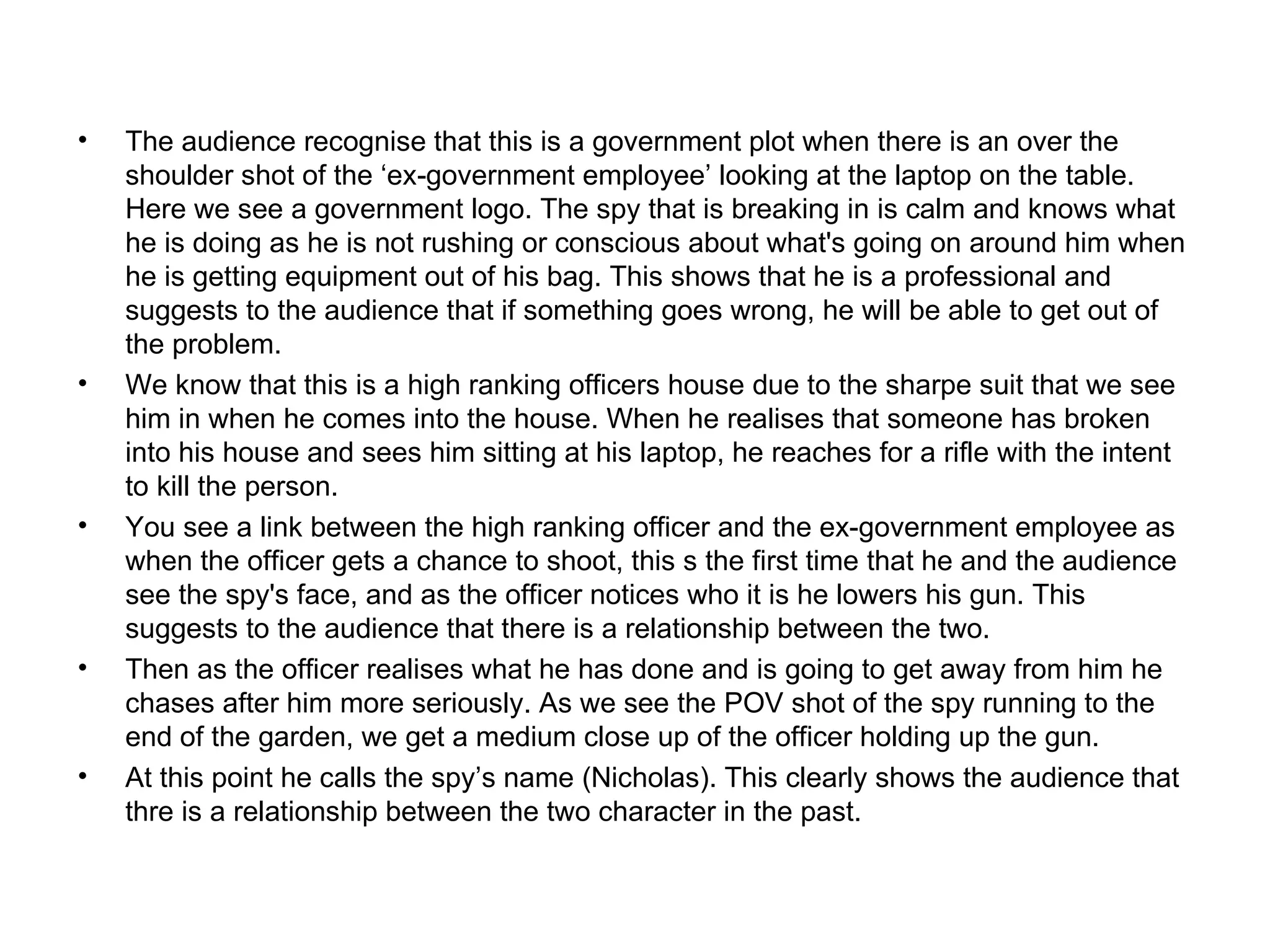
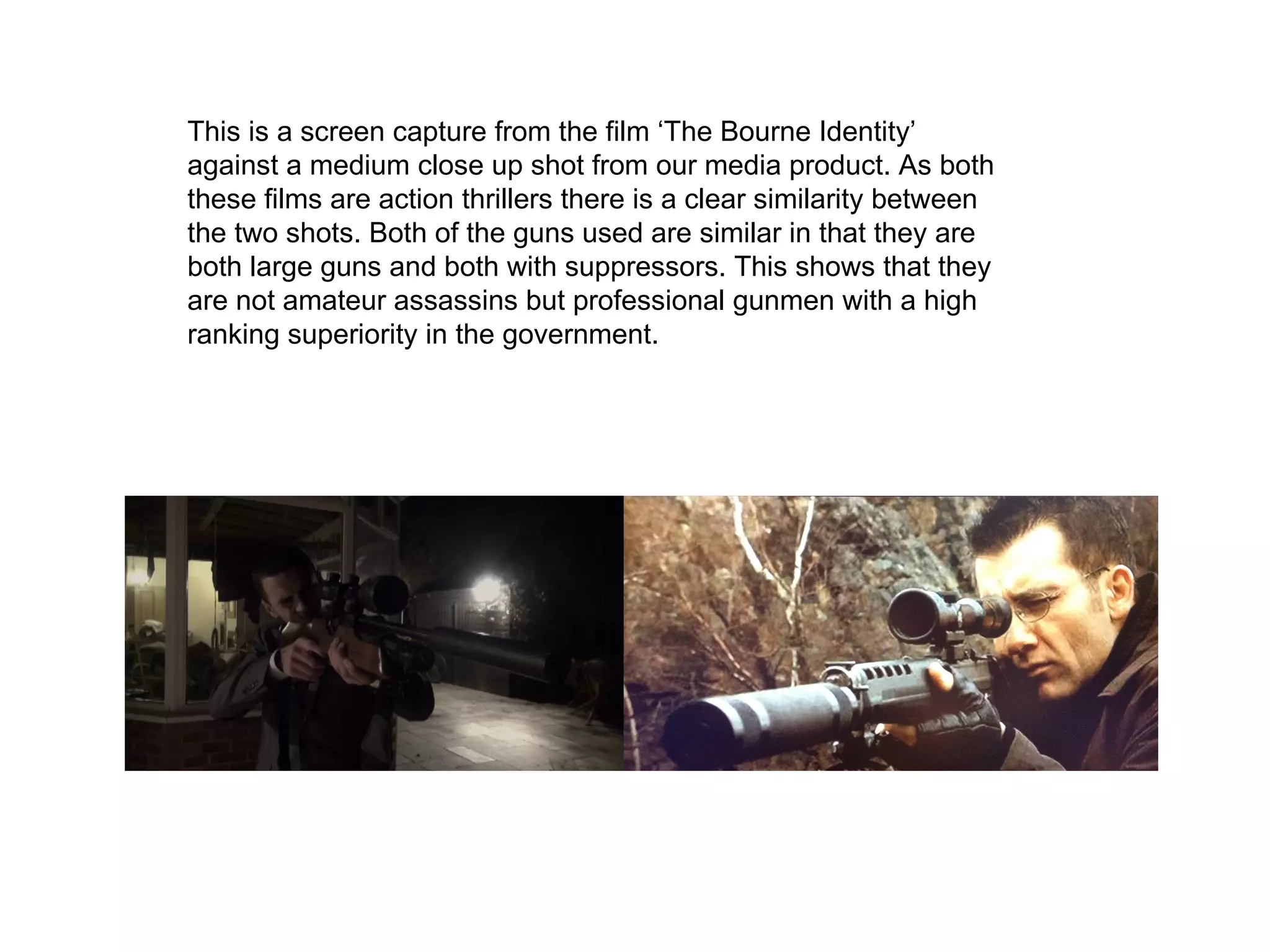
This is a screen capture from the film ‘The Bourne Identity’
against a medium close up shot from our media product. As both
these films are action thrillers there is a clear similarity between
the two shots. Both of the guns used are similar in that they are
both large guns and both with suppressors. This shows that they
are not amateur assassins but professional gunmen with a high
ranking superiority in the government.

2) how does your media product represent

  • 1.
    2) How doesyour media product represent particular social groups?
  • 2.
    The audience recognise that this is a government plot when there is an over the shoulder shot of the ‘ex-government employee’ looking at the laptop on the table. Here we see a government logo. The spy that is breaking in is calm and knows what he is doing as he is not rushing or conscious about what's going on around him when he is getting equipment out of his bag. This shows that he is a professional and suggests to the audience that if something goes wrong, he will be able to get out of the problem. • We know that this is a high ranking officers house due to the sharpe suit that we see him in when he comes into the house. When he realises that someone has broken into his house and sees him sitting at his laptop, he reaches for a rifle with the intent to kill the person. • You see a link between the high ranking officer and the ex-government employee as when the officer gets a chance to shoot, this s the first time that he and the audience see the spy's face, and as the officer notices who it is he lowers his gun. This suggests to the audience that there is a relationship between the two. • Then as the officer realises what he has done and is going to get away from him he chases after him more seriously. As we see the POV shot of the spy running to the end of the garden, we get a medium close up of the officer holding up the gun. • At this point he calls the spy’s name (Nicholas). This clearly shows the audience that thre is a relationship between the two character in the past.
  • 3.
    This is ascreen capture from the film ‘The Bourne Identity’ against a medium close up shot from our media product. As both these films are action thrillers there is a clear similarity between the two shots. Both of the guns used are similar in that they are both large guns and both with suppressors. This shows that they are not amateur assassins but professional gunmen with a high ranking superiority in the government.