• From the Greek pharmakon (drug), legos (to speak)
• Pharmacology studies the effects of drugs and how they
exert their effects.
• acetylsalicylic acid (ASA) can reduce inflammation, pain
and fever
 inhibit the action of a human cell membrane enzyme
known as cyclooxygenase, which is responsible for the
synthesis of a number of inflammatory mediators
• penicillin cures certain bacterial infections
 disrupt the synthesis of cell walls in susceptible bacterial
strains by inhibiting a key enzyme
Pharmacology
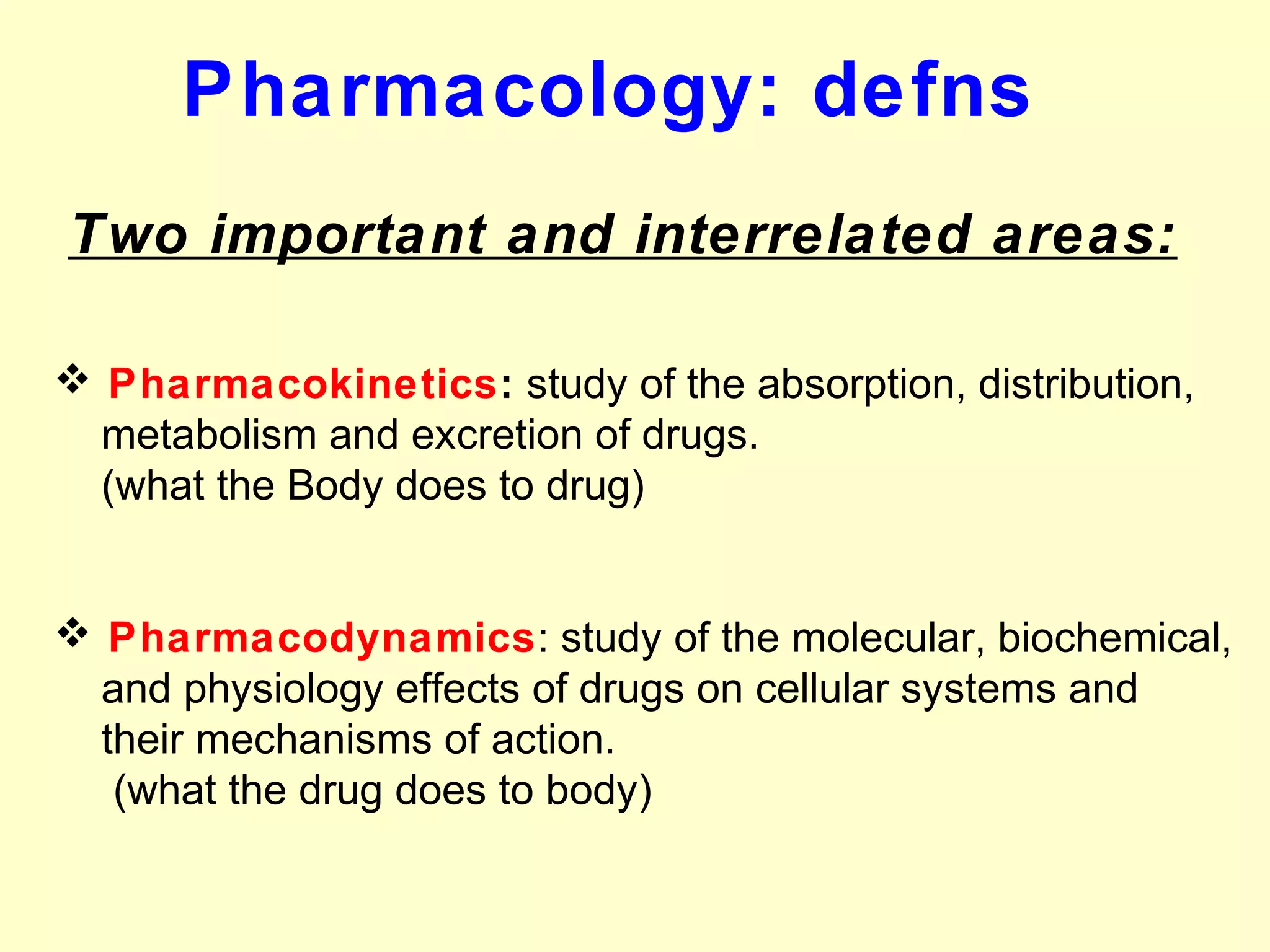
Two important and interrelated areas:
 Pharmacokinetics: study of the absorption, distribution,
metabolism and excretion of drugs.
(what the Body does to drug)
 Pharmacodynamics: study of the molecular, biochemical,
and physiology effects of drugs on cellular systems and
their mechanisms of action.
(what the drug does to body)
Pharmacology: defns
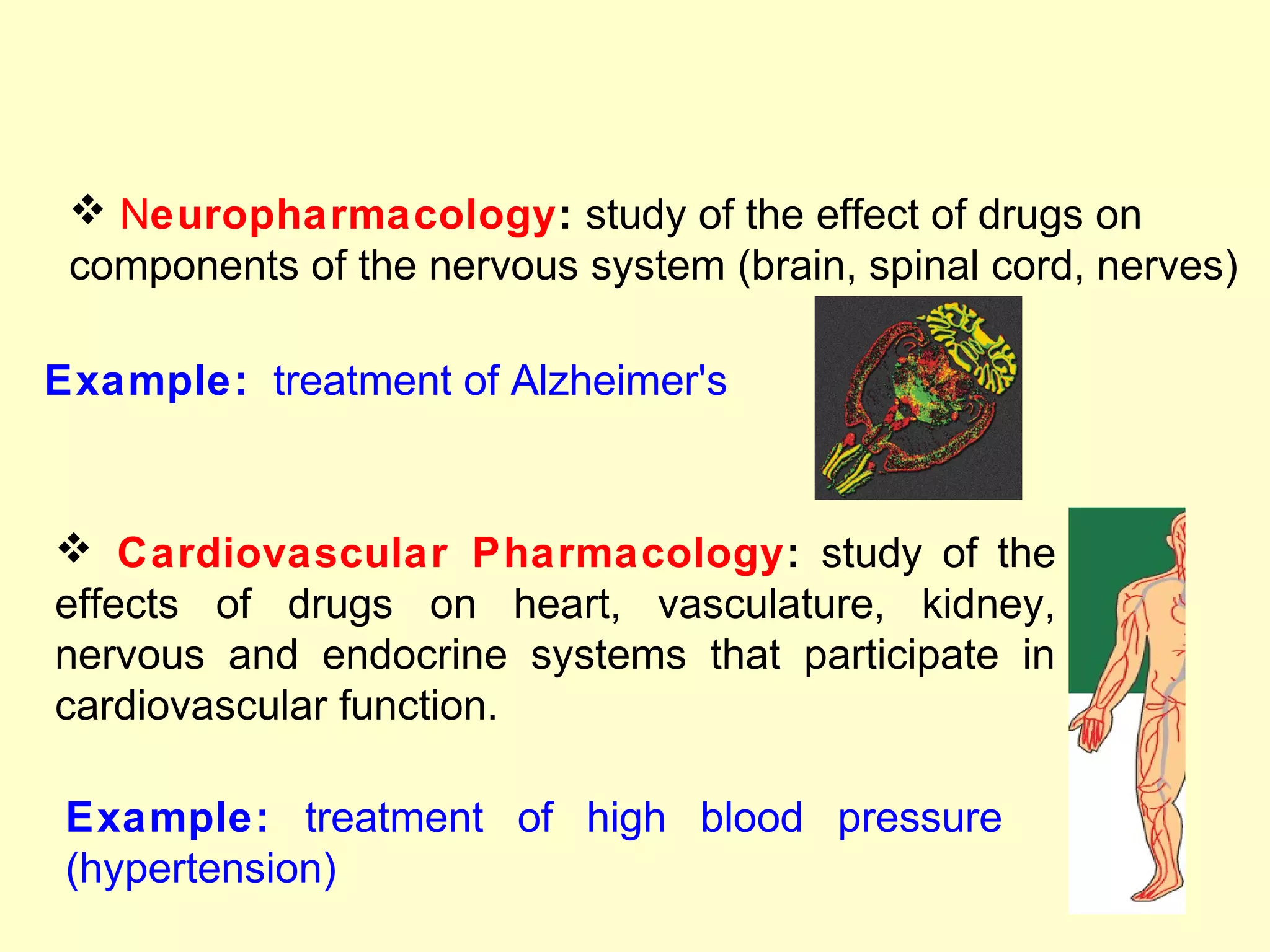
 Neuropharmacology: study of the effect of drugs on
components of the nervous system (brain, spinal cord, nerves)
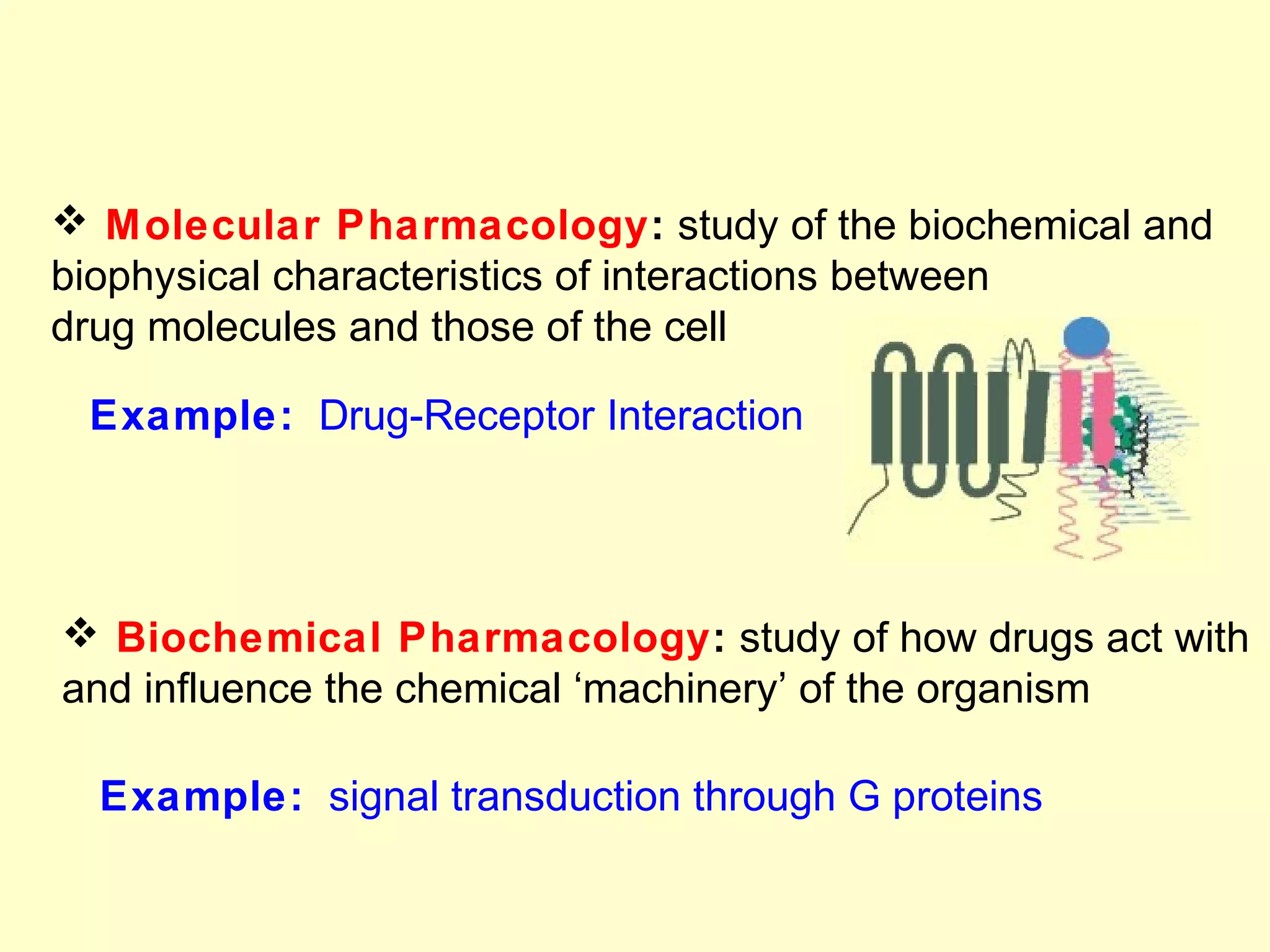
 Cardiovascular Pharmacology: study of the
effects of drugs on heart, vasculature, kidney,
nervous and endocrine systems that participate in
cardiovascular function.
Example: treatment of Alzheimer's
Example: treatment of high blood pressure
(hypertension)
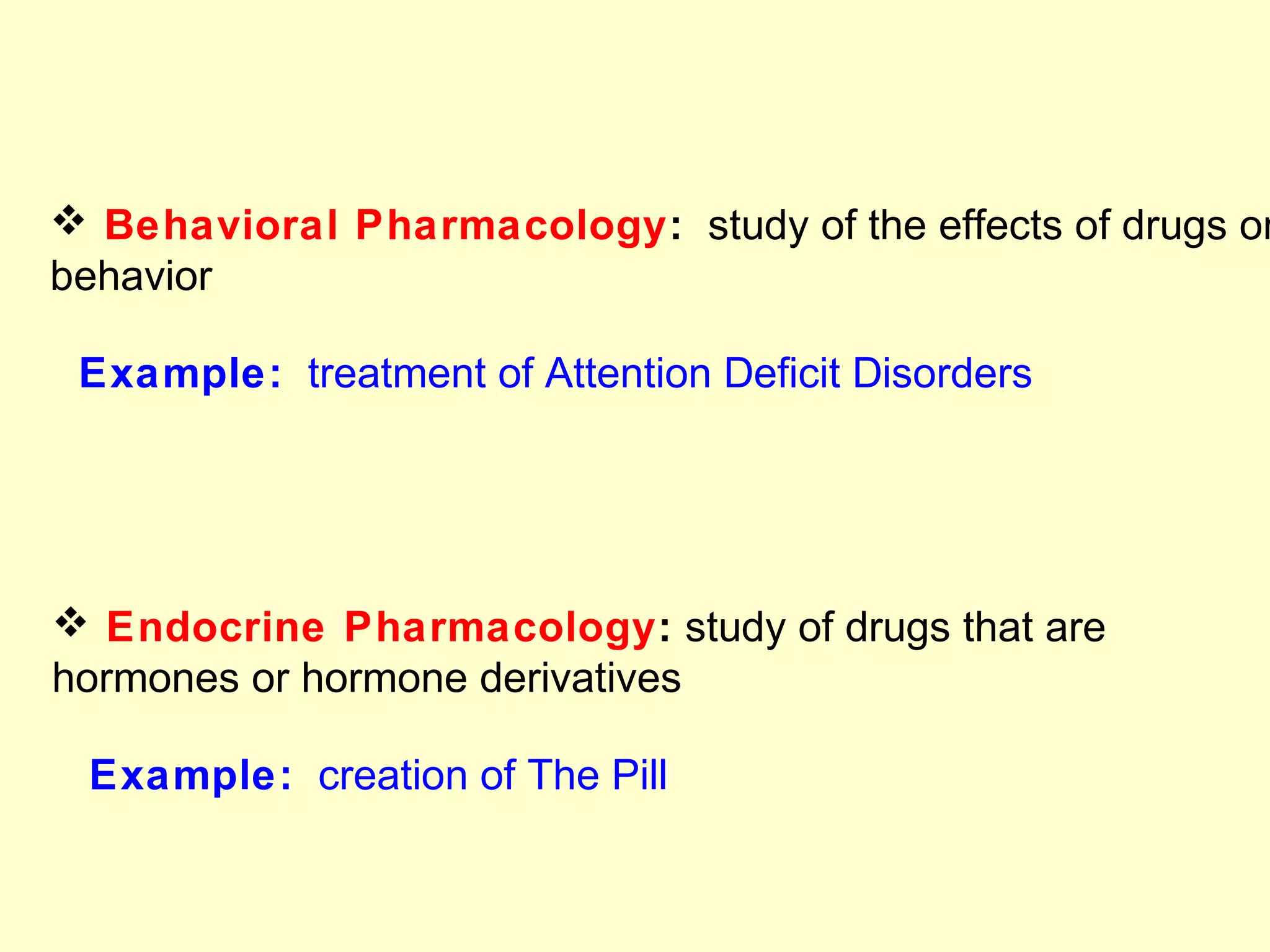
 Molecular Pharmacology: study of the biochemical and
biophysical characteristics of interactions between
drug molecules and those of the cell
Example: Drug-Receptor Interaction
 Biochemical Pharmacology: study of how drugs act with
and influence the chemical ‘machinery’ of the organism
Example: signal transduction through G proteins
 Behavioral Pharmacology: study of the effects of drugs on
behavior
Example: treatment of Attention Deficit Disorders
 Endocrine Pharmacology: study of drugs that are
hormones or hormone derivatives
Example: creation of The Pill
 Clinical Pharmacology: application of pharmacodynamics
and pharmacokinetics to patients with disease.
Example: use of pharmacogenomics to tailor individual
medical treatment
 Chemotherapy: study of drugs used for treatment of
microbial/viral infection and malignancies
Example: treatment of cancer through anti-angiogenic
agents such as bevacizumab.
ANTIBODY THERAPY
• Drug- a drug is "a chemical substance used in the
treatment, cure, prevention, or diagnosis of disease or used
to otherwise enhance physical or mental well-being.“
• Pharmacotherapeutics - use of drugs to treat disorders;
the emphasis is on clinical management
• Pharmacoepidemiology - study of the effect of drugs on
populations;
• Pharmacoeconomics - study of the cost-effectiveness of
drug treatments; the cost of medications is of worldwide
concern, particularly among certain groups such as the
elderly and AIDS patients
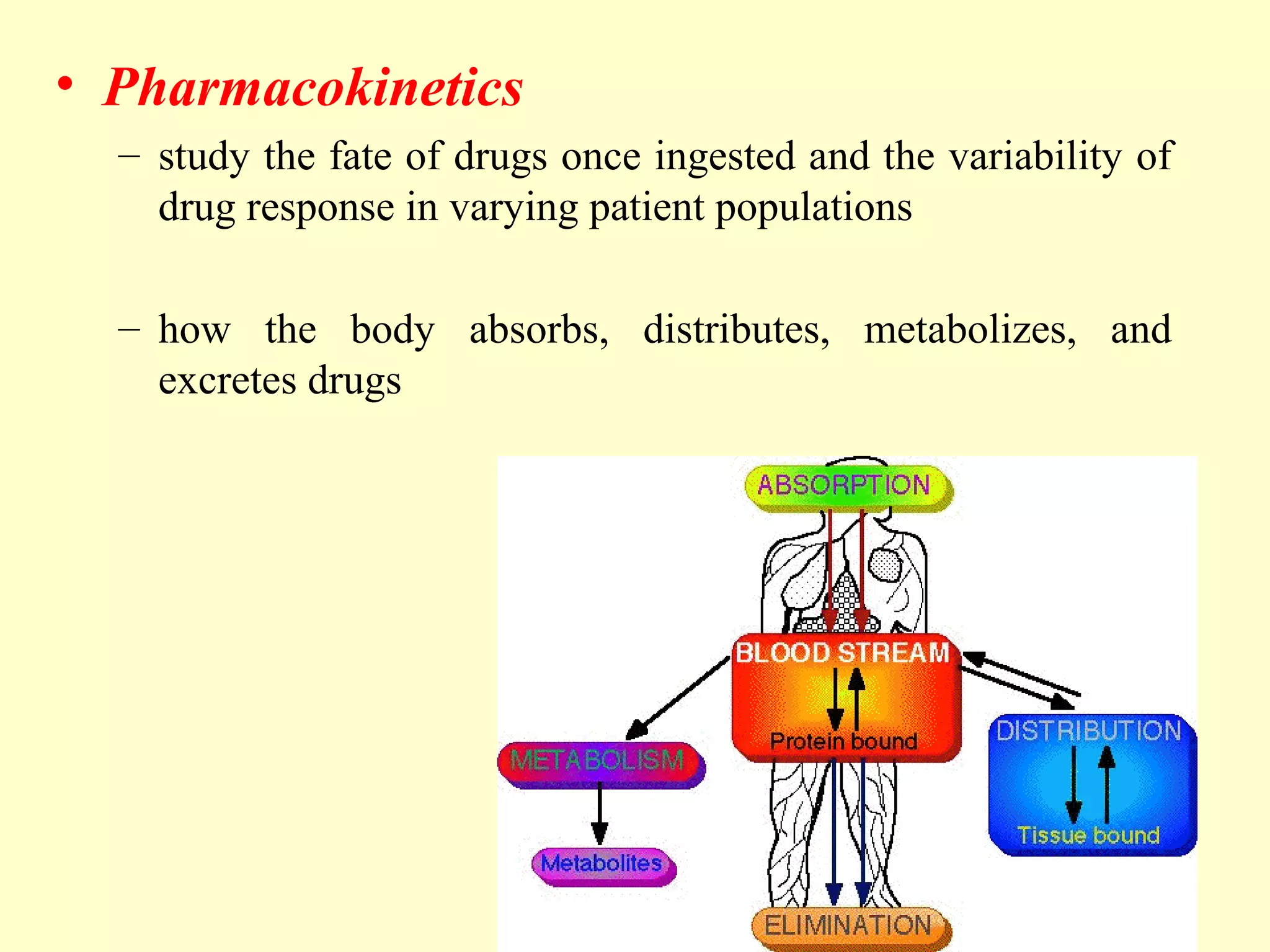
• Pharmacokinetics
– study the fate of drugs once ingested and the variability of
drug response in varying patient populations
– how the body absorbs, distributes, metabolizes, and
excretes drugs
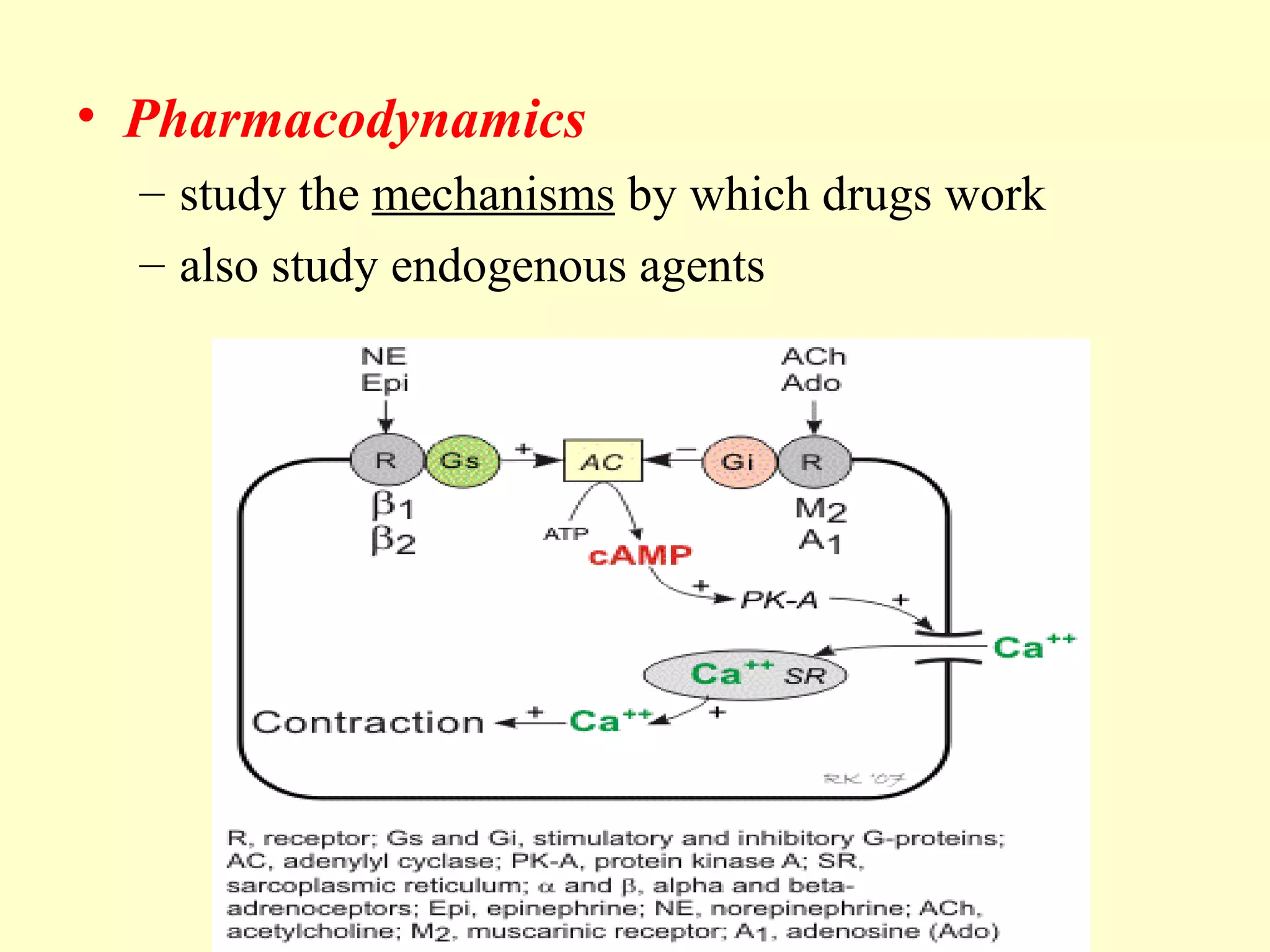
• Pharmacodynamics
– study the mechanisms by which drugs work
– also study endogenous agents
Quiz Yourself
1.Pharmakon
2.Logos
3.Chemotherapy
4.(what the Body does to drug)
Pharmacodynamics
Pharmacokinetics
5.

Introduction to Pharmacologyvpp

  • 1.
    • From theGreek pharmakon (drug), legos (to speak) • Pharmacology studies the effects of drugs and how they exert their effects. • acetylsalicylic acid (ASA) can reduce inflammation, pain and fever  inhibit the action of a human cell membrane enzyme known as cyclooxygenase, which is responsible for the synthesis of a number of inflammatory mediators • penicillin cures certain bacterial infections  disrupt the synthesis of cell walls in susceptible bacterial strains by inhibiting a key enzyme Pharmacology
  • 8.
    Two important andinterrelated areas:  Pharmacokinetics: study of the absorption, distribution, metabolism and excretion of drugs. (what the Body does to drug)  Pharmacodynamics: study of the molecular, biochemical, and physiology effects of drugs on cellular systems and their mechanisms of action. (what the drug does to body) Pharmacology: defns
  • 9.
     Neuropharmacology: studyof the effect of drugs on components of the nervous system (brain, spinal cord, nerves)  Cardiovascular Pharmacology: study of the effects of drugs on heart, vasculature, kidney, nervous and endocrine systems that participate in cardiovascular function. Example: treatment of Alzheimer's Example: treatment of high blood pressure (hypertension)
  • 10.
     Molecular Pharmacology:study of the biochemical and biophysical characteristics of interactions between drug molecules and those of the cell Example: Drug-Receptor Interaction  Biochemical Pharmacology: study of how drugs act with and influence the chemical ‘machinery’ of the organism Example: signal transduction through G proteins
  • 11.
     Behavioral Pharmacology:study of the effects of drugs on behavior Example: treatment of Attention Deficit Disorders  Endocrine Pharmacology: study of drugs that are hormones or hormone derivatives Example: creation of The Pill
  • 12.
     Clinical Pharmacology:application of pharmacodynamics and pharmacokinetics to patients with disease. Example: use of pharmacogenomics to tailor individual medical treatment  Chemotherapy: study of drugs used for treatment of microbial/viral infection and malignancies Example: treatment of cancer through anti-angiogenic agents such as bevacizumab. ANTIBODY THERAPY
  • 13.
    • Drug- adrug is "a chemical substance used in the treatment, cure, prevention, or diagnosis of disease or used to otherwise enhance physical or mental well-being.“ • Pharmacotherapeutics - use of drugs to treat disorders; the emphasis is on clinical management • Pharmacoepidemiology - study of the effect of drugs on populations; • Pharmacoeconomics - study of the cost-effectiveness of drug treatments; the cost of medications is of worldwide concern, particularly among certain groups such as the elderly and AIDS patients
  • 14.
    • Pharmacokinetics – studythe fate of drugs once ingested and the variability of drug response in varying patient populations – how the body absorbs, distributes, metabolizes, and excretes drugs
  • 15.
    • Pharmacodynamics – studythe mechanisms by which drugs work – also study endogenous agents
  • 16.
    Quiz Yourself 1.Pharmakon 2.Logos 3.Chemotherapy 4.(what theBody does to drug) Pharmacodynamics Pharmacokinetics 5.