Hazel Cheeseman 
Director of Policy 
Action on Smoking and Health 
Ian Gray, CFCIEH, MBE 
Chief Policy Officer, Chartered Institute of Environmental Health
Permitting or prohibiting vaping – ingredients for developing a policy 
Ian Gray 
Principal Policy Office 
Chartered Institute of Environmental Health 
Hazel Cheeseman 
Director of Policy 
Action on Smoking and Health
The project 
•Support small number of councils through policy development process 
•Learn from their experiences to share ideas about a good process with others 
•To date worked with seven councils, three now have formal policies, rest in development 
•Next year we’ll publish conclusions 
•This presentation is based on lesson’s we’ve learnt working with these councils and others around the UK. 
3
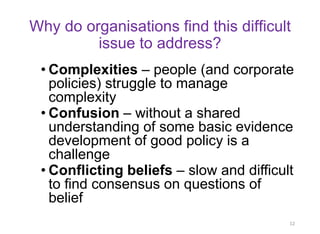
Why do organisations find this difficult issue to address? 
•Complexities 
•Confusion 
•Conflicting beliefs 
4
Complexities: There are no easy answers 
“Are they safe to use?” 
“Will they lead to more children smoking?” 
“Will they undermine smokefree legislation?” 
“Will banning them have a negative effect on people trying to quit?” 
5 
“They’re safer than smoking” 
“There’s no evidence of this yet…” 
“They haven’t yet, we don’t think they will…” 
“We don’t know, it’s possible…”
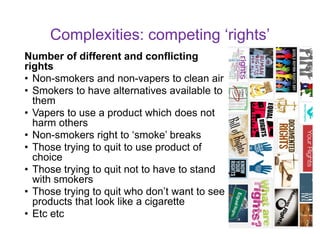
Complexities: competing ‘rights’ 
Number of different and conflicting rights 
•Non-smokers and non-vapers to clean air 
•Smokers to have alternatives available to them 
•Vapers to use a product which does not harm others 
•Non-smokers right to ‘smoke’ breaks 
•Those trying to quit to use product of choice 
•Those trying to quit not to have to stand with smokers 
•Those trying to quit who don’t want to see products that look like a cigarette 
•Etc etc 
6
Complexities: a balance of responsibilities 
Number of different and conflicting responsibilities 
•Promote public health 
•Duty of care to staff 
•Duty of care to clients and public 
•Support smokers to quit or reduce harm 
•Protect corporate image 
•Minimise workplace conflict 
•Maximise the choice of vulnerable service users 
•Locus Parentis 
•Etc etc 
7
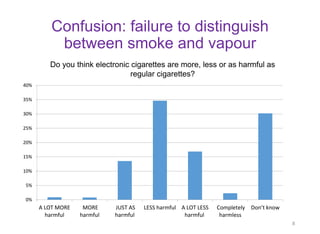
Confusion: failure to distinguish between smoke and vapour 
8 
0% 
5% 
10% 
15% 
20% 
25% 
30% 
35% 
40% 
A LOT MORE 
harmful 
MORE 
harmful 
JUST AS 
harmful 
LESS harmful 
A LOT LESS 
harmful 
Completely 
harmless 
Don’t know 
Do you think electronic cigarettes are more, less or as harmful as regular cigarettes?
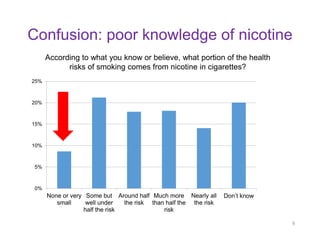
Confusion: poor knowledge of nicotine 
9 
0% 
5% 
10% 
15% 
20% 
25% 
None or very 
small 
Some but 
well under 
half the risk 
Around half 
the risk 
Much more 
than half the 
risk 
Nearly all 
the risk 
Don’t know 
According to what you know or believe, what portion of the health risks of smoking comes from nicotine in cigarettes?
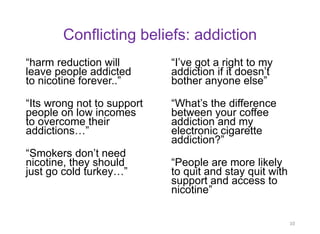
Conflicting beliefs: addiction 
“harm reduction will leave people addicted to nicotine forever..” 
“Its wrong not to support people on low incomes to overcome their addictions…” 
“Smokers don’t need nicotine, they should just go cold turkey…” 
10 
“I’ve got a right to my addiction if it doesn’t bother anyone else” 
“What’s the difference between your coffee addiction and my electronic cigarette addiction?” 
“People are more likely to quit and stay quit with support and access to nicotine”
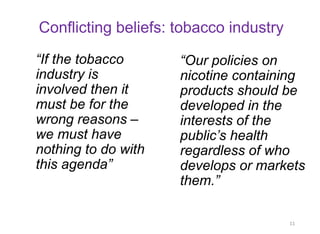
Conflicting beliefs: tobacco industry 
“If the tobacco industry is involved then it must be for the wrong reasons – we must have nothing to do with this agenda” 
11 
“Our policies on nicotine containing products should be developed in the interests of the public’s health regardless of who develops or markets them.”
Why do organisations find this difficult issue to address? 
•Complexities – people (and corporate policies) struggle to manage complexity 
•Confusion – without a shared understanding of some basic evidence development of good policy is a challenge 
•Conflicting beliefs – slow and difficult to find consensus on questions of belief 
12
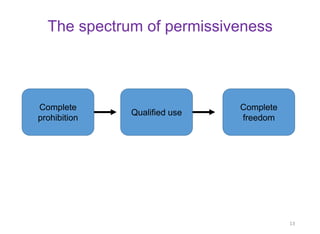
The spectrum of permissiveness 
Complete prohibition 
Qualified use 
Complete freedom 
13
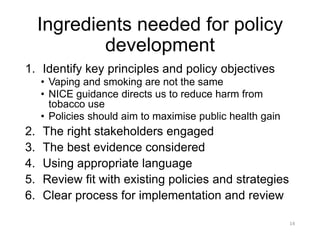
Ingredients needed for policy development 
1.Identify key principles and policy objectives 
•Vaping and smoking are not the same 
•NICE guidance directs us to reduce harm from tobacco use 
•Policies should aim to maximise public health gain 
2.The right stakeholders engaged 
3.The best evidence considered 
4.Using appropriate language 
5.Review fit with existing policies and strategies 
6.Clear process for implementation and review 
14

Hazel Cheeseman & Ian Gray - E-Cigarette Summit 2014

  • 1.
    Hazel Cheeseman Directorof Policy Action on Smoking and Health Ian Gray, CFCIEH, MBE Chief Policy Officer, Chartered Institute of Environmental Health
  • 2.
    Permitting or prohibitingvaping – ingredients for developing a policy Ian Gray Principal Policy Office Chartered Institute of Environmental Health Hazel Cheeseman Director of Policy Action on Smoking and Health
  • 3.
    The project •Supportsmall number of councils through policy development process •Learn from their experiences to share ideas about a good process with others •To date worked with seven councils, three now have formal policies, rest in development •Next year we’ll publish conclusions •This presentation is based on lesson’s we’ve learnt working with these councils and others around the UK. 3
  • 4.
    Why do organisationsfind this difficult issue to address? •Complexities •Confusion •Conflicting beliefs 4
  • 5.
    Complexities: There areno easy answers “Are they safe to use?” “Will they lead to more children smoking?” “Will they undermine smokefree legislation?” “Will banning them have a negative effect on people trying to quit?” 5 “They’re safer than smoking” “There’s no evidence of this yet…” “They haven’t yet, we don’t think they will…” “We don’t know, it’s possible…”
  • 6.
    Complexities: competing ‘rights’ Number of different and conflicting rights •Non-smokers and non-vapers to clean air •Smokers to have alternatives available to them •Vapers to use a product which does not harm others •Non-smokers right to ‘smoke’ breaks •Those trying to quit to use product of choice •Those trying to quit not to have to stand with smokers •Those trying to quit who don’t want to see products that look like a cigarette •Etc etc 6
  • 7.
    Complexities: a balanceof responsibilities Number of different and conflicting responsibilities •Promote public health •Duty of care to staff •Duty of care to clients and public •Support smokers to quit or reduce harm •Protect corporate image •Minimise workplace conflict •Maximise the choice of vulnerable service users •Locus Parentis •Etc etc 7
  • 8.
    Confusion: failure todistinguish between smoke and vapour 8 0% 5% 10% 15% 20% 25% 30% 35% 40% A LOT MORE harmful MORE harmful JUST AS harmful LESS harmful A LOT LESS harmful Completely harmless Don’t know Do you think electronic cigarettes are more, less or as harmful as regular cigarettes?
  • 9.
    Confusion: poor knowledgeof nicotine 9 0% 5% 10% 15% 20% 25% None or very small Some but well under half the risk Around half the risk Much more than half the risk Nearly all the risk Don’t know According to what you know or believe, what portion of the health risks of smoking comes from nicotine in cigarettes?
  • 10.
    Conflicting beliefs: addiction “harm reduction will leave people addicted to nicotine forever..” “Its wrong not to support people on low incomes to overcome their addictions…” “Smokers don’t need nicotine, they should just go cold turkey…” 10 “I’ve got a right to my addiction if it doesn’t bother anyone else” “What’s the difference between your coffee addiction and my electronic cigarette addiction?” “People are more likely to quit and stay quit with support and access to nicotine”
  • 11.
    Conflicting beliefs: tobaccoindustry “If the tobacco industry is involved then it must be for the wrong reasons – we must have nothing to do with this agenda” 11 “Our policies on nicotine containing products should be developed in the interests of the public’s health regardless of who develops or markets them.”
  • 12.
    Why do organisationsfind this difficult issue to address? •Complexities – people (and corporate policies) struggle to manage complexity •Confusion – without a shared understanding of some basic evidence development of good policy is a challenge •Conflicting beliefs – slow and difficult to find consensus on questions of belief 12
  • 13.
    The spectrum ofpermissiveness Complete prohibition Qualified use Complete freedom 13
  • 14.
    Ingredients needed forpolicy development 1.Identify key principles and policy objectives •Vaping and smoking are not the same •NICE guidance directs us to reduce harm from tobacco use •Policies should aim to maximise public health gain 2.The right stakeholders engaged 3.The best evidence considered 4.Using appropriate language 5.Review fit with existing policies and strategies 6.Clear process for implementation and review 14