B D U _ d e p a r t m e n t o f
ARCHITECTURE
HISTORY OF ARCHITECTURE III
S e m e s t e r A s s i g n m e n t
b y A b r h a m z e b e n e
A case study on
architect and designerMarcelBreuer
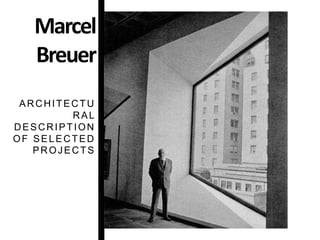
Marcel
Breuer
bibliography
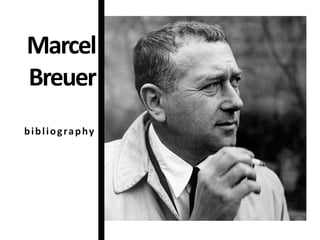
 Marcel Lajos Breuer – Lajkó to his
friends – was born on 21 May 1902 in the
provincial city of Pecs, Hungary.
 Breuer left his hometown at the age of 18 in
search of artistic training and was one of the
first and youngest students at the Bauhaus.
 He was recognized by Gropius as a
significant talent and was quickly put at the
head of the Carpentry Shop.
 Marcel Breuer (1902-1981) numbers among
the most important and prolific designers of
the twentieth century.
 Today he is best known for his furniture.
The tubular steel pieces created by Breuer
during his tenure at the Bauhaus and during
the following years, which have enjoyed
unflagging popularity for decades, must be
counted among the great classics of
modernism.
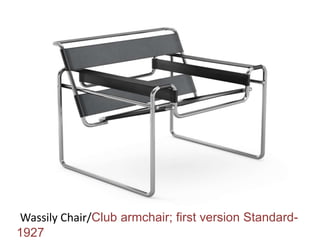
Wassily Chair/Club armchair; first version Standard-
1927
 One of the masters of Modernism, architect
and furniture designer, Breuer extended the
sculptural vocabulary he had developed in
the carpentry shop at the Bauhaus into a
personal architecture that made him one of
the world’s most popular architects at the
peak of 20th-Century design.
Marcel
Breuer
IDEOLOGY &
LIST OF
PROJECTS
 Breuer, one of the most influential
exponents of the international style; he
was concerned with applying new forms
and uses to newly developed technology
and materials in order to create an art
expressive of an industrial age.
 He followed the lead of Walter Gropius in
espousing unit construction; i.e., the
combination of standardized units to form
a technologically simple but functionally
complex whole.
 In 1925, inspired by the design of bicycle
handlebars, he invented the tubular metal
chair; his original version is known as the
Wassily chair.
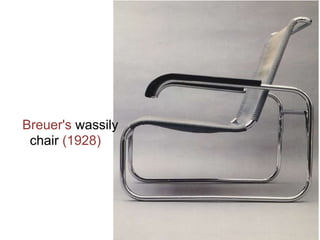
Breuer's wassily
chair (1928)
 Marcel Breuer's chair (1928) reflects the
universal appeal movement through its lack
of 'decoration' and timeless appeal. The
chair strictly follows its function and does
not include elements which are not
necessary for its purpose.
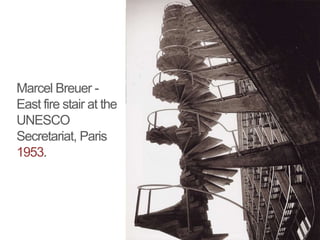
Marcel Breuer -
East fire stair at the
UNESCO
Secretariat, Paris
1953.
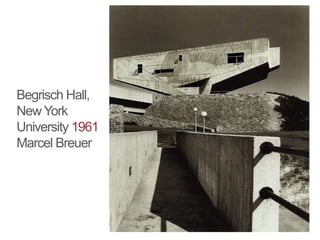
Begrisch Hall,
New York
University 1961
Marcel Breuer
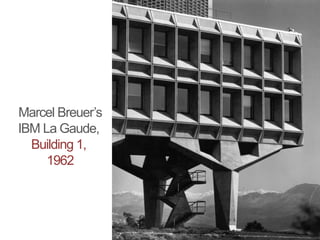
Marcel Breuer’s
IBM La Gaude,
Building 1,
1962
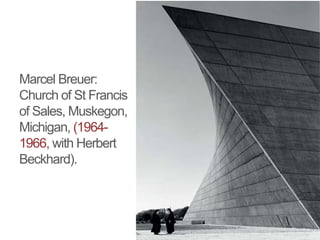
Marcel Breuer:
Church of St Francis
of Sales, Muskegon,
Michigan, (1964-
1966, with Herbert
Beckhard).
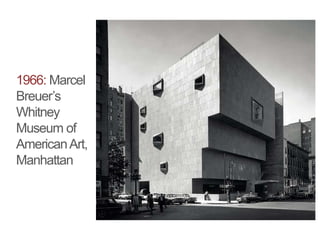
1966: Marcel
Breuer’s
Whitney
Museum of
AmericanArt,
Manhattan
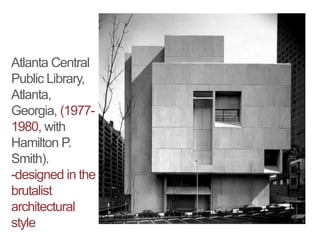
Atlanta Central
Public Library,
Atlanta,
Georgia, (1977-
1980, with
Hamilton P.
Smith).
-designed in the
brutalist
architectural
style
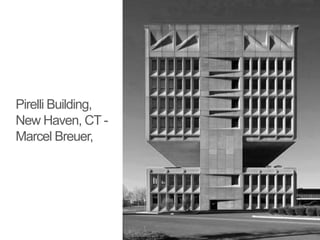
Pirelli Building,
New Haven, CT -
Marcel Breuer,
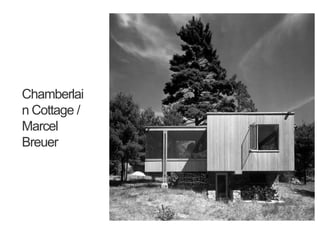
Chamberlai
n Cottage /
Marcel
Breuer
Marcel
Breuer
ARCHITECTU
RAL
DESCRIPTION
OF SELECTED
PROJECTS
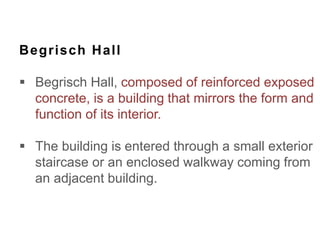
Begrisch Hall
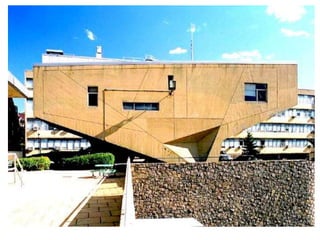
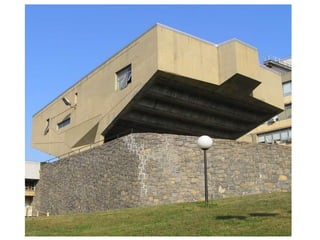
 Begrisch Hall, composed of reinforced exposed
concrete, is a building that mirrors the form and
function of its interior.
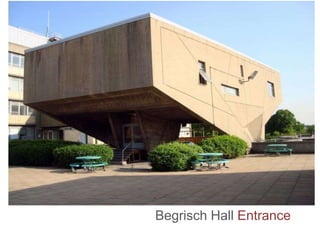
 The building is entered through a small exterior
staircase or an enclosed walkway coming from
an adjacent building.
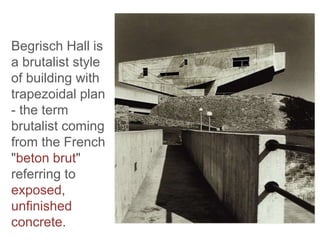
Begrisch Hall is
a brutalist style
of building with
trapezoidal plan
- the term
brutalist coming
from the French
"beton brut"
referring to
exposed,
unfinished
concrete.
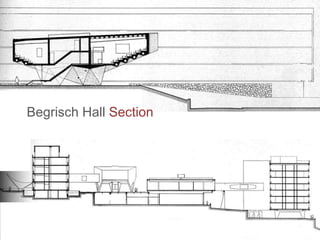
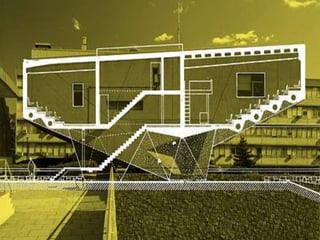
Begrisch Hall Section
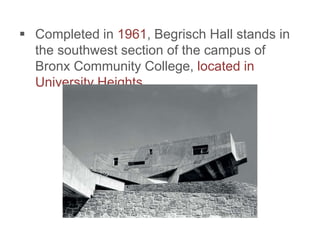
 Completed in 1961, Begrisch Hall stands in
the southwest section of the campus of
Bronx Community College, located in
University Heights.
Begrisch Hall Entrance
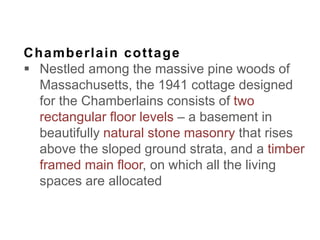
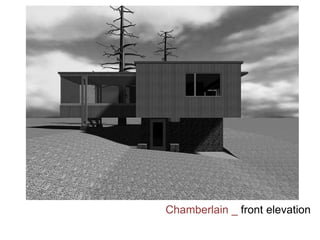
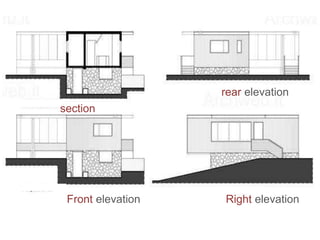
Chamberlain cottage
 Nestled among the massive pine woods of
Massachusetts, the 1941 cottage designed
for the Chamberlains consists of two
rectangular floor levels – a basement in
beautifully natural stone masonry that rises
above the sloped ground strata, and a timber
framed main floor, on which all the living
spaces are allocated
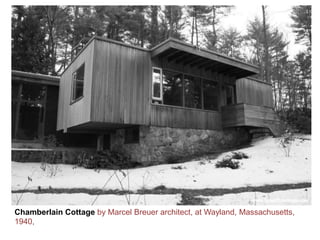
Chamberlain Cottage by Marcel Breuer architect, at Wayland, Massachusetts,
1940,
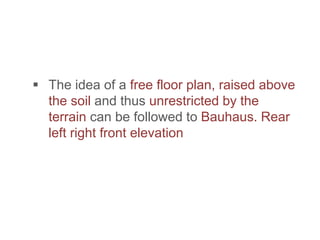
 The idea of a free floor plan, raised above
the soil and thus unrestricted by the
terrain can be followed to Bauhaus. Rear
left right front elevation
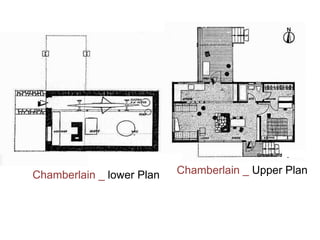
Chamberlain _ Upper PlanChamberlain _ lower Plan
Chamberlain _ front elevation
Right elevation
section
rear elevation
Front elevation
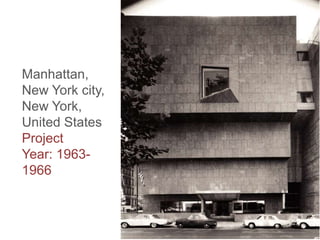
Whitney Museum · New York
 located at the corner of Madison Avenue and
75th Street, served as the Whitney's third
home.
 He worked with Hamilton Smith, creating a
strong modernist statement in a
neighborhood of traditional limestone,
brownstone, and brick row houses and
postwar apartment buildings.
Manhattan,
New York city,
New York,
United States
Project
Year: 1963-
1966
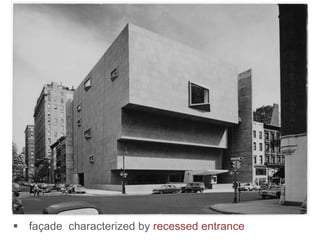
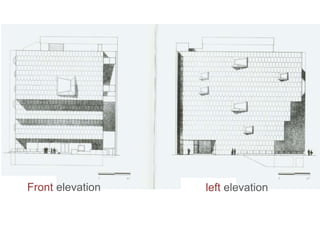
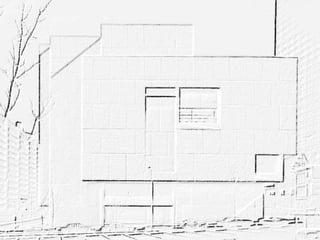
 façade characterized by recessed entrance
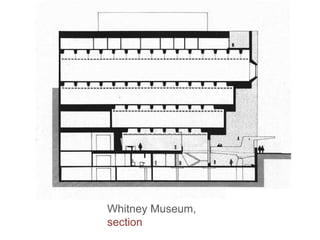
Whitney Museum,
section
Front elevation left elevation
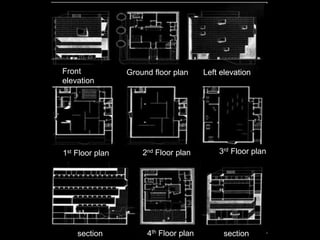
Front
elevation
Ground floor plan Left elevation
3rd Floor plan2nd Floor plan1st Floor plan
4th Floor plansection section
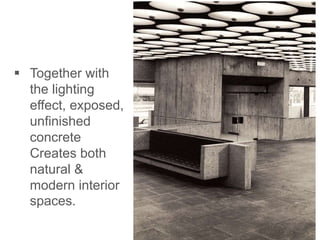
 Together with
the lighting
effect, exposed,
unfinished
concrete
Creates both
natural &
modern interior
spaces.
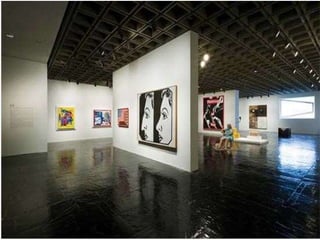
 The Museum have large and
distinguishable open gallery spaces, with
suspended precast concrete grid ceilings.
These are each detailed to receive movable
wall panels and flexible lighting.
 Designed in Breuer’s
distinct modern style,
the museum stands
out against its
neighboring facades
of traditional
limestone,
brownstone, and
brick
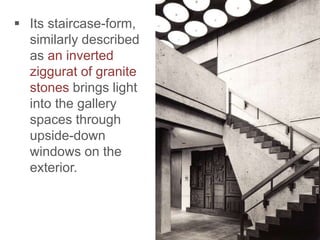
 Its staircase-form,
similarly described
as an inverted
ziggurat of granite
stones brings light
into the gallery
spaces through
upside-down
windows on the
exterior.
THE END

14. marcel breuer abrham zebene

  • 1.
    B D U_ d e p a r t m e n t o f ARCHITECTURE HISTORY OF ARCHITECTURE III S e m e s t e r A s s i g n m e n t b y A b r h a m z e b e n e A case study on architect and designerMarcelBreuer
  • 3.
  • 4.
     Marcel LajosBreuer – Lajkó to his friends – was born on 21 May 1902 in the provincial city of Pecs, Hungary.  Breuer left his hometown at the age of 18 in search of artistic training and was one of the first and youngest students at the Bauhaus.  He was recognized by Gropius as a significant talent and was quickly put at the head of the Carpentry Shop.
  • 5.
     Marcel Breuer(1902-1981) numbers among the most important and prolific designers of the twentieth century.  Today he is best known for his furniture. The tubular steel pieces created by Breuer during his tenure at the Bauhaus and during the following years, which have enjoyed unflagging popularity for decades, must be counted among the great classics of modernism.
  • 6.
    Wassily Chair/Club armchair;first version Standard- 1927
  • 7.
     One ofthe masters of Modernism, architect and furniture designer, Breuer extended the sculptural vocabulary he had developed in the carpentry shop at the Bauhaus into a personal architecture that made him one of the world’s most popular architects at the peak of 20th-Century design.
  • 9.
  • 10.
     Breuer, oneof the most influential exponents of the international style; he was concerned with applying new forms and uses to newly developed technology and materials in order to create an art expressive of an industrial age.
  • 11.
     He followedthe lead of Walter Gropius in espousing unit construction; i.e., the combination of standardized units to form a technologically simple but functionally complex whole.  In 1925, inspired by the design of bicycle handlebars, he invented the tubular metal chair; his original version is known as the Wassily chair.
  • 12.
  • 13.
     Marcel Breuer'schair (1928) reflects the universal appeal movement through its lack of 'decoration' and timeless appeal. The chair strictly follows its function and does not include elements which are not necessary for its purpose.
  • 15.
    Marcel Breuer - Eastfire stair at the UNESCO Secretariat, Paris 1953.
  • 16.
  • 17.
    Marcel Breuer’s IBM LaGaude, Building 1, 1962
  • 18.
    Marcel Breuer: Church ofSt Francis of Sales, Muskegon, Michigan, (1964- 1966, with Herbert Beckhard).
  • 19.
  • 20.
    Atlanta Central Public Library, Atlanta, Georgia,(1977- 1980, with Hamilton P. Smith). -designed in the brutalist architectural style
  • 21.
    Pirelli Building, New Haven,CT - Marcel Breuer,
  • 22.
  • 24.
  • 25.
    Begrisch Hall  BegrischHall, composed of reinforced exposed concrete, is a building that mirrors the form and function of its interior.  The building is entered through a small exterior staircase or an enclosed walkway coming from an adjacent building.
  • 26.
    Begrisch Hall is abrutalist style of building with trapezoidal plan - the term brutalist coming from the French "beton brut" referring to exposed, unfinished concrete.
  • 27.
  • 28.
     Completed in1961, Begrisch Hall stands in the southwest section of the campus of Bronx Community College, located in University Heights.
  • 31.
  • 33.
    Chamberlain cottage  Nestledamong the massive pine woods of Massachusetts, the 1941 cottage designed for the Chamberlains consists of two rectangular floor levels – a basement in beautifully natural stone masonry that rises above the sloped ground strata, and a timber framed main floor, on which all the living spaces are allocated
  • 34.
    Chamberlain Cottage byMarcel Breuer architect, at Wayland, Massachusetts, 1940,
  • 35.
     The ideaof a free floor plan, raised above the soil and thus unrestricted by the terrain can be followed to Bauhaus. Rear left right front elevation
  • 36.
    Chamberlain _ UpperPlanChamberlain _ lower Plan
  • 37.
  • 38.
  • 39.
    Whitney Museum ·New York  located at the corner of Madison Avenue and 75th Street, served as the Whitney's third home.  He worked with Hamilton Smith, creating a strong modernist statement in a neighborhood of traditional limestone, brownstone, and brick row houses and postwar apartment buildings.
  • 40.
    Manhattan, New York city, NewYork, United States Project Year: 1963- 1966
  • 41.
     façade characterizedby recessed entrance
  • 42.
  • 43.
  • 44.
    Front elevation Ground floor planLeft elevation 3rd Floor plan2nd Floor plan1st Floor plan 4th Floor plansection section
  • 45.
     Together with thelighting effect, exposed, unfinished concrete Creates both natural & modern interior spaces.
  • 46.
     The Museumhave large and distinguishable open gallery spaces, with suspended precast concrete grid ceilings. These are each detailed to receive movable wall panels and flexible lighting.
  • 48.
     Designed inBreuer’s distinct modern style, the museum stands out against its neighboring facades of traditional limestone, brownstone, and brick
  • 49.
     Its staircase-form, similarlydescribed as an inverted ziggurat of granite stones brings light into the gallery spaces through upside-down windows on the exterior.
  • 50.