ANIMAL FEED
AND
FEED MIXING
Learning
Objectives
FEEDING AND NUTRITION
• Feed hogs with 100% organically grown feed of good
quality
• Feeding is based on nutritional requirements of a
specific class of pigs
• Roughage maintains healthy gut and improve
digestion
• Induces foraging and makes them more active, and
reduces possible aggressive behavior
• Provides natural protein, vitamin
DIFFERENT
TYPES OF PIG
FEEDS
1. Creep feed or Starter feed
-This is a specific type of feed that is fed to the youngest and suckling
piglets aged between 2 and 8 weeks. Creep feed can be fed to piglets from
7 to 10 days after farrow (or birth).
2. Weaner feed
-This pig diet is specifically for young, weaned piglets from 6 weeks of
age to attainment of 20 kg body weight.
3. Grower Feed
- This type of diet is for young pigs that weigh over 20 kg or are aged 10
weeks until they attain 35 to 40 kg body weight. If you intend to fatten up a
pig, this is the feed you need to give before switching to the fattener feed.
4. Fattener Feed
-This is the feed giver to pigs that are over 40kg in body weight until they
reach a marketable body weight which is around 90-100 kg or slaughter.
5. Pregnant Sow Feed
-This is the feed for pregnant sows and can be fed to boars that are over
90 kg in body weight.
6. Lactating Sow Feed
-This particular feed is for sows that are factating that a breastfeeding
piglets, it is given after a
pregnant sow gives birth
SELECTING FEEDS
FOR SWINE
• Feed costs range from 55-70% of the total
cost of raising hogs.
• Combining the right kinds of feed in a
well-balanced ration is one of the most
important tasks of a hog producer.
• The nutrient needs of hogs include
energy, protein, minerals, vitamins, and
water.
PIG FEED
INGREDIENTS
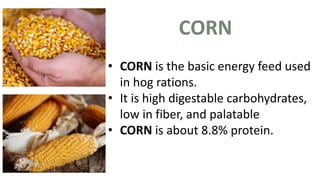
CORN
• CORN is the basic energy feed used
in hog rations.
• It is high digestable carbohydrates,
low in fiber, and palatable
• CORN is about 8.8% protein.
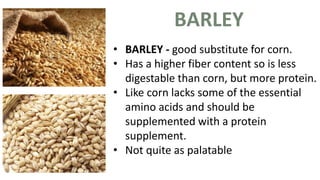
BARLEY
• BARLEY - good substitute for corn.
• Has a higher fiber content so is less
digestable than corn, but more protein.
• Like corn lacks some of the essential
amino acids and should be
supplemented with a protein
supplement.
• Not quite as palatable
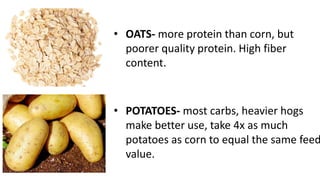
• OATS- more protein than corn, but
poorer quality protein. High fiber
content.
• POTATOES- most carbs, heavier hogs
make better use, take 4x as much
potatoes as corn to equal the same feed
value.
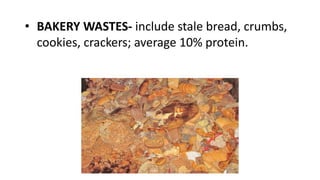
• BAKERY WASTES- include stale bread, crumbs,
cookies, crackers; average 10% protein.
PROTEIN FEED
SOURCES
SEED BY-PRODUCTS
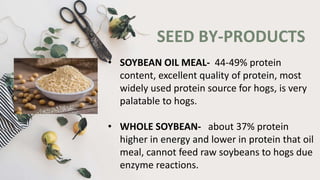
• SOYBEAN OIL MEAL- 44-49% protein
content, excellent quality of protein, most
widely used protein source for hogs, is very
palatable to hogs.
• WHOLE SOYBEAN- about 37% protein
higher in energy and lower in protein that oil
meal, cannot feed raw soybeans to hogs due
enzyme reactions.
ANIMAL BY- PRODUCTS
• TANKAGE & MEAT SCRAPS- 50-60% protein,
high content of calcium and phosphorus , not
near as palatable as soybean meal.
• MEAT & BONE MEAL- 50% protein, amount of
bone contained in mix determines the feeding
value.
• FISH MEAL- 60-70% protein, excellent quality,
hugh in minerals and vitamins and is very
palatable, but expensive.
FEED
FORMULATION
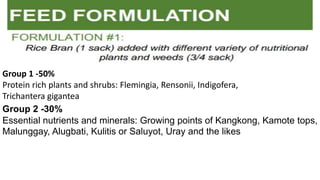
Group 1 -50%
Protein rich plants and shrubs: Flemingia, Rensonii, Indigofera, Trichantera
gigantea
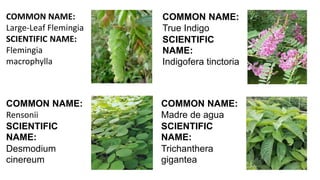
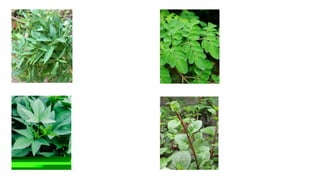
COMMON NAME:
Large-Leaf Flemingia
SCIENTIFIC NAME:
Flemingia
macrophylla
COMMON NAME:
Rensonii
SCIENTIFIC
NAME:
Desmodium
cinereum
COMMON NAME:
True Indigo
SCIENTIFIC
NAME:
Indigofera tinctoria
COMMON NAME:
Madre de agua
SCIENTIFIC
NAME:
Trichanthera
gigantea
Group 1 -50%
Protein rich plants and shrubs: Flemingia, Rensonii, Indigofera,
Trichantera gigantea
Group 2 -30%
Essential nutrients and minerals: Growing points of Kangkong, Kamote tops,
Malunggay, Alugbati, Kulitis or Saluyot, Uray and the likes
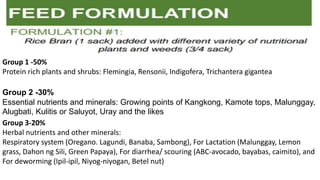
Group 1 -50%
Protein rich plants and shrubs: Flemingia, Rensonii, Indigofera, Trichantera gigantea
Group 2 -30%
Essential nutrients and minerals: Growing points of Kangkong, Kamote tops, Malunggay,
Alugbati, Kulitis or Saluyot, Uray and the likes
Group 3-20%
Herbal nutrients and other minerals:
Respiratory system (Oregano. Lagundi, Banaba, Sambong), For Lactation (Malunggay, Lemon
grass, Dahon ng Sili, Green Papaya), For diarrhea/ scouring (ABC-avocado, bayabas, caimito), and
For deworming (Ipil-ipil, Niyog-niyogan, Betel nut)
THANK YOU
T H A N K S

14. ANIMAL-FEEDS----AND-FEED-MIXING.pptx

  • 1.
  • 2.
  • 3.
    FEEDING AND NUTRITION •Feed hogs with 100% organically grown feed of good quality • Feeding is based on nutritional requirements of a specific class of pigs • Roughage maintains healthy gut and improve digestion • Induces foraging and makes them more active, and reduces possible aggressive behavior • Provides natural protein, vitamin
  • 4.
  • 5.
    1. Creep feedor Starter feed -This is a specific type of feed that is fed to the youngest and suckling piglets aged between 2 and 8 weeks. Creep feed can be fed to piglets from 7 to 10 days after farrow (or birth). 2. Weaner feed -This pig diet is specifically for young, weaned piglets from 6 weeks of age to attainment of 20 kg body weight. 3. Grower Feed - This type of diet is for young pigs that weigh over 20 kg or are aged 10 weeks until they attain 35 to 40 kg body weight. If you intend to fatten up a pig, this is the feed you need to give before switching to the fattener feed.
  • 6.
    4. Fattener Feed -Thisis the feed giver to pigs that are over 40kg in body weight until they reach a marketable body weight which is around 90-100 kg or slaughter. 5. Pregnant Sow Feed -This is the feed for pregnant sows and can be fed to boars that are over 90 kg in body weight. 6. Lactating Sow Feed -This particular feed is for sows that are factating that a breastfeeding piglets, it is given after a pregnant sow gives birth
  • 7.
    SELECTING FEEDS FOR SWINE •Feed costs range from 55-70% of the total cost of raising hogs. • Combining the right kinds of feed in a well-balanced ration is one of the most important tasks of a hog producer. • The nutrient needs of hogs include energy, protein, minerals, vitamins, and water.
  • 8.
  • 9.
    CORN • CORN isthe basic energy feed used in hog rations. • It is high digestable carbohydrates, low in fiber, and palatable • CORN is about 8.8% protein.
  • 10.
    BARLEY • BARLEY -good substitute for corn. • Has a higher fiber content so is less digestable than corn, but more protein. • Like corn lacks some of the essential amino acids and should be supplemented with a protein supplement. • Not quite as palatable
  • 11.
    • OATS- moreprotein than corn, but poorer quality protein. High fiber content. • POTATOES- most carbs, heavier hogs make better use, take 4x as much potatoes as corn to equal the same feed value.
  • 12.
    • BAKERY WASTES-include stale bread, crumbs, cookies, crackers; average 10% protein.
  • 13.
  • 14.
    SEED BY-PRODUCTS • SOYBEANOIL MEAL- 44-49% protein content, excellent quality of protein, most widely used protein source for hogs, is very palatable to hogs. • WHOLE SOYBEAN- about 37% protein higher in energy and lower in protein that oil meal, cannot feed raw soybeans to hogs due enzyme reactions.
  • 15.
    ANIMAL BY- PRODUCTS •TANKAGE & MEAT SCRAPS- 50-60% protein, high content of calcium and phosphorus , not near as palatable as soybean meal. • MEAT & BONE MEAL- 50% protein, amount of bone contained in mix determines the feeding value. • FISH MEAL- 60-70% protein, excellent quality, hugh in minerals and vitamins and is very palatable, but expensive.
  • 16.
  • 17.
    Group 1 -50% Proteinrich plants and shrubs: Flemingia, Rensonii, Indigofera, Trichantera gigantea
  • 18.
    COMMON NAME: Large-Leaf Flemingia SCIENTIFICNAME: Flemingia macrophylla COMMON NAME: Rensonii SCIENTIFIC NAME: Desmodium cinereum COMMON NAME: True Indigo SCIENTIFIC NAME: Indigofera tinctoria COMMON NAME: Madre de agua SCIENTIFIC NAME: Trichanthera gigantea
  • 19.
    Group 1 -50% Proteinrich plants and shrubs: Flemingia, Rensonii, Indigofera, Trichantera gigantea Group 2 -30% Essential nutrients and minerals: Growing points of Kangkong, Kamote tops, Malunggay, Alugbati, Kulitis or Saluyot, Uray and the likes
  • 22.
    Group 1 -50% Proteinrich plants and shrubs: Flemingia, Rensonii, Indigofera, Trichantera gigantea Group 2 -30% Essential nutrients and minerals: Growing points of Kangkong, Kamote tops, Malunggay, Alugbati, Kulitis or Saluyot, Uray and the likes Group 3-20% Herbal nutrients and other minerals: Respiratory system (Oregano. Lagundi, Banaba, Sambong), For Lactation (Malunggay, Lemon grass, Dahon ng Sili, Green Papaya), For diarrhea/ scouring (ABC-avocado, bayabas, caimito), and For deworming (Ipil-ipil, Niyog-niyogan, Betel nut)
  • 28.