SWINE
FEED
FOMULATI
ON
Definition of Swine
Feed
Swine feed is a specialized diet formulated to meet the nutritional
needs of pigs at various stages of their life cycle. It typically
consists of a combination of grains, protein sources, vitamins,
minerals, and other essential nutrients. The specific composition
of swine feed can vary depending on the age, weight, and
Importance of
Balanced
Nutrition for Swine
Feed
Is crucial for the health, growth, and productivity of
swine. Providing pigs with a well-balanced diet
ensures that they receive the necessary nutrients
to support their physiological functions, optimize
their immune systems, and maximize their genetic
potential. A balanced diet includes a proper ratio of
macronutrients (carbohydrates, proteins, and fats),
as well as essential vitamins and minerals.
Deficiencies or excesses of any nutrient can lead to
health problems, reduced growth rates, and
decreased reproductive performance. By ensuring
that swine receive a balanced diet, producers can
improve the overall health and well-being of their
animals, ultimately leading to increased
Factors Affecting Swine Feed Formulation
The formulation of swine feed is a complex process that
involves considering various factors to ensure optimal
growth, health, and productivity. The specific nutritional
requirements of swine change as they progress through
different stages of their life cycle: pre-start, starter, grower,
Pre-Starter
Stage (0-7
days)
The formulation of feed for pre-
start piglets is heavily influenced
by their digestive immaturity
and reliance on colostrum. Due
to their underdeveloped
digestive systems, pre-start feed
must be highly digestible and
During the starter stage, piglets'
digestive systems continue to
mature, allowing for the
introduction of more complex
feed ingredients.
Starter feed must provide
adequate levels of protein for
tissue development and energy
Starter
Stage (7-21
days)
Grower
Stage
(21-70 days)
In the grower stage, pigs
experience a rapid growth
phase and a higher feed
intake. Feed formulations
must be adjusted to meet
these increased nutritional
During the finisher stage, the
primary goal is to produce pigs
with desirable carcass
characteristics that meet market
specifications. Feed
formulations must be tailored
to optimize lean meat
production while minimizing
Finisher
Stage
(70-120+
days)
Nutritional Requirements for
Swine
The nutritional
requirements of swine vary
depending on their age,
weight, and stage of
production (pre-start,
starter, grower, and
finisher). However, there are
some essential nutrients
that are common to all
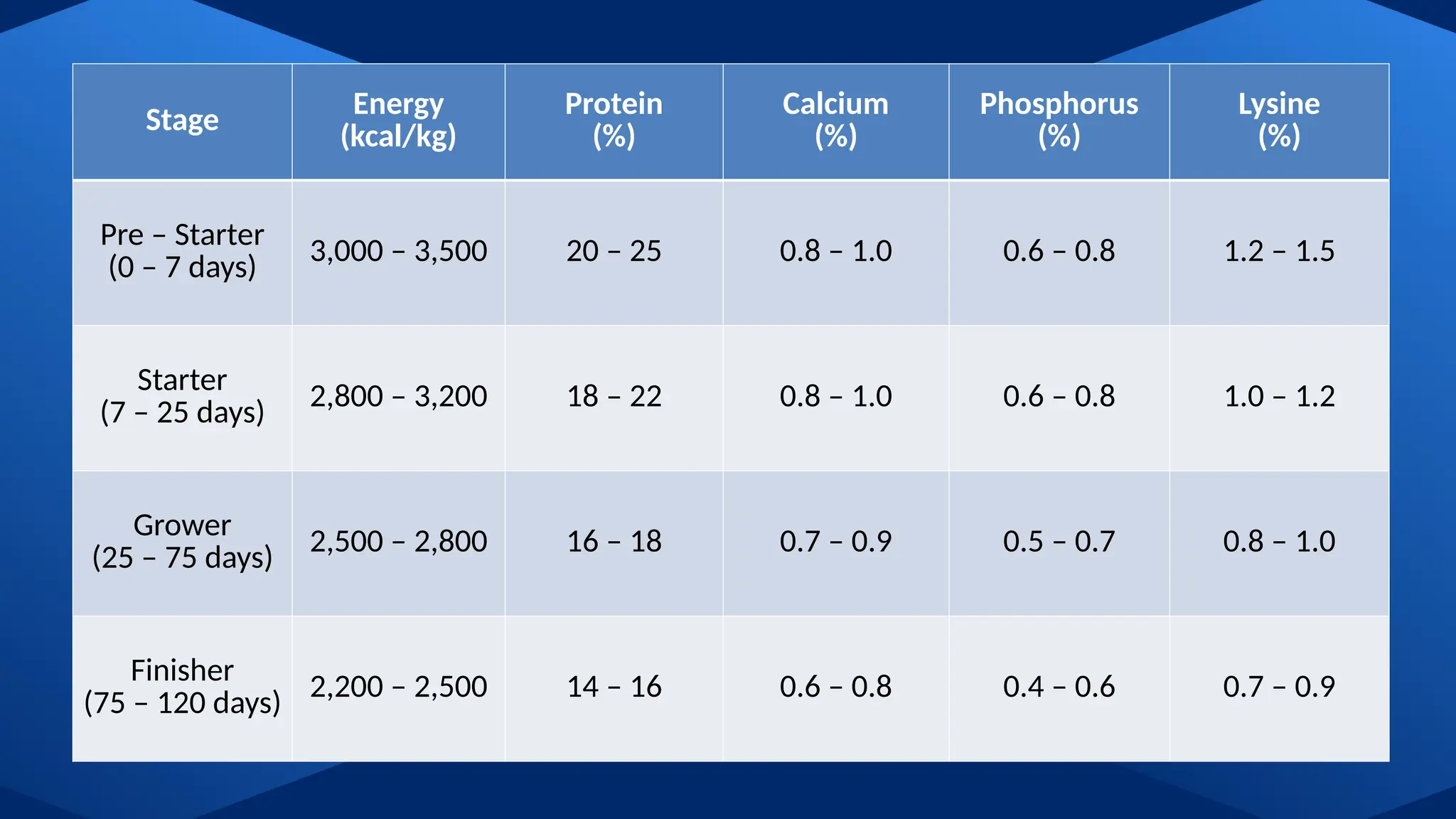
Stage
Energy
(kcal/kg)
Protein
(%)
Calcium
(%)
Phosphorus
(%)
Lysine
(%)
Pre – Starter
(0 – 7 days)
3,000 – 3,500 20 – 25 0.8 – 1.0 0.6 – 0.8 1.2 – 1.5
Starter
(7 – 25 days) 2,800 – 3,200 18 – 22 0.8 – 1.0 0.6 – 0.8 1.0 – 1.2
Grower
(25 – 75 days)
2,500 – 2,800 16 – 18 0.7 – 0.9 0.5 – 0.7 0.8 – 1.0
Finisher
(75 – 120 days)
2,200 – 2,500 14 – 16 0.6 – 0.8 0.4 – 0.6 0.7 – 0.9
Feed
Ingredients
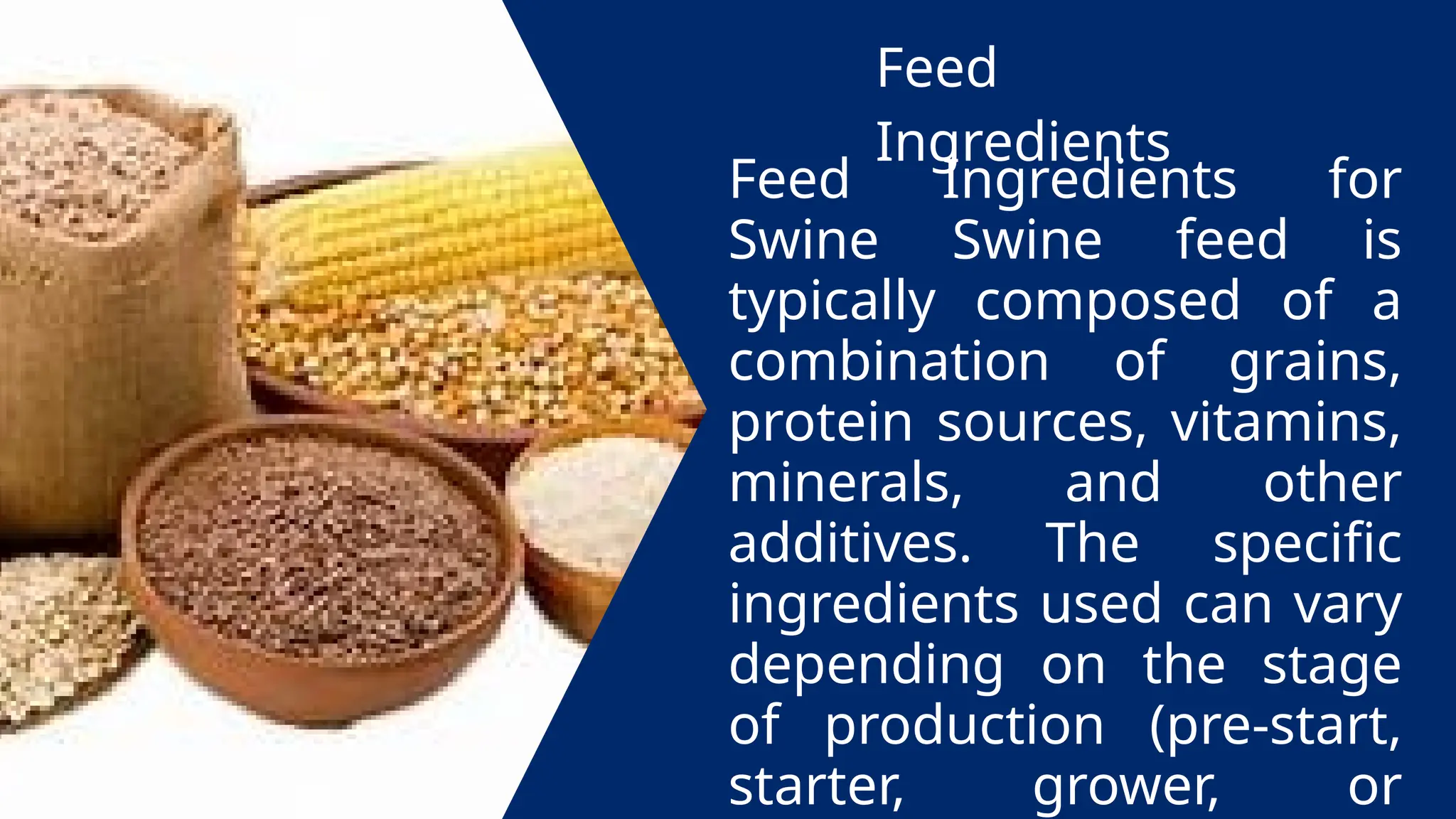
Feed Ingredients for
Swine Swine feed is
typically composed of a
combination of grains,
protein sources, vitamins,
minerals, and other
additives. The specific
ingredients used can vary
depending on the stage
of production (pre-start,
starter, grower, or
Grain
s
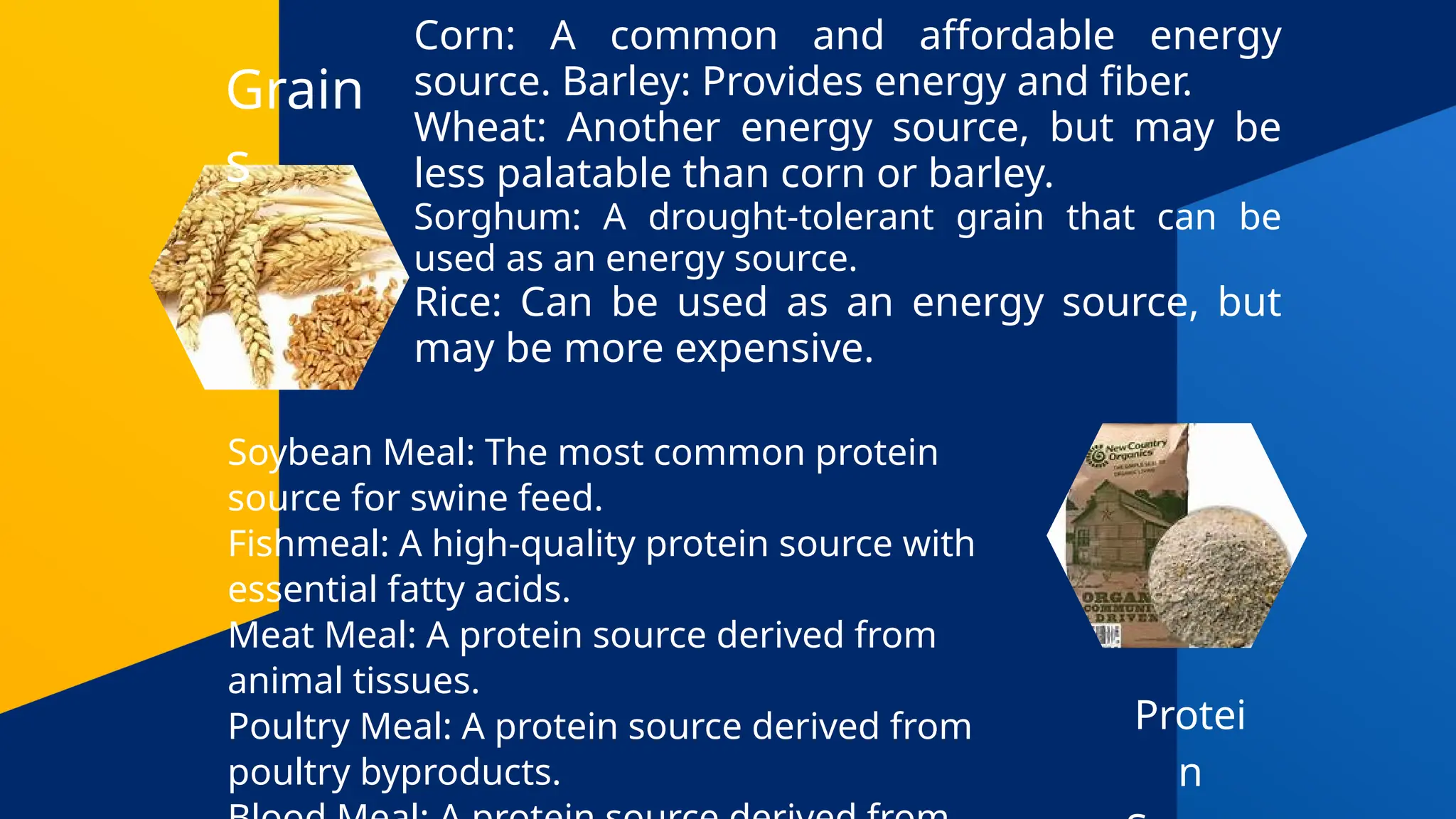
Corn: A common and affordable energy
source. Barley: Provides energy and fiber.
Wheat: Another energy source, but may be
less palatable than corn or barley.
Sorghum: A drought-tolerant grain that can be
used as an energy source.
Rice: Can be used as an energy source, but
may be more expensive.
Protei
n
Soybean Meal: The most common protein
source for swine feed.
Fishmeal: A high-quality protein source with
essential fatty acids.
Meat Meal: A protein source derived from
animal tissues.
Poultry Meal: A protein source derived from
poultry byproducts.
Vitamin
s
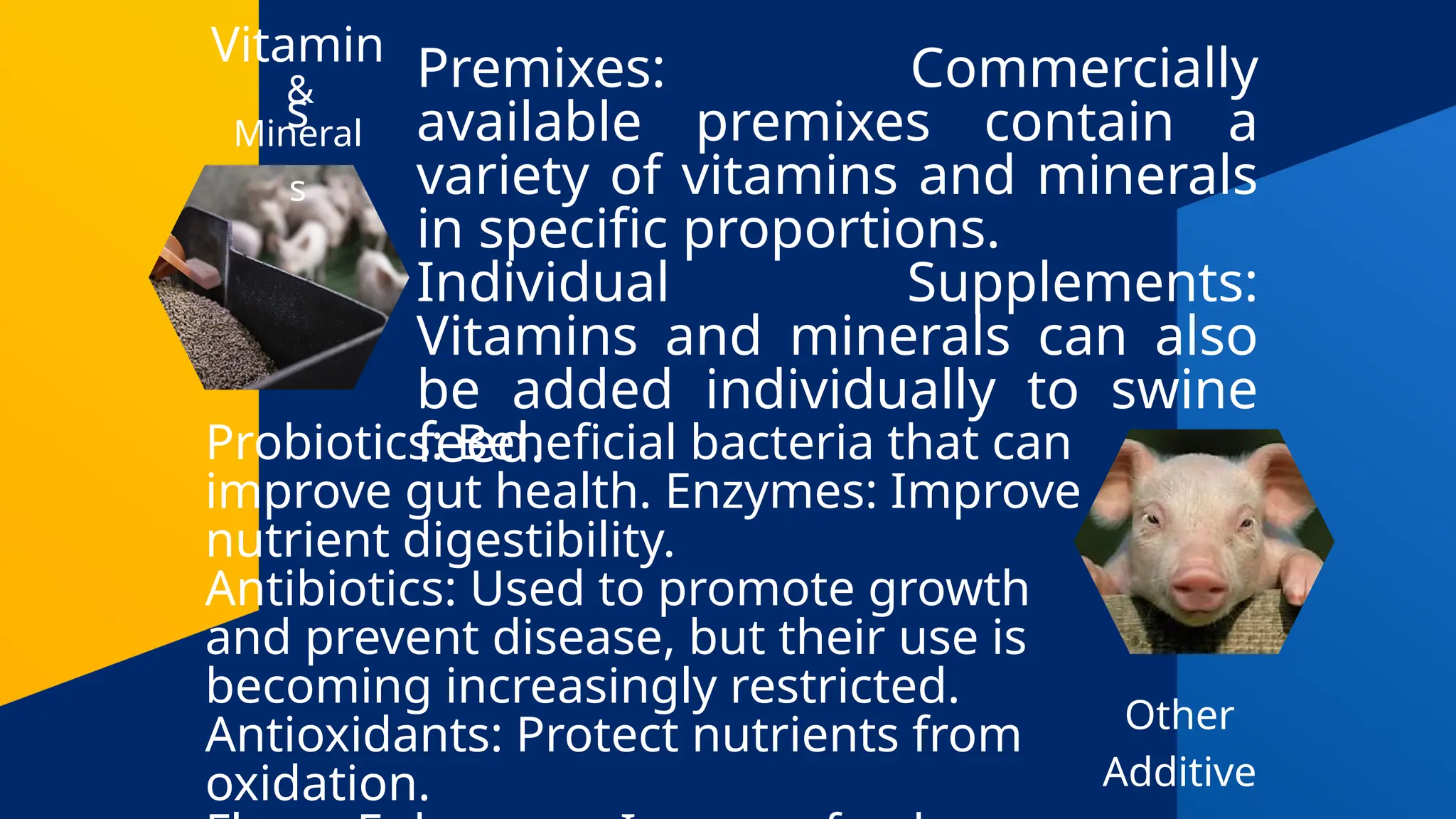
Premixes: Commercially
available premixes contain a
variety of vitamins and minerals
in specific proportions.
Individual Supplements:
Vitamins and minerals can also
be added individually to swine
feed.
Other
Additive
Probiotics: Beneficial bacteria that can
improve gut health. Enzymes: Improve
nutrient digestibility.
Antibiotics: Used to promote growth
and prevent disease, but their use is
becoming increasingly restricted.
Antioxidants: Protect nutrients from
oxidation.
&
Mineral
s
Feed
Formulation
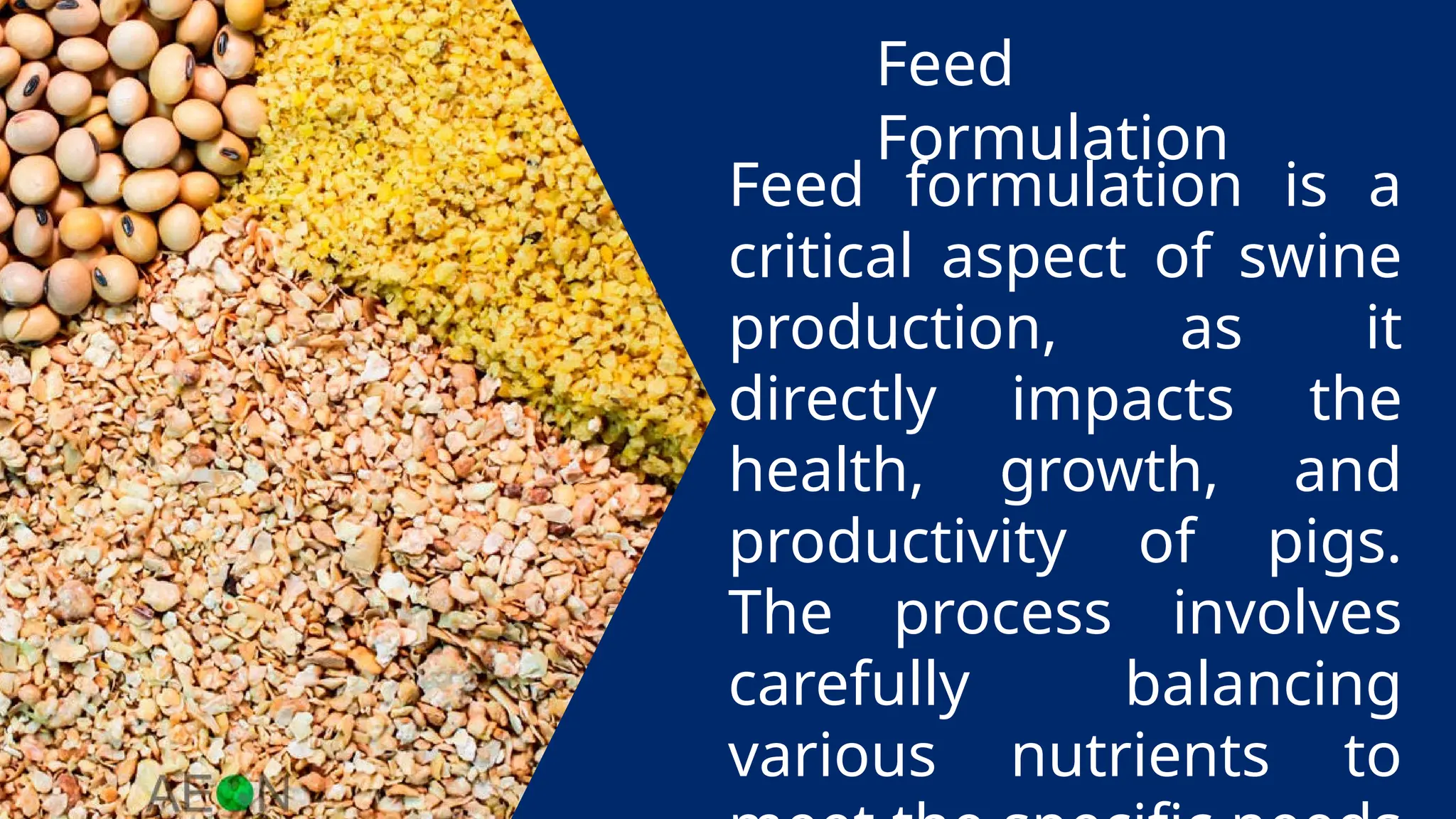
Feed formulation is a
critical aspect of swine
production, as it
directly impacts the
health, growth, and
productivity of pigs.
The process involves
carefully balancing
various nutrients to
Using Feed
Formulation
Software
Nutrient Balancing
Techniques
NutriOpt: A comprehensive software
package that offers features like nutrient
balancing, cost optimization, and scenario
analysis.
Feed Manager: A user-friendly software
that provides tools for feed formulation,
inventory management, and cost analysis.
FeedPro: A versatile software with
capabilities for feed formulation, ration
balancing, and economic analysis.
WinFeed: A popular choice for swine
producers, offering a range of featuraes
for feed formulation and management.
Feed Calculator: A simpler option for
smaller-scale producers, providing basic
Nutrient Density: Ensuring that the
feed contains the necessary nutrients
in appropriate proportions to meet
the pig's requirements.
Amino Acid Balance: Maintaining a
balanced ratio of essential amino
acids to support protein synthesis.
Mineral-to-Vitamin Ratios: Balancing
minerals and vitamins to ensure
optimal absorption and utilization.
Energy-to-Protein Ratio: Adjusting the
energy content of the feed relative to
protein levels to meet specific growth
Considerations for
Different Swine
Stages
Environmental
Factors
Affecting Feed
Formulation
Climate: Extreme temperatures can affect
feed intake, nutrient requirements, and the
palatability of feed.
Disease Outbreaks: Affect feed demand, as
producers may need to implement
biosecurity measures or restrict animal
movement.
Economic Factors: Fluctuations in the price
of feed ingredients can affect the cost of
feed formulation. The cost of energy, which
is used for feed processing and
transportation, can impact feed prices.
Regulatory Changes: Changes in food
safety regulations can impact the use of
Pre-Starter: Focus on providing
highly digestible nutrients to
support the immature
digestive system and meet the
piglets' colostrum needs.
Starter: Balance energy and
protein requirements to
support rapid growth.
Grower: Increase energy intake
to support continued growth
and weight gain.
Finisher: Optimize feed
Feed Quality and
Safety
Ensuring the quality
and safety of swine
feed is crucial for the
health and productivity
of pigs. Here are some
key factors to consider:
• Quality Control
Measures
• Biosecurity
Conclusi
on
THAN
K

Swine-Feed-Formulation-for-Symposium1..pptx

  • 1.
  • 2.
    Definition of Swine Feed Swinefeed is a specialized diet formulated to meet the nutritional needs of pigs at various stages of their life cycle. It typically consists of a combination of grains, protein sources, vitamins, minerals, and other essential nutrients. The specific composition of swine feed can vary depending on the age, weight, and
  • 3.
    Importance of Balanced Nutrition forSwine Feed Is crucial for the health, growth, and productivity of swine. Providing pigs with a well-balanced diet ensures that they receive the necessary nutrients to support their physiological functions, optimize their immune systems, and maximize their genetic potential. A balanced diet includes a proper ratio of macronutrients (carbohydrates, proteins, and fats), as well as essential vitamins and minerals. Deficiencies or excesses of any nutrient can lead to health problems, reduced growth rates, and decreased reproductive performance. By ensuring that swine receive a balanced diet, producers can improve the overall health and well-being of their animals, ultimately leading to increased
  • 4.
    Factors Affecting SwineFeed Formulation The formulation of swine feed is a complex process that involves considering various factors to ensure optimal growth, health, and productivity. The specific nutritional requirements of swine change as they progress through different stages of their life cycle: pre-start, starter, grower,
  • 5.
    Pre-Starter Stage (0-7 days) The formulationof feed for pre- start piglets is heavily influenced by their digestive immaturity and reliance on colostrum. Due to their underdeveloped digestive systems, pre-start feed must be highly digestible and During the starter stage, piglets' digestive systems continue to mature, allowing for the introduction of more complex feed ingredients. Starter feed must provide adequate levels of protein for tissue development and energy Starter Stage (7-21 days)
  • 6.
    Grower Stage (21-70 days) In thegrower stage, pigs experience a rapid growth phase and a higher feed intake. Feed formulations must be adjusted to meet these increased nutritional During the finisher stage, the primary goal is to produce pigs with desirable carcass characteristics that meet market specifications. Feed formulations must be tailored to optimize lean meat production while minimizing Finisher Stage (70-120+ days)
  • 7.
    Nutritional Requirements for Swine Thenutritional requirements of swine vary depending on their age, weight, and stage of production (pre-start, starter, grower, and finisher). However, there are some essential nutrients that are common to all
  • 8.
    Stage Energy (kcal/kg) Protein (%) Calcium (%) Phosphorus (%) Lysine (%) Pre – Starter (0– 7 days) 3,000 – 3,500 20 – 25 0.8 – 1.0 0.6 – 0.8 1.2 – 1.5 Starter (7 – 25 days) 2,800 – 3,200 18 – 22 0.8 – 1.0 0.6 – 0.8 1.0 – 1.2 Grower (25 – 75 days) 2,500 – 2,800 16 – 18 0.7 – 0.9 0.5 – 0.7 0.8 – 1.0 Finisher (75 – 120 days) 2,200 – 2,500 14 – 16 0.6 – 0.8 0.4 – 0.6 0.7 – 0.9
  • 9.
    Feed Ingredients Feed Ingredients for SwineSwine feed is typically composed of a combination of grains, protein sources, vitamins, minerals, and other additives. The specific ingredients used can vary depending on the stage of production (pre-start, starter, grower, or
  • 10.
    Grain s Corn: A commonand affordable energy source. Barley: Provides energy and fiber. Wheat: Another energy source, but may be less palatable than corn or barley. Sorghum: A drought-tolerant grain that can be used as an energy source. Rice: Can be used as an energy source, but may be more expensive. Protei n Soybean Meal: The most common protein source for swine feed. Fishmeal: A high-quality protein source with essential fatty acids. Meat Meal: A protein source derived from animal tissues. Poultry Meal: A protein source derived from poultry byproducts.
  • 11.
    Vitamin s Premixes: Commercially available premixescontain a variety of vitamins and minerals in specific proportions. Individual Supplements: Vitamins and minerals can also be added individually to swine feed. Other Additive Probiotics: Beneficial bacteria that can improve gut health. Enzymes: Improve nutrient digestibility. Antibiotics: Used to promote growth and prevent disease, but their use is becoming increasingly restricted. Antioxidants: Protect nutrients from oxidation. & Mineral s
  • 12.
    Feed Formulation Feed formulation isa critical aspect of swine production, as it directly impacts the health, growth, and productivity of pigs. The process involves carefully balancing various nutrients to
  • 13.
    Using Feed Formulation Software Nutrient Balancing Techniques NutriOpt:A comprehensive software package that offers features like nutrient balancing, cost optimization, and scenario analysis. Feed Manager: A user-friendly software that provides tools for feed formulation, inventory management, and cost analysis. FeedPro: A versatile software with capabilities for feed formulation, ration balancing, and economic analysis. WinFeed: A popular choice for swine producers, offering a range of featuraes for feed formulation and management. Feed Calculator: A simpler option for smaller-scale producers, providing basic Nutrient Density: Ensuring that the feed contains the necessary nutrients in appropriate proportions to meet the pig's requirements. Amino Acid Balance: Maintaining a balanced ratio of essential amino acids to support protein synthesis. Mineral-to-Vitamin Ratios: Balancing minerals and vitamins to ensure optimal absorption and utilization. Energy-to-Protein Ratio: Adjusting the energy content of the feed relative to protein levels to meet specific growth
  • 14.
    Considerations for Different Swine Stages Environmental Factors AffectingFeed Formulation Climate: Extreme temperatures can affect feed intake, nutrient requirements, and the palatability of feed. Disease Outbreaks: Affect feed demand, as producers may need to implement biosecurity measures or restrict animal movement. Economic Factors: Fluctuations in the price of feed ingredients can affect the cost of feed formulation. The cost of energy, which is used for feed processing and transportation, can impact feed prices. Regulatory Changes: Changes in food safety regulations can impact the use of Pre-Starter: Focus on providing highly digestible nutrients to support the immature digestive system and meet the piglets' colostrum needs. Starter: Balance energy and protein requirements to support rapid growth. Grower: Increase energy intake to support continued growth and weight gain. Finisher: Optimize feed
  • 15.
    Feed Quality and Safety Ensuringthe quality and safety of swine feed is crucial for the health and productivity of pigs. Here are some key factors to consider: • Quality Control Measures • Biosecurity
  • 16.
  • 17.