ROLE OF GROWTH FACTORS IN
DIABETIC FOOT ULCER
MANAGEMENT
DR ARUN BAL
PRESIDENT
DIABETIC FOOT SOCIETY OF
INDIA
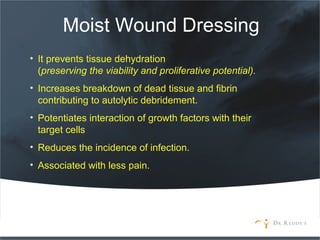
Moist Wound Dressing
• It prevents tissue dehydration
(preserving the viability and proliferative potential).
• Increases breakdown of dead tissue and fibrin
contributing to autolytic debridement.
• Potentiates interaction of growth factors with their
target cells
• Reduces the incidence of infection.
• Associated with less pain.
HEMOSTASIS 1 hour
W
O
U
N
D
I
N
G
Platelets
Fibrin
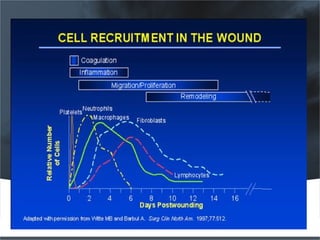
INFLAMMATION days 1 through 7
Proteoglycans
Neutrophils
Macrophages]
Lymphocytes
PROLIFERATION days 2 through 20
Normal wound
healing
Fibroblasts[produce growth factors]
Collagen
Epithelial Cells
Endothelial Cells
REMODELING 1 week to 6 months
Collagen Fibril Cross linking
Scar Maturation
Time from injury
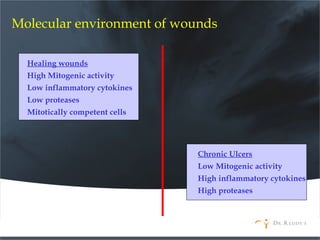
Molecular environment of wounds
Healing wounds
High Mitogenic activity
Low inflammatory cytokines
Low proteases
Mitotically competent cells
Chronic Ulcers
Low Mitogenic activity
High inflammatory cytokines
High proteases
WOUND BED
PREPARATION
• DYNAMIC & RAPIDLY EVOLVING
CONCEPT
• REDUCES THE WOUND HEALING TIME
• REDUCES HE COST OF THE TREATMENT
• TIME FRAMEWORK
• T:TISSUE MANAGEMENT
• I : INFECTION/INFLAMMATION CONTROL
• M:MOISTURE CONTROL
• E:EPITHELIAL(EDGE)ADVANCEMENT
• DIFFERENCE BETWEEN SHARP & SURGICAL
DEBRIDEMENT
GROWTH FACTORS
VITAL FACTOR FOR WOUND HEALING
Growth Factors
• Basically signal proteins released from local
tissues that activate target cells to replicate or
migrate.
• Control wound healing by acting in a paracrine,
endocrine or autocrine mode.
• Action of growth factors is complex and
carefully controlled during the normal wound
healing process.
• Growth factors at appropriate concentration are
mitogenic to their target cells
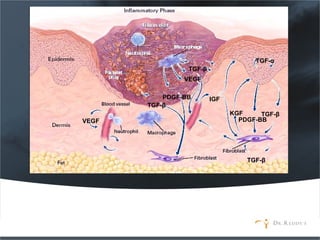
Role of various
growth factors
in wound healing
Growth factors
Growth factors of significance in wound healing are:
 Platelet Derived Growth Factor (PDGF)
 Vascular Endothelial Growth Factor (VEGF)
 Transforming Growth Factor- β (TGF- β)
 Keratinocyte Growth Factor (KGF)
 Epidermal Growth Factor (EGF)
Growth Factors
• Basically signal proteins released from local
tissues that activate target cells to replicate or
migrate.
• Control wound healing by acting in a paracrine,
endocrine or autocrine mode.
• Action of growth factors is complex and
carefully controlled during the normal wound
healing process.
• Growth factors at appropriate concentration are
mitogenic to their target cells
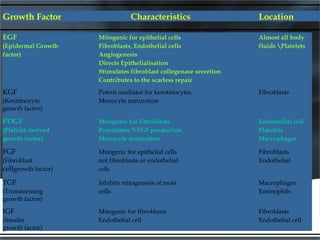
Growth Factor Characteristics Location
EGF Mitogenic for epithelial cells Almost all body
(Epidermal Growth Fibroblasts, Endothelial cells fluids Platelets
factor) Angiogenesis
Directs Epithelialisation
Stimulates fibroblast collegenase secretion
Contributes to the scarless repair
KGF Potent mediator for kerotinocytes Fibroblasts
(Keratinocyte Monocyte maturation
growth factor)
PDGF Mitogenic for fibroblasts Endothelial cell
(Platelet derived Potentiates VEGF production Platelets
growth factor) Monocyte maturation Macrophages
FGF Mitogenic for epithelial cells Fibroblasts
(Fibroblast not fibroblasts or endothelial Endothelial
cellgrowth factor) cells
TGF Inhibits mitogenesis of most Macrophages
(Transforming cells Eosinophils
growth factor)
IGF Mitogenic for fibroblasts Fibroblasts
(Insulin Endothelial cell Endothelial cell
growth factor)
TGF-β
PDGF-BB
VEGF
TGF-β
VEGF
PDGF-BB
TGF-β
IGF
TGF-βKGF
TGF-α
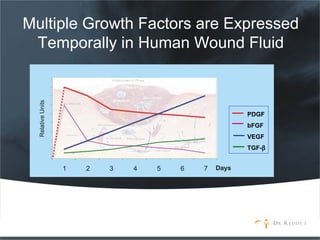
Multiple Growth Factors are Expressed
Temporally in Human Wound Fluid
PDGF
bFGF
VEGF
TGF-β
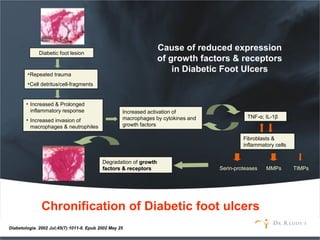
Cause of reduced expression
of growth factors & receptors
in Diabetic Foot Ulcers
Diabetic foot lesion
•Repeated trauma
•Cell detritus/cell-fragments
• Increased & Prolonged
inflammatory response
• Increased invasion of
macrophages & neutrophiles
Increased activation of
macrophages by cytokines and
growth factors
TNF-α; IL-1β
Fibroblasts &
inflammatory cells
Serin-proteases MMPs TIMPs
Degradation of growthgrowth
factors & receptorsfactors & receptors
Diabetologia. 2002 Jul;45(7):1011-6. Epub 2002 May 25
Chronification of Diabetic foot ulcers
The only growth factors available
commercially, for the treatment of
diabetic foot ulcers is
1.recombinant human Platelet
Derived Growth Factor (rhPDGF)
2.Epidermal growth Factor
Biology
• Platelet Derived Growth Factor is structurally a 25 kDa
protein
• It is released during stages of wound healing by
 Platelets
 Macrophages
 Fibroblasts
 Endothelial cells
 Keratinocytes
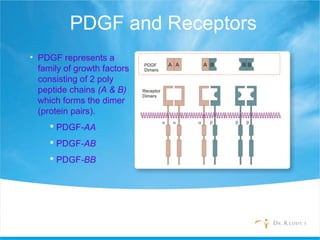
PDGF and Receptors
• PDGF represents a
family of growth factors
consisting of 2 poly
peptide chains (A & B)
which forms the dimer
(protein pairs).
 PDGF-AA
 PDGF-AB
 PDGF-BB
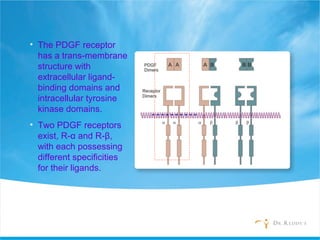
• The PDGF receptor
has a trans-membrane
structure with
extracellular ligand-
binding domains and
intracellular tyrosine
kinase domains.
• Two PDGF receptors
exist, R-α and R-β,
with each possessing
different specificities
for their ligands.
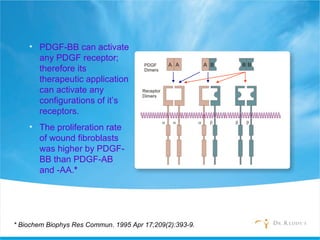
• PDGF-BB can activate
any PDGF receptor;
therefore its
therapeutic application
can activate any
configurations of it’s
receptors.
• The proliferation rate
of wound fibroblasts
was higher by PDGF-
BB than PDGF-AB
and -AA.*
* Biochem Biophys Res Commun. 1995 Apr 17;209(2):393-9.
rhPDGF-BB
• Recombinant human Platelet Derived Growth Factor
(rhPDGF-BB) is a homo-dimer produced by Recombinant
DNA technology by inserting the human gene of
PDGF-BB in E. coli.
• Can also be produced with Yeast (Saccharomyces
cerevisiae).
• The biological activity of rhPDGF-BB is similar to that of
naturally occurring PDGF.
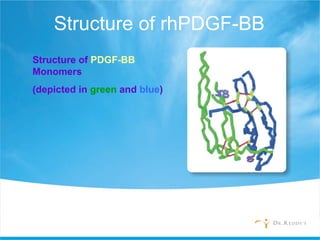
Structure of rhPDGF-BB
Structure of PDGF-BB
Monomers
(depicted in green and blue)
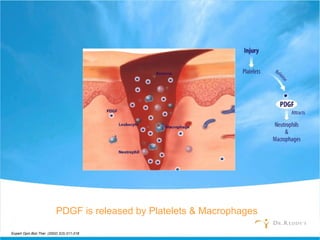
Role of PDGF-BB
in wound healing process
Expert Opin.Biol Ther. (2002) 2(2):211-218
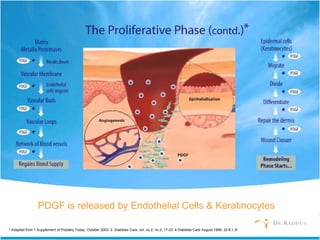
PDGF is released by Platelets & Macrophages
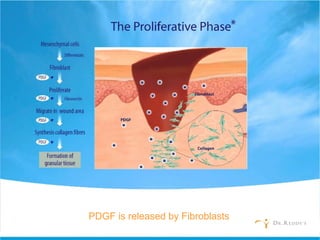
PDGF is released by Fibroblasts
* Adapted from 1.Supplement of Podiatry Today, October 2003. 2. Diabetes Care, vol, no.2, no.2, 17-23. 4.Diabetes Care August 1999, 22:8;1,354-60
PDGF is released by Endothelial Cells & Keratinocytes
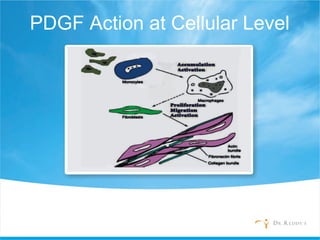
PDGF Action at Cellular Level
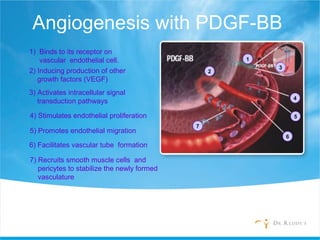
Angiogenesis with PDGF-BB
1) Binds to its receptor on
vascular endothelial cell.
4) Stimulates endothelial proliferation
2) Inducing production of other
growth factors (VEGF)
3) Activates intracellular signal
transduction pathways
5) Promotes endothelial migration
7) Recruits smooth muscle cells and
pericytes to stabilize the newly formed
vasculature
6) Facilitates vascular tube formation
1
2
3
4
5
6
7
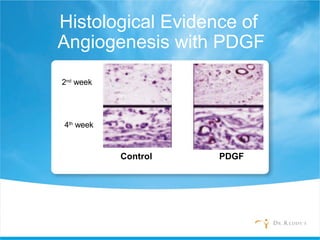
Histological Evidence of
Angiogenesis with PDGF
2nd
week
4th
week
Control PDGF
Summary of MOA of PDGF-BB
• Chemoattraction for neutrophils, monocytes &
fibroblasts.
• Mitogenic for smooth muscle cells and fibroblasts.
• Stimulates endothelial cells proliferation & migration.
• Promotes vascular tube formation.
• Stimulates epithelialization.
• Induces the release of other growth factors.
Toxicology studies*
• Acute & chronic toxicity studies were performed on
various animals showing no abnormal findings.
• Reproductive & teratogenic studies were not performed.
• Mutagenic studies were negative.
• In pharmacokinetic studies the level measured in blood
samples were below the baseline even after repeated
application.
*http://www.fda.gov/cder/biologics/products/becaomj121697.htm
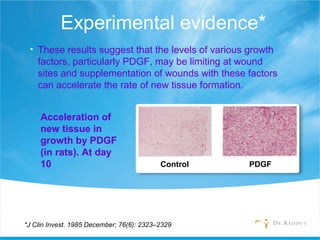
Experimental evidence*
• These results suggest that the levels of various growth
factors, particularly PDGF, may be limiting at wound
sites and supplementation of wounds with these factors
can accelerate the rate of new tissue formation.
Acceleration of
new tissue in
growth by PDGF
(in rats). At day
10
*J Clin Invest. 1985 December; 76(6): 2323–2329
Control PDGF
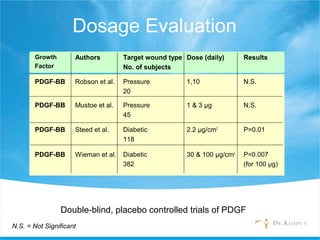
30 & 100 μg/cm2
2.2 μg/cm2
1 & 3 μg
1,10
Dose (daily)
P=0.007
(for 100 μg)
Diabetic
382
Wieman et al.PDGF-BB
P=0.01Diabetic
118
Steed et al.PDGF-BB
N.S.Pressure
45
Mustoe et al.PDGF-BB
N.S.Pressure
20
Robson et al.PDGF-BB
ResultsTarget wound type
No. of subjects
AuthorsGrowth
Factor
Dosage Evaluation
N.S. = Not Significant
Double-blind, placebo controlled trials of PDGF
Pharmacokinetics
• rhPDGF-BB 0.01% gel has biological activity similar to
endogenous PDGF and has a high affinity for PDGF-β
receptor
• Daily application of rhPDGF-BB has only negligible systemic
absorption.
• It is present in biological fluid for at least 12 hours in vivo and
24 hours in vitro
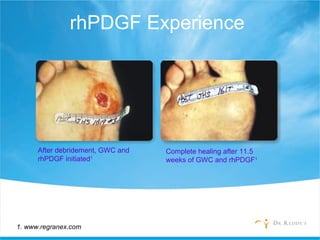
rhPDGF Experience
Complete healing after 11.5
weeks of GWC and rhPDGF1
After debridement, GWC and
rhPDGF initiated1
1. www.regranex.com
Indication
Indicated for the treatment of lower extremity diabetic
neuropathic ulcers* that extend into the subcutaneous
tissue or beyond and have an adequate blood supply,
*(Stage III & Stage IV ulcers IAET Staging
classification)
Good wound care & tight blood glucose control are
very important in rhPDGF-BB therapy.
Contra-indications
• rhPDGF-BB gel should not be used in patients with:
 Known hypersensitivity to any component of the
excipients used in the product.
 Known neoplasm(s) at the site(s) of application.
Dose calculation
The intended dose is around 7μg /cm² of ulcer per
day for topical application.
(For an average man of around 50kg weight)
Tube Size Formula
7. 5g/15 g tube [Length (cm) X Width (cm) ÷ 4]*
*Greatest length of the ulcer multiplied with greatest width
Method of application
• One tube for one patient
• Proper hand wash before application.
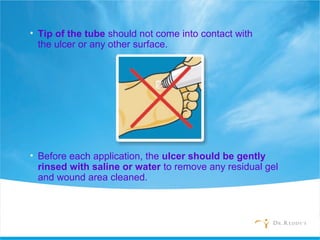
• Tip of the tube should not come into contact with
the ulcer or any other surface.
• Before each application, the ulcer should be gently
rinsed with saline or water to remove any residual gel
and wound area cleaned.
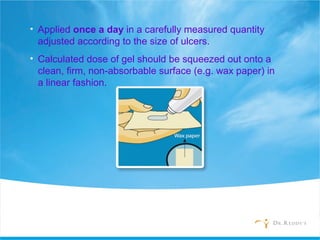
• Applied once a day in a carefully measured quantity
adjusted according to the size of ulcers.
• Calculated dose of gel should be squeezed out onto a
clean, firm, non-absorbable surface (e.g. wax paper) in
a linear fashion.
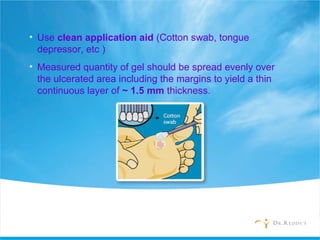
• Use clean application aid (Cotton swab, tongue
depressor, etc )
• Measured quantity of gel should be spread evenly over
the ulcerated area including the margins to yield a thin
continuous layer of ~ 1.5 mm thickness.
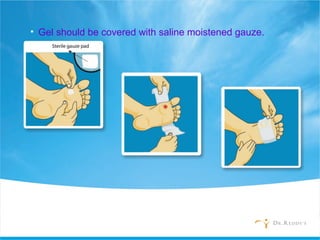
• Gel should be covered with saline moistened gauze.
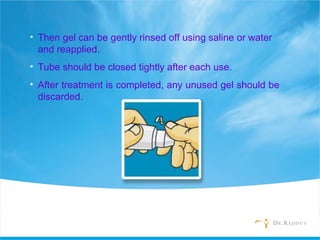
• Then gel can be gently rinsed off using saline or water
and reapplied.
• Tube should be closed tightly after each use.
• After treatment is completed, any unused gel should be
discarded.
(Contd…)
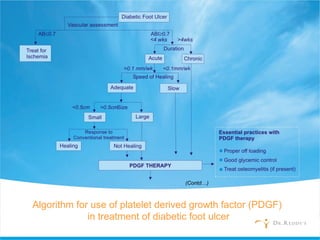
Algorithm for use of platelet derived growth factor (PDGF)
in treatment of diabetic foot ulcer
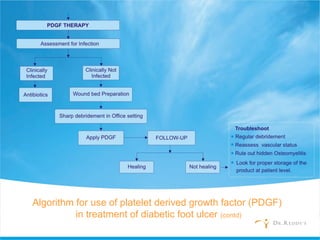
Algorithm for use of platelet derived growth factor (PDGF)
in treatment of diabetic foot ulcer (contd)
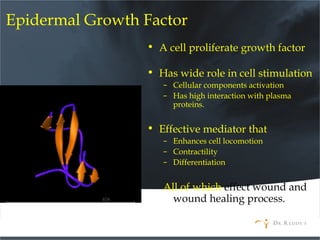
Epidermal Growth
Factor
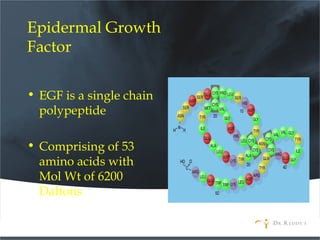
• EGF is a single chain
polypeptide
• Comprising of 53
amino acids with
Mol Wt of 6200
Daltons
Epidermal Growth Factor
• A cell proliferate growth factor
• Has wide role in cell stimulation
– Cellular components activation
– Has high interaction with plasma
proteins.
• Effective mediator that
– Enhances cell locomotion
– Contractility
– Differentiation
All of which effect wound and
wound healing process.
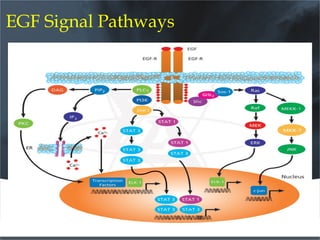
Mode of action
• EGF induces cellular proliferation through the EGF
receptor, which has a tyrosine kinase cytoplasmic
domain - a single transmembrane domain
• Binding of EGF results in EGF receptor activation,
autophosphorylation of the receptor, and tyrosine
phosphorylation of other proteins.
• EGF receptor activates various proteins, ultimately
causing phosphorylation that contributes to
proliferation.
EGF Signal Pathways
Role of EGF
• Mitogenic for epithelial cells,
Fibroblasts, Endothelial cells
• Angiogenesis
• Directs Epithelialisation
• Stimulates fibroblast collegenase secretion
• Contributes to the scarless repair
Role of EGF
• Potent mitogen for many types of cells1
• Shown a greater efficacy in ulcer healing2
• Attracts cells into the wound and stimulates
their proliferation3
• Stimulates the rate of formation of granulation
tissue4
• Enhances wound healing and increases collagen
production5
1. Acta Endocrinol (Copenh). 1990 Sep; 123(3):326-30, 2. Irn J Endocrinol Metab 2003: Vol 5 No 2, 3.
Journal of Trauma-Injury Infection & Critical Care 4(1):159-167, July 1996. 4. J Surg Res. 1987 Oct: 43
(4): 322-8, 5. Biochem J. 1987 Oct 15; 24792:385-8
Multi centric, Phase III, Double Blind
• Product Developer:
Bharat Biotech International Ltd
• Centers : 5
• Approved Indications
» Diabetic foot ulcers
» Donor site Skin Grafts
» Ist & IInd Degree Burns
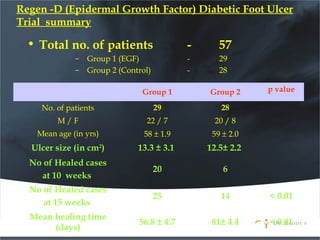
Regen -D (Epidermal Growth Factor) Diabetic Foot Ulcer
Trial summary
• Total no. of patients - 57
– Group 1 (EGF) - 29
– Group 2 (Control) - 28
Group 1 Group 2 p value
No. of patients 29 28
M / F 22 / 7 20 / 8
Mean age (in yrs) 58 ± 1.9 59 ± 2.0
Ulcer size (in cm2
) 13.3 ± 3.1 12.5± 2.2
No of Healed cases
at 10 weeks
20 6
No of Healed cases
at 15 weeks
25 14 < 0.01
Mean healing time
(days)
56.8 ± 4.7 81± 4.4 < 0.01
Week, w
Percentageofpatientscuredbyweekw
282420161284
100
80
60
40
20
0
Figure-5: Efficacy of Regen-D Gel
Cont rol
Test
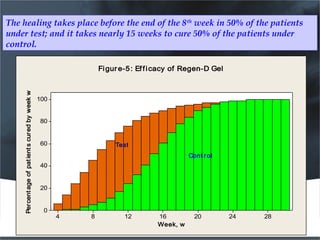
The healing takes place before the end of the 8th
week in 50% of the patients
under test; and it takes nearly 15 weeks to cure 50% of the patients under
control.
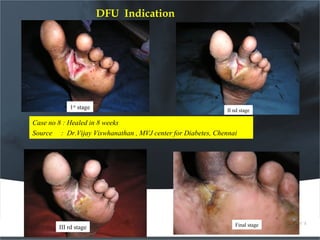
Case no 8 : Healed in 8 weeks
Source : Dr.Vijay Viswhanathan , MVJ center for Diabetes, Chennai
1st
stage II nd stage
III rd stage Final stage
DFU Indication
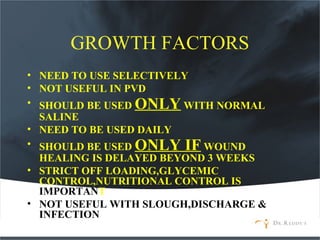
GROWTH FACTORS
• NEED TO USE SELECTIVELY
• NOT USEFUL IN PVD
• SHOULD BE USED ONLY WITH NORMAL
SALINE
• NEED TO BE USED DAILY
• SHOULD BE USED ONLY IF WOUND
HEALING IS DELAYED BEYOND 3 WEEKS
• STRICT OFF LOADING,GLYCEMIC
CONTROL,NUTRITIONAL CONTROL IS
IMPORTANT
• NOT USEFUL WITH SLOUGH,DISCHARGE &
INFECTION
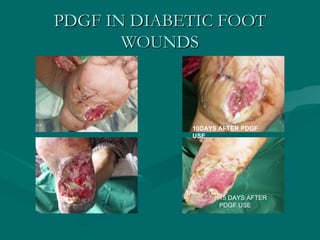
PDGF IN DIABETIC FOOTPDGF IN DIABETIC FOOT
WOUNDSWOUNDS
10DAYS AFTER PDGF
USE
15 DAYS AFTER
PDGF USE
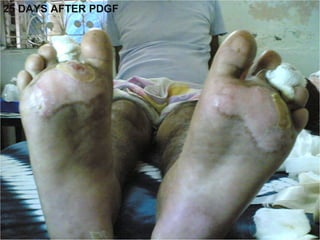
25 DAYS AFTER PDGF
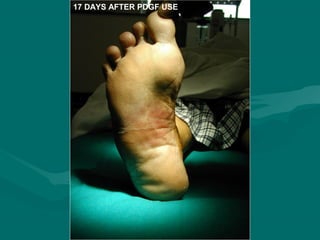
17 DAYS AFTER PDGF USE
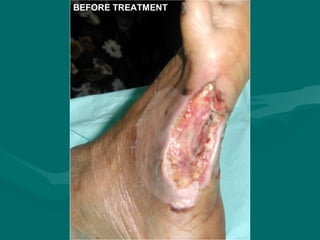
BEFORE TREATMENT
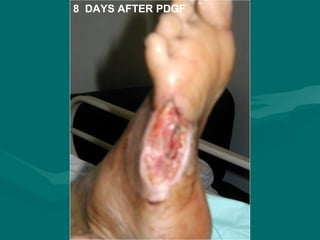
8 DAYS AFTER PDGF
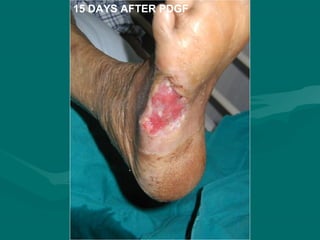
15 DAYS AFTER PDGF
FOOT ULCER
FORMATION IS
BEGINNING OF THE
END
THANK YOUTHANK YOU

1362575848 growth factos presentation a bal

  • 1.
    ROLE OF GROWTHFACTORS IN DIABETIC FOOT ULCER MANAGEMENT DR ARUN BAL PRESIDENT DIABETIC FOOT SOCIETY OF INDIA
  • 2.
    Moist Wound Dressing •It prevents tissue dehydration (preserving the viability and proliferative potential). • Increases breakdown of dead tissue and fibrin contributing to autolytic debridement. • Potentiates interaction of growth factors with their target cells • Reduces the incidence of infection. • Associated with less pain.
  • 3.
    HEMOSTASIS 1 hour W O U N D I N G Platelets Fibrin INFLAMMATIONdays 1 through 7 Proteoglycans Neutrophils Macrophages] Lymphocytes PROLIFERATION days 2 through 20 Normal wound healing Fibroblasts[produce growth factors] Collagen Epithelial Cells Endothelial Cells REMODELING 1 week to 6 months Collagen Fibril Cross linking Scar Maturation Time from injury
  • 4.
    Molecular environment ofwounds Healing wounds High Mitogenic activity Low inflammatory cytokines Low proteases Mitotically competent cells Chronic Ulcers Low Mitogenic activity High inflammatory cytokines High proteases
  • 6.
    WOUND BED PREPARATION • DYNAMIC& RAPIDLY EVOLVING CONCEPT • REDUCES THE WOUND HEALING TIME • REDUCES HE COST OF THE TREATMENT • TIME FRAMEWORK • T:TISSUE MANAGEMENT • I : INFECTION/INFLAMMATION CONTROL • M:MOISTURE CONTROL • E:EPITHELIAL(EDGE)ADVANCEMENT • DIFFERENCE BETWEEN SHARP & SURGICAL DEBRIDEMENT
  • 7.
    GROWTH FACTORS VITAL FACTORFOR WOUND HEALING
  • 8.
    Growth Factors • Basicallysignal proteins released from local tissues that activate target cells to replicate or migrate. • Control wound healing by acting in a paracrine, endocrine or autocrine mode. • Action of growth factors is complex and carefully controlled during the normal wound healing process. • Growth factors at appropriate concentration are mitogenic to their target cells
  • 9.
    Role of various growthfactors in wound healing
  • 10.
    Growth factors Growth factorsof significance in wound healing are:  Platelet Derived Growth Factor (PDGF)  Vascular Endothelial Growth Factor (VEGF)  Transforming Growth Factor- β (TGF- β)  Keratinocyte Growth Factor (KGF)  Epidermal Growth Factor (EGF)
  • 11.
    Growth Factors • Basicallysignal proteins released from local tissues that activate target cells to replicate or migrate. • Control wound healing by acting in a paracrine, endocrine or autocrine mode. • Action of growth factors is complex and carefully controlled during the normal wound healing process. • Growth factors at appropriate concentration are mitogenic to their target cells
  • 12.
    Growth Factor CharacteristicsLocation EGF Mitogenic for epithelial cells Almost all body (Epidermal Growth Fibroblasts, Endothelial cells fluids Platelets factor) Angiogenesis Directs Epithelialisation Stimulates fibroblast collegenase secretion Contributes to the scarless repair KGF Potent mediator for kerotinocytes Fibroblasts (Keratinocyte Monocyte maturation growth factor) PDGF Mitogenic for fibroblasts Endothelial cell (Platelet derived Potentiates VEGF production Platelets growth factor) Monocyte maturation Macrophages FGF Mitogenic for epithelial cells Fibroblasts (Fibroblast not fibroblasts or endothelial Endothelial cellgrowth factor) cells TGF Inhibits mitogenesis of most Macrophages (Transforming cells Eosinophils growth factor) IGF Mitogenic for fibroblasts Fibroblasts (Insulin Endothelial cell Endothelial cell growth factor)
  • 13.
  • 14.
    Multiple Growth Factorsare Expressed Temporally in Human Wound Fluid PDGF bFGF VEGF TGF-β
  • 15.
    Cause of reducedexpression of growth factors & receptors in Diabetic Foot Ulcers Diabetic foot lesion •Repeated trauma •Cell detritus/cell-fragments • Increased & Prolonged inflammatory response • Increased invasion of macrophages & neutrophiles Increased activation of macrophages by cytokines and growth factors TNF-α; IL-1β Fibroblasts & inflammatory cells Serin-proteases MMPs TIMPs Degradation of growthgrowth factors & receptorsfactors & receptors Diabetologia. 2002 Jul;45(7):1011-6. Epub 2002 May 25 Chronification of Diabetic foot ulcers
  • 16.
    The only growthfactors available commercially, for the treatment of diabetic foot ulcers is 1.recombinant human Platelet Derived Growth Factor (rhPDGF) 2.Epidermal growth Factor
  • 17.
    Biology • Platelet DerivedGrowth Factor is structurally a 25 kDa protein • It is released during stages of wound healing by  Platelets  Macrophages  Fibroblasts  Endothelial cells  Keratinocytes
  • 18.
    PDGF and Receptors •PDGF represents a family of growth factors consisting of 2 poly peptide chains (A & B) which forms the dimer (protein pairs).  PDGF-AA  PDGF-AB  PDGF-BB
  • 19.
    • The PDGFreceptor has a trans-membrane structure with extracellular ligand- binding domains and intracellular tyrosine kinase domains. • Two PDGF receptors exist, R-α and R-β, with each possessing different specificities for their ligands.
  • 20.
    • PDGF-BB canactivate any PDGF receptor; therefore its therapeutic application can activate any configurations of it’s receptors. • The proliferation rate of wound fibroblasts was higher by PDGF- BB than PDGF-AB and -AA.* * Biochem Biophys Res Commun. 1995 Apr 17;209(2):393-9.
  • 21.
    rhPDGF-BB • Recombinant humanPlatelet Derived Growth Factor (rhPDGF-BB) is a homo-dimer produced by Recombinant DNA technology by inserting the human gene of PDGF-BB in E. coli. • Can also be produced with Yeast (Saccharomyces cerevisiae). • The biological activity of rhPDGF-BB is similar to that of naturally occurring PDGF.
  • 22.
    Structure of rhPDGF-BB Structureof PDGF-BB Monomers (depicted in green and blue)
  • 23.
    Role of PDGF-BB inwound healing process
  • 24.
    Expert Opin.Biol Ther.(2002) 2(2):211-218 PDGF is released by Platelets & Macrophages
  • 25.
    PDGF is releasedby Fibroblasts
  • 26.
    * Adapted from1.Supplement of Podiatry Today, October 2003. 2. Diabetes Care, vol, no.2, no.2, 17-23. 4.Diabetes Care August 1999, 22:8;1,354-60 PDGF is released by Endothelial Cells & Keratinocytes
  • 27.
    PDGF Action atCellular Level
  • 28.
    Angiogenesis with PDGF-BB 1)Binds to its receptor on vascular endothelial cell. 4) Stimulates endothelial proliferation 2) Inducing production of other growth factors (VEGF) 3) Activates intracellular signal transduction pathways 5) Promotes endothelial migration 7) Recruits smooth muscle cells and pericytes to stabilize the newly formed vasculature 6) Facilitates vascular tube formation 1 2 3 4 5 6 7
  • 29.
    Histological Evidence of Angiogenesiswith PDGF 2nd week 4th week Control PDGF
  • 30.
    Summary of MOAof PDGF-BB • Chemoattraction for neutrophils, monocytes & fibroblasts. • Mitogenic for smooth muscle cells and fibroblasts. • Stimulates endothelial cells proliferation & migration. • Promotes vascular tube formation. • Stimulates epithelialization. • Induces the release of other growth factors.
  • 31.
    Toxicology studies* • Acute& chronic toxicity studies were performed on various animals showing no abnormal findings. • Reproductive & teratogenic studies were not performed. • Mutagenic studies were negative. • In pharmacokinetic studies the level measured in blood samples were below the baseline even after repeated application. *http://www.fda.gov/cder/biologics/products/becaomj121697.htm
  • 32.
    Experimental evidence* • Theseresults suggest that the levels of various growth factors, particularly PDGF, may be limiting at wound sites and supplementation of wounds with these factors can accelerate the rate of new tissue formation. Acceleration of new tissue in growth by PDGF (in rats). At day 10 *J Clin Invest. 1985 December; 76(6): 2323–2329 Control PDGF
  • 33.
    30 & 100μg/cm2 2.2 μg/cm2 1 & 3 μg 1,10 Dose (daily) P=0.007 (for 100 μg) Diabetic 382 Wieman et al.PDGF-BB P=0.01Diabetic 118 Steed et al.PDGF-BB N.S.Pressure 45 Mustoe et al.PDGF-BB N.S.Pressure 20 Robson et al.PDGF-BB ResultsTarget wound type No. of subjects AuthorsGrowth Factor Dosage Evaluation N.S. = Not Significant Double-blind, placebo controlled trials of PDGF
  • 34.
    Pharmacokinetics • rhPDGF-BB 0.01%gel has biological activity similar to endogenous PDGF and has a high affinity for PDGF-β receptor • Daily application of rhPDGF-BB has only negligible systemic absorption. • It is present in biological fluid for at least 12 hours in vivo and 24 hours in vitro
  • 35.
    rhPDGF Experience Complete healingafter 11.5 weeks of GWC and rhPDGF1 After debridement, GWC and rhPDGF initiated1 1. www.regranex.com
  • 36.
    Indication Indicated for thetreatment of lower extremity diabetic neuropathic ulcers* that extend into the subcutaneous tissue or beyond and have an adequate blood supply, *(Stage III & Stage IV ulcers IAET Staging classification) Good wound care & tight blood glucose control are very important in rhPDGF-BB therapy.
  • 37.
    Contra-indications • rhPDGF-BB gelshould not be used in patients with:  Known hypersensitivity to any component of the excipients used in the product.  Known neoplasm(s) at the site(s) of application.
  • 38.
    Dose calculation The intendeddose is around 7μg /cm² of ulcer per day for topical application. (For an average man of around 50kg weight) Tube Size Formula 7. 5g/15 g tube [Length (cm) X Width (cm) ÷ 4]* *Greatest length of the ulcer multiplied with greatest width
  • 39.
    Method of application •One tube for one patient • Proper hand wash before application.
  • 40.
    • Tip ofthe tube should not come into contact with the ulcer or any other surface. • Before each application, the ulcer should be gently rinsed with saline or water to remove any residual gel and wound area cleaned.
  • 41.
    • Applied oncea day in a carefully measured quantity adjusted according to the size of ulcers. • Calculated dose of gel should be squeezed out onto a clean, firm, non-absorbable surface (e.g. wax paper) in a linear fashion.
  • 42.
    • Use cleanapplication aid (Cotton swab, tongue depressor, etc ) • Measured quantity of gel should be spread evenly over the ulcerated area including the margins to yield a thin continuous layer of ~ 1.5 mm thickness.
  • 43.
    • Gel shouldbe covered with saline moistened gauze.
  • 44.
    • Then gelcan be gently rinsed off using saline or water and reapplied. • Tube should be closed tightly after each use. • After treatment is completed, any unused gel should be discarded.
  • 45.
    (Contd…) Algorithm for useof platelet derived growth factor (PDGF) in treatment of diabetic foot ulcer
  • 46.
    Algorithm for useof platelet derived growth factor (PDGF) in treatment of diabetic foot ulcer (contd)
  • 47.
    Epidermal Growth Factor • EGFis a single chain polypeptide • Comprising of 53 amino acids with Mol Wt of 6200 Daltons
  • 48.
    Epidermal Growth Factor •A cell proliferate growth factor • Has wide role in cell stimulation – Cellular components activation – Has high interaction with plasma proteins. • Effective mediator that – Enhances cell locomotion – Contractility – Differentiation All of which effect wound and wound healing process.
  • 49.
    Mode of action •EGF induces cellular proliferation through the EGF receptor, which has a tyrosine kinase cytoplasmic domain - a single transmembrane domain • Binding of EGF results in EGF receptor activation, autophosphorylation of the receptor, and tyrosine phosphorylation of other proteins. • EGF receptor activates various proteins, ultimately causing phosphorylation that contributes to proliferation.
  • 50.
  • 51.
    Role of EGF •Mitogenic for epithelial cells, Fibroblasts, Endothelial cells • Angiogenesis • Directs Epithelialisation • Stimulates fibroblast collegenase secretion • Contributes to the scarless repair
  • 52.
    Role of EGF •Potent mitogen for many types of cells1 • Shown a greater efficacy in ulcer healing2 • Attracts cells into the wound and stimulates their proliferation3 • Stimulates the rate of formation of granulation tissue4 • Enhances wound healing and increases collagen production5 1. Acta Endocrinol (Copenh). 1990 Sep; 123(3):326-30, 2. Irn J Endocrinol Metab 2003: Vol 5 No 2, 3. Journal of Trauma-Injury Infection & Critical Care 4(1):159-167, July 1996. 4. J Surg Res. 1987 Oct: 43 (4): 322-8, 5. Biochem J. 1987 Oct 15; 24792:385-8
  • 53.
    Multi centric, PhaseIII, Double Blind • Product Developer: Bharat Biotech International Ltd • Centers : 5 • Approved Indications » Diabetic foot ulcers » Donor site Skin Grafts » Ist & IInd Degree Burns
  • 54.
    Regen -D (EpidermalGrowth Factor) Diabetic Foot Ulcer Trial summary • Total no. of patients - 57 – Group 1 (EGF) - 29 – Group 2 (Control) - 28 Group 1 Group 2 p value No. of patients 29 28 M / F 22 / 7 20 / 8 Mean age (in yrs) 58 ± 1.9 59 ± 2.0 Ulcer size (in cm2 ) 13.3 ± 3.1 12.5± 2.2 No of Healed cases at 10 weeks 20 6 No of Healed cases at 15 weeks 25 14 < 0.01 Mean healing time (days) 56.8 ± 4.7 81± 4.4 < 0.01
  • 55.
    Week, w Percentageofpatientscuredbyweekw 282420161284 100 80 60 40 20 0 Figure-5: Efficacyof Regen-D Gel Cont rol Test The healing takes place before the end of the 8th week in 50% of the patients under test; and it takes nearly 15 weeks to cure 50% of the patients under control.
  • 56.
    Case no 8: Healed in 8 weeks Source : Dr.Vijay Viswhanathan , MVJ center for Diabetes, Chennai 1st stage II nd stage III rd stage Final stage DFU Indication
  • 57.
    GROWTH FACTORS • NEEDTO USE SELECTIVELY • NOT USEFUL IN PVD • SHOULD BE USED ONLY WITH NORMAL SALINE • NEED TO BE USED DAILY • SHOULD BE USED ONLY IF WOUND HEALING IS DELAYED BEYOND 3 WEEKS • STRICT OFF LOADING,GLYCEMIC CONTROL,NUTRITIONAL CONTROL IS IMPORTANT • NOT USEFUL WITH SLOUGH,DISCHARGE & INFECTION
  • 58.
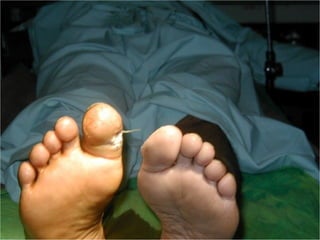
    PDGF IN DIABETICFOOTPDGF IN DIABETIC FOOT WOUNDSWOUNDS 10DAYS AFTER PDGF USE 15 DAYS AFTER PDGF USE
  • 60.
  • 62.
    17 DAYS AFTERPDGF USE
  • 63.
  • 64.
  • 65.
  • 66.
  • 67.