Project Procurement
Project Procurement
Management
Management
Sections of this presentation were adapted
from
from A Guide to the Project Management
A Guide to the Project Management
Body of Knowledge
Body of Knowledge 4
4th
th
Edition, Project
Edition, Project
Management Institute Inc., © 2008
Project Quality Management
“
“The processes to purchase or acquire the
The processes to purchase or acquire the
products, services, or results needed from
outside the project team to perform the
work”
work”
Why Procurement Management?
Most all projects will need to acquire some
resources from outside
Not understanding the different ways to
contract could result in unnecessary risk for
the project
the project
Note for Test Takers: PMI Procurement questions are from the
BUYERS perspective unless noted otherwise
How Do We Manage Procurement?
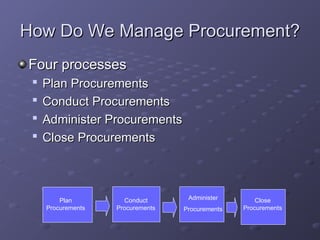
Four processes
Four processes

Plan Procurements
Plan Procurements

Conduct Procurements

Administer Procurements

Close Procurements
Close Procurements
Conduct
Procurements
Administer
Procurements
Plan
Procurements
Close
Procurements
Plan Procurements
Plan Procurements
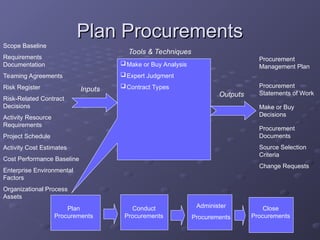
Scope Baseline
Requirements
Documentation
Teaming Agreements
Risk Register
Risk-Related Contract
Decisions
Activity Resource
Requirements
Project Schedule
Activity Cost Estimates
Cost Performance Baseline
Enterprise Environmental
Factors
Organizational Process
Assets
Make or Buy Analysis
Expert Judgment
Contract Types
Inputs
Outputs
Tools & Techniques
Procurement
Management Plan
Procurement
Statements of Work
Procurement
Documents
Source Selection
Criteria
Change Requests
Make or Buy
Decisions
Conduct
Procurements
Administer
Procurements
Plan
Procurements
Close
Procurements
Contract Types
Contract Types
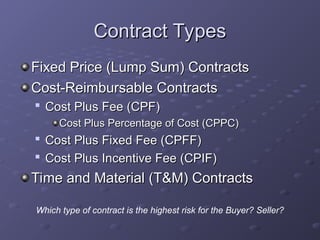
Fixed Price (Lump Sum) Contracts
Cost-Reimbursable Contracts

Cost Plus Fee (CPF)
Cost Plus Fee (CPF)
Cost Plus Percentage of Cost (CPPC)

Cost Plus Fixed Fee (CPFF)

Cost Plus Incentive Fee (CPIF)
Time and Material (T&M) Contracts
Which type of contract is the highest risk for the Buyer? Seller?
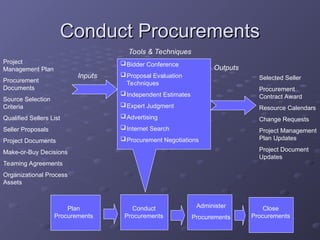
Conduct Procurements
Project
Management Plan
Procurement
Documents
Source Selection
Criteria
Qualified Sellers List
Seller Proposals
Project Documents
Make-or-Buy Decisions
Teaming Agreements
Organizational Process
Assets
Bidder Conference
Proposal Evaluation
Techniques
Independent Estimates
Expert Judgment
Advertising
Internet Search
Procurement Negotiations
Inputs
Outputs
Tools & Techniques
Selected Seller
Procurement
Contract Award
Resource Calendars
Change Requests
Project Management
Plan Updates
Project Document
Updates
Conduct
Procurements
Administer
Procurements
Plan
Procurements
Close
Procurements
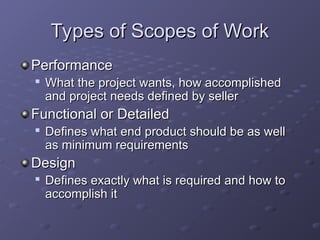
Types of Scopes of Work
Performance
Performance

What the project wants, how accomplished
and project needs defined by seller
Functional or Detailed

Defines what end product should be as well
as minimum requirements
Design
Design

Defines exactly what is required and how to
accomplish it
accomplish it
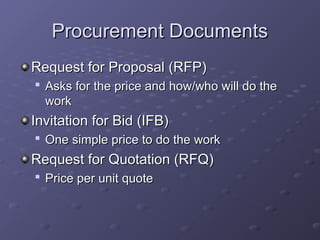
Procurement Documents
Request for Proposal (RFP)

Asks for the price and how/who will do the
work
work
Invitation for Bid (IFB)

One simple price to do the work
Request for Quotation (RFQ)

Price per unit quote
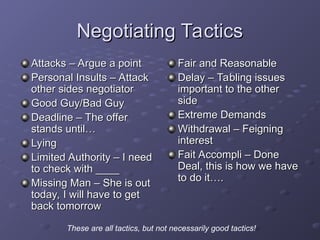
Negotiating Tactics
Negotiating Tactics
Attacks – Argue a point
Personal Insults – Attack
other sides negotiator
Good Guy/Bad Guy
Good Guy/Bad Guy
Deadline – The offer
stands until…
stands until…
Lying
Lying
Limited Authority – I need
to check with ____
to check with ____
Missing Man – She is out
today, I will have to get
back tomorrow
back tomorrow
Fair and Reasonable
Fair and Reasonable
Delay – Tabling issues
important to the other
side
side
Extreme Demands
Extreme Demands
Withdrawal – Feigning
interest
interest
Fait Accompli – Done
Deal, this is how we have
to do it….
to do it….
These are all tactics, but not necessarily good tactics!
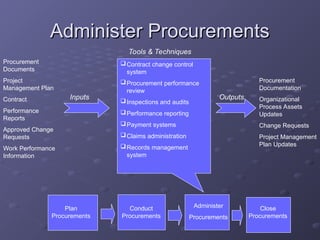
Administer Procurements
Procurement
Documents
Project
Management Plan
Contract
Performance
Reports
Approved Change
Requests
Work Performance
Information
Contract change control
system
Procurement performance
review
Inspections and audits
Performance reporting
Payment systems
Claims administration
Records management
system
Inputs Outputs
Tools & Techniques
Procurement
Documentation
Organizational
Process Assets
Updates
Change Requests
Project Management
Plan Updates
Conduct
Procurements
Administer
Procurements
Plan
Procurements
Close
Procurements
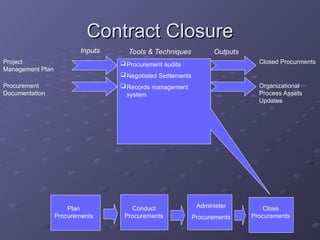
Contract Closure
Contract Closure
Project
Management Plan
Procurement
Documentation
Procurement audits
Negotiated Settlements
Records management
system
Inputs Outputs
Tools & Techniques
Closed Procurments
Organizational
Process Assets
Updates
Conduct
Procurements
Administer
Procurements
Plan
Procurements
Close
Procurements
Procurement Terms
Procurement Terms
Arbitration – Third party dispute resolution
Breach/Default – When a contract provision is not
met
met
Force Majeure – Riots, wars, weather, or other “Acts
of God”
of God”
Indemnification – Who is liable
Liquidated Damages – Estimated damages for
specific types of defaults as defined in the contract
Material Breach – A violation of the contract of
sufficient magnitude that the contract cannot be
completed
completed
Procurement Terms Continued
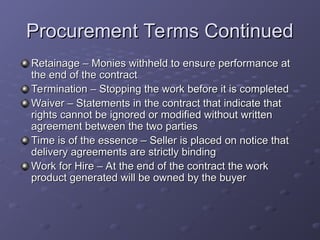
Retainage – Monies withheld to ensure performance at
the end of the contract
Termination – Stopping the work before it is completed
Waiver – Statements in the contract that indicate that
rights cannot be ignored or modified without written
agreement between the two parties
Time is of the essence – Seller is placed on notice that
delivery agreements are strictly binding
Work for Hire – At the end of the contract the work
product generated will be owned by the buyer
procurementmanagementslides ppt for students

  • 1.
    Project Procurement Project Procurement Management Management Sectionsof this presentation were adapted Sections of this presentation were adapted from from A Guide to the Project Management A Guide to the Project Management Body of Knowledge Body of Knowledge 4 4th th Edition, Project Edition, Project Management Institute Inc., © 2008 Management Institute Inc., © 2008
  • 2.
    Project Quality Management ProjectQuality Management “ “The processes to purchase or acquire the The processes to purchase or acquire the products, services, or results needed from products, services, or results needed from outside the project team to perform the outside the project team to perform the work” work”
  • 3.
    Why Procurement Management? WhyProcurement Management? Most all projects will need to acquire some Most all projects will need to acquire some resources from outside resources from outside Not understanding the different ways to Not understanding the different ways to contract could result in unnecessary risk for contract could result in unnecessary risk for the project the project Note for Test Takers: PMI Procurement questions are from the BUYERS perspective unless noted otherwise
  • 4.
    How Do WeManage Procurement? How Do We Manage Procurement? Four processes Four processes  Plan Procurements Plan Procurements  Conduct Procurements Conduct Procurements  Administer Procurements Administer Procurements  Close Procurements Close Procurements Conduct Procurements Administer Procurements Plan Procurements Close Procurements
  • 5.
    Plan Procurements Plan Procurements ScopeBaseline Requirements Documentation Teaming Agreements Risk Register Risk-Related Contract Decisions Activity Resource Requirements Project Schedule Activity Cost Estimates Cost Performance Baseline Enterprise Environmental Factors Organizational Process Assets Make or Buy Analysis Expert Judgment Contract Types Inputs Outputs Tools & Techniques Procurement Management Plan Procurement Statements of Work Procurement Documents Source Selection Criteria Change Requests Make or Buy Decisions Conduct Procurements Administer Procurements Plan Procurements Close Procurements
  • 6.
    Contract Types Contract Types FixedPrice (Lump Sum) Contracts Fixed Price (Lump Sum) Contracts Cost-Reimbursable Contracts Cost-Reimbursable Contracts  Cost Plus Fee (CPF) Cost Plus Fee (CPF) Cost Plus Percentage of Cost (CPPC) Cost Plus Percentage of Cost (CPPC)  Cost Plus Fixed Fee (CPFF) Cost Plus Fixed Fee (CPFF)  Cost Plus Incentive Fee (CPIF) Cost Plus Incentive Fee (CPIF) Time and Material (T&M) Contracts Time and Material (T&M) Contracts Which type of contract is the highest risk for the Buyer? Seller?
  • 7.
    Conduct Procurements Conduct Procurements Project ManagementPlan Procurement Documents Source Selection Criteria Qualified Sellers List Seller Proposals Project Documents Make-or-Buy Decisions Teaming Agreements Organizational Process Assets Bidder Conference Proposal Evaluation Techniques Independent Estimates Expert Judgment Advertising Internet Search Procurement Negotiations Inputs Outputs Tools & Techniques Selected Seller Procurement Contract Award Resource Calendars Change Requests Project Management Plan Updates Project Document Updates Conduct Procurements Administer Procurements Plan Procurements Close Procurements
  • 8.
    Types of Scopesof Work Types of Scopes of Work Performance Performance  What the project wants, how accomplished What the project wants, how accomplished and project needs defined by seller and project needs defined by seller Functional or Detailed Functional or Detailed  Defines what end product should be as well Defines what end product should be as well as minimum requirements as minimum requirements Design Design  Defines exactly what is required and how to Defines exactly what is required and how to accomplish it accomplish it
  • 9.
    Procurement Documents Procurement Documents Requestfor Proposal (RFP) Request for Proposal (RFP)  Asks for the price and how/who will do the Asks for the price and how/who will do the work work Invitation for Bid (IFB) Invitation for Bid (IFB)  One simple price to do the work One simple price to do the work Request for Quotation (RFQ) Request for Quotation (RFQ)  Price per unit quote Price per unit quote
  • 10.
    Negotiating Tactics Negotiating Tactics Attacks– Argue a point Attacks – Argue a point Personal Insults – Attack Personal Insults – Attack other sides negotiator other sides negotiator Good Guy/Bad Guy Good Guy/Bad Guy Deadline – The offer Deadline – The offer stands until… stands until… Lying Lying Limited Authority – I need Limited Authority – I need to check with ____ to check with ____ Missing Man – She is out Missing Man – She is out today, I will have to get today, I will have to get back tomorrow back tomorrow Fair and Reasonable Fair and Reasonable Delay – Tabling issues Delay – Tabling issues important to the other important to the other side side Extreme Demands Extreme Demands Withdrawal – Feigning Withdrawal – Feigning interest interest Fait Accompli – Done Fait Accompli – Done Deal, this is how we have Deal, this is how we have to do it…. to do it…. These are all tactics, but not necessarily good tactics!
  • 11.
    Administer Procurements Administer Procurements Procurement Documents Project ManagementPlan Contract Performance Reports Approved Change Requests Work Performance Information Contract change control system Procurement performance review Inspections and audits Performance reporting Payment systems Claims administration Records management system Inputs Outputs Tools & Techniques Procurement Documentation Organizational Process Assets Updates Change Requests Project Management Plan Updates Conduct Procurements Administer Procurements Plan Procurements Close Procurements
  • 12.
    Contract Closure Contract Closure Project ManagementPlan Procurement Documentation Procurement audits Negotiated Settlements Records management system Inputs Outputs Tools & Techniques Closed Procurments Organizational Process Assets Updates Conduct Procurements Administer Procurements Plan Procurements Close Procurements
  • 13.
    Procurement Terms Procurement Terms Arbitration– Third party dispute resolution Arbitration – Third party dispute resolution Breach/Default – When a contract provision is not Breach/Default – When a contract provision is not met met Force Majeure – Riots, wars, weather, or other “Acts Force Majeure – Riots, wars, weather, or other “Acts of God” of God” Indemnification – Who is liable Indemnification – Who is liable Liquidated Damages – Estimated damages for Liquidated Damages – Estimated damages for specific types of defaults as defined in the contract specific types of defaults as defined in the contract Material Breach – A violation of the contract of Material Breach – A violation of the contract of sufficient magnitude that the contract cannot be sufficient magnitude that the contract cannot be completed completed
  • 14.
    Procurement Terms Continued ProcurementTerms Continued Retainage – Monies withheld to ensure performance at Retainage – Monies withheld to ensure performance at the end of the contract the end of the contract Termination – Stopping the work before it is completed Termination – Stopping the work before it is completed Waiver – Statements in the contract that indicate that Waiver – Statements in the contract that indicate that rights cannot be ignored or modified without written rights cannot be ignored or modified without written agreement between the two parties agreement between the two parties Time is of the essence – Seller is placed on notice that Time is of the essence – Seller is placed on notice that delivery agreements are strictly binding delivery agreements are strictly binding Work for Hire – At the end of the contract the work Work for Hire – At the end of the contract the work product generated will be owned by the buyer product generated will be owned by the buyer