11 Goals
A portrait of a highly functioning SQL Server development shop
Ike Ellis, MVP
Crafting Bytes
A San Diego Software Studio
#SQLintheCityUS
Two pairs of eye on all SQL code,
minimum – sometimes 3 or 4
• They pair minimum
• Sometimes they mob
• This allows for someone to do the right
thing
• And they can slack and work
They don’t give estimates
• They work off of a prioritized list and
deliver a piece of value every day to the
organization
• They let the organization change anything
on the list, except the first three things
• You get it when it’s ready
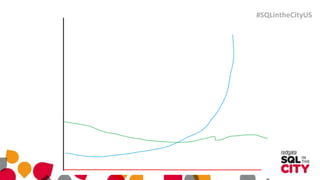
They test all of the time…mostly test first
Write a line of code Deliver Code to Users
#SQLintheCityUS
#SQLintheCityUS
They never code with production data
on a dev server
1. Save Schema
2. Restore Database
3. Reset security
4. Restore Schema
#SQLintheCityUS
Why do they do this?
• Bugs in production are not reproducible in development
• They like seeing mock data because it gives them better
testing of user interfaces and other things
• They like to be able to quickly answer questions
#SQLintheCityUS
What’s the downside?
• Break tests because of old data
• Production data shouldn’t be seen by developers
• If development environments are on laptops, laptops
get stolen and the company has lost production data
• Development servers are not usually backed up or
secured properly
--And the development database is way too large---
#SQLintheCityUS
What do they do instead?
• All development data is mocked
– Tests are repeatable
– They use MOQ/Xunit
– But you can easily use tSQLt/RedGate SQL Test, instead
• Thread the buggy data, back through the development process
• Write a test that will fail with the new data
• Solve the issue
• Watch the test pass
• Check the test into source control
• Run the tests all the time
• Bug never happens again
I’m
mocking
your data
#SQLintheCityUS
The dev environment
database is stays very small
• Why is it large?
• 15 years of data
• 75% of blob storage
– (PDFs, DOCs, AVIs)
• Lots of temp files, ETL imports, etc
Huge Bloated Database
#SQLintheCityUS
Tiny Dev
Database
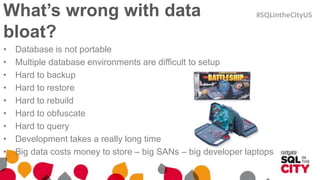
What’s wrong with data
bloat?
• Database is not portable
• Multiple database environments are difficult to setup
• Hard to backup
• Hard to restore
• Hard to rebuild
• Hard to obfuscate
• Hard to query
• Development takes a really long time
• Big data costs money to store – big SANs – big developer laptops
#SQLintheCityUS
They never update production
outside of their development
pipeline
• Changes are fast
• Bugs are fixed quickly
• All because they’re release pipeline is very
fast
#SQLintheCityUS
What’s wrong with updating
production servers?
• Changes don’t get tested
• Changes don’t go back into the development
environment
• Changes can cause table and schema locks
and cause unexpected downtime
• These changes are often not peer reviewed
#SQLintheCityUS
They avoid three part
database names
I like to
reference
you!
Oooo, I like
to reference
you, too!
#SQLintheCityUS
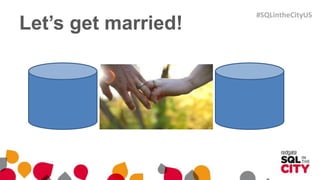
Let’s get married!
#SQLintheCityUS
But not all marriages are
happy…
• Creates a tight coupling
• Moved together
– To a new server
• Have to be tested together
• Have to be integrated together
• Have to change together
• Have to be upgraded to a new version
• Have to be backed up together
• Have to be restored together
#SQLintheCityUS
They avoid four part
database names
I like to
reference
you!
Oooo, I like
to reference
you, too!
#SQLintheCityUS
Why is this bad?
• Servers are now anchored together
• It complicates building a test, QA, integration,
or canary environment
• Security concerns
#SQLintheCityUS
Developers have their own
database
• Source control history
– Generation 0 – Visual Source Safe
– Generation 1 – Subversion, TFS
– Generation 2- GIT, Mercurial
• Sharing databases is like going back to
generation 0.
#SQLintheCityUS
They avoid rollback plans. Instead, they keep
changes inside of their development pipeline
• You can’t unbake this turkey
• You have to fix it
• Those fixes need to be tested – run it through again!
#SQLintheCityUS
They obfuscate production data
in all of their environments
I was your data,
but now you
don’t recognize
me
They use a canary
If I die, you
better not
deploy!
#SQLintheCityUS
They never let more than one
application touch a transactional
database
• Microservices
• One application to one database
• Change together in the same pipeline
• Decouple everything, and I mean everything,
else
They build their databases
and they fix compile errors
• Lots of processes, including RedGate CI Server, will do
this
• Show bad bindings
• Show bad columns
• Show sprocs that just won’t run
• Show tight-coupling
#SQLintheCityUS
They write never write SQL Statements against
tables
• More coupling
#SQLintheCityUS
Ike Ellis
• Crafting Bytes
– Small San Diego Software Studio
– Modern web, mobile, Azure, SQL Server
– Looking for future teammates!
• Book: Developing Azure Solutions
• Podcast Guest:
– Talk Python to Me – Dec 2015
– .NET Rocks – Sept 2015
• www.craftingbytes.com
• blog.ikeellis.com
• www.ikeellis.com
• SDTIG – www.sdtig.com
Ike Ellis, MVP
@ike_ellis
619.922.9801
ike@craftingbytes.com
#SQLintheCityUS

11 Goals of High Functioning SQL Developers

  • 1.
    11 Goals A portraitof a highly functioning SQL Server development shop Ike Ellis, MVP Crafting Bytes A San Diego Software Studio #SQLintheCityUS
  • 2.
    Two pairs ofeye on all SQL code, minimum – sometimes 3 or 4 • They pair minimum • Sometimes they mob • This allows for someone to do the right thing • And they can slack and work
  • 5.
    They don’t giveestimates • They work off of a prioritized list and deliver a piece of value every day to the organization • They let the organization change anything on the list, except the first three things • You get it when it’s ready
  • 6.
    They test allof the time…mostly test first Write a line of code Deliver Code to Users #SQLintheCityUS
  • 7.
  • 8.
    They never codewith production data on a dev server 1. Save Schema 2. Restore Database 3. Reset security 4. Restore Schema #SQLintheCityUS
  • 9.
    Why do theydo this? • Bugs in production are not reproducible in development • They like seeing mock data because it gives them better testing of user interfaces and other things • They like to be able to quickly answer questions #SQLintheCityUS
  • 10.
    What’s the downside? •Break tests because of old data • Production data shouldn’t be seen by developers • If development environments are on laptops, laptops get stolen and the company has lost production data • Development servers are not usually backed up or secured properly --And the development database is way too large--- #SQLintheCityUS
  • 11.
    What do theydo instead? • All development data is mocked – Tests are repeatable – They use MOQ/Xunit – But you can easily use tSQLt/RedGate SQL Test, instead • Thread the buggy data, back through the development process • Write a test that will fail with the new data • Solve the issue • Watch the test pass • Check the test into source control • Run the tests all the time • Bug never happens again I’m mocking your data #SQLintheCityUS
  • 12.
    The dev environment databaseis stays very small • Why is it large? • 15 years of data • 75% of blob storage – (PDFs, DOCs, AVIs) • Lots of temp files, ETL imports, etc Huge Bloated Database #SQLintheCityUS Tiny Dev Database
  • 13.
    What’s wrong withdata bloat? • Database is not portable • Multiple database environments are difficult to setup • Hard to backup • Hard to restore • Hard to rebuild • Hard to obfuscate • Hard to query • Development takes a really long time • Big data costs money to store – big SANs – big developer laptops #SQLintheCityUS
  • 14.
    They never updateproduction outside of their development pipeline • Changes are fast • Bugs are fixed quickly • All because they’re release pipeline is very fast #SQLintheCityUS
  • 15.
    What’s wrong withupdating production servers? • Changes don’t get tested • Changes don’t go back into the development environment • Changes can cause table and schema locks and cause unexpected downtime • These changes are often not peer reviewed #SQLintheCityUS
  • 16.
    They avoid threepart database names I like to reference you! Oooo, I like to reference you, too! #SQLintheCityUS
  • 17.
  • 18.
    But not allmarriages are happy… • Creates a tight coupling • Moved together – To a new server • Have to be tested together • Have to be integrated together • Have to change together • Have to be upgraded to a new version • Have to be backed up together • Have to be restored together #SQLintheCityUS
  • 19.
    They avoid fourpart database names I like to reference you! Oooo, I like to reference you, too! #SQLintheCityUS
  • 20.
    Why is thisbad? • Servers are now anchored together • It complicates building a test, QA, integration, or canary environment • Security concerns #SQLintheCityUS
  • 21.
    Developers have theirown database • Source control history – Generation 0 – Visual Source Safe – Generation 1 – Subversion, TFS – Generation 2- GIT, Mercurial • Sharing databases is like going back to generation 0. #SQLintheCityUS
  • 22.
    They avoid rollbackplans. Instead, they keep changes inside of their development pipeline • You can’t unbake this turkey • You have to fix it • Those fixes need to be tested – run it through again! #SQLintheCityUS
  • 23.
    They obfuscate productiondata in all of their environments I was your data, but now you don’t recognize me
  • 24.
    They use acanary If I die, you better not deploy! #SQLintheCityUS
  • 25.
    They never letmore than one application touch a transactional database • Microservices • One application to one database • Change together in the same pipeline • Decouple everything, and I mean everything, else
  • 26.
    They build theirdatabases and they fix compile errors • Lots of processes, including RedGate CI Server, will do this • Show bad bindings • Show bad columns • Show sprocs that just won’t run • Show tight-coupling #SQLintheCityUS
  • 27.
    They write neverwrite SQL Statements against tables • More coupling #SQLintheCityUS
  • 28.
    Ike Ellis • CraftingBytes – Small San Diego Software Studio – Modern web, mobile, Azure, SQL Server – Looking for future teammates! • Book: Developing Azure Solutions • Podcast Guest: – Talk Python to Me – Dec 2015 – .NET Rocks – Sept 2015 • www.craftingbytes.com • blog.ikeellis.com • www.ikeellis.com • SDTIG – www.sdtig.com Ike Ellis, MVP @ike_ellis 619.922.9801 ike@craftingbytes.com #SQLintheCityUS