Higher
Computing Science
11. Computer Misuse Act 1990
Higher Computing Science - Computer Systems
Learning Intentions
Learn how the Computer Misuse Act 1990 is
used to recognise offences such as
unauthorised access to data, unauthorised
altering of data and the making, supplying or
obtaining items that can be used in computer
misuse offences
Success Criteria
I can explain the legality of unauthorised access
to data
I can explain the legality of unauthorised
modification of data
I can explain the legality of making, supplying or
obtaining anything which can be used in
computer misuse offences
Higher Computing Science - Computer Systems
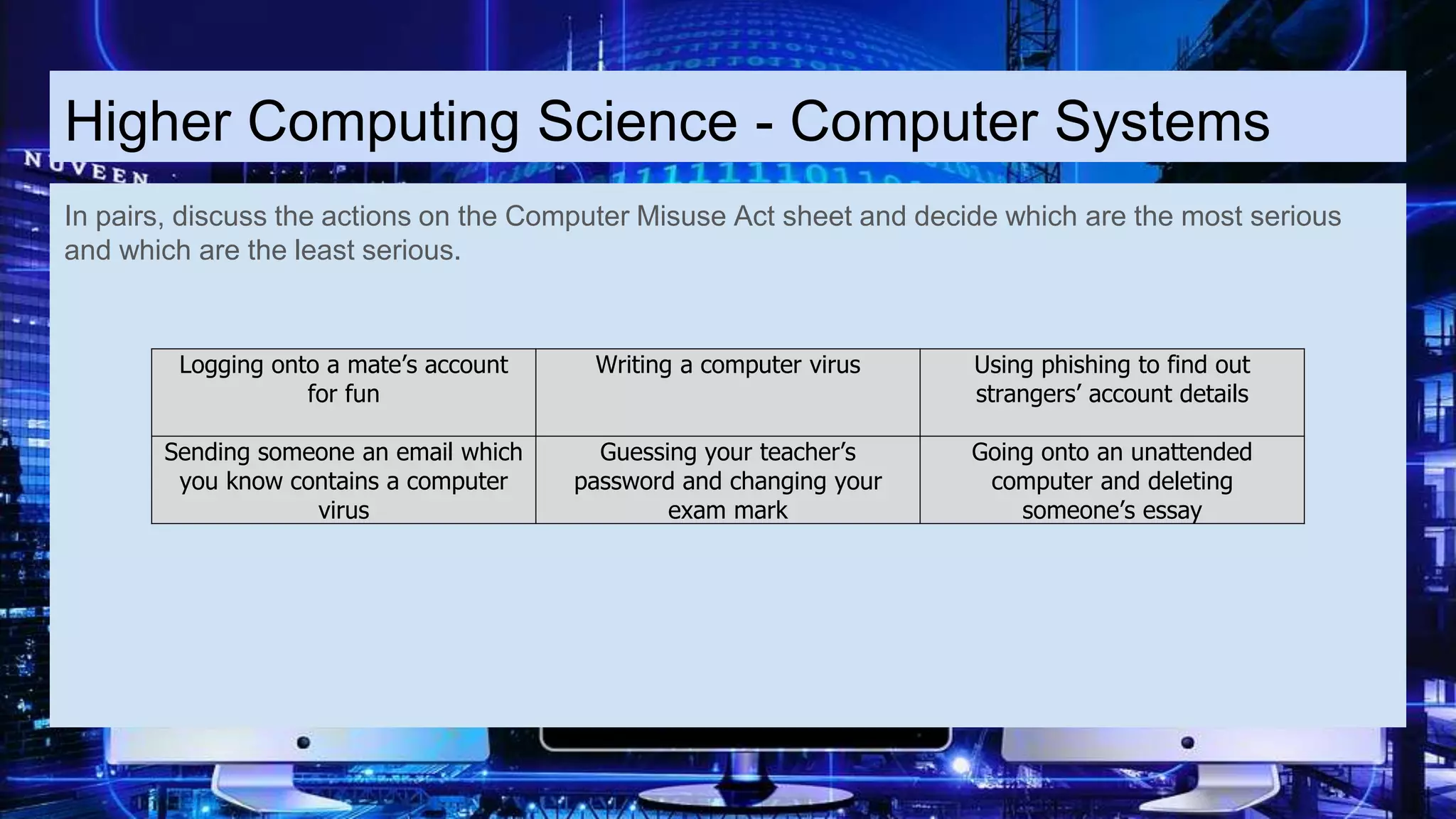
In pairs, discuss the actions on the Computer Misuse Act sheet and decide which are the most serious
and which are the least serious.
Logging onto a mate’s account
for fun
Writing a computer virus Using phishing to find out
strangers’ account details
Sending someone an email which
you know contains a computer
virus
Guessing your teacher’s
password and changing your
exam mark
Going onto an unattended
computer and deleting
someone’s essay
Higher Computing Science - Computer Systems
The Computer Misuse Act (1990) recognises the following as offences:
1. Unauthorised access to computer material.
1. Unauthorised access with intent to commit or facilitate a crime.
1. Unauthorised modification of computer material.
1. Making, supplying or obtaining anything which can be used in computer misuse offences.
Higher Computing Science - Computer Systems
Unauthorised access to computer material
This is the lowest level of offence and is one that many of us might be guilty of at some stage in our school or working lives.
Have you ever found, guessed or used someone elses' password to log onto their user area? If you do this and then look at their
files, even if you don't change, delete or damage anything, you are still guilty of accessing materials without authorisation - and
this is illegal.
This offence carries the risk of being sentenced to six months in prison and/or a hefty fine.
Higher Computing Science - Computer Systems
Unauthorised access with intent to commit or facilitate a crime.
The difference between this and the first offence is that the person gaining access to someone elses' system is doing so with the
sole purpose of doing something illegal.
This might mean that they had to guess or steal the password in order to get into someone's user area or their bank account.
They could do this by trial and error or by using special programs such as spyware or keylogging software, or they could use a
relatively new technique called 'phishing'.
They might want to steal some company secrets or they might want to transfer some money out of your bank account into their
own.
Anyone caught doing this risks up to a five year prison sentence and/or a hefty fine.
Higher Computing Science - Computer Systems
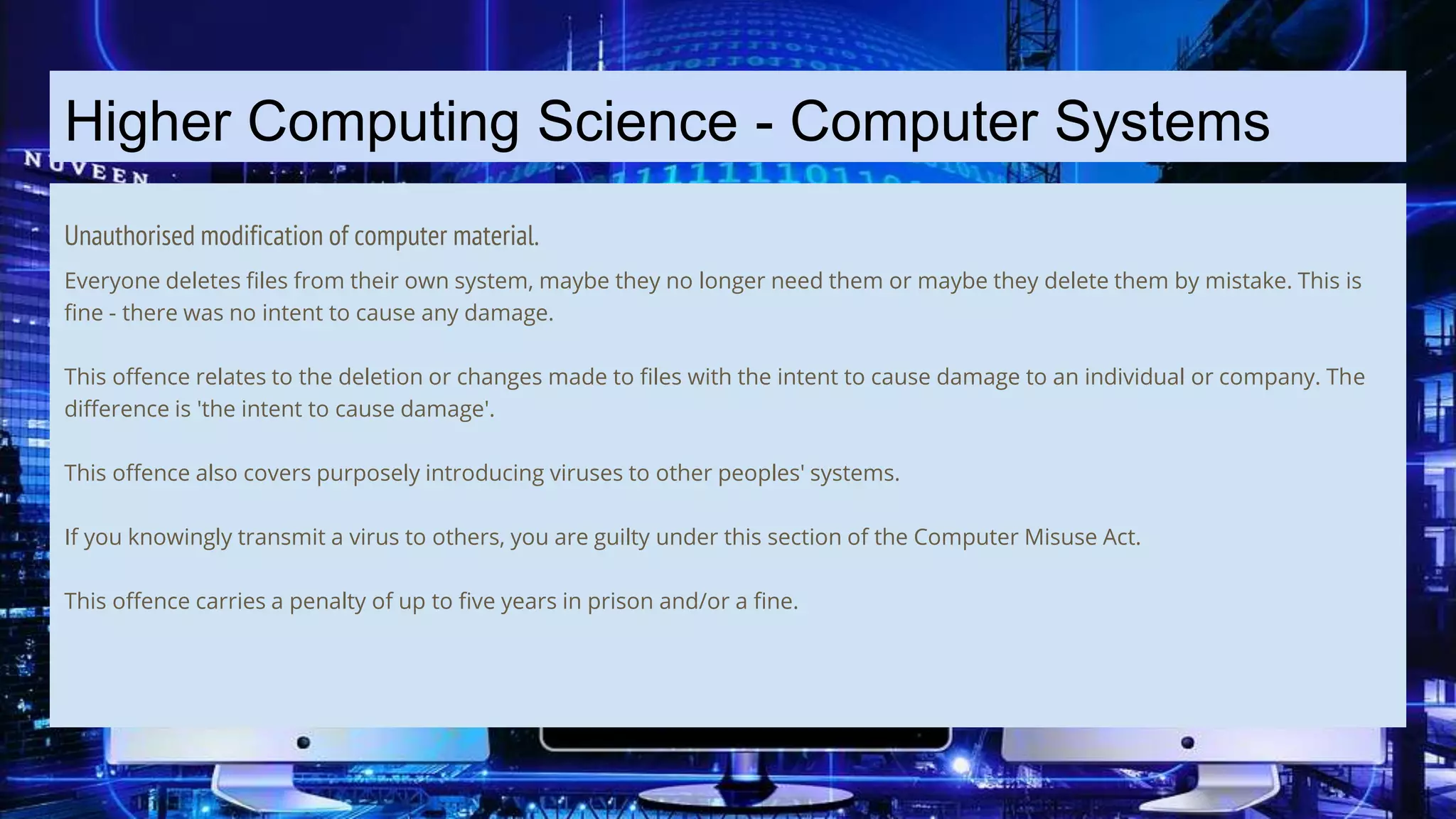
Unauthorised modification of computer material.
Everyone deletes files from their own system, maybe they no longer need them or maybe they delete them by mistake. This is
fine - there was no intent to cause any damage.
This offence relates to the deletion or changes made to files with the intent to cause damage to an individual or company. The
difference is 'the intent to cause damage'.
This offence also covers purposely introducing viruses to other peoples' systems.
If you knowingly transmit a virus to others, you are guilty under this section of the Computer Misuse Act.
This offence carries a penalty of up to five years in prison and/or a fine.
Higher Computing Science - Computer Systems
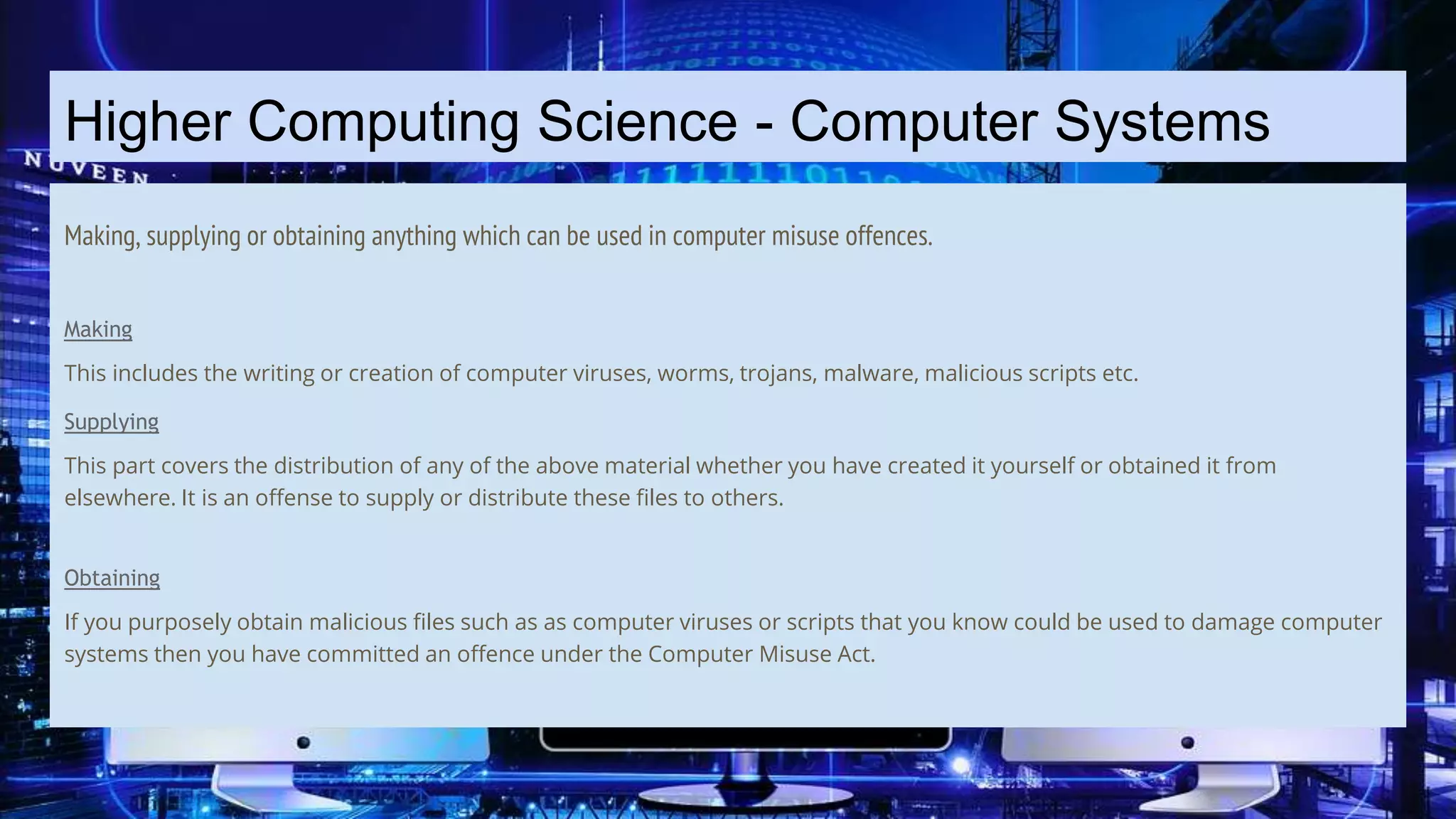
Making, supplying or obtaining anything which can be used in computer misuse offences.
Making
This includes the writing or creation of computer viruses, worms, trojans, malware, malicious scripts etc.
Supplying
This part covers the distribution of any of the above material whether you have created it yourself or obtained it from
elsewhere. It is an offense to supply or distribute these files to others.
Obtaining
If you purposely obtain malicious files such as as computer viruses or scripts that you know could be used to damage computer
systems then you have committed an offence under the Computer Misuse Act.
Higher Computing Science - Computer Systems
In the booklet
Page 32
Answer the scenarios
Higher Computing Science - Computer Systems
Learning Intentions
Learn how the Computer Misuse Act 1990 is
used to recognise offences such as
unauthorised access to data, unauthorised
altering of data and the making, supplying or
obtaining items that can be used in computer
misuse offences
Success Criteria
I can explain the legality of unauthorised access
to data
I can explain the legality of unauthorised
modification of data
I can explain the legality of making, supplying or
obtaining anything which can be used in
computer misuse offences

11. cs sr p - computer misuse act 1990

  • 1.
  • 2.
    Higher Computing Science- Computer Systems Learning Intentions Learn how the Computer Misuse Act 1990 is used to recognise offences such as unauthorised access to data, unauthorised altering of data and the making, supplying or obtaining items that can be used in computer misuse offences Success Criteria I can explain the legality of unauthorised access to data I can explain the legality of unauthorised modification of data I can explain the legality of making, supplying or obtaining anything which can be used in computer misuse offences
  • 3.
    Higher Computing Science- Computer Systems In pairs, discuss the actions on the Computer Misuse Act sheet and decide which are the most serious and which are the least serious. Logging onto a mate’s account for fun Writing a computer virus Using phishing to find out strangers’ account details Sending someone an email which you know contains a computer virus Guessing your teacher’s password and changing your exam mark Going onto an unattended computer and deleting someone’s essay
  • 4.
    Higher Computing Science- Computer Systems
  • 5.
    Higher Computing Science- Computer Systems The Computer Misuse Act (1990) recognises the following as offences: 1. Unauthorised access to computer material. 1. Unauthorised access with intent to commit or facilitate a crime. 1. Unauthorised modification of computer material. 1. Making, supplying or obtaining anything which can be used in computer misuse offences.
  • 6.
    Higher Computing Science- Computer Systems Unauthorised access to computer material This is the lowest level of offence and is one that many of us might be guilty of at some stage in our school or working lives. Have you ever found, guessed or used someone elses' password to log onto their user area? If you do this and then look at their files, even if you don't change, delete or damage anything, you are still guilty of accessing materials without authorisation - and this is illegal. This offence carries the risk of being sentenced to six months in prison and/or a hefty fine.
  • 7.
    Higher Computing Science- Computer Systems Unauthorised access with intent to commit or facilitate a crime. The difference between this and the first offence is that the person gaining access to someone elses' system is doing so with the sole purpose of doing something illegal. This might mean that they had to guess or steal the password in order to get into someone's user area or their bank account. They could do this by trial and error or by using special programs such as spyware or keylogging software, or they could use a relatively new technique called 'phishing'. They might want to steal some company secrets or they might want to transfer some money out of your bank account into their own. Anyone caught doing this risks up to a five year prison sentence and/or a hefty fine.
  • 8.
    Higher Computing Science- Computer Systems Unauthorised modification of computer material. Everyone deletes files from their own system, maybe they no longer need them or maybe they delete them by mistake. This is fine - there was no intent to cause any damage. This offence relates to the deletion or changes made to files with the intent to cause damage to an individual or company. The difference is 'the intent to cause damage'. This offence also covers purposely introducing viruses to other peoples' systems. If you knowingly transmit a virus to others, you are guilty under this section of the Computer Misuse Act. This offence carries a penalty of up to five years in prison and/or a fine.
  • 9.
    Higher Computing Science- Computer Systems Making, supplying or obtaining anything which can be used in computer misuse offences. Making This includes the writing or creation of computer viruses, worms, trojans, malware, malicious scripts etc. Supplying This part covers the distribution of any of the above material whether you have created it yourself or obtained it from elsewhere. It is an offense to supply or distribute these files to others. Obtaining If you purposely obtain malicious files such as as computer viruses or scripts that you know could be used to damage computer systems then you have committed an offence under the Computer Misuse Act.
  • 10.
    Higher Computing Science- Computer Systems In the booklet Page 32 Answer the scenarios
  • 11.
    Higher Computing Science- Computer Systems Learning Intentions Learn how the Computer Misuse Act 1990 is used to recognise offences such as unauthorised access to data, unauthorised altering of data and the making, supplying or obtaining items that can be used in computer misuse offences Success Criteria I can explain the legality of unauthorised access to data I can explain the legality of unauthorised modification of data I can explain the legality of making, supplying or obtaining anything which can be used in computer misuse offences