








Problems of the Design and Interpretation of Very Early Clinical Trials in Hemato-OncologyBruce D. Cheson, M.D.Georgetown University HospitalLombardi Comprehensive Cancer CenterChair, CALGB Lymphoma CommitteeWashington, D.C., USA
Earliest Published Clinical TrialsDaniel 1:11-20. Health of Hebrews fed a Kosher diet vs Babylonians fed on a state dietScurvy on the HMS Salisbury: 	cider vs vinegar vs lemons
Phases of Clinical TrialsPhase I - determine toxicityPhase II - determine activityPhase III - evaluate efficacyPhase IV - post-marketing
The Problem6500 trials open to accrual in the U.S. (clinicaltrials.gov)3% of patients go on studiesStudies compete for same patients63% of trials are ever completed
Why our trials failBlame the designBlame the physiciansBlame the patientsBlame the wealth of new agentsRarely do we blame the science
Problems in New Drug DevelopmentSlow rate of accrual to clinical trialsLack of good preclinical modelsLack of surrogate endpointsFalse negatives – missing an active agentFalse positives – waste resources on ineffective agent
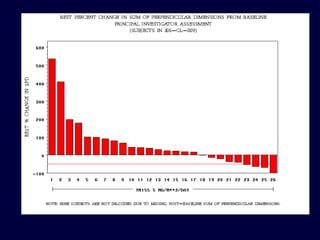
High False Positive RateRely on a single studyUnpredictability of intermediate endpointsGet excited by waterfall plotsShort follow-upResponse durationToxicityUnplanned subset analyses
Will Rogers  (1879-1935)
The Will Rogers Effect“When the Okies left Oklahoma and moved to California, they raised the average intelligence level in both states!”
Or, in non-Cowboy Terms ~	A positive effect will occur when both of the following conditions are met ~The element being moved is below average for its current set.  Removing it will, by definition, raise the average of the remaining elements
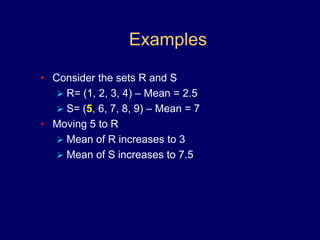
The element being moved is above the current average of the set it is entering.  Adding to it will, by definition, raise the averageExamplesConsider the sets R and SR= (1, 2, 3, 4) – Mean = 2.5
S= (5, 6, 7, 8, 9) – Mean = 7
Moving 5 to R
Mean of R increases to 3
Mean of S increases to 7.5Relevance to Clinical Trials: Stage MigrationImproved detection of illness leads to the movement of people from the set of healthy to the set of unhealthyExample: Increased sensitivity of PET scans in lymphomaMoves “early” stage to advanced stage
Moves false-positive advanced stage to early stage
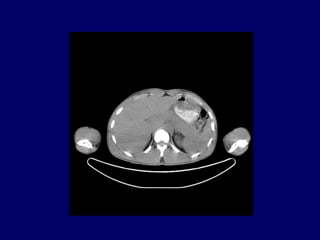
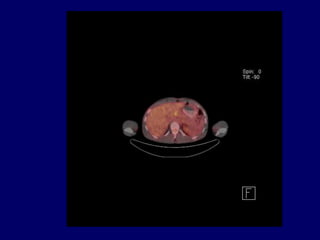
Improves the outcome of both cohortsCT from PET/CT - axial view
Contrast enhanced CT - axial view
PET - axial view
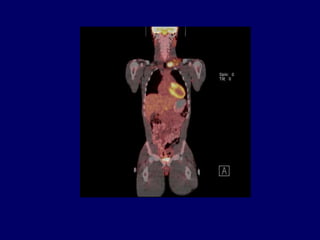
PET-coronal
Reducing the False Negative RateRecognize tumor diversityUnderstand tumor biology
Not All Patients or Their Diseases Are Created Equal
Lymphoma Cancer FactsLymphomas represent the 5th most common form of cancer in the US2011 projected >75,000 new cases in the US alone with ~ 25,000 deaths/yr~ 60 morphologic/immunologic subtypesMany more by molecular-genetic assessmentNo two lymphomas are alike and treatments must be selected based on an individual’s tumor characteristics, by personalized medicine
Antoni van Leeuwenhoek (1632-1723)Invented the microscope around 166821
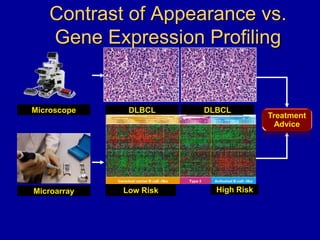
TreatmentAdviceContrast of Appearance vs.Gene Expression ProfilingMicroscopeDLBCLDLBCLHigh RiskLow RiskMicroarray22
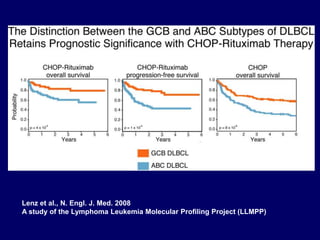
Lenz et al., N. Engl. J. Med. 2008A study of the Lymphoma Leukemia Molecular Profiling Project (LLMPP)
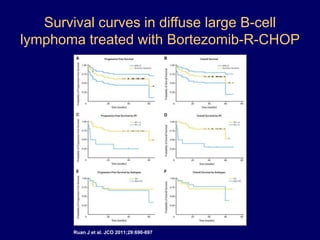
Survival curves in diffuse large B-cell lymphoma treated with Bortezomib-R-CHOPRuan J et al. JCO 2011;29:690-697
Lenalidomide in DLBCLHernandez-Ilizaliturri et al, Cancer (e-pub, 2011)
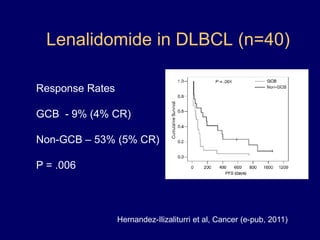
Lenalidomide in DLBCL (n=40)Response RatesGCB  - 9% (4% CR)Non-GCB – 53% (5% CR)P = .006Hernandez-Ilizaliturri et al, Cancer (e-pub, 2011)
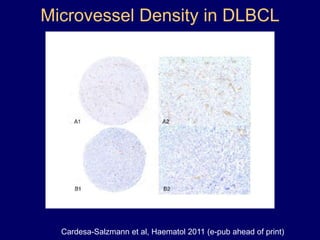
Microvessel Density in DLBCLCardesa-Salzmann et al, Haematol 2011 (e-pub ahead of print)
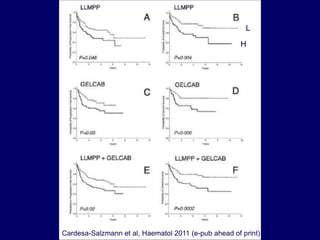
LHCardesa-Salzmann et al, Haematol 2011 (e-pub ahead of print)
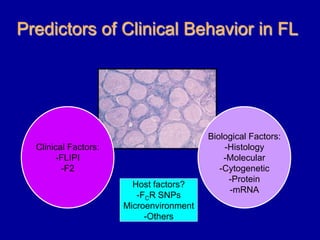
Clinical Factors:-FLIPI-F2Biological Factors:-Histology-Molecular-Cytogenetic-Protein-mRNAPredictors of Clinical Behavior in FLHost factors?-FCR SNPsMicroenvironment-Others
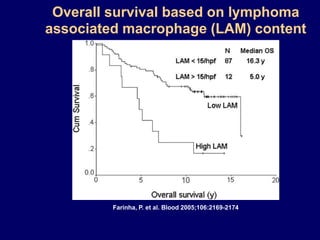
Overall survival based on lymphoma associated macrophage (LAM) contentFarinha, P. et al. Blood 2005;106:2169-2174
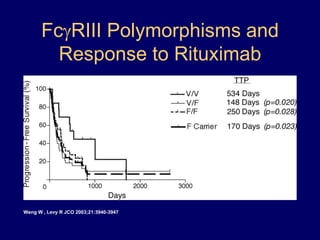
.Weng W , Levy R JCO 2003;21:3940-3947FcgRIII Polymorphisms and Response to Rituximab
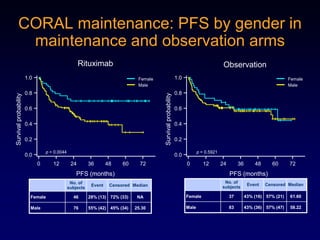
CORAL maintenance: PFS by gender in maintenance and observation arms1.01.00.80.80.60.6Survival probabilitySurvival probability0.40.40.20.2p = 0.0044p = 0.59210.00.001224364860720122436486072PFS (months)PFS (months)FemaleFemaleMaleMaleRituximabObservation
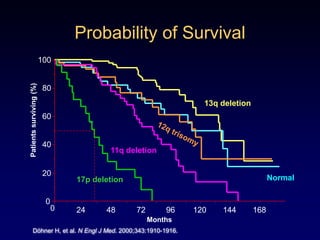
Probability of Survival100806040200024487296120144168Months13q deletionPatients surviving (%)12q trisomy11q deletionNormal17p deletionDöhner H, et al. N Engl J Med. 2000;343:1910-1916.
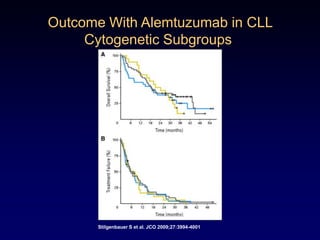
Outcome With Alemtuzumab in CLL Cytogenetic Subgroups.Stilgenbauer S et al. JCO 2009;27:3994-4001
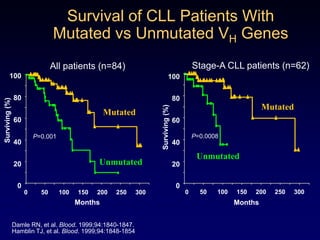
1001008080Surviving (%)6060Surviving (%)P=0.0008P=0.0014040202000501001502002503000050100150200250300MonthsMonthsSurvival of CLL Patients With Mutated vsUnmutated VH GenesStage-A CLL patients (n=62)All patients (n=84)MutatedMutatedUnmutatedUnmutatedDamle RN, et al. Blood. 1999;94:1840-1847.Hamblin TJ, et al. Blood. 1999;94:1848-1854
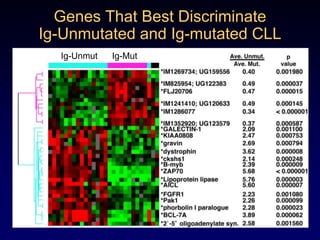
Genes That Best Discriminate Ig-Unmutated and Ig-mutated CLLIg-Unmut      Ig-Mut
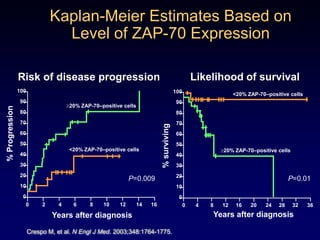
Kaplan-Meier Estimates Based on Level of ZAP-70 ExpressionLikelihood of survivalRisk of disease progression10090807060504030201001009080706050403020100<20% ZAP-70–positive cells20% ZAP-70–positive cells% Progression% surviving<20% ZAP-70–positive cells20% ZAP-70–positive cellsP=0.009P=0.010         2         4        6         8       10       12       14      160       4        8      12     16      20      24     28     32      36Years after diagnosisYears after diagnosisCrespo M, et al. N Engl J Med. 2003;348:1764-1775.
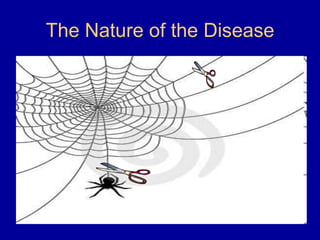
The Nature of the Disease
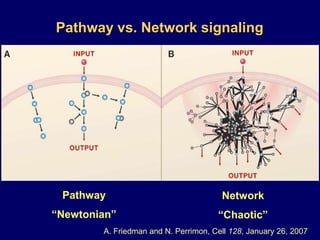
Pathway vs. Network signalingPathway“Newtonian”Network“Chaotic”A. Friedman and N. Perrimon, Cell 128, January 26, 2007
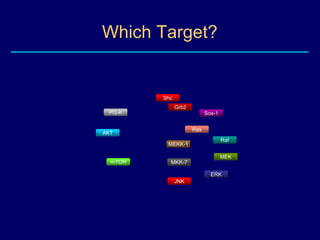
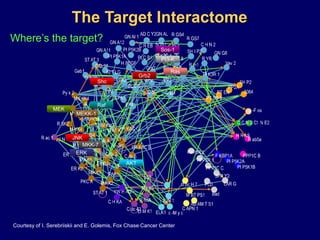
ShcGrb2PI3-KSos-1RasAKTRafMEKK-1MEKmTORMKK-7ERKJNKWhich Target?
Sos-1PI3-KRasGrb2ShcRafMEKMEKK-1JNKMKK-7ERKAKTThe Target InteractomeWhere’s the target?Courtesy of I. Serebriiskii and E. Golemis, Fox Chase Cancer Center
Cheson’s Rule“The efficacy of a new drug is directly proportional to its negative impact on clinical research”
Victims of Our Own Successes: The DiseaseFront-line HLFront-line DLBCLFront-line FLFront-line CLL
Victims of Our Own Successes: The DrugNew drug B is very active in relapsed/refractory diseaseRapidly adopted as front-lineProblemsNo drug B naïve pts against which to compare drug CNo data on other drugs in B-relapsed ptsResults in relapse too good to improve uponResults in front-line too good to improve upon
ExamplesTK inhibitors in CMLB(R) in F/LG NHLB(R) in CLLBrentuximabvedotin in HL
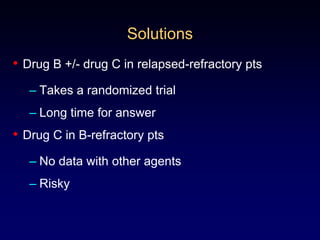
SolutionsDrug B +/- drug C in relapsed-refractory ptsTakes a randomized trialLong time for answerDrug C in B-refractory ptsNo data with other agentsRisky
Do We Have Surrogate Endpoints?
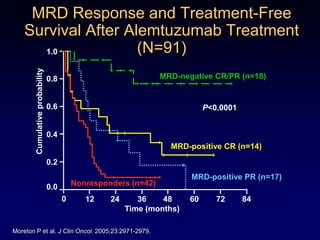
1.00.80.60.40.20.0012243648846072Time (months)MRD Response and Treatment-Free Survival After Alemtuzumab Treatment (N=91)MRD-negative CR/PR (n=18)P<0.0001Cumulative probabilityMRD-positive CR (n=14)MRD-positive PR (n=17)Nonresponders (n=42)Moreton P et al. J Clin Oncol. 2005;23:2971-2979.
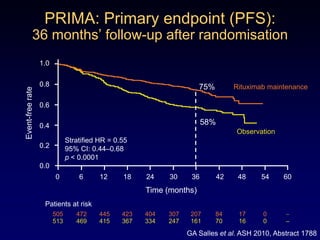
PRIMA: Primary endpoint (PFS): 36 months’ follow-up after randomisation1.00.875%Rituximab maintenance0.6Event-free rate58%0.4ObservationStratified HR = 0.5595% CI: 0.44–0.68p < 0.00010.20.006121824303642485460Time (months)Patients at risk50547244542340430720784170–51346941536733424716170160–GA Salles et al. ASH 2010, Abstract 1788
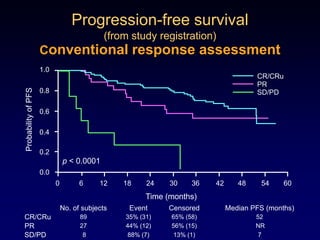
Progression-free survival(from study registration)Conventional response assessment1.0CR/CRuPR0.8SD/PD0.6Probability of PFS0.40.2p < 0.00010.006121824303642485460Time (months)No. of subjectsEventCensoredMedian PFS (months)CR/CRu8935% (31)65% (58)52PR2744% (12)56% (15) NRSD/PD 888% (7)13% (1)7
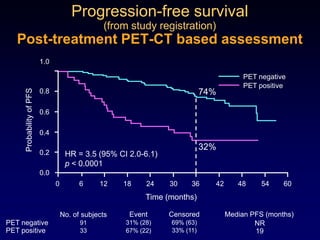
Progression-free survival(from study registration) Post-treatment PET-CT based assessment1.0PET negativePET positive74%0.80.6Probability of PFS0.432%HR = 3.5 (95% CI 2.0-6.1)p < 0.00010.20.006121824303642485460Time (months)EventCensoredMedian PFS (months)No. of subjectsPET negative31% (28)69% (63)NR91PET positive33% (11)193367% (22)
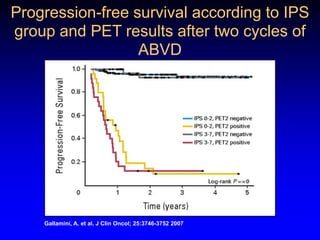
Progression-free survival according to IPS group and PET results after two cycles of ABVDGallamini, A. et al. J Clin Oncol; 25:3746-3752 2007
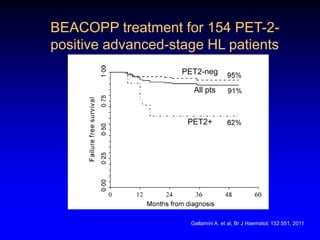
BEACOPP treatment for 154 PET-2- positive advanced-stage HL patients PET2-negAll ptsPET2+Gallamini A. et al, Br J Haematol, 152:551, 2011
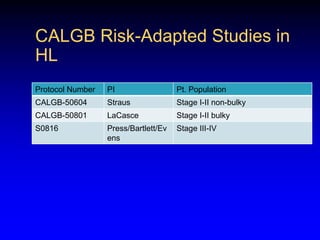
CALGB Risk-Adapted Studies in HL
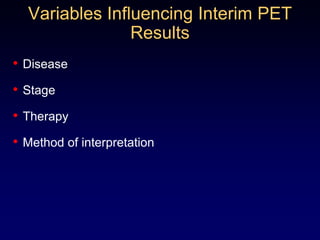
Variables Influencing Interim PET ResultsDiseaseStageTherapyMethod of interpretation
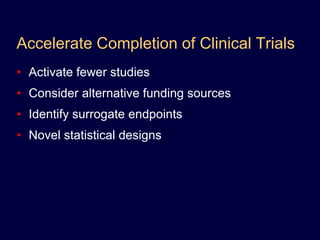
Accelerate Completion of Clinical TrialsActivate fewer studiesConsider alternative funding sourcesIdentify surrogate endpointsNovel statistical designs
Is There Still a Role For Traditional Phase I Studies in Haematologic Malignancies?
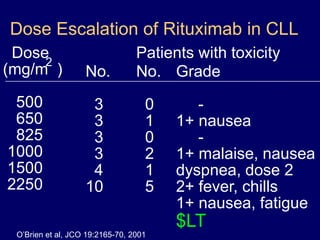
Dose Escalation of Rituximab in CLL  DosePatients with toxicity2(mg/m  )No.No.Grade   500  3  0     -   650  3  11+ nausea   825  3  0     - 1000  3  21+ malaise, nausea 1500  4  1dyspnea, dose 2 225010  52+ fever, chills1+ nausea, fatigue$LTO’Brien et al, JCO 19:2165-70, 2001
Need to Consider Novel Study Designs
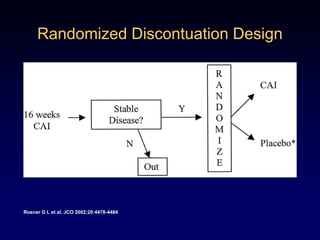
Randomized Discontinuation DesignPremise:Some drugs are more static than tumouricidal
Tumour growth may be slow
Single arm study cannot identify improved PFSEnrichment designSelect/randomize relatively homogenous patients
.Rosner G L et al. JCO 2002;20:4478-4484Randomized Discontuation Design
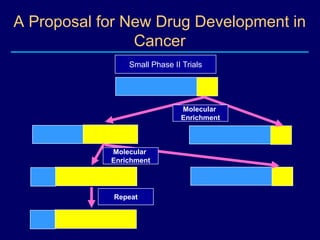
A Proposal for New Drug Development in CancerSmall Phase II TrialsMolecular EnrichmentMolecular EnrichmentRepeat
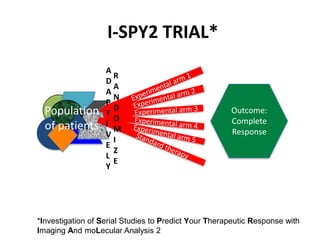
I-SPY2 TRIAL*ADAPTIVELYRANDOMIZE            Experimental arm 1             Experimental arm 2Outcome:Complete Response Populationof patients               Experimental arm 3               Experimental arm 4             Experimental arm 5             Standard therapy*Investigation of Serial Studies to Predict Your Therapeutic Response with Imaging And moLecular Analysis 2
Sometimes We Are Misled By Rigid Response CriteriaCLLCheson, et al, Am J Hematol 29:72, 1988Cheson, et al, Blood 87:4990, 1996Hallek, Cheson, et al,  Blood 111:5446, 2008AML Cheson, et al, JCO 8:813, 1990Cheson et al, JCO 21:4642, 2003MDSCheson, et al, Blood 96:3671, 2000Cheson, et a, Blood 108:419, 2006NHLCheson, et al, JCO 17:1244, 1999Cheson, et al, JCO 25:579, 2007MM – Don’t blame me!
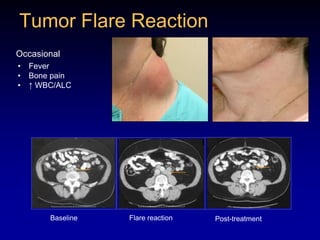
Tumor Flare ReactionFlare reactionBaselinePost-treatmentOccasionalFever
Bone pain
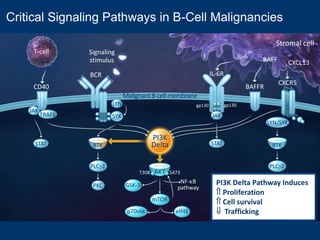
↑ WBC/ALCPI3K Delta Pathway Induces Proliferation Cell survival  TraffickingCritical Signaling Pathways in B-Cell MalignanciesStromal cellT-cellSignalingstimulusIL-6BAFFCXCL13IL-6RBCRCXCR5BAFFRCD40Malignant B-cell membraneLYNgp130gp130JAKTRAF6JAKSYKaLYN/SYKbgPI3KDeltaSTATSTATBTKBTKPLCg2PLCg2AKTT308S473NF-kBpathwayGSK-3PKCmTORp70s6kelf4E
The Road to Individualized Therapy Starts With Science
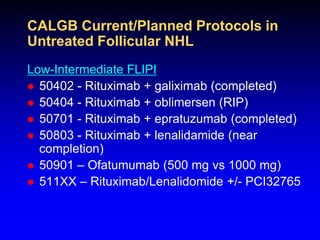
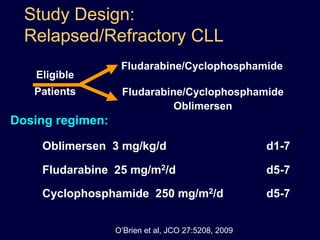
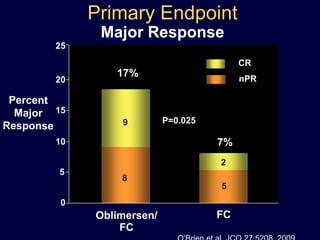
CALGB Current/Planned Protocols in Untreated Follicular NHLLow-Intermediate FLIPI50402 - Rituximab + galiximab (completed)50404 - Rituximab + oblimersen (RIP)50701 - Rituximab + epratuzumab (completed)50803 - Rituximab + lenalidamide (near completion)50901 – Ofatumumab (500 mg vs 1000 mg)511XX – Rituximab/Lenalidomide +/- PCI32765
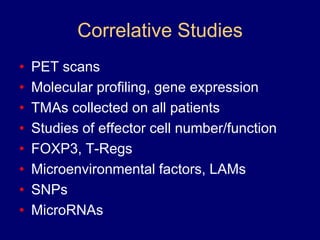
Correlative StudiesPET scansMolecular profiling, gene expressionTMAs collected on all patientsStudies of effector cell number/functionFOXP3, T-RegsMicroenvironmental factors, LAMsSNPsMicroRNAs
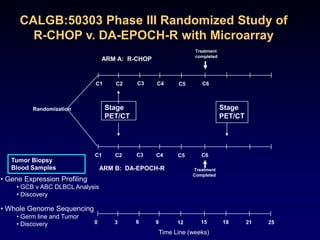
CALGB:50303 Phase III Randomized Study of R-CHOP v. DA-EPOCH-R with Microarray TreatmentcompletedARM A:  R-CHOPC3C4C6C1C2C5StagePET/CTStagePET/CTRandomization C3C4C6C1C2C5Tumor BiopsyBlood SamplesARM B:  DA-EPOCH-RTreatmentCompleted  Gene Expression Profiling

LLA 2011 - B. Cheson - Problems of the design and interpretation of very early clinical trials in hemato-oncology

  • 1.
    Problems of theDesign and Interpretation of Very Early Clinical Trials in Hemato-OncologyBruce D. Cheson, M.D.Georgetown University HospitalLombardi Comprehensive Cancer CenterChair, CALGB Lymphoma CommitteeWashington, D.C., USA
  • 2.
    Earliest Published ClinicalTrialsDaniel 1:11-20. Health of Hebrews fed a Kosher diet vs Babylonians fed on a state dietScurvy on the HMS Salisbury: cider vs vinegar vs lemons
  • 3.
    Phases of ClinicalTrialsPhase I - determine toxicityPhase II - determine activityPhase III - evaluate efficacyPhase IV - post-marketing
  • 4.
    The Problem6500 trialsopen to accrual in the U.S. (clinicaltrials.gov)3% of patients go on studiesStudies compete for same patients63% of trials are ever completed
  • 5.
    Why our trialsfailBlame the designBlame the physiciansBlame the patientsBlame the wealth of new agentsRarely do we blame the science
  • 6.
    Problems in NewDrug DevelopmentSlow rate of accrual to clinical trialsLack of good preclinical modelsLack of surrogate endpointsFalse negatives – missing an active agentFalse positives – waste resources on ineffective agent
  • 7.
    High False PositiveRateRely on a single studyUnpredictability of intermediate endpointsGet excited by waterfall plotsShort follow-upResponse durationToxicityUnplanned subset analyses
  • 9.
    Will Rogers (1879-1935)
  • 10.
    The Will RogersEffect“When the Okies left Oklahoma and moved to California, they raised the average intelligence level in both states!”
  • 11.
    Or, in non-CowboyTerms ~ A positive effect will occur when both of the following conditions are met ~The element being moved is below average for its current set. Removing it will, by definition, raise the average of the remaining elements
  • 12.
    The element beingmoved is above the current average of the set it is entering. Adding to it will, by definition, raise the averageExamplesConsider the sets R and SR= (1, 2, 3, 4) – Mean = 2.5
  • 13.
    S= (5, 6,7, 8, 9) – Mean = 7
  • 14.
  • 15.
    Mean of Rincreases to 3
  • 16.
    Mean of Sincreases to 7.5Relevance to Clinical Trials: Stage MigrationImproved detection of illness leads to the movement of people from the set of healthy to the set of unhealthyExample: Increased sensitivity of PET scans in lymphomaMoves “early” stage to advanced stage
  • 17.
    Moves false-positive advancedstage to early stage
  • 18.
    Improves the outcomeof both cohortsCT from PET/CT - axial view
  • 19.
  • 20.
  • 21.
  • 22.
    Reducing the FalseNegative RateRecognize tumor diversityUnderstand tumor biology
  • 23.
    Not All Patientsor Their Diseases Are Created Equal
  • 24.
    Lymphoma Cancer FactsLymphomasrepresent the 5th most common form of cancer in the US2011 projected >75,000 new cases in the US alone with ~ 25,000 deaths/yr~ 60 morphologic/immunologic subtypesMany more by molecular-genetic assessmentNo two lymphomas are alike and treatments must be selected based on an individual’s tumor characteristics, by personalized medicine
  • 25.
    Antoni van Leeuwenhoek(1632-1723)Invented the microscope around 166821
  • 26.
    TreatmentAdviceContrast of Appearancevs.Gene Expression ProfilingMicroscopeDLBCLDLBCLHigh RiskLow RiskMicroarray22
  • 27.
    Lenz et al.,N. Engl. J. Med. 2008A study of the Lymphoma Leukemia Molecular Profiling Project (LLMPP)
  • 28.
    Survival curves indiffuse large B-cell lymphoma treated with Bortezomib-R-CHOPRuan J et al. JCO 2011;29:690-697
  • 29.
  • 30.
    Lenalidomide in DLBCL(n=40)Response RatesGCB - 9% (4% CR)Non-GCB – 53% (5% CR)P = .006Hernandez-Ilizaliturri et al, Cancer (e-pub, 2011)
  • 31.
    Microvessel Density inDLBCLCardesa-Salzmann et al, Haematol 2011 (e-pub ahead of print)
  • 32.
    LHCardesa-Salzmann et al,Haematol 2011 (e-pub ahead of print)
  • 33.
    Clinical Factors:-FLIPI-F2Biological Factors:-Histology-Molecular-Cytogenetic-Protein-mRNAPredictorsof Clinical Behavior in FLHost factors?-FCR SNPsMicroenvironment-Others
  • 34.
    Overall survival basedon lymphoma associated macrophage (LAM) contentFarinha, P. et al. Blood 2005;106:2169-2174
  • 35.
    .Weng W ,Levy R JCO 2003;21:3940-3947FcgRIII Polymorphisms and Response to Rituximab
  • 36.
    CORAL maintenance: PFSby gender in maintenance and observation arms1.01.00.80.80.60.6Survival probabilitySurvival probability0.40.40.20.2p = 0.0044p = 0.59210.00.001224364860720122436486072PFS (months)PFS (months)FemaleFemaleMaleMaleRituximabObservation
  • 38.
    Probability of Survival100806040200024487296120144168Months13qdeletionPatients surviving (%)12q trisomy11q deletionNormal17p deletionDöhner H, et al. N Engl J Med. 2000;343:1910-1916.
  • 39.
    Outcome With Alemtuzumabin CLL Cytogenetic Subgroups.Stilgenbauer S et al. JCO 2009;27:3994-4001
  • 40.
    1001008080Surviving (%)6060Surviving (%)P=0.0008P=0.0014040202000501001502002503000050100150200250300MonthsMonthsSurvivalof CLL Patients With Mutated vsUnmutated VH GenesStage-A CLL patients (n=62)All patients (n=84)MutatedMutatedUnmutatedUnmutatedDamle RN, et al. Blood. 1999;94:1840-1847.Hamblin TJ, et al. Blood. 1999;94:1848-1854
  • 41.
    Genes That BestDiscriminate Ig-Unmutated and Ig-mutated CLLIg-Unmut Ig-Mut
  • 42.
    Kaplan-Meier Estimates Basedon Level of ZAP-70 ExpressionLikelihood of survivalRisk of disease progression10090807060504030201001009080706050403020100<20% ZAP-70–positive cells20% ZAP-70–positive cells% Progression% surviving<20% ZAP-70–positive cells20% ZAP-70–positive cellsP=0.009P=0.010 2 4 6 8 10 12 14 160 4 8 12 16 20 24 28 32 36Years after diagnosisYears after diagnosisCrespo M, et al. N Engl J Med. 2003;348:1764-1775.
  • 43.
    The Nature ofthe Disease
  • 44.
    Pathway vs. NetworksignalingPathway“Newtonian”Network“Chaotic”A. Friedman and N. Perrimon, Cell 128, January 26, 2007
  • 45.
  • 46.
    Sos-1PI3-KRasGrb2ShcRafMEKMEKK-1JNKMKK-7ERKAKTThe Target InteractomeWhere’sthe target?Courtesy of I. Serebriiskii and E. Golemis, Fox Chase Cancer Center
  • 47.
    Cheson’s Rule“The efficacyof a new drug is directly proportional to its negative impact on clinical research”
  • 48.
    Victims of OurOwn Successes: The DiseaseFront-line HLFront-line DLBCLFront-line FLFront-line CLL
  • 49.
    Victims of OurOwn Successes: The DrugNew drug B is very active in relapsed/refractory diseaseRapidly adopted as front-lineProblemsNo drug B naïve pts against which to compare drug CNo data on other drugs in B-relapsed ptsResults in relapse too good to improve uponResults in front-line too good to improve upon
  • 50.
    ExamplesTK inhibitors inCMLB(R) in F/LG NHLB(R) in CLLBrentuximabvedotin in HL
  • 51.
    SolutionsDrug B +/-drug C in relapsed-refractory ptsTakes a randomized trialLong time for answerDrug C in B-refractory ptsNo data with other agentsRisky
  • 52.
    Do We HaveSurrogate Endpoints?
  • 53.
    1.00.80.60.40.20.0012243648846072Time (months)MRD Responseand Treatment-Free Survival After Alemtuzumab Treatment (N=91)MRD-negative CR/PR (n=18)P<0.0001Cumulative probabilityMRD-positive CR (n=14)MRD-positive PR (n=17)Nonresponders (n=42)Moreton P et al. J Clin Oncol. 2005;23:2971-2979.
  • 54.
    PRIMA: Primary endpoint(PFS): 36 months’ follow-up after randomisation1.00.875%Rituximab maintenance0.6Event-free rate58%0.4ObservationStratified HR = 0.5595% CI: 0.44–0.68p < 0.00010.20.006121824303642485460Time (months)Patients at risk50547244542340430720784170–51346941536733424716170160–GA Salles et al. ASH 2010, Abstract 1788
  • 55.
    Progression-free survival(from studyregistration)Conventional response assessment1.0CR/CRuPR0.8SD/PD0.6Probability of PFS0.40.2p < 0.00010.006121824303642485460Time (months)No. of subjectsEventCensoredMedian PFS (months)CR/CRu8935% (31)65% (58)52PR2744% (12)56% (15) NRSD/PD 888% (7)13% (1)7
  • 56.
    Progression-free survival(from studyregistration) Post-treatment PET-CT based assessment1.0PET negativePET positive74%0.80.6Probability of PFS0.432%HR = 3.5 (95% CI 2.0-6.1)p < 0.00010.20.006121824303642485460Time (months)EventCensoredMedian PFS (months)No. of subjectsPET negative31% (28)69% (63)NR91PET positive33% (11)193367% (22)
  • 57.
    Progression-free survival accordingto IPS group and PET results after two cycles of ABVDGallamini, A. et al. J Clin Oncol; 25:3746-3752 2007
  • 58.
    BEACOPP treatment for154 PET-2- positive advanced-stage HL patients PET2-negAll ptsPET2+Gallamini A. et al, Br J Haematol, 152:551, 2011
  • 59.
  • 60.
    Variables Influencing InterimPET ResultsDiseaseStageTherapyMethod of interpretation
  • 61.
    Accelerate Completion ofClinical TrialsActivate fewer studiesConsider alternative funding sourcesIdentify surrogate endpointsNovel statistical designs
  • 62.
    Is There Stilla Role For Traditional Phase I Studies in Haematologic Malignancies?
  • 63.
    Dose Escalation ofRituximab in CLL DosePatients with toxicity2(mg/m )No.No.Grade 500 3 0 - 650 3 11+ nausea 825 3 0 - 1000 3 21+ malaise, nausea 1500 4 1dyspnea, dose 2 225010 52+ fever, chills1+ nausea, fatigue$LTO’Brien et al, JCO 19:2165-70, 2001
  • 64.
    Need to ConsiderNovel Study Designs
  • 65.
    Randomized Discontinuation DesignPremise:Somedrugs are more static than tumouricidal
  • 66.
  • 67.
    Single arm studycannot identify improved PFSEnrichment designSelect/randomize relatively homogenous patients
  • 68.
    .Rosner G Let al. JCO 2002;20:4478-4484Randomized Discontuation Design
  • 69.
    A Proposal forNew Drug Development in CancerSmall Phase II TrialsMolecular EnrichmentMolecular EnrichmentRepeat
  • 70.
    I-SPY2 TRIAL*ADAPTIVELYRANDOMIZE Experimental arm 1 Experimental arm 2Outcome:Complete Response Populationof patients Experimental arm 3 Experimental arm 4 Experimental arm 5 Standard therapy*Investigation of Serial Studies to Predict Your Therapeutic Response with Imaging And moLecular Analysis 2
  • 71.
    Sometimes We AreMisled By Rigid Response CriteriaCLLCheson, et al, Am J Hematol 29:72, 1988Cheson, et al, Blood 87:4990, 1996Hallek, Cheson, et al, Blood 111:5446, 2008AML Cheson, et al, JCO 8:813, 1990Cheson et al, JCO 21:4642, 2003MDSCheson, et al, Blood 96:3671, 2000Cheson, et a, Blood 108:419, 2006NHLCheson, et al, JCO 17:1244, 1999Cheson, et al, JCO 25:579, 2007MM – Don’t blame me!
  • 72.
    Tumor Flare ReactionFlarereactionBaselinePost-treatmentOccasionalFever
  • 73.
  • 74.
    ↑ WBC/ALCPI3K DeltaPathway Induces Proliferation Cell survival TraffickingCritical Signaling Pathways in B-Cell MalignanciesStromal cellT-cellSignalingstimulusIL-6BAFFCXCL13IL-6RBCRCXCR5BAFFRCD40Malignant B-cell membraneLYNgp130gp130JAKTRAF6JAKSYKaLYN/SYKbgPI3KDeltaSTATSTATBTKBTKPLCg2PLCg2AKTT308S473NF-kBpathwayGSK-3PKCmTORp70s6kelf4E
  • 75.
    The Road toIndividualized Therapy Starts With Science
  • 76.
    CALGB Current/Planned Protocolsin Untreated Follicular NHLLow-Intermediate FLIPI50402 - Rituximab + galiximab (completed)50404 - Rituximab + oblimersen (RIP)50701 - Rituximab + epratuzumab (completed)50803 - Rituximab + lenalidamide (near completion)50901 – Ofatumumab (500 mg vs 1000 mg)511XX – Rituximab/Lenalidomide +/- PCI32765
  • 77.
    Correlative StudiesPET scansMolecularprofiling, gene expressionTMAs collected on all patientsStudies of effector cell number/functionFOXP3, T-RegsMicroenvironmental factors, LAMsSNPsMicroRNAs
  • 78.
    CALGB:50303 Phase IIIRandomized Study of R-CHOP v. DA-EPOCH-R with Microarray TreatmentcompletedARM A: R-CHOPC3C4C6C1C2C5StagePET/CTStagePET/CTRandomization C3C4C6C1C2C5Tumor BiopsyBlood SamplesARM B: DA-EPOCH-RTreatmentCompleted Gene Expression Profiling