---Prashiddha Dhakal 
MBBS, KUSMS
“SIX PILLARS” OF SAFE MOTHERHOOD 
Safe Motherhood 
FP ANC PNC 
Obs. 
Care 
Post 
Aborti 
on 
Care 
Communication for behavior change 
Equity & Education for women 
STD/ 
HIV 
Contr 
ol 
Primary health care
1.Family Planning--- Information & services to 
plan the timing, number & spacing of 
pregnancies
2.Antenatal Care--- For early detection & 
treatment of complications of pregnancy
3.Obstetric Care--- Provide proper knowledge & 
equipments to the birth attendants & ensure 
emergency care for high risk pregnancy
4.Postnatal Care--- For both mother & her baby. 
Includes lactation assistance, FP services & 
management of complications of delivery
5.Post abortion care--- Management of 
complications & FP consultation
• 6.STD/HIV Control--- Voluntary Counseling & 
Testing (VCT), Prevention of Mother to Child 
Transmission (PMTCT)
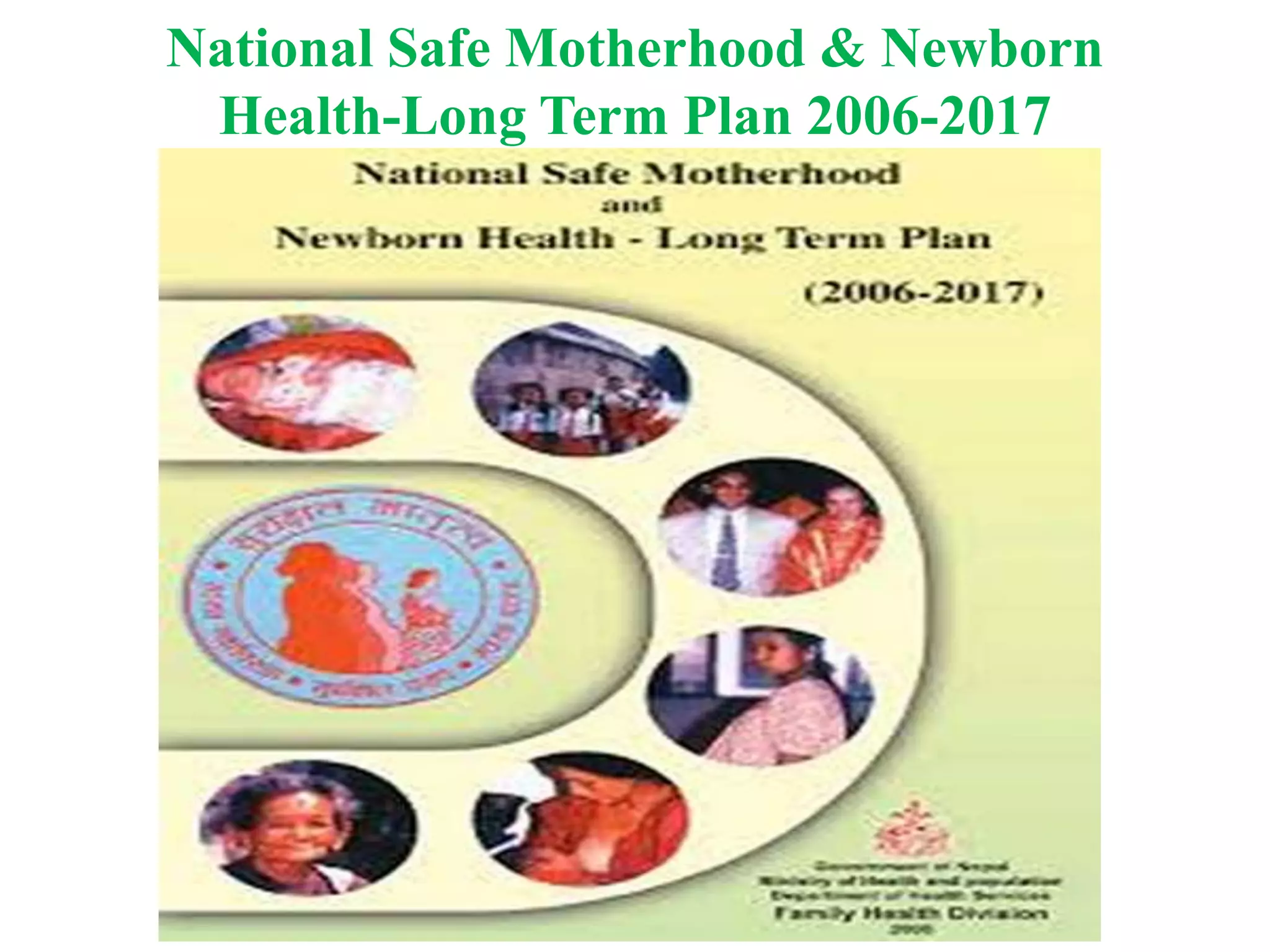
National Safe Motherhood & Newborn 
Health-Long Term Plan 2006-2017
• Developed by MoHP to fulfill the goals of 
maternal health status in Nepal 
• Goal--- 
To improve maternal & neonatal health & survival, 
especially of poor & excluded people 
• Key indicators of the goal--- 
1. Maternal Mortality Ratio- Reduction from 539 
per 1 lakh life births to 134 per 1 lakh by 2017 
2. Neonatal Mortality Ratio- Reduction from 
39/1000 to 15/1000 by 2017
• Other indicators of safe motherhood--- 
1. Infant Mortality Rate 
2. Total Fertility Rate 
3. Contraceptive Prevalence Rate 
4. ANC coverage rate 
5. % delivery assisted by SBA 
6. % of women who took iron during pregnancy 
7. % of institutional delivery 
8. % of caesarean section 
9. Obstetric case fatality rate
• Strategies--- 
1. Promoting intersectorial collaboration for safe 
motherhood at central, regional, district & 
community level---- i.e. between sectors like 
health, education, and social welfare ,legal and 
local development 
2. Promote research on safe motherhood to 
contribute to improved planning , higher quality 
services, and more cost-effective interventions 
3. Supporting activities that raise the status of 
women in society
4. Expanding delivery by skilled birth attendant & 
basic/comprehensive obstetric care services at 
all levels---Interventions include : 
 Developing the infrastructures for delivery and 
emergency obstetric care. 
 Establishing functional referral system and 
advocating for emergency transport systems 
and funds from communities to district 
hospitals for obstetrics emergencies and high – 
risk pregnancies. 
 Strengthening community –based awareness on 
birth preparedness and complication readiness 
through FCHVs ,increasing acess of all relevant 
maternal health information and service

Safe motherhood

  • 1.
  • 2.
    “SIX PILLARS” OFSAFE MOTHERHOOD Safe Motherhood FP ANC PNC Obs. Care Post Aborti on Care Communication for behavior change Equity & Education for women STD/ HIV Contr ol Primary health care
  • 3.
    1.Family Planning--- Information& services to plan the timing, number & spacing of pregnancies
  • 4.
    2.Antenatal Care--- Forearly detection & treatment of complications of pregnancy
  • 5.
    3.Obstetric Care--- Provideproper knowledge & equipments to the birth attendants & ensure emergency care for high risk pregnancy
  • 6.
    4.Postnatal Care--- Forboth mother & her baby. Includes lactation assistance, FP services & management of complications of delivery
  • 7.
    5.Post abortion care---Management of complications & FP consultation
  • 8.
    • 6.STD/HIV Control---Voluntary Counseling & Testing (VCT), Prevention of Mother to Child Transmission (PMTCT)
  • 9.
    National Safe Motherhood& Newborn Health-Long Term Plan 2006-2017
  • 10.
    • Developed byMoHP to fulfill the goals of maternal health status in Nepal • Goal--- To improve maternal & neonatal health & survival, especially of poor & excluded people • Key indicators of the goal--- 1. Maternal Mortality Ratio- Reduction from 539 per 1 lakh life births to 134 per 1 lakh by 2017 2. Neonatal Mortality Ratio- Reduction from 39/1000 to 15/1000 by 2017
  • 11.
    • Other indicatorsof safe motherhood--- 1. Infant Mortality Rate 2. Total Fertility Rate 3. Contraceptive Prevalence Rate 4. ANC coverage rate 5. % delivery assisted by SBA 6. % of women who took iron during pregnancy 7. % of institutional delivery 8. % of caesarean section 9. Obstetric case fatality rate
  • 12.
    • Strategies--- 1.Promoting intersectorial collaboration for safe motherhood at central, regional, district & community level---- i.e. between sectors like health, education, and social welfare ,legal and local development 2. Promote research on safe motherhood to contribute to improved planning , higher quality services, and more cost-effective interventions 3. Supporting activities that raise the status of women in society
  • 13.
    4. Expanding deliveryby skilled birth attendant & basic/comprehensive obstetric care services at all levels---Interventions include :  Developing the infrastructures for delivery and emergency obstetric care.  Establishing functional referral system and advocating for emergency transport systems and funds from communities to district hospitals for obstetrics emergencies and high – risk pregnancies.  Strengthening community –based awareness on birth preparedness and complication readiness through FCHVs ,increasing acess of all relevant maternal health information and service