BASIC CONCEPT OF DISASTER
AND DISASTER RISK
ALWAYS FIRST ALWAYS READY ALWAYS THERE
Module I: Basic Concepts of DRR
• Concept of disaster
• Concept of disaster risk
• Nature of disasters
• Effects of disasters
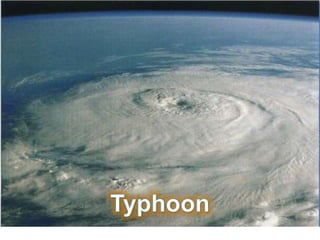
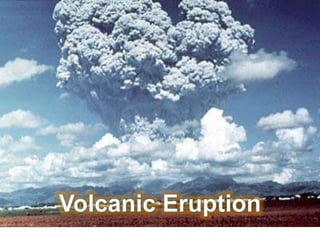
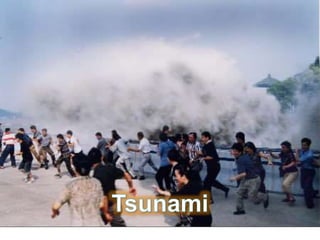
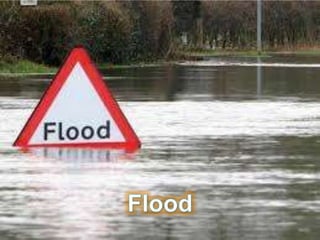
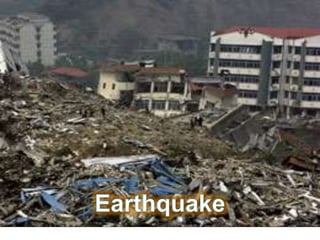
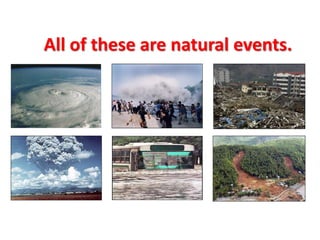
All of these are natural events.
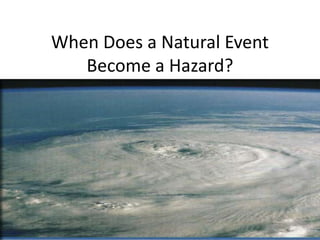
When Does a Natural Event
Become a Hazard?
is a phenomenon that poses threat to people,
structure or economic assets
WHAT IS A NATURAL HAZARD?
• A natural hazard is a natural event or process
which affects people causing loss of life or
injury, economic damage, disruption to
peoples’ lives or environmental degradation
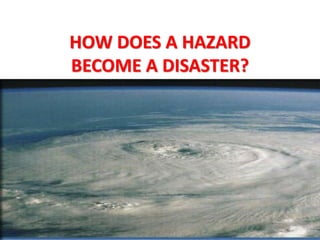
HOW DOES A HAZARD
BECOME A DISASTER?
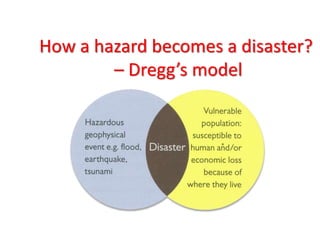
How a hazard becomes a disaster?
– Dregg’s model
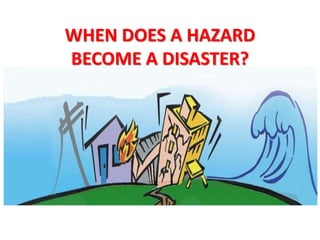
WHEN DOES A HAZARD
BECOME A DISASTER?
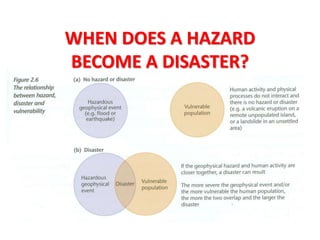
A disaster happens when
the probable destructive
agent, the hazard, hits a
vulnerable populated area
WHEN DOES A HAZARD
BECOME A DISASTER?
WHEN DOES A HAZARD
BECOME A DISASTER?
Natural hazards are part and parcel of
the Philippine environment, but
disasters happen because human
settlements, infrastructures, people
and economic activities are placed
where hazards happen
WHAT IS DISASTER RISK?
Disaster risk refers to the
expectation value of deaths,
injuries, and property losses
that would be caused by a
hazard.
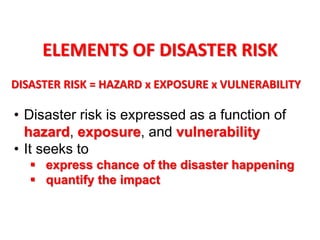
DISASTER RISK = HAZARD x EXPOSURE x VULNERABILITY
ELEMENTS OF DISASTER RISK
• Disaster risk is expressed as a function of
hazard, exposure, and vulnerability
• It seeks to
 express chance of the disaster happening
 quantify the impact
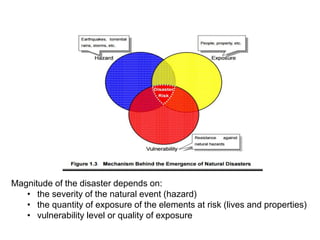
Disaster Risk Model
Magnitude of the disaster depends on:
• the severity of the natural event (hazard)
• the quantity of exposure of the elements at risk (lives and properties)
• vulnerability level or quality of exposure
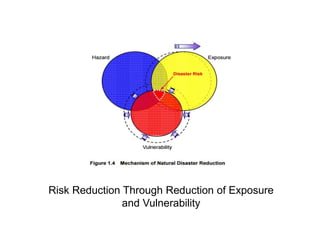
Minimizing Disaster Risk
Risk Reduction Through Reduction of Exposure
and Vulnerability
Minimizing Disaster Risk
Risk Reduction Through Reduction of
Exposure and Vulnerability
Level of vulnerability and
exposure can be reduced by:
• Keeping people and property away
from hazards
• Relocation must come hand in hand
with mitigation and prevention
measures
Minimizing Disaster Risk
Why people are resistive to relocation?
• This would mean giving up their homes,
land, and even jobs;
• People tend to turn a blind eye;
• People remain in places previously hit by a
disaster thinking that after a large
magnitude event occurs comes a period
that is safe from another event
• The most vulnerable are the poor who are
forced to live in unsafe places
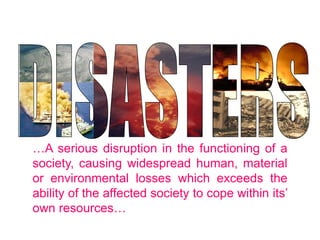
…A serious disruption in the functioning of a
society, causing widespread human, material
or environmental losses which exceeds the
ability of the affected society to cope within its’
own resources…
RA 10121 Definition of Disaster
A condition involving mass casualty
and/or major damages to property,
disruption of means of livelihoods, roads
and normal way of life of people in the
affected areas as a result of the
occurrence of natural or human-induced
hazard
State of Calamity
Characteristics of Disasters
• Disasters are inherently unexpected
• Disasters cannot be managed through
normal means
• Disasters create demands beyond the
capacity of a government
• Knows no political boundary
• Requires structured and new responding
organizations
Characteristics of Disasters
• Creates new tasks and more people as
disaster responders
• Renders inutile routine emergency response
equipment and facilities
• Worsens confusion in understanding roles
of peoples and organizations
• Exposes lack of disaster planning, response
and coordination.
Impacts of Disasters
• Medical effects
• Damage to critical facilities
• Disruption of transportation
• Economic impact
• Global environmental change
• Social and political impact
The Philippine National Red Cross
Among the effects:
Loss of life
Loss of livelihoods
Damage to property
Destruction of infrastructure
Damage to the environment
Financial loss
Diversion of resources
Epidemics
Migration
Displaced people or refugees
Food shortages
Insecurity
End of Module

1 Module I Basic Concept of Disaster and Disaster Risk.pptx

  • 1.
    BASIC CONCEPT OFDISASTER AND DISASTER RISK ALWAYS FIRST ALWAYS READY ALWAYS THERE
  • 2.
    Module I: BasicConcepts of DRR • Concept of disaster • Concept of disaster risk • Nature of disasters • Effects of disasters
  • 9.
    All of theseare natural events.
  • 10.
    When Does aNatural Event Become a Hazard?
  • 11.
    is a phenomenonthat poses threat to people, structure or economic assets
  • 12.
    WHAT IS ANATURAL HAZARD? • A natural hazard is a natural event or process which affects people causing loss of life or injury, economic damage, disruption to peoples’ lives or environmental degradation
  • 13.
    HOW DOES AHAZARD BECOME A DISASTER?
  • 14.
    How a hazardbecomes a disaster? – Dregg’s model
  • 15.
    WHEN DOES AHAZARD BECOME A DISASTER? A disaster happens when the probable destructive agent, the hazard, hits a vulnerable populated area
  • 16.
    WHEN DOES AHAZARD BECOME A DISASTER?
  • 17.
    WHEN DOES AHAZARD BECOME A DISASTER?
  • 18.
    Natural hazards arepart and parcel of the Philippine environment, but disasters happen because human settlements, infrastructures, people and economic activities are placed where hazards happen
  • 19.
    WHAT IS DISASTERRISK? Disaster risk refers to the expectation value of deaths, injuries, and property losses that would be caused by a hazard.
  • 20.
    DISASTER RISK =HAZARD x EXPOSURE x VULNERABILITY ELEMENTS OF DISASTER RISK • Disaster risk is expressed as a function of hazard, exposure, and vulnerability • It seeks to  express chance of the disaster happening  quantify the impact
  • 21.
    Disaster Risk Model Magnitudeof the disaster depends on: • the severity of the natural event (hazard) • the quantity of exposure of the elements at risk (lives and properties) • vulnerability level or quality of exposure
  • 22.
    Minimizing Disaster Risk RiskReduction Through Reduction of Exposure and Vulnerability
  • 23.
    Minimizing Disaster Risk RiskReduction Through Reduction of Exposure and Vulnerability Level of vulnerability and exposure can be reduced by: • Keeping people and property away from hazards • Relocation must come hand in hand with mitigation and prevention measures
  • 24.
    Minimizing Disaster Risk Whypeople are resistive to relocation? • This would mean giving up their homes, land, and even jobs; • People tend to turn a blind eye; • People remain in places previously hit by a disaster thinking that after a large magnitude event occurs comes a period that is safe from another event • The most vulnerable are the poor who are forced to live in unsafe places
  • 25.
    …A serious disruptionin the functioning of a society, causing widespread human, material or environmental losses which exceeds the ability of the affected society to cope within its’ own resources… RA 10121 Definition of Disaster
  • 26.
    A condition involvingmass casualty and/or major damages to property, disruption of means of livelihoods, roads and normal way of life of people in the affected areas as a result of the occurrence of natural or human-induced hazard State of Calamity
  • 27.
    Characteristics of Disasters •Disasters are inherently unexpected • Disasters cannot be managed through normal means • Disasters create demands beyond the capacity of a government • Knows no political boundary • Requires structured and new responding organizations
  • 28.
    Characteristics of Disasters •Creates new tasks and more people as disaster responders • Renders inutile routine emergency response equipment and facilities • Worsens confusion in understanding roles of peoples and organizations • Exposes lack of disaster planning, response and coordination.
  • 29.
    Impacts of Disasters •Medical effects • Damage to critical facilities • Disruption of transportation • Economic impact • Global environmental change • Social and political impact
  • 30.
    The Philippine NationalRed Cross Among the effects: Loss of life Loss of livelihoods Damage to property Destruction of infrastructure Damage to the environment Financial loss Diversion of resources Epidemics Migration Displaced people or refugees Food shortages Insecurity
  • 31.