Introduction and classification
Dr. Waseem Bahjat Mushtaha
Specialized in prosthodontics
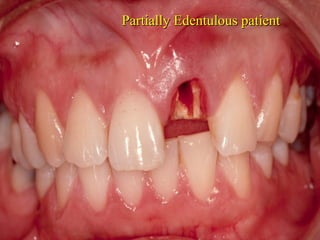
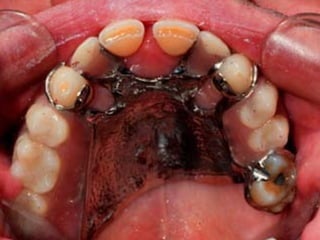
Partially Edentulous patientPartially Edentulous patient
Terminology
Prosthetics:
The art and science of replacing absent body
parts
Prosthesis:
An artificial replacement for a missing body
part.
Prosthodontics or dental prosthetics:
The branch of dental art and science that
pertains to the replacement of missing teeth
and oral tissues to restore and maintain oral
form. function, appearance and health.
Removable Prosthodontics
is devoted to replacement of missing teeth and
contagious tissues with prosthesis designed
to be removed by the wearer .It includes
two disciplines; removable complete and
removable partial Prosthodontics.
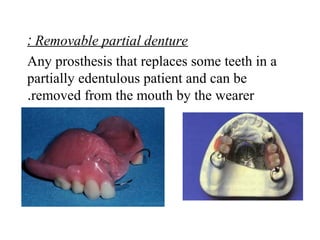
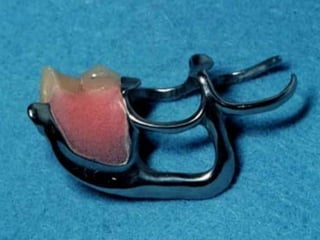
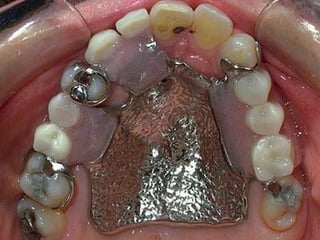
Removable partial denture:
Any prosthesis that replaces some teeth in a
partially edentulous patient and can be
removed from the mouth by the wearer.
PURPOSE OF REMOVABLE
PARTIAL DENTURE
I-Preservation of the remaining teeth and tissues:
The primary purpose of removable partial dentures
must always be the preservation of the remaining
teeth and soft tissues. The provision of partial
dentures will prevent or at least minimize the
following retrograde pathologies in the oral
structures:
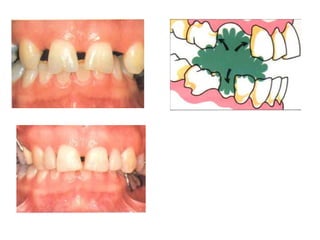
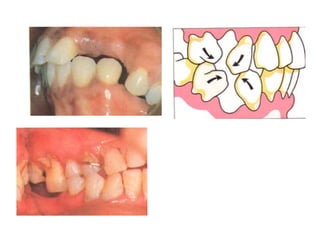
A- Drifting and rotation of remaining teeth.
B-Continuous eruption of unopposed teeth.
C-Overclosure and protrusion of the
mandible.
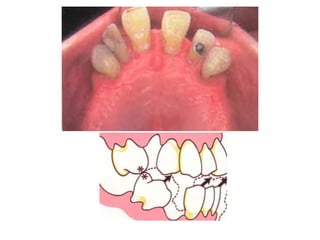
D- Trauma to the oral mucosa: Common
situation is excessively deep anterior
overbite and impingement of the lower teeth
into the palatal mucosa.
E-Facial or temporomandibular joint pain,
may result from occlusal derangement
occurred due to drifting and super-eruption
of the remaining teeth and overclosure and
mandibular protrusion.
2-To improve masticatory function:
Replacing the lost teeth in an arch will greatly improve the
act of chewing, by eliminating space into which food
escape from the occlusal table and also it contributes
directly in mastication.
3-Improve aesthetics:
Restoration of lost facial contour, vertical dimension of the
face and absent teeth will improve the patient appearance.
4-Restoration of speech:
The artificial teeth should be placed in the position previously
occupied by the natural teeth to correct the speech defects.
5-Psychological benefits:
The provision of an acceptable partial denture will enhance
comfort of the patient
CLASSIFICATION OF
PARTIALLY EDENTULOUS
ARCHES
Classification according to support
The partial dentures are classified according to the
vertical support into
I-Tooth borne; derives its support totally from the
abutment teeth throughout rests.
2-Mucosa borne; supported totally by the
edentulous ridge.
3-Tooth-mucosa support; supported by both
abutment teeth and the edentulous ridge as in free
end saddle (distal extension base(.
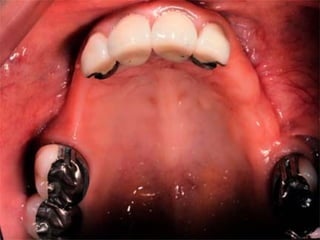
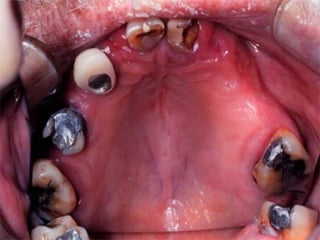
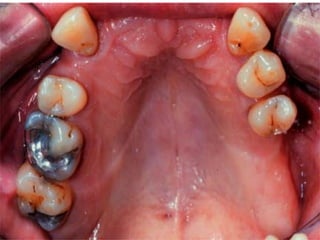
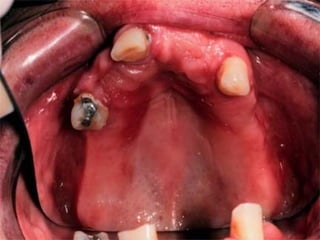
Kennedy classification
Kennedy's classification contains the following four classes, with certain
modifications:
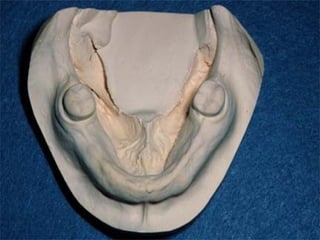
Class I
Bilateral edentulous areas located posterior to the remairing natural teeth.
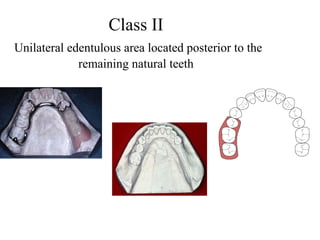
Class II
Unilateral edentulous area located posterior to the remaining natural teeth.
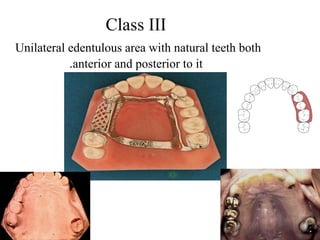
Class III
Unilateral edentulous area with natural teeth both anterior and posterior to
it.
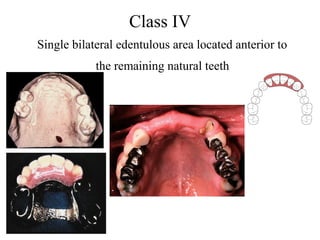
Class IV
Single bilateral edentulous area located anterior to the remaining natural
teeth
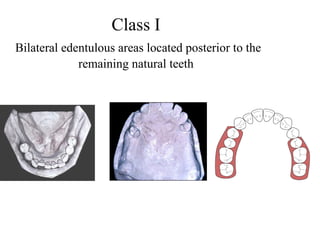
Class I
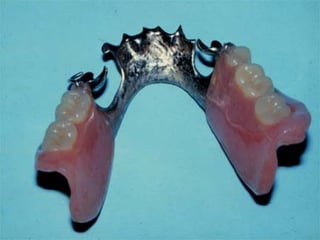
Bilateral edentulous areas located posterior to the
remaining natural teeth
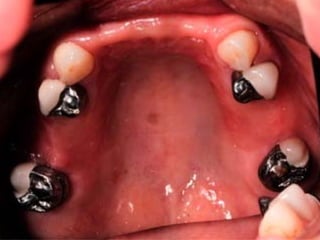
Class II
Unilateral edentulous area located posterior to the
remaining natural teeth
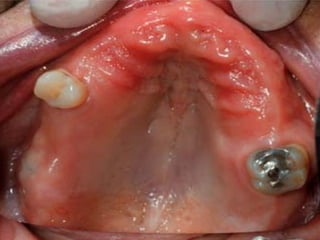
Class III
Unilateral edentulous area with natural teeth both
anterior and posterior to it.
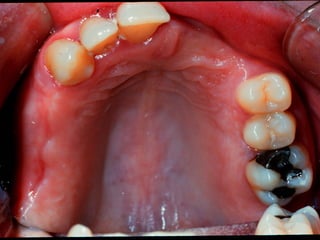
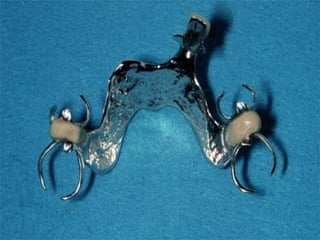
Class IV
Single bilateral edentulous area located anterior to
the remaining natural teeth
Applegate's rules
Applegate provided the following eight rules to govern the
application of the Kennedy system:
Rule 1.
Classification should follow rather than precede extraction
that might alter the original classification.
Rule 2
If the third molar is missing and not to be replaced it is not
considered in the classification.
Rule 3
If a third molar is present and is to be used as an abutment, it
is considered in the classification.
Rule 4:
If a second molar is missing and is not to be replaced (that is, the
opposing second molar is also missing and is not to be replaced), it is
not considered in the classification.
Rule 5:
The most posterior edentulous area or areas always determine the
classification.
Rule 6:
Edentulous areas other than those determining the classification are
referred to as modification spaces and are designated by their number.
Rule 7:
The extent of the modification is not considered only the number of
additional edentulous areas.
Rule8:
There can be no modification areas in class IV arches. Any edentulous
area lying posterior to the single bilateral area determines the
classification.
1 introduction-and-classification

1 introduction-and-classification

  • 1.
    Introduction and classification Dr.Waseem Bahjat Mushtaha Specialized in prosthodontics
  • 2.
  • 3.
    Terminology Prosthetics: The art andscience of replacing absent body parts Prosthesis: An artificial replacement for a missing body part.
  • 4.
    Prosthodontics or dentalprosthetics: The branch of dental art and science that pertains to the replacement of missing teeth and oral tissues to restore and maintain oral form. function, appearance and health. Removable Prosthodontics is devoted to replacement of missing teeth and contagious tissues with prosthesis designed to be removed by the wearer .It includes two disciplines; removable complete and removable partial Prosthodontics.
  • 5.
    Removable partial denture: Anyprosthesis that replaces some teeth in a partially edentulous patient and can be removed from the mouth by the wearer.
  • 6.
    PURPOSE OF REMOVABLE PARTIALDENTURE I-Preservation of the remaining teeth and tissues: The primary purpose of removable partial dentures must always be the preservation of the remaining teeth and soft tissues. The provision of partial dentures will prevent or at least minimize the following retrograde pathologies in the oral structures: A- Drifting and rotation of remaining teeth. B-Continuous eruption of unopposed teeth.
  • 7.
    C-Overclosure and protrusionof the mandible. D- Trauma to the oral mucosa: Common situation is excessively deep anterior overbite and impingement of the lower teeth into the palatal mucosa. E-Facial or temporomandibular joint pain, may result from occlusal derangement occurred due to drifting and super-eruption of the remaining teeth and overclosure and mandibular protrusion.
  • 8.
    2-To improve masticatoryfunction: Replacing the lost teeth in an arch will greatly improve the act of chewing, by eliminating space into which food escape from the occlusal table and also it contributes directly in mastication. 3-Improve aesthetics: Restoration of lost facial contour, vertical dimension of the face and absent teeth will improve the patient appearance. 4-Restoration of speech: The artificial teeth should be placed in the position previously occupied by the natural teeth to correct the speech defects. 5-Psychological benefits: The provision of an acceptable partial denture will enhance comfort of the patient
  • 12.
  • 13.
    Classification according tosupport The partial dentures are classified according to the vertical support into I-Tooth borne; derives its support totally from the abutment teeth throughout rests. 2-Mucosa borne; supported totally by the edentulous ridge. 3-Tooth-mucosa support; supported by both abutment teeth and the edentulous ridge as in free end saddle (distal extension base(.
  • 14.
    Kennedy classification Kennedy's classificationcontains the following four classes, with certain modifications: Class I Bilateral edentulous areas located posterior to the remairing natural teeth. Class II Unilateral edentulous area located posterior to the remaining natural teeth. Class III Unilateral edentulous area with natural teeth both anterior and posterior to it. Class IV Single bilateral edentulous area located anterior to the remaining natural teeth
  • 15.
    Class I Bilateral edentulousareas located posterior to the remaining natural teeth
  • 16.
    Class II Unilateral edentulousarea located posterior to the remaining natural teeth
  • 17.
    Class III Unilateral edentulousarea with natural teeth both anterior and posterior to it.
  • 18.
    Class IV Single bilateraledentulous area located anterior to the remaining natural teeth
  • 19.
    Applegate's rules Applegate providedthe following eight rules to govern the application of the Kennedy system: Rule 1. Classification should follow rather than precede extraction that might alter the original classification. Rule 2 If the third molar is missing and not to be replaced it is not considered in the classification. Rule 3 If a third molar is present and is to be used as an abutment, it is considered in the classification.
  • 20.
    Rule 4: If asecond molar is missing and is not to be replaced (that is, the opposing second molar is also missing and is not to be replaced), it is not considered in the classification. Rule 5: The most posterior edentulous area or areas always determine the classification. Rule 6: Edentulous areas other than those determining the classification are referred to as modification spaces and are designated by their number. Rule 7: The extent of the modification is not considered only the number of additional edentulous areas. Rule8: There can be no modification areas in class IV arches. Any edentulous area lying posterior to the single bilateral area determines the classification.