Fizz Mind 2018 – Summary and Synthesis of Slideware
Summary
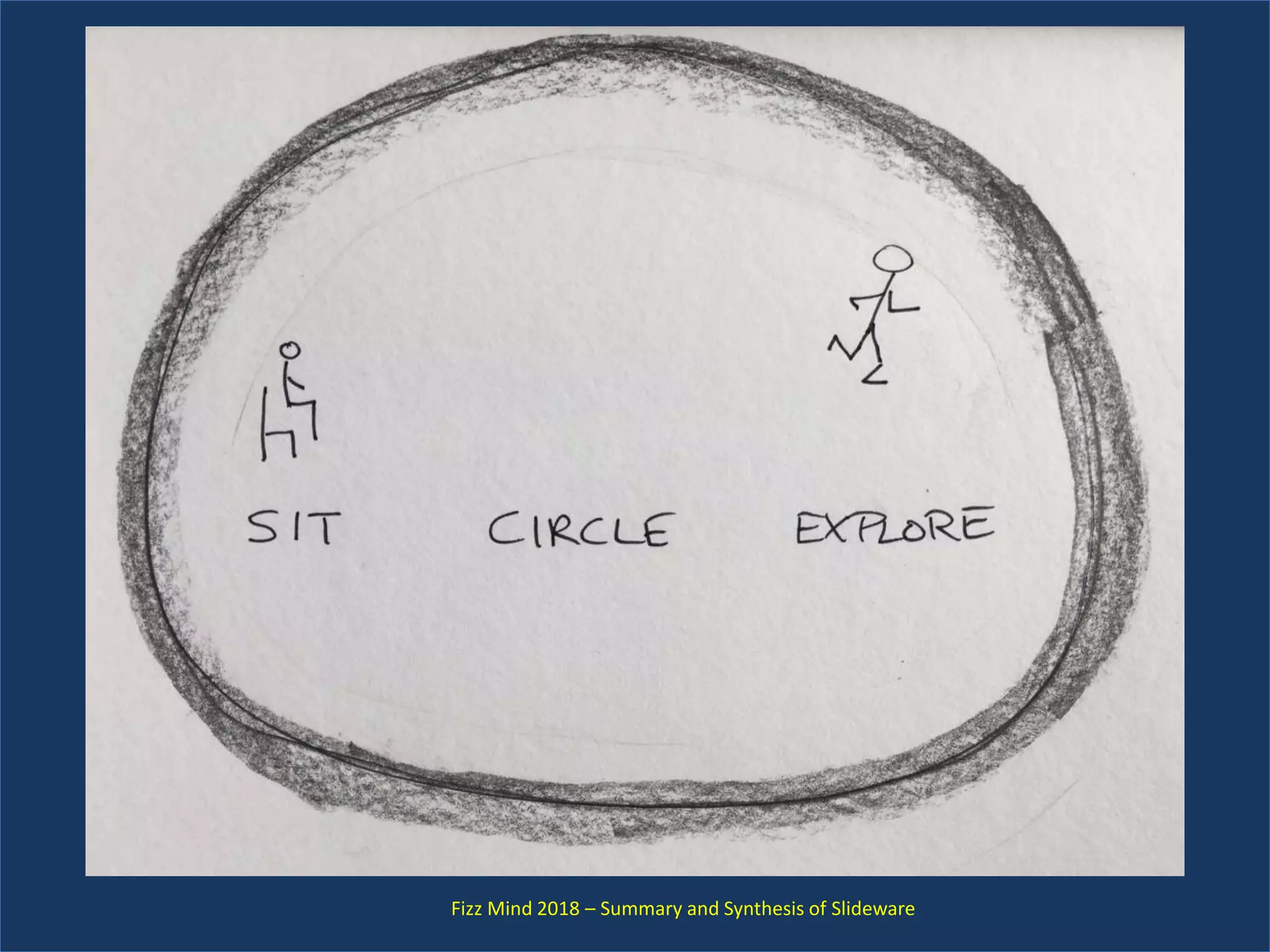
• Here is a collection of slides from the whole
workshop.
• Slides cover all the Sit, Circle, and Explore
topics.
– Opening & Closing, Sitting, Guiding, Circling,
Career Exploration, Science, Spiritual, and Next
Steps.
Opening & Closing
Sitting
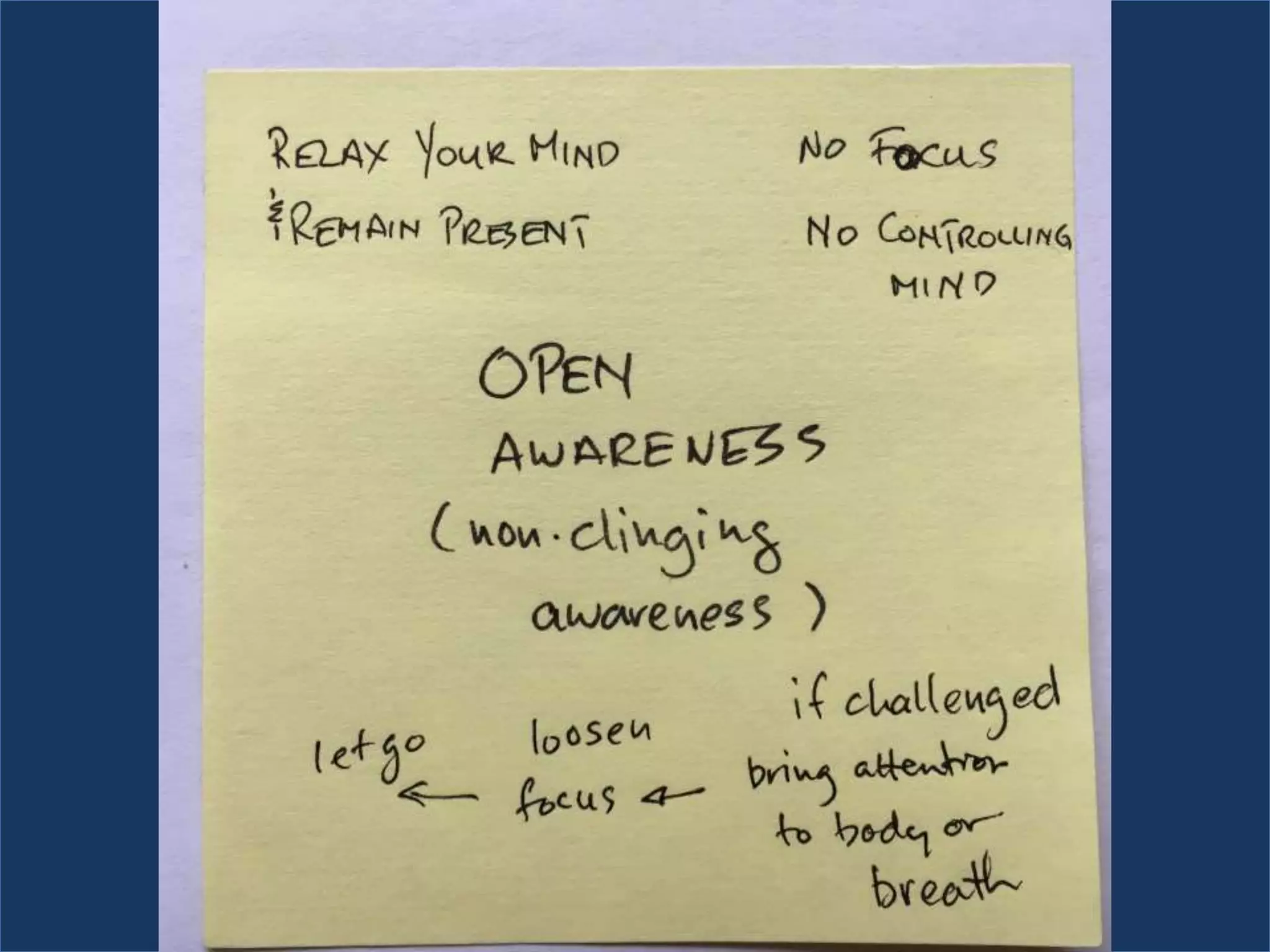
More - Open Awareness Notes
• "... resting in open awareness means that we
are awake and present, but not controlling our
experience, or even directing our mind, in any
way. As Mingyur Rinpoche often says, we are
not meditating, but not lost. When resting in
open awareness, you don’t have to worry about
whether you are doing it “right” or not. You can
let thoughts and feelings come and go freely,
and leave all your senses open and relaxed. You
don’t have to focus on anything in particular.
Just let be, natural and at ease.”
• Yongey Mingyur Rinpoche, "Joy of Living 1
Handbook" Page 13
• "When we practice on the level of objectless
attention (Open Awareness), we're actually
resting the mind in its natural clarity, unaltered
by the passage of thought, emotions, and
physical sensations. This natural clarity is always
present for us in the same way that space is
always present. In a sense, objectless attention
is like allowing ourselves to be aware of the
branches and leaves in front of us while
recognizing the space that allows us to
<em>see</em> the branches and leaves in the
first place. Thoughts, emotions, and sensations
shift and quiver in awareness in the same way
branches and leaves shift and quiver in space.
Moreover, just as space isn't defined by the
objects that move through it, awareness isn't
defined or limited by the thoughts, emotions,
and sensations it apprehends. Awareness
simply is.
• Yongey Mingyur Rinpoche, "Joyful Wisdom",
page 147
Guiding
Extra
Circling
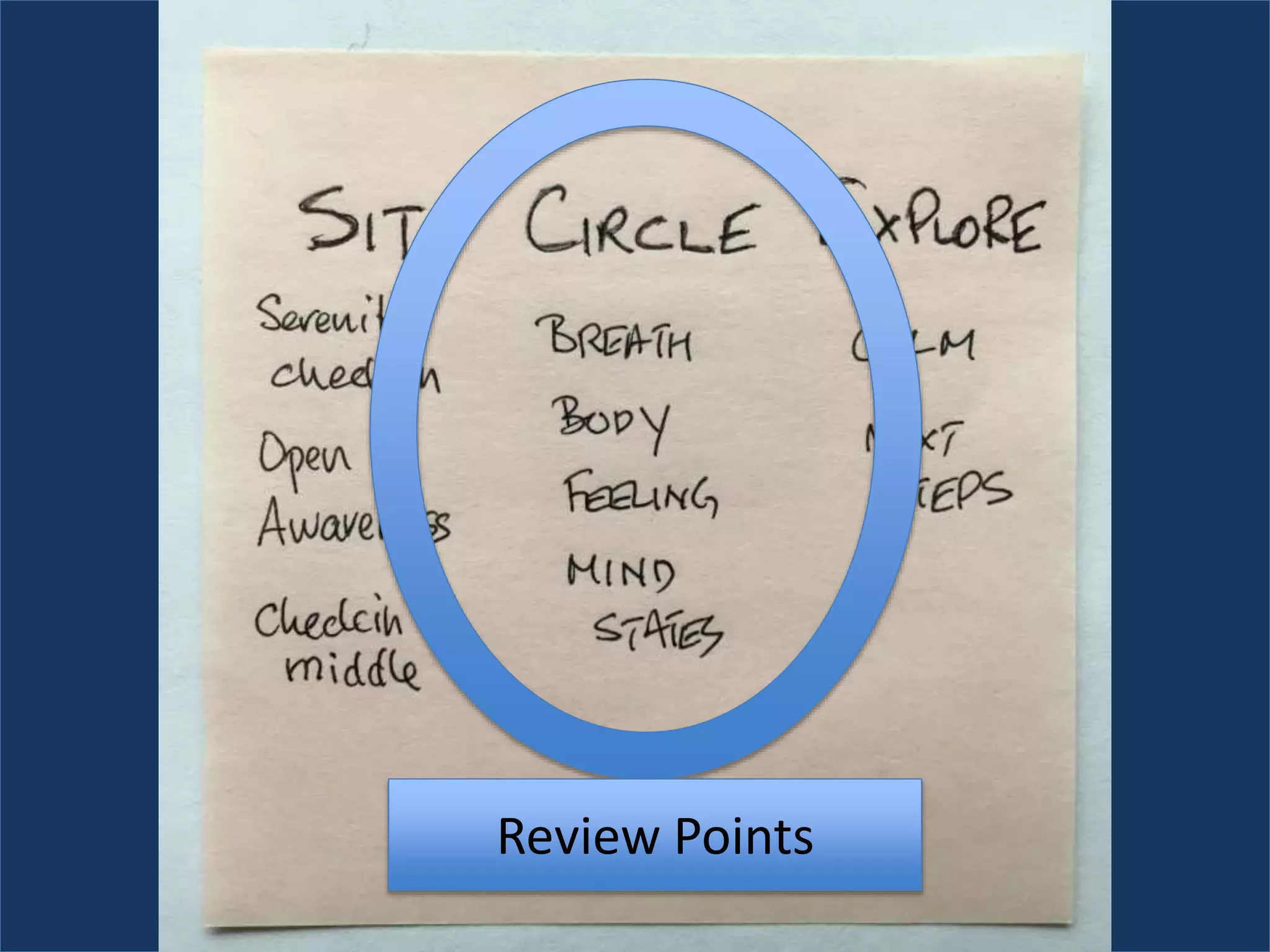
Review Points
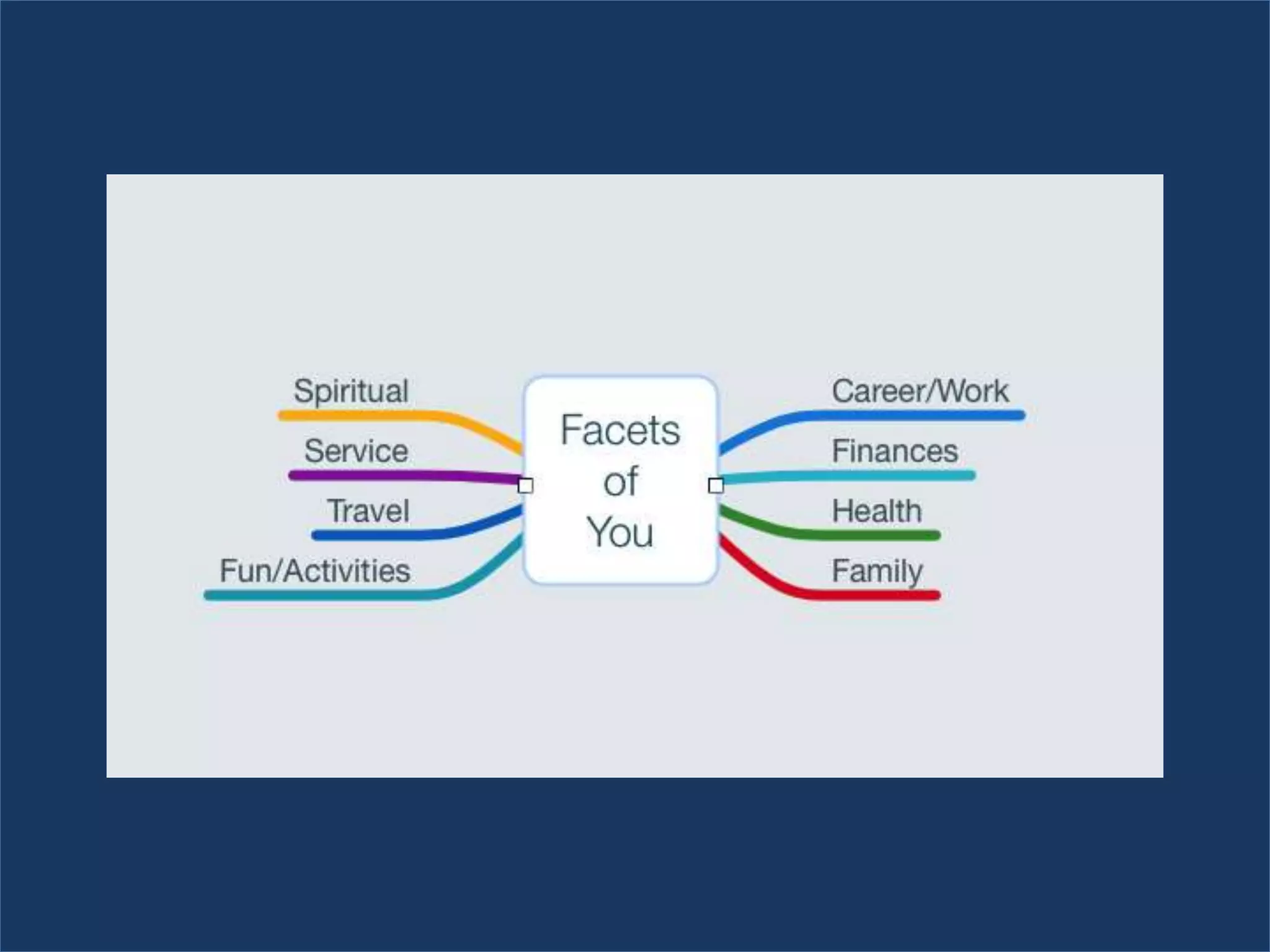
Career Exploration
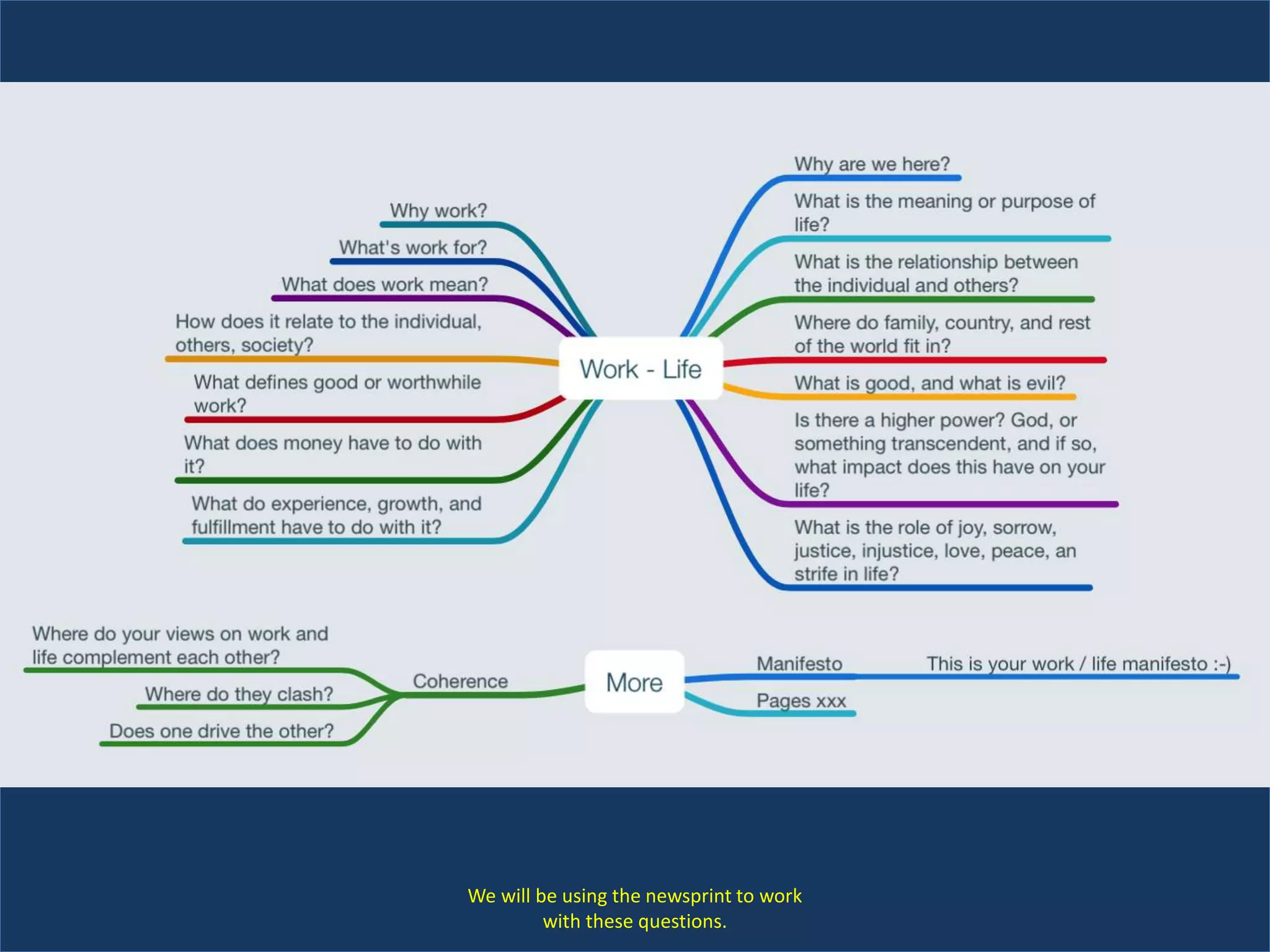
We will be using the newsprint to work
with these questions.
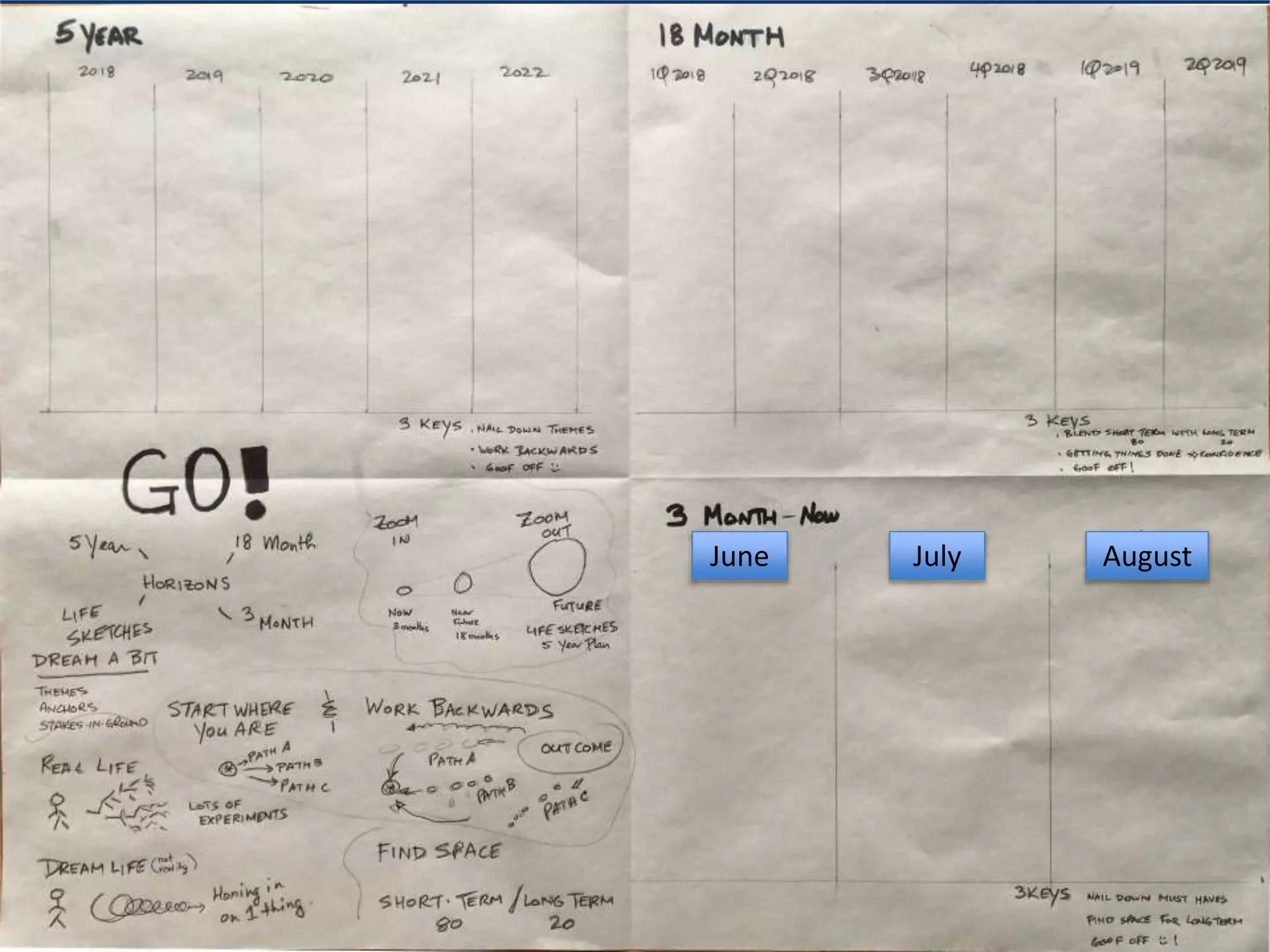
This is what yours
will look like 
Plan A
The
Dream
Not
Plan A
June July August
Science
&
Spiritual
Some
Science
York U
Ontario
More
Science
Some
More
Science
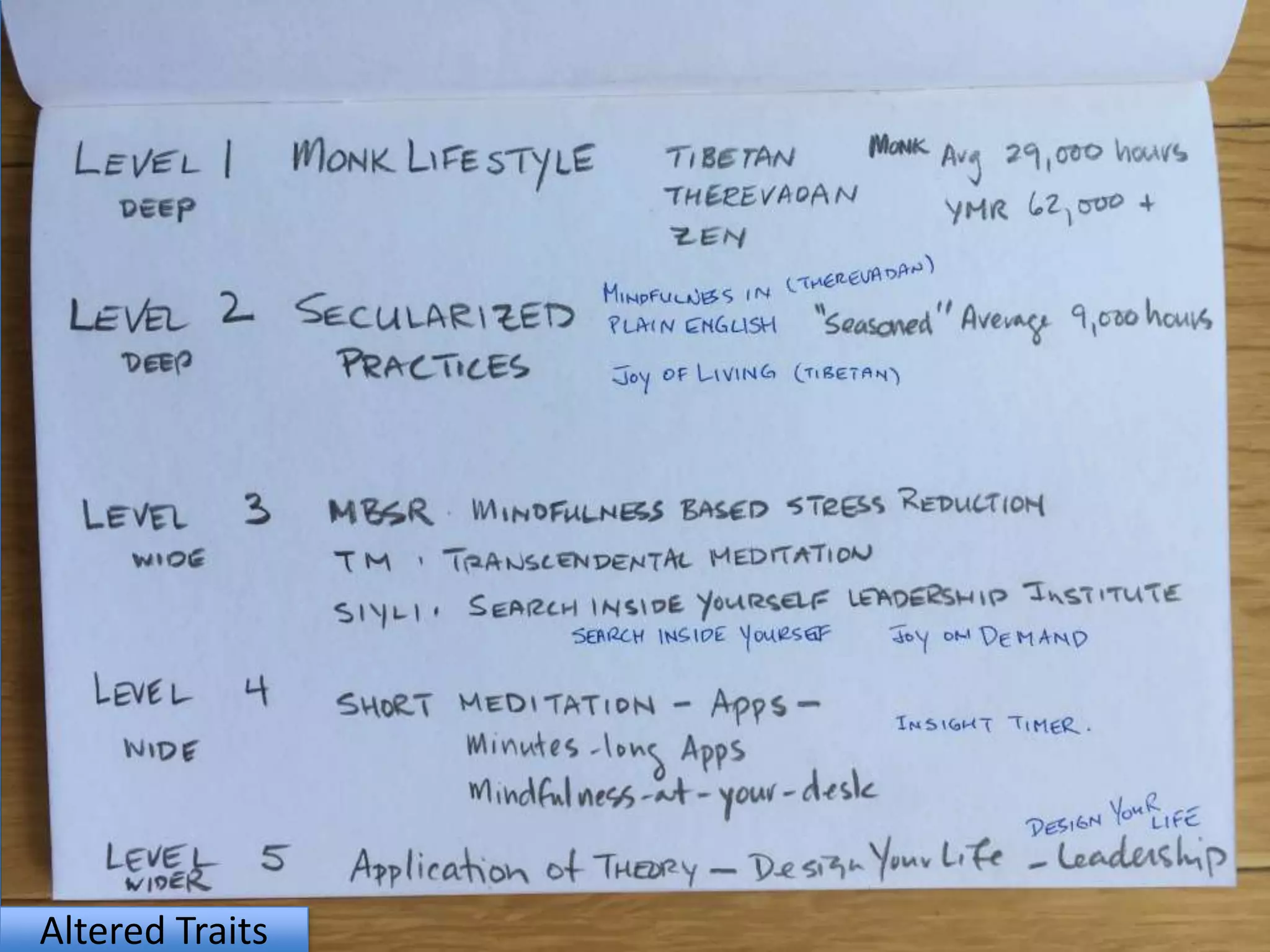
Altered Traits
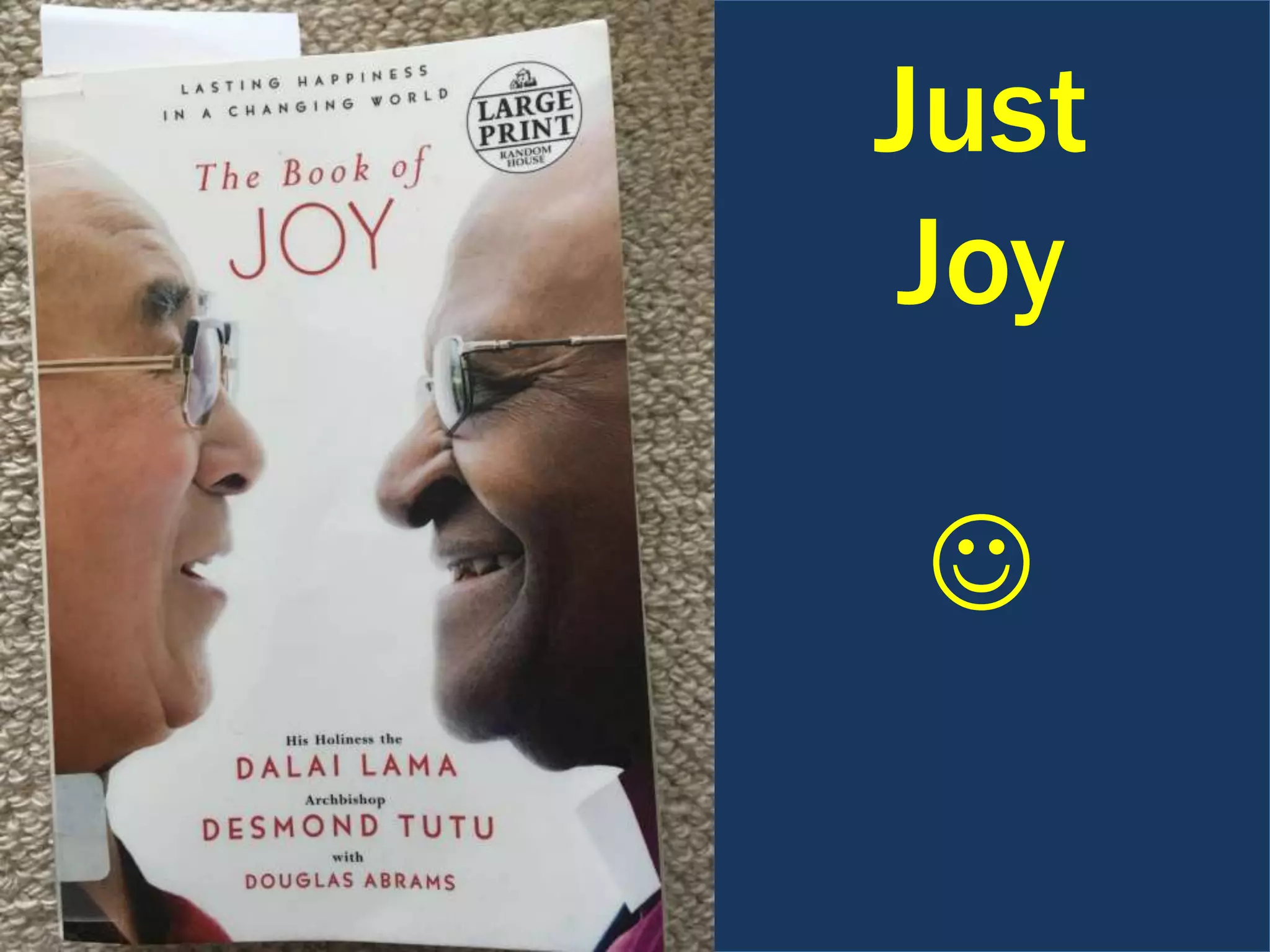
Just
Joy

Kindness Compassion
JoyEquanimity
Next Steps
• Fall 2018 - Monthly Sit/Circle
Sessions – (All Fizz)
–Need “Student Leader(s)”
• June 2019 “Fizz Mind 2019”
–For new 2nd Years.
Next Steps / Ideas
• More “Design Your Life”
– more time, action plans, and follow-up.
• Leadership Training Workshop(s).
– Self Efficacy, Building Relationships,
Producing Results with Others, Building an
Enterprise
Next Steps / Ideas

Fizz Mind 2018 -- All With Notes

  • 1.
    Fizz Mind 2018– Summary and Synthesis of Slideware
  • 2.
    Summary • Here isa collection of slides from the whole workshop. • Slides cover all the Sit, Circle, and Explore topics. – Opening & Closing, Sitting, Guiding, Circling, Career Exploration, Science, Spiritual, and Next Steps.
  • 4.
  • 12.
  • 19.
    More - OpenAwareness Notes • "... resting in open awareness means that we are awake and present, but not controlling our experience, or even directing our mind, in any way. As Mingyur Rinpoche often says, we are not meditating, but not lost. When resting in open awareness, you don’t have to worry about whether you are doing it “right” or not. You can let thoughts and feelings come and go freely, and leave all your senses open and relaxed. You don’t have to focus on anything in particular. Just let be, natural and at ease.” • Yongey Mingyur Rinpoche, "Joy of Living 1 Handbook" Page 13 • "When we practice on the level of objectless attention (Open Awareness), we're actually resting the mind in its natural clarity, unaltered by the passage of thought, emotions, and physical sensations. This natural clarity is always present for us in the same way that space is always present. In a sense, objectless attention is like allowing ourselves to be aware of the branches and leaves in front of us while recognizing the space that allows us to <em>see</em> the branches and leaves in the first place. Thoughts, emotions, and sensations shift and quiver in awareness in the same way branches and leaves shift and quiver in space. Moreover, just as space isn't defined by the objects that move through it, awareness isn't defined or limited by the thoughts, emotions, and sensations it apprehends. Awareness simply is. • Yongey Mingyur Rinpoche, "Joyful Wisdom", page 147
  • 20.
  • 22.
  • 24.
  • 26.
  • 27.
  • 28.
    We will beusing the newsprint to work with these questions.
  • 29.
    This is whatyours will look like 
  • 30.
  • 32.
  • 35.
  • 36.
  • 39.
  • 40.
  • 41.
  • 42.
  • 43.
  • 44.
    • Fall 2018- Monthly Sit/Circle Sessions – (All Fizz) –Need “Student Leader(s)” • June 2019 “Fizz Mind 2019” –For new 2nd Years. Next Steps / Ideas
  • 45.
    • More “DesignYour Life” – more time, action plans, and follow-up. • Leadership Training Workshop(s). – Self Efficacy, Building Relationships, Producing Results with Others, Building an Enterprise Next Steps / Ideas

Editor's Notes

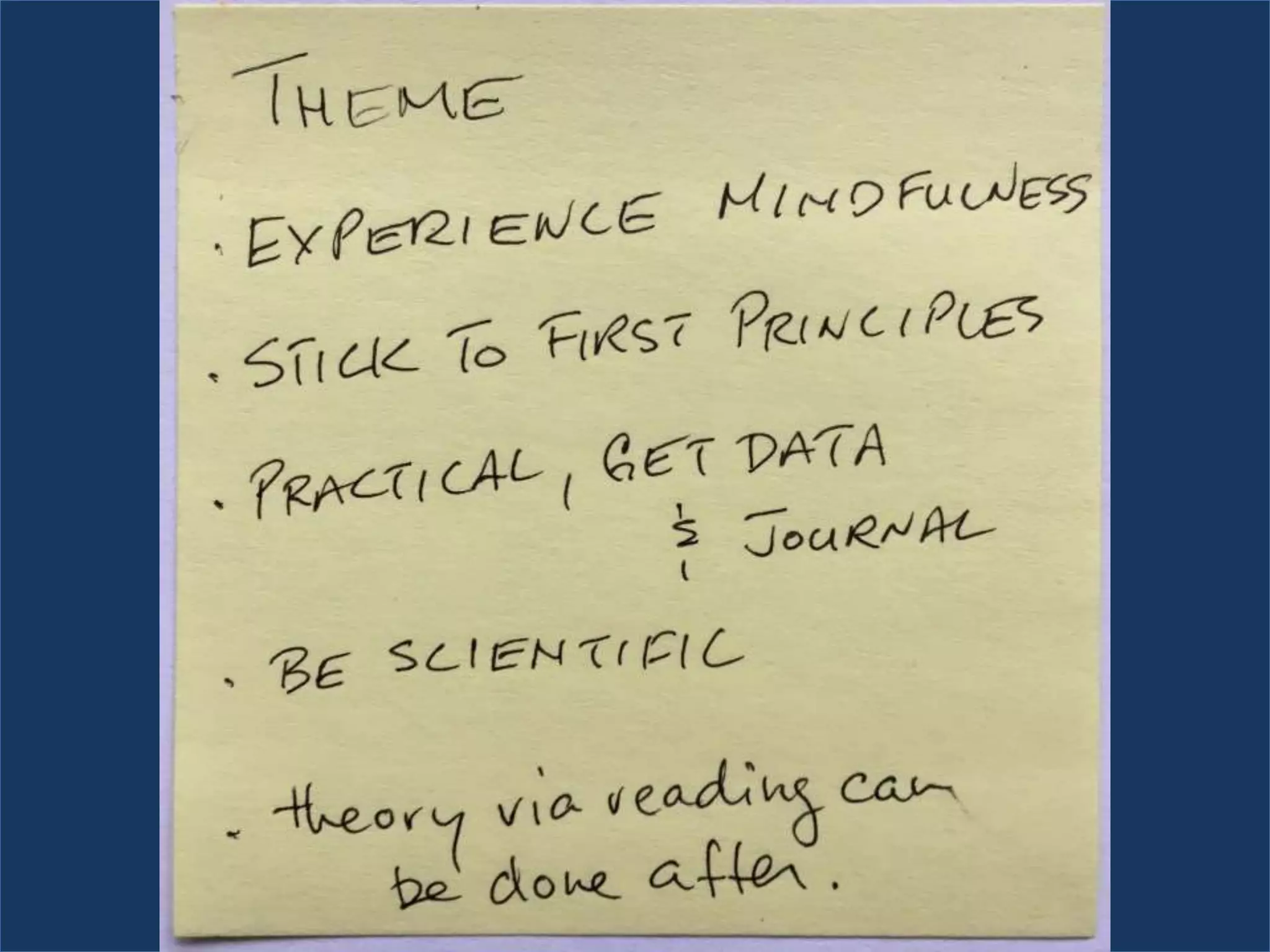
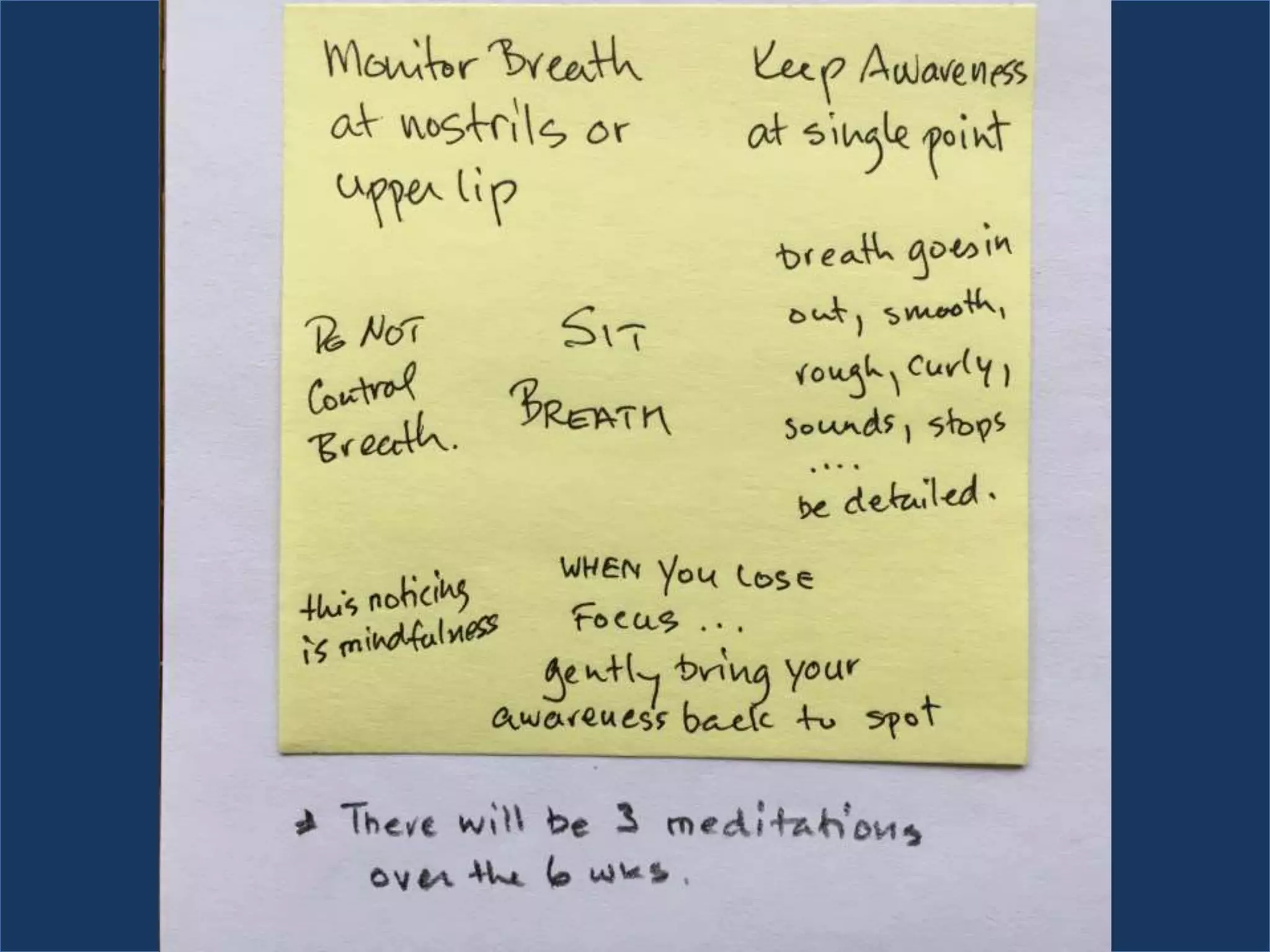
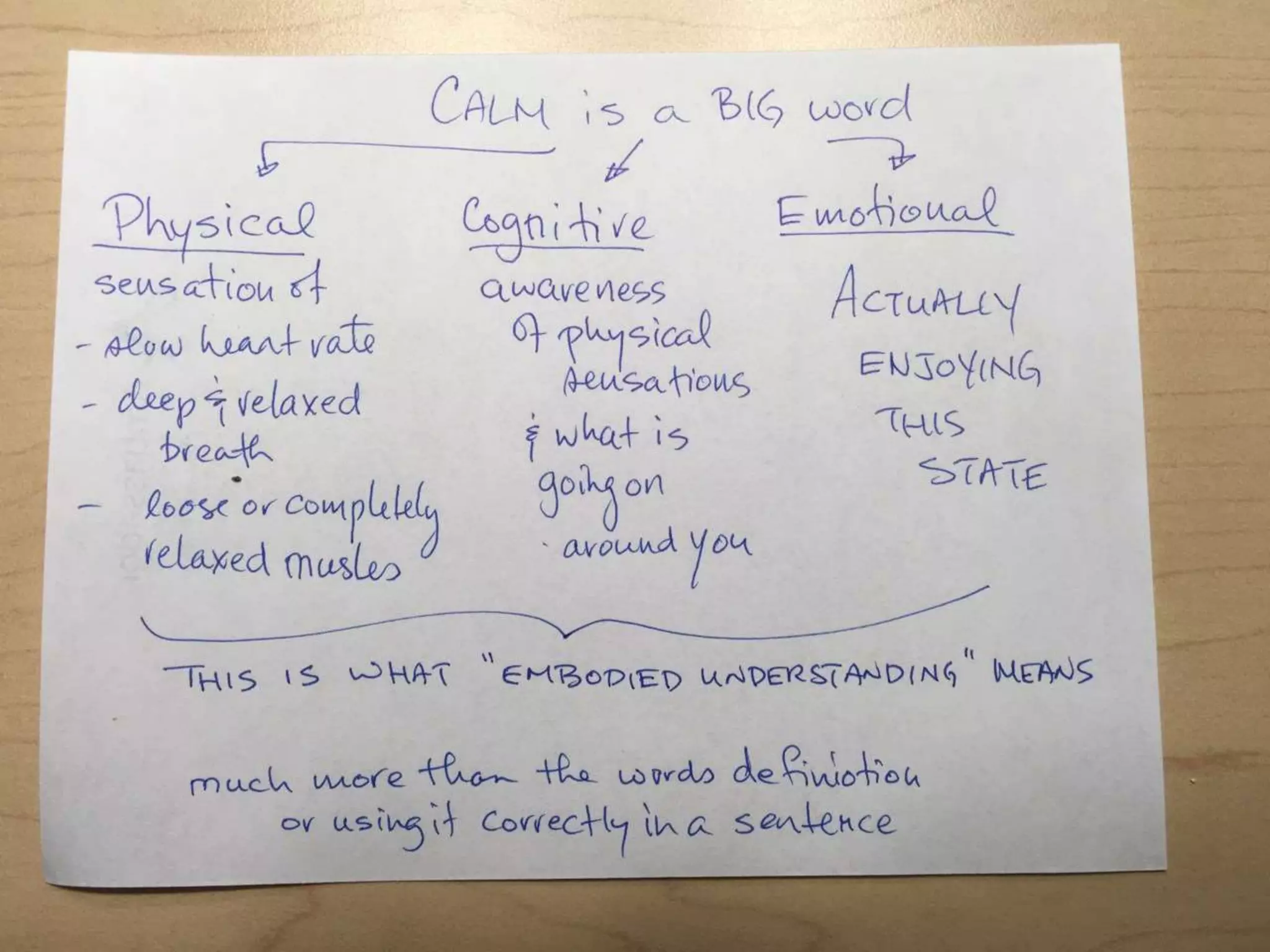
  • #4 The Theme of this workshop is “Experience Mindfulness”. There is a big difference between reading about it and experiencing it. Meditation is more like a physical sport than an intellectual exercise. One needs to *feel* it. We stick to first principles and use “old school” meditation practices from Therevadan (Breath) and Tibetan (Open Awareness) cultures. (Level 2 in the Goleman/Davidson schema … this schema is in this slideware) We are very practical in reviewing our meditations. We collect data on how our Breath felt, data on our noticing of our focus on the breath (mindfulness), how we felt in our bodies, and we touch on the Four Foundations of Mindfulness (Body, Feeling, Mind States, and Phenomena) With this experience we can later read about mindfulness with a felt sense of what the words mean. In sports terms we’ve hit a few golf balls and can now begin to learn the theory of the golf swing if we want.
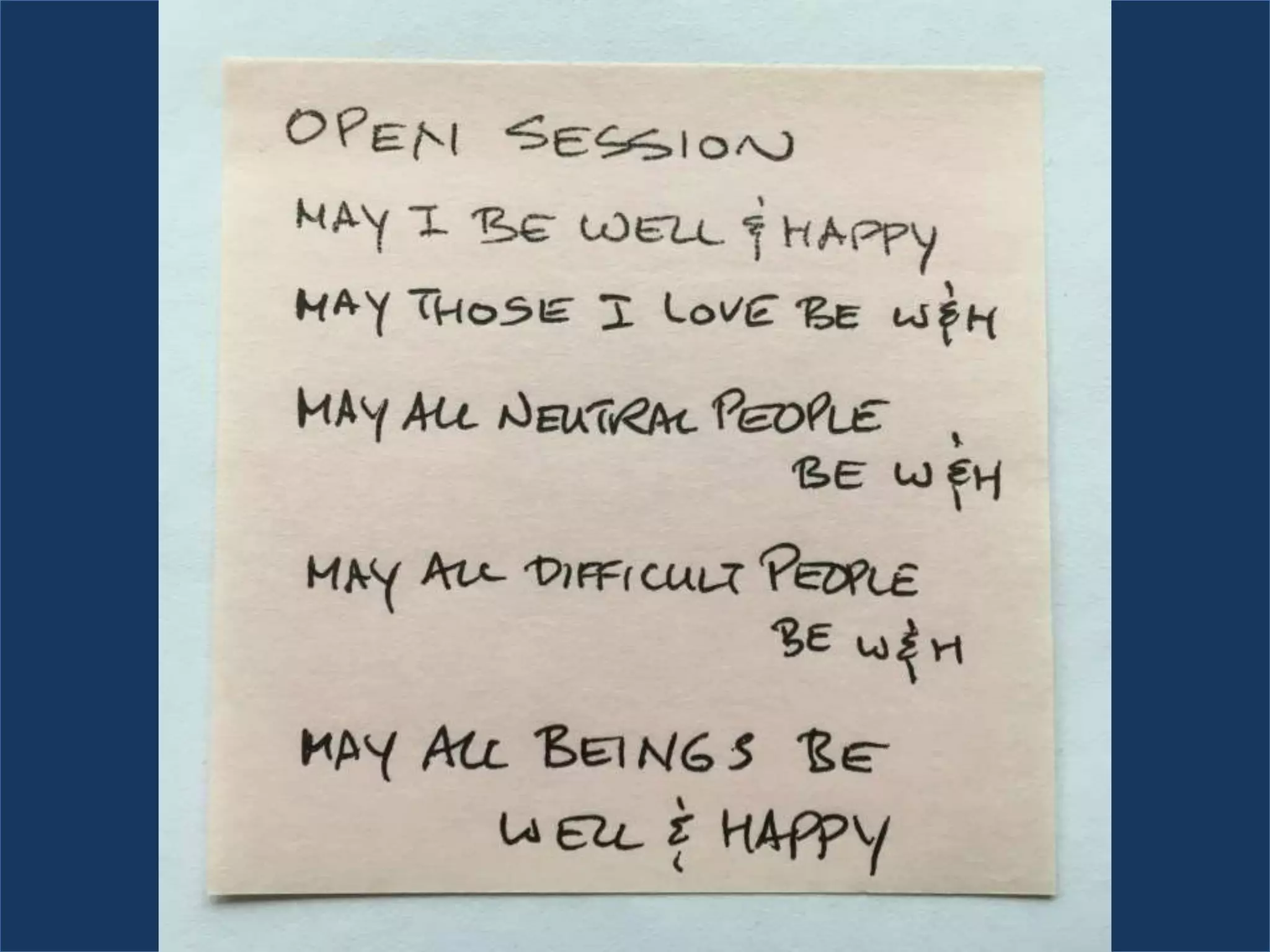
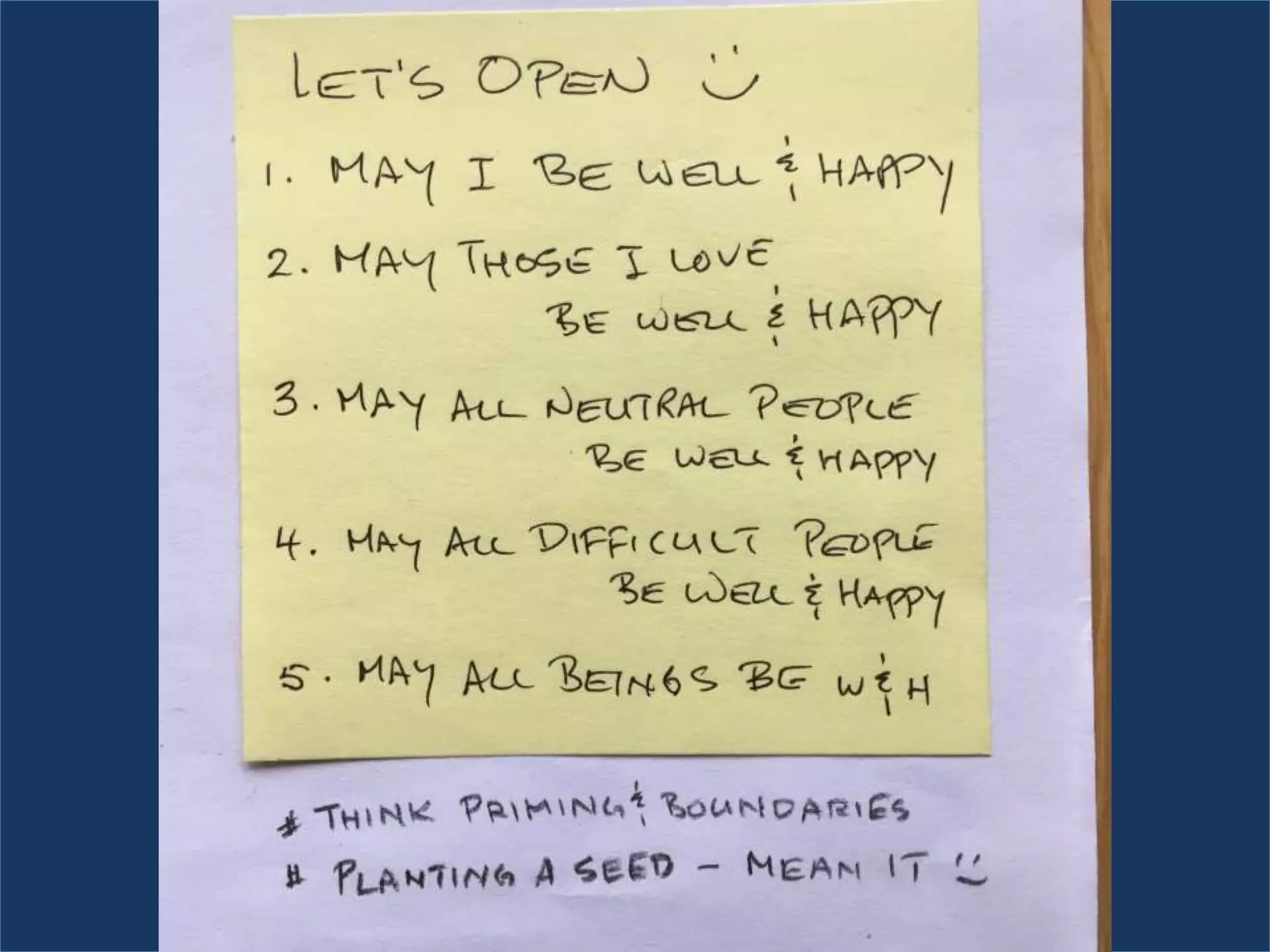
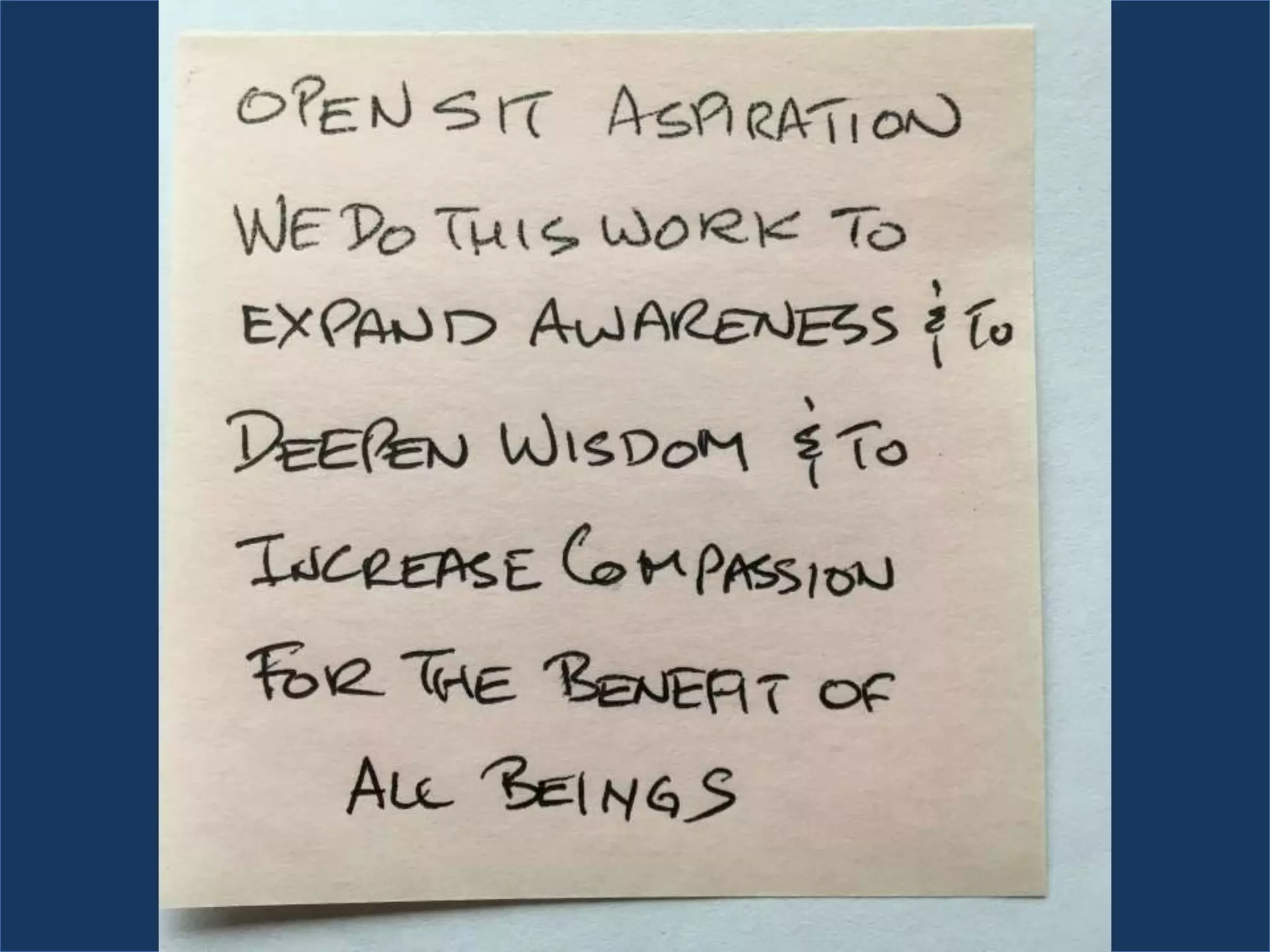
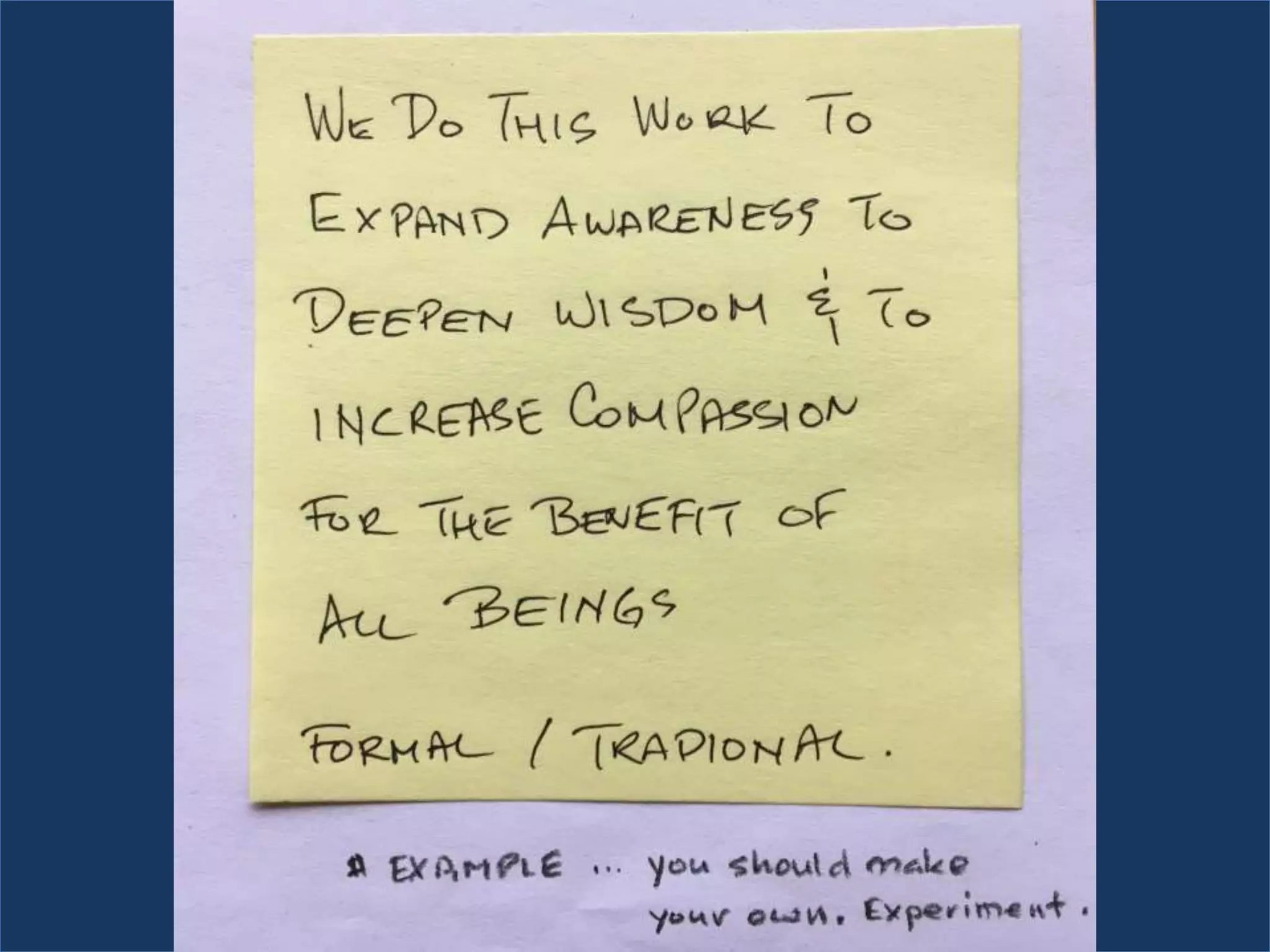
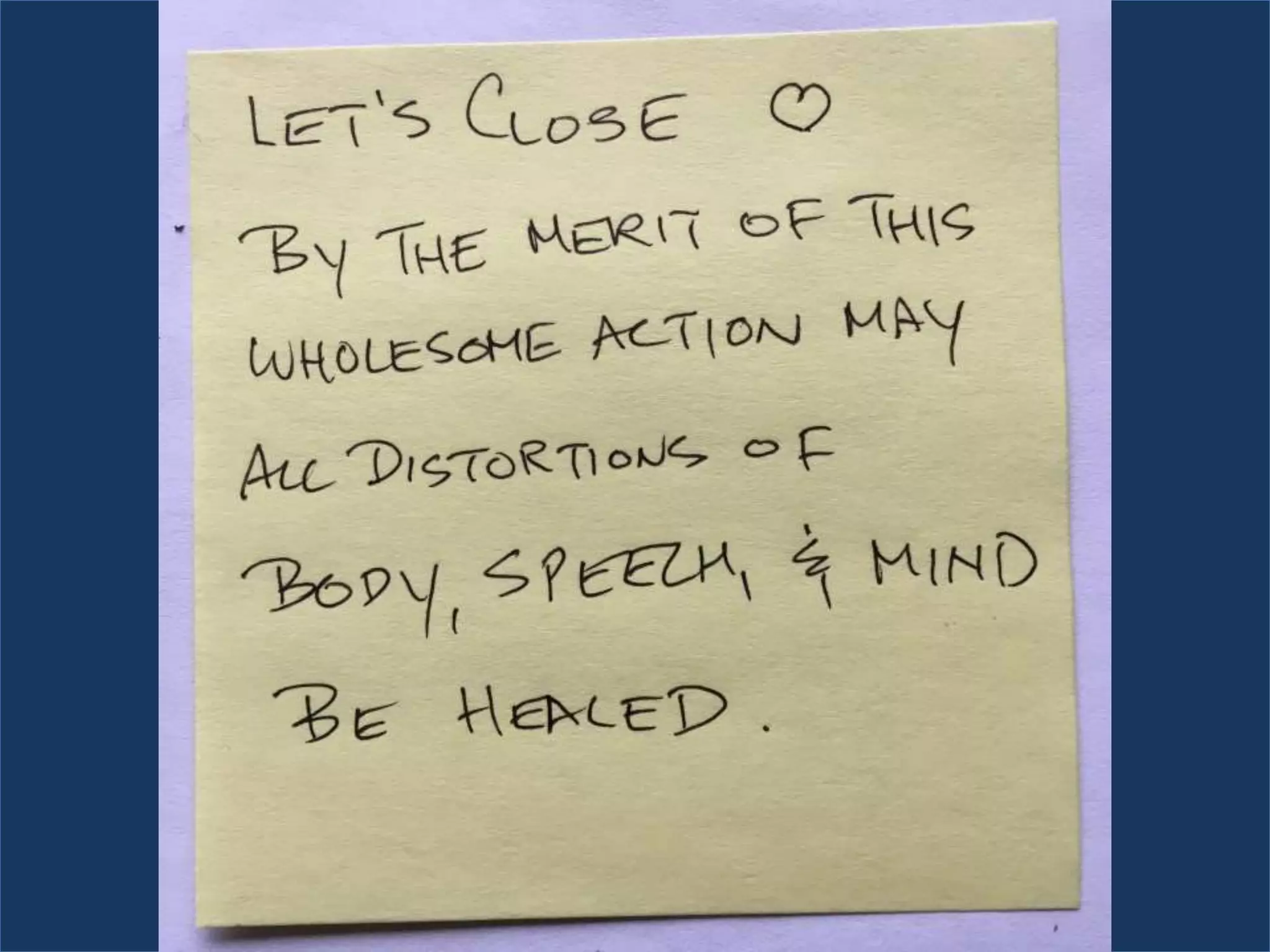
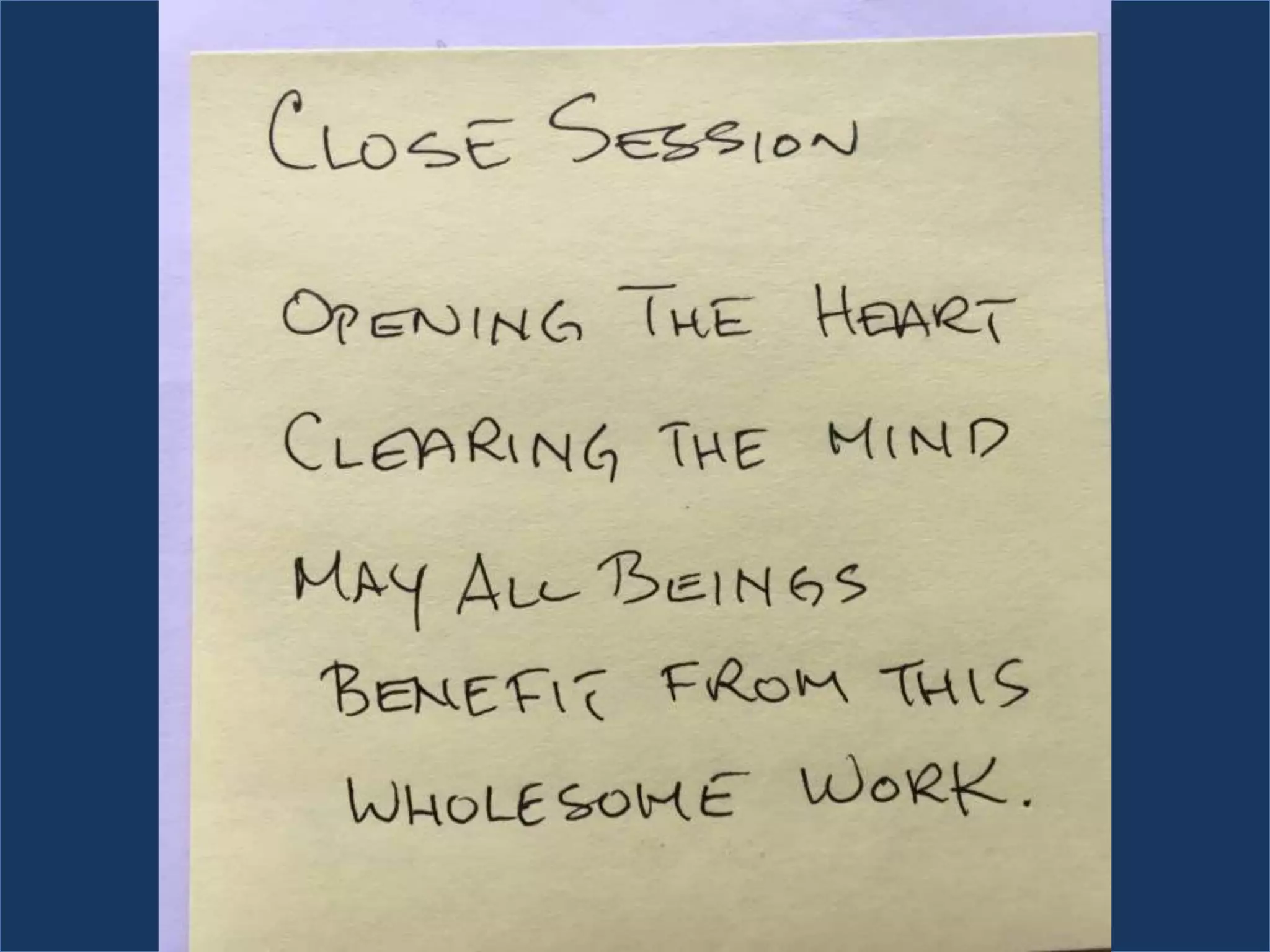
  • #5 We are creating mental containers so that the session is a “perfect space” … saying these statements as a group create a boundary from what we were doing before. It’s supposed to be a bit “jolting” at first. I want you to notice that we are doing something different and wholesome. <smile> Open Session – May x be well and happy … Open Sit & Circle Section – We do this work …. Close Sit & Circle Section – By the merit of the wholesome action … Close Session – Openiing the heart, clearing the mind …
  • #13 The Sit basics Aspiration Sit Review Journal Include posture notes Include Breath sit and Open Awareness sit. The review points are in the Circling section. Journaling is covered in the class blog.
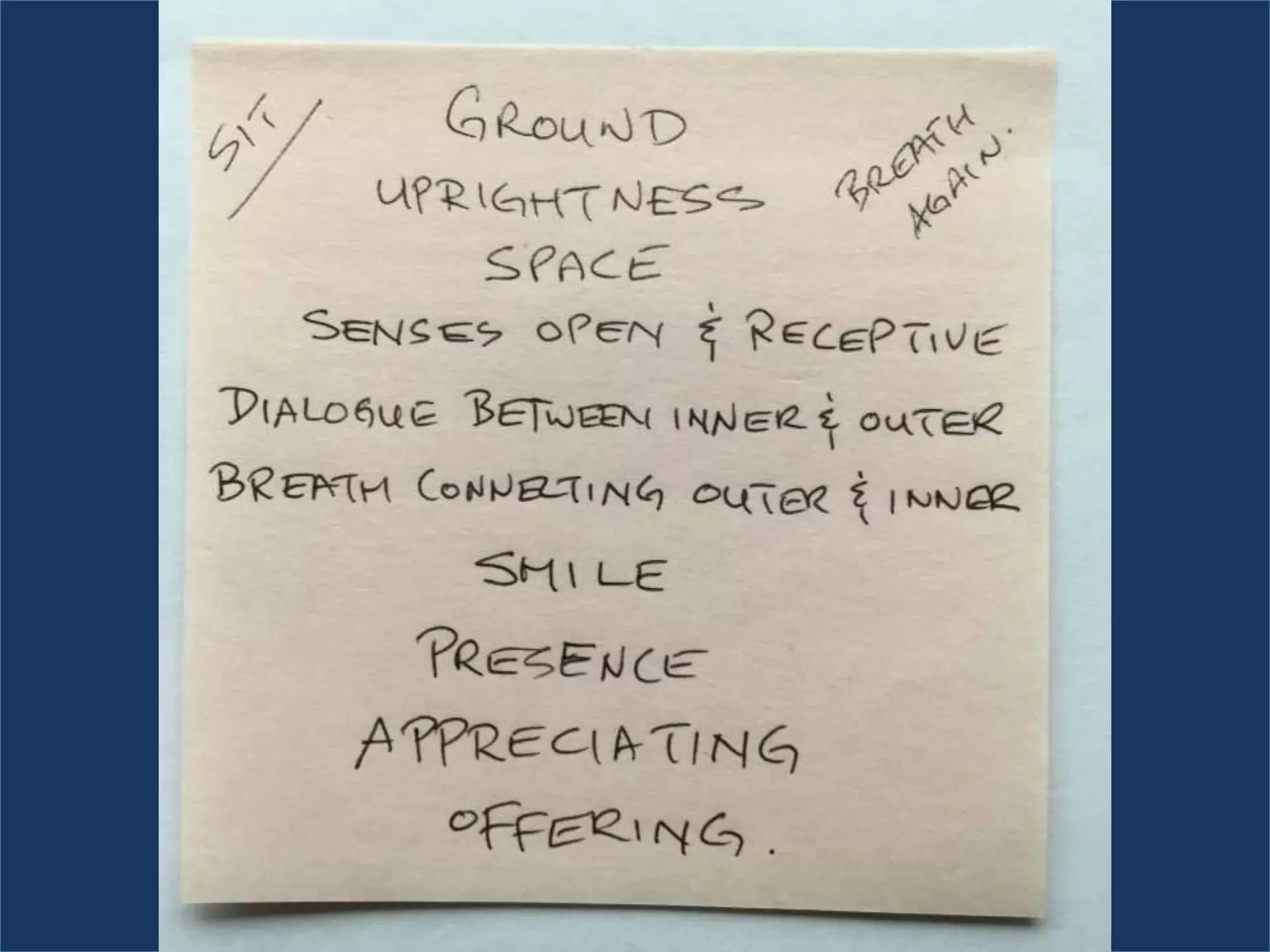
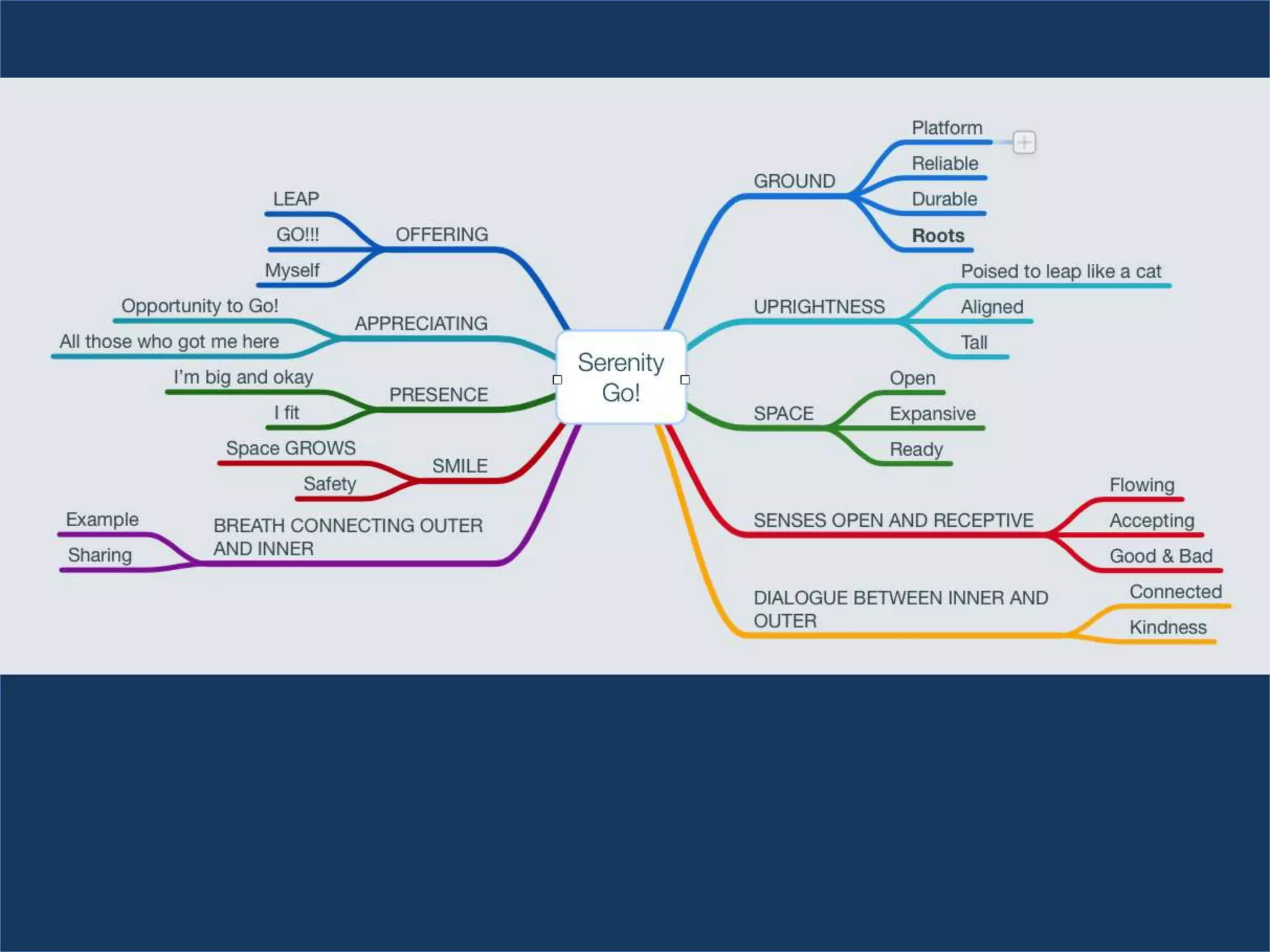
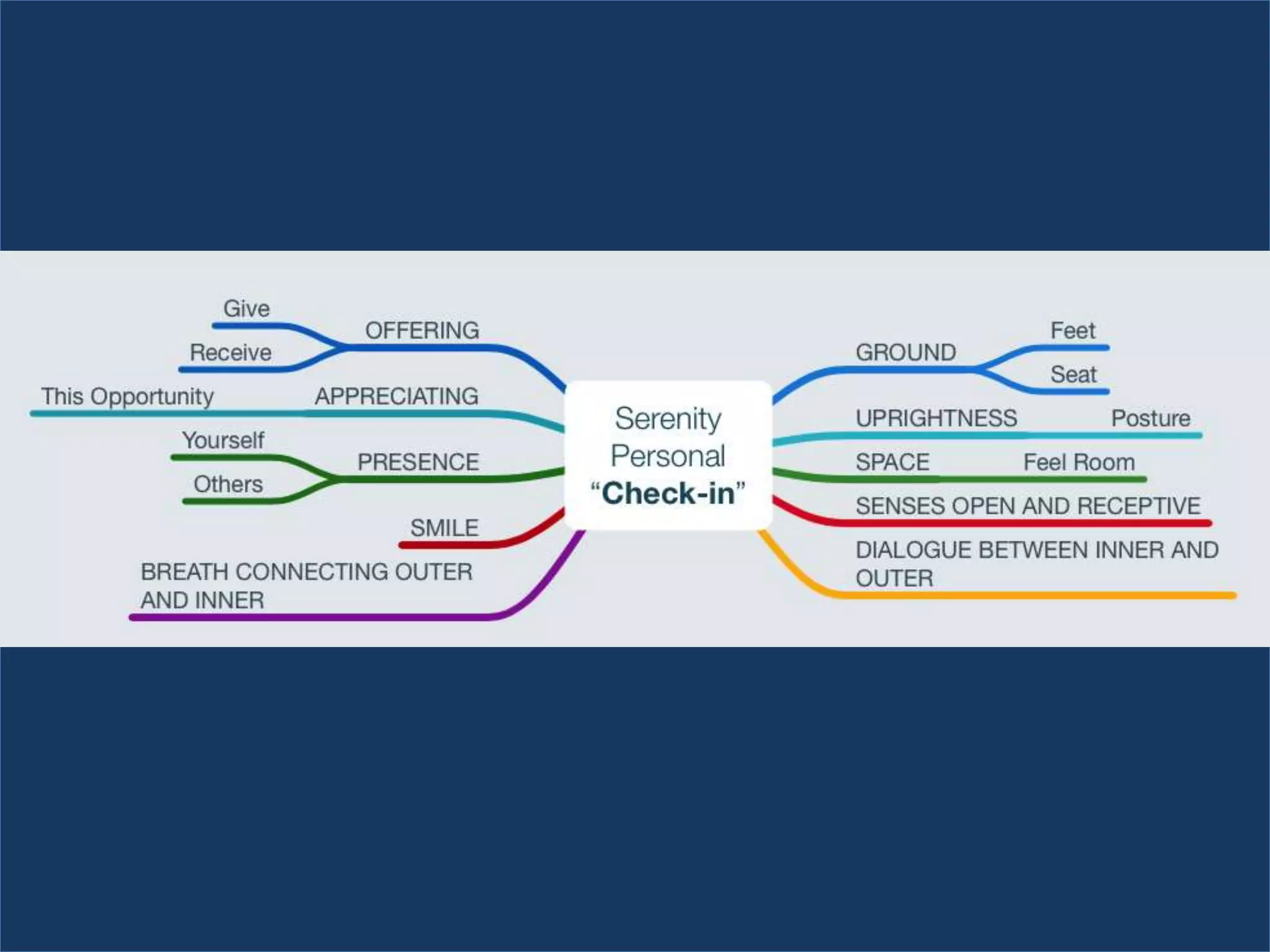
  • #21 Guiding – We used a serenity statement from Bonni Ross. It was used in 3 ways 1) to develop calm, 2) to develop calm and alert, and 3) for use as a personal checkin The main reasons for guiding are 1) to calm the group down, 2) to help meditators check in to the mental and physical posture, 3) to aid new meditators in lengthening the sessions in time. The 6th session is a 20 minute sit.
  • #25 Circling helps us to do the review. It is also a beautiful listening and team building exercise.
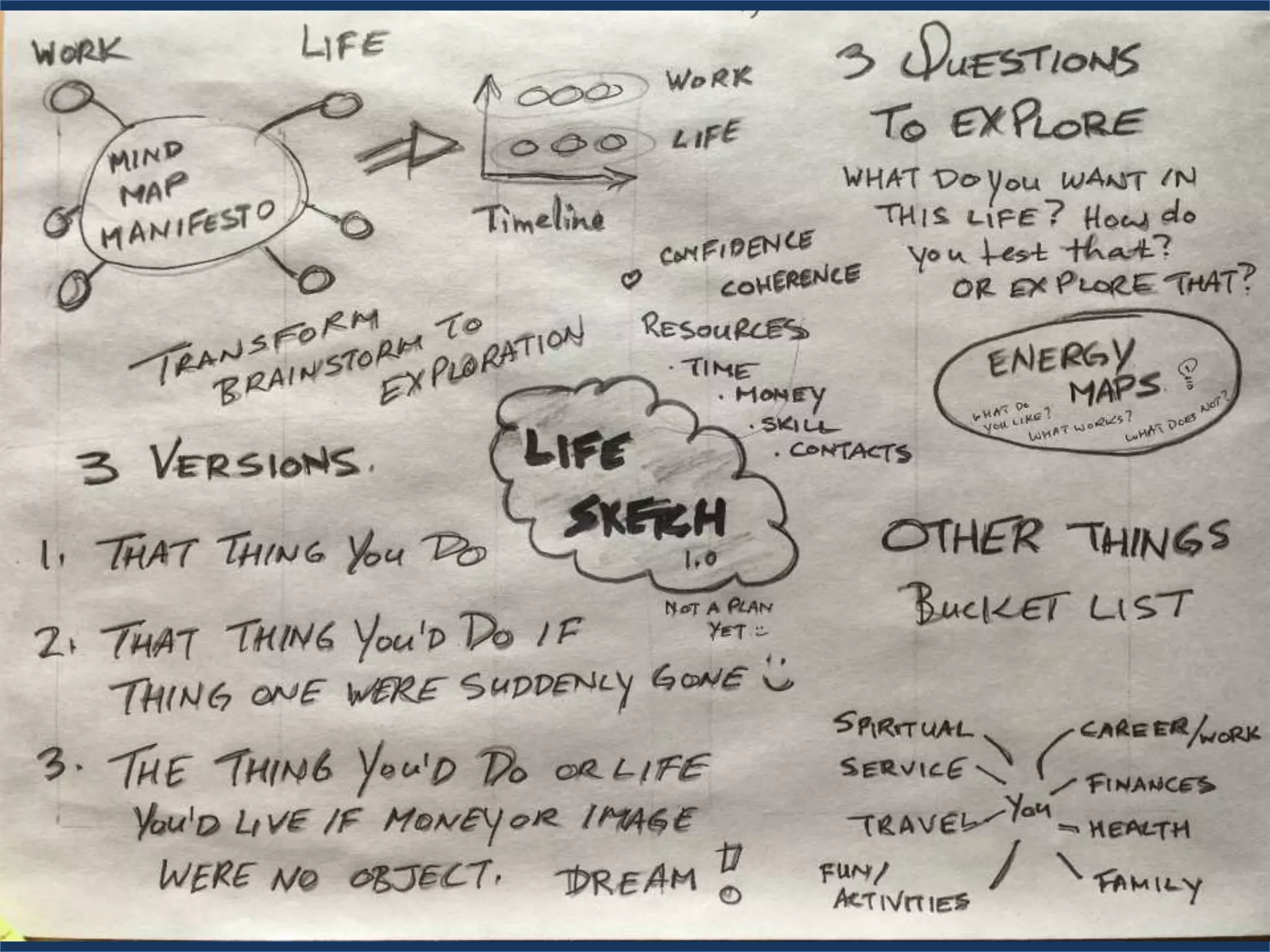
  • #28 Career Exploration is part of this because it is my hypothesis that a big stressor for students. The main reason for this is that Sit & Circle takes 30 to 40 mintues. I needed something complementary to fill the hour.
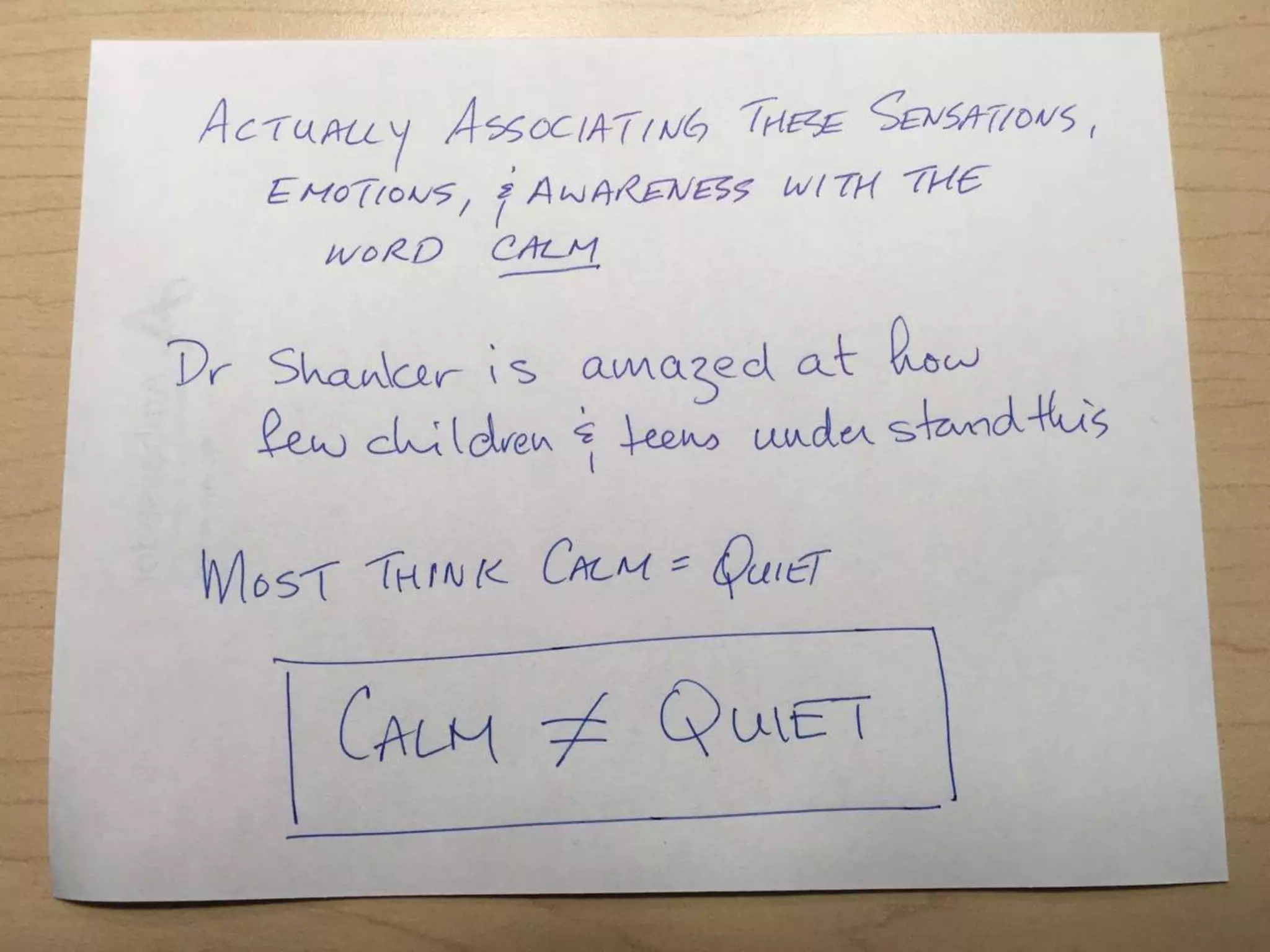
  • #36 • Self Regulation out of York University is a fantastic strategy for relieving stress. The calm they are talking about can be developed with meditation. • Altered Traits, Goleman & Davison, 2017, takes ~6,000 research papers on mindfulness & meditations and synthesizes them into a handful of themes. • Spiritual – The Dalai Lama and Desmond Tutu meet for a week to discuss Joy. Fantastic.
  • #41 I took the “levels” framework from Altered Traits and then added in blue ink the books that are used/mentioned in this workshop
  • #42 Paradox … How do we move forward if we don’t know what is safe? DL and DT … give the 4 Imeasurables – Loving Kindness, Compassion, Joy, and Equanimity are always the right things to do.
  • #44 • Support students who want to continue meditating with a student run club and having me attend monthly. • Do this class with next years 2nd years. Also look into repeating “Career Exploration” in later years. Also look into adding in Leadership Coaching curriculum for years 3, 4, and 5.