0TALGIA(EAR ACHE)
DR MANUPRITA SHARMA
M.S ENT.
ALLERGOLOGIST
LAYOUT
• DEFINATION
• TYPES
• NEUROANATOMY
• PATHOPHYSIOLOGY
• ETIOLOGY
• APPROACH TOWARDS MANAGEMENT
• TAKE HOME MESSAGE
DEFINATION
• PAIN IN OR AROUND THE EAR(SCOTT-
BROWN)
TYPES
1. PRIMARY (LOCAL) – pain arising from
diseases of the ear. Usually infection in origin.
2. SECONDARY OTALGIA(REFERRED)- non
otologic causes. Approx 50 % of opd visits.
Need is to identify the source of pain.
3. PSYCHOGENIC-when no cause discovered.
Patient should be kept under observation.
NEUROANATOMY
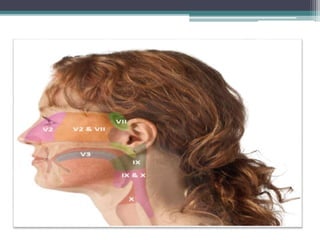
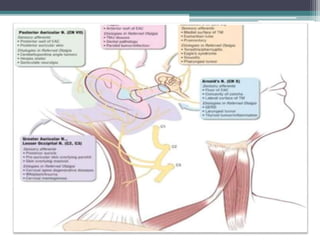
Sensory innervation of the ear and
referred pain
- The ear receives a cutaneous innervation
through
• four cranial nerves: trigeminal (V), facial (VII),
glossopharyngeal (IX)
• vagus (X)
• two branches of the cervical plexus: lesser
occipital nerve(C3), and great
• auricular nerve(C2+C3)
•
ETIOLOGY
A. LOCAL CAUSES:
1 . EXTERNAL EAR –
a . Furuncle
b. Impacted wax
c. Otitis externa
d. Otomycosis
e. Myringitis bullosa
f. Herpes zoster
g. Malignant neoplasms.
2. MIDDLE EAR –
a. Acute otitis media
b. Eustachian tube obstruction
c. Mastoiditis
d. Extradural abscess
e. Aero-otitis media
f. Carcinoma middle ear
B. REFERRED CAUSES:
1. Via Vth cranial nerve-
a. Dental –
 Caries tooth
 Apical abscess
 Impacted molar
 Malocclusion.
b. Oral cavity -
Benign or maligant ulcerative lesions.
c. Temporomandibular joint disorders –
o Bruxism
oOsteoarthritis
oRecurrent dislocation
oIll fitting dentures
d. Sphenopalatine neuralgia.
• 2. Via IXth cranial nerve –
a. Oropharyx –
 Acute tonsillitis
 Peritonsillar abscess
 Tonsillectomy
 Ulcers of soft palate,tonsil,pillars.
b. Base of tongue- tuberculosis or malignancy.
c. Styalgia ( elongated styloid process)
• 3. Via Xth cranial nerve –
Malignancy or ulcerative lesion of vallecula,
epiglottis, larynx or laryngopharynx,
oesophagus.
4. Via C2 and C3 spinal nerves –
Cervical spondylitis
Injuries of cervical spine
Caries spine.
• Irritation of the trigeminal nerve (cranial nerve
V) is the most common cause of referred ear
pain.[3]
APPROACH TOWARDS MANAGEMENT
TAKE HOME MESSAGE
• OTALGIA is a symptom.
• It is not always associated with ear disease.
• It is essential to find its cause before specific
treatment can be instituted.
• TREAT THE CAUSE.
THANKYOU

0talgia(ear ache)

  • 1.
    0TALGIA(EAR ACHE) DR MANUPRITASHARMA M.S ENT. ALLERGOLOGIST
  • 2.
    LAYOUT • DEFINATION • TYPES •NEUROANATOMY • PATHOPHYSIOLOGY • ETIOLOGY • APPROACH TOWARDS MANAGEMENT • TAKE HOME MESSAGE
  • 3.
    DEFINATION • PAIN INOR AROUND THE EAR(SCOTT- BROWN)
  • 4.
    TYPES 1. PRIMARY (LOCAL)– pain arising from diseases of the ear. Usually infection in origin. 2. SECONDARY OTALGIA(REFERRED)- non otologic causes. Approx 50 % of opd visits. Need is to identify the source of pain. 3. PSYCHOGENIC-when no cause discovered. Patient should be kept under observation.
  • 5.
    NEUROANATOMY Sensory innervation ofthe ear and referred pain - The ear receives a cutaneous innervation through • four cranial nerves: trigeminal (V), facial (VII), glossopharyngeal (IX) • vagus (X) • two branches of the cervical plexus: lesser occipital nerve(C3), and great • auricular nerve(C2+C3)
  • 8.
  • 10.
    ETIOLOGY A. LOCAL CAUSES: 1. EXTERNAL EAR – a . Furuncle b. Impacted wax c. Otitis externa d. Otomycosis e. Myringitis bullosa f. Herpes zoster g. Malignant neoplasms.
  • 11.
    2. MIDDLE EAR– a. Acute otitis media b. Eustachian tube obstruction c. Mastoiditis d. Extradural abscess e. Aero-otitis media f. Carcinoma middle ear
  • 12.
    B. REFERRED CAUSES: 1.Via Vth cranial nerve- a. Dental –  Caries tooth  Apical abscess  Impacted molar  Malocclusion. b. Oral cavity - Benign or maligant ulcerative lesions.
  • 13.
    c. Temporomandibular jointdisorders – o Bruxism oOsteoarthritis oRecurrent dislocation oIll fitting dentures d. Sphenopalatine neuralgia.
  • 14.
    • 2. ViaIXth cranial nerve – a. Oropharyx –  Acute tonsillitis  Peritonsillar abscess  Tonsillectomy  Ulcers of soft palate,tonsil,pillars. b. Base of tongue- tuberculosis or malignancy. c. Styalgia ( elongated styloid process)
  • 15.
    • 3. ViaXth cranial nerve – Malignancy or ulcerative lesion of vallecula, epiglottis, larynx or laryngopharynx, oesophagus. 4. Via C2 and C3 spinal nerves – Cervical spondylitis Injuries of cervical spine Caries spine.
  • 16.
    • Irritation ofthe trigeminal nerve (cranial nerve V) is the most common cause of referred ear pain.[3]
  • 18.
  • 24.
    TAKE HOME MESSAGE •OTALGIA is a symptom. • It is not always associated with ear disease. • It is essential to find its cause before specific treatment can be instituted. • TREAT THE CAUSE.
  • 25.