IEEE/ACM TRANSACTIONS ON NETWORKING, VOL. 22, NO. 1, FEBRUARY 2014 39
PACK: Prediction-Based Cloud Bandwidth
and Cost Reduction System
Eyal Zohar, Israel Cidon, and Osnat Mokryn
Abstract—In this paper, we present PACK (Predictive ACKs),
a novel end-to-end traffic redundancy elimination (TRE) system,
designed for cloud computing customers. Cloud-based TRE needs
to apply a judicious use of cloud resources so that the bandwidth
cost reduction combined with the additional cost of TRE compu-
tation and storage would be optimized. PACK’s main advantage
is its capability of offloading the cloud-server TRE effort to end-
clients, thus minimizing the processing costs induced by the TRE
algorithm. Unlike previous solutions, PACK does not require the
server to continuously maintain clients’ status. This makes PACK
very suitable for pervasive computation environments that com-
bine client mobility and server migration to maintain cloud elas-
ticity. PACK is based on a novel TRE technique, which allows the
client to use newly received chunks to identify previously received
chunk chains, which in turn can be used as reliable predictors to
future transmitted chunks. We present a fully functional PACK im-
plementation, transparent to all TCP-based applications and net-
work devices. Finally, we analyze PACK benefits for cloud users,
using traffic traces from various sources.
Index Terms—Caching, cloud computing, network optimization,
traffic redundancy elimination.
I. INTRODUCTION
CLOUD computing offers its customers an economical
and convenient pay-as-you-go service model, known
also as usage-based pricing [2]. Cloud customers1 pay only
for the actual use of computing resources, storage, and band-
width, according to their changing needs, utilizing the cloud’s
scalable and elastic computational capabilities. In particular,
data transfer costs (i.e., bandwidth) is an important issue
when trying to minimize costs [2]. Consequently, cloud cus-
tomers, applying a judicious use of the cloud’s resources,
are motivated to use various traffic reduction techniques, in
particular traffic redundancy elimination (TRE), for reducing
bandwidth costs.
Manuscript received May 01, 2012; revised December 01, 2012; accepted
January 06, 2013; approved by IEEE/ACM TRANSACTIONS ON NETWORKING
Editor L. E. Li. Date of publication February 01, 2013; date of current version
February 12, 2014.
E. Zohar and I. Cidon are with the Department of Electrical Engineering,
Technion—Israel Institute of Technology, Haifa 44444, Israel (e-mail:
eyalzo@tx.technion.ac.il; cidon@ee.technion.ac.il).
O. Mokryn is with the Computer Science Department, Tel Aviv College, Tel-
Aviv 46410, Israel (e-mail: ossi@mta.ac.il).
Color versions of one or more of the figures in this paper are available online
at http://ieeexplore.ieee.org.
Digital Object Identifier 10.1109/TNET.2013.2240010
1We refer as cloud customers to organizations that export services to the
cloud, and as users to the end-users and devices that consume the services.
Traffic redundancy stems from common end-users’ activi-
ties, such as repeatedly accessing, downloading, uploading (i.e.,
backup), distributing, and modifying the same or similar infor-
mation items (documents, data, Web, and video). TRE is used
to eliminate the transmission of redundant content and, there-
fore, to significantly reduce the network cost. In most common
TRE solutions, both the sender and the receiver examine and
compare signatures of data chunks, parsed according to the data
content, prior to their transmission. When redundant chunks are
detected, the sender replaces the transmission of each redundant
chunk with its strong signature [3]–[5]. Commercial TRE solu-
tions are popular at enterprise networks, and involve the deploy-
ment of two or more proprietary-protocol, state synchronized
middle-boxes at both the intranet entry points of data centers
and branch offices, eliminating repetitive traffic between them
(e.g., Cisco [6], Riverbed [7], Quantum [8], Juniper [9], Blue
Coat [10], Expand Networks [11], and F5 [12]).
While proprietary middle-boxes are popular point solutions
within enterprises, they are not as attractive in a cloud environ-
ment. Cloud providers cannot benefit from a technology whose
goal is to reduce customer bandwidth bills, and thus are not
likely to invest in one. The rise of “on-demand” work spaces,
meeting rooms, and work-from-home solutions [13] detaches
the workers from their offices. In such a dynamic work envi-
ronment, fixed-point solutions that require a client-side and a
server-side middle-box pair become ineffective. On the other
hand, cloud-side elasticity motivates work distribution among
servers and migration among data centers. Therefore, it is com-
monly agreed that a universal, software-based, end-to-end TRE
is crucial in today’s pervasive environment [14], [15]. This en-
ables the use of a standard protocol stack and makes a TRE
within end-to-end secured traffic (e.g., SSL) possible.
Current end-to-end TRE solutions are sender-based. In the
case where the cloud server is the sender, these solutions require
that the server continuously maintain clients’ status.
We show here that cloud elasticity calls for a new TRE solu-
tion. First, cloud load balancing and power optimizations may
lead to a server-side process and data migration environment, in
which TRE solutions that require full synchronization between
the server and the client are hard to accomplish or may lose ef-
ficiency due to lost synchronization. Second, the popularity of
rich media that consume high bandwidth motivates content dis-
tribution network (CDN) solutions, in which the service point
for fixed and mobile users may change dynamically according
to the relative service point locations and loads. Moreover, if an
2We generally assume that the cloud side, following the current Web service
model, is dominated by a sender operation. The cases where the cloud is the
receiver are referenced specifically.
1063-6692 © 2013 IEEE. Personal use is permitted, but republication/redistribution requires IEEE permission.
See http://www.ieee.org/publications_standards/publications/rights/index.html for more information.
40 IEEE/ACM TRANSACTIONS ON NETWORKING, VOL. 22, NO. 1, FEBRUARY 2014
end-to-end solution is employed, its additional computational
and storage costs at the cloud side should be weighed against its
bandwidth saving gains.
Clearly, a TRE solution that puts most of its computational ef-
fort on the cloud side2 may turn to be less cost-effective than the
one that leverages the combined client-side capabilities. Given
an end-to-end solution, we have found through our experiments
that sender-based end-to-end TRE solutions [4], [15] add a con-
siderable load to the servers, which may eradicate the cloud
cost saving addressed by the TRE in the first place. Our experi-
ments further show that current end-to-end solutions also suffer
from the requirement to maintain end-to-end synchronization
that may result in degraded TRE efficiency.
In this paper, we present a novel receiver-based end-to-end
TRE solution that relies on the power of predictions to eliminate
redundant traffic between the cloud and its end-users. In this so-
lution, each receiver observes the incoming stream and tries to
match its chunks with a previously received chunk chain or a
chunk chain of a local file. Using the long-term chunks’ meta-
data information kept locally, the receiver sends to the server
predictions that include chunks’ signatures and easy-to-verify
hints of the sender’s future data. The sender first examines the
hint and performs the TRE operation only on a hint-match. The
purpose of this procedure is to avoid the expensive TRE com-
putation at the sender side in the absence of traffic redundancy.
When redundancy is detected, the sender then sends to the re-
ceiver only the ACKs to the predictions, instead of sending the
data.
On the receiver side, we propose a new computationally
lightweight chunking (fingerprinting) scheme termed PACK
chunking. PACK chunking is a new alternative for Rabin fin-
gerprinting traditionally used by RE applications. Experiments
show that our approach can reach data processing speeds over
3 Gb/s, at least 20% faster than Rabin fingerprinting.
Offloading the computational effort from the cloud to a large
group of clients forms a load distribution action, as each client
processes only its TRE part. The receiver-based TRE solution
addresses mobility problems common to quasi-mobile desktop/
laptops computational environments. One of them is cloud elas-
ticity due to which the servers are dynamically relocated around
the federated cloud, thus causing clients to interact with mul-
tiple changing servers. Another property is IP dynamics, which
compel roaming users to frequently change IP addresses. In ad-
dition to the receiver-based operation, we also suggest a hy-
brid approach, which allows a battery-powered mobile device
to shift the TRE computation overhead back to the cloud by trig-
gering a sender-based end-to-end TRE similar to [15].
To validate the receiver-based TRE concept, we imple-
mented, tested, and performed realistic experiments with
PACK within a cloud environment. Our experiments demon-
strate a cloud cost reduction achieved at a reasonable client
effort while gaining additional bandwidth savings at the client
side. The implementation code, over 25 000 lines of C and
Java, can be obtained from [16]. Our implementation utilizes
the TCP Options field, supporting all TCP-based applications
such as Web, video streaming, P2P, e-mail, etc.
In addition, we evaluate our solution and compare it to pre-
vious end-to-end solutions using terabytes of real video traffic
consumed by 40 000 distinct clients, captured within an ISP, and
traffic obtained in a social network service for over a month. We
demonstrate that our solution achieves 30% redundancy elimi-
nation without significantly affecting the computational effort
of the sender, resulting in a 20% reduction of the overall cost to
the cloud customer.
This paper is organized as follows. Section II reviews existing
TRE solutions. In Section III, we present our receiver-based
TRE solution and explain the prediction process and the pre-
diction-based TRE mechanism. In Section IV, we present opti-
mizations to the receiver-side algorithms. Section V evaluates
data redundancy in a cloud and compares PACK to sender-based
TRE. Section VI details our implementation and discusses our
experiments and results.
II. RELATED WORK
Several TRE techniques have been explored in recent years.
A protocol-independent TRE was proposed in [4]. The paper
describes a packet-level TRE, utilizing the algorithms presented
in [3].
Several commercial TRE solutions described in [6] and [7]
have combined the sender-based TRE ideas of [4] with the algo-
rithmic and implementation approach of [5] along with protocol
specific optimizations for middle-boxes solutions. In particular,
[6] describes how to get away with three-way handshake be-
tween the sender and the receiver if a full state synchronization
is maintained.
References [17] and [18] present redundancy-aware routing
algorithm. These papers assume that the routers are equipped
with data caches, and that they search those routes that make a
better use of the cached data.
A large-scale study of real-life traffic redundancy is presented
in [19], [20], and [14]. In the latter, packet-level TRE techniques
are compared [3], [21]. Our paper builds on their finding that “an
end to end redundancy elimination solution, could obtain most
of the middle-box’s bandwidth savings,” motivating the benefit
of low cost software end-to-end solutions.
Wanax [22] is a TRE system for the developing world where
storage and WAN bandwidth are scarce. It is a software-based
middle-boxreplacementfortheexpensivecommercialhardware.
Inthis scheme,the sender middle-box holds backthe TCP stream
andsendsdatasignaturestothereceivermiddle-box.Thereceiver
checkswhetherthedataisfoundinitslocalcache.Datachunksthat
arenotfoundinthe cachearefetchedfromthesendermiddle-box
oranearbyreceivermiddle-box.Naturally,suchaschemeincursa
three-way-handshakelatencyfornoncacheddata.
EndRE [15] is a sender-based end-to-end TRE for enterprise
networks. It uses a new chunking scheme that is faster than the
commonly used Rabin fingerprint, but is restricted to chunks as
small as 32–64 B. Unlike PACK, EndRE requires the server to
maintain a fully and reliably synchronized cache for each client.
To adhere with the server’s memory requirements, these caches
are kept small (around 10 MB per client), making the system in-
adequate for medium-to-large content or long-term redundancy.
EndRE is server-specific, hence not suitable for a CDN or cloud
environment.
ZOHAR et al.: PACK: PREDICTION-BASED CLOUD BANDWIDTH AND COST REDUCTION SYSTEM 41
Fig. 1. From stream to chain.
To the best of our knowledge, none of the previous
works have addressed the requirements for a cloud-com-
puting-friendly, end-to-end TRE, which forms PACK’s focus.
III. PACK ALGORITHM
For the sake of clarity, we first describe the basic receiver-
driven operation of the PACK protocol. Several enhancements
and optimizations are introduced in Section IV.
The stream of data received at the PACK receiver is parsed to
a sequence of variable-size, content-based signed chunks sim-
ilar to [3] and [5]. The chunks are then compared to the receiver
local storage, termed chunk store. If a matching chunk is found
in the local chunk store, the receiver retrieves the sequence
of subsequent chunks, referred to as a chain, by traversing
the sequence of LRU chunk pointers that are included in the
chunks’ metadata. Using the constructed chain, the receiver
sends a prediction to the sender for the subsequent data. Part of
each chunk’s prediction, termed a hint, is an easy-to-compute
function with a small-enough false-positive value, such as the
value of the last byte in the predicted data or a byte-wide XOR
checksum of all or selected bytes. The prediction sent by the
receiver includes the range of the predicted data, the hint, and
the signature of the chunk. The sender identifies the predicted
range in its buffered data and verifies the hint for that range. If
the result matches the received hint, it continues to perform the
more computationally intensive SHA-1 signature operation.
Upon a signature match, the sender sends a confirmation mes-
sage to the receiver, enabling it to copy the matched data from
its local storage.
A. Receiver Chunk Store
PACK uses a new chains scheme, described in Fig. 1, in
which chunks are linked to other chunks according to their last
received order. The PACK receiver maintains a chunk store,
which is a large size cache of chunks and their associated
metadata. Chunk’s metadata includes the chunk’s signature and
a (single) pointer to the successive chunk in the last received
stream containing this chunk. Caching and indexing techniques
are employed to efficiently maintain and retrieve the stored
chunks, their signatures, and the chains formed by traversing
the chunk pointers.
When the new data are received and parsed to chunks, the
receiver computes each chunk’s signature using SHA-1. At this
point, the chunk and its signature are added to the chunk store.
In addition, the metadata of the previously received chunk in the
same stream is updated to point to the current chunk.
The unsynchronized nature of PACK allows the receiver to
map each existing file in the local file system to a chain of
chunks, saving in the chunk store only the metadata associated
with the chunks.3 Using the latter observation, the receiver can
also share chunks with peer clients within the same local net-
work utilizing a simple map of network drives.
The utilization of a small chunk size presents better redun-
dancy elimination when data modifications are fine-grained,
such as sporadic changes in an HTML page. On the other hand,
the use of smaller chunks increases the storage index size,
memory usage, and magnetic disk seeks. It also increases the
transmission overhead of the virtual data exchanged between
the client and the server.
Unlike IP-level TRE solutions that are limited by the IP
packet size ( B), PACK operates on TCP streams and
can therefore handle large chunks and entire chains. Although
our design permits each PACK client to use any chunk size, we
recommend an average chunk size of 8 kB (see Section VI).
B. Receiver Algorithm
Upon the arrival of new data, the receiver computes the re-
spective signature for each chunk and looks for a match in its
local chunk store. If the chunk’s signature is found, the receiver
determines whether it is a part of a formerly received chain,
using the chunks’ metadata. If affirmative, the receiver sends a
prediction to the sender for several next expected chain chunks.
The prediction carries a starting point in the byte stream (i.e.,
offset) and the identity of several subsequent chunks (PRED
command).
Upon a successful prediction, the sender responds with a
PRED-ACK confirmation message. Once the PRED-ACK
message is received and processed, the receiver copies the cor-
responding data from the chunk store to its TCP input buffers,
placing it according to the corresponding sequence numbers.
At this point, the receiver sends a normal TCP ACK with the
next expected TCP sequence number. In case the prediction
is false, or one or more predicted chunks are already sent, the
sender continues with normal operation, e.g., sending the raw
data, without sending a PRED-ACK message.
Proc. 1: Receiver Segment Processing
1. if segment carries payload data then
2. calculate chunk
3. if reached chunk boundary then
4. activate predAttempt()
5. end if
6. else if PRED-ACK segment then
7. processPredAck()
8. activate predAttempt()
9. end if
3De-duplicated storage systems provide similar functionality and can be used
for this purpose.
42 IEEE/ACM TRANSACTIONS ON NETWORKING, VOL. 22, NO. 1, FEBRUARY 2014
Proc. 2: predAttempt()
1. if received chunk matches one in chunk store then
2. if foundChain(chunk) then
3. prepare PREDs
4. send single TCP ACK with PREDs according to
Options free space
5. exit
6. end if
7. else
8. store chunk
9. link chunk to current chain
10. end if
11. send TCP ACK only
Proc. 3: processPredAck()
1. for all offset PRED-ACK do
2. read data from chunk store
3. put data in TCP input buffer
4. end for
C. Sender Algorithm
When a sender receives a PRED message from the receiver, it
tries to match the received predictions to its buffered (yet to be
sent) data. For each prediction, the sender determines the corre-
sponding TCP sequence range and verifies the hint. Upon a hint
match, the sender calculates the more computationally intensive
SHA-1 signature for the predicted data range and compares the
result to the signature received in the PRED message. Note that
in case the hint does not match, a computationally expansive op-
eration is saved. If the two SHA-1 signatures match, the sender
can safely assume that the receiver’s prediction is correct. In this
case, it replaces the corresponding outgoing buffered data with
a PRED-ACK message.
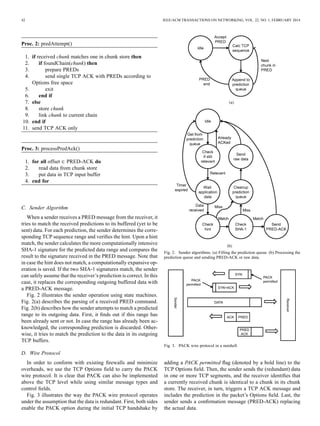
Fig. 2 illustrates the sender operation using state machines.
Fig. 2(a) describes the parsing of a received PRED command.
Fig. 2(b) describes how the sender attempts to match a predicted
range to its outgoing data. First, it finds out if this range has
been already sent or not. In case the range has already been ac-
knowledged, the corresponding prediction is discarded. Other-
wise, it tries to match the prediction to the data in its outgoing
TCP buffers.
D. Wire Protocol
In order to conform with existing firewalls and minimize
overheads, we use the TCP Options field to carry the PACK
wire protocol. It is clear that PACK can also be implemented
above the TCP level while using similar message types and
control fields.
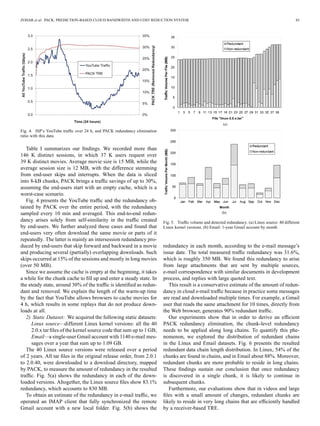
Fig. 3 illustrates the way the PACK wire protocol operates
under the assumption that the data is redundant. First, both sides
enable the PACK option during the initial TCP handshake by
Fig. 2. Sender algorithms. (a) Filling the prediction queue. (b) Processing the
prediction queue and sending PRED-ACK or raw data.
Fig. 3. PACK wire protocol in a nutshell.
adding a PACK permitted flag (denoted by a bold line) to the
TCP Options field. Then, the sender sends the (redundant) data
in one or more TCP segments, and the receiver identifies that
a currently received chunk is identical to a chunk in its chunk
store. The receiver, in turn, triggers a TCP ACK message and
includes the prediction in the packet’s Options field. Last, the
sender sends a confirmation message (PRED-ACK) replacing
the actual data.
ZOHAR et al.: PACK: PREDICTION-BASED CLOUD BANDWIDTH AND COST REDUCTION SYSTEM 43
IV. OPTIMIZATIONS
For the sake of clarity, Section III presents the most basic
version of the PACK protocol. In this section, we describe ad-
ditional options and optimizations.
A. Adaptive Receiver Virtual Window
PACK enables the receiver to locally obtain the sender’s data
when a local copy is available, thus eliminating the need to send
this data through the network. We term the receiver’s fetching
of such local data as the reception of virtual data.
When the sender transmits a high volume of virtual data,
the connection rate may be, to a certain extent, limited by the
number of predictions sent by the receiver. This, in turn, means
that the receiver predictions and the sender confirmations should
be expedited in order to reach high virtual data rate. For ex-
ample, in case of a repetitive success in predictions, the re-
ceiver’s side algorithm may become optimistic and gradually
increase the ranges of its predictions, similarly to the TCP rate
adjustment procedures.
PACK enables a large prediction size by either sending sev-
eral successive PRED commands or by enlarging PRED com-
mand range to cover several chunks.
PACK enables the receiver to combine several chunks into a
single range, as the sender is not bounded to the anchors origi-
nally used by the receiver’s data chunking algorithm. The com-
bined range has a new hint and a new signature that is an SHA-1
of the concatenated content of the chunks.
The variable prediction size introduces the notion of a vir-
tual window, which is the current receiver’s window for virtual
data. The virtual window is the receiver’s upper bound for the
aggregated number of bytes in all the pending predictions. The
virtual window is first set to a minimal value, which is identical
to the receiver’s flow control window. The receiver increases
the virtual window with each prediction success, according to
the following description.
Upon the first chunk match, the receiver sends predictions
limited to its initial virtual window. It is likely that, before the
predictions arrive at the sender, some of the corresponding real
data is already transmitted from it. When the real data arrives,
the receiver can partially confirm its prediction and increase the
virtual window. Upon getting PRED-ACK confirmations from
the sender, the receiver also increases the virtual window. This
logic resembles the slow-start part of the TCP rate control algo-
rithm. When a mismatch occurs, the receiver switches back to
the initial virtual window.
Proc. 4 describes the advanced algorithm performed at the
receiver’s side. The code at lines 2–8 describes PACK behavior
when a data segment arrives after its prediction was sent and the
virtual window is doubled. Proc. 5 describes the reception of a
successful acknowledgement message (PRED-ACK) from the
sender. The receiver reads the data from the local chunk store.
It then modifies the next byte sequence number to the last byte of
the redundant data that has just been read plus one, and sends the
next TCP ACK, piggybacked with the new prediction. Finally,
the virtual window is doubled.
Proc. 4: predAttemptAdaptive()—obsoletes Proc. 2
1. {new code for Adaptive}
2. if received chunk overlaps recently sent prediction then
3. if received chunk matches the prediction then
4. predSizeExponent()
5. else
6. predSizeReset()
7. end if
8. end if
9. if received chunk matches one in signature cache then
10. if foundChain(chunk) then
11. {new code for Adaptive}
12. prepare PREDs according to predSize
13. send TCP ACKs with all PREDs
14. exit
15. end if
16. else
17. store chunk
18. append chunk to current chain
19. end if
20. send TCP ACK only
Proc. 5: processPredAckAdaptive()—obsoletes Proc. 3
1. for all offset PRED-ACK do
2. read data from disk
3. put data in TCP input buffer
4. end for
5. {new code for Adaptive}
6. predSizeExponent()
The size increase of the virtual window introduces a tradeoff
in case the prediction fails from some point on. The code in
Proc. 4, line 6, describes the receiver’s behavior when the ar-
riving data does not match the recently sent predictions. The
new received chunk may, of course, start a new chain match.
Following the reception of the data, the receiver reverts to the
initial virtual window (conforming to the normal TCP receiver
window size) until a new match is found in the chunk store. Note
that even a slight change in the sender’s data, compared to the
saved chain, causes the entire prediction range to be sent to the
receiver as raw data. Hence, using large virtual windows intro-
duces a tradeoff between the potential rate gain and the recovery
effort in the case of a missed prediction.
B. Cloud Server as a Receiver
In a growing trend, cloud storage is becoming a dominant
player [23], [24]—from backup and sharing services [25] to the
American National Library [26], and e-mail services [27], [28].
In many of these services, the cloud is often the receiver of the
data.
If the sending client has no power limitations, PACK can
work to save bandwidth on the upstream to the cloud. In these
44 IEEE/ACM TRANSACTIONS ON NETWORKING, VOL. 22, NO. 1, FEBRUARY 2014
cases, the end-user acts as a sender, and the cloud server is
the receiver. The PACK algorithm need not change. It does
require, however, that the cloud server—like any PACK re-
ceiver—maintain a chunk store.
C. Hybrid Approach
PACK’s receiver-based mode is less efficient if changes in the
data are scattered. In this case, the prediction sequences are fre-
quently interrupted, which, in turn, forces the sender to revert
to raw data transmission until a new match is found at the re-
ceiver and reported back to the sender. To that end, we present
the PACK hybrid mode of operation, described in Proc. 6 and
Proc. 7. When PACK recognizes a pattern of dispersed changes,
it may select to trigger a sender-driven approach in the spirit of
[4], [6], [7], and [18].
Proc. 6: Receiver Segment Processing Hybrid—obsoletes
Proc. 1
1. if segment carries payload data then
2. calculate chunk
3. if reached chunk boundary then
4. activate predAttempt()
5. {new code for Hybrid}
6. if detected broken chain then
7. calcDispersion(255)
8. else
9. calcDispersion(0)
10. end if
11. end if
12. else if PRED-ACK segment then
13. processPredAck()
14. activate predAttempt()
15. end if
Proc. 7: processPredAckHybrid()—obsoletes Proc. 3
1. for all offset PRED-ACK do
2. read data from disk
3. put data in TCP input buffer
4. {new code for Hybrid}
5. for all chunk offset do
6. calcDispersion(0)
7. end for
8. end for
However, as was explained earlier, we would like to revert
to the sender-driven mode with a minimal computational and
buffering overhead at the server in the steady state. Therefore,
our approach is to first evaluate at the receiver the need for a
sender-driven operation and then to report it back to the sender.
At this point, the sender can decide if it has enough resources to
process a sender-driven TRE for some of its clients. To support
this enhancement, an additional command (DISPER) is intro-
duced. Using this command, the receiver periodically sends its
TABLE I
DATA AND PACK’S RESULTS OF 24 hYOUTUBE TRAFFIC TRACE
estimated level of dispersion, ranging from 0 for long smooth
chains, up to 255.
PACK computes the data dispersion value using an exponen-
tial smoothing function
(1)
where is a smoothing factor. The value is set to 0 when a
chain break is detected, and 255 otherwise.
V. MOTIVATING A RECEIVER-BASED APPROACH
The objective of this section is twofold: evaluating the po-
tential data redundancy for several applications that are likely
to reside in a cloud, and to estimate the PACK performance and
cloud costs of the redundancy elimination process.
Our evaluations are conducted using: 1) video traces captured
at a major ISP; 2) traffic obtained from a popular social network
service; and 3) genuine data sets of real-life workloads. In this
section, we relate to an average chunk size of 8 kB, although
our algorithm allows each client to use a different chunk size.
A. Traffic Redundancy
1) Traffic Traces: We obtained a 24-h recording of traffic at
an ISP’s 10-Gb/s PoP router, using a 2.4-GHz CPU recording
machine with 2 TB storage (4 500 GB 7 200 RPM disks)
and 1-Gb/s NIC. We filtered YouTube traffic using deep packet
inspection and mirrored traffic associated with YouTube servers
IP addresses to our recording device. Our measurements show
that YouTube traffic accounts for 13% of the total daily Web
traffic volume of this ISP. The recording of the full YouTube
stream would require 3 times our network and disk write
speeds. Therefore, we isolated 1/6 of the obtained YouTube
traffic, grouped by the video identifier (keeping the redundancy
level intact) using a programmed load balancer that examined
the upstream HTTP requests and redirected downstream ses-
sions according to the video identifier that was found in the
YouTube’s URLs, to a total of 1.55 TB. For accurate reading of
the true redundancy, we filtered out the client IP addresses that
were used too intensively to represent a single user and were
assumed to represent a NAT address.
Note that YouTube’s video content is not cacheable by stan-
dard Web proxies since its URL contains private single-use to-
kens changed with each HTTP request. Moreover, most Web
browsers cannot cache and reuse partial movie downloads that
occur when end-users skip within a movie or switch to another
movie before the previous one ends.
ZOHAR et al.: PACK: PREDICTION-BASED CLOUD BANDWIDTH AND COST REDUCTION SYSTEM 45
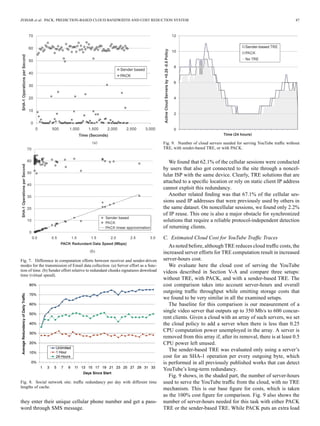
Fig. 4. ISP’s YouTube traffic over 24 h, and PACK redundancy elimination
ratio with this data.
Table I summarizes our findings. We recorded more than
146 K distinct sessions, in which 37 K users request over
39 K distinct movies. Average movie size is 15 MB, while the
average session size is 12 MB, with the difference stemming
from end-user skips and interrupts. When the data is sliced
into 8-kB chunks, PACK brings a traffic savings of up to 30%,
assuming the end-users start with an empty cache, which is a
worst-case scenario.
Fig. 4 presents the YouTube traffic and the redundancy ob-
tained by PACK over the entire period, with the redundancy
sampled every 10 min and averaged. This end-to-end redun-
dancy arises solely from self-similarity in the traffic created
by end-users. We further analyzed these cases and found that
end-users very often download the same movie or parts of it
repeatedly. The latter is mainly an intersession redundancy pro-
duced by end-users that skip forward and backward in a movie
and producing several (partially) overlapping downloads. Such
skips occurred at 15% of the sessions and mostly in long movies
(over 50 MB).
Since we assume the cache is empty at the beginning, it takes
a while for the chunk cache to fill up and enter a steady state. In
the steady state, around 30% of the traffic is identified as redun-
dant and removed. We explain the length of the warm-up time
by the fact that YouTube allows browsers to cache movies for
4 h, which results in some replays that do not produce down-
loads at all.
2) Static Dataset: We acquired the following static datasets:
Linux source—different Linux kernel versions: all the 40
2.0.x tar files of the kernel source code that sum up to 1 GB;
Email—a single-user Gmail account with 1140 e-mail mes-
sages over a year that sum up to 1.09 GB.
The 40 Linux source versions were released over a period
of 2 years. All tar files in the original release order, from 2.0.1
to 2.0.40, were downloaded to a download directory, mapped
by PACK, to measure the amount of redundancy in the resulted
traffic. Fig. 5(a) shows the redundancy in each of the down-
loaded versions. Altogether, the Linux source files show 83.1%
redundancy, which accounts to 830 MB.
To obtain an estimate of the redundancy in e-mail traffic, we
operated an IMAP client that fully synchronized the remote
Gmail account with a new local folder. Fig. 5(b) shows the
Fig. 5. Traffic volume and detected redundancy. (a) Linux source: 40 different
Linux kernel versions. (b) Email: 1-year Gmail account by month.
redundancy in each month, according to the e-mail message’s
issue date. The total measured traffic redundancy was 31.6%,
which is roughly 350 MB. We found this redundancy to arise
from large attachments that are sent by multiple sources,
e-mail correspondence with similar documents in development
process, and replies with large quoted text.
This result is a conservative estimate of the amount of redun-
dancy in cloud e-mail traffic because in practice some messages
are read and downloaded multiple times. For example, a Gmail
user that reads the same attachment for 10 times, directly from
the Web browser, generates 90% redundant traffic.
Our experiments show that in order to derive an efficient
PACK redundancy elimination, the chunk-level redundancy
needs to be applied along long chains. To quantify this phe-
nomenon, we explored the distribution of redundant chains
in the Linux and Email datasets. Fig. 6 presents the resulted
redundant data chain length distribution. In Linux, 54% of the
chunks are found in chains, and in Email about 88%. Moreover,
redundant chunks are more probable to reside in long chains.
These findings sustain our conclusion that once redundancy
is discovered in a single chunk, it is likely to continue in
subsequent chunks.
Furthermore, our evaluations show that in videos and large
files with a small amount of changes, redundant chunks are
likely to reside in very long chains that are efficiently handled
by a receiver-based TRE.
46 IEEE/ACM TRANSACTIONS ON NETWORKING, VOL. 22, NO. 1, FEBRUARY 2014
TABLE II
SENDER COMPUTATIONAL EFFORT COMPARISON BETWEEN DIFFERENT TRE MECHANISMS
Fig. 6. Chain length histogram Linux Software and Email data collections.
B. Receiver-Based Versus Sender-Based TRE
In this section, we evaluate the sender performance of PACK
as well as of a sender-based end-to-end TRE.
1) Server Computational Effort: First, we evaluate the com-
putational effort of the server in both cases. In PACK, the server
is required to perform an SHA-1 operation over a defined range
of bytes (the prediction determines a starting point, i.e., offset,
and the size of the prediction) only after it verifies that the
hint, sent as a part of the prediction, matches the data. In the
sender-based TRE, the server is required to first compute Rabin
fingerprints in order to slice the stream into chunks, and then to
compute an SHA-1 signature for each chunk, prior to sending it.
Table II presents a summary of the server computational effort
of each sender-based TRE described in the literature, as well as
of PACK.
To further evaluate the server computational effort for the dif-
ferent sender-based and PACK TRE schemes, we measured the
server effort as a function of time and traffic redundancy. For the
sender-based scheme, we simulated the approach of [22] using
their published performance benchmarks.4 We then measured
the server performance as a function of the download time and
redundant traffic for the Email dataset, which contains 31.6%
4The taken benchmarks: For 8-kB chunks, the SHA-1 calculation throughput
is about 250 Mb/s with a Pentium III 850 MHz and 500 Mb/s with a Pentium D
2.8 GHz. Rabin fingerprint chunking is reported to be 2–3 times slower.
redundancy. The sender effort is expressed by the number of
SHA-1 operations per second.
Fig. 7(a) demonstrates the high effort placed on a server in a
sender-based scheme, compared to the much lower effort of a
PACK sender, which performs SHA-1 operations only for data
that matches the hint. Moreover, Fig. 7(b) shows that the PACK
server computational effort grows linearly with the amount of
redundant data. As a result, the server works only when a re-
dundancy is observed and the client reads the data from its local
storage instead of receiving it from the server. This scenario
demonstrates how the server’s and the client’s incentives meet:
While the server invests the effort into saving traffic volume, the
client cooperates to save volume and get faster downloads.
2) Synchronization: Several sender-based end-to-end TRE
mechanisms require full synchronization between the sender
and the receiver caches. When such synchronization exists,
the redundancy is detected and eliminated up front by the
sender. While this synchronization saves an otherwise required
three-way handshake, it ignores redundant chunks that arrive
at the receiver from different senders. This problem is avoided
in PACK, but we did not account this extra efficiency in our
current study.
To further understand how TRE would work for a
cloud-based Web service with returning end-users, we ob-
tained a traffic log from a social network site for a period of
33 days at the end of 2010. The data log enables a reliable
long-term detection of returning users, as users identify them-
selves using a login to enter the site. We identified the sessions
of 7000 registered users over this period. We then measured
the amount of TRE that can be obtained with different cache
sizes at the receiver (a synchronized sender-based TRE keeps a
mirror of the last period cache size).
Fig. 8 shows the redundancy that can be obtained for different
caching periods. Clearly, a short-term cache cannot identify re-
turning long-term sessions.
3) Users Mobility: Using the social network dataset pre-
sented above, we explored the effect of users’ mobility on TRE.
Clearly, PACK is not directed to mobile devices, but to users
who use their stations from different locations. However, in this
experiment we focused on users that connected through 3G cel-
lular networks with many device types (PCs, smartphones, etc.).
Users are required to complete a registration progress, in which
ZOHAR et al.: PACK: PREDICTION-BASED CLOUD BANDWIDTH AND COST REDUCTION SYSTEM 47
Fig. 7. Difference in computation efforts between receiver and sender-driven
modes for the transmission of Email data collection. (a) Server effort as a func-
tion of time. (b) Sender effort relative to redundant chunks signatures download
time (virtual speed).
Fig. 8. Social network site: traffic redundancy per day with different time
lengths of cache.
they enter their unique cellular phone number and get a pass-
word through SMS message.
Fig. 9. Number of cloud servers needed for serving YouTube traffic without
TRE, with sender-based TRE, or with PACK.
We found that 62.1% of the cellular sessions were conducted
by users that also got connected to the site through a noncel-
lular ISP with the same device. Clearly, TRE solutions that are
attached to a specific location or rely on static client IP address
cannot exploit this redundancy.
Another related finding was that 67.1% of the cellular ses-
sions used IP addresses that were previously used by others in
the same dataset. On noncellular sessions, we found only 2.2%
of IP reuse. This one is also a major obstacle for synchronized
solutions that require a reliable protocol-independent detection
of returning clients.
C. Estimated Cloud Cost for YouTube Traffic Traces
As noted before, although TRE reduces cloud traffic costs, the
increased server efforts for TRE computation result in increased
server-hours cost.
We evaluate here the cloud cost of serving the YouTube
videos described in Section V-A and compare three setups:
without TRE, with PACK, and with a sender-based TRE. The
cost comparison takes into account server-hours and overall
outgoing traffic throughput while omitting storage costs that
we found to be very similar in all the examined setups.
The baseline for this comparison is our measurement of a
single video server that outputs up to 350 Mb/s to 600 concur-
rent clients. Given a cloud with an array of such servers, we set
the cloud policy to add a server when there is less than 0.25
CPU computation power unemployed in the array. A server is
removed from this array if, after its removal, there is at least 0.5
CPU power left unused.
The sender-based TRE was evaluated only using a server’s
cost for an SHA-1 operation per every outgoing byte, which
is performed in all previously published works that can detect
YouTube’s long-term redundancy.
Fig. 9 shows, in the shaded part, the number of server-hours
used to serve the YouTube traffic from the cloud, with no TRE
mechanism. This is our base figure for costs, which is taken
as the 100% cost figure for comparison. Fig. 9 also shows the
number of server-hours needed for this task with either PACK
TRE or the sender-based TRE. While PACK puts an extra load
48 IEEE/ACM TRANSACTIONS ON NETWORKING, VOL. 22, NO. 1, FEBRUARY 2014
Fig. 10. Overview of the PACK implementation.
TABLE III
CLOUD OPERATIONAL COST COMPARISON
of almost one server for only 30% of the time, which accounts
for the amount of redundancy eliminated, the sender-based TRE
scheme requires between one to two additional servers for al-
most 90% of the time, resulting in a higher operational cost for
32% redundancy elimination.
Table III summarizes the costs and the benefits of the TRE
operations and compares them to a baseline with no TRE. The
total operational cost is based on current Amazon EC2 [29]
pricing for the given traffic-intensive scenario (traffic:server-
hours cost ratio of 7:3). Both TRE schemes identify and elimi-
nate the traffic redundancy. However, while PACK employs the
server only when redundancy exists, the sender-based TRE em-
ploys it for the entire period of time, consuming more servers
than PACK and no-TRE schemes when no or little redundancy
is detected.
VI. IMPLEMENTATION
In this section, we present PACK implementation, its perfor-
mance analysis, and the projected server costs derived from the
implementation experiments.
Our implementation contains over 25 000 lines of C and
Java code. It runs on Linux with Netfilter Queue [30]. Fig. 10
shows the PACK implementation architecture. At the server
side, we use an Intel Core 2 Duo 3 GHz, 2 GB of RAM,
and a WD1600AAJS SATA drive desktop. The clients laptop
machines are based on an Intel Core 2 Duo 2.8 GHz, 3.5 GB of
RAM, and a WD2500BJKT SATA drive.
Our implementation enables the transparent use of the TRE at
both the server and the client. PACK receiver–sender protocol is
embedded in the TCP Options field for low overhead and com-
patibility with legacy systems along the path. We keep the gen-
uine operating systems’ TCP stacks intact, allowing a seamless
integration with all applications and protocols above TCP.
Chunking and indexing are performed only at the client’s
side, enabling the clients to decide independently on their pre-
ferred chunk size. In our implementation, the client uses an av-
erage chunk size of 8 kB. We found this size to achieve high
TRE hit-ratio in the evaluated datasets, while adding only neg-
ligible overheads of 0.1% in metadata storage and 0.15% in pre-
dictions bandwidth.
For the experiments held in this section, we generated a work-
load consisting of Section V datasets: IMAP e-mails, HTTP
videos, and files downloaded over FTP. The workload was then
loaded to the server and consumed by the clients. We sampled
the machines’ status every second to measure real and virtual
traffic volumes and CPU utilization.
A. Server Operational Cost
We measured the server performance and cost as a function
of the data redundancy level in order to capture the effect of the
TRE mechanisms in real environment. To isolate the TRE oper-
ational cost, we measured the server’s traffic volume and CPU
utilization at maximal throughput without operating a TRE. We
then used these numbers as a reference cost, based on present
Amazon EC2 [29] pricing. The server operational cost is com-
posed of both the network traffic volume and the CPU utiliza-
tion, as derived from the EC2 pricing.
We constructed a system consisting of one server and seven
clients over a 1-Gb/s network. The server was configured to pro-
vide a maximal throughput of 50 Mb/s per client. We then mea-
sured three different scenarios: a baseline no-TRE operation,
PACK, and a sender-based TRE similar to EndRE’s Chunk-
Match [15], referred to as EndRE-like. For the EndRE-like case,
we accounted for the SHA-1 calculated over the entire outgoing
traffic, but did not account for the chunking effort. In the case
of EndRE-like, we made the assumption of unlimited buffers at
both the server and client sides to enable the same long-term re-
dundancy level and TRE ratio of PACK.
Fig. 11 presents the overall processing and networking cost
for traffic redundancy, relative to no-TRE operation. As the
redundancy grows, the PACK server cost decreases due to the
bandwidth saved by unsent data. However, the EndRE-like
server does not gain a significant cost reduction since the
SHA-1 operations are performed over nonredundant data as
well. Note that at above 25% redundancy, which is common
to all reviewed datasets, the PACK operational cost is at least
20% lower than that of EndRE-like.
B. PACK Impact on the Client CPU
To evaluate the CPU effort imposed by PACK on a client, we
measured a random client under a scenario similar to the one
used for measuring the server’s cost, only this time the cloud
server streamed videos at a rate of 9 Mb/s to each client. Such
a speed throttling is very common in real-time video servers
that aim to provide all clients with stable bandwidth for smooth
view.
Table IV summarizes the results. The average PACK-related
CPU consumption of a client is less than 4% for 9-Mb/s video
with 36.4% redundancy.
Fig. 12(a) presents the client CPU utilization as a function
of the real incoming traffic bandwidth. Since the client chunks
the arriving data, the CPU utilization grows as more real traffic
enters the client’s machine. Fig. 12(b) shows the client CPU
utilization as a function of the virtual traffic bandwidth. Vir-
tual traffic arrives in the form of prediction approvals from the
ZOHAR et al.: PACK: PREDICTION-BASED CLOUD BANDWIDTH AND COST REDUCTION SYSTEM 49
Fig. 11. PACK versus EndRE-like cloud server operational cost as a function
of redundancy ratio.
TABLE IV
CLIENT CPU UTILIZATION WHEN STREAMING 9-Mb/s VIDEO WITH AND
WITHOUT PACK
sender and is limited to a rate of 9 Mb/s by the server’s throt-
tling. The approvals save the client the need to chunk data or
sign the chunks and enable him to send more predictions based
on the same chain that was just used successfully. Hence, the
more redundancy is found, the less CPU utilization incurred by
PACK.
C. Chunking Scheme
Our implementation employs a novel computationally
lightweight chunking (fingerprinting) scheme, termed PACK
chunking. The scheme, presented in Proc. 8 and illustrated in
Fig. 13, is an XOR-based rolling hash function, tailored for
fast TRE chunking. Anchors are detected by the mask in line 1
that provides on average 8-kB chunks. The mask, as shown
in Fig. 13, was chosen to consider all the 48 B in the sliding
window.
Proc. 8: PACK chunking algorithm
1. {48 bytes window; 8
KB chunks}
2. {has to be 64 bits}
3. for all byte stream do
4. shift left longval by 1 bit { ; drop msb}
5. bitwise-xor byte
6. if processed at least 48 bytes and (longval bitwise-and
mask) then
7. found an anchor
8. end if
9. end for
Fig. 12. Client CPU utilization as a function of the received traffic, when the
client’s CPU utilization without TRE is used as a baseline. (a) Real traffic.
(b) Virtual traffic.
Fig. 13. PACK chunking: snapshot after at least 48 B were processed.
Our measurements show that PACK chunking is faster than
the fastest known Rabin fingerprint software implementa-
tion [31] due to one less XOR operation per byte.
We further measured PACK chunking speed and compared
it to other schemes. The measurements were performed on an
unloaded CPU whose only operation was to chunk a 10-MB
50 IEEE/ACM TRANSACTIONS ON NETWORKING, VOL. 22, NO. 1, FEBRUARY 2014
Fig. 14. Receiver message example of a large range prediction.
TABLE V
CHUNKING SCHEMES PROCESSING SPEED TESTED WITH 10-MB RANDOM FILE
OVER A CLIENT’S LAPTOP, WITHOUT EITHER MINIMAL OR MAXIMAL LIMIT
ON THE CHUNK SIZE
random binary file. Table V summaries the processing speed of
the different chunking schemes. As a baseline figure, we mea-
sured the speed of SHA-1 signing and found that it reached
946 Mb/s.
D. Pack Messages Format
In our implementation, we use two currently unused TCP op-
tion codes, similar to the ones defined in SACK [32]. The first
one is an enabling option PACK permitted sent in a SYN seg-
ment to indicate that the PACK option can be used after the
connection is established. The other one is a PACK message
that may be sent over an established connection once permis-
sion has been granted by both parties. A single PACK message,
piggybacked on a single TCP packet, is designed to wrap and
carry multiple PACK commands, as illustrated in Fig. 14. This
not only saves message overhead, but also copes with security
network devices (e.g., firewall) that tend to change TCP options
order [33]. Note that most TCP options are only used at the TCP
initialization period, with several exceptions such as SACK [32]
and timestamps [34], [33]. Due to the lack of space, additional
implementation details are left out and are available in [16].
VII. CONCLUSION
Cloud computing is expected to trigger high demand for TRE
solutions as the amount of data exchanged between the cloud
and its users is expected to dramatically increase. The cloud en-
vironment redefines the TRE system requirements, making pro-
prietary middle-box solutions inadequate. Consequently, there
is a rising need for a TRE solution that reduces the cloud’s op-
erational cost while accounting for application latencies, user
mobility, and cloud elasticity.
In this paper, we have presented PACK, a receiver-based,
cloud-friendly, end-to-end TRE that is based on novel specula-
tive principles that reduce latency and cloud operational cost.
PACK does not require the server to continuously maintain
clients’ status, thus enabling cloud elasticity and user mobility
while preserving long-term redundancy. Moreover, PACK is
capable of eliminating redundancy based on content arriving to
the client from multiple servers without applying a three-way
handshake.
Our evaluation using a wide collection of content types shows
that PACK meets the expected design goals and has clear advan-
tages over sender-based TRE, especially when the cloud com-
putation cost and buffering requirements are important. More-
over, PACK imposes additional effort on the sender only when
redundancy is exploited, thus reducing the cloud overall cost.
Two interesting future extensions can provide additional ben-
efits to the PACK concept. First, our implementation maintains
chains by keeping for any chunk only the last observed sub-
sequent chunk in an LRU fashion. An interesting extension to
this work is the statistical study of chains of chunks that would
enable multiple possibilities in both the chunk order and the
corresponding predictions. The system may also allow making
more than one prediction at a time, and it is enough that one of
them will be correct for successful traffic elimination. A second
promising direction is the mode of operation optimization of the
hybrid sender–receiver approach based on shared decisions de-
rived from receiver’s power or server’s cost changes.
REFERENCES
[1] E. Zohar, I. Cidon, and O. Mokryn, “The power of prediction: Cloud
bandwidth and cost reduction,” in Proc. SIGCOMM, 2011, pp. 86–97.
[2] M. Armbrust, A. Fox, R. Griffith, A. D. Joseph, R. Katz, A. Konwinski,
G. Lee, D. Patterson, A. Rabkin, I. Stoica, and M. Zaharia, “A view of
cloud computing,” Commun. ACM, vol. 53, no. 4, pp. 50–58, 2010.
[3] U. Manber, “Finding similar files in a large file system,” in Proc.
USENIX Winter Tech. Conf., 1994, pp. 1–10.
[4] N. T. Spring and D. Wetherall, “A protocol-independent technique for
eliminating redundant network traffic,” in Proc. SIGCOMM, 2000, vol.
30, pp. 87–95.
[5] A. Muthitacharoen, B. Chen, and D. Mazières, “A low-bandwidth net-
work file system,” in Proc. SOSP, 2001, pp. 174–187.
[6] E. Lev-Ran, I. Cidon, and I. Z. Ben-Shaul, “Method and apparatus
for reducing network traffic over low bandwidth links,” US Patent
7636767, Nov. 2009.
[7] S. Mccanne and M. Demmer, “Content-based segmentation scheme for
data compression in storage and transmission including hierarchical
segment representation,” US Patent 6828925, Dec. 2004.
[8] R. Williams, “Method for partitioning a block of data into subblocks
and for storing and communicating such subblocks,” US Patent
5990810, Nov. 1999.
[9] Juniper Networks, Sunnyvale, CA, USA, “Application accel-
eration,” 1996 [Online]. Available: http://www.juniper.net/us/
en/products-services/application-acceleration/
[10] Blue Coat Systems, Sunnyvale, CA, USA, “MACH5,” 1996 [Online].
Available: http://www.bluecoat.com/products/mach5
[11] Expand Networks, Riverbed Technology, San Francisco, CA,
USA, “Application acceleration and WAN optimization,”
1998 [Online]. Available: http://www.expand.com/technology/
application-acceleration.aspx
[12] F5, Seattle, WA, USA, “WAN optimization,” 1996 [Online]. Available:
http://www.f5.com/solutions/acceleration/wan-optimization/
[13] A. Flint, “The next workplace revolution,” Nov. 2012 [Online].
Available: http://m.theatlanticcities.com/jobs-and-economy/2012/11/
nextworkplace-revolution/3904/
[14] A. Anand, C. Muthukrishnan, A. Akella, and R. Ramjee, “Redundancy
in network traffic: Findings and implications,” in Proc. SIGMETRICS,
2009, pp. 37–48.
ZOHAR et al.: PACK: PREDICTION-BASED CLOUD BANDWIDTH AND COST REDUCTION SYSTEM 51
[15] B. Aggarwal, A. Akella, A. Anand, A. Balachandran, P. Chitnis, C.
Muthukrishnan, R. Ramjee, and G. Varghese, “EndRE: An end-system
redundancy elimination service for enterprises,” in Proc. NSDI, 2010,
pp. 28–28.
[16] “PACK source code,” 2011 [Online]. Available: http://www.eyalzo.
com/projects/pack
[17] A. Anand, A. Gupta, A. Akella, S. Seshan, and S. Shenker, “Packet
caches on routers: The implications of universal redundant traffic elim-
ination,” in Proc. SIGCOMM, 2008, pp. 219–230.
[18] A. Anand, V. Sekar, and A. Akella, “SmartRE: An architecture for
coordinated network-wide redundancy elimination,” in Proc. SIG-
COMM, 2009, vol. 39, pp. 87–98.
[19] A. Gupta, A. Akella, S. Seshan, S. Shenker, and J. Wang, “Under-
standing and exploiting network traffic redundancy,” UW-Madison,
Madison, WI, USA, Tech. Rep. 1592, Apr. 2007.
[20] M. Zink, K. Suh, Y. Gu, and J. Kurose, “Watch global, cache local:
YouTube network traffic at a campus network—Measurements and im-
plications,” in Proc. MMCN, 2008, pp. 1–13.
[21] S. Schleimer, D. S. Wilkerson, and A. Aiken, “Winnowing: Local al-
gorithms for document fingerprinting,” in Proc. SIGMOD, 2003, pp.
76–85.
[22] S. Ihm, K. Park, and V. Pai, “Wide-area network acceleration for the
developing world,” in Proc. USENIX ATC, 2010, pp. 18–18.
[23] H. Stevens and C. Pettey, “Gartner says cloud computing will be as
influential as e-business,” Gartner Newsroom, Jun. 26, 2008.
[24] H. Abu-Libdeh, L. Princehouse, and H. Weatherspoon, “RACS: A case
for cloud storage diversity,” in Proc. SOCC, 2010, pp. 229–240.
[25] “Dropbox,” 2007 [Online]. Available: http://www.dropbox.com/
[26] E. Allen and C. M. Morris, “Library of Congress and Duracloud launch
pilot program using cloud technologies to test perpetual access to dig-
ital content,” News Release, Jul. 2009.
[27] D. Hansen, “GMail filesystem over FUSE,” [Online]. Available: http://
sr71.net/projects/gmailfs/
[28] J. Srinivasan, W. Wei, X. Ma, and T. Yu, “EMFS: Email-based personal
cloud storage,” in Proc. NAS, 2011, pp. 248–257.
[29] “Amazon Elastic Compute Cloud (EC2),” [Online]. Available: http://
aws.amazon.com/ec2/
[30] “netfilter/iptables project: Libnetfilter_queue,” Oct. 2005 [Online].
Available: http://www.netfilter.org/projects/libnetfilter_queue
[31] A. Z. Broder, “Some applications of Rabin’s fingerprinting method,”
in Sequences II: Methods in Communications, Security, and Computer
Science. New York, NY, USA: Springer-Verlag, 1993, pp. 143–152.
[32] M. Mathis, J. Mahdavi, S. Floyd, and A. Romanow, “TCP selective
acknowledgment options,” RFC 2018, 1996.
[33] A. Medina, M. Allman, and S. Floyd, “Measuring the evolution of
transport protocols in the internet,” Comput. Commun. Rev., vol. 35,
no. 2, pp. 37–52, 2005.
[34] V. Jacobson, R. Braden, and D. Borman, “TCP extensions for high
performance,” RFC 1323, 1992.
Eyal Zohar received the B.A. and M.Sc. degrees
in computer science from the Open University,
Ra’anana, Israel, in 1998 and 2009, respectively, and
is currently pursuing the Ph.D. degree in electrical
engineering at the Technion—Israel Institute of
Technology, Haifa, Israel.
He has a vast experience in network-related soft-
ware-development from several startup companies.
His research interests include P2P networks, content
caching, cloud computing, cellular networks, and
traffic redundancy elimination.
Mr. Zohar is a recipient of the Intel Award for graduate students in 2012.
Israel Cidon received the B.Sc. and Ph.D. degrees in
electrical engineering from the Technion—Israel In-
stitute of Technology, Haifa, Israel, in 1980 and 1984,
respectively.
He is a Professor of electrical engineering with the
Technion. From 2005 to 2010, he was the Dean of the
Electrical Engineering Faculty with the Technion.
Between 1985 and 1994, he was the Manager of the
Network Architecture and Algorithms with the IBM
T. J. Watson Research Center, Yorktown Heights,
NY, leading several computer networks projects
including the first implementations of a packet-based multimedia network
and IBM first storage area network. During 1994 and 1995, he founded and
managed the high-speed networking group with Sun Microsystems Labs,
Mountain View, CA. In 1981 he cofounded Micronet Ltd., Tel-Aviv, Israel, an
early vendor of mobile data-entry terminals. In 1998, he cofounded Viola Net-
works, Yokneam, Israel, a provider network and VoIP performance diagnostic
suite (acquired by Fluke Networks, 2008). In 2000, he cofounded Actona
Technologies, Haifa, Israel (acquired by Cisco in 2004), which pioneered the
technology of wide area file systems (WAFS). This technology was adopted by
most large enterprises. In 2012, he cofounded Sookasa, Mountain View, CA,
USA, a provider of unstructured data security and management for storage
cloud services. He is the coauthor of over 170 refereed papers and 27 US
patents. His current research involves wire-line and wireless communication
networks and on-chip interconnects networks.
Dr. Cidon received the IBM Outstanding Innovation Award twice.
Osnat (Ossi) Mokryn received the B.Sc. degree in
computer science and M.Sc. degree in electrical engi-
neering from the Technion—Israel Institute of Tech-
nology, Haifa, Israel, in 1993 and 1998, respectively,
and the Ph.D. degree in computer science from the
Hebrew University, Jerusalem, Israel, in 2004.
She has an extensive high-tech experience from
leading companies such as Intel and IBM research
labs in Haifa, Israel. She was a Post-Doctorate
Fellow with the Electrical Engineering Department,
Tel-Aviv University, Tel-Aviv, Israel. Starting in
2008, she was faculty and heading the Internet and Computer Networks field
with the School of Computer Science, Tel Aviv Jaffa Academic College, Tel
Aviv, Israel. Her recent research focuses on content-aware caching, wireless
and opportunistic networks, and data mining for recommender systems.

06425531

  • 1.
    IEEE/ACM TRANSACTIONS ONNETWORKING, VOL. 22, NO. 1, FEBRUARY 2014 39 PACK: Prediction-Based Cloud Bandwidth and Cost Reduction System Eyal Zohar, Israel Cidon, and Osnat Mokryn Abstract—In this paper, we present PACK (Predictive ACKs), a novel end-to-end traffic redundancy elimination (TRE) system, designed for cloud computing customers. Cloud-based TRE needs to apply a judicious use of cloud resources so that the bandwidth cost reduction combined with the additional cost of TRE compu- tation and storage would be optimized. PACK’s main advantage is its capability of offloading the cloud-server TRE effort to end- clients, thus minimizing the processing costs induced by the TRE algorithm. Unlike previous solutions, PACK does not require the server to continuously maintain clients’ status. This makes PACK very suitable for pervasive computation environments that com- bine client mobility and server migration to maintain cloud elas- ticity. PACK is based on a novel TRE technique, which allows the client to use newly received chunks to identify previously received chunk chains, which in turn can be used as reliable predictors to future transmitted chunks. We present a fully functional PACK im- plementation, transparent to all TCP-based applications and net- work devices. Finally, we analyze PACK benefits for cloud users, using traffic traces from various sources. Index Terms—Caching, cloud computing, network optimization, traffic redundancy elimination. I. INTRODUCTION CLOUD computing offers its customers an economical and convenient pay-as-you-go service model, known also as usage-based pricing [2]. Cloud customers1 pay only for the actual use of computing resources, storage, and band- width, according to their changing needs, utilizing the cloud’s scalable and elastic computational capabilities. In particular, data transfer costs (i.e., bandwidth) is an important issue when trying to minimize costs [2]. Consequently, cloud cus- tomers, applying a judicious use of the cloud’s resources, are motivated to use various traffic reduction techniques, in particular traffic redundancy elimination (TRE), for reducing bandwidth costs. Manuscript received May 01, 2012; revised December 01, 2012; accepted January 06, 2013; approved by IEEE/ACM TRANSACTIONS ON NETWORKING Editor L. E. Li. Date of publication February 01, 2013; date of current version February 12, 2014. E. Zohar and I. Cidon are with the Department of Electrical Engineering, Technion—Israel Institute of Technology, Haifa 44444, Israel (e-mail: eyalzo@tx.technion.ac.il; cidon@ee.technion.ac.il). O. Mokryn is with the Computer Science Department, Tel Aviv College, Tel- Aviv 46410, Israel (e-mail: ossi@mta.ac.il). Color versions of one or more of the figures in this paper are available online at http://ieeexplore.ieee.org. Digital Object Identifier 10.1109/TNET.2013.2240010 1We refer as cloud customers to organizations that export services to the cloud, and as users to the end-users and devices that consume the services. Traffic redundancy stems from common end-users’ activi- ties, such as repeatedly accessing, downloading, uploading (i.e., backup), distributing, and modifying the same or similar infor- mation items (documents, data, Web, and video). TRE is used to eliminate the transmission of redundant content and, there- fore, to significantly reduce the network cost. In most common TRE solutions, both the sender and the receiver examine and compare signatures of data chunks, parsed according to the data content, prior to their transmission. When redundant chunks are detected, the sender replaces the transmission of each redundant chunk with its strong signature [3]–[5]. Commercial TRE solu- tions are popular at enterprise networks, and involve the deploy- ment of two or more proprietary-protocol, state synchronized middle-boxes at both the intranet entry points of data centers and branch offices, eliminating repetitive traffic between them (e.g., Cisco [6], Riverbed [7], Quantum [8], Juniper [9], Blue Coat [10], Expand Networks [11], and F5 [12]). While proprietary middle-boxes are popular point solutions within enterprises, they are not as attractive in a cloud environ- ment. Cloud providers cannot benefit from a technology whose goal is to reduce customer bandwidth bills, and thus are not likely to invest in one. The rise of “on-demand” work spaces, meeting rooms, and work-from-home solutions [13] detaches the workers from their offices. In such a dynamic work envi- ronment, fixed-point solutions that require a client-side and a server-side middle-box pair become ineffective. On the other hand, cloud-side elasticity motivates work distribution among servers and migration among data centers. Therefore, it is com- monly agreed that a universal, software-based, end-to-end TRE is crucial in today’s pervasive environment [14], [15]. This en- ables the use of a standard protocol stack and makes a TRE within end-to-end secured traffic (e.g., SSL) possible. Current end-to-end TRE solutions are sender-based. In the case where the cloud server is the sender, these solutions require that the server continuously maintain clients’ status. We show here that cloud elasticity calls for a new TRE solu- tion. First, cloud load balancing and power optimizations may lead to a server-side process and data migration environment, in which TRE solutions that require full synchronization between the server and the client are hard to accomplish or may lose ef- ficiency due to lost synchronization. Second, the popularity of rich media that consume high bandwidth motivates content dis- tribution network (CDN) solutions, in which the service point for fixed and mobile users may change dynamically according to the relative service point locations and loads. Moreover, if an 2We generally assume that the cloud side, following the current Web service model, is dominated by a sender operation. The cases where the cloud is the receiver are referenced specifically. 1063-6692 © 2013 IEEE. Personal use is permitted, but republication/redistribution requires IEEE permission. See http://www.ieee.org/publications_standards/publications/rights/index.html for more information.
  • 2.
    40 IEEE/ACM TRANSACTIONSON NETWORKING, VOL. 22, NO. 1, FEBRUARY 2014 end-to-end solution is employed, its additional computational and storage costs at the cloud side should be weighed against its bandwidth saving gains. Clearly, a TRE solution that puts most of its computational ef- fort on the cloud side2 may turn to be less cost-effective than the one that leverages the combined client-side capabilities. Given an end-to-end solution, we have found through our experiments that sender-based end-to-end TRE solutions [4], [15] add a con- siderable load to the servers, which may eradicate the cloud cost saving addressed by the TRE in the first place. Our experi- ments further show that current end-to-end solutions also suffer from the requirement to maintain end-to-end synchronization that may result in degraded TRE efficiency. In this paper, we present a novel receiver-based end-to-end TRE solution that relies on the power of predictions to eliminate redundant traffic between the cloud and its end-users. In this so- lution, each receiver observes the incoming stream and tries to match its chunks with a previously received chunk chain or a chunk chain of a local file. Using the long-term chunks’ meta- data information kept locally, the receiver sends to the server predictions that include chunks’ signatures and easy-to-verify hints of the sender’s future data. The sender first examines the hint and performs the TRE operation only on a hint-match. The purpose of this procedure is to avoid the expensive TRE com- putation at the sender side in the absence of traffic redundancy. When redundancy is detected, the sender then sends to the re- ceiver only the ACKs to the predictions, instead of sending the data. On the receiver side, we propose a new computationally lightweight chunking (fingerprinting) scheme termed PACK chunking. PACK chunking is a new alternative for Rabin fin- gerprinting traditionally used by RE applications. Experiments show that our approach can reach data processing speeds over 3 Gb/s, at least 20% faster than Rabin fingerprinting. Offloading the computational effort from the cloud to a large group of clients forms a load distribution action, as each client processes only its TRE part. The receiver-based TRE solution addresses mobility problems common to quasi-mobile desktop/ laptops computational environments. One of them is cloud elas- ticity due to which the servers are dynamically relocated around the federated cloud, thus causing clients to interact with mul- tiple changing servers. Another property is IP dynamics, which compel roaming users to frequently change IP addresses. In ad- dition to the receiver-based operation, we also suggest a hy- brid approach, which allows a battery-powered mobile device to shift the TRE computation overhead back to the cloud by trig- gering a sender-based end-to-end TRE similar to [15]. To validate the receiver-based TRE concept, we imple- mented, tested, and performed realistic experiments with PACK within a cloud environment. Our experiments demon- strate a cloud cost reduction achieved at a reasonable client effort while gaining additional bandwidth savings at the client side. The implementation code, over 25 000 lines of C and Java, can be obtained from [16]. Our implementation utilizes the TCP Options field, supporting all TCP-based applications such as Web, video streaming, P2P, e-mail, etc. In addition, we evaluate our solution and compare it to pre- vious end-to-end solutions using terabytes of real video traffic consumed by 40 000 distinct clients, captured within an ISP, and traffic obtained in a social network service for over a month. We demonstrate that our solution achieves 30% redundancy elimi- nation without significantly affecting the computational effort of the sender, resulting in a 20% reduction of the overall cost to the cloud customer. This paper is organized as follows. Section II reviews existing TRE solutions. In Section III, we present our receiver-based TRE solution and explain the prediction process and the pre- diction-based TRE mechanism. In Section IV, we present opti- mizations to the receiver-side algorithms. Section V evaluates data redundancy in a cloud and compares PACK to sender-based TRE. Section VI details our implementation and discusses our experiments and results. II. RELATED WORK Several TRE techniques have been explored in recent years. A protocol-independent TRE was proposed in [4]. The paper describes a packet-level TRE, utilizing the algorithms presented in [3]. Several commercial TRE solutions described in [6] and [7] have combined the sender-based TRE ideas of [4] with the algo- rithmic and implementation approach of [5] along with protocol specific optimizations for middle-boxes solutions. In particular, [6] describes how to get away with three-way handshake be- tween the sender and the receiver if a full state synchronization is maintained. References [17] and [18] present redundancy-aware routing algorithm. These papers assume that the routers are equipped with data caches, and that they search those routes that make a better use of the cached data. A large-scale study of real-life traffic redundancy is presented in [19], [20], and [14]. In the latter, packet-level TRE techniques are compared [3], [21]. Our paper builds on their finding that “an end to end redundancy elimination solution, could obtain most of the middle-box’s bandwidth savings,” motivating the benefit of low cost software end-to-end solutions. Wanax [22] is a TRE system for the developing world where storage and WAN bandwidth are scarce. It is a software-based middle-boxreplacementfortheexpensivecommercialhardware. Inthis scheme,the sender middle-box holds backthe TCP stream andsendsdatasignaturestothereceivermiddle-box.Thereceiver checkswhetherthedataisfoundinitslocalcache.Datachunksthat arenotfoundinthe cachearefetchedfromthesendermiddle-box oranearbyreceivermiddle-box.Naturally,suchaschemeincursa three-way-handshakelatencyfornoncacheddata. EndRE [15] is a sender-based end-to-end TRE for enterprise networks. It uses a new chunking scheme that is faster than the commonly used Rabin fingerprint, but is restricted to chunks as small as 32–64 B. Unlike PACK, EndRE requires the server to maintain a fully and reliably synchronized cache for each client. To adhere with the server’s memory requirements, these caches are kept small (around 10 MB per client), making the system in- adequate for medium-to-large content or long-term redundancy. EndRE is server-specific, hence not suitable for a CDN or cloud environment.
  • 3.
    ZOHAR et al.:PACK: PREDICTION-BASED CLOUD BANDWIDTH AND COST REDUCTION SYSTEM 41 Fig. 1. From stream to chain. To the best of our knowledge, none of the previous works have addressed the requirements for a cloud-com- puting-friendly, end-to-end TRE, which forms PACK’s focus. III. PACK ALGORITHM For the sake of clarity, we first describe the basic receiver- driven operation of the PACK protocol. Several enhancements and optimizations are introduced in Section IV. The stream of data received at the PACK receiver is parsed to a sequence of variable-size, content-based signed chunks sim- ilar to [3] and [5]. The chunks are then compared to the receiver local storage, termed chunk store. If a matching chunk is found in the local chunk store, the receiver retrieves the sequence of subsequent chunks, referred to as a chain, by traversing the sequence of LRU chunk pointers that are included in the chunks’ metadata. Using the constructed chain, the receiver sends a prediction to the sender for the subsequent data. Part of each chunk’s prediction, termed a hint, is an easy-to-compute function with a small-enough false-positive value, such as the value of the last byte in the predicted data or a byte-wide XOR checksum of all or selected bytes. The prediction sent by the receiver includes the range of the predicted data, the hint, and the signature of the chunk. The sender identifies the predicted range in its buffered data and verifies the hint for that range. If the result matches the received hint, it continues to perform the more computationally intensive SHA-1 signature operation. Upon a signature match, the sender sends a confirmation mes- sage to the receiver, enabling it to copy the matched data from its local storage. A. Receiver Chunk Store PACK uses a new chains scheme, described in Fig. 1, in which chunks are linked to other chunks according to their last received order. The PACK receiver maintains a chunk store, which is a large size cache of chunks and their associated metadata. Chunk’s metadata includes the chunk’s signature and a (single) pointer to the successive chunk in the last received stream containing this chunk. Caching and indexing techniques are employed to efficiently maintain and retrieve the stored chunks, their signatures, and the chains formed by traversing the chunk pointers. When the new data are received and parsed to chunks, the receiver computes each chunk’s signature using SHA-1. At this point, the chunk and its signature are added to the chunk store. In addition, the metadata of the previously received chunk in the same stream is updated to point to the current chunk. The unsynchronized nature of PACK allows the receiver to map each existing file in the local file system to a chain of chunks, saving in the chunk store only the metadata associated with the chunks.3 Using the latter observation, the receiver can also share chunks with peer clients within the same local net- work utilizing a simple map of network drives. The utilization of a small chunk size presents better redun- dancy elimination when data modifications are fine-grained, such as sporadic changes in an HTML page. On the other hand, the use of smaller chunks increases the storage index size, memory usage, and magnetic disk seeks. It also increases the transmission overhead of the virtual data exchanged between the client and the server. Unlike IP-level TRE solutions that are limited by the IP packet size ( B), PACK operates on TCP streams and can therefore handle large chunks and entire chains. Although our design permits each PACK client to use any chunk size, we recommend an average chunk size of 8 kB (see Section VI). B. Receiver Algorithm Upon the arrival of new data, the receiver computes the re- spective signature for each chunk and looks for a match in its local chunk store. If the chunk’s signature is found, the receiver determines whether it is a part of a formerly received chain, using the chunks’ metadata. If affirmative, the receiver sends a prediction to the sender for several next expected chain chunks. The prediction carries a starting point in the byte stream (i.e., offset) and the identity of several subsequent chunks (PRED command). Upon a successful prediction, the sender responds with a PRED-ACK confirmation message. Once the PRED-ACK message is received and processed, the receiver copies the cor- responding data from the chunk store to its TCP input buffers, placing it according to the corresponding sequence numbers. At this point, the receiver sends a normal TCP ACK with the next expected TCP sequence number. In case the prediction is false, or one or more predicted chunks are already sent, the sender continues with normal operation, e.g., sending the raw data, without sending a PRED-ACK message. Proc. 1: Receiver Segment Processing 1. if segment carries payload data then 2. calculate chunk 3. if reached chunk boundary then 4. activate predAttempt() 5. end if 6. else if PRED-ACK segment then 7. processPredAck() 8. activate predAttempt() 9. end if 3De-duplicated storage systems provide similar functionality and can be used for this purpose.
  • 4.
    42 IEEE/ACM TRANSACTIONSON NETWORKING, VOL. 22, NO. 1, FEBRUARY 2014 Proc. 2: predAttempt() 1. if received chunk matches one in chunk store then 2. if foundChain(chunk) then 3. prepare PREDs 4. send single TCP ACK with PREDs according to Options free space 5. exit 6. end if 7. else 8. store chunk 9. link chunk to current chain 10. end if 11. send TCP ACK only Proc. 3: processPredAck() 1. for all offset PRED-ACK do 2. read data from chunk store 3. put data in TCP input buffer 4. end for C. Sender Algorithm When a sender receives a PRED message from the receiver, it tries to match the received predictions to its buffered (yet to be sent) data. For each prediction, the sender determines the corre- sponding TCP sequence range and verifies the hint. Upon a hint match, the sender calculates the more computationally intensive SHA-1 signature for the predicted data range and compares the result to the signature received in the PRED message. Note that in case the hint does not match, a computationally expansive op- eration is saved. If the two SHA-1 signatures match, the sender can safely assume that the receiver’s prediction is correct. In this case, it replaces the corresponding outgoing buffered data with a PRED-ACK message. Fig. 2 illustrates the sender operation using state machines. Fig. 2(a) describes the parsing of a received PRED command. Fig. 2(b) describes how the sender attempts to match a predicted range to its outgoing data. First, it finds out if this range has been already sent or not. In case the range has already been ac- knowledged, the corresponding prediction is discarded. Other- wise, it tries to match the prediction to the data in its outgoing TCP buffers. D. Wire Protocol In order to conform with existing firewalls and minimize overheads, we use the TCP Options field to carry the PACK wire protocol. It is clear that PACK can also be implemented above the TCP level while using similar message types and control fields. Fig. 3 illustrates the way the PACK wire protocol operates under the assumption that the data is redundant. First, both sides enable the PACK option during the initial TCP handshake by Fig. 2. Sender algorithms. (a) Filling the prediction queue. (b) Processing the prediction queue and sending PRED-ACK or raw data. Fig. 3. PACK wire protocol in a nutshell. adding a PACK permitted flag (denoted by a bold line) to the TCP Options field. Then, the sender sends the (redundant) data in one or more TCP segments, and the receiver identifies that a currently received chunk is identical to a chunk in its chunk store. The receiver, in turn, triggers a TCP ACK message and includes the prediction in the packet’s Options field. Last, the sender sends a confirmation message (PRED-ACK) replacing the actual data.
  • 5.
    ZOHAR et al.:PACK: PREDICTION-BASED CLOUD BANDWIDTH AND COST REDUCTION SYSTEM 43 IV. OPTIMIZATIONS For the sake of clarity, Section III presents the most basic version of the PACK protocol. In this section, we describe ad- ditional options and optimizations. A. Adaptive Receiver Virtual Window PACK enables the receiver to locally obtain the sender’s data when a local copy is available, thus eliminating the need to send this data through the network. We term the receiver’s fetching of such local data as the reception of virtual data. When the sender transmits a high volume of virtual data, the connection rate may be, to a certain extent, limited by the number of predictions sent by the receiver. This, in turn, means that the receiver predictions and the sender confirmations should be expedited in order to reach high virtual data rate. For ex- ample, in case of a repetitive success in predictions, the re- ceiver’s side algorithm may become optimistic and gradually increase the ranges of its predictions, similarly to the TCP rate adjustment procedures. PACK enables a large prediction size by either sending sev- eral successive PRED commands or by enlarging PRED com- mand range to cover several chunks. PACK enables the receiver to combine several chunks into a single range, as the sender is not bounded to the anchors origi- nally used by the receiver’s data chunking algorithm. The com- bined range has a new hint and a new signature that is an SHA-1 of the concatenated content of the chunks. The variable prediction size introduces the notion of a vir- tual window, which is the current receiver’s window for virtual data. The virtual window is the receiver’s upper bound for the aggregated number of bytes in all the pending predictions. The virtual window is first set to a minimal value, which is identical to the receiver’s flow control window. The receiver increases the virtual window with each prediction success, according to the following description. Upon the first chunk match, the receiver sends predictions limited to its initial virtual window. It is likely that, before the predictions arrive at the sender, some of the corresponding real data is already transmitted from it. When the real data arrives, the receiver can partially confirm its prediction and increase the virtual window. Upon getting PRED-ACK confirmations from the sender, the receiver also increases the virtual window. This logic resembles the slow-start part of the TCP rate control algo- rithm. When a mismatch occurs, the receiver switches back to the initial virtual window. Proc. 4 describes the advanced algorithm performed at the receiver’s side. The code at lines 2–8 describes PACK behavior when a data segment arrives after its prediction was sent and the virtual window is doubled. Proc. 5 describes the reception of a successful acknowledgement message (PRED-ACK) from the sender. The receiver reads the data from the local chunk store. It then modifies the next byte sequence number to the last byte of the redundant data that has just been read plus one, and sends the next TCP ACK, piggybacked with the new prediction. Finally, the virtual window is doubled. Proc. 4: predAttemptAdaptive()—obsoletes Proc. 2 1. {new code for Adaptive} 2. if received chunk overlaps recently sent prediction then 3. if received chunk matches the prediction then 4. predSizeExponent() 5. else 6. predSizeReset() 7. end if 8. end if 9. if received chunk matches one in signature cache then 10. if foundChain(chunk) then 11. {new code for Adaptive} 12. prepare PREDs according to predSize 13. send TCP ACKs with all PREDs 14. exit 15. end if 16. else 17. store chunk 18. append chunk to current chain 19. end if 20. send TCP ACK only Proc. 5: processPredAckAdaptive()—obsoletes Proc. 3 1. for all offset PRED-ACK do 2. read data from disk 3. put data in TCP input buffer 4. end for 5. {new code for Adaptive} 6. predSizeExponent() The size increase of the virtual window introduces a tradeoff in case the prediction fails from some point on. The code in Proc. 4, line 6, describes the receiver’s behavior when the ar- riving data does not match the recently sent predictions. The new received chunk may, of course, start a new chain match. Following the reception of the data, the receiver reverts to the initial virtual window (conforming to the normal TCP receiver window size) until a new match is found in the chunk store. Note that even a slight change in the sender’s data, compared to the saved chain, causes the entire prediction range to be sent to the receiver as raw data. Hence, using large virtual windows intro- duces a tradeoff between the potential rate gain and the recovery effort in the case of a missed prediction. B. Cloud Server as a Receiver In a growing trend, cloud storage is becoming a dominant player [23], [24]—from backup and sharing services [25] to the American National Library [26], and e-mail services [27], [28]. In many of these services, the cloud is often the receiver of the data. If the sending client has no power limitations, PACK can work to save bandwidth on the upstream to the cloud. In these
  • 6.
    44 IEEE/ACM TRANSACTIONSON NETWORKING, VOL. 22, NO. 1, FEBRUARY 2014 cases, the end-user acts as a sender, and the cloud server is the receiver. The PACK algorithm need not change. It does require, however, that the cloud server—like any PACK re- ceiver—maintain a chunk store. C. Hybrid Approach PACK’s receiver-based mode is less efficient if changes in the data are scattered. In this case, the prediction sequences are fre- quently interrupted, which, in turn, forces the sender to revert to raw data transmission until a new match is found at the re- ceiver and reported back to the sender. To that end, we present the PACK hybrid mode of operation, described in Proc. 6 and Proc. 7. When PACK recognizes a pattern of dispersed changes, it may select to trigger a sender-driven approach in the spirit of [4], [6], [7], and [18]. Proc. 6: Receiver Segment Processing Hybrid—obsoletes Proc. 1 1. if segment carries payload data then 2. calculate chunk 3. if reached chunk boundary then 4. activate predAttempt() 5. {new code for Hybrid} 6. if detected broken chain then 7. calcDispersion(255) 8. else 9. calcDispersion(0) 10. end if 11. end if 12. else if PRED-ACK segment then 13. processPredAck() 14. activate predAttempt() 15. end if Proc. 7: processPredAckHybrid()—obsoletes Proc. 3 1. for all offset PRED-ACK do 2. read data from disk 3. put data in TCP input buffer 4. {new code for Hybrid} 5. for all chunk offset do 6. calcDispersion(0) 7. end for 8. end for However, as was explained earlier, we would like to revert to the sender-driven mode with a minimal computational and buffering overhead at the server in the steady state. Therefore, our approach is to first evaluate at the receiver the need for a sender-driven operation and then to report it back to the sender. At this point, the sender can decide if it has enough resources to process a sender-driven TRE for some of its clients. To support this enhancement, an additional command (DISPER) is intro- duced. Using this command, the receiver periodically sends its TABLE I DATA AND PACK’S RESULTS OF 24 hYOUTUBE TRAFFIC TRACE estimated level of dispersion, ranging from 0 for long smooth chains, up to 255. PACK computes the data dispersion value using an exponen- tial smoothing function (1) where is a smoothing factor. The value is set to 0 when a chain break is detected, and 255 otherwise. V. MOTIVATING A RECEIVER-BASED APPROACH The objective of this section is twofold: evaluating the po- tential data redundancy for several applications that are likely to reside in a cloud, and to estimate the PACK performance and cloud costs of the redundancy elimination process. Our evaluations are conducted using: 1) video traces captured at a major ISP; 2) traffic obtained from a popular social network service; and 3) genuine data sets of real-life workloads. In this section, we relate to an average chunk size of 8 kB, although our algorithm allows each client to use a different chunk size. A. Traffic Redundancy 1) Traffic Traces: We obtained a 24-h recording of traffic at an ISP’s 10-Gb/s PoP router, using a 2.4-GHz CPU recording machine with 2 TB storage (4 500 GB 7 200 RPM disks) and 1-Gb/s NIC. We filtered YouTube traffic using deep packet inspection and mirrored traffic associated with YouTube servers IP addresses to our recording device. Our measurements show that YouTube traffic accounts for 13% of the total daily Web traffic volume of this ISP. The recording of the full YouTube stream would require 3 times our network and disk write speeds. Therefore, we isolated 1/6 of the obtained YouTube traffic, grouped by the video identifier (keeping the redundancy level intact) using a programmed load balancer that examined the upstream HTTP requests and redirected downstream ses- sions according to the video identifier that was found in the YouTube’s URLs, to a total of 1.55 TB. For accurate reading of the true redundancy, we filtered out the client IP addresses that were used too intensively to represent a single user and were assumed to represent a NAT address. Note that YouTube’s video content is not cacheable by stan- dard Web proxies since its URL contains private single-use to- kens changed with each HTTP request. Moreover, most Web browsers cannot cache and reuse partial movie downloads that occur when end-users skip within a movie or switch to another movie before the previous one ends.
  • 7.
    ZOHAR et al.:PACK: PREDICTION-BASED CLOUD BANDWIDTH AND COST REDUCTION SYSTEM 45 Fig. 4. ISP’s YouTube traffic over 24 h, and PACK redundancy elimination ratio with this data. Table I summarizes our findings. We recorded more than 146 K distinct sessions, in which 37 K users request over 39 K distinct movies. Average movie size is 15 MB, while the average session size is 12 MB, with the difference stemming from end-user skips and interrupts. When the data is sliced into 8-kB chunks, PACK brings a traffic savings of up to 30%, assuming the end-users start with an empty cache, which is a worst-case scenario. Fig. 4 presents the YouTube traffic and the redundancy ob- tained by PACK over the entire period, with the redundancy sampled every 10 min and averaged. This end-to-end redun- dancy arises solely from self-similarity in the traffic created by end-users. We further analyzed these cases and found that end-users very often download the same movie or parts of it repeatedly. The latter is mainly an intersession redundancy pro- duced by end-users that skip forward and backward in a movie and producing several (partially) overlapping downloads. Such skips occurred at 15% of the sessions and mostly in long movies (over 50 MB). Since we assume the cache is empty at the beginning, it takes a while for the chunk cache to fill up and enter a steady state. In the steady state, around 30% of the traffic is identified as redun- dant and removed. We explain the length of the warm-up time by the fact that YouTube allows browsers to cache movies for 4 h, which results in some replays that do not produce down- loads at all. 2) Static Dataset: We acquired the following static datasets: Linux source—different Linux kernel versions: all the 40 2.0.x tar files of the kernel source code that sum up to 1 GB; Email—a single-user Gmail account with 1140 e-mail mes- sages over a year that sum up to 1.09 GB. The 40 Linux source versions were released over a period of 2 years. All tar files in the original release order, from 2.0.1 to 2.0.40, were downloaded to a download directory, mapped by PACK, to measure the amount of redundancy in the resulted traffic. Fig. 5(a) shows the redundancy in each of the down- loaded versions. Altogether, the Linux source files show 83.1% redundancy, which accounts to 830 MB. To obtain an estimate of the redundancy in e-mail traffic, we operated an IMAP client that fully synchronized the remote Gmail account with a new local folder. Fig. 5(b) shows the Fig. 5. Traffic volume and detected redundancy. (a) Linux source: 40 different Linux kernel versions. (b) Email: 1-year Gmail account by month. redundancy in each month, according to the e-mail message’s issue date. The total measured traffic redundancy was 31.6%, which is roughly 350 MB. We found this redundancy to arise from large attachments that are sent by multiple sources, e-mail correspondence with similar documents in development process, and replies with large quoted text. This result is a conservative estimate of the amount of redun- dancy in cloud e-mail traffic because in practice some messages are read and downloaded multiple times. For example, a Gmail user that reads the same attachment for 10 times, directly from the Web browser, generates 90% redundant traffic. Our experiments show that in order to derive an efficient PACK redundancy elimination, the chunk-level redundancy needs to be applied along long chains. To quantify this phe- nomenon, we explored the distribution of redundant chains in the Linux and Email datasets. Fig. 6 presents the resulted redundant data chain length distribution. In Linux, 54% of the chunks are found in chains, and in Email about 88%. Moreover, redundant chunks are more probable to reside in long chains. These findings sustain our conclusion that once redundancy is discovered in a single chunk, it is likely to continue in subsequent chunks. Furthermore, our evaluations show that in videos and large files with a small amount of changes, redundant chunks are likely to reside in very long chains that are efficiently handled by a receiver-based TRE.
  • 8.
    46 IEEE/ACM TRANSACTIONSON NETWORKING, VOL. 22, NO. 1, FEBRUARY 2014 TABLE II SENDER COMPUTATIONAL EFFORT COMPARISON BETWEEN DIFFERENT TRE MECHANISMS Fig. 6. Chain length histogram Linux Software and Email data collections. B. Receiver-Based Versus Sender-Based TRE In this section, we evaluate the sender performance of PACK as well as of a sender-based end-to-end TRE. 1) Server Computational Effort: First, we evaluate the com- putational effort of the server in both cases. In PACK, the server is required to perform an SHA-1 operation over a defined range of bytes (the prediction determines a starting point, i.e., offset, and the size of the prediction) only after it verifies that the hint, sent as a part of the prediction, matches the data. In the sender-based TRE, the server is required to first compute Rabin fingerprints in order to slice the stream into chunks, and then to compute an SHA-1 signature for each chunk, prior to sending it. Table II presents a summary of the server computational effort of each sender-based TRE described in the literature, as well as of PACK. To further evaluate the server computational effort for the dif- ferent sender-based and PACK TRE schemes, we measured the server effort as a function of time and traffic redundancy. For the sender-based scheme, we simulated the approach of [22] using their published performance benchmarks.4 We then measured the server performance as a function of the download time and redundant traffic for the Email dataset, which contains 31.6% 4The taken benchmarks: For 8-kB chunks, the SHA-1 calculation throughput is about 250 Mb/s with a Pentium III 850 MHz and 500 Mb/s with a Pentium D 2.8 GHz. Rabin fingerprint chunking is reported to be 2–3 times slower. redundancy. The sender effort is expressed by the number of SHA-1 operations per second. Fig. 7(a) demonstrates the high effort placed on a server in a sender-based scheme, compared to the much lower effort of a PACK sender, which performs SHA-1 operations only for data that matches the hint. Moreover, Fig. 7(b) shows that the PACK server computational effort grows linearly with the amount of redundant data. As a result, the server works only when a re- dundancy is observed and the client reads the data from its local storage instead of receiving it from the server. This scenario demonstrates how the server’s and the client’s incentives meet: While the server invests the effort into saving traffic volume, the client cooperates to save volume and get faster downloads. 2) Synchronization: Several sender-based end-to-end TRE mechanisms require full synchronization between the sender and the receiver caches. When such synchronization exists, the redundancy is detected and eliminated up front by the sender. While this synchronization saves an otherwise required three-way handshake, it ignores redundant chunks that arrive at the receiver from different senders. This problem is avoided in PACK, but we did not account this extra efficiency in our current study. To further understand how TRE would work for a cloud-based Web service with returning end-users, we ob- tained a traffic log from a social network site for a period of 33 days at the end of 2010. The data log enables a reliable long-term detection of returning users, as users identify them- selves using a login to enter the site. We identified the sessions of 7000 registered users over this period. We then measured the amount of TRE that can be obtained with different cache sizes at the receiver (a synchronized sender-based TRE keeps a mirror of the last period cache size). Fig. 8 shows the redundancy that can be obtained for different caching periods. Clearly, a short-term cache cannot identify re- turning long-term sessions. 3) Users Mobility: Using the social network dataset pre- sented above, we explored the effect of users’ mobility on TRE. Clearly, PACK is not directed to mobile devices, but to users who use their stations from different locations. However, in this experiment we focused on users that connected through 3G cel- lular networks with many device types (PCs, smartphones, etc.). Users are required to complete a registration progress, in which
  • 9.
    ZOHAR et al.:PACK: PREDICTION-BASED CLOUD BANDWIDTH AND COST REDUCTION SYSTEM 47 Fig. 7. Difference in computation efforts between receiver and sender-driven modes for the transmission of Email data collection. (a) Server effort as a func- tion of time. (b) Sender effort relative to redundant chunks signatures download time (virtual speed). Fig. 8. Social network site: traffic redundancy per day with different time lengths of cache. they enter their unique cellular phone number and get a pass- word through SMS message. Fig. 9. Number of cloud servers needed for serving YouTube traffic without TRE, with sender-based TRE, or with PACK. We found that 62.1% of the cellular sessions were conducted by users that also got connected to the site through a noncel- lular ISP with the same device. Clearly, TRE solutions that are attached to a specific location or rely on static client IP address cannot exploit this redundancy. Another related finding was that 67.1% of the cellular ses- sions used IP addresses that were previously used by others in the same dataset. On noncellular sessions, we found only 2.2% of IP reuse. This one is also a major obstacle for synchronized solutions that require a reliable protocol-independent detection of returning clients. C. Estimated Cloud Cost for YouTube Traffic Traces As noted before, although TRE reduces cloud traffic costs, the increased server efforts for TRE computation result in increased server-hours cost. We evaluate here the cloud cost of serving the YouTube videos described in Section V-A and compare three setups: without TRE, with PACK, and with a sender-based TRE. The cost comparison takes into account server-hours and overall outgoing traffic throughput while omitting storage costs that we found to be very similar in all the examined setups. The baseline for this comparison is our measurement of a single video server that outputs up to 350 Mb/s to 600 concur- rent clients. Given a cloud with an array of such servers, we set the cloud policy to add a server when there is less than 0.25 CPU computation power unemployed in the array. A server is removed from this array if, after its removal, there is at least 0.5 CPU power left unused. The sender-based TRE was evaluated only using a server’s cost for an SHA-1 operation per every outgoing byte, which is performed in all previously published works that can detect YouTube’s long-term redundancy. Fig. 9 shows, in the shaded part, the number of server-hours used to serve the YouTube traffic from the cloud, with no TRE mechanism. This is our base figure for costs, which is taken as the 100% cost figure for comparison. Fig. 9 also shows the number of server-hours needed for this task with either PACK TRE or the sender-based TRE. While PACK puts an extra load
  • 10.
    48 IEEE/ACM TRANSACTIONSON NETWORKING, VOL. 22, NO. 1, FEBRUARY 2014 Fig. 10. Overview of the PACK implementation. TABLE III CLOUD OPERATIONAL COST COMPARISON of almost one server for only 30% of the time, which accounts for the amount of redundancy eliminated, the sender-based TRE scheme requires between one to two additional servers for al- most 90% of the time, resulting in a higher operational cost for 32% redundancy elimination. Table III summarizes the costs and the benefits of the TRE operations and compares them to a baseline with no TRE. The total operational cost is based on current Amazon EC2 [29] pricing for the given traffic-intensive scenario (traffic:server- hours cost ratio of 7:3). Both TRE schemes identify and elimi- nate the traffic redundancy. However, while PACK employs the server only when redundancy exists, the sender-based TRE em- ploys it for the entire period of time, consuming more servers than PACK and no-TRE schemes when no or little redundancy is detected. VI. IMPLEMENTATION In this section, we present PACK implementation, its perfor- mance analysis, and the projected server costs derived from the implementation experiments. Our implementation contains over 25 000 lines of C and Java code. It runs on Linux with Netfilter Queue [30]. Fig. 10 shows the PACK implementation architecture. At the server side, we use an Intel Core 2 Duo 3 GHz, 2 GB of RAM, and a WD1600AAJS SATA drive desktop. The clients laptop machines are based on an Intel Core 2 Duo 2.8 GHz, 3.5 GB of RAM, and a WD2500BJKT SATA drive. Our implementation enables the transparent use of the TRE at both the server and the client. PACK receiver–sender protocol is embedded in the TCP Options field for low overhead and com- patibility with legacy systems along the path. We keep the gen- uine operating systems’ TCP stacks intact, allowing a seamless integration with all applications and protocols above TCP. Chunking and indexing are performed only at the client’s side, enabling the clients to decide independently on their pre- ferred chunk size. In our implementation, the client uses an av- erage chunk size of 8 kB. We found this size to achieve high TRE hit-ratio in the evaluated datasets, while adding only neg- ligible overheads of 0.1% in metadata storage and 0.15% in pre- dictions bandwidth. For the experiments held in this section, we generated a work- load consisting of Section V datasets: IMAP e-mails, HTTP videos, and files downloaded over FTP. The workload was then loaded to the server and consumed by the clients. We sampled the machines’ status every second to measure real and virtual traffic volumes and CPU utilization. A. Server Operational Cost We measured the server performance and cost as a function of the data redundancy level in order to capture the effect of the TRE mechanisms in real environment. To isolate the TRE oper- ational cost, we measured the server’s traffic volume and CPU utilization at maximal throughput without operating a TRE. We then used these numbers as a reference cost, based on present Amazon EC2 [29] pricing. The server operational cost is com- posed of both the network traffic volume and the CPU utiliza- tion, as derived from the EC2 pricing. We constructed a system consisting of one server and seven clients over a 1-Gb/s network. The server was configured to pro- vide a maximal throughput of 50 Mb/s per client. We then mea- sured three different scenarios: a baseline no-TRE operation, PACK, and a sender-based TRE similar to EndRE’s Chunk- Match [15], referred to as EndRE-like. For the EndRE-like case, we accounted for the SHA-1 calculated over the entire outgoing traffic, but did not account for the chunking effort. In the case of EndRE-like, we made the assumption of unlimited buffers at both the server and client sides to enable the same long-term re- dundancy level and TRE ratio of PACK. Fig. 11 presents the overall processing and networking cost for traffic redundancy, relative to no-TRE operation. As the redundancy grows, the PACK server cost decreases due to the bandwidth saved by unsent data. However, the EndRE-like server does not gain a significant cost reduction since the SHA-1 operations are performed over nonredundant data as well. Note that at above 25% redundancy, which is common to all reviewed datasets, the PACK operational cost is at least 20% lower than that of EndRE-like. B. PACK Impact on the Client CPU To evaluate the CPU effort imposed by PACK on a client, we measured a random client under a scenario similar to the one used for measuring the server’s cost, only this time the cloud server streamed videos at a rate of 9 Mb/s to each client. Such a speed throttling is very common in real-time video servers that aim to provide all clients with stable bandwidth for smooth view. Table IV summarizes the results. The average PACK-related CPU consumption of a client is less than 4% for 9-Mb/s video with 36.4% redundancy. Fig. 12(a) presents the client CPU utilization as a function of the real incoming traffic bandwidth. Since the client chunks the arriving data, the CPU utilization grows as more real traffic enters the client’s machine. Fig. 12(b) shows the client CPU utilization as a function of the virtual traffic bandwidth. Vir- tual traffic arrives in the form of prediction approvals from the
  • 11.
    ZOHAR et al.:PACK: PREDICTION-BASED CLOUD BANDWIDTH AND COST REDUCTION SYSTEM 49 Fig. 11. PACK versus EndRE-like cloud server operational cost as a function of redundancy ratio. TABLE IV CLIENT CPU UTILIZATION WHEN STREAMING 9-Mb/s VIDEO WITH AND WITHOUT PACK sender and is limited to a rate of 9 Mb/s by the server’s throt- tling. The approvals save the client the need to chunk data or sign the chunks and enable him to send more predictions based on the same chain that was just used successfully. Hence, the more redundancy is found, the less CPU utilization incurred by PACK. C. Chunking Scheme Our implementation employs a novel computationally lightweight chunking (fingerprinting) scheme, termed PACK chunking. The scheme, presented in Proc. 8 and illustrated in Fig. 13, is an XOR-based rolling hash function, tailored for fast TRE chunking. Anchors are detected by the mask in line 1 that provides on average 8-kB chunks. The mask, as shown in Fig. 13, was chosen to consider all the 48 B in the sliding window. Proc. 8: PACK chunking algorithm 1. {48 bytes window; 8 KB chunks} 2. {has to be 64 bits} 3. for all byte stream do 4. shift left longval by 1 bit { ; drop msb} 5. bitwise-xor byte 6. if processed at least 48 bytes and (longval bitwise-and mask) then 7. found an anchor 8. end if 9. end for Fig. 12. Client CPU utilization as a function of the received traffic, when the client’s CPU utilization without TRE is used as a baseline. (a) Real traffic. (b) Virtual traffic. Fig. 13. PACK chunking: snapshot after at least 48 B were processed. Our measurements show that PACK chunking is faster than the fastest known Rabin fingerprint software implementa- tion [31] due to one less XOR operation per byte. We further measured PACK chunking speed and compared it to other schemes. The measurements were performed on an unloaded CPU whose only operation was to chunk a 10-MB
  • 12.
    50 IEEE/ACM TRANSACTIONSON NETWORKING, VOL. 22, NO. 1, FEBRUARY 2014 Fig. 14. Receiver message example of a large range prediction. TABLE V CHUNKING SCHEMES PROCESSING SPEED TESTED WITH 10-MB RANDOM FILE OVER A CLIENT’S LAPTOP, WITHOUT EITHER MINIMAL OR MAXIMAL LIMIT ON THE CHUNK SIZE random binary file. Table V summaries the processing speed of the different chunking schemes. As a baseline figure, we mea- sured the speed of SHA-1 signing and found that it reached 946 Mb/s. D. Pack Messages Format In our implementation, we use two currently unused TCP op- tion codes, similar to the ones defined in SACK [32]. The first one is an enabling option PACK permitted sent in a SYN seg- ment to indicate that the PACK option can be used after the connection is established. The other one is a PACK message that may be sent over an established connection once permis- sion has been granted by both parties. A single PACK message, piggybacked on a single TCP packet, is designed to wrap and carry multiple PACK commands, as illustrated in Fig. 14. This not only saves message overhead, but also copes with security network devices (e.g., firewall) that tend to change TCP options order [33]. Note that most TCP options are only used at the TCP initialization period, with several exceptions such as SACK [32] and timestamps [34], [33]. Due to the lack of space, additional implementation details are left out and are available in [16]. VII. CONCLUSION Cloud computing is expected to trigger high demand for TRE solutions as the amount of data exchanged between the cloud and its users is expected to dramatically increase. The cloud en- vironment redefines the TRE system requirements, making pro- prietary middle-box solutions inadequate. Consequently, there is a rising need for a TRE solution that reduces the cloud’s op- erational cost while accounting for application latencies, user mobility, and cloud elasticity. In this paper, we have presented PACK, a receiver-based, cloud-friendly, end-to-end TRE that is based on novel specula- tive principles that reduce latency and cloud operational cost. PACK does not require the server to continuously maintain clients’ status, thus enabling cloud elasticity and user mobility while preserving long-term redundancy. Moreover, PACK is capable of eliminating redundancy based on content arriving to the client from multiple servers without applying a three-way handshake. Our evaluation using a wide collection of content types shows that PACK meets the expected design goals and has clear advan- tages over sender-based TRE, especially when the cloud com- putation cost and buffering requirements are important. More- over, PACK imposes additional effort on the sender only when redundancy is exploited, thus reducing the cloud overall cost. Two interesting future extensions can provide additional ben- efits to the PACK concept. First, our implementation maintains chains by keeping for any chunk only the last observed sub- sequent chunk in an LRU fashion. An interesting extension to this work is the statistical study of chains of chunks that would enable multiple possibilities in both the chunk order and the corresponding predictions. The system may also allow making more than one prediction at a time, and it is enough that one of them will be correct for successful traffic elimination. A second promising direction is the mode of operation optimization of the hybrid sender–receiver approach based on shared decisions de- rived from receiver’s power or server’s cost changes. REFERENCES [1] E. Zohar, I. Cidon, and O. Mokryn, “The power of prediction: Cloud bandwidth and cost reduction,” in Proc. SIGCOMM, 2011, pp. 86–97. [2] M. Armbrust, A. Fox, R. Griffith, A. D. Joseph, R. Katz, A. Konwinski, G. Lee, D. Patterson, A. Rabkin, I. Stoica, and M. Zaharia, “A view of cloud computing,” Commun. ACM, vol. 53, no. 4, pp. 50–58, 2010. [3] U. Manber, “Finding similar files in a large file system,” in Proc. USENIX Winter Tech. Conf., 1994, pp. 1–10. [4] N. T. Spring and D. Wetherall, “A protocol-independent technique for eliminating redundant network traffic,” in Proc. SIGCOMM, 2000, vol. 30, pp. 87–95. [5] A. Muthitacharoen, B. Chen, and D. Mazières, “A low-bandwidth net- work file system,” in Proc. SOSP, 2001, pp. 174–187. [6] E. Lev-Ran, I. Cidon, and I. Z. Ben-Shaul, “Method and apparatus for reducing network traffic over low bandwidth links,” US Patent 7636767, Nov. 2009. [7] S. Mccanne and M. Demmer, “Content-based segmentation scheme for data compression in storage and transmission including hierarchical segment representation,” US Patent 6828925, Dec. 2004. [8] R. Williams, “Method for partitioning a block of data into subblocks and for storing and communicating such subblocks,” US Patent 5990810, Nov. 1999. [9] Juniper Networks, Sunnyvale, CA, USA, “Application accel- eration,” 1996 [Online]. Available: http://www.juniper.net/us/ en/products-services/application-acceleration/ [10] Blue Coat Systems, Sunnyvale, CA, USA, “MACH5,” 1996 [Online]. Available: http://www.bluecoat.com/products/mach5 [11] Expand Networks, Riverbed Technology, San Francisco, CA, USA, “Application acceleration and WAN optimization,” 1998 [Online]. Available: http://www.expand.com/technology/ application-acceleration.aspx [12] F5, Seattle, WA, USA, “WAN optimization,” 1996 [Online]. Available: http://www.f5.com/solutions/acceleration/wan-optimization/ [13] A. Flint, “The next workplace revolution,” Nov. 2012 [Online]. Available: http://m.theatlanticcities.com/jobs-and-economy/2012/11/ nextworkplace-revolution/3904/ [14] A. Anand, C. Muthukrishnan, A. Akella, and R. Ramjee, “Redundancy in network traffic: Findings and implications,” in Proc. SIGMETRICS, 2009, pp. 37–48.
  • 13.
    ZOHAR et al.:PACK: PREDICTION-BASED CLOUD BANDWIDTH AND COST REDUCTION SYSTEM 51 [15] B. Aggarwal, A. Akella, A. Anand, A. Balachandran, P. Chitnis, C. Muthukrishnan, R. Ramjee, and G. Varghese, “EndRE: An end-system redundancy elimination service for enterprises,” in Proc. NSDI, 2010, pp. 28–28. [16] “PACK source code,” 2011 [Online]. Available: http://www.eyalzo. com/projects/pack [17] A. Anand, A. Gupta, A. Akella, S. Seshan, and S. Shenker, “Packet caches on routers: The implications of universal redundant traffic elim- ination,” in Proc. SIGCOMM, 2008, pp. 219–230. [18] A. Anand, V. Sekar, and A. Akella, “SmartRE: An architecture for coordinated network-wide redundancy elimination,” in Proc. SIG- COMM, 2009, vol. 39, pp. 87–98. [19] A. Gupta, A. Akella, S. Seshan, S. Shenker, and J. Wang, “Under- standing and exploiting network traffic redundancy,” UW-Madison, Madison, WI, USA, Tech. Rep. 1592, Apr. 2007. [20] M. Zink, K. Suh, Y. Gu, and J. Kurose, “Watch global, cache local: YouTube network traffic at a campus network—Measurements and im- plications,” in Proc. MMCN, 2008, pp. 1–13. [21] S. Schleimer, D. S. Wilkerson, and A. Aiken, “Winnowing: Local al- gorithms for document fingerprinting,” in Proc. SIGMOD, 2003, pp. 76–85. [22] S. Ihm, K. Park, and V. Pai, “Wide-area network acceleration for the developing world,” in Proc. USENIX ATC, 2010, pp. 18–18. [23] H. Stevens and C. Pettey, “Gartner says cloud computing will be as influential as e-business,” Gartner Newsroom, Jun. 26, 2008. [24] H. Abu-Libdeh, L. Princehouse, and H. Weatherspoon, “RACS: A case for cloud storage diversity,” in Proc. SOCC, 2010, pp. 229–240. [25] “Dropbox,” 2007 [Online]. Available: http://www.dropbox.com/ [26] E. Allen and C. M. Morris, “Library of Congress and Duracloud launch pilot program using cloud technologies to test perpetual access to dig- ital content,” News Release, Jul. 2009. [27] D. Hansen, “GMail filesystem over FUSE,” [Online]. Available: http:// sr71.net/projects/gmailfs/ [28] J. Srinivasan, W. Wei, X. Ma, and T. Yu, “EMFS: Email-based personal cloud storage,” in Proc. NAS, 2011, pp. 248–257. [29] “Amazon Elastic Compute Cloud (EC2),” [Online]. Available: http:// aws.amazon.com/ec2/ [30] “netfilter/iptables project: Libnetfilter_queue,” Oct. 2005 [Online]. Available: http://www.netfilter.org/projects/libnetfilter_queue [31] A. Z. Broder, “Some applications of Rabin’s fingerprinting method,” in Sequences II: Methods in Communications, Security, and Computer Science. New York, NY, USA: Springer-Verlag, 1993, pp. 143–152. [32] M. Mathis, J. Mahdavi, S. Floyd, and A. Romanow, “TCP selective acknowledgment options,” RFC 2018, 1996. [33] A. Medina, M. Allman, and S. Floyd, “Measuring the evolution of transport protocols in the internet,” Comput. Commun. Rev., vol. 35, no. 2, pp. 37–52, 2005. [34] V. Jacobson, R. Braden, and D. Borman, “TCP extensions for high performance,” RFC 1323, 1992. Eyal Zohar received the B.A. and M.Sc. degrees in computer science from the Open University, Ra’anana, Israel, in 1998 and 2009, respectively, and is currently pursuing the Ph.D. degree in electrical engineering at the Technion—Israel Institute of Technology, Haifa, Israel. He has a vast experience in network-related soft- ware-development from several startup companies. His research interests include P2P networks, content caching, cloud computing, cellular networks, and traffic redundancy elimination. Mr. Zohar is a recipient of the Intel Award for graduate students in 2012. Israel Cidon received the B.Sc. and Ph.D. degrees in electrical engineering from the Technion—Israel In- stitute of Technology, Haifa, Israel, in 1980 and 1984, respectively. He is a Professor of electrical engineering with the Technion. From 2005 to 2010, he was the Dean of the Electrical Engineering Faculty with the Technion. Between 1985 and 1994, he was the Manager of the Network Architecture and Algorithms with the IBM T. J. Watson Research Center, Yorktown Heights, NY, leading several computer networks projects including the first implementations of a packet-based multimedia network and IBM first storage area network. During 1994 and 1995, he founded and managed the high-speed networking group with Sun Microsystems Labs, Mountain View, CA. In 1981 he cofounded Micronet Ltd., Tel-Aviv, Israel, an early vendor of mobile data-entry terminals. In 1998, he cofounded Viola Net- works, Yokneam, Israel, a provider network and VoIP performance diagnostic suite (acquired by Fluke Networks, 2008). In 2000, he cofounded Actona Technologies, Haifa, Israel (acquired by Cisco in 2004), which pioneered the technology of wide area file systems (WAFS). This technology was adopted by most large enterprises. In 2012, he cofounded Sookasa, Mountain View, CA, USA, a provider of unstructured data security and management for storage cloud services. He is the coauthor of over 170 refereed papers and 27 US patents. His current research involves wire-line and wireless communication networks and on-chip interconnects networks. Dr. Cidon received the IBM Outstanding Innovation Award twice. Osnat (Ossi) Mokryn received the B.Sc. degree in computer science and M.Sc. degree in electrical engi- neering from the Technion—Israel Institute of Tech- nology, Haifa, Israel, in 1993 and 1998, respectively, and the Ph.D. degree in computer science from the Hebrew University, Jerusalem, Israel, in 2004. She has an extensive high-tech experience from leading companies such as Intel and IBM research labs in Haifa, Israel. She was a Post-Doctorate Fellow with the Electrical Engineering Department, Tel-Aviv University, Tel-Aviv, Israel. Starting in 2008, she was faculty and heading the Internet and Computer Networks field with the School of Computer Science, Tel Aviv Jaffa Academic College, Tel Aviv, Israel. Her recent research focuses on content-aware caching, wireless and opportunistic networks, and data mining for recommender systems.