Treatment of acute promyelocytic 
leukemia with ATRA and arsenic: 
experience from China 
Jiong HU 
Shanghai Institute of Hematology, Department of 
Hematology, Rui-Jin Hospital, Shanghai Jiao Tong 
University School of Medicine
• Front-line therapy with ATRA 
• Salvage therapy with arsenic 
• Combination therapy with ATRA and arsenic 
• Oral arsenic 
• Future direction: APL therapy without 
chemotherapy
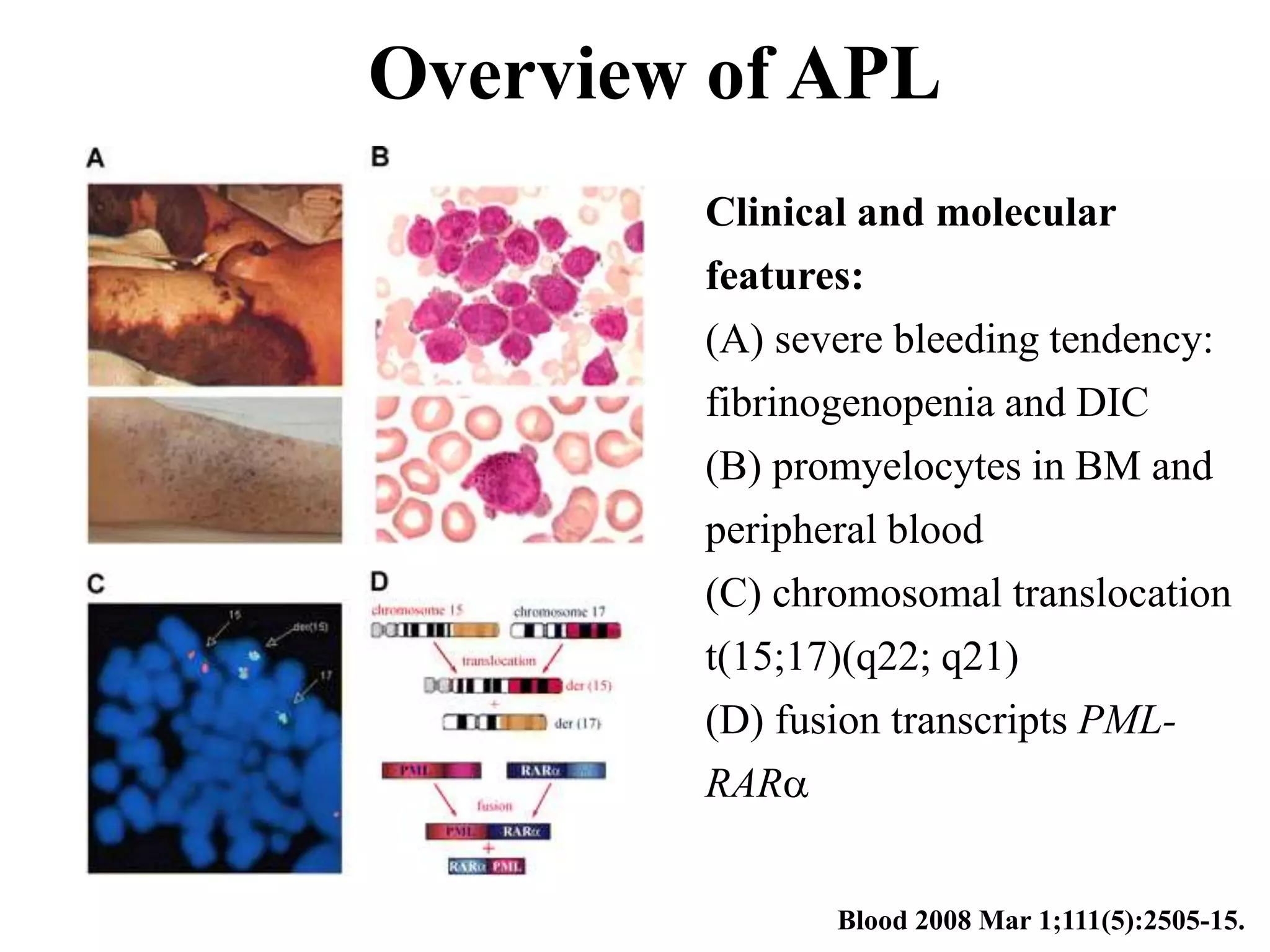
Overview of APL 
Clinical and molecular 
features: 
(A) severe bleeding tendency: 
fibrinogenopenia and DIC 
(B) promyelocytes in BM and 
peripheral blood 
(C) chromosomal translocation 
t(15;17)(q22; q21) 
(D) fusion transcripts PML-RAR 
Blood 2008 Mar 1;111(5):2505-15. 

Overview of APL treatment 
• pre-ATRA period: chemotherapy 
• ATRA: 
- introduction of ATRA 
- optimization of ATRA-chemo combination regimens 
• Arsenic: 
- introduction of ATO in relapsed APL 
- ATRA/ATO combination as front-line therapy 
- Oral arsenic
Chemotherapy 
• Chemotherapy: anthracycline (DNR or Ida) + Ara-C: 
- CR rates 70%~80% in newly diagnosed patients 
- aggravation of bleeding syndrome: high early death rate 
- relapse in large proportion of patients with median duration 
of CR: 11~25 months 
- long-term survival: 35% ~ 45% 
• Recognition of APL as a highly fatal disease 
Blood 2008 Mar 1;111(5):2505-15.
ATRA treatment in APL 
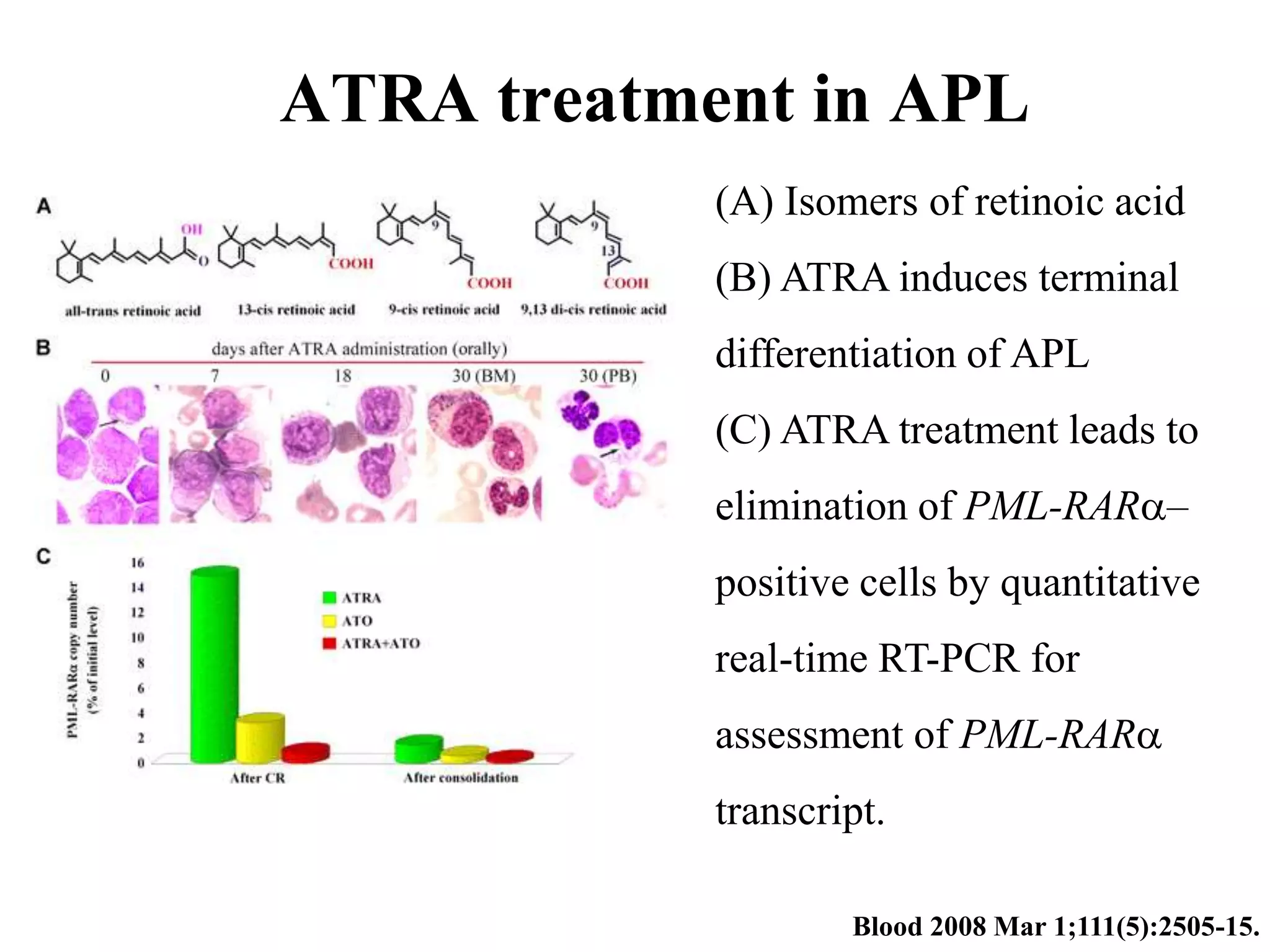
(A) Isomers of retinoic acid 
(B) ATRA induces terminal 
differentiation of APL 
(C) ATRA treatment leads to 
elimination of PML-RAR– 
positive cells by quantitative 
real-time RT-PCR for 
assessment of PML-RAR 
transcript. 
Blood 2008 Mar 1;111(5):2505-15.
ATRA treatment in APL 
 Pilot study in Shanghai Institute of Hematology (SIH) 
- 1985~1988 
- 24 APL patients: 16 newly diagnosed / 8 refractory disease 
- ATRA: 45mg/m2 oral until response or max 60 days 
- outcome: 
23 achieved CR 
differentiation syndrome 
1 patient achieved CR by adding low-dose Ara-C 
Blood 2008 Mar 1;111(5):2505-15.
ATRA treatment in APL 
Blood 2008 Mar 1;111(5):2505-15. 
- Chemotherapy + ATRA: 
anthracycline (Ida, DNR, Mitoxantrone, or HHT) and Ara-C 
- Induction: 
high remission rate 
reduce differentiation syndrome 
- Consolidation/maintenance: 
3 monthly courses of anthracycline-based chemo/low-dose 
maintenance (6-MP+MTX with ATRA) 
5-year EFS/DFS: up to 70%
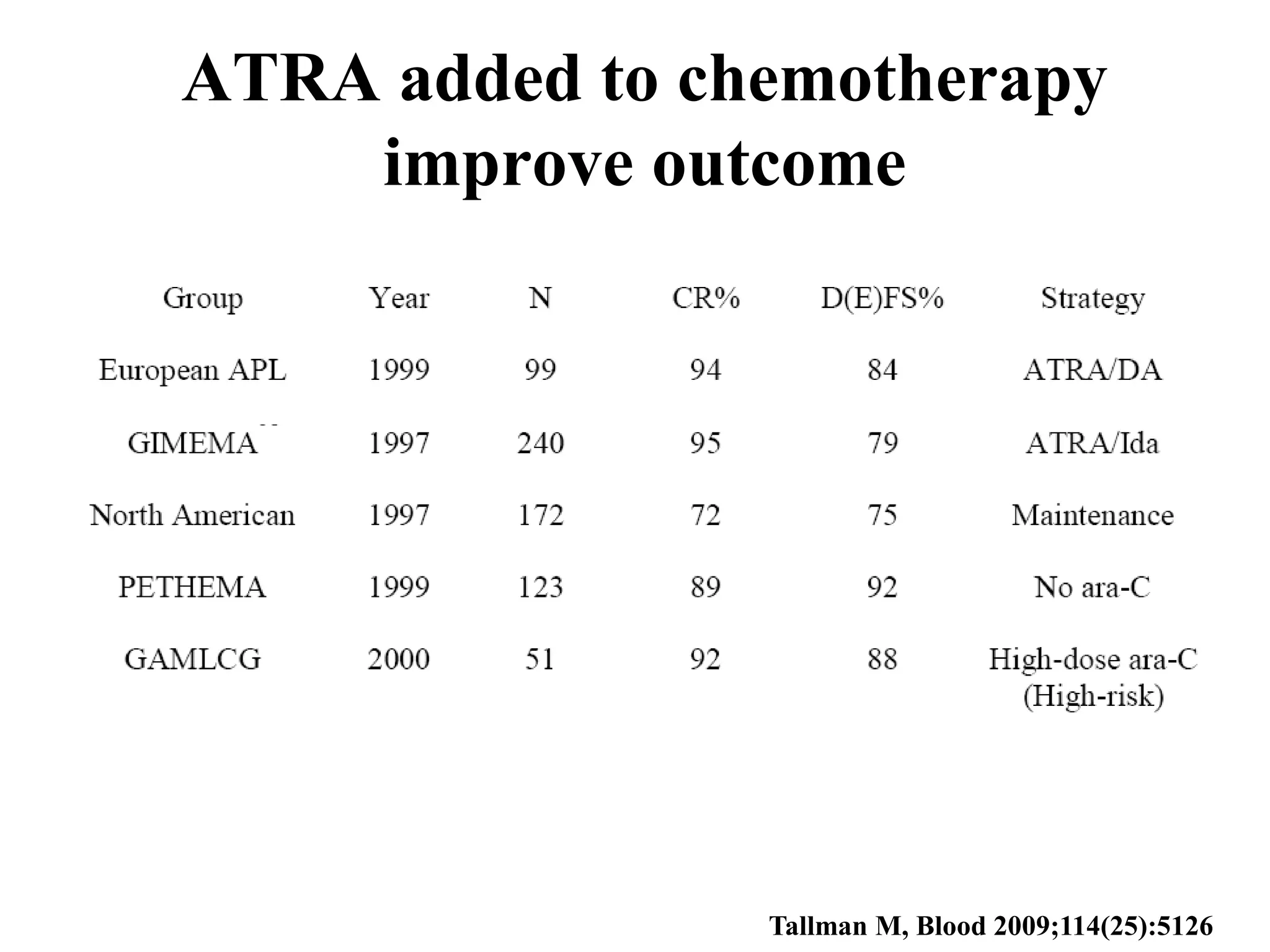
ATRA added to chemotherapy 
improve outcome 
Tallman M, Blood 2009;114(25):5126
Arsenic as salvage therapy 
- arsenic developed as TCM in Northeastern China 
- Harbin group(1992): iv 1% ATO 
32 APL, 21 obtained CR 
10-year survival 30% 
- SIH(1996~1997): 
47 relapsed and 11 newly diagnosed APL 
CR rate of 85.1% and 72.7% 
molecular remission documented ~60% 
long-term survival in relapsed APL: 50~60% 
Blood 2008 Mar 1;111(5):2505-15.
Treatment of APL: guidelines 
ELN guideline / NCCN guideline / Consensus of CSH: 
- Newly-diagnosed APL: simultaneous administration of ATRA 
and anthracycline-based chemotherapy as standard 
- Relapse disease: arsenic is the best option with or without 
chemotherapy 
Blood 2009;113:1875 
Chin J Hematol 2010;31:69
Rationale of arsenic as front-line treatment 
- efficacy in relapse patients: high remission rate with sizable 
proportion of long-term survival 
- efficacy in newly-diagnosed patients as single agent: long-term 
survival observed
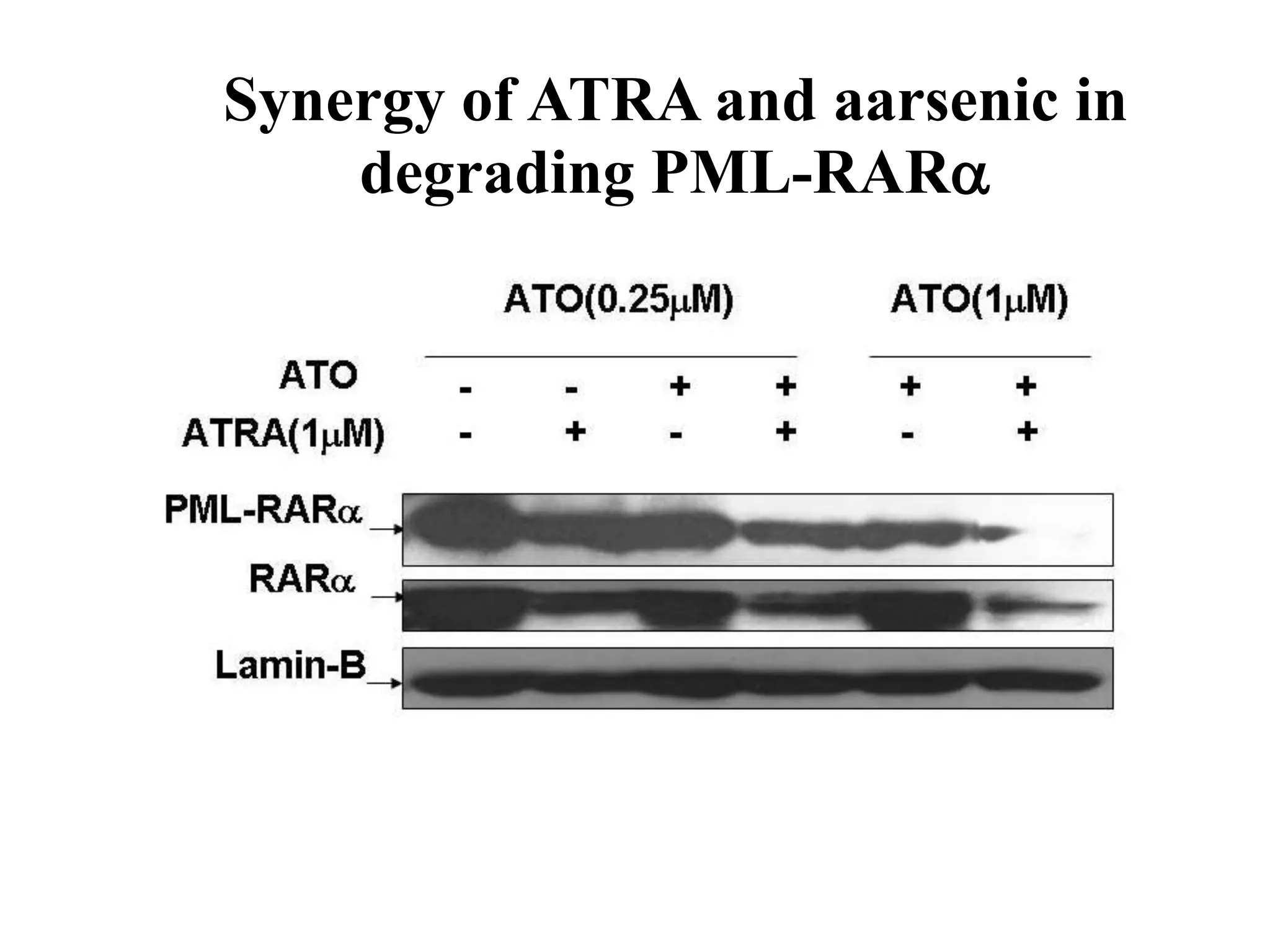
Synergy of ATRA and aarsenic in 
degrading PML-RAR
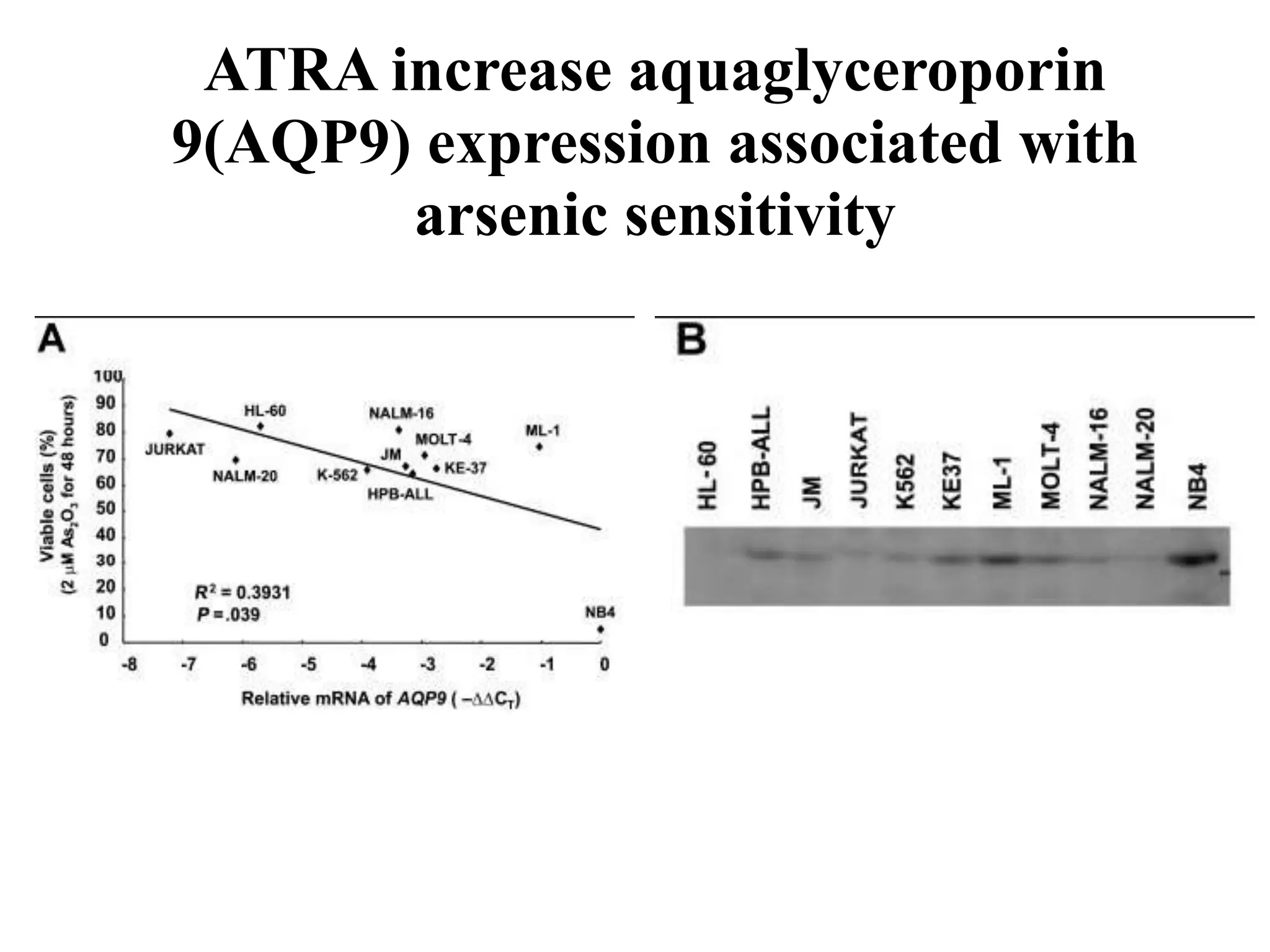
ATRA increase aquaglyceroporin 
9(AQP9) expression associated with 
arsenic sensitivity 
Relationship of AQP9 with arsenic uptake and sensitivity in leukemia cells. Blood 2007; 109: 740-746.
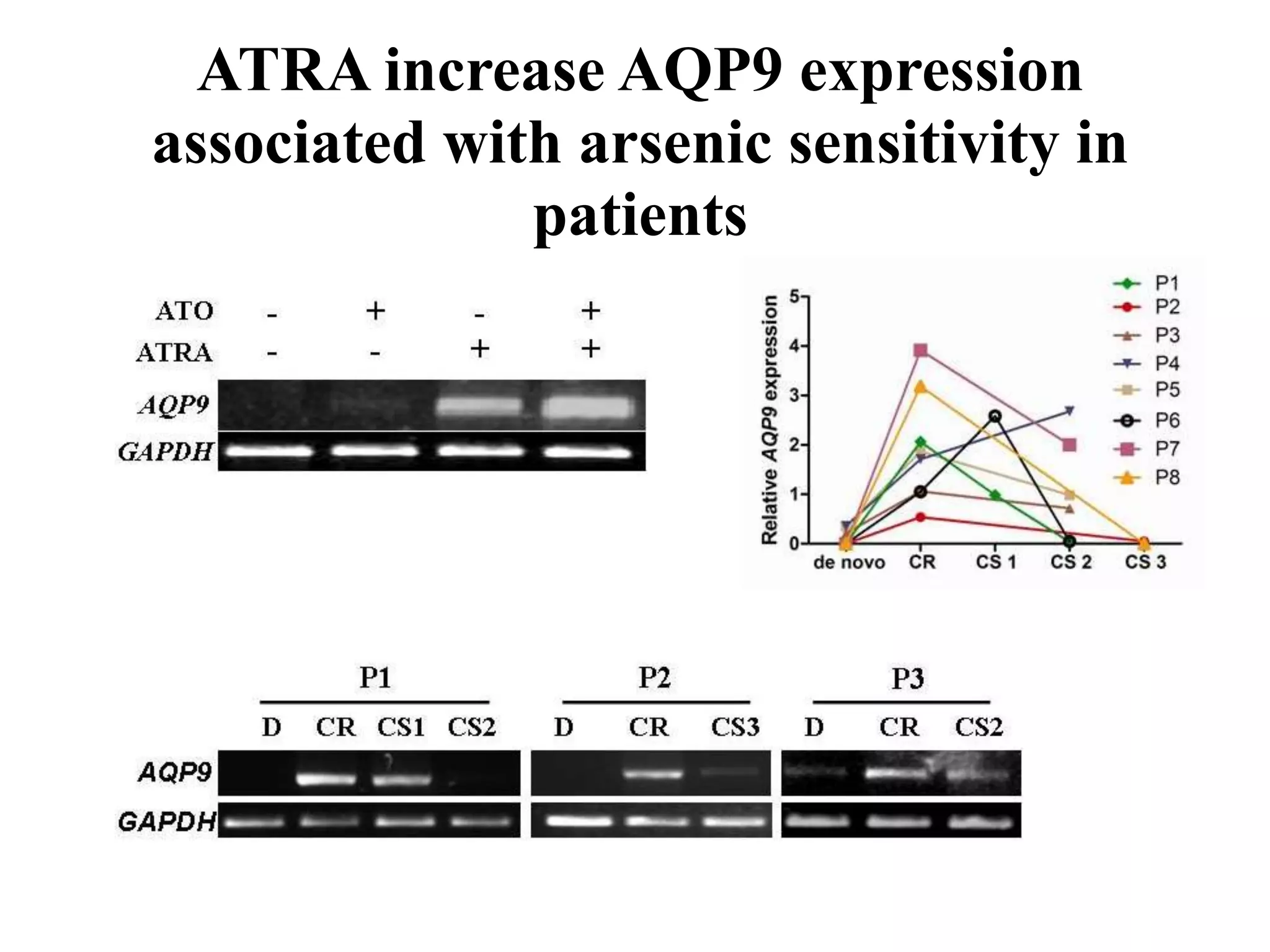
ATRA increase AQP9 expression 
associated with arsenic sensitivity in 
patients
Synergy of ATRA and arsenic in 
eradicating leukemia stem cells 
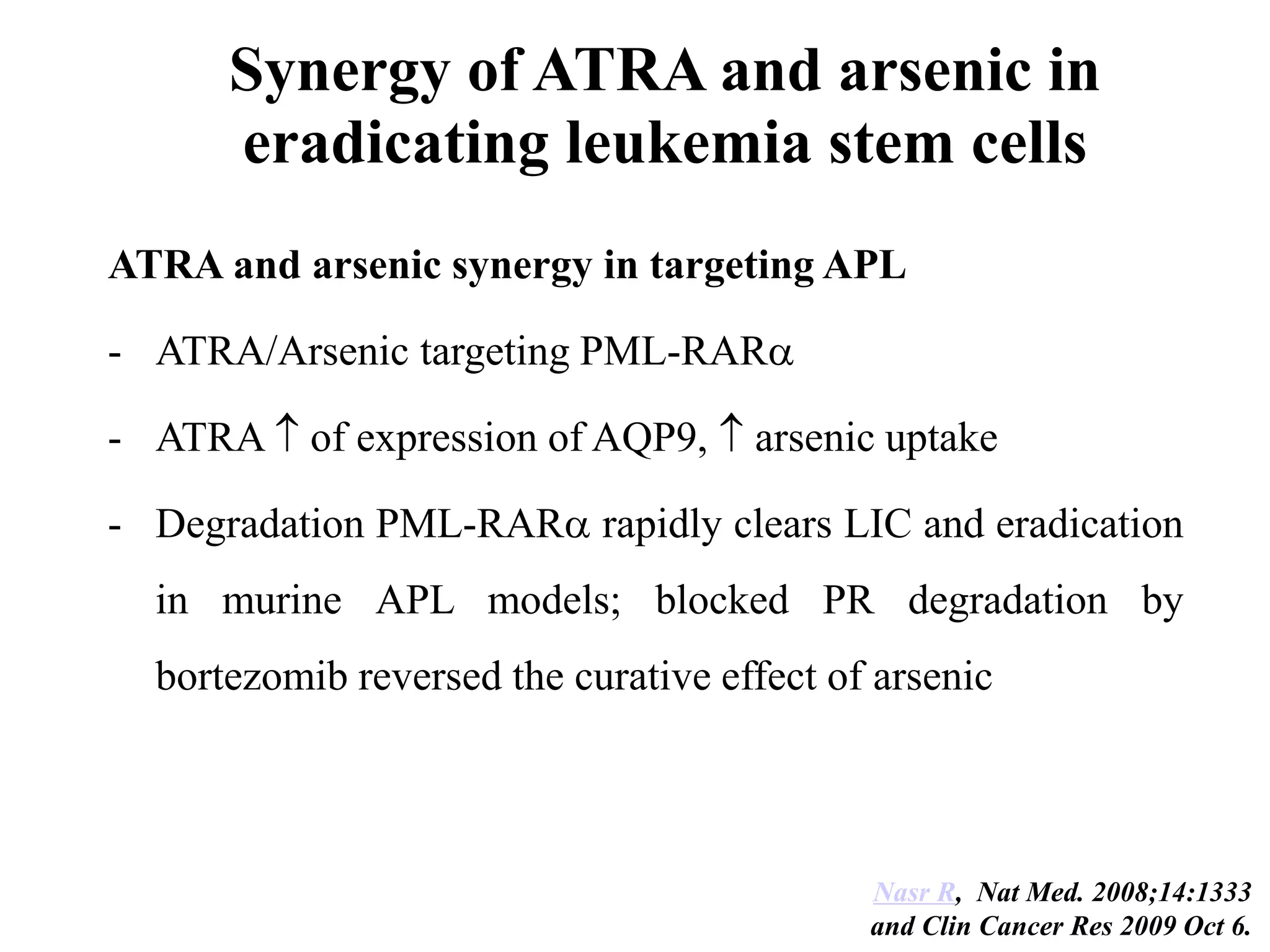
ATRA and arsenic synergy in targeting APL 
- ATRA/Arsenic targeting PML-RAR 
- ATRA  of expression of AQP9,  arsenic uptake 
- Degradation PML-RAR rapidly clears LIC and eradication 
in murine APL models; blocked PR degradation by 
bortezomib reversed the curative effect of arsenic 
Nasr R, Nat Med. 2008;14:1333 
and Clin Cancer Res 2009 Oct 6.
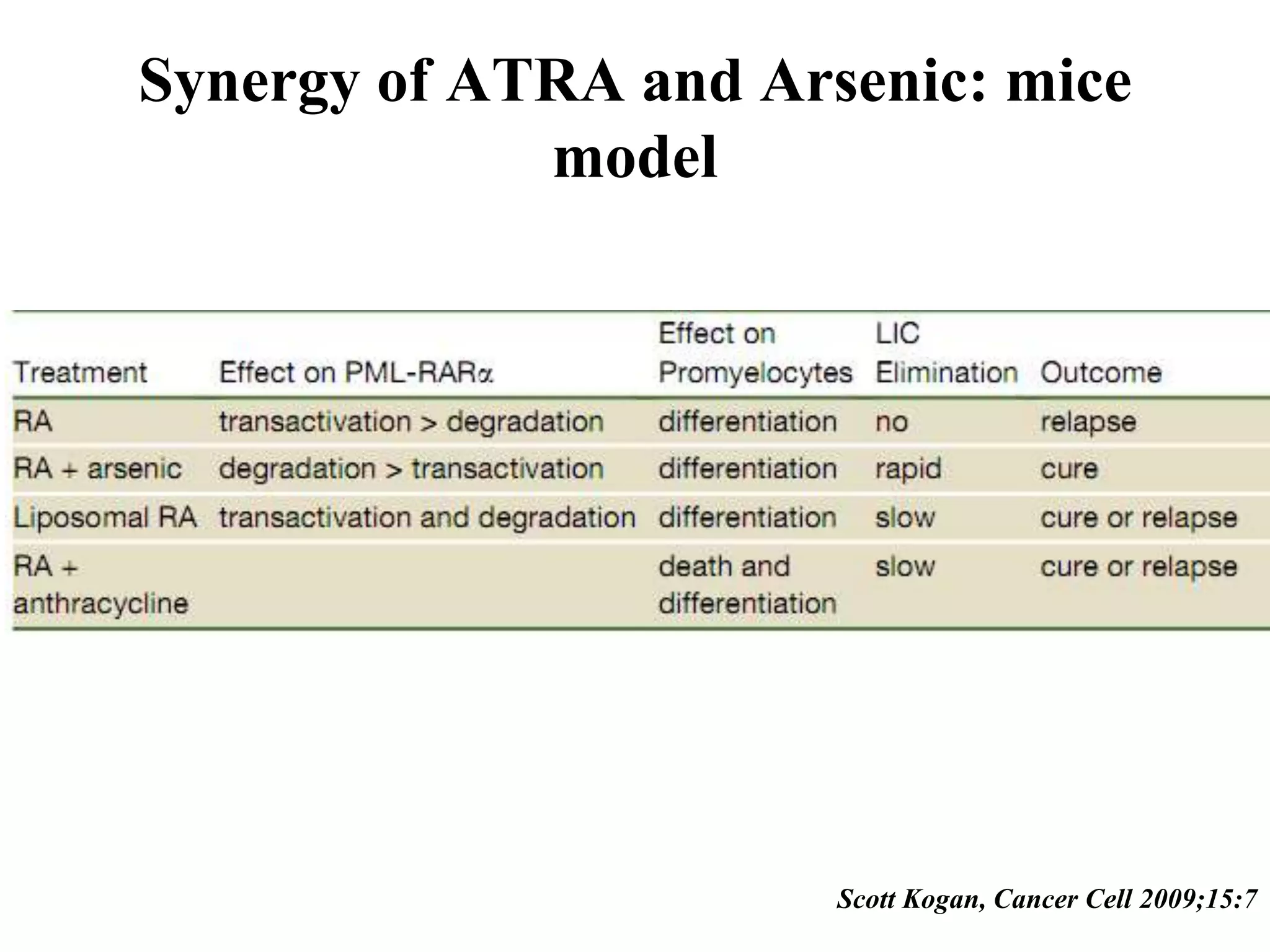
Synergy of ATRA and Arsenic: mice 
model 
Scott Kogan, Cancer Cell 2009;15:7
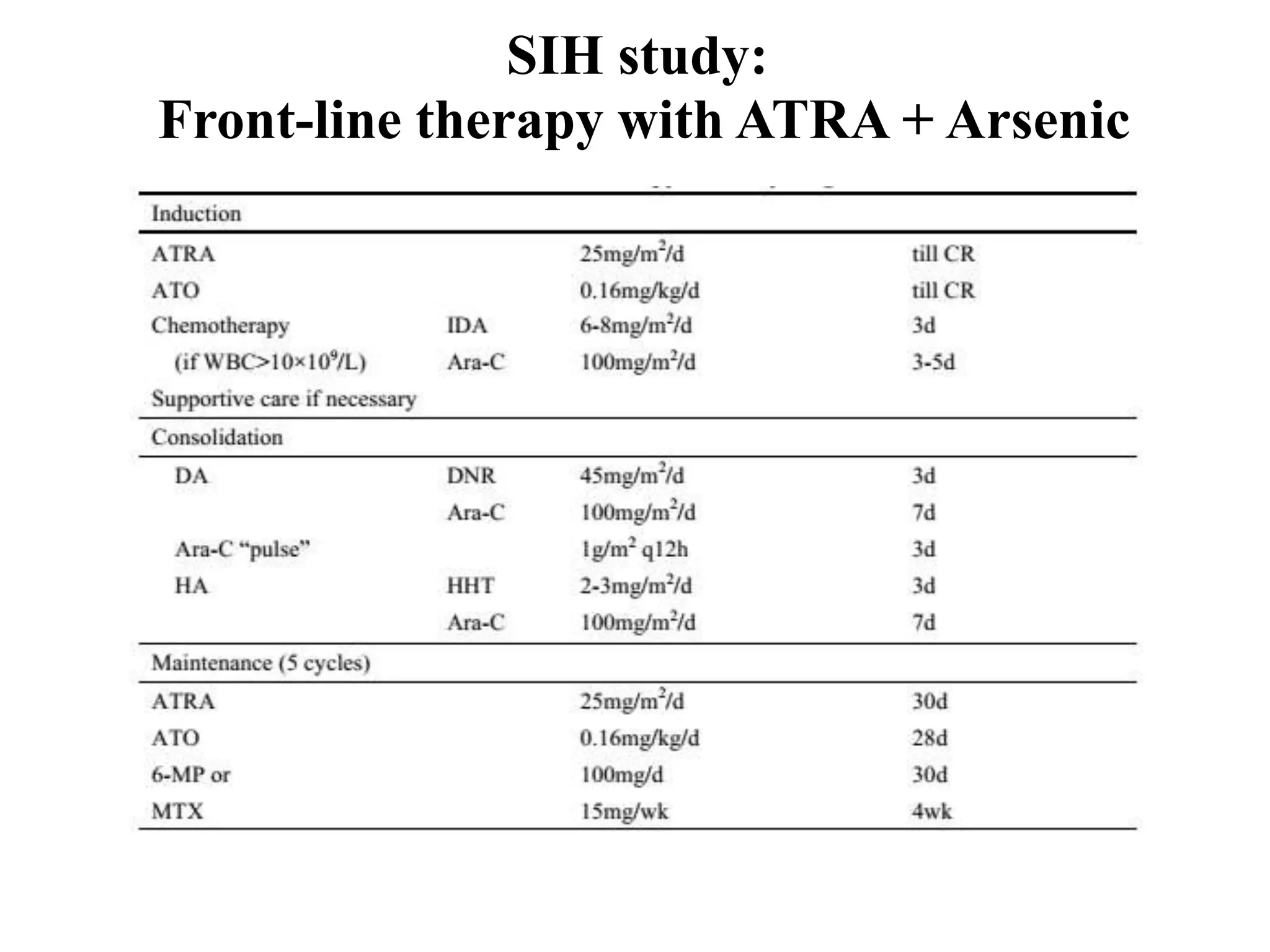
SIH study: 
Front-line therapy with ATRA + Arsenic
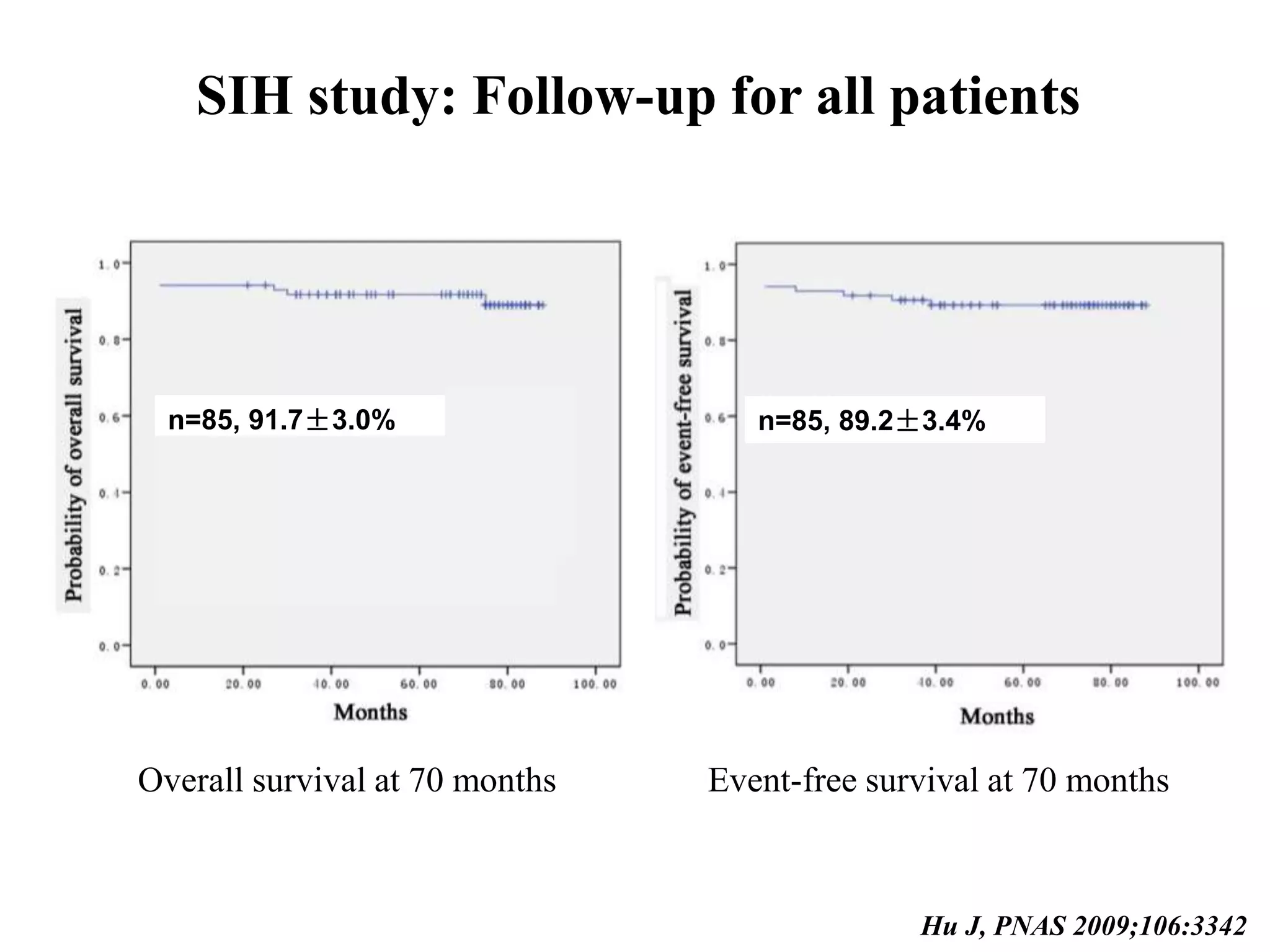
SIH study: Follow-up for all patients 
n=85, 91.7±3.0% n=85, 89.2±3.4% 
Overall survival at 70 months Event-free survival at 70 months 
Hu J, PNAS 2009;106:3342
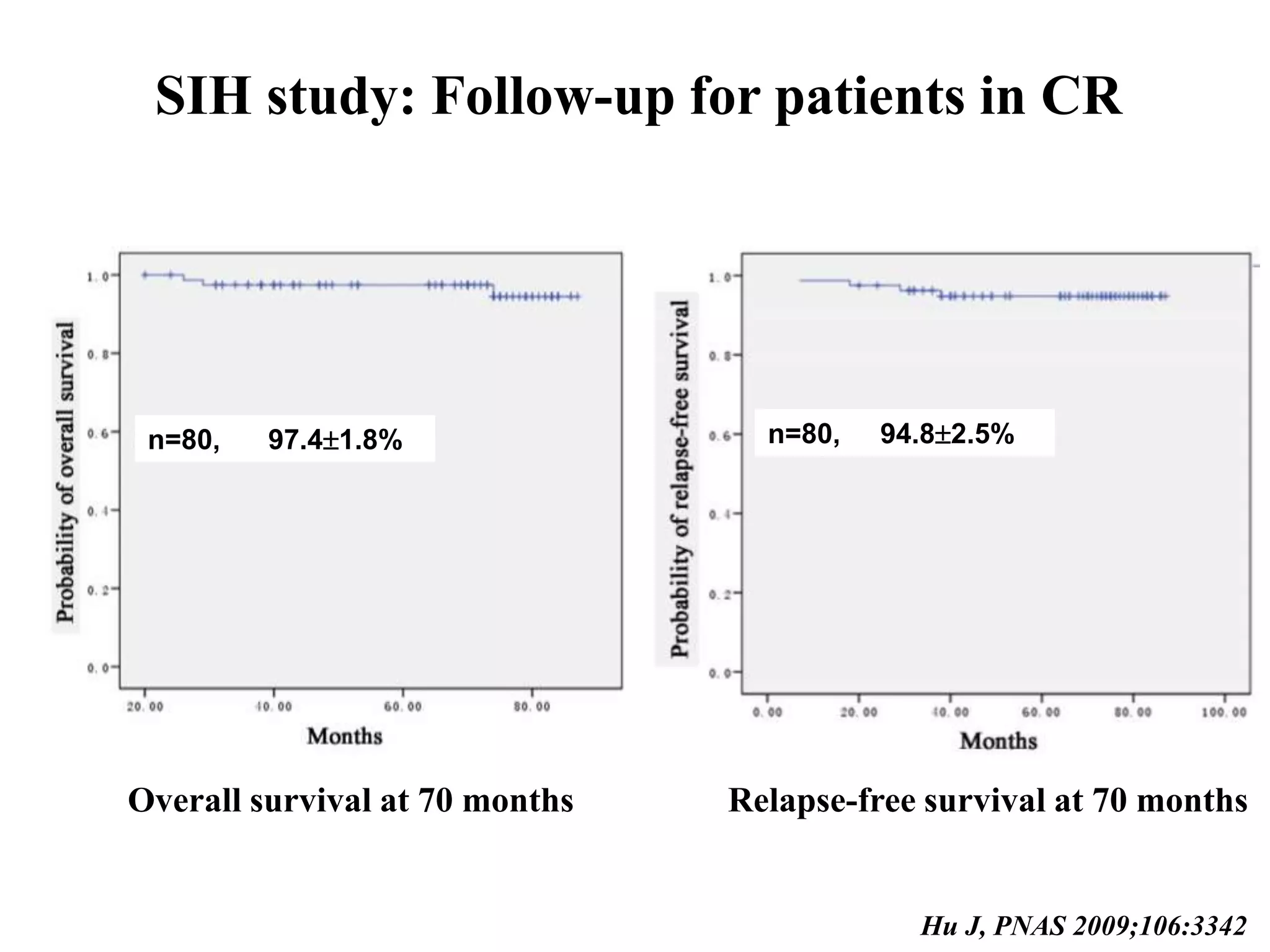
SIH study: Follow-up for patients in CR 
n=80, 97.41.8% n=80, 94.82.5% 
Overall survival at 70 months Relapse-free survival at 70 months 
Hu J, PNAS 2009;106:3342
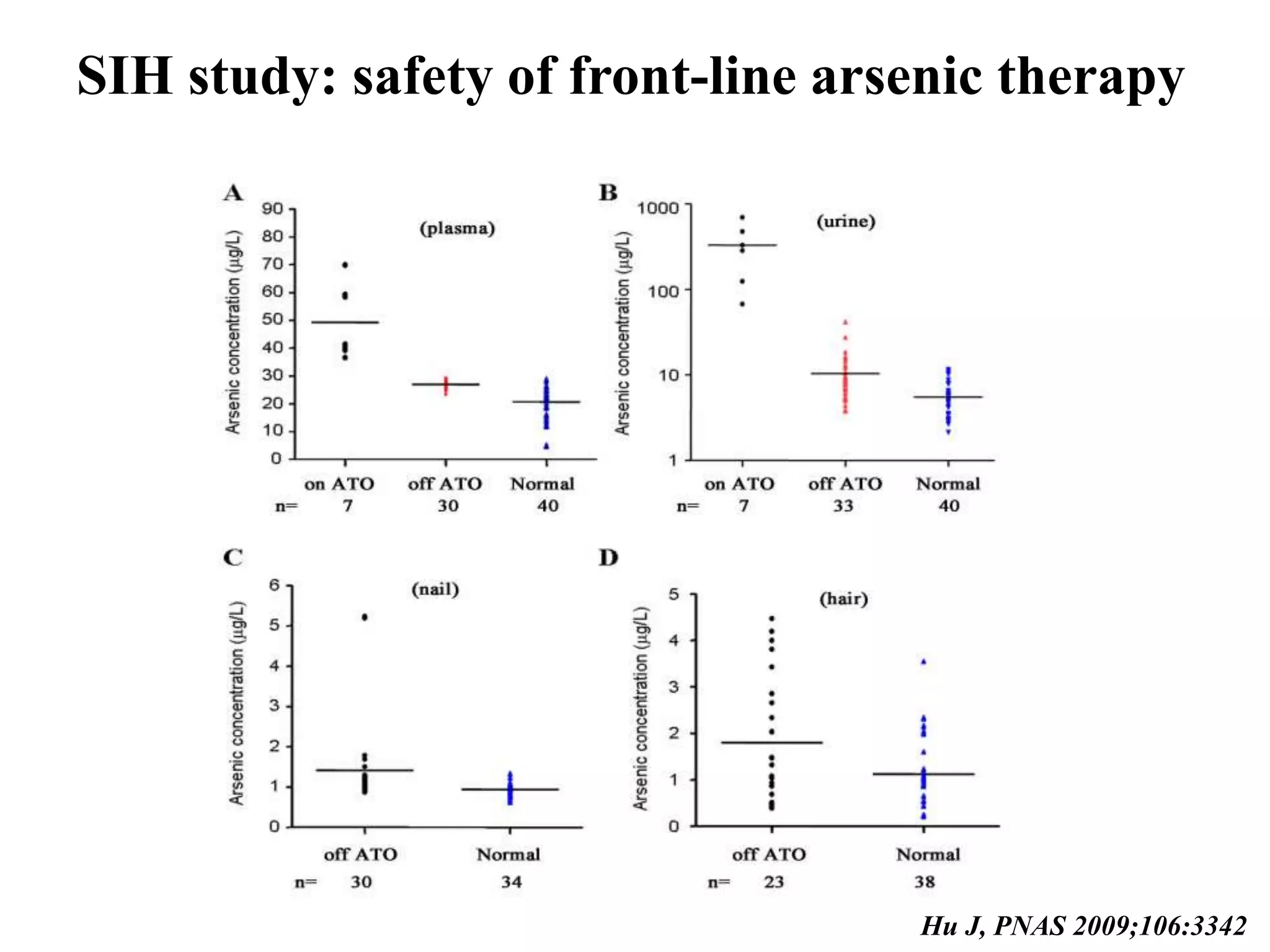
SIH study: safety of front-line arsenic therapy 
Hu J, PNAS 2009;106:3342
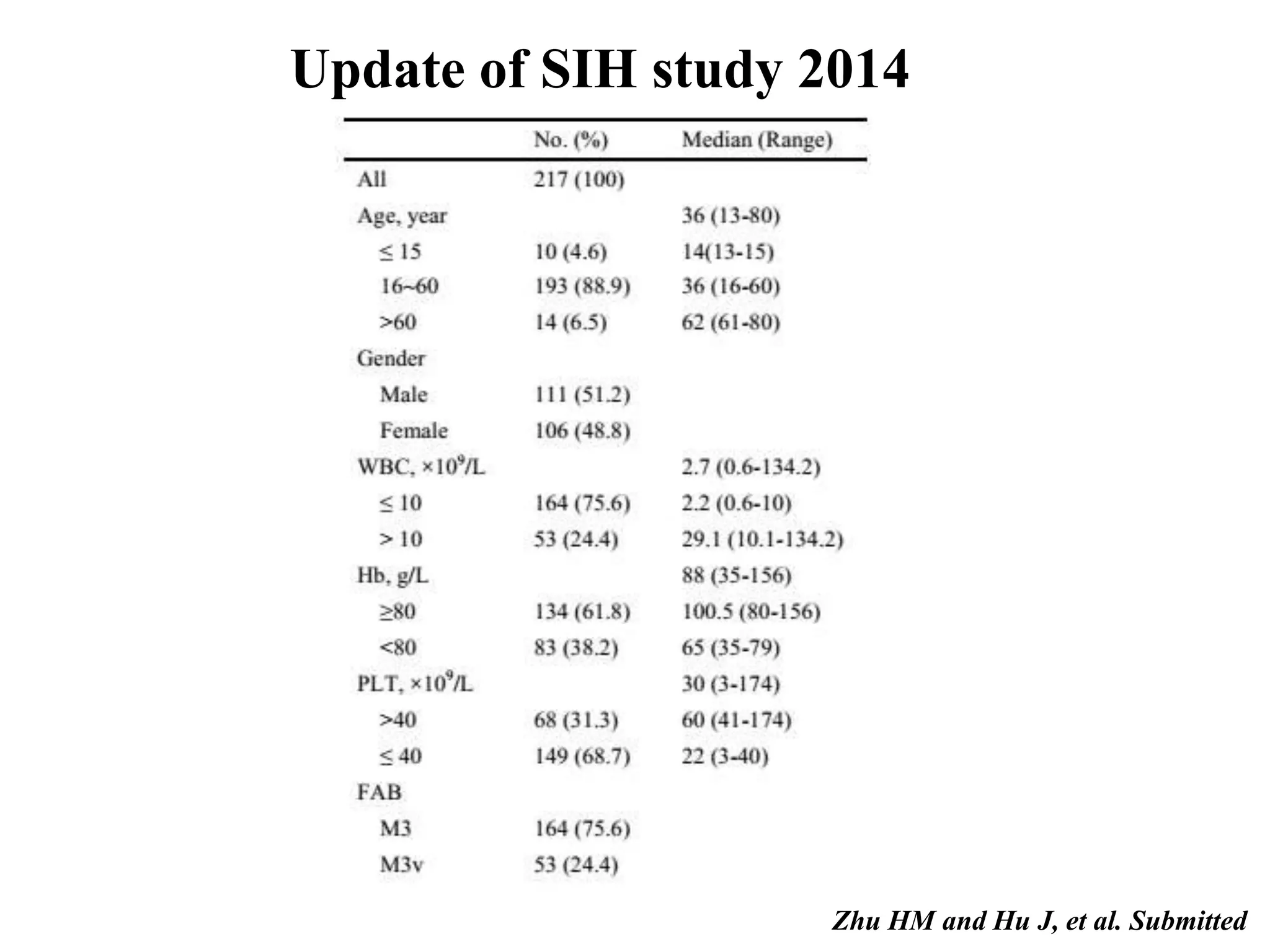
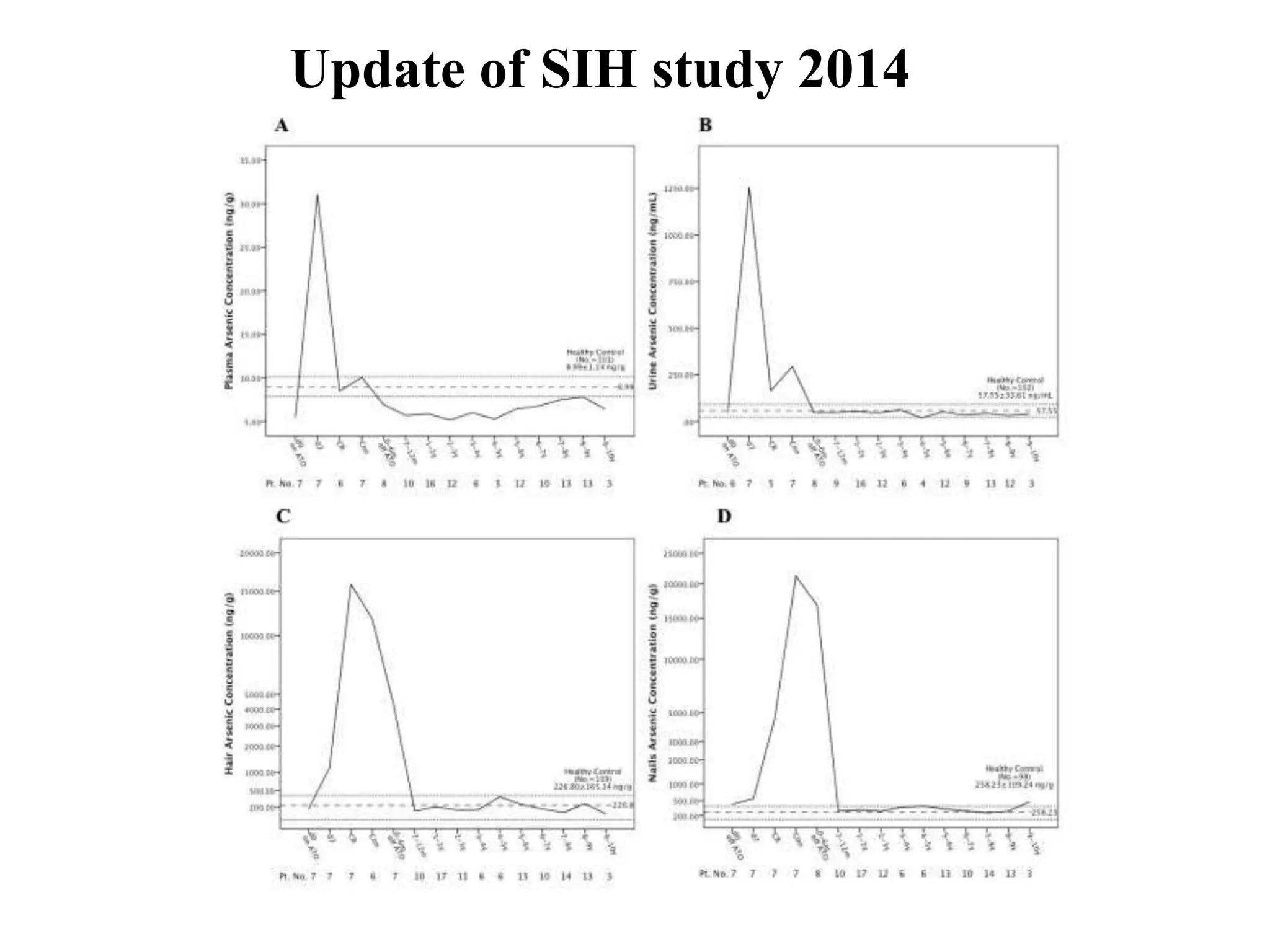
Update of SIH study 2014 
Zhu HM and Hu J, et al. Submitted
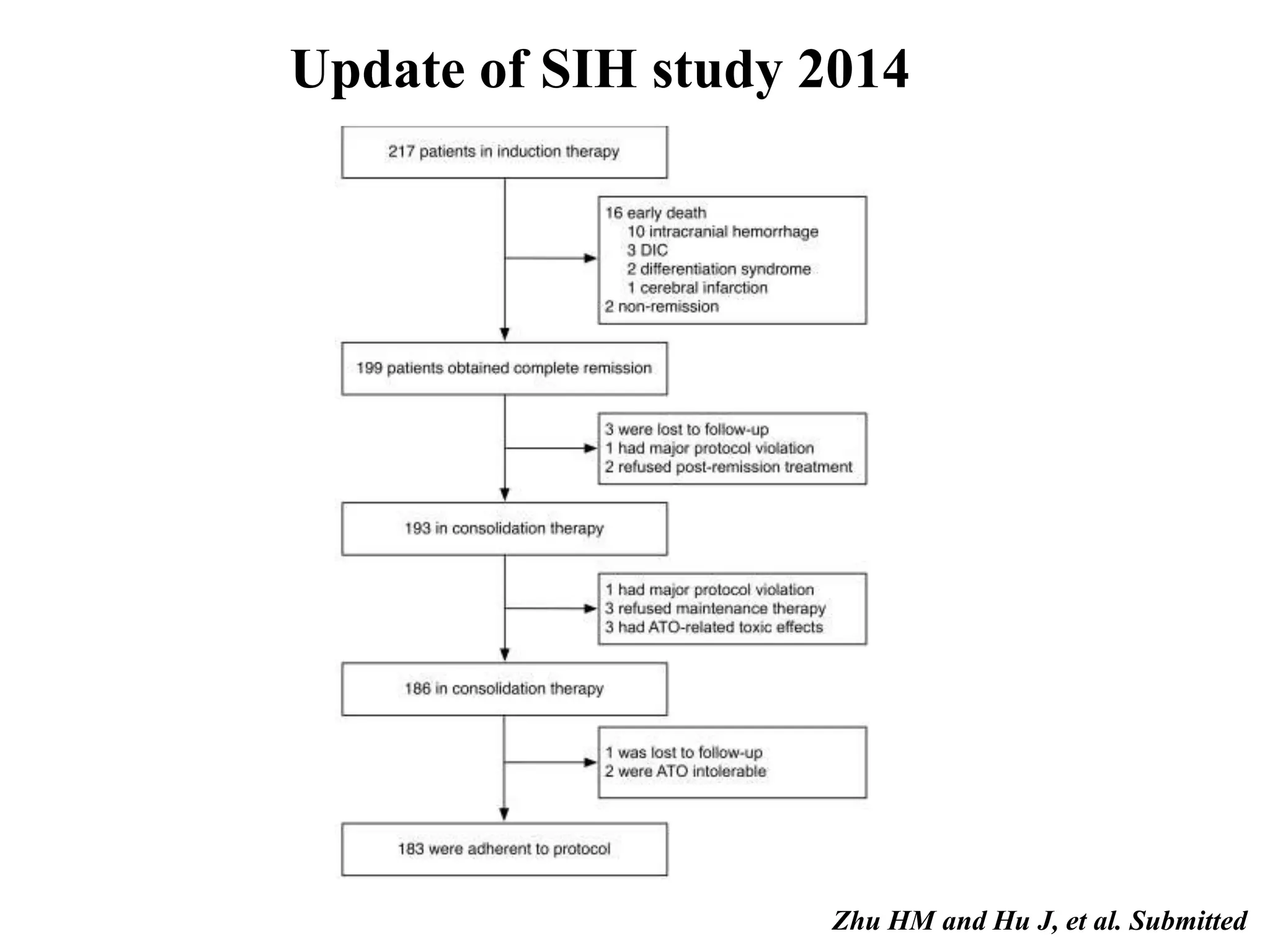
Update of SIH study 2014 
Zhu HM and Hu J, et al. Submitted
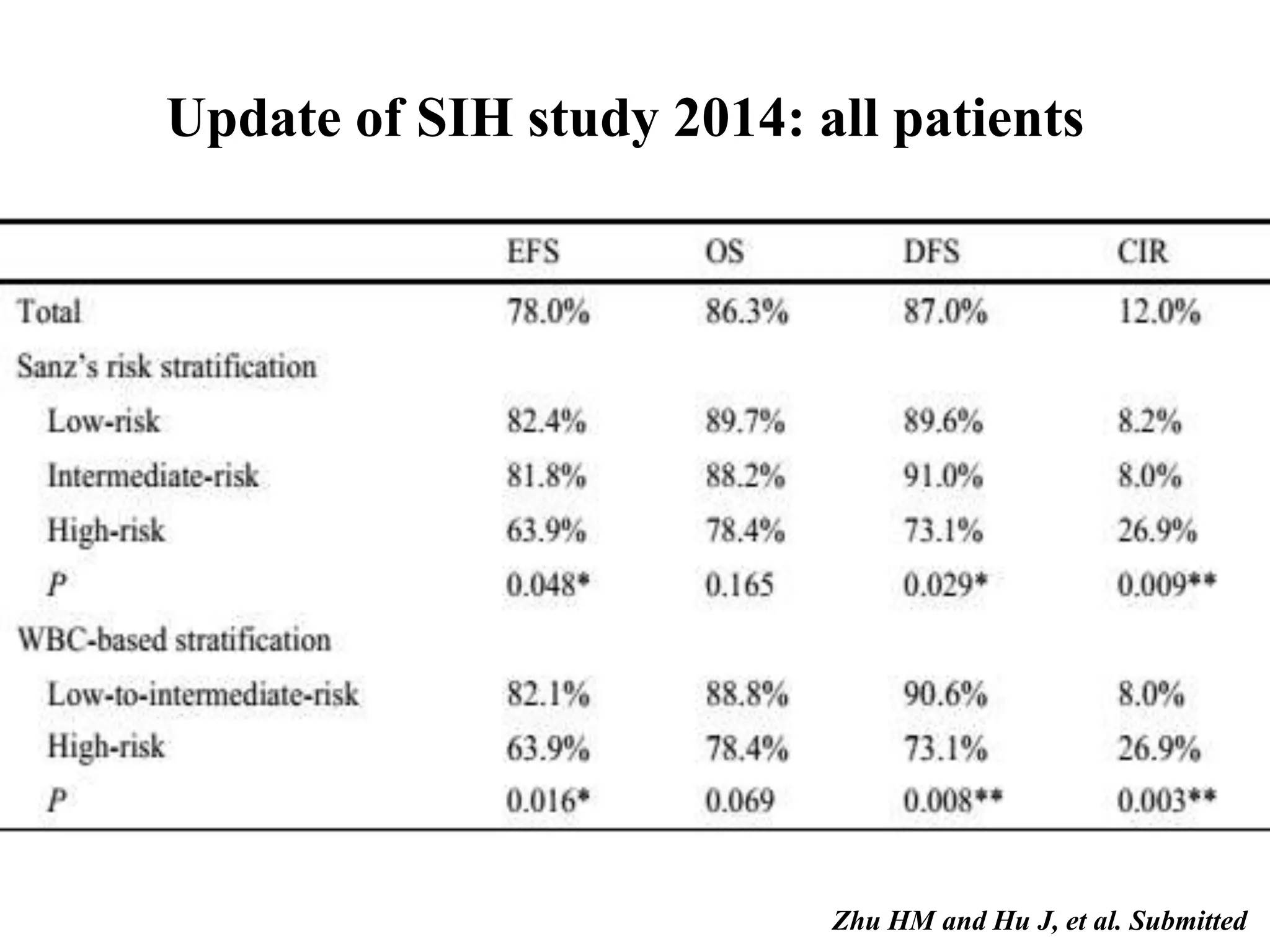
Update of SIH study 2014: all patients 
Zhu HM and Hu J, et al. Submitted
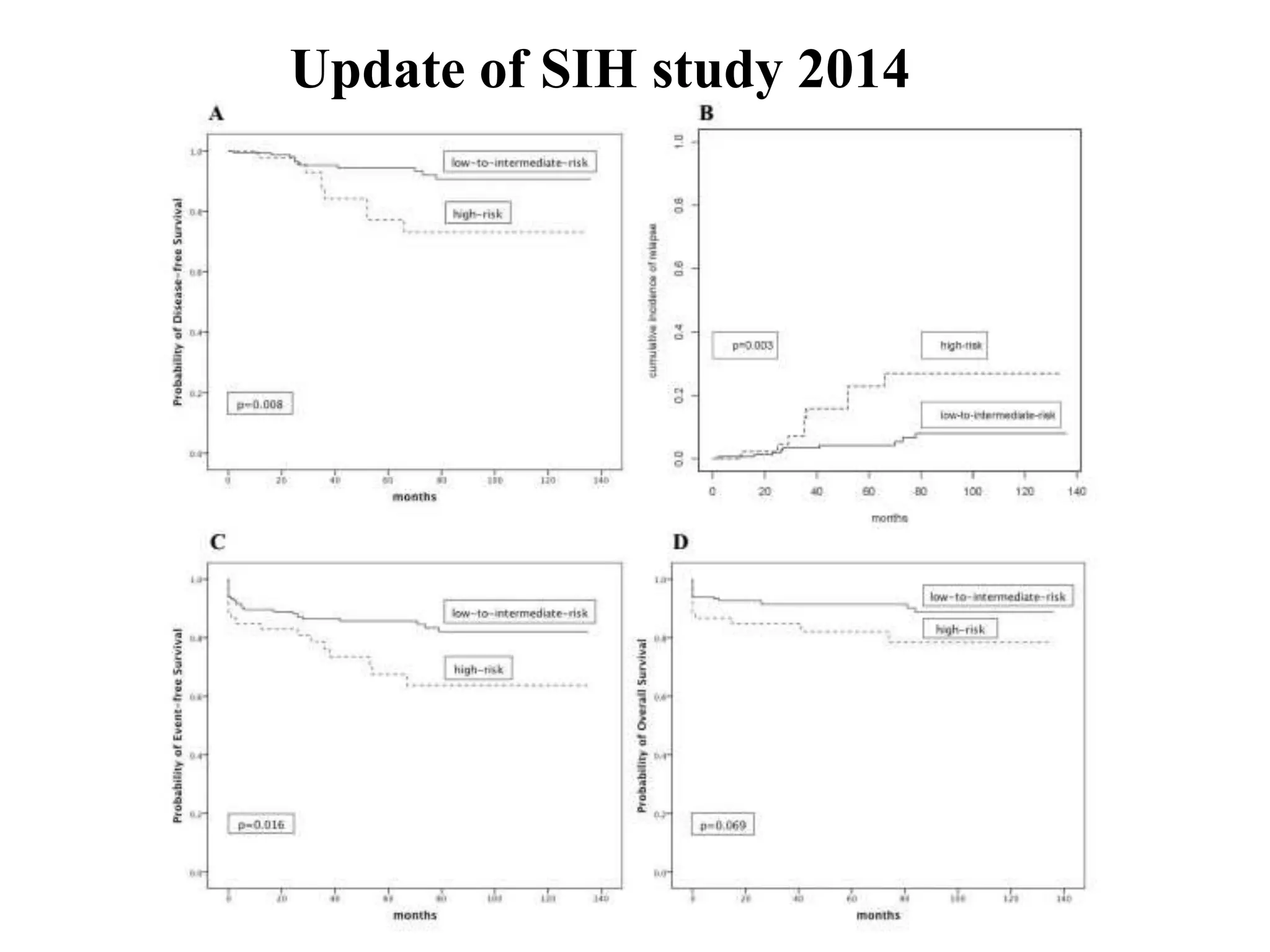
Update of SIH study 2014
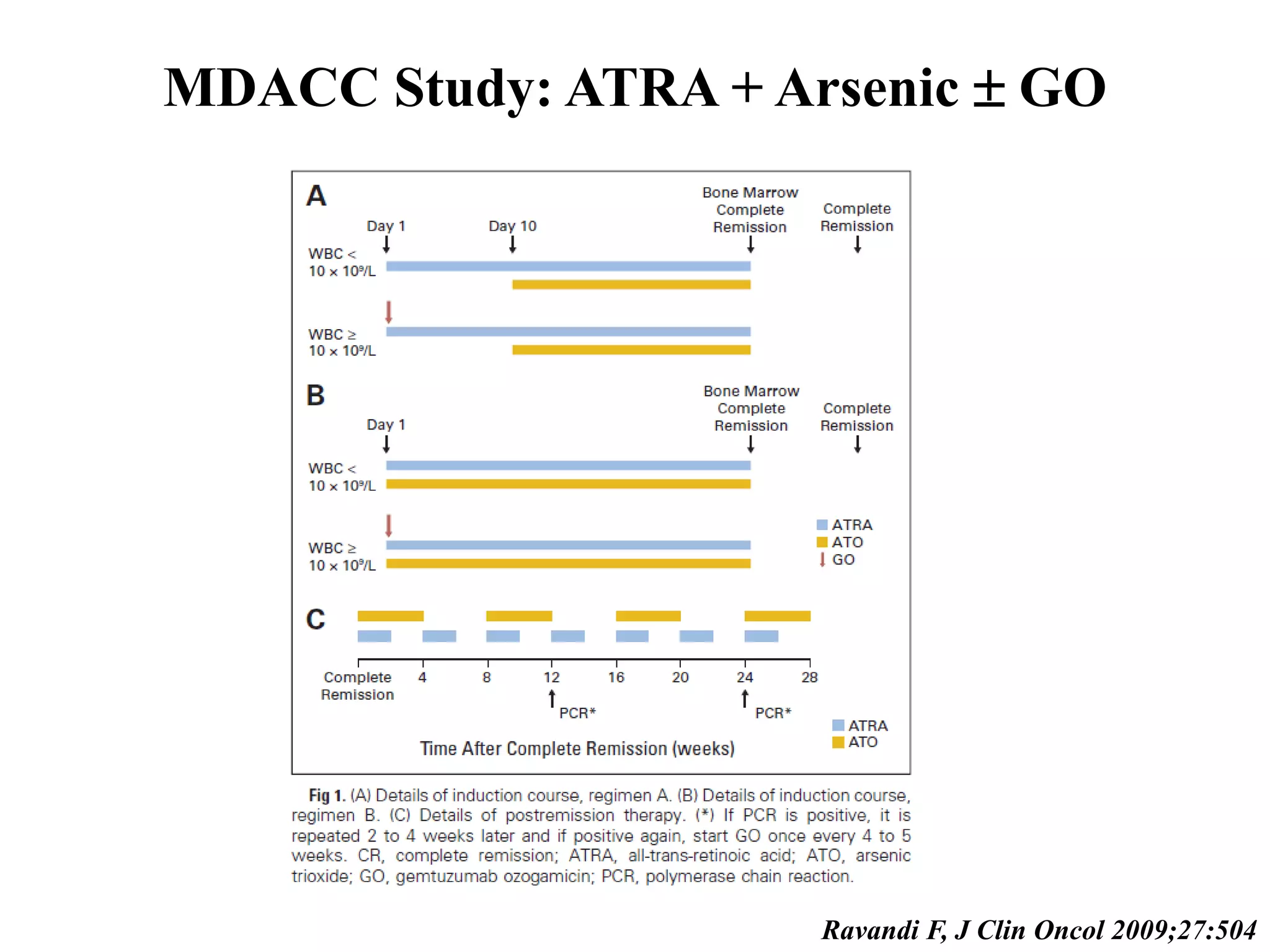
MDACC Study: ATRA + Arsenic  GO 
Ravandi F, J Clin Oncol 2009;27:504
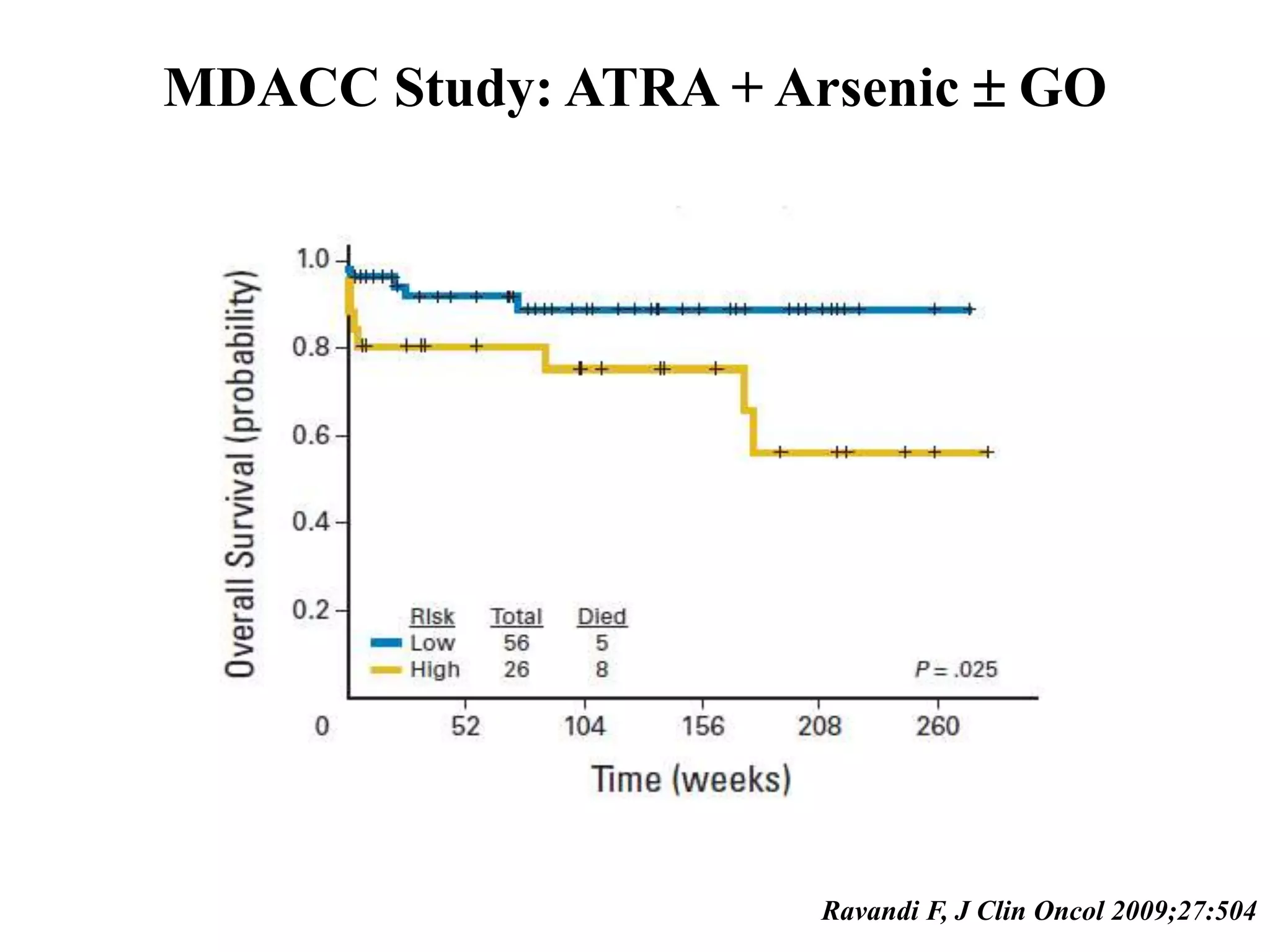
MDACC Study: ATRA + Arsenic  GO 
Ravandi F, J Clin Oncol 2009;27:504
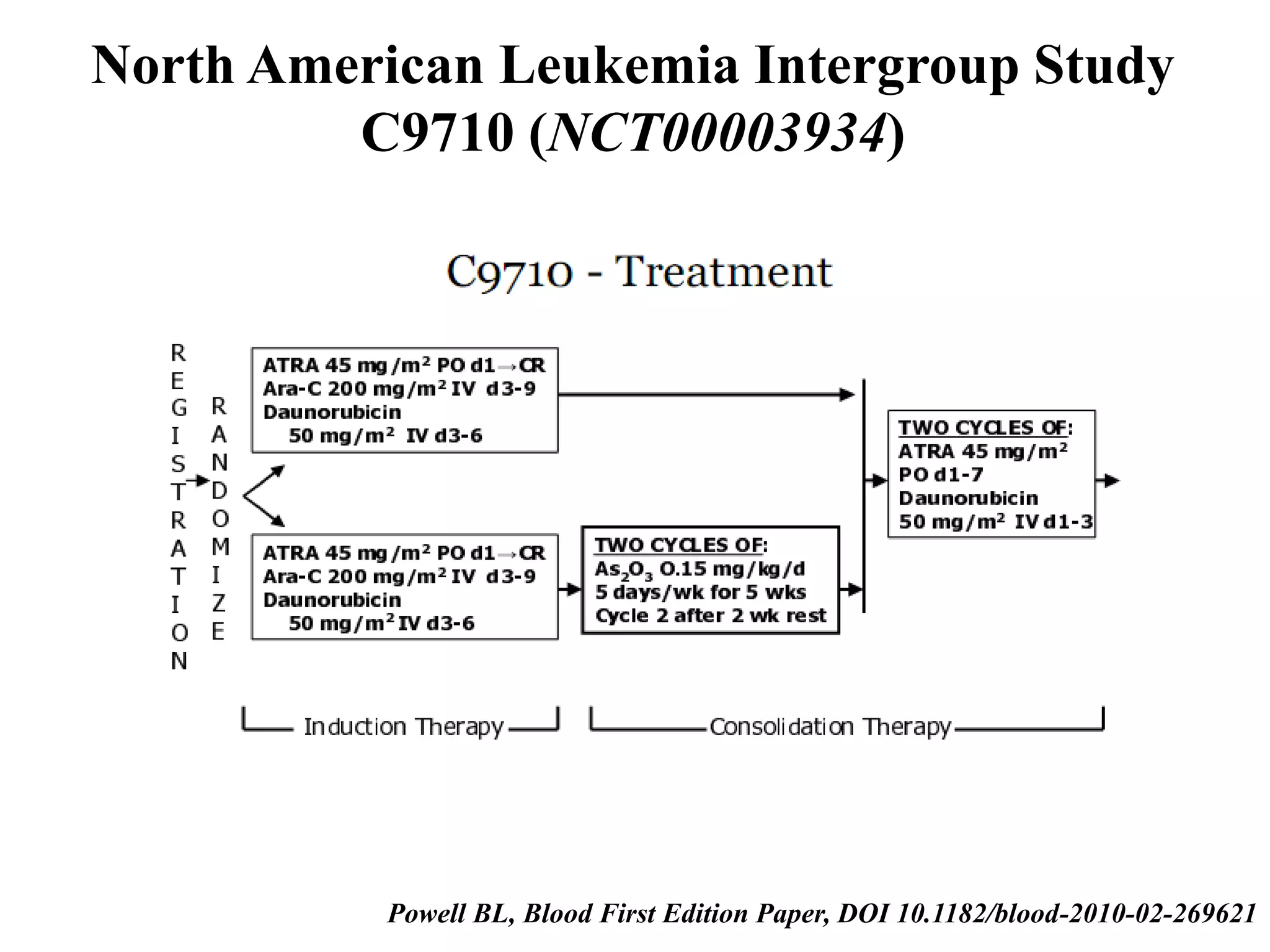
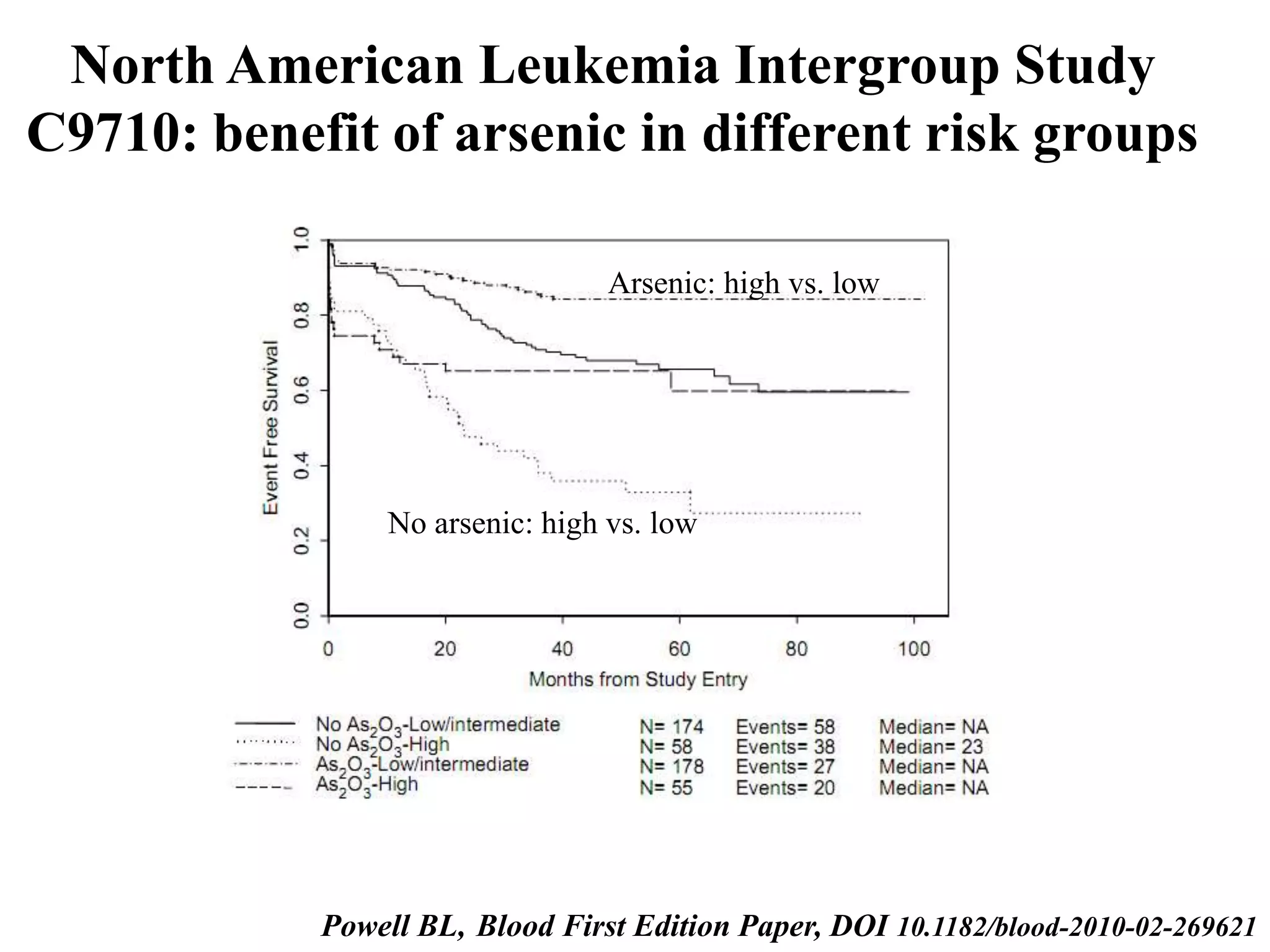
North American Leukemia Intergroup Study 
C9710 (NCT00003934) 
Powell BL, Blood First Edition Paper, DOI 10.1182/blood-2010-02-269621
North American Leukemia Intergroup Study 
C9710: benefit of arsenic in different risk groups 
Arsenic: high vs. low 
No arsenic: high vs. low 
Powell BL, Blood First Edition Paper, DOI 10.1182/blood-2010-02-269621
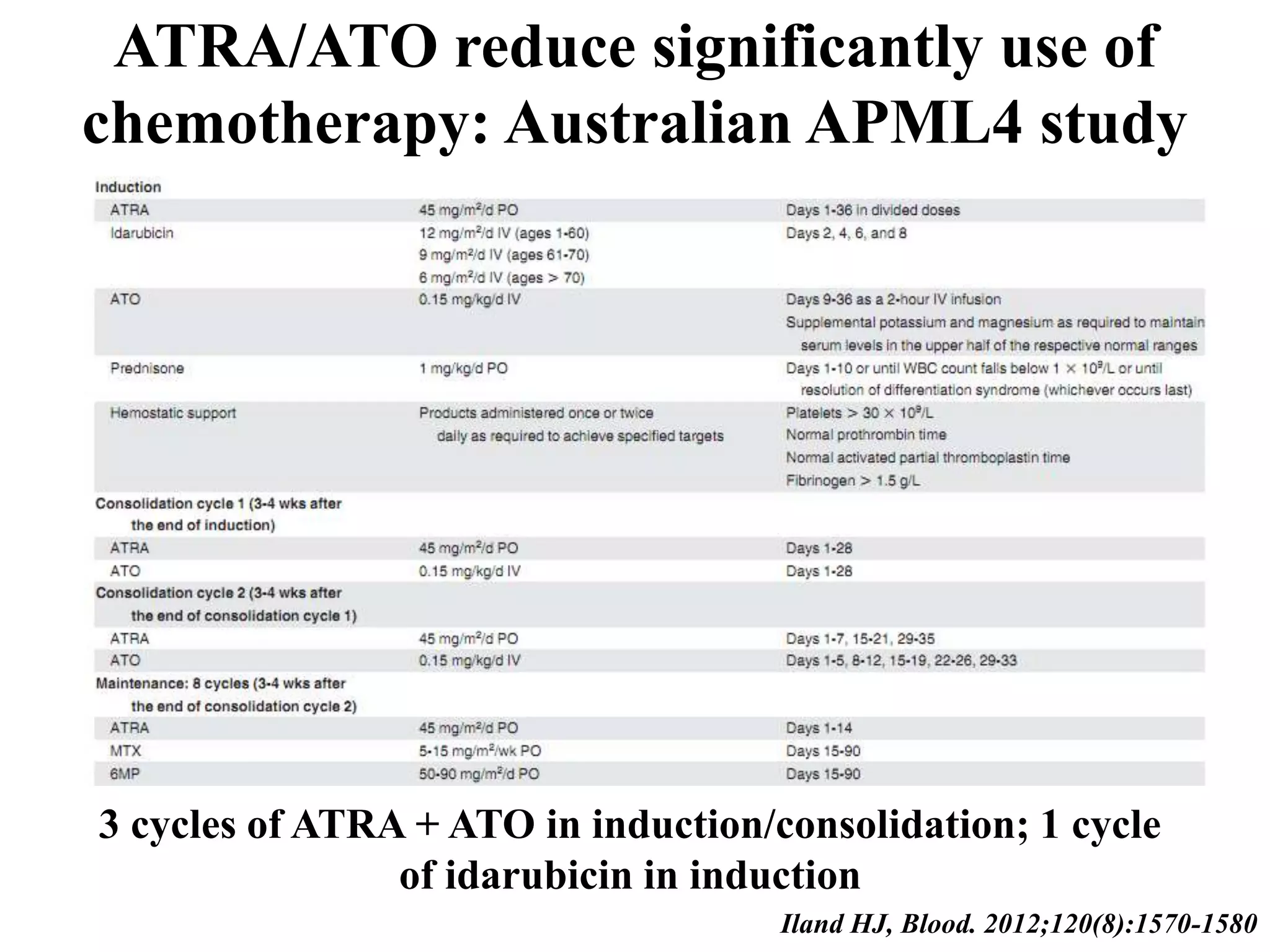
ATRA/ATO reduce significantly use of 
chemotherapy: Australian APML4 study 
3 cycles of ATRA + ATO in induction/consolidation; 1 cycle 
of idarubicin in induction 
Iland HJ, Blood. 2012;120(8):1570-1580
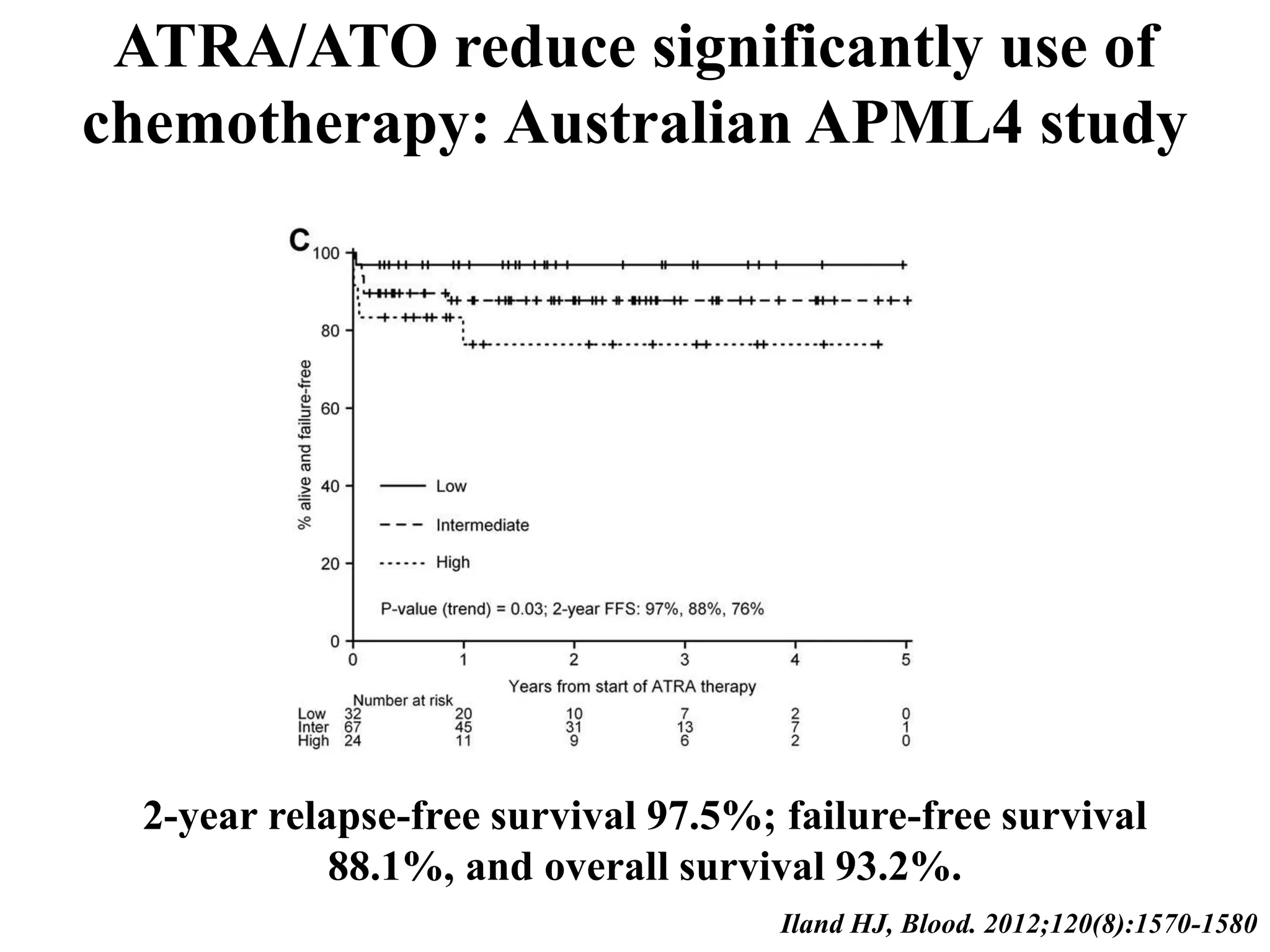
ATRA/ATO reduce significantly use of 
chemotherapy: Australian APML4 study 
2-year relapse-free survival 97.5%; failure-free survival 
88.1%, and overall survival 93.2%. 
Iland HJ, Blood. 2012;120(8):1570-1580
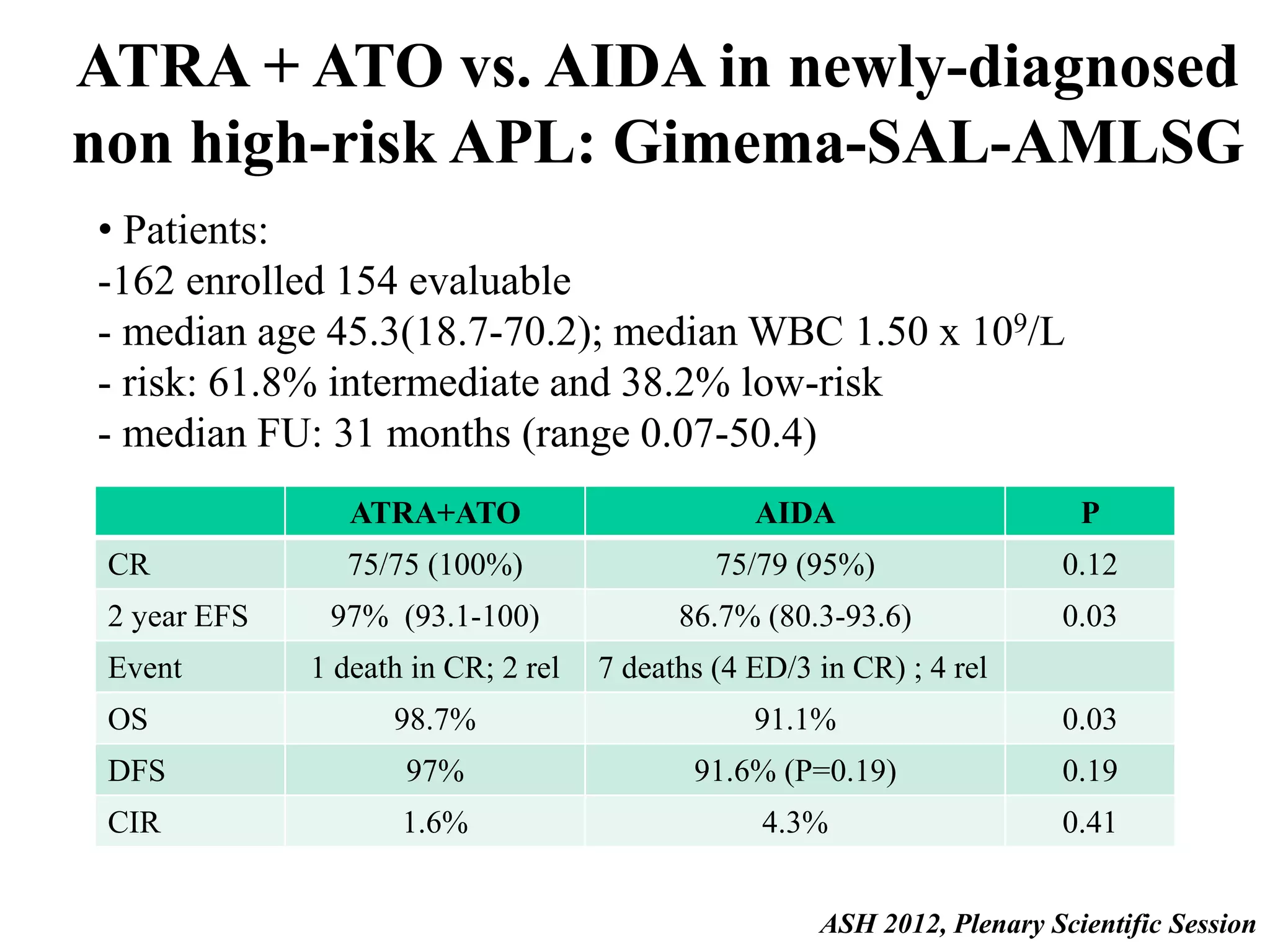
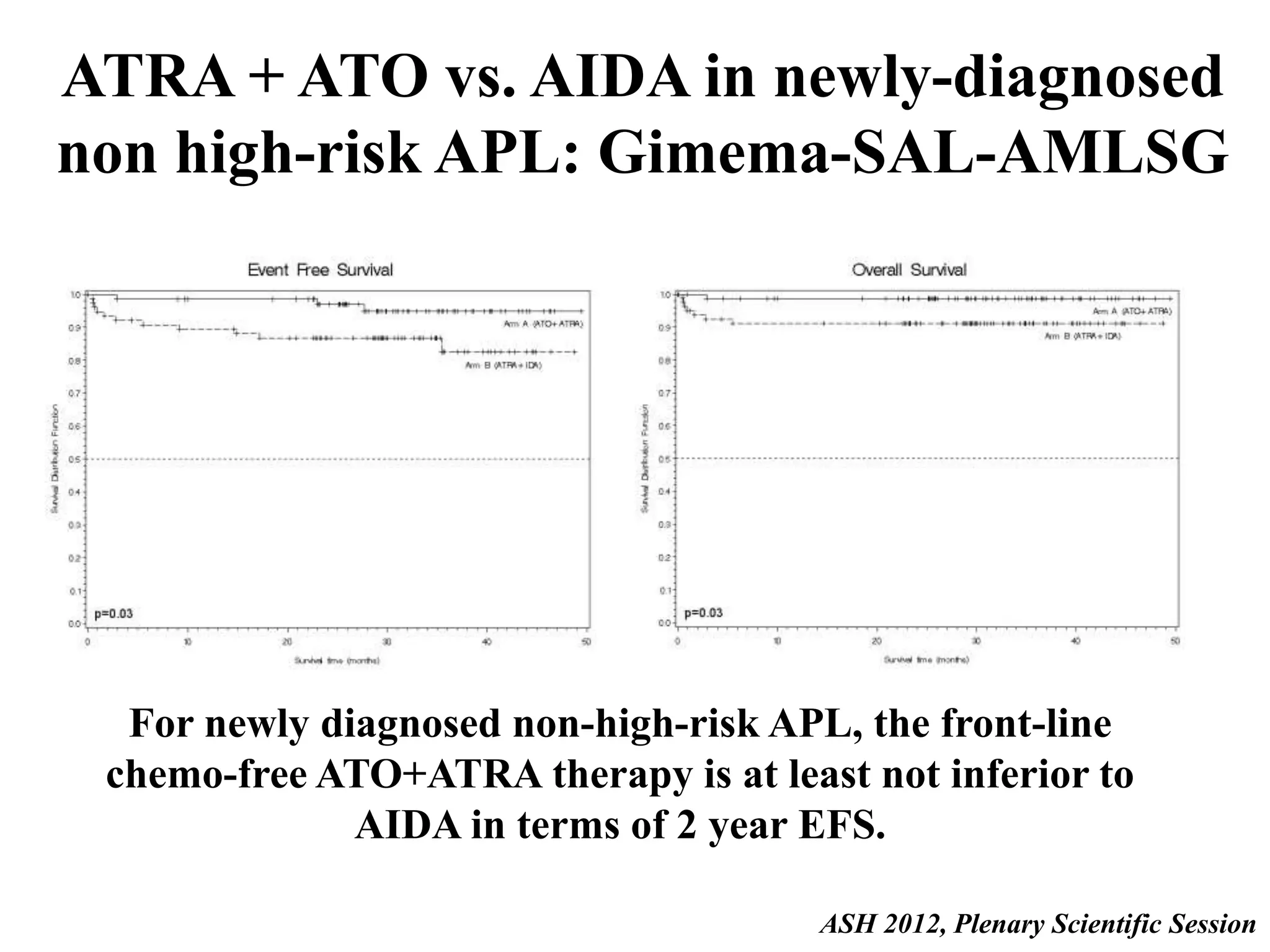
ATRA + ATO vs. AIDA in newly-diagnosed 
non high-risk APL: Gimema-SAL-AMLSG 
• Patients: 
-162 enrolled 154 evaluable 
- median age 45.3(18.7-70.2); median WBC 1.50 x 10⁹/L 
- risk: 61.8% intermediate and 38.2% low-risk 
- median FU: 31 months (range 0.07-50.4) 
ATRA+ATO AIDA P 
CR 75/75 (100%) 75/79 (95%) 0.12 
2 year EFS 97% (93.1-100) 86.7% (80.3-93.6) 0.03 
Event 1 death in CR; 2 rel 7 deaths (4 ED/3 in CR) ; 4 rel 
OS 98.7% 91.1% 0.03 
DFS 97% 91.6% (P=0.19) 0.19 
CIR 1.6% 4.3% 0.41 
ASH 2012, Plenary Scientific Session
ATRA + ATO vs. AIDA in newly-diagnosed 
non high-risk APL: Gimema-SAL-AMLSG 
For newly diagnosed non-high-risk APL, the front-line 
chemo-free ATO+ATRA therapy is at least not inferior to 
AIDA in terms of 2 year EFS. 
ASH 2012, Plenary Scientific Session
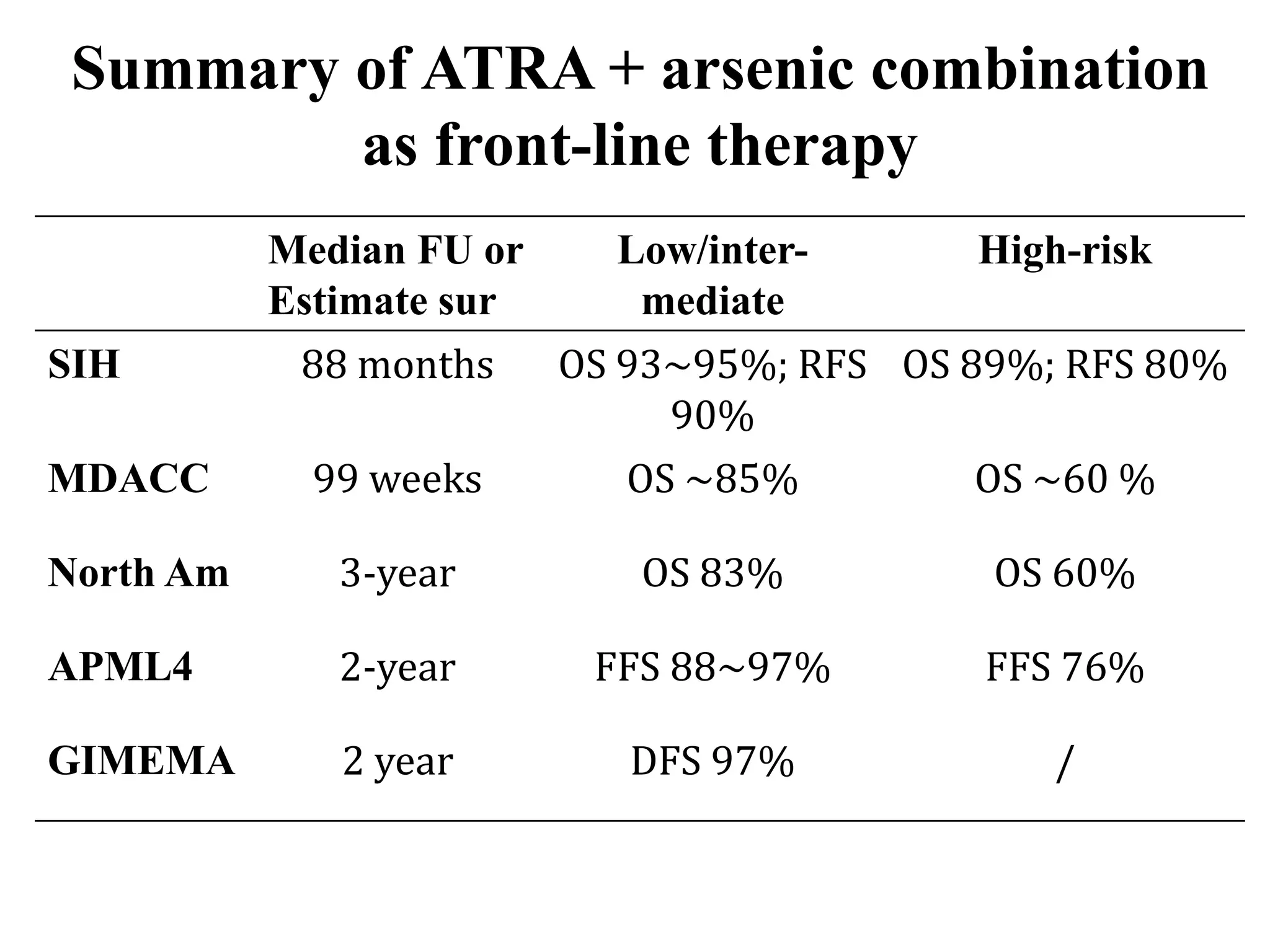
Summary of ATRA + arsenic combination 
as front-line therapy 
Median FU or 
Estimate sur 
Low/inter-mediate 
High-risk 
SIH 88 months OS 93~95%; RFS 
90% 
OS 89%; RFS 80% 
MDACC 99 weeks OS ~85% OS ~60 % 
North Am 3-year OS 83% OS 60% 
APML4 2-year FFS 88~97% FFS 76% 
GIMEMA 2 year DFS 97% /
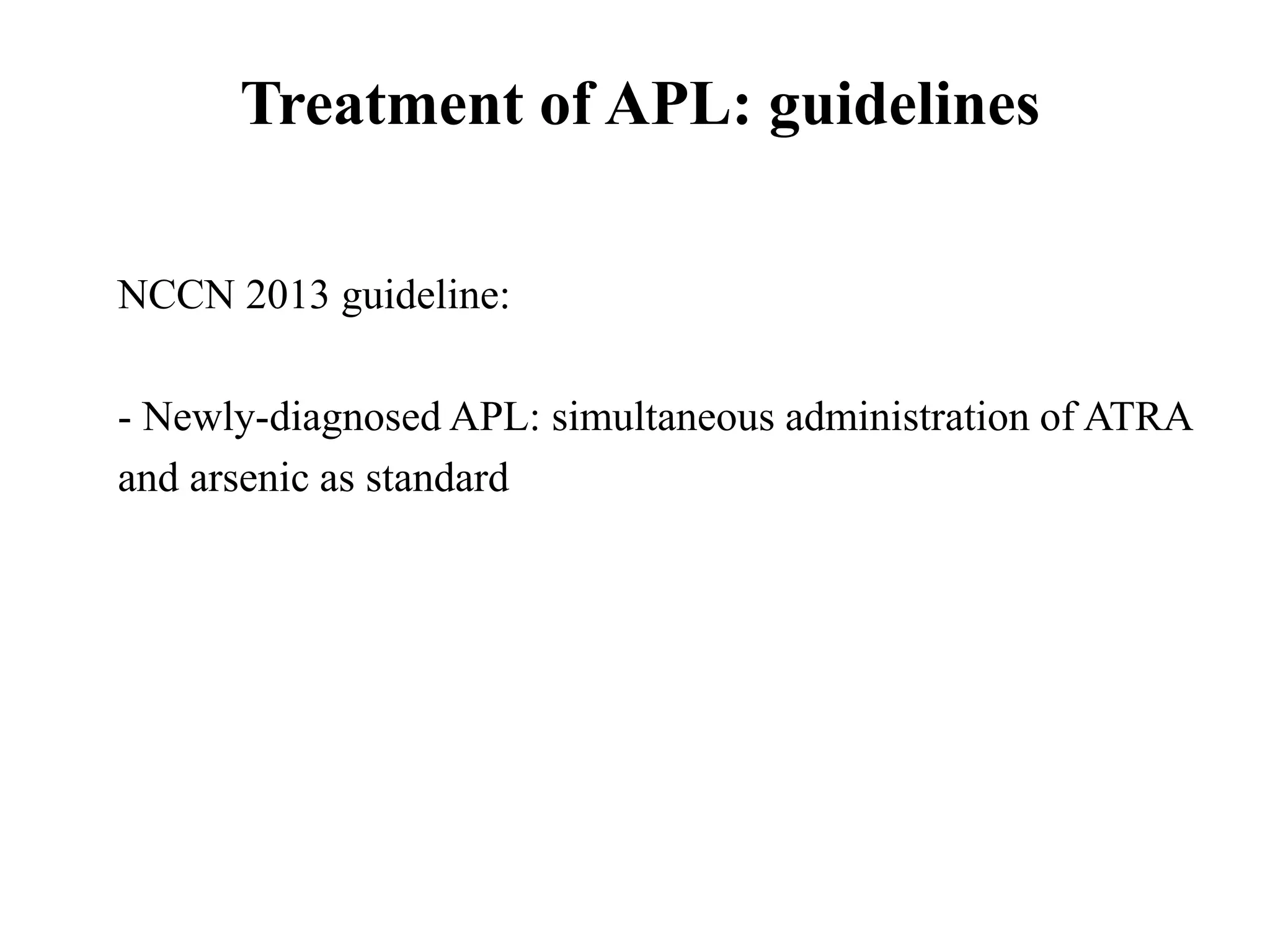
Treatment of APL: guidelines 
NCCN 2013 guideline: 
- Newly-diagnosed APL: simultaneous administration of ATRA 
and arsenic as standard
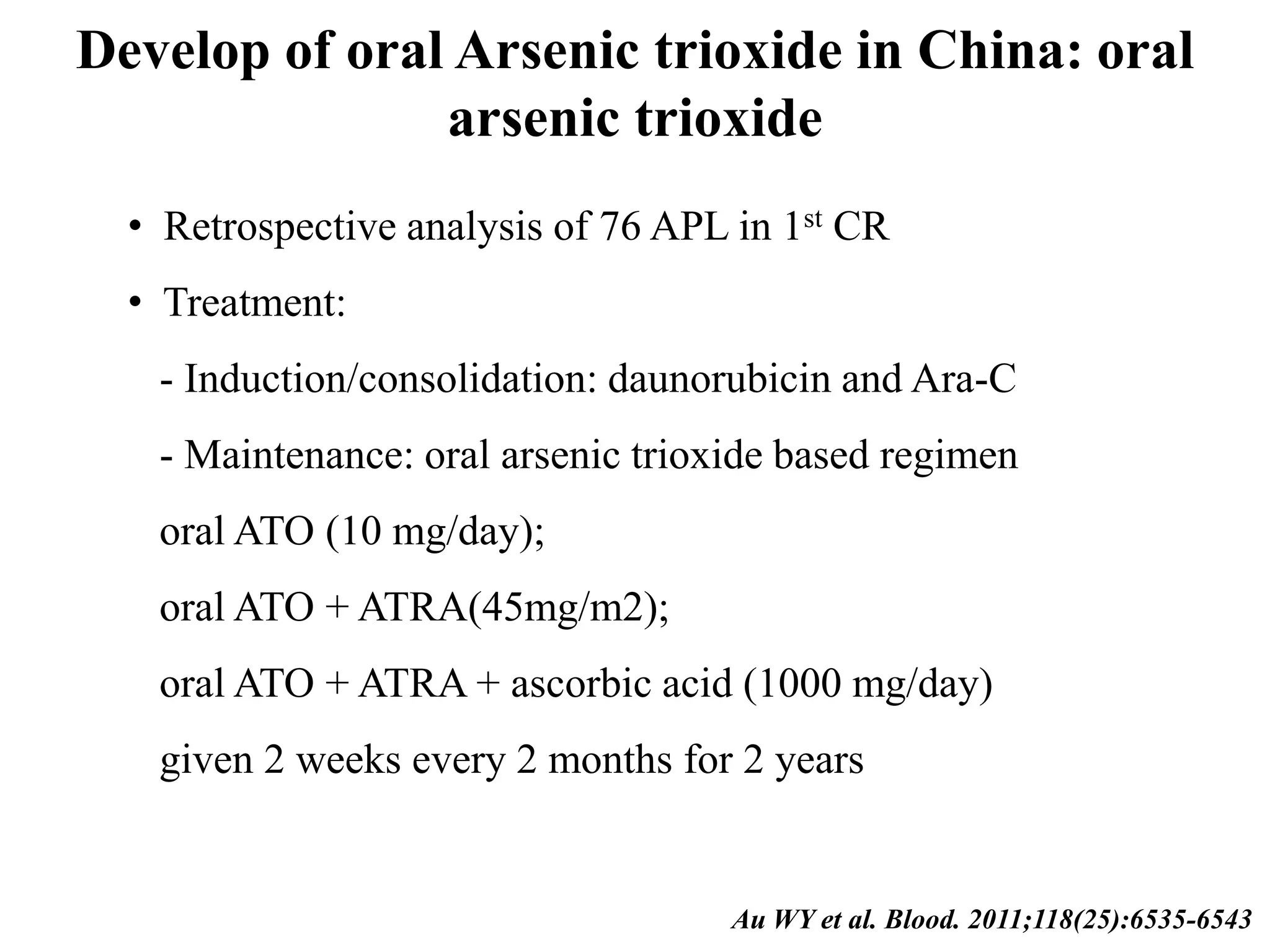
Develop of oral Arsenic trioxide in China: oral 
arsenic trioxide 
• Retrospective analysis of 76 APL in 1st CR 
• Treatment: 
- Induction/consolidation: daunorubicin and Ara-C 
- Maintenance: oral arsenic trioxide based regimen 
oral ATO (10 mg/day); 
oral ATO + ATRA(45mg/m2); 
oral ATO + ATRA + ascorbic acid (1000 mg/day) 
given 2 weeks every 2 months for 2 years 
Au WY et al. Blood. 2011;118(25):6535-6543
Develop of oral Arsenic trioxide in China: oral 
arsenic trioxide 
• Median follow-up of 24 months (range, 1-115 months): 
- relapse only in 8 patients; 3-year LFS and OS: 87.7% and 90.6% 
Au WY et al. Blood. 2011;118(25):6535-6543
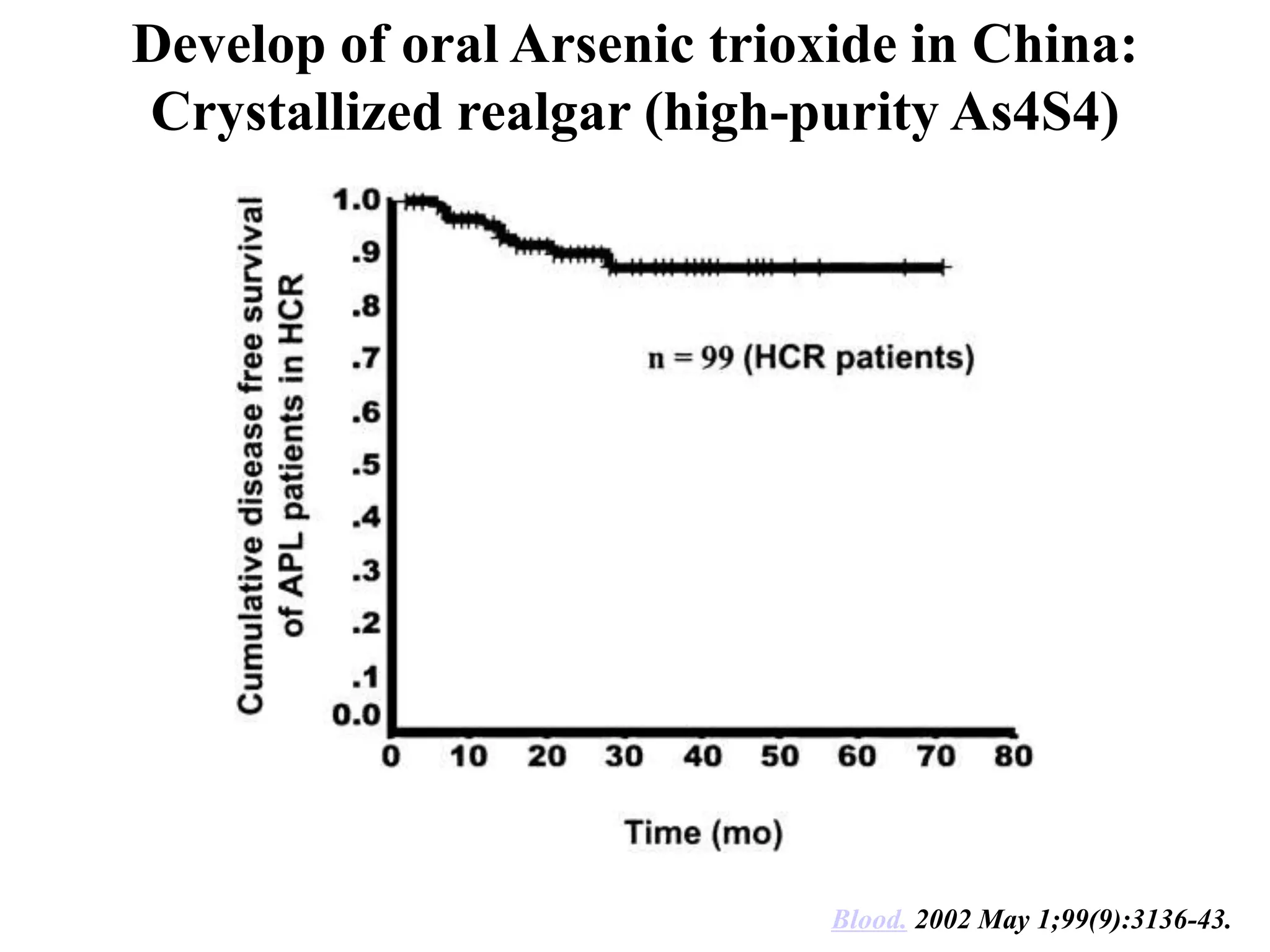
Develop of oral Arsenic trioxide in China: 
Crystallized realgar (high-purity As4S4) 
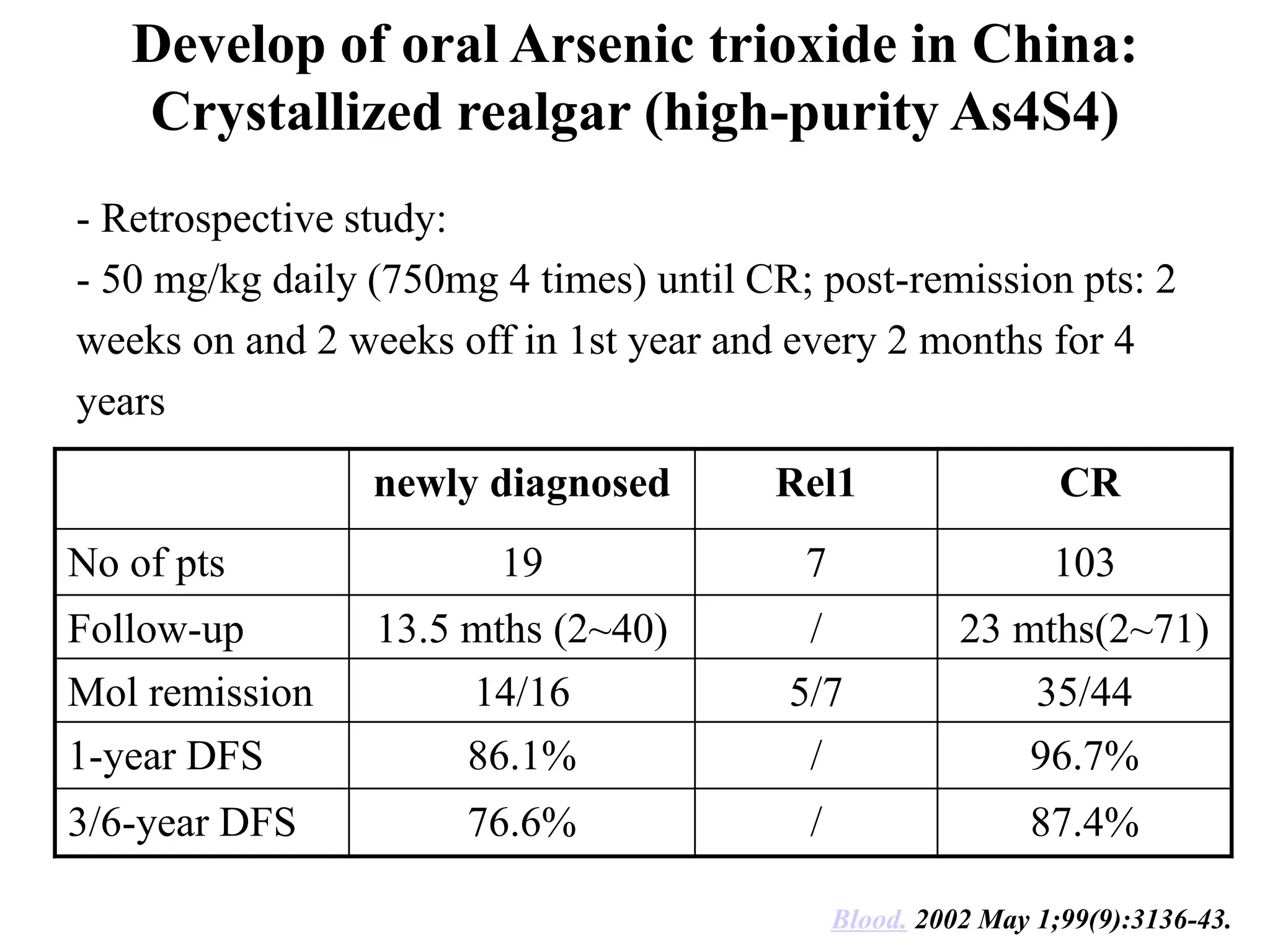
- Retrospective study: 
- 50 mg/kg daily (750mg 4 times) until CR; post-remission pts: 2 
weeks on and 2 weeks off in 1st year and every 2 months for 4 
years 
newly diagnosed Rel1 CR 
No of pts 19 7 103 
Follow-up 13.5 mths (2~40) / 23 mths(2~71) 
Mol remission 14/16 5/7 35/44 
1-year DFS 86.1% / 96.7% 
3/6-year DFS 76.6% / 87.4% 
Blood. 2002 May 1;99(9):3136-43.
Develop of oral Arsenic trioxide in China: 
Crystallized realgar (high-purity As4S4) 
Blood. 2002 May 1;99(9):3136-43.
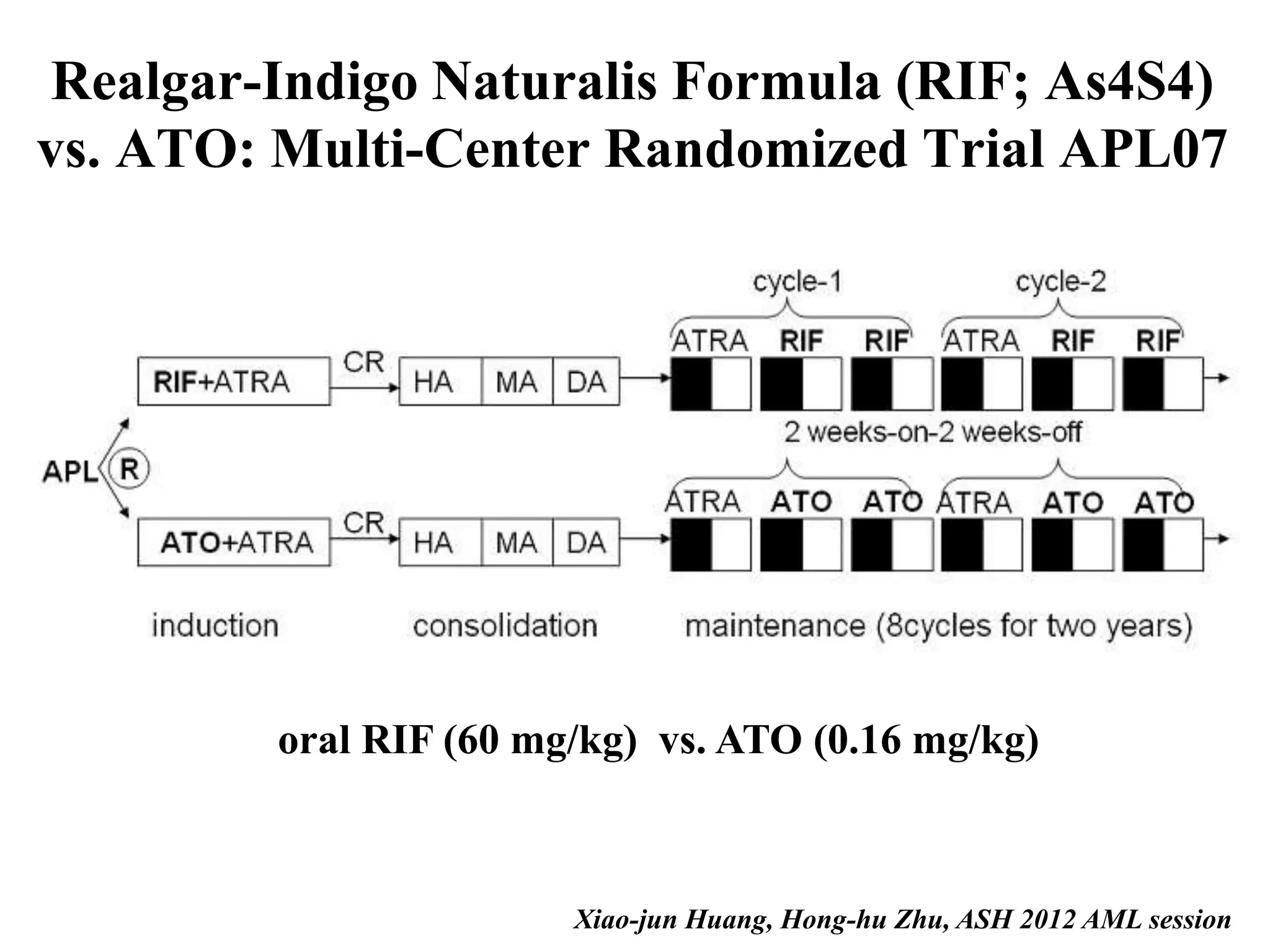
Realgar-Indigo Naturalis Formula (RIF; As4S4) 
vs. ATO: Multi-Center Randomized Trial APL07 
Newly-diagnosed 
APL 
oral RIF (60 mg/kg) vs. ATO (0.16 mg/kg) 
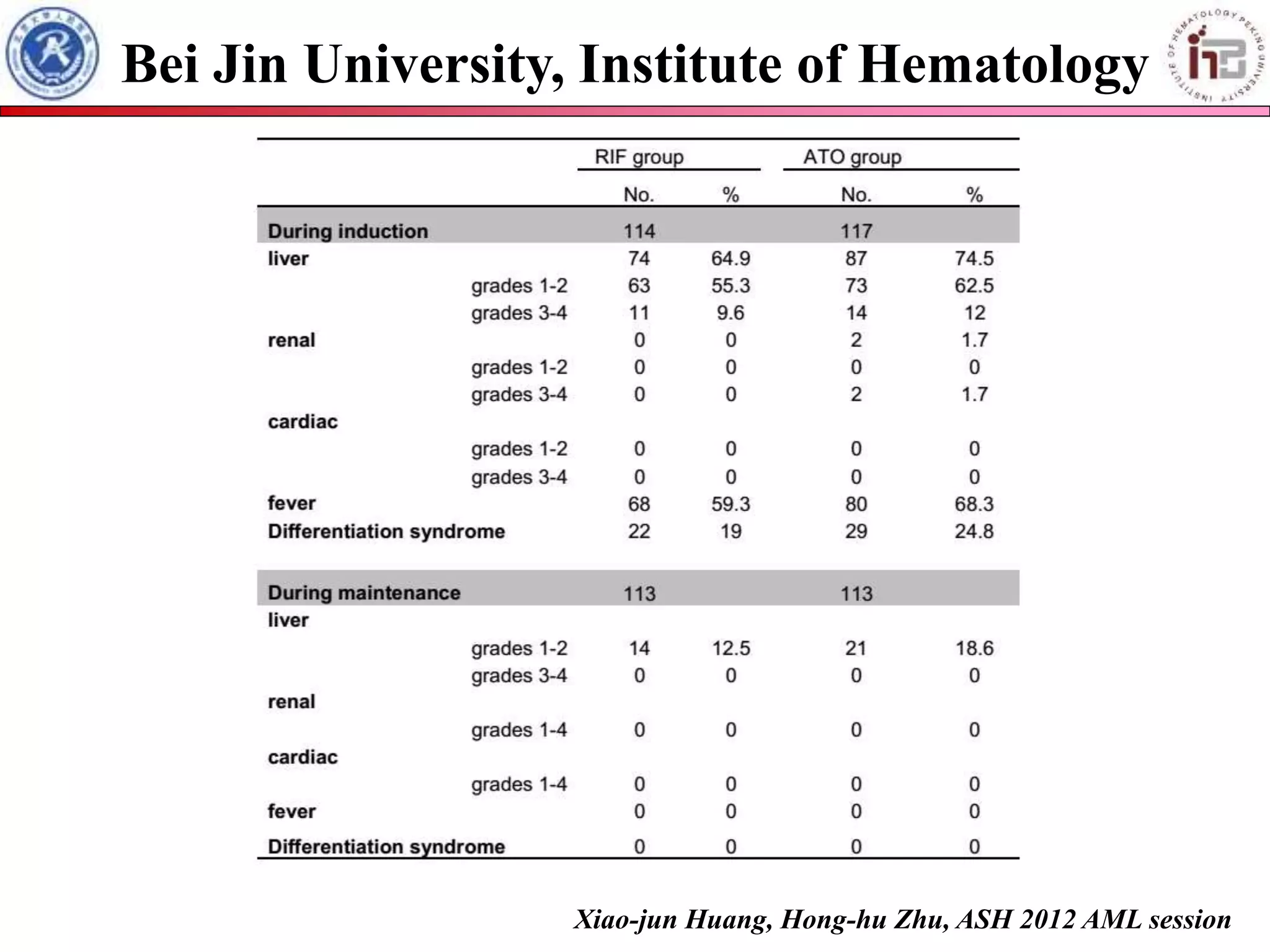
Xiao-jun Huang, Hong-hu Zhu, ASH 2012 AML session
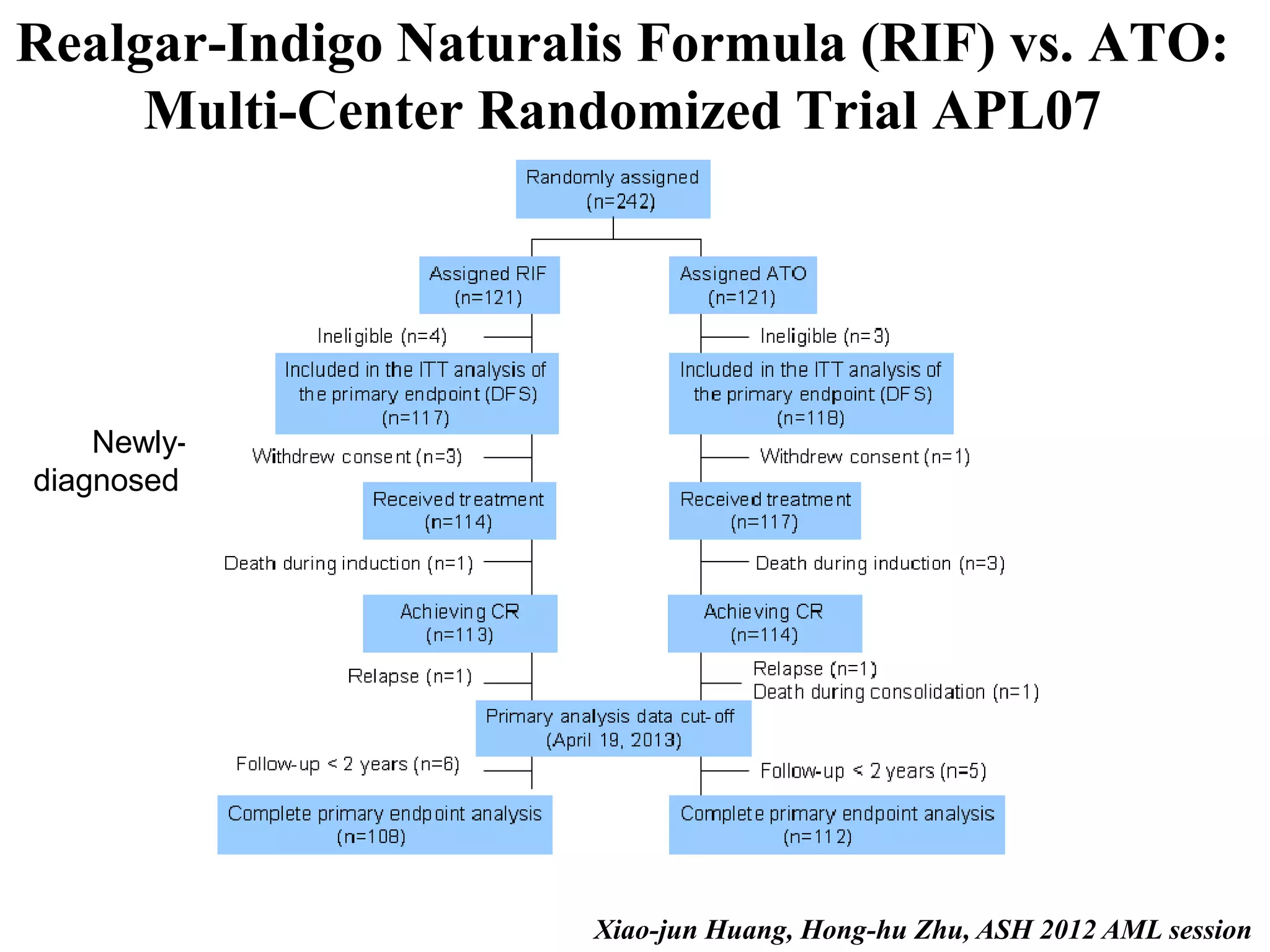
Realgar-Indigo Naturalis Formula (RIF) vs. ATO: 
Multi-Center Randomized Trial APL07 
Newly-diagnosed 
APL 
Xiao-jun Huang, Hong-hu Zhu, ASH 2012 AML session
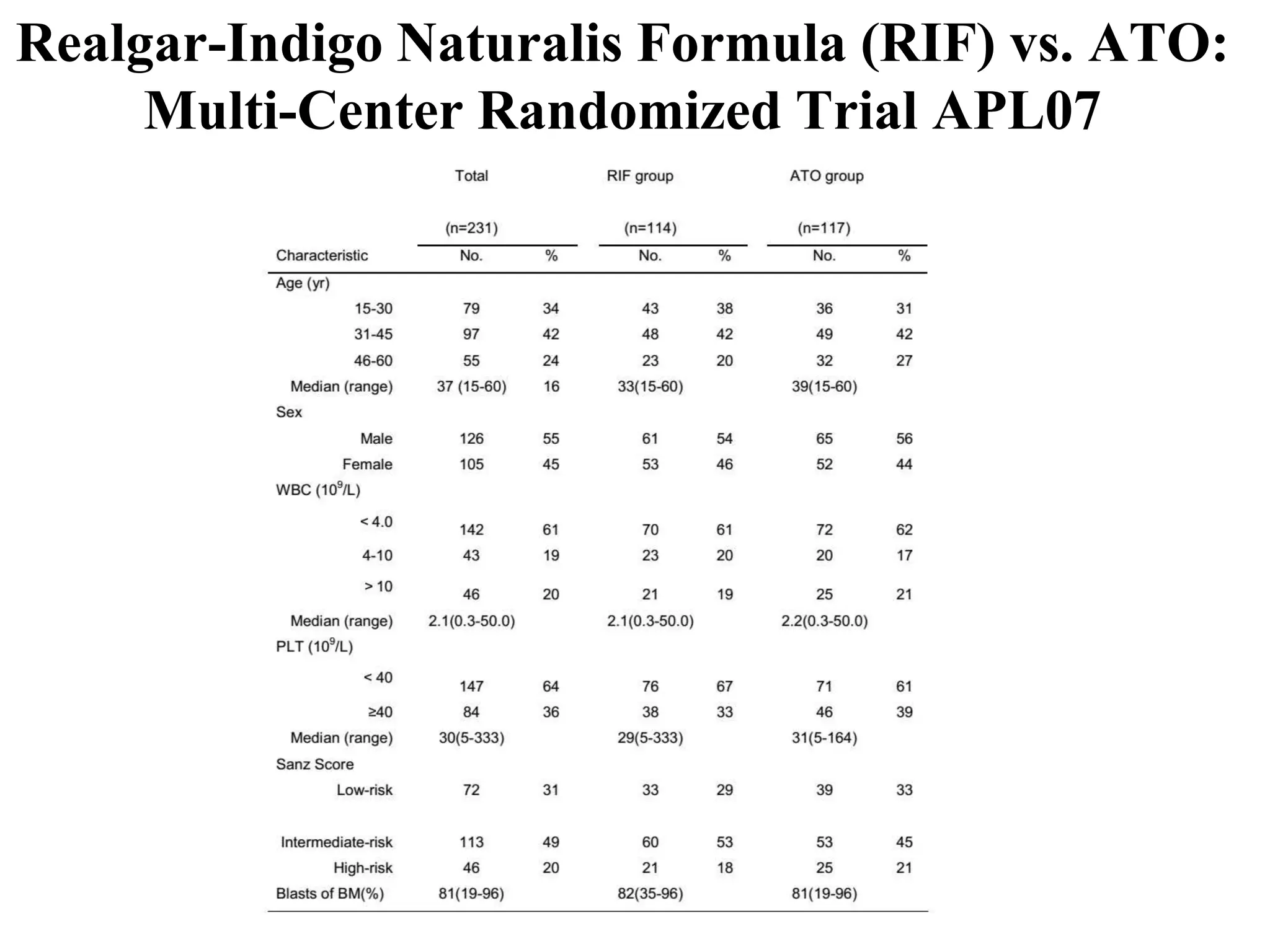
Realgar-Indigo Naturalis Formula (RIF) vs. ATO: 
Multi-Center Randomized Trial APL07
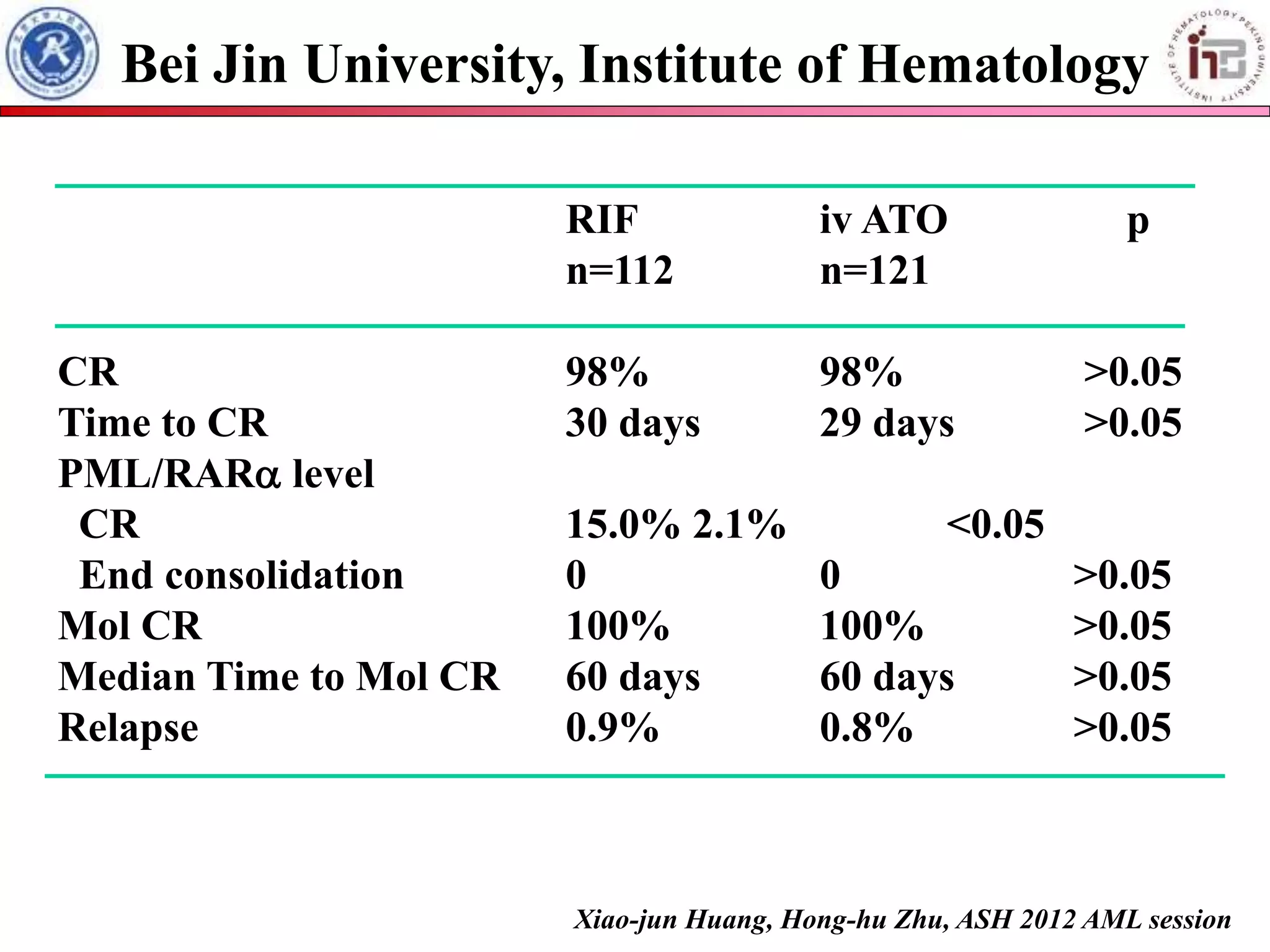
Bei Jin University, Institute of Hematology 
RIF iv ATO p 
n=112 n=121 
CR 98% 98% >0.05 
Time to CR 30 days 29 days >0.05 
PML/RAR level 
CR 15.0% 2.1% <0.05 
End consolidation 0 0 >0.05 
Mol CR 100% 100% >0.05 
Median Time to Mol CR 60 days 60 days >0.05 
Relapse 0.9% 0.8% >0.05 
Xiao-jun Huang, Hong-hu Zhu, ASH 2012 AML session
Bei Jin University, Institute of Hematology 
Xiao-jun Huang, Hong-hu Zhu, ASH 2012 AML session
Bei Jin University, Institute of Hematology 
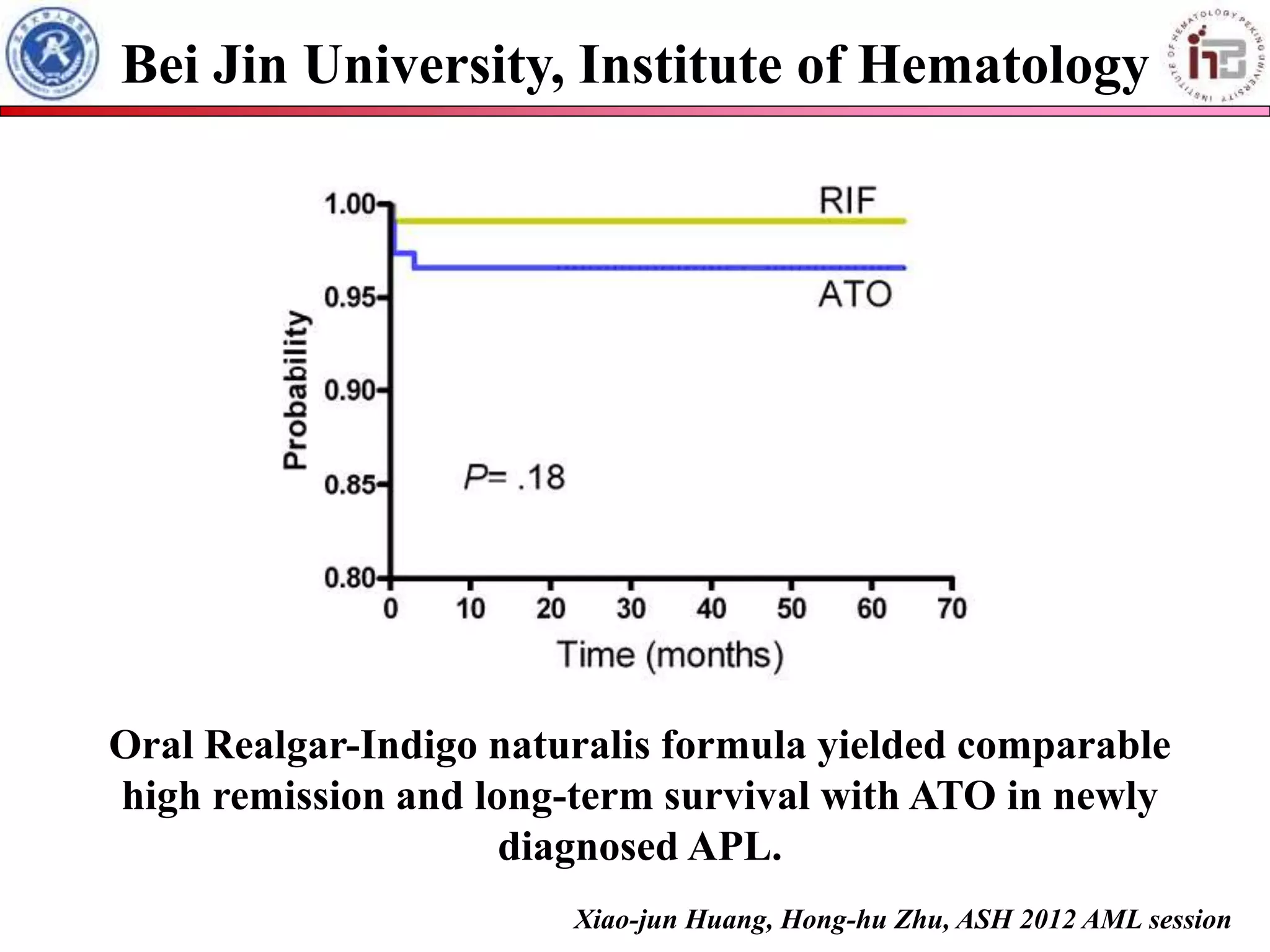
Oral Realgar-Indigo naturalis formula yielded comparable 
high remission and long-term survival with ATO in newly 
diagnosed APL. 
Xiao-jun Huang, Hong-hu Zhu, ASH 2012 AML session
Bei Jin University, Institute of Hematology 
Xiao-jun Huang, Hong-hu Zhu, ASH 2012 AML session
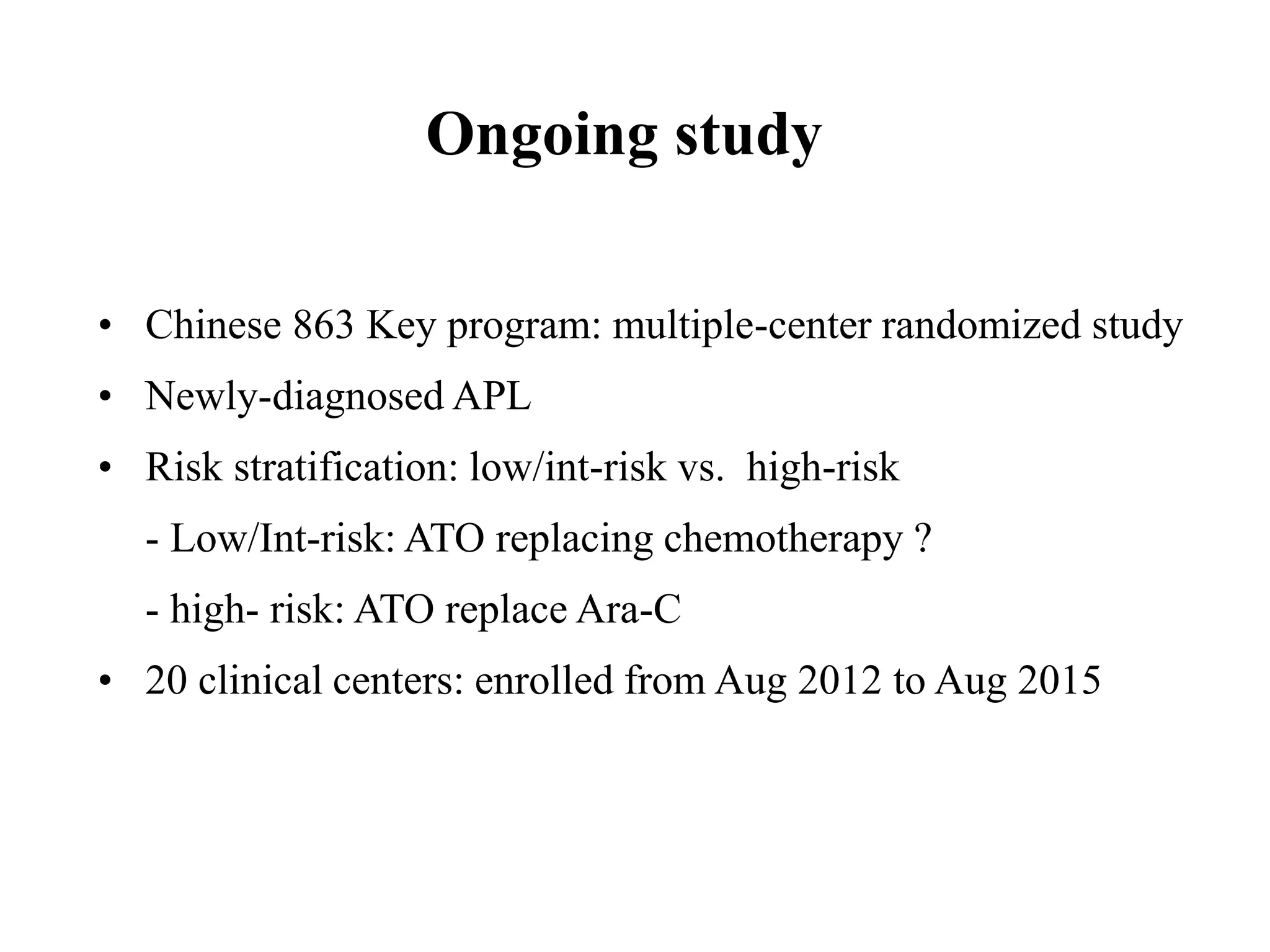
Ongoing study 
• Chinese 863 Key program: multiple-center randomized study 
• Newly-diagnosed APL 
• Risk stratification: low/int-risk vs. high-risk 
- Low/Int-risk: ATO replacing chemotherapy ? 
- high- risk: ATO replace Ara-C 
• 20 clinical centers: enrolled from Aug 2012 to Aug 2015
• Early death: 
Two issues …… 
- start ATRA in clinical suspected patients without morphology 
confirmation 
- start arsenic arsenic with morphological support 
- management of differentiation syndrome 
- best supportive care
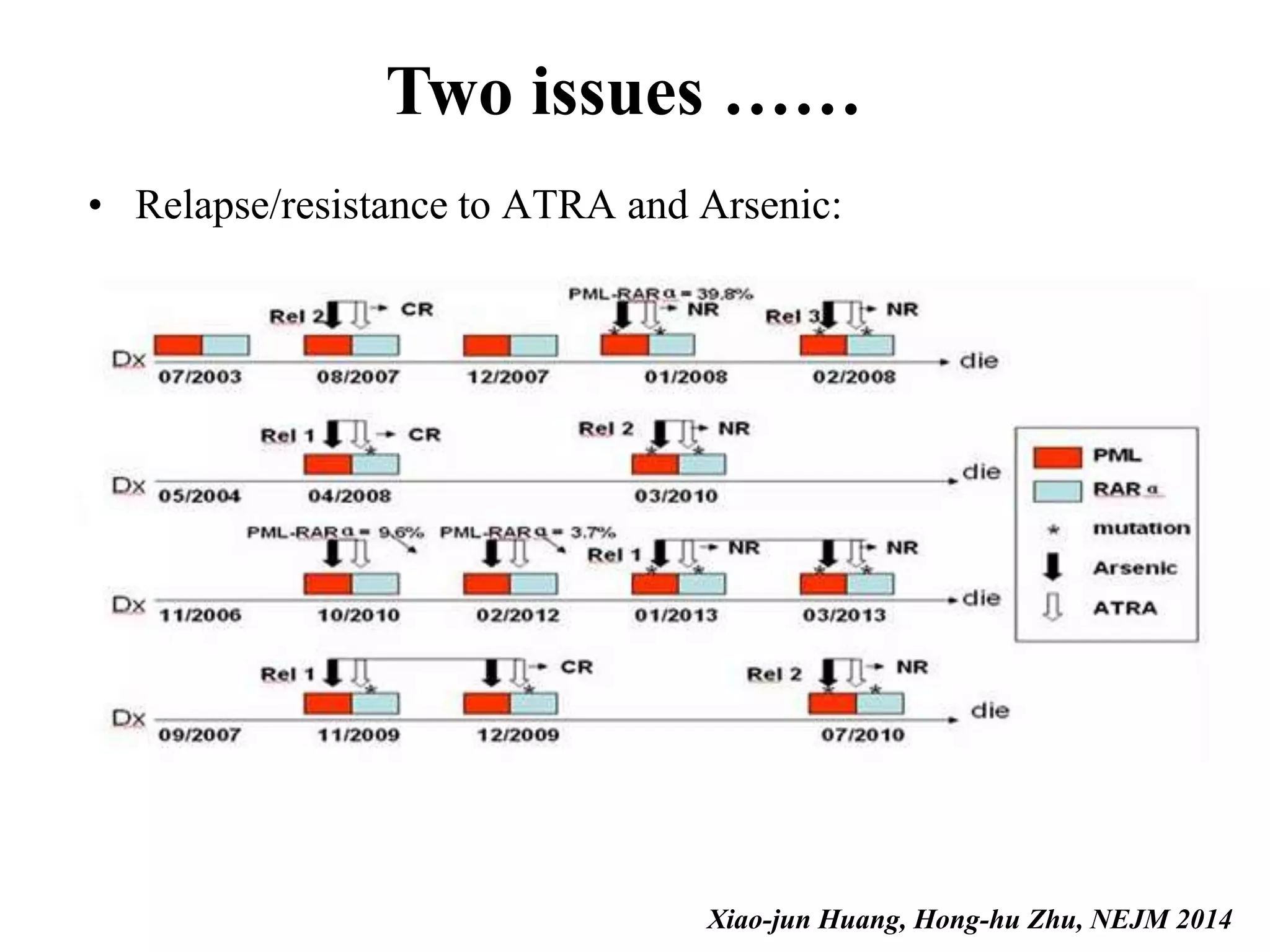
Two issues …… 
• Relapse/resistance to ATRA and Arsenic: 
Xiao-jun Huang, Hong-hu Zhu, NEJM 2014
• Development of ATRA and arsenic treatment dramatically 
improve the outcome of APL: curable disease 
• arsenic + ATRA: mainstay of front-line treatment for newly-diagnosed 
APL 
• Arsenic + ATRA without chemo: promising outcome in low or 
low/intermediate risk pts 
• Importance of chemotherapy remain in high-risk group 
• Oral arsenic: better tolerance/convenience and comparable 
efficacy 
Summary
… future direction … 
Oral ATRA and oral arsenic as curable regimen 
(for low/Int risk APL)
Acknowledgements 
• Prof Zhen-yi Wang; Zhu Chen and Sai-juan Chen; 
Zhi-xiang Shen; Jun-min Li and colleagues at 
Shanghai Institute of Hematology, Department of 
Hematology, RuiJin Hospital
Acute Promyelocytic Leukemia

  • 1.
    Treatment of acutepromyelocytic leukemia with ATRA and arsenic: experience from China Jiong HU Shanghai Institute of Hematology, Department of Hematology, Rui-Jin Hospital, Shanghai Jiao Tong University School of Medicine
  • 2.
    • Front-line therapywith ATRA • Salvage therapy with arsenic • Combination therapy with ATRA and arsenic • Oral arsenic • Future direction: APL therapy without chemotherapy
  • 3.
    Overview of APL Clinical and molecular features: (A) severe bleeding tendency: fibrinogenopenia and DIC (B) promyelocytes in BM and peripheral blood (C) chromosomal translocation t(15;17)(q22; q21) (D) fusion transcripts PML-RAR Blood 2008 Mar 1;111(5):2505-15. 
  • 4.
    Overview of APLtreatment • pre-ATRA period: chemotherapy • ATRA: - introduction of ATRA - optimization of ATRA-chemo combination regimens • Arsenic: - introduction of ATO in relapsed APL - ATRA/ATO combination as front-line therapy - Oral arsenic
  • 5.
    Chemotherapy • Chemotherapy:anthracycline (DNR or Ida) + Ara-C: - CR rates 70%~80% in newly diagnosed patients - aggravation of bleeding syndrome: high early death rate - relapse in large proportion of patients with median duration of CR: 11~25 months - long-term survival: 35% ~ 45% • Recognition of APL as a highly fatal disease Blood 2008 Mar 1;111(5):2505-15.
  • 6.
    ATRA treatment inAPL (A) Isomers of retinoic acid (B) ATRA induces terminal differentiation of APL (C) ATRA treatment leads to elimination of PML-RAR– positive cells by quantitative real-time RT-PCR for assessment of PML-RAR transcript. Blood 2008 Mar 1;111(5):2505-15.
  • 7.
    ATRA treatment inAPL  Pilot study in Shanghai Institute of Hematology (SIH) - 1985~1988 - 24 APL patients: 16 newly diagnosed / 8 refractory disease - ATRA: 45mg/m2 oral until response or max 60 days - outcome: 23 achieved CR differentiation syndrome 1 patient achieved CR by adding low-dose Ara-C Blood 2008 Mar 1;111(5):2505-15.
  • 8.
    ATRA treatment inAPL Blood 2008 Mar 1;111(5):2505-15. - Chemotherapy + ATRA: anthracycline (Ida, DNR, Mitoxantrone, or HHT) and Ara-C - Induction: high remission rate reduce differentiation syndrome - Consolidation/maintenance: 3 monthly courses of anthracycline-based chemo/low-dose maintenance (6-MP+MTX with ATRA) 5-year EFS/DFS: up to 70%
  • 9.
    ATRA added tochemotherapy improve outcome Tallman M, Blood 2009;114(25):5126
  • 10.
    Arsenic as salvagetherapy - arsenic developed as TCM in Northeastern China - Harbin group(1992): iv 1% ATO 32 APL, 21 obtained CR 10-year survival 30% - SIH(1996~1997): 47 relapsed and 11 newly diagnosed APL CR rate of 85.1% and 72.7% molecular remission documented ~60% long-term survival in relapsed APL: 50~60% Blood 2008 Mar 1;111(5):2505-15.
  • 11.
    Treatment of APL:guidelines ELN guideline / NCCN guideline / Consensus of CSH: - Newly-diagnosed APL: simultaneous administration of ATRA and anthracycline-based chemotherapy as standard - Relapse disease: arsenic is the best option with or without chemotherapy Blood 2009;113:1875 Chin J Hematol 2010;31:69
  • 12.
    Rationale of arsenicas front-line treatment - efficacy in relapse patients: high remission rate with sizable proportion of long-term survival - efficacy in newly-diagnosed patients as single agent: long-term survival observed
  • 13.
    Synergy of ATRAand aarsenic in degrading PML-RAR
  • 14.
    ATRA increase aquaglyceroporin 9(AQP9) expression associated with arsenic sensitivity Relationship of AQP9 with arsenic uptake and sensitivity in leukemia cells. Blood 2007; 109: 740-746.
  • 15.
    ATRA increase AQP9expression associated with arsenic sensitivity in patients
  • 16.
    Synergy of ATRAand arsenic in eradicating leukemia stem cells ATRA and arsenic synergy in targeting APL - ATRA/Arsenic targeting PML-RAR - ATRA  of expression of AQP9,  arsenic uptake - Degradation PML-RAR rapidly clears LIC and eradication in murine APL models; blocked PR degradation by bortezomib reversed the curative effect of arsenic Nasr R, Nat Med. 2008;14:1333 and Clin Cancer Res 2009 Oct 6.
  • 17.
    Synergy of ATRAand Arsenic: mice model Scott Kogan, Cancer Cell 2009;15:7
  • 18.
    SIH study: Front-linetherapy with ATRA + Arsenic
  • 19.
    SIH study: Follow-upfor all patients n=85, 91.7±3.0% n=85, 89.2±3.4% Overall survival at 70 months Event-free survival at 70 months Hu J, PNAS 2009;106:3342
  • 20.
    SIH study: Follow-upfor patients in CR n=80, 97.41.8% n=80, 94.82.5% Overall survival at 70 months Relapse-free survival at 70 months Hu J, PNAS 2009;106:3342
  • 21.
    SIH study: safetyof front-line arsenic therapy Hu J, PNAS 2009;106:3342
  • 22.
    Update of SIHstudy 2014 Zhu HM and Hu J, et al. Submitted
  • 23.
    Update of SIHstudy 2014 Zhu HM and Hu J, et al. Submitted
  • 24.
    Update of SIHstudy 2014: all patients Zhu HM and Hu J, et al. Submitted
  • 25.
    Update of SIHstudy 2014
  • 26.
    Update of SIHstudy 2014
  • 27.
    MDACC Study: ATRA+ Arsenic  GO Ravandi F, J Clin Oncol 2009;27:504
  • 28.
    MDACC Study: ATRA+ Arsenic  GO Ravandi F, J Clin Oncol 2009;27:504
  • 29.
    North American LeukemiaIntergroup Study C9710 (NCT00003934) Powell BL, Blood First Edition Paper, DOI 10.1182/blood-2010-02-269621
  • 30.
    North American LeukemiaIntergroup Study C9710: benefit of arsenic in different risk groups Arsenic: high vs. low No arsenic: high vs. low Powell BL, Blood First Edition Paper, DOI 10.1182/blood-2010-02-269621
  • 31.
    ATRA/ATO reduce significantlyuse of chemotherapy: Australian APML4 study 3 cycles of ATRA + ATO in induction/consolidation; 1 cycle of idarubicin in induction Iland HJ, Blood. 2012;120(8):1570-1580
  • 32.
    ATRA/ATO reduce significantlyuse of chemotherapy: Australian APML4 study 2-year relapse-free survival 97.5%; failure-free survival 88.1%, and overall survival 93.2%. Iland HJ, Blood. 2012;120(8):1570-1580
  • 33.
    ATRA + ATOvs. AIDA in newly-diagnosed non high-risk APL: Gimema-SAL-AMLSG • Patients: -162 enrolled 154 evaluable - median age 45.3(18.7-70.2); median WBC 1.50 x 10⁹/L - risk: 61.8% intermediate and 38.2% low-risk - median FU: 31 months (range 0.07-50.4) ATRA+ATO AIDA P CR 75/75 (100%) 75/79 (95%) 0.12 2 year EFS 97% (93.1-100) 86.7% (80.3-93.6) 0.03 Event 1 death in CR; 2 rel 7 deaths (4 ED/3 in CR) ; 4 rel OS 98.7% 91.1% 0.03 DFS 97% 91.6% (P=0.19) 0.19 CIR 1.6% 4.3% 0.41 ASH 2012, Plenary Scientific Session
  • 34.
    ATRA + ATOvs. AIDA in newly-diagnosed non high-risk APL: Gimema-SAL-AMLSG For newly diagnosed non-high-risk APL, the front-line chemo-free ATO+ATRA therapy is at least not inferior to AIDA in terms of 2 year EFS. ASH 2012, Plenary Scientific Session
  • 35.
    Summary of ATRA+ arsenic combination as front-line therapy Median FU or Estimate sur Low/inter-mediate High-risk SIH 88 months OS 93~95%; RFS 90% OS 89%; RFS 80% MDACC 99 weeks OS ~85% OS ~60 % North Am 3-year OS 83% OS 60% APML4 2-year FFS 88~97% FFS 76% GIMEMA 2 year DFS 97% /
  • 36.
    Treatment of APL:guidelines NCCN 2013 guideline: - Newly-diagnosed APL: simultaneous administration of ATRA and arsenic as standard
  • 37.
    Develop of oralArsenic trioxide in China: oral arsenic trioxide • Retrospective analysis of 76 APL in 1st CR • Treatment: - Induction/consolidation: daunorubicin and Ara-C - Maintenance: oral arsenic trioxide based regimen oral ATO (10 mg/day); oral ATO + ATRA(45mg/m2); oral ATO + ATRA + ascorbic acid (1000 mg/day) given 2 weeks every 2 months for 2 years Au WY et al. Blood. 2011;118(25):6535-6543
  • 38.
    Develop of oralArsenic trioxide in China: oral arsenic trioxide • Median follow-up of 24 months (range, 1-115 months): - relapse only in 8 patients; 3-year LFS and OS: 87.7% and 90.6% Au WY et al. Blood. 2011;118(25):6535-6543
  • 39.
    Develop of oralArsenic trioxide in China: Crystallized realgar (high-purity As4S4) - Retrospective study: - 50 mg/kg daily (750mg 4 times) until CR; post-remission pts: 2 weeks on and 2 weeks off in 1st year and every 2 months for 4 years newly diagnosed Rel1 CR No of pts 19 7 103 Follow-up 13.5 mths (2~40) / 23 mths(2~71) Mol remission 14/16 5/7 35/44 1-year DFS 86.1% / 96.7% 3/6-year DFS 76.6% / 87.4% Blood. 2002 May 1;99(9):3136-43.
  • 40.
    Develop of oralArsenic trioxide in China: Crystallized realgar (high-purity As4S4) Blood. 2002 May 1;99(9):3136-43.
  • 41.
    Realgar-Indigo Naturalis Formula(RIF; As4S4) vs. ATO: Multi-Center Randomized Trial APL07 Newly-diagnosed APL oral RIF (60 mg/kg) vs. ATO (0.16 mg/kg) Xiao-jun Huang, Hong-hu Zhu, ASH 2012 AML session
  • 42.
    Realgar-Indigo Naturalis Formula(RIF) vs. ATO: Multi-Center Randomized Trial APL07 Newly-diagnosed APL Xiao-jun Huang, Hong-hu Zhu, ASH 2012 AML session
  • 43.
    Realgar-Indigo Naturalis Formula(RIF) vs. ATO: Multi-Center Randomized Trial APL07
  • 44.
    Bei Jin University,Institute of Hematology RIF iv ATO p n=112 n=121 CR 98% 98% >0.05 Time to CR 30 days 29 days >0.05 PML/RAR level CR 15.0% 2.1% <0.05 End consolidation 0 0 >0.05 Mol CR 100% 100% >0.05 Median Time to Mol CR 60 days 60 days >0.05 Relapse 0.9% 0.8% >0.05 Xiao-jun Huang, Hong-hu Zhu, ASH 2012 AML session
  • 45.
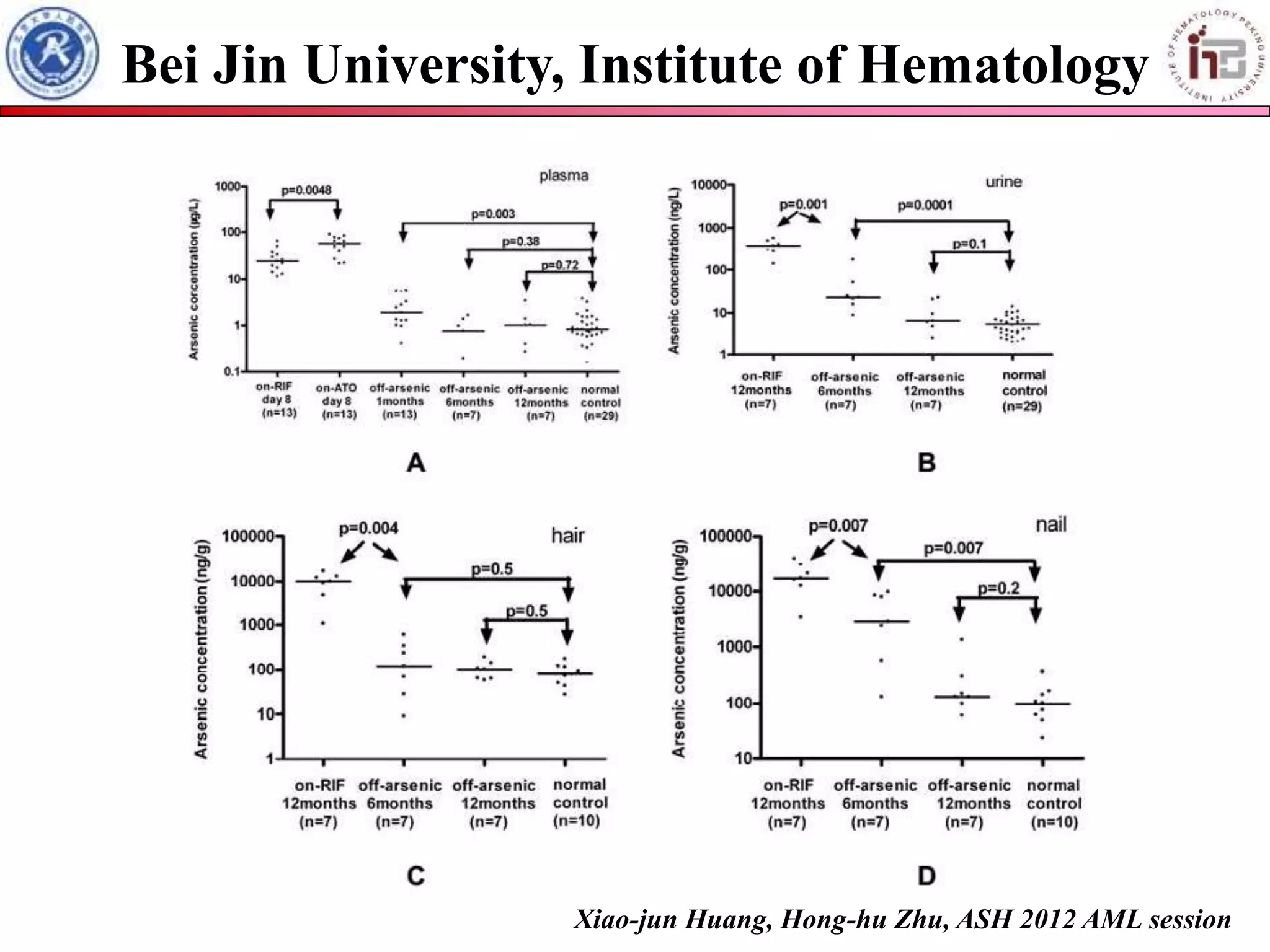
    Bei Jin University,Institute of Hematology Xiao-jun Huang, Hong-hu Zhu, ASH 2012 AML session
  • 46.
    Bei Jin University,Institute of Hematology Oral Realgar-Indigo naturalis formula yielded comparable high remission and long-term survival with ATO in newly diagnosed APL. Xiao-jun Huang, Hong-hu Zhu, ASH 2012 AML session
  • 47.
    Bei Jin University,Institute of Hematology Xiao-jun Huang, Hong-hu Zhu, ASH 2012 AML session
  • 48.
    Ongoing study •Chinese 863 Key program: multiple-center randomized study • Newly-diagnosed APL • Risk stratification: low/int-risk vs. high-risk - Low/Int-risk: ATO replacing chemotherapy ? - high- risk: ATO replace Ara-C • 20 clinical centers: enrolled from Aug 2012 to Aug 2015
  • 49.
    • Early death: Two issues …… - start ATRA in clinical suspected patients without morphology confirmation - start arsenic arsenic with morphological support - management of differentiation syndrome - best supportive care
  • 50.
    Two issues …… • Relapse/resistance to ATRA and Arsenic: Xiao-jun Huang, Hong-hu Zhu, NEJM 2014
  • 51.
    • Development ofATRA and arsenic treatment dramatically improve the outcome of APL: curable disease • arsenic + ATRA: mainstay of front-line treatment for newly-diagnosed APL • Arsenic + ATRA without chemo: promising outcome in low or low/intermediate risk pts • Importance of chemotherapy remain in high-risk group • Oral arsenic: better tolerance/convenience and comparable efficacy Summary
  • 52.
    … future direction… Oral ATRA and oral arsenic as curable regimen (for low/Int risk APL)
  • 53.
    Acknowledgements • ProfZhen-yi Wang; Zhu Chen and Sai-juan Chen; Zhi-xiang Shen; Jun-min Li and colleagues at Shanghai Institute of Hematology, Department of Hematology, RuiJin Hospital