SOLAR PASSIVE ARCHITECTUREAIMS & OBJECTIVEINTRODUCTIONMethodologyHISTORYTECHNIQUEPASSIVE HEATINGPASSIVE COOLINGCASE STUDIES
Aims & ObjectiveAIM:	To study different types of solar architectural and constructional techniques for designing different buildings and conclude the result.OBJECTIVE:To promote energy efficient building design ,i.e. to minimize energy use and negative environment effect of buildingTo maximize use of renewable and natural resources in building environmentBuilding Construction with optimum use of solar energyThermal comfort for the inhabitantsTo reduce maintenance cost.
MethodologyResearch on Solar Passive featuresCollect Definition of various terminology used in it.Case studies of building in different climatic zones to understand the importance and usefulness of solar passive design features.Conclusion
INTRODUCTIONPassive design is design that does not require mechanical heating or cooling. Buildings that are passively designed take advantage of natural energy flows to maintain thermal comfort.When sunlight strikes a building, the building materials can reflect, transmit, or absorb the solar radiation. Additionally, the heat produced by the sun causes air movement that can be predictable in designed spaces. These basic responses to solar heat lead to design elements, material choices and placements that can provide heating and cooling effects in a building.
HISTORY: 5TH CENTURYThe ancient Greeks planned whole cities in Greece, to allow every homeowner access to sunlight during winter to warm their homes. By running the streets in a checkerboard pattern running east west and north-south pattern every home could face south, permitting the winter sun to flow into the house throughout the day.The Romans used it as their south-facing rooms. They became much hotter in winter than similarly oriented Greek homes because the Romans covered their window spaces with mica or glass while the Greeks did not.
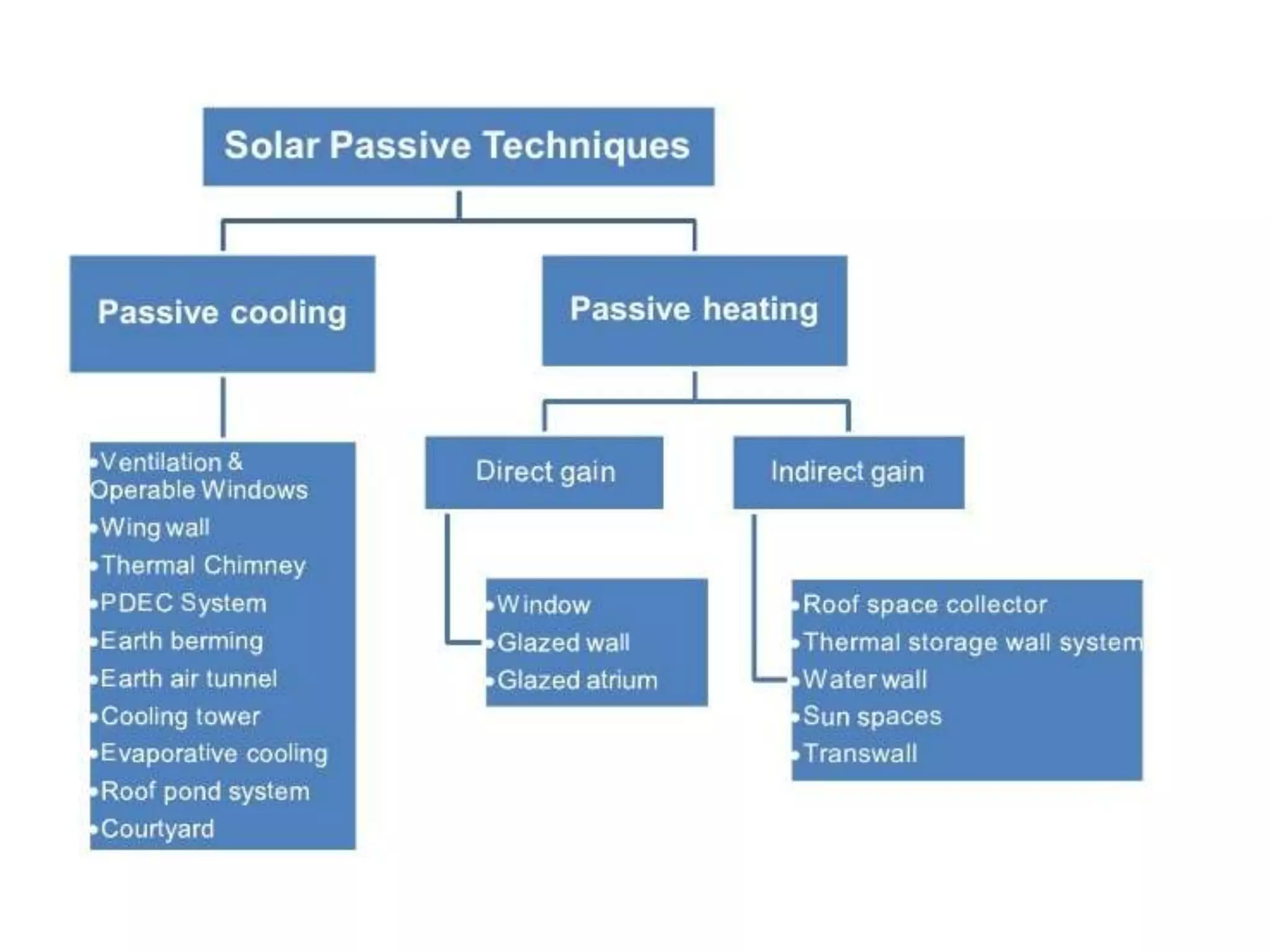
Passive heatingTwo primary elements of passive solar heating are -South facing glassThermal mass to absorb, store, and distribute heat There are three approaches to passive systemsdirect gain, indirect gain (trombe wall), and isolated gain.
Passive CoolingPassive solar cooling can reduce or even eliminate the need for air conditioning in homes. Cross VentilationWing WallsThermal ChimneyOther Ventilating Strategies
Case StudiesAnokhi Industries, Jaipur By NimeshpatelTorrent Research Building, AhmedabadYouth Hostel, Jodhpur by Vinod GuptaIIHMR, JAIPURHEMURAJA HOTEL,SHIMLA

Solar passive architecture

  • 1.
    SOLAR PASSIVE ARCHITECTUREAIMS& OBJECTIVEINTRODUCTIONMethodologyHISTORYTECHNIQUEPASSIVE HEATINGPASSIVE COOLINGCASE STUDIES
  • 2.
    Aims & ObjectiveAIM: Tostudy different types of solar architectural and constructional techniques for designing different buildings and conclude the result.OBJECTIVE:To promote energy efficient building design ,i.e. to minimize energy use and negative environment effect of buildingTo maximize use of renewable and natural resources in building environmentBuilding Construction with optimum use of solar energyThermal comfort for the inhabitantsTo reduce maintenance cost.
  • 3.
    MethodologyResearch on SolarPassive featuresCollect Definition of various terminology used in it.Case studies of building in different climatic zones to understand the importance and usefulness of solar passive design features.Conclusion
  • 4.
    INTRODUCTIONPassive design isdesign that does not require mechanical heating or cooling. Buildings that are passively designed take advantage of natural energy flows to maintain thermal comfort.When sunlight strikes a building, the building materials can reflect, transmit, or absorb the solar radiation. Additionally, the heat produced by the sun causes air movement that can be predictable in designed spaces. These basic responses to solar heat lead to design elements, material choices and placements that can provide heating and cooling effects in a building.
  • 5.
    HISTORY: 5TH CENTURYTheancient Greeks planned whole cities in Greece, to allow every homeowner access to sunlight during winter to warm their homes. By running the streets in a checkerboard pattern running east west and north-south pattern every home could face south, permitting the winter sun to flow into the house throughout the day.The Romans used it as their south-facing rooms. They became much hotter in winter than similarly oriented Greek homes because the Romans covered their window spaces with mica or glass while the Greeks did not.
  • 6.
    Passive heatingTwo primaryelements of passive solar heating are -South facing glassThermal mass to absorb, store, and distribute heat There are three approaches to passive systemsdirect gain, indirect gain (trombe wall), and isolated gain.
  • 7.
    Passive CoolingPassive solarcooling can reduce or even eliminate the need for air conditioning in homes. Cross VentilationWing WallsThermal ChimneyOther Ventilating Strategies
  • 9.
    Case StudiesAnokhi Industries,Jaipur By NimeshpatelTorrent Research Building, AhmedabadYouth Hostel, Jodhpur by Vinod GuptaIIHMR, JAIPURHEMURAJA HOTEL,SHIMLA