English for children
of early age
Salaspils municipality
Preschool "Ritenitis"
Comenius project
Partners:
Goal:
To motivate children
to learn English
Through active working
and gaining positive emotions
The experience of the partners:
 Poland
 Turkey
There are two teachers - an
English teacher
communicates only in
English and a preschool
teacher communicates with
children in mother tongue
 Hungary
 Romania
 Italy
 Spain
 Latvia
Preschool teacher, who
communicates with
children in mother
tongue, integrates
English in everyday
activities.
Latvia
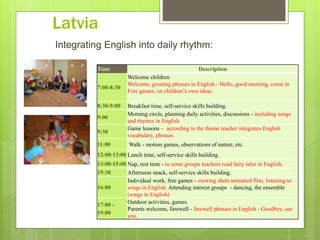
Integrating English into daily rhythm:
Time Description
7:00-8:30
Welcome children
Welcome, greeting phrases in English - Hello, good morning, come in
Free games, on children’s own ideas.
8:30-9:00 Breakfast time, self-service skills building.
9:00
Morning circle, planning daily activities, discussions - including songs
and rhymes in English.
9:30
Game lessons – according to the theme teacher integrates English
vocabulary, phrases.
11:00 Walk - motion games, observations of nature, etc.
12:00-13:00 Lunch time, self-service skills building.
13:00-15:00 Nap, rest time - in some groups teachers read fairy tales in English.
15:30 Afternoon snack, self-service skills building.
16:00
Individual work, free games - viewing short animated film, listening to
songs in English. Attending interest groups - dancing, the ensemble
(songs in English)
17:00 -
19:00
Outdoor activities, games.
Parents welcome, farewell - farewell phrases in English - Goodbye, see
you.
Methods and methodological
techniques
/ What contributes to implementation of the goal /
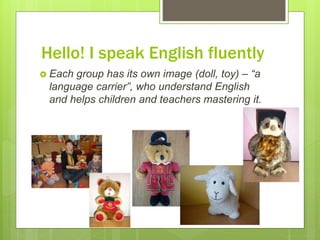
Hello! I speak English fluently
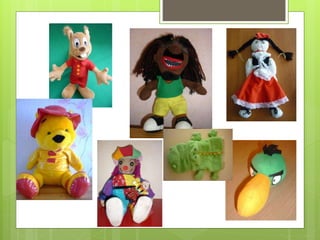
 Each group has its own image (doll, toy) – “a
language carrier”, who understand English
and helps children and teachers mastering it.
Songs and rhymes
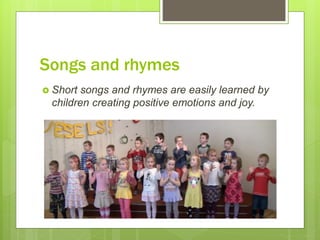
 Short songs and rhymes are easily learned by
children creating positive emotions and joy.
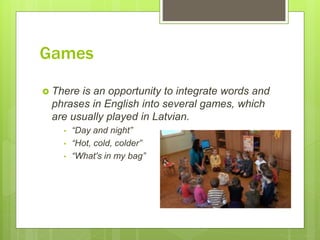
Games
 There is an opportunity to integrate words and
phrases in English into several games, which
are usually played in Latvian.
• “Day and night”
• “Hot, cold, colder”
• “What's in my bag”
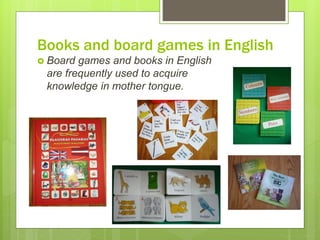
Books and board games in English
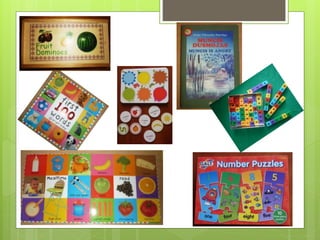
 Board games and books in English
are frequently used to acquire
knowledge in mother tongue.
Animation films and songs
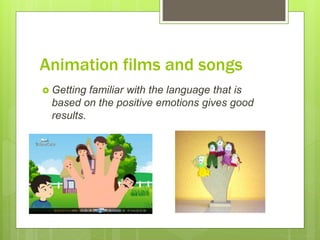
 Getting familiar with the language that is
based on the positive emotions gives good
results.
Cooperation
Acting together always gives better results!
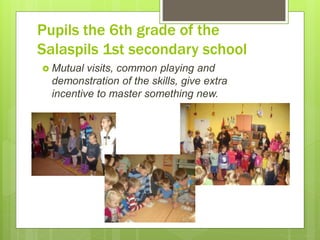
Pupils the 6th grade of the
Salaspils 1st secondary school
 Mutual visits, common playing and
demonstration of the skills, give extra
incentive to master something new.
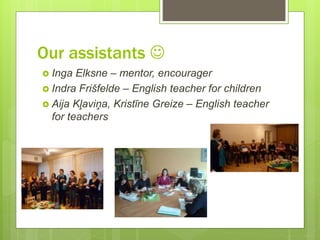
Our assistants 
 Inga Elksne – mentor, encourager
 Indra Frišfelde – English teacher for children
 Aija Kļaviņa, Kristīne Greize – English teacher
for teachers
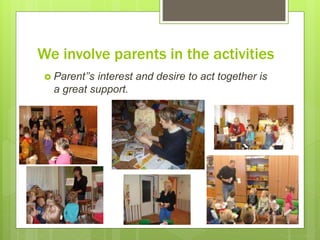
We involve parents in the activities
 Parent’’s interest and desire to act together is
a great support.
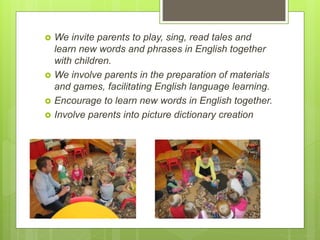
 We invite parents to play, sing, read tales and
learn new words and phrases in English together
with children.
 We involve parents in the preparation of materials
and games, facilitating English language learning.
 Encourage to learn new words in English together.
 Involve parents into picture dictionary creation
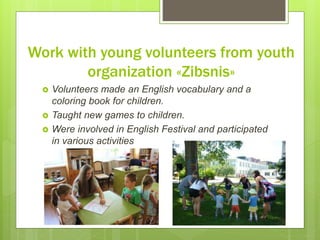
Work with young volunteers from youth
organization «Zibsnis»
 Volunteers made an English vocabulary and a
coloring book for children.
 Taught new games to children.
 Were involved in English Festival and participated
in various activities
Activities of the Comenius project
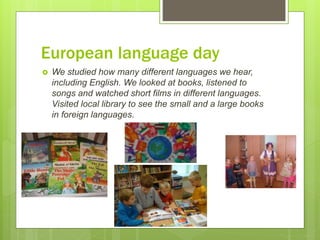
European language day
 We studied how many different languages we hear,
including English. We looked at books, listened to
songs and watched short films in different languages.
Visited local library to see the small and a large books
in foreign languages.
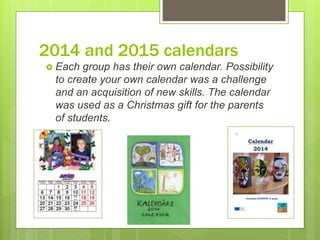
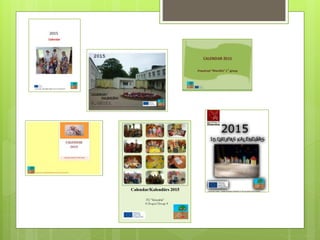
2014 and 2015 calendars
 Each group has their own calendar. Possibility
to create your own calendar was a challenge
and an acquisition of new skills. The calendar
was used as a Christmas gift for the parents
of students.
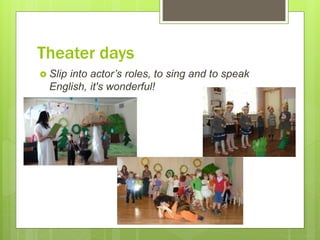
Theater days
 Slip into actor’s roles, to sing and to speak
English, it's wonderful!
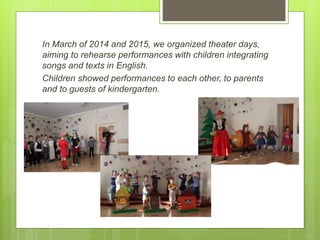
In March of 2014 and 2015, we organized theater days,
aiming to rehearse performances with children integrating
songs and texts in English.
Children showed performances to each other, to parents
and to guests of kindergarten.
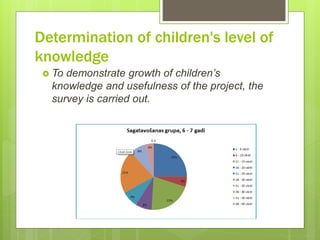
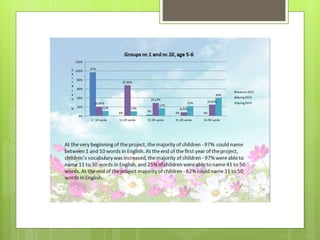
Determination of children's level of
knowledge
 To demonstrate growth of children’s
knowledge and usefulness of the project, the
survey is carried out.
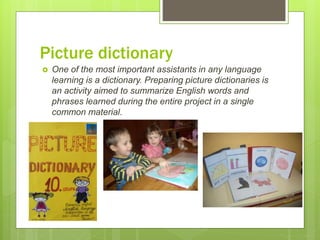
Picture dictionary
 One of the most important assistants in any language
learning is a dictionary. Preparing picture dictionaries is
an activity aimed to summarize English words and
phrases learned during the entire project in a single
common material.
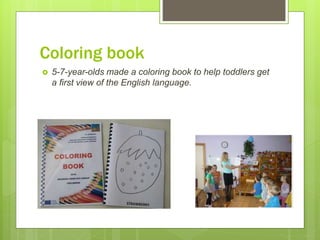
Coloring book
 5-7-year-olds made a coloring book to help toddlers get
a first view of the English language.
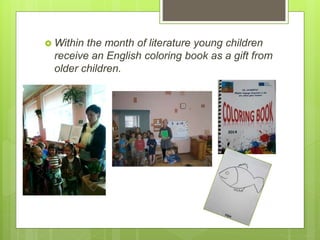
 Within the month of literature young children
receive an English coloring book as a gift from
older children.
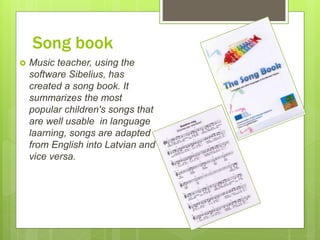
Song book
 Music teacher, using the
software Sibelius, has
created a song book. It
summarizes the most
popular children's songs that
are well usable in language
laarning, songs are adapted
from English into Latvian and
vice versa.
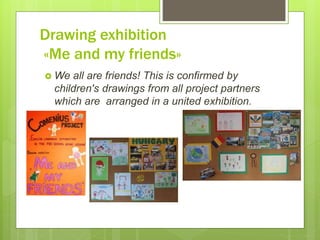
Drawing exhibition
«Me and my friends»
 We all are friends! This is confirmed by
children's drawings from all project partners
which are arranged in a united exhibition.
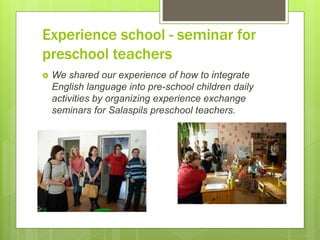
Experience school - seminar for
preschool teachers
 We shared our experience of how to integrate
English language into pre-school children daily
activities by organizing experience exchange
seminars for Salaspils preschool teachers.
Publicity
 To tell the general public about the project, we
published several informative articles in the
newspaper «Salaspils News» und on
Salaspils county website.
 You can find an insight into the activities held
during the project on our institution's website
and on the project blogspot:
http://www.ritenitis.lv/lat/projekta-apraksts/169-comenius-
projekts-2013-2015/
http://www.englishforplaytime.blogspot.com
Everyday moments
A slight insight into the daily activities
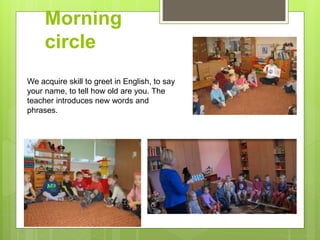
Morning
circle
We acquire skill to greet in English, to say
your name, to tell how old are you. The
teacher introduces new words and
phrases.
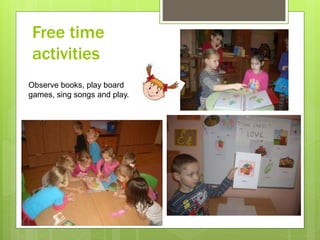
Free time
activities
Observe books, play board
games, sing songs and play.
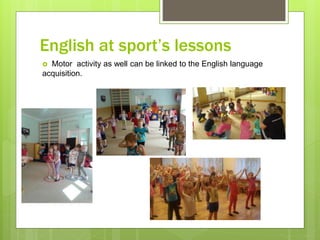
English at sport’s lessons
 Motor activity as well can be linked to the English language
acquisition.
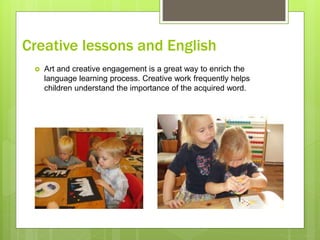
Creative lessons and English
 Art and creative engagement is a great way to enrich the
language learning process. Creative work frequently helps
children understand the importance of the acquired word.
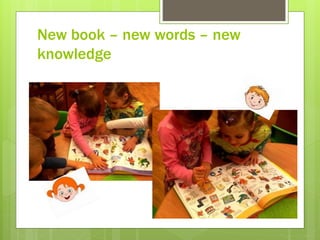
New book – new words – new
knowledge
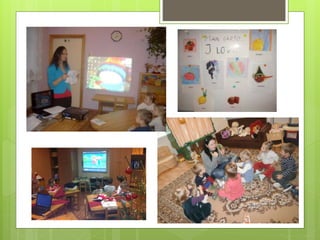
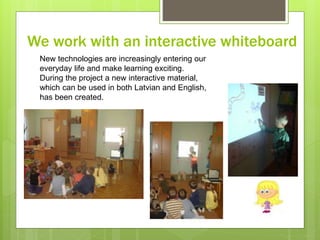
We work with an interactive whiteboard
New technologies are increasingly entering our
everyday life and make learning exciting.
During the project a new interactive material,
which can be used in both Latvian and English,
has been created.
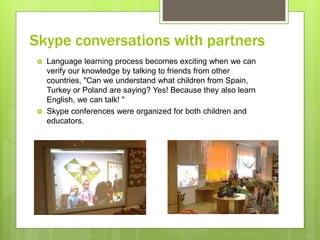
Skype conversations with partners
 Language learning process becomes exciting when we can
verify our knowledge by talking to friends from other
countries, "Can we understand what children from Spain,
Turkey or Poland are saying? Yes! Because they also learn
English, we can talk! "
 Skype conferences were organized for both children and
educators.
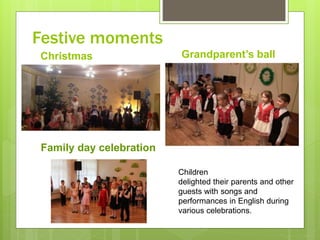
Festive moments
Christmas Grandparent’s ball
Family day celebration
Children
delighted their parents and other
guests with songs and
performances in English during
various celebrations.
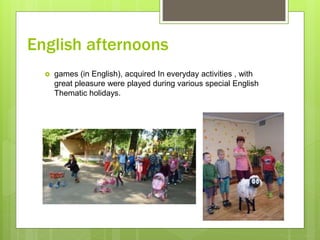
English afternoons
 games (in English), acquired In everyday activities , with
great pleasure were played during various special English
Thematic holidays.
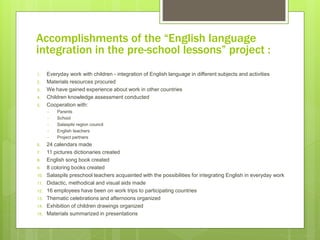
Accomplishments of the “English language
integration in the pre-school lessons” project :
1. Everyday work with children - integration of English language in different subjects and activities
2. Materials resources procured
3. We have gained experience about work in other countries
4. Children knowledge assessment conducted
5. Cooperation with:
• Parents
• School
• Salaspils region council
• English teachers
• Project partners
6. 24 calendars made
7. 11 pictures dictionaries created
8. English song book created
9. 8 coloring books created
10. Salaspils preschool teachers acquainted with the possibilities for integrating English in everyday work
11. Didactic, methodical and visual aids made
12. 16 employees have been on work trips to participating countries
13. Thematic celebrations and afternoons organized
14. Exhibition of children drawings organized
15. Materials summarized in presentations
Thank you!
“Let the world always have
something that you want to learn,
something what you want to do, a
place where you want to come, a
person whom you want to meet!”

English for preschool eng

  • 1.
    English for children ofearly age Salaspils municipality Preschool "Ritenitis"
  • 2.
  • 3.
    Goal: To motivate children tolearn English Through active working and gaining positive emotions
  • 4.
    The experience ofthe partners:  Poland  Turkey There are two teachers - an English teacher communicates only in English and a preschool teacher communicates with children in mother tongue  Hungary  Romania  Italy  Spain  Latvia Preschool teacher, who communicates with children in mother tongue, integrates English in everyday activities.
  • 5.
    Latvia Integrating English intodaily rhythm: Time Description 7:00-8:30 Welcome children Welcome, greeting phrases in English - Hello, good morning, come in Free games, on children’s own ideas. 8:30-9:00 Breakfast time, self-service skills building. 9:00 Morning circle, planning daily activities, discussions - including songs and rhymes in English. 9:30 Game lessons – according to the theme teacher integrates English vocabulary, phrases. 11:00 Walk - motion games, observations of nature, etc. 12:00-13:00 Lunch time, self-service skills building. 13:00-15:00 Nap, rest time - in some groups teachers read fairy tales in English. 15:30 Afternoon snack, self-service skills building. 16:00 Individual work, free games - viewing short animated film, listening to songs in English. Attending interest groups - dancing, the ensemble (songs in English) 17:00 - 19:00 Outdoor activities, games. Parents welcome, farewell - farewell phrases in English - Goodbye, see you.
  • 6.
    Methods and methodological techniques /What contributes to implementation of the goal /
  • 7.
    Hello! I speakEnglish fluently  Each group has its own image (doll, toy) – “a language carrier”, who understand English and helps children and teachers mastering it.
  • 9.
    Songs and rhymes Short songs and rhymes are easily learned by children creating positive emotions and joy.
  • 10.
    Games  There isan opportunity to integrate words and phrases in English into several games, which are usually played in Latvian. • “Day and night” • “Hot, cold, colder” • “What's in my bag”
  • 11.
    Books and boardgames in English  Board games and books in English are frequently used to acquire knowledge in mother tongue.
  • 13.
    Animation films andsongs  Getting familiar with the language that is based on the positive emotions gives good results.
  • 14.
  • 15.
    Pupils the 6thgrade of the Salaspils 1st secondary school  Mutual visits, common playing and demonstration of the skills, give extra incentive to master something new.
  • 16.
    Our assistants  Inga Elksne – mentor, encourager  Indra Frišfelde – English teacher for children  Aija Kļaviņa, Kristīne Greize – English teacher for teachers
  • 17.
    We involve parentsin the activities  Parent’’s interest and desire to act together is a great support.
  • 18.
     We inviteparents to play, sing, read tales and learn new words and phrases in English together with children.  We involve parents in the preparation of materials and games, facilitating English language learning.  Encourage to learn new words in English together.  Involve parents into picture dictionary creation
  • 19.
    Work with youngvolunteers from youth organization «Zibsnis»  Volunteers made an English vocabulary and a coloring book for children.  Taught new games to children.  Were involved in English Festival and participated in various activities
  • 20.
    Activities of theComenius project
  • 21.
    European language day We studied how many different languages we hear, including English. We looked at books, listened to songs and watched short films in different languages. Visited local library to see the small and a large books in foreign languages.
  • 22.
    2014 and 2015calendars  Each group has their own calendar. Possibility to create your own calendar was a challenge and an acquisition of new skills. The calendar was used as a Christmas gift for the parents of students.
  • 24.
    Theater days  Slipinto actor’s roles, to sing and to speak English, it's wonderful!
  • 25.
    In March of2014 and 2015, we organized theater days, aiming to rehearse performances with children integrating songs and texts in English. Children showed performances to each other, to parents and to guests of kindergarten.
  • 26.
    Determination of children'slevel of knowledge  To demonstrate growth of children’s knowledge and usefulness of the project, the survey is carried out.
  • 28.
    Picture dictionary  Oneof the most important assistants in any language learning is a dictionary. Preparing picture dictionaries is an activity aimed to summarize English words and phrases learned during the entire project in a single common material.
  • 29.
    Coloring book  5-7-year-oldsmade a coloring book to help toddlers get a first view of the English language.
  • 30.
     Within themonth of literature young children receive an English coloring book as a gift from older children.
  • 31.
    Song book  Musicteacher, using the software Sibelius, has created a song book. It summarizes the most popular children's songs that are well usable in language laarning, songs are adapted from English into Latvian and vice versa.
  • 32.
    Drawing exhibition «Me andmy friends»  We all are friends! This is confirmed by children's drawings from all project partners which are arranged in a united exhibition.
  • 33.
    Experience school -seminar for preschool teachers  We shared our experience of how to integrate English language into pre-school children daily activities by organizing experience exchange seminars for Salaspils preschool teachers.
  • 34.
    Publicity  To tellthe general public about the project, we published several informative articles in the newspaper «Salaspils News» und on Salaspils county website.  You can find an insight into the activities held during the project on our institution's website and on the project blogspot: http://www.ritenitis.lv/lat/projekta-apraksts/169-comenius- projekts-2013-2015/ http://www.englishforplaytime.blogspot.com
  • 35.
    Everyday moments A slightinsight into the daily activities
  • 36.
    Morning circle We acquire skillto greet in English, to say your name, to tell how old are you. The teacher introduces new words and phrases.
  • 37.
    Free time activities Observe books,play board games, sing songs and play.
  • 39.
    English at sport’slessons  Motor activity as well can be linked to the English language acquisition.
  • 40.
    Creative lessons andEnglish  Art and creative engagement is a great way to enrich the language learning process. Creative work frequently helps children understand the importance of the acquired word.
  • 41.
    New book –new words – new knowledge
  • 42.
    We work withan interactive whiteboard New technologies are increasingly entering our everyday life and make learning exciting. During the project a new interactive material, which can be used in both Latvian and English, has been created.
  • 43.
    Skype conversations withpartners  Language learning process becomes exciting when we can verify our knowledge by talking to friends from other countries, "Can we understand what children from Spain, Turkey or Poland are saying? Yes! Because they also learn English, we can talk! "  Skype conferences were organized for both children and educators.
  • 44.
    Festive moments Christmas Grandparent’sball Family day celebration Children delighted their parents and other guests with songs and performances in English during various celebrations.
  • 45.
    English afternoons  games(in English), acquired In everyday activities , with great pleasure were played during various special English Thematic holidays.
  • 46.
    Accomplishments of the“English language integration in the pre-school lessons” project : 1. Everyday work with children - integration of English language in different subjects and activities 2. Materials resources procured 3. We have gained experience about work in other countries 4. Children knowledge assessment conducted 5. Cooperation with: • Parents • School • Salaspils region council • English teachers • Project partners 6. 24 calendars made 7. 11 pictures dictionaries created 8. English song book created 9. 8 coloring books created 10. Salaspils preschool teachers acquainted with the possibilities for integrating English in everyday work 11. Didactic, methodical and visual aids made 12. 16 employees have been on work trips to participating countries 13. Thematic celebrations and afternoons organized 14. Exhibition of children drawings organized 15. Materials summarized in presentations
  • 47.
    Thank you! “Let theworld always have something that you want to learn, something what you want to do, a place where you want to come, a person whom you want to meet!”