The Power of Reading
Stopping Points
• During my presentation, I will come to
“stopping points” where I will ask to
answer some questions. In order to
answer the questions, you will need to
take notes as I speak. Now, please get out
a pen or pencil, and then we’ll begin.
High School English Education
• A.
• Did you enjoy your high school English
class?
• Did you learn how to speak English in your
class?
• Did you communicate in English?
• Did your teacher communicate to you in
English?
Characteristics of
Entrance Exam Preparation
• The purpose of education is to prepare for
an exam
• The purpose of the exam is to divide
students into winners and losers
• Students’ interests and individuality are
ignored
• Students memorize information
Indirect Results of
Entrance-Exam Education
• Many students hate school
• Many students hate learning
• Many students find classes boring
• Many students lose confidence in
themselves, especially in their academic
ability
• Many teachers try to control students
Student Strategies for Resisting
Entrance-Exam Education
• Students become extremely passive,
sleeping in classes
• Students become silent, never asking
questions or showing interest
• Students completely separate their
personal, meaningful lives from the
classroom, which has no meaning for
them
Student Strategies II
• Students never do more than what is
required by the teacher (homework)
• Students do not think about the content of
their education
• Students in the classroom wait for class to
end so they can be free of school
• Students have no personal learning goals
Consequences of
Entrance-Exam Education
• Students do not know how to learn for purposes
of personal growth
• Students never act independently
• Students have little experience learning outside
of class
• Students do not see learning as something that
gives them power
• Students do not know how to study for purposes
other than a test
B.
What is the connection between
Entrance Examinations and the fact
that many students do not learn to
speak English in high school?
Please write down your idea in
English or Japanese.
This is Keiko. She has a problem
Keiko wants to improve her English
• She studied English for six years in Jr.
High and in High School.
• She bought several books on English
Grammar.
• She studied vocabulary on the train
• She bought an electronic dictionary
• She even went to an English Conversation
School.
Still, she still has trouble
listening, understanding,
reading and writing.
What should she do?
The Best Way for Keiko to
improve her English is to learn
how to read English for fun!
Let me explain.
Free Voluntary Reading (FVR)
• Reading because you want to read
• Reading what YOU want to read
• No Book Reports
• You can read magazines, comic books,
children’s books, anything you want.
Reading English
without a Dictionary
• Did you learn to read Japanese with a
dictionary?
• How did you understand new words?
• What kinds of books did you read when
you started reading Japanese?
• Have you ever read a book in English
(with no Japanese words)?
Why should you not
use a dictionary?
• Your reading will be too slow
• Guessing the meaning of words is a very
important part of becoming a good reader
• Using a dictionary to look up every word is
boring
• You can circle words and look them up
later to check their meanings
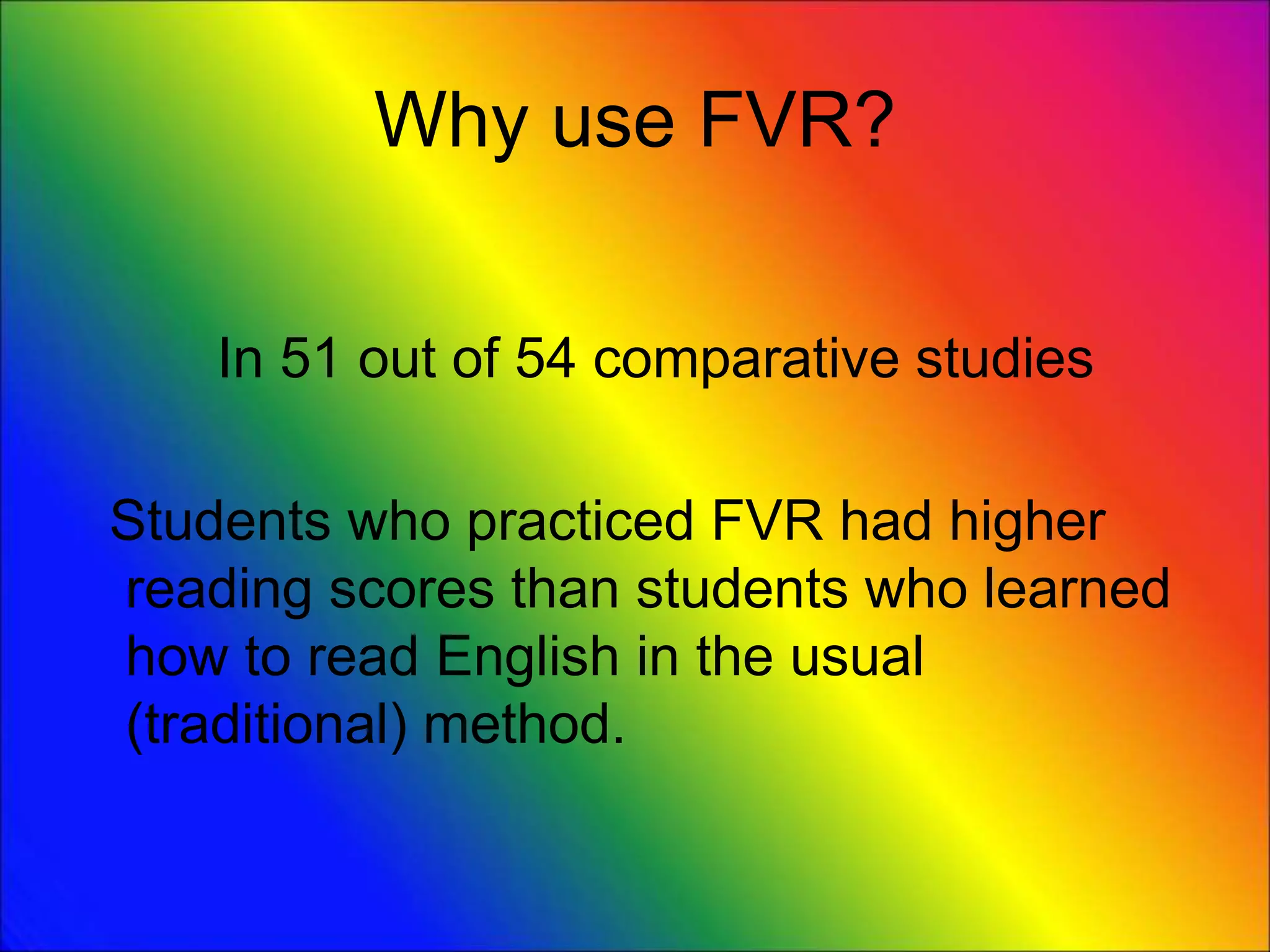
Why use FVR?
In 51 out of 54 comparative studies
Students who practiced FVR had higher
reading scores than students who learned
how to read English in the usual
(traditional) method.
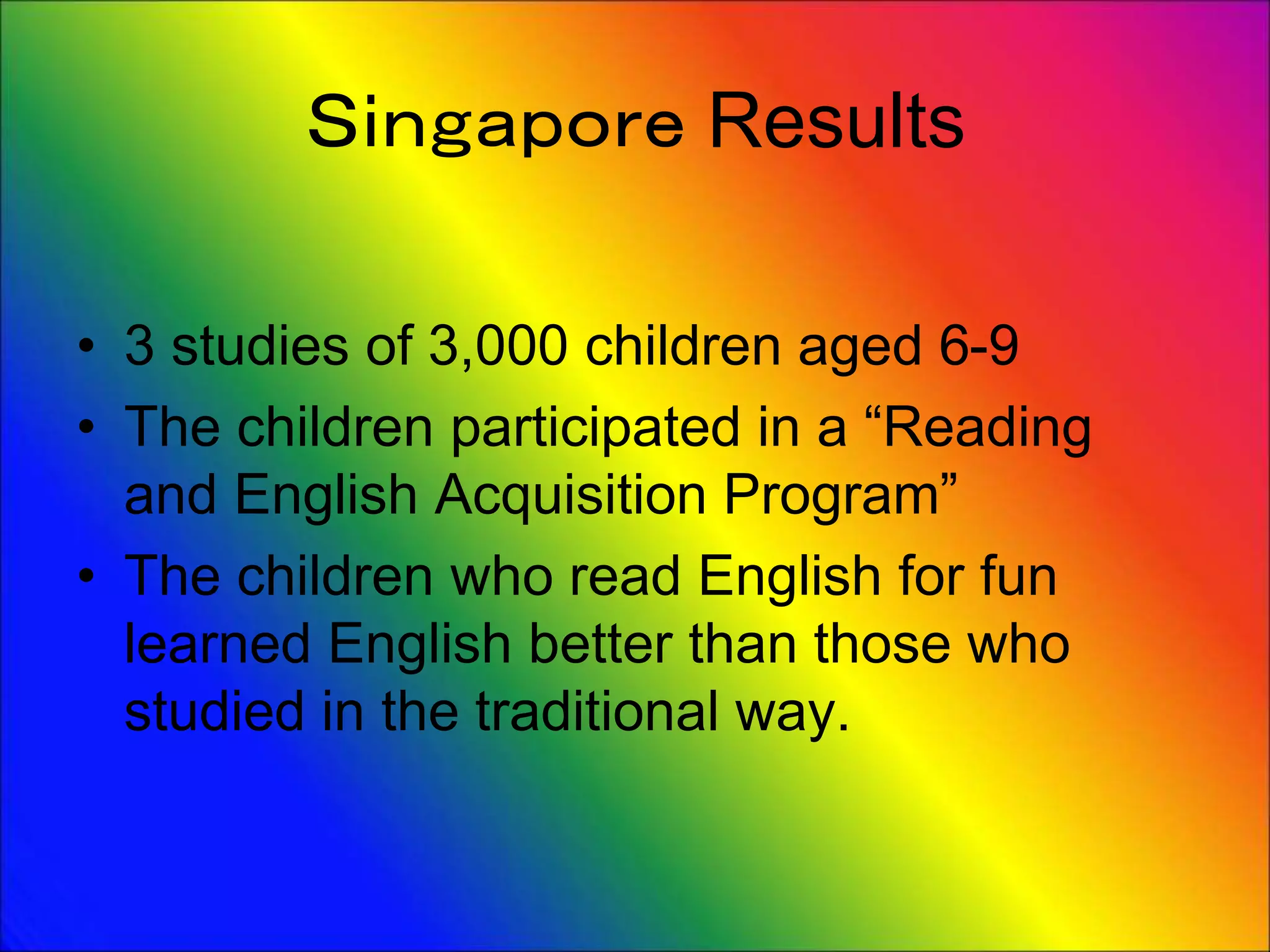
Singapore Results
• 3 studies of 3,000 children aged 6-9
• The children participated in a “Reading
and English Acquisition Program”
• The children who read English for fun
learned English better than those who
studied in the traditional way.
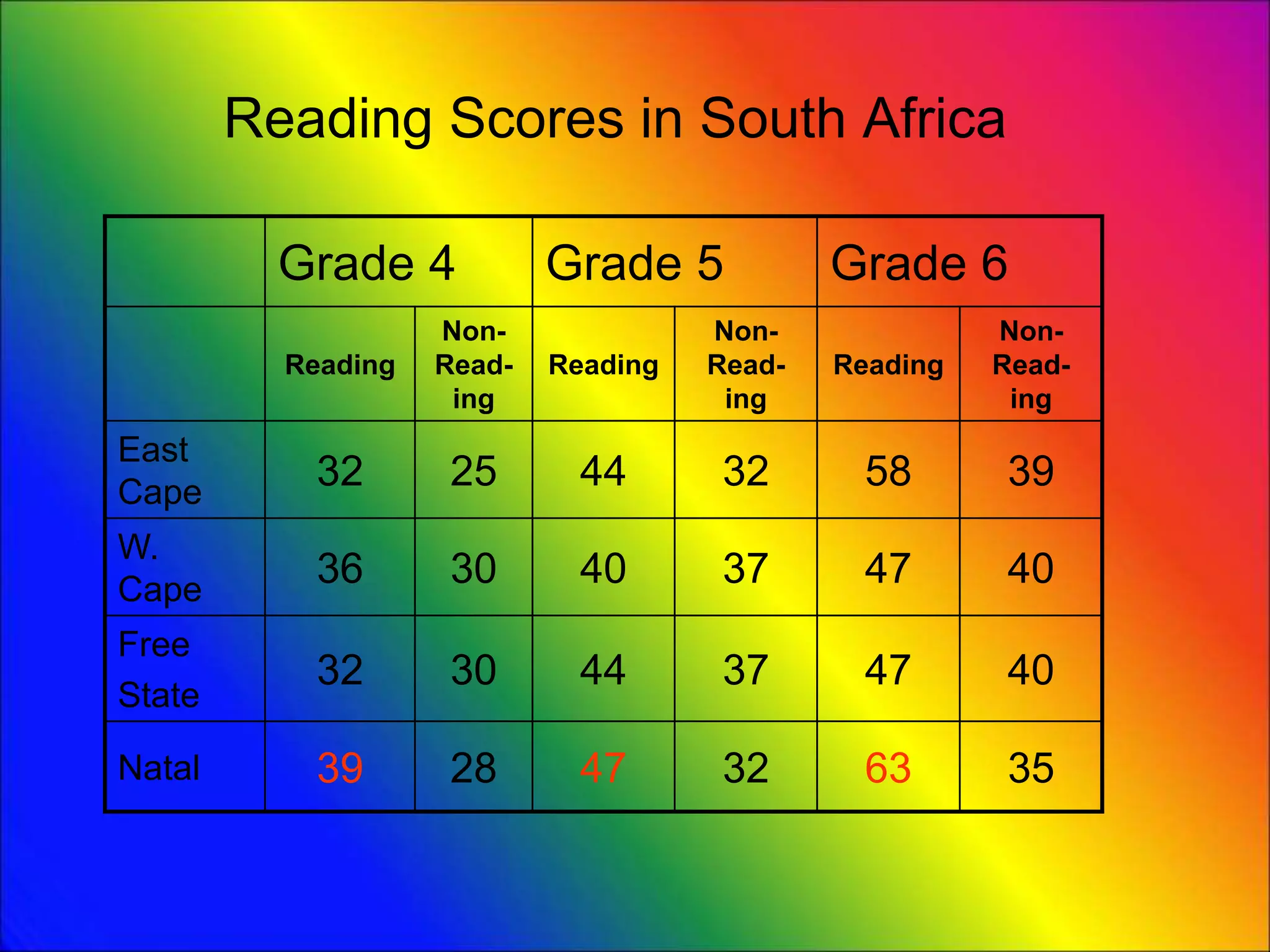
Reading Scores in South Africa
Grade 4 Grade 5 Grade 6
Reading
Non-
Read-
ing
Reading
Non-
Read-
ing
Reading
Non-
Read-
ing
East
Cape
32 25 44 32 58 39
W.
Cape
36 30 40 37 47 40
Free
State
32 30 44 37 47 40
Natal 39 28 47 32 63 35
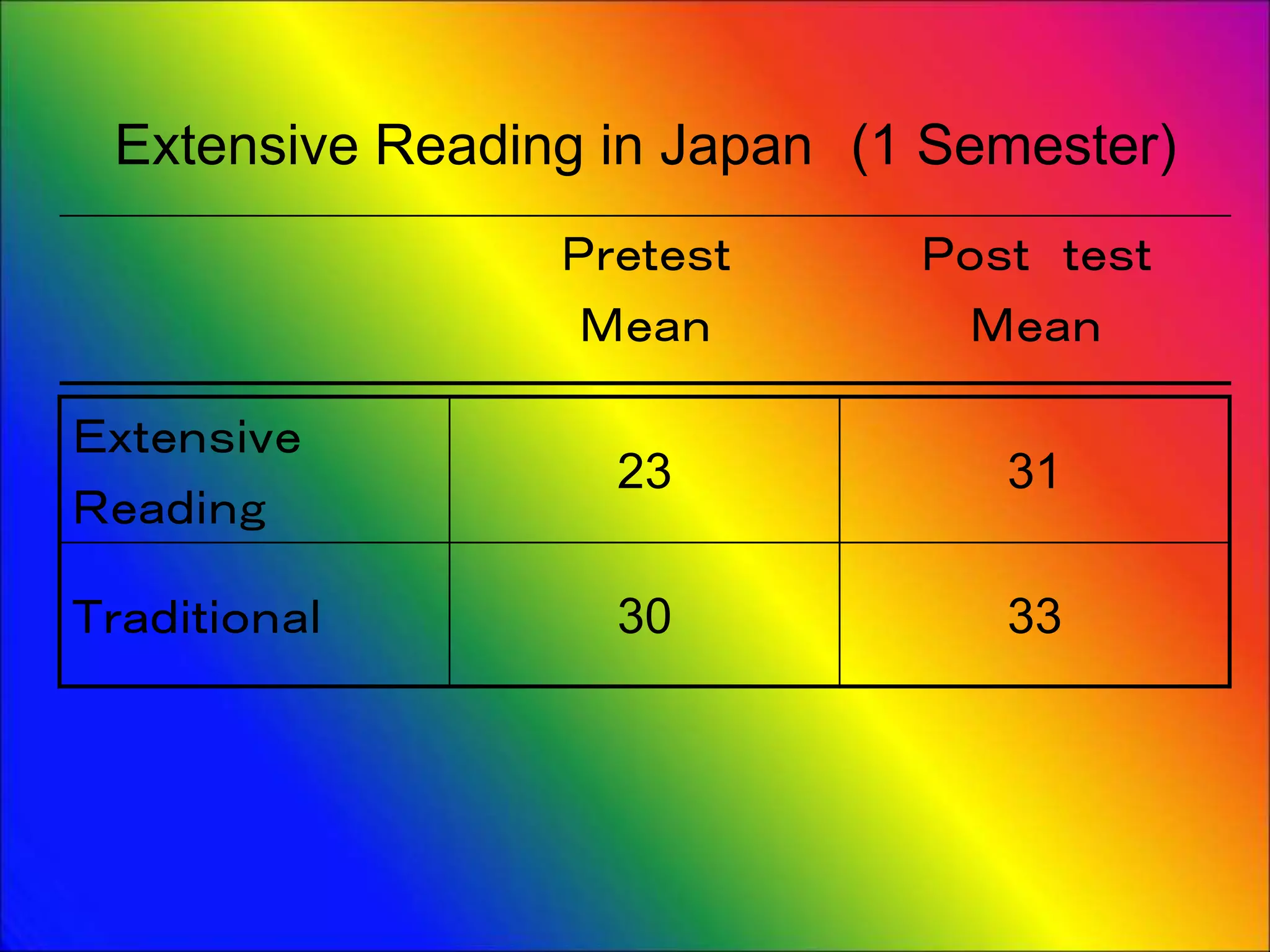
Extensive Reading in Japan (1 Semester)
Pretest
Mean
Post test
Mean
Extensive
Reading
23 31
Traditional 30 33
D. Please summarize with your
friends what I have said up to this
point.
1. What information have you learned?
2. What has been the main point?
3. What do you think? What is your idea?
Do you have any questions?
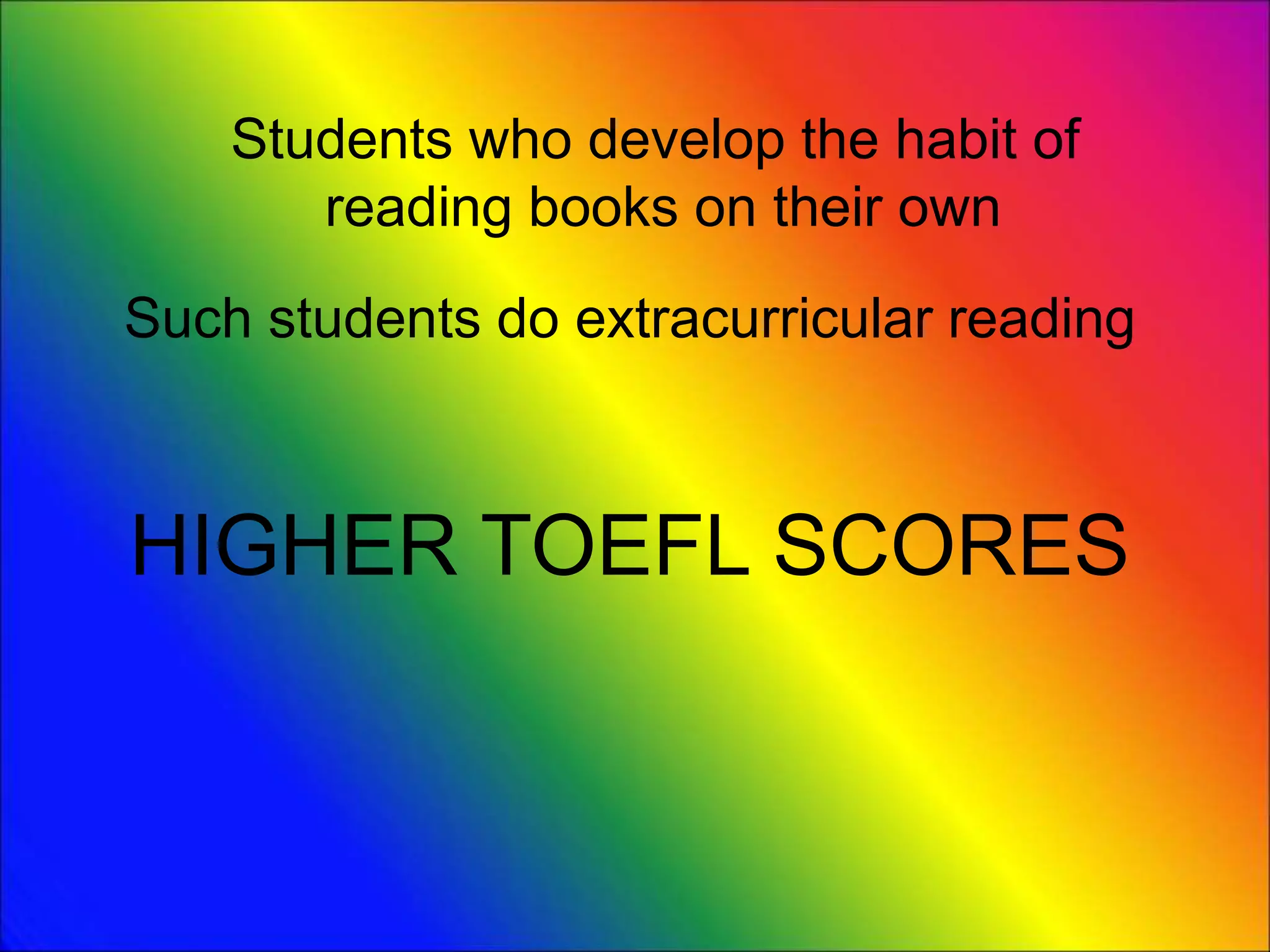
Students who develop the habit of
reading books on their own
Such students do extracurricular reading
HIGHER TOEFL SCORES
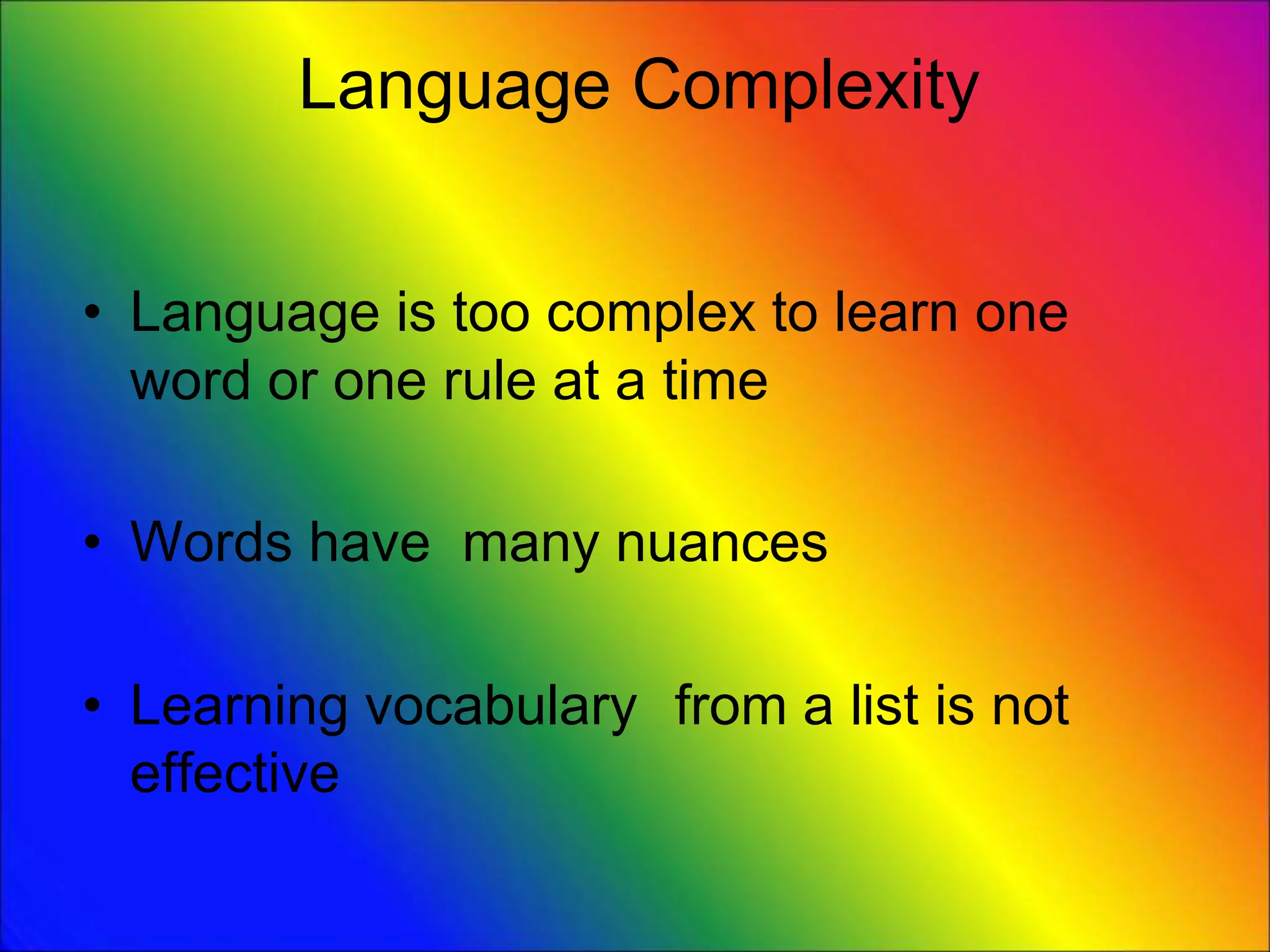
Language Complexity
• Language is too complex to learn one
word or one rule at a time
• Words have many nuances
• Learning vocabulary from a list is not
effective
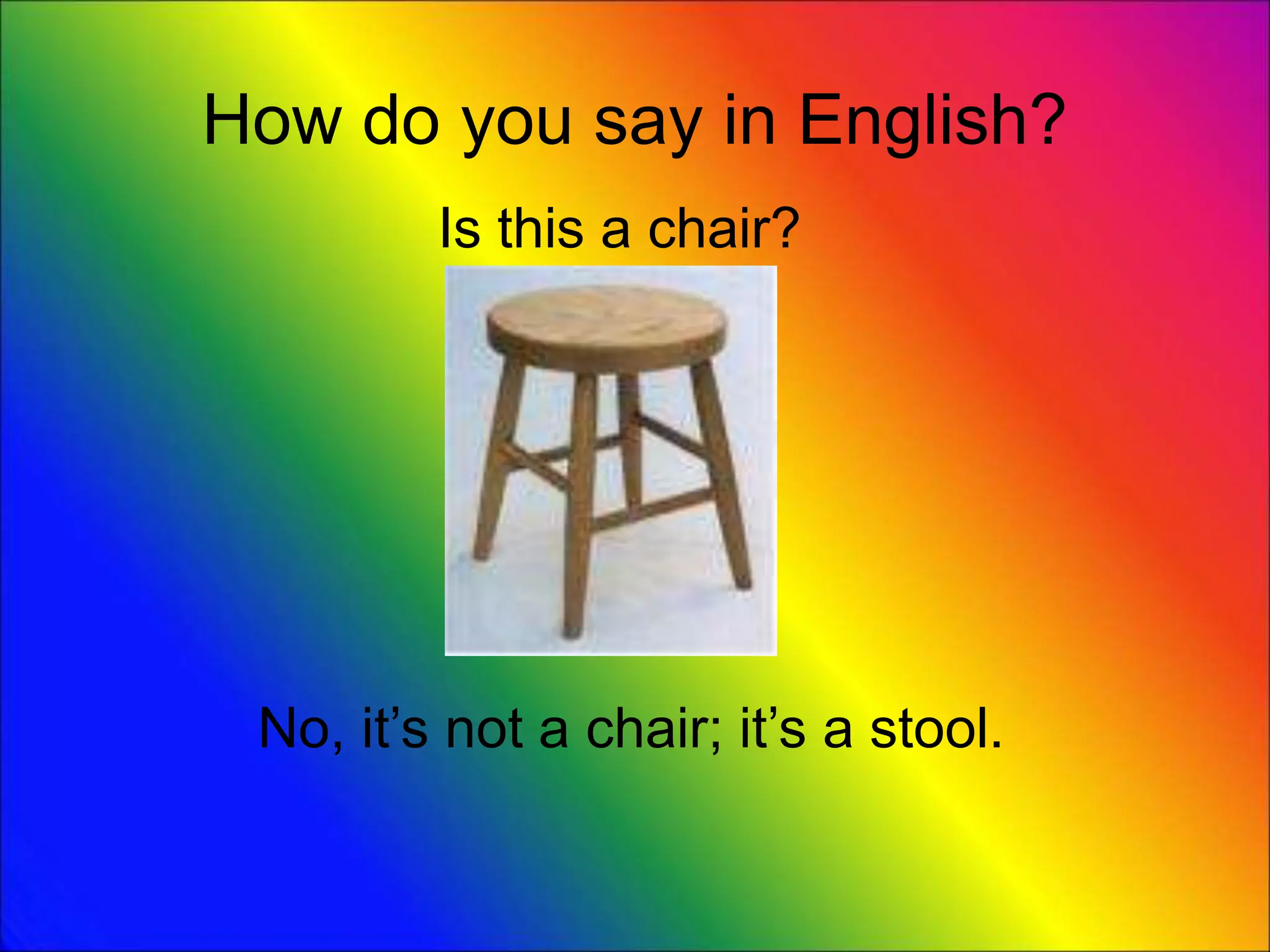
How do you say in English?
Is this a chair?
No, it’s not a chair; it’s a stool.
going to do
• I’m going to visit my niece.
• When he finds out, he’s going to be angry.
• Tomorrow, it’s going to rain.
• When is the train going to come?
These are some other words that
have different nuances in Japanese
and in English
• woman
• lie
• fat
• home (not house)
E.
What words or grammar can you think of
that is different in English and Japanese?
Who are these two people?
The Story of Malcolm X
• Only went to school to the 8th Grade (the
2nd year of Middle School)
• Began to read while he was in prison
• Became a very eloquent speaker
• Wrote a famous autobiography
• Became a powerful African-American
Leader
Students who Practice FVR
Receive Higher Scores in:
• Reading
• Vocabulary
• Writing
• grammar
Spelling and Grammar
• Spelling Instruction is almost never
effective
• Grammar Instruction does not help
students read and write better
• What is the connection between students who
read for pleasure and TOEFL scores?
• Why is studying grammar and vocabulary lists
not an effective way of learning English?
• Who was Malcom X? What is the connection
between him and this presentation?
• If you want to improve your English, what should
you do after this class?
F.
Conclusion
• Light reading for fun is very important!!
• Reading comic books, magazines and
fictional stories is the best way to learn
English

Power of reading

  • 1.
    The Power ofReading
  • 2.
    Stopping Points • Duringmy presentation, I will come to “stopping points” where I will ask to answer some questions. In order to answer the questions, you will need to take notes as I speak. Now, please get out a pen or pencil, and then we’ll begin.
  • 3.
    High School EnglishEducation • A. • Did you enjoy your high school English class? • Did you learn how to speak English in your class? • Did you communicate in English? • Did your teacher communicate to you in English?
  • 4.
    Characteristics of Entrance ExamPreparation • The purpose of education is to prepare for an exam • The purpose of the exam is to divide students into winners and losers • Students’ interests and individuality are ignored • Students memorize information
  • 5.
    Indirect Results of Entrance-ExamEducation • Many students hate school • Many students hate learning • Many students find classes boring • Many students lose confidence in themselves, especially in their academic ability • Many teachers try to control students
  • 6.
    Student Strategies forResisting Entrance-Exam Education • Students become extremely passive, sleeping in classes • Students become silent, never asking questions or showing interest • Students completely separate their personal, meaningful lives from the classroom, which has no meaning for them
  • 7.
    Student Strategies II •Students never do more than what is required by the teacher (homework) • Students do not think about the content of their education • Students in the classroom wait for class to end so they can be free of school • Students have no personal learning goals
  • 8.
    Consequences of Entrance-Exam Education •Students do not know how to learn for purposes of personal growth • Students never act independently • Students have little experience learning outside of class • Students do not see learning as something that gives them power • Students do not know how to study for purposes other than a test
  • 9.
    B. What is theconnection between Entrance Examinations and the fact that many students do not learn to speak English in high school? Please write down your idea in English or Japanese.
  • 10.
    This is Keiko.She has a problem
  • 11.
    Keiko wants toimprove her English • She studied English for six years in Jr. High and in High School. • She bought several books on English Grammar. • She studied vocabulary on the train • She bought an electronic dictionary • She even went to an English Conversation School.
  • 12.
    Still, she stillhas trouble listening, understanding, reading and writing. What should she do?
  • 13.
    The Best Wayfor Keiko to improve her English is to learn how to read English for fun! Let me explain.
  • 14.
    Free Voluntary Reading(FVR) • Reading because you want to read • Reading what YOU want to read • No Book Reports • You can read magazines, comic books, children’s books, anything you want.
  • 15.
    Reading English without aDictionary • Did you learn to read Japanese with a dictionary? • How did you understand new words? • What kinds of books did you read when you started reading Japanese? • Have you ever read a book in English (with no Japanese words)?
  • 16.
    Why should younot use a dictionary? • Your reading will be too slow • Guessing the meaning of words is a very important part of becoming a good reader • Using a dictionary to look up every word is boring • You can circle words and look them up later to check their meanings
  • 17.
    Why use FVR? In51 out of 54 comparative studies Students who practiced FVR had higher reading scores than students who learned how to read English in the usual (traditional) method.
  • 18.
    Singapore Results • 3studies of 3,000 children aged 6-9 • The children participated in a “Reading and English Acquisition Program” • The children who read English for fun learned English better than those who studied in the traditional way.
  • 19.
    Reading Scores inSouth Africa Grade 4 Grade 5 Grade 6 Reading Non- Read- ing Reading Non- Read- ing Reading Non- Read- ing East Cape 32 25 44 32 58 39 W. Cape 36 30 40 37 47 40 Free State 32 30 44 37 47 40 Natal 39 28 47 32 63 35
  • 20.
    Extensive Reading inJapan (1 Semester) Pretest Mean Post test Mean Extensive Reading 23 31 Traditional 30 33
  • 21.
    D. Please summarizewith your friends what I have said up to this point. 1. What information have you learned? 2. What has been the main point? 3. What do you think? What is your idea? Do you have any questions?
  • 22.
    Students who developthe habit of reading books on their own Such students do extracurricular reading HIGHER TOEFL SCORES
  • 23.
    Language Complexity • Languageis too complex to learn one word or one rule at a time • Words have many nuances • Learning vocabulary from a list is not effective
  • 24.
    How do yousay in English? Is this a chair? No, it’s not a chair; it’s a stool.
  • 25.
    going to do •I’m going to visit my niece. • When he finds out, he’s going to be angry. • Tomorrow, it’s going to rain. • When is the train going to come?
  • 26.
    These are someother words that have different nuances in Japanese and in English • woman • lie • fat • home (not house) E. What words or grammar can you think of that is different in English and Japanese?
  • 27.
    Who are thesetwo people?
  • 28.
    The Story ofMalcolm X • Only went to school to the 8th Grade (the 2nd year of Middle School) • Began to read while he was in prison • Became a very eloquent speaker • Wrote a famous autobiography • Became a powerful African-American Leader
  • 29.
    Students who PracticeFVR Receive Higher Scores in: • Reading • Vocabulary • Writing • grammar
  • 30.
    Spelling and Grammar •Spelling Instruction is almost never effective • Grammar Instruction does not help students read and write better
  • 31.
    • What isthe connection between students who read for pleasure and TOEFL scores? • Why is studying grammar and vocabulary lists not an effective way of learning English? • Who was Malcom X? What is the connection between him and this presentation? • If you want to improve your English, what should you do after this class? F.
  • 32.
    Conclusion • Light readingfor fun is very important!! • Reading comic books, magazines and fictional stories is the best way to learn English