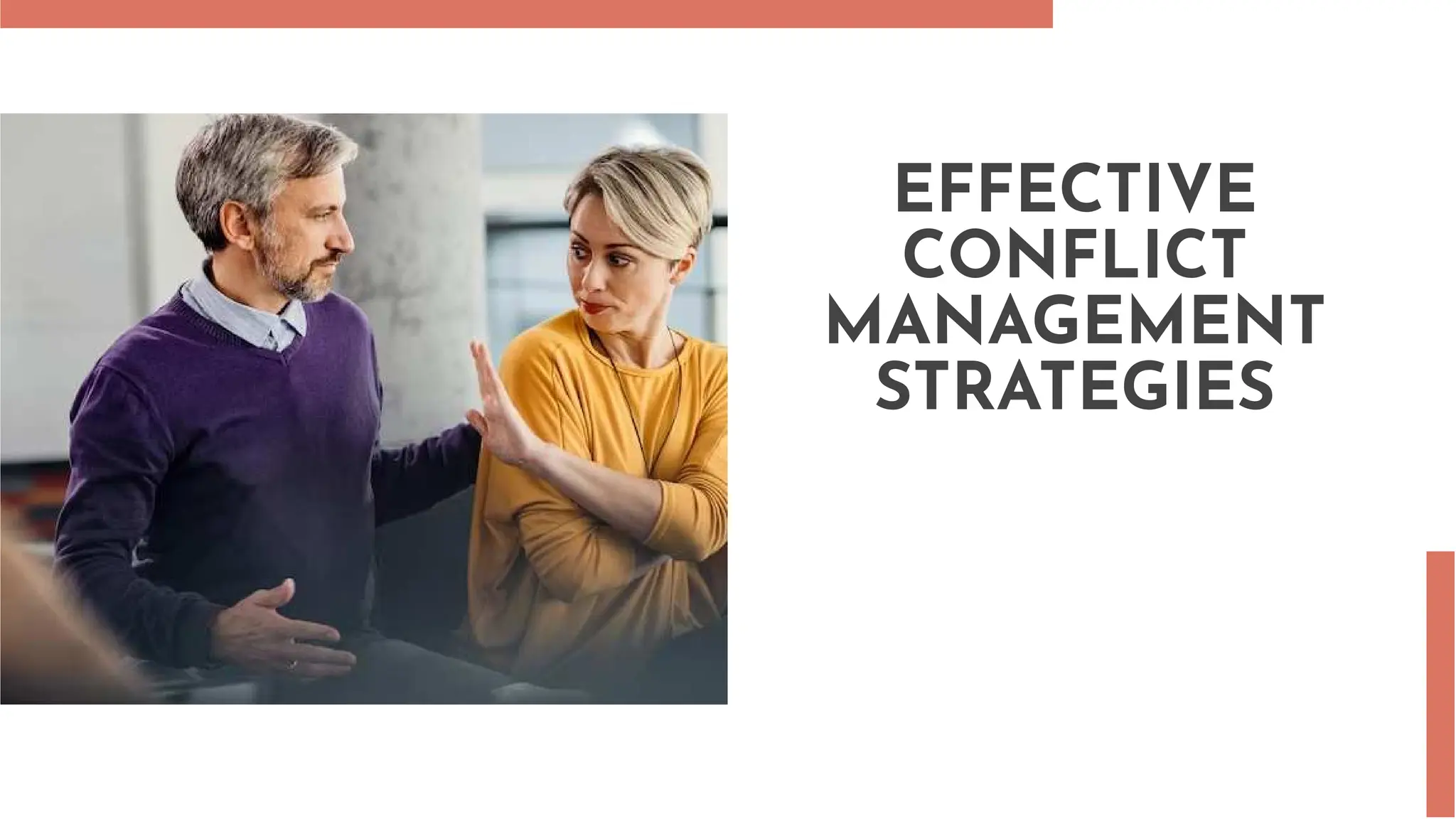
EFFECTIVE
CONFLICT
MANAGEMENT
STRATEGIES
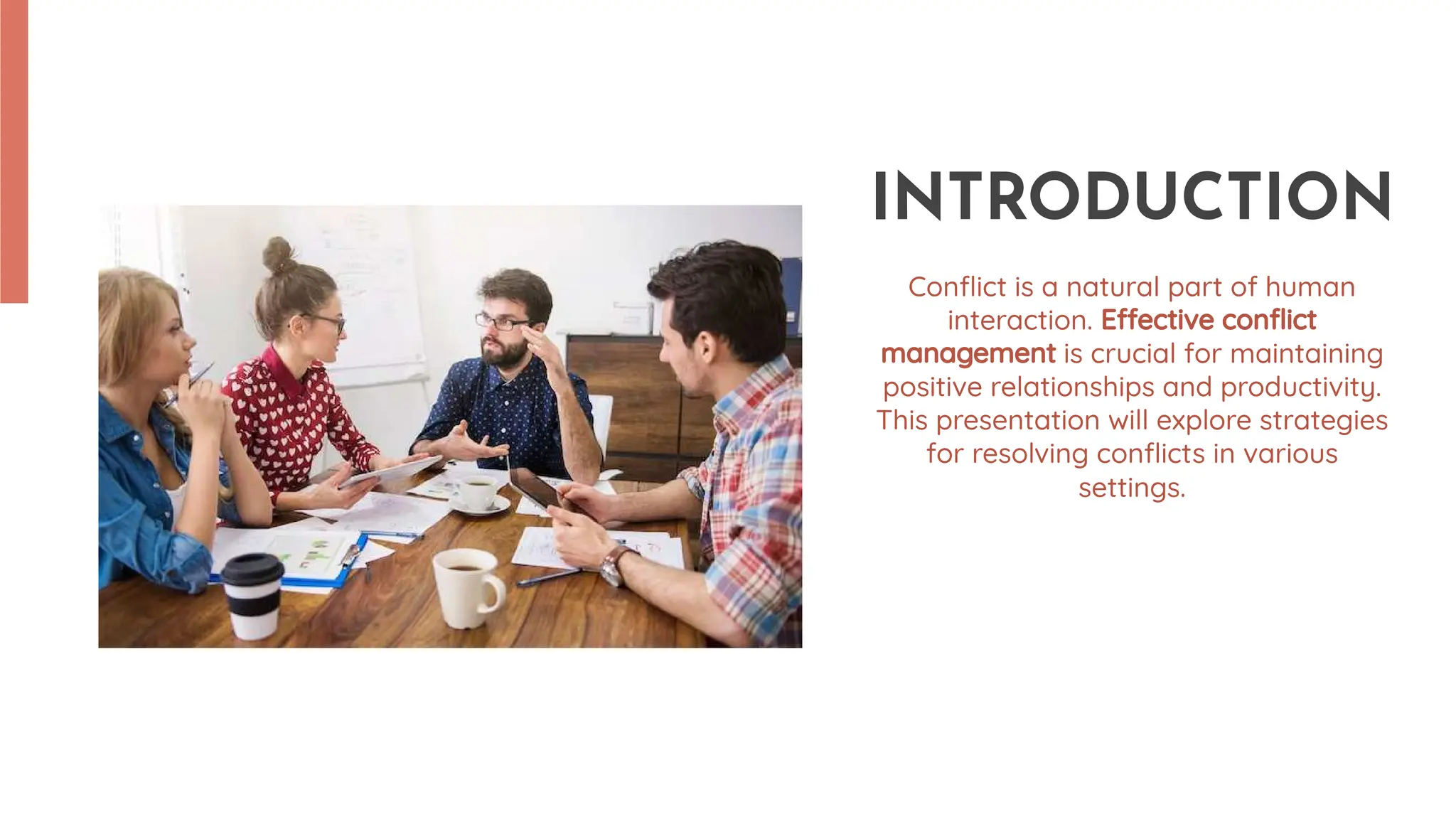
Conflict is a natural part of human
interaction. E ective conflict
management is crucial for maintaining
positive relationships and productivity.
This presentation will explore strategies
for resolving conflicts in various
settings.
INTRODUCTION
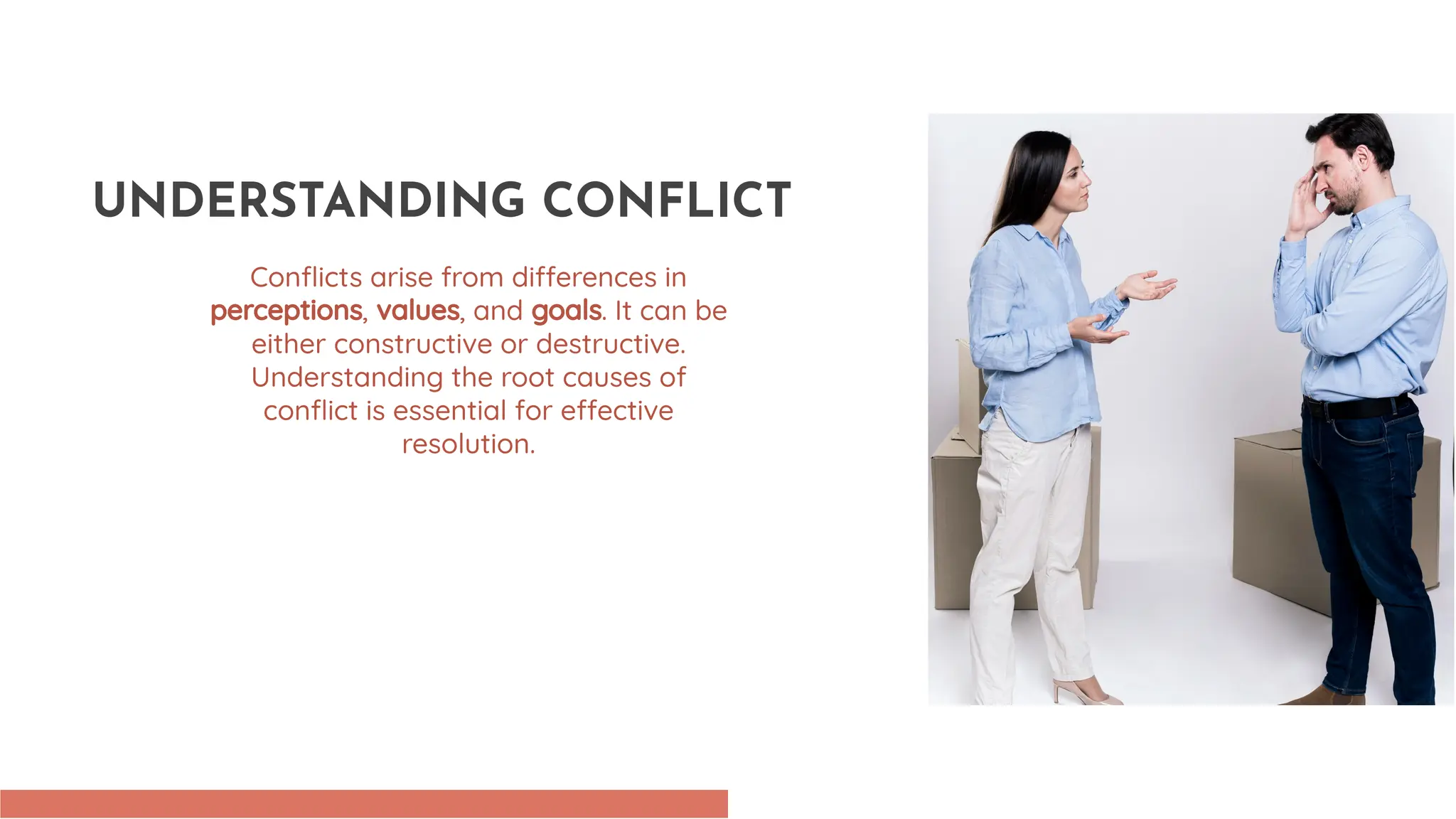
Conflicts arise from di erences in
perceptions, values, and goals. It can be
either constructive or destructive.
Understanding the root causes of
conflict is essential for e ective
resolution.
UNDERSTANDING CONFLICT
COMMUNICATION STRATEGIES
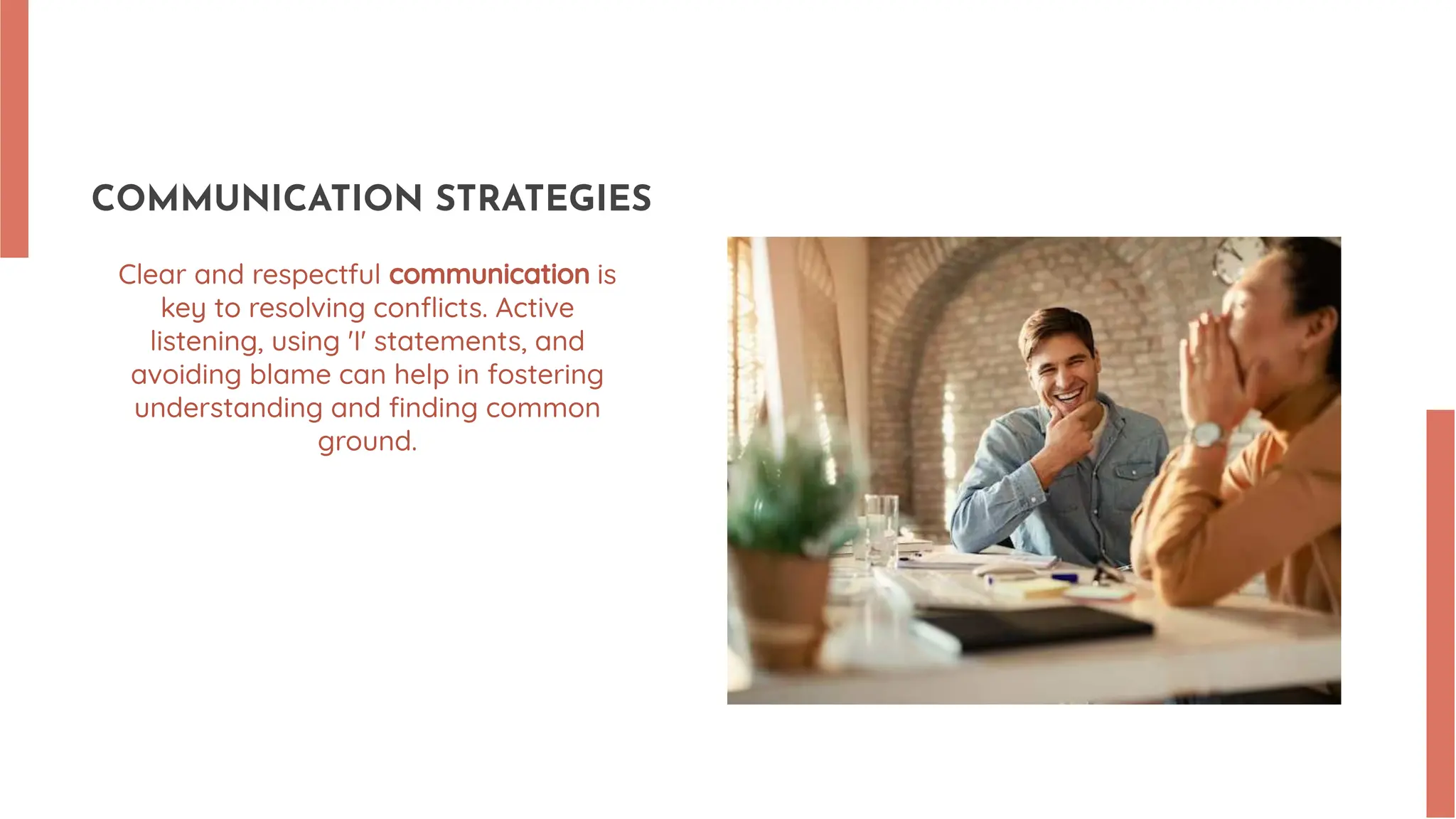
Clear and respectful communication is
key to resolving conflicts. Active
listening, using 'I' statements, and
avoiding blame can help in fostering
understanding and finding common
ground.
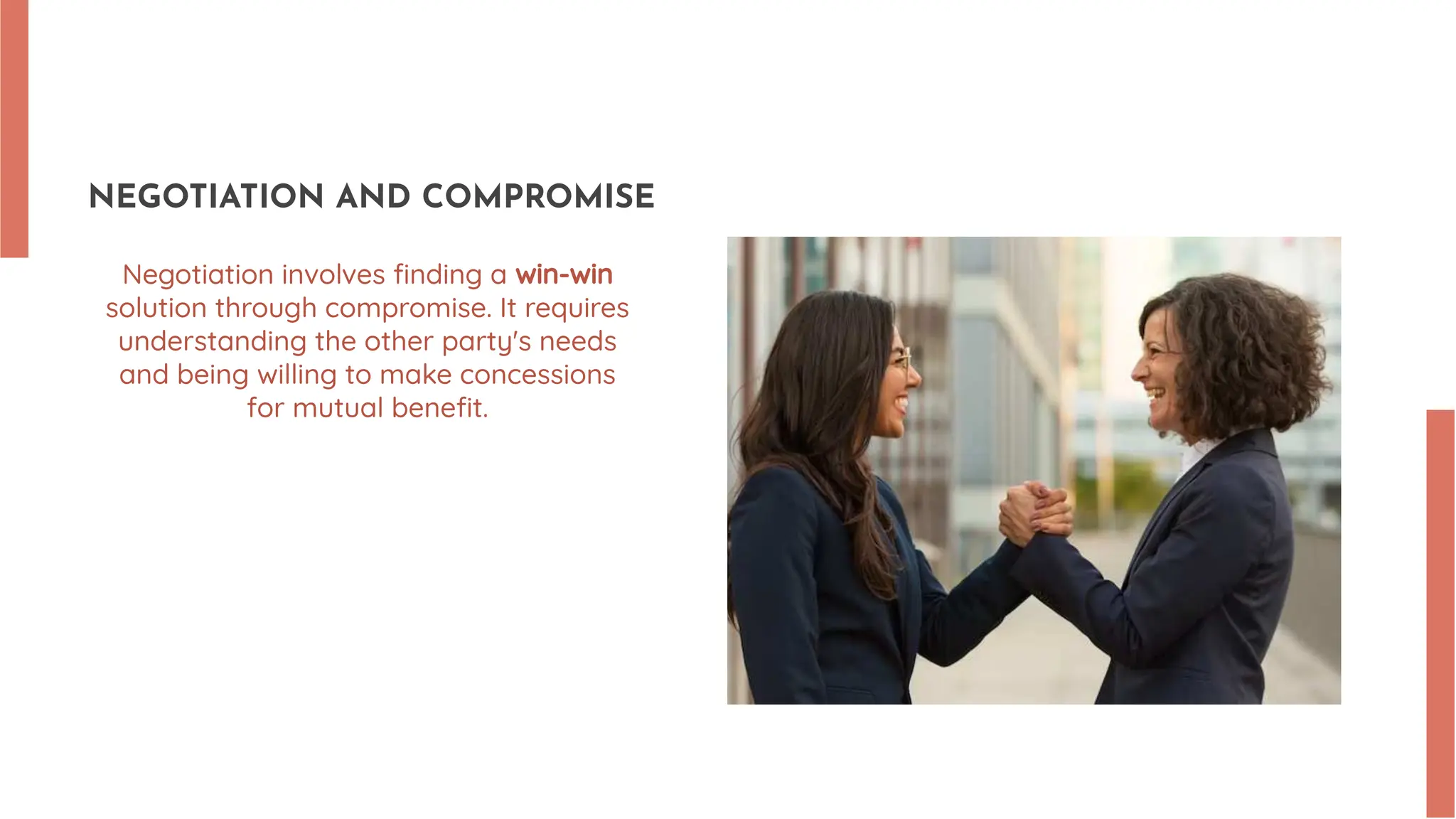
NEGOTIATION AND COMPROMISE
Negotiation involves finding a win-win
solution through compromise. It requires
understanding the other party's needs
and being willing to make concessions
for mutual benefit.
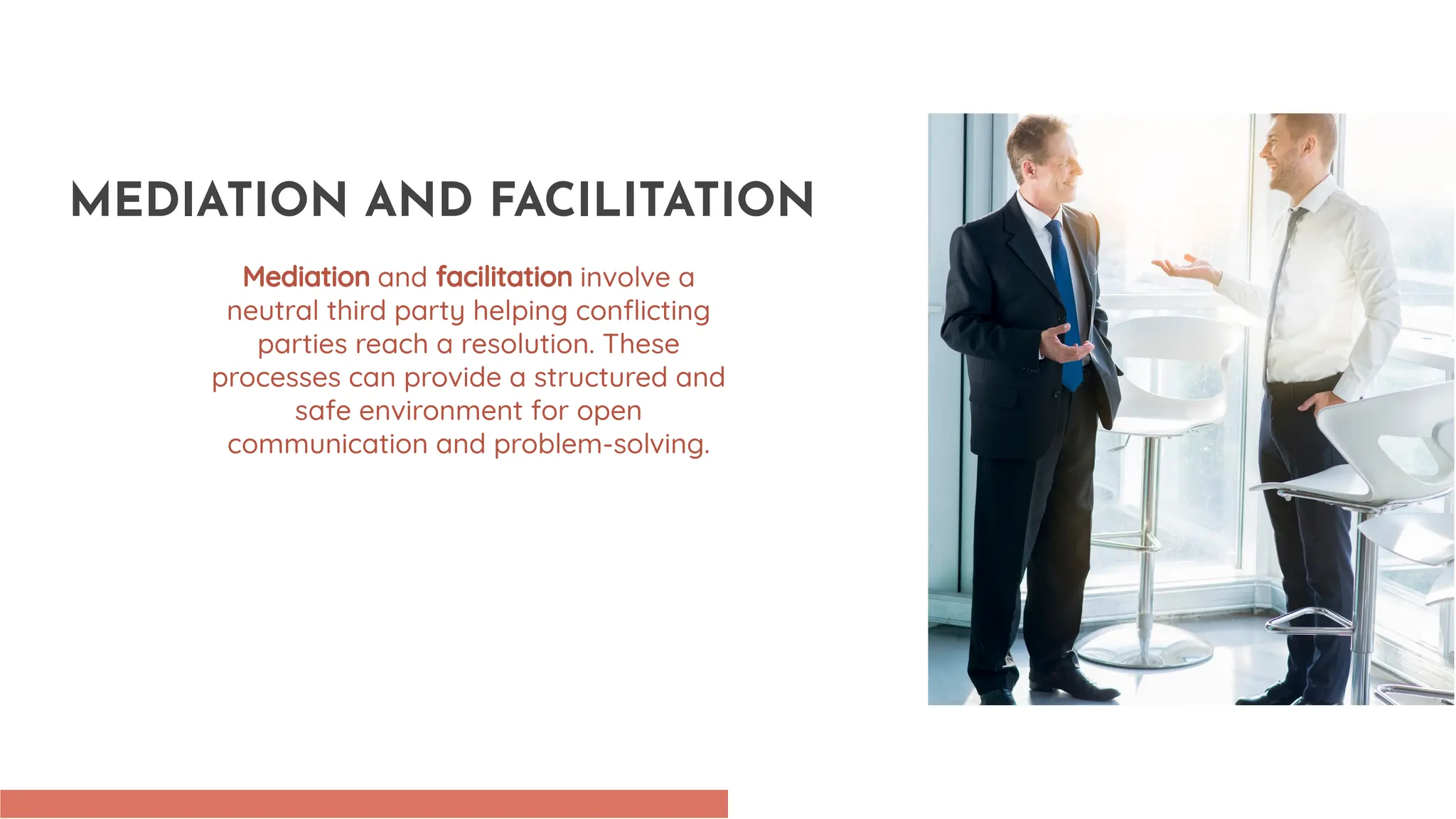
Mediation and facilitation involve a
neutral third party helping conflicting
parties reach a resolution. These
processes can provide a structured and
safe environment for open
communication and problem-solving.
MEDIATION AND FACILITATION
CONCLUSION
E ective conflict management is essential for maintaining healthy
relationships and a productive environment. By understanding the
root causes of conflict and implementing communication and
resolution strategies, conflicts can be resolved constructively.
Thanks!
Do you have any questions?
sasiaviation@yahoo.in
+91 8270460419
www.itzmemsd.com
@itzmemsd

Conflict Management Strategies

  • 1.
  • 2.
    Conflict is anatural part of human interaction. E ective conflict management is crucial for maintaining positive relationships and productivity. This presentation will explore strategies for resolving conflicts in various settings. INTRODUCTION
  • 3.
    Conflicts arise fromdi erences in perceptions, values, and goals. It can be either constructive or destructive. Understanding the root causes of conflict is essential for e ective resolution. UNDERSTANDING CONFLICT
  • 4.
    COMMUNICATION STRATEGIES Clear andrespectful communication is key to resolving conflicts. Active listening, using 'I' statements, and avoiding blame can help in fostering understanding and finding common ground.
  • 5.
    NEGOTIATION AND COMPROMISE Negotiationinvolves finding a win-win solution through compromise. It requires understanding the other party's needs and being willing to make concessions for mutual benefit.
  • 6.
    Mediation and facilitationinvolve a neutral third party helping conflicting parties reach a resolution. These processes can provide a structured and safe environment for open communication and problem-solving. MEDIATION AND FACILITATION
  • 7.
    CONCLUSION E ective conflictmanagement is essential for maintaining healthy relationships and a productive environment. By understanding the root causes of conflict and implementing communication and resolution strategies, conflicts can be resolved constructively.
  • 8.
    Thanks! Do you haveany questions? sasiaviation@yahoo.in +91 8270460419 www.itzmemsd.com @itzmemsd