Transferable Skills
Content
What are Transferable Skills?
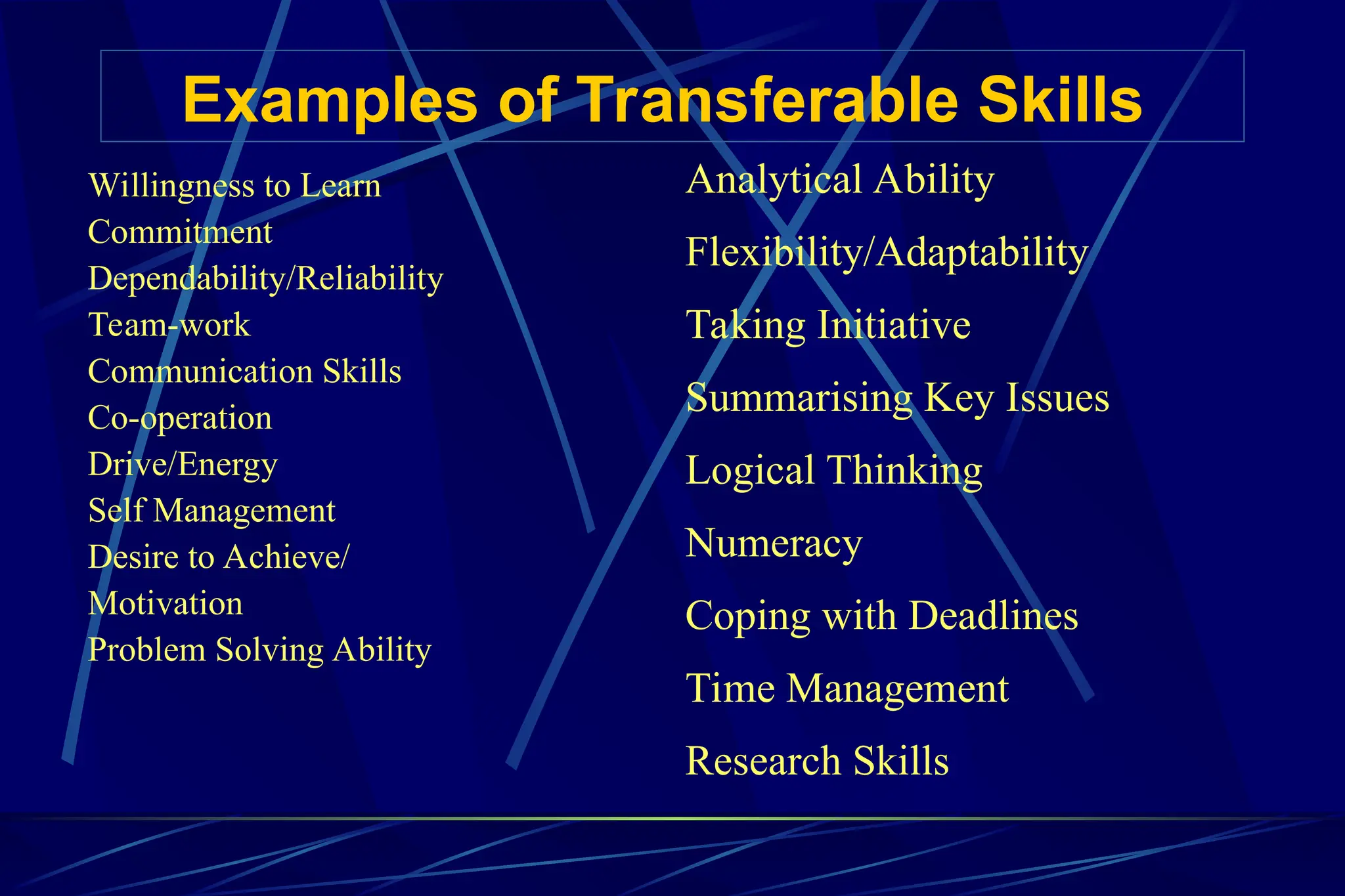
Examples of Transferable Skills
Why do employers look for them?
Transferable Skill Cycle
Highlighting your transferable skills
Importance of analysing your Skills
What are Transferable Skills?
•Transferable skills are the skills you acquire
during any activity in your life, that can be
applied at a later stage in new situations i.e
they can be transferred.
•You can acquire these skills through all sorts
of activities e.g employment, projects,
voluntary work, hobbies, sports.
Examples of Transferable Skills
Willingness to Learn
Commitment
Dependability/Reliability
Team-work
Communication Skills
Co-operation
Drive/Energy
Self Management
Desire to Achieve/
Motivation
Problem Solving Ability
Analytical Ability
Flexibility/Adaptability
Taking Initiative
Summarising Key Issues
Logical Thinking
Numeracy
Coping with Deadlines
Time Management
Research Skills
Why do employers look for them?
With your Transferable Skills, employers see you
as a very valuable source of skilled labour.
Once you have acquired a skill, they know you
have the capacity to transfer it into their
organisation and to develop it further i.e. Skill
Progression.
In your CV and at Interview, employers look for
concrete evidence that you have the skills they
are looking for i.e. Skill Match
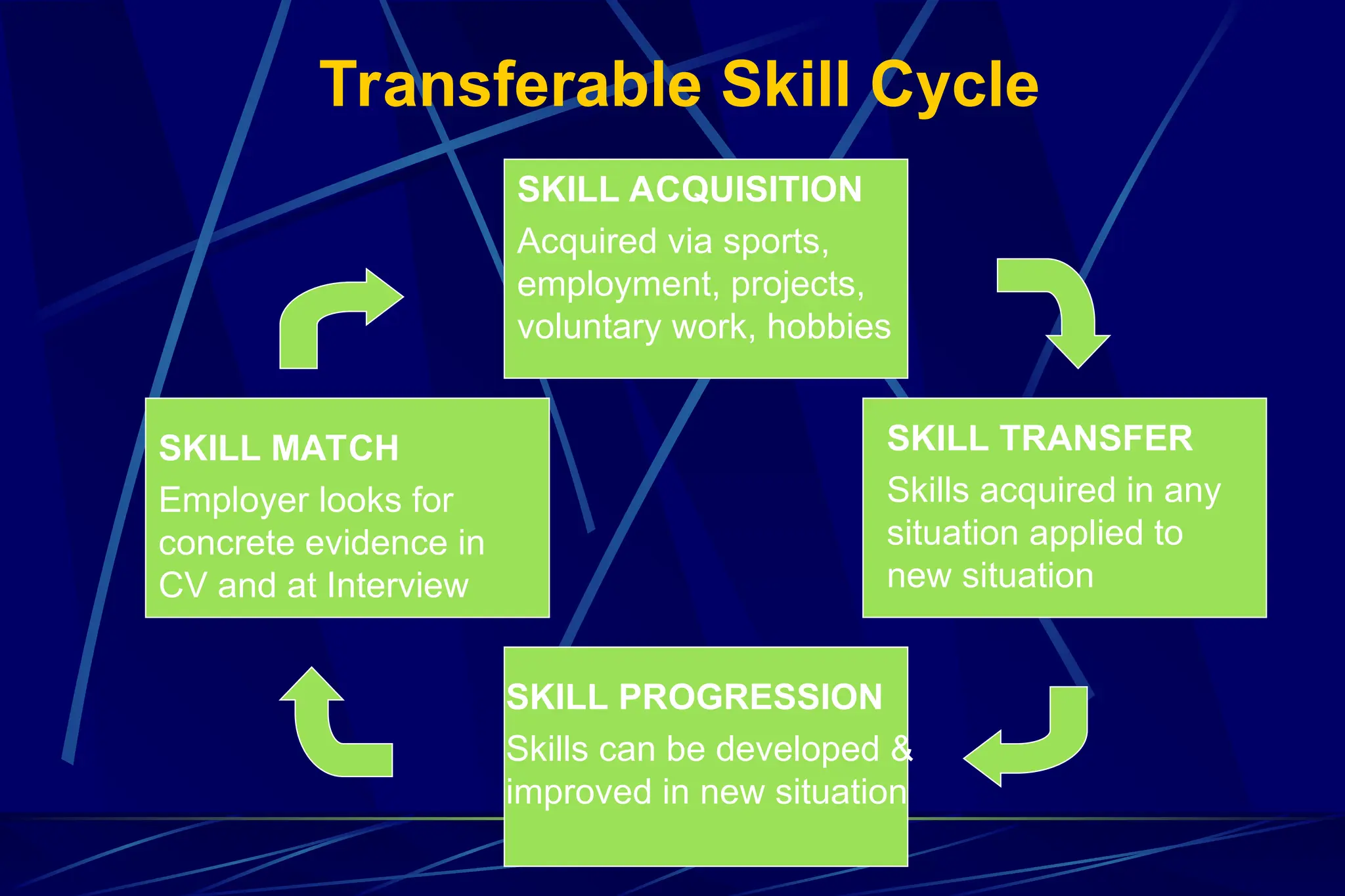
Transferable Skill Cycle
SKILL ACQUISITION
Acquired via sports,
employment, projects,
voluntary work, hobbies
SKILL TRANSFER
Skills acquired in any
situation applied to
new situation
SKILL PROGRESSION
Skills can be developed &
improved in new situation
SKILL MATCH
Employer looks for
concrete evidence in
CV and at Interview
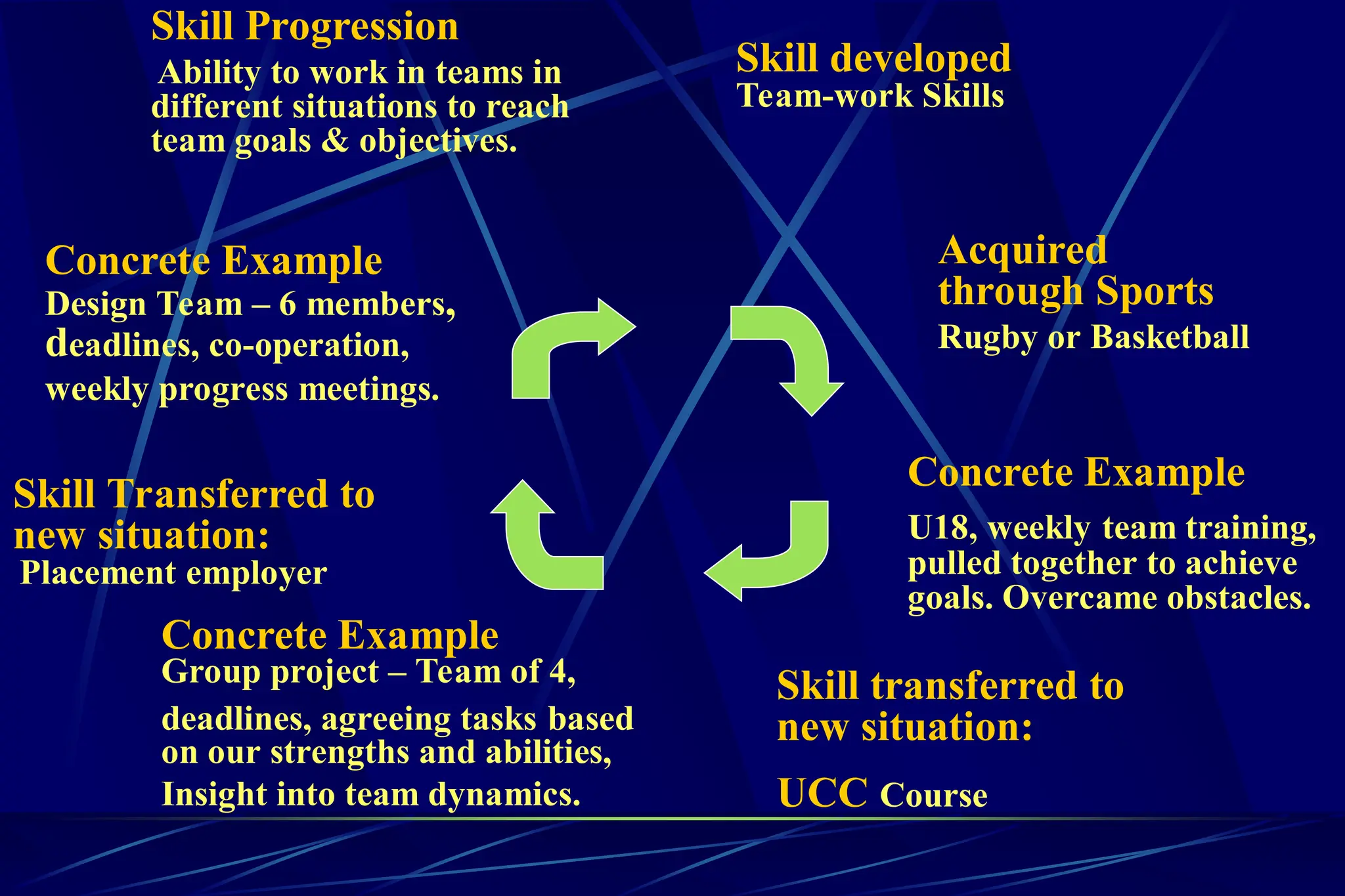
Skill Progression
Ability to work in teams in
different situations to reach
team goals & objectives.
Skill developed
Team-work Skills
Concrete Example
Design Team – 6 members,
deadlines, co-operation,
weekly progress meetings.
Acquired
through Sports
Rugby or Basketball
Skill transferred to
new situation:
UCC Course
Skill Transferred to
new situation:
Placement employer
Concrete Example
U18, weekly team training,
pulled together to achieve
goals. Overcame obstacles.
Concrete Example
Group project – Team of 4,
deadlines, agreeing tasks based
on our strengths and abilities,
Insight into team dynamics.
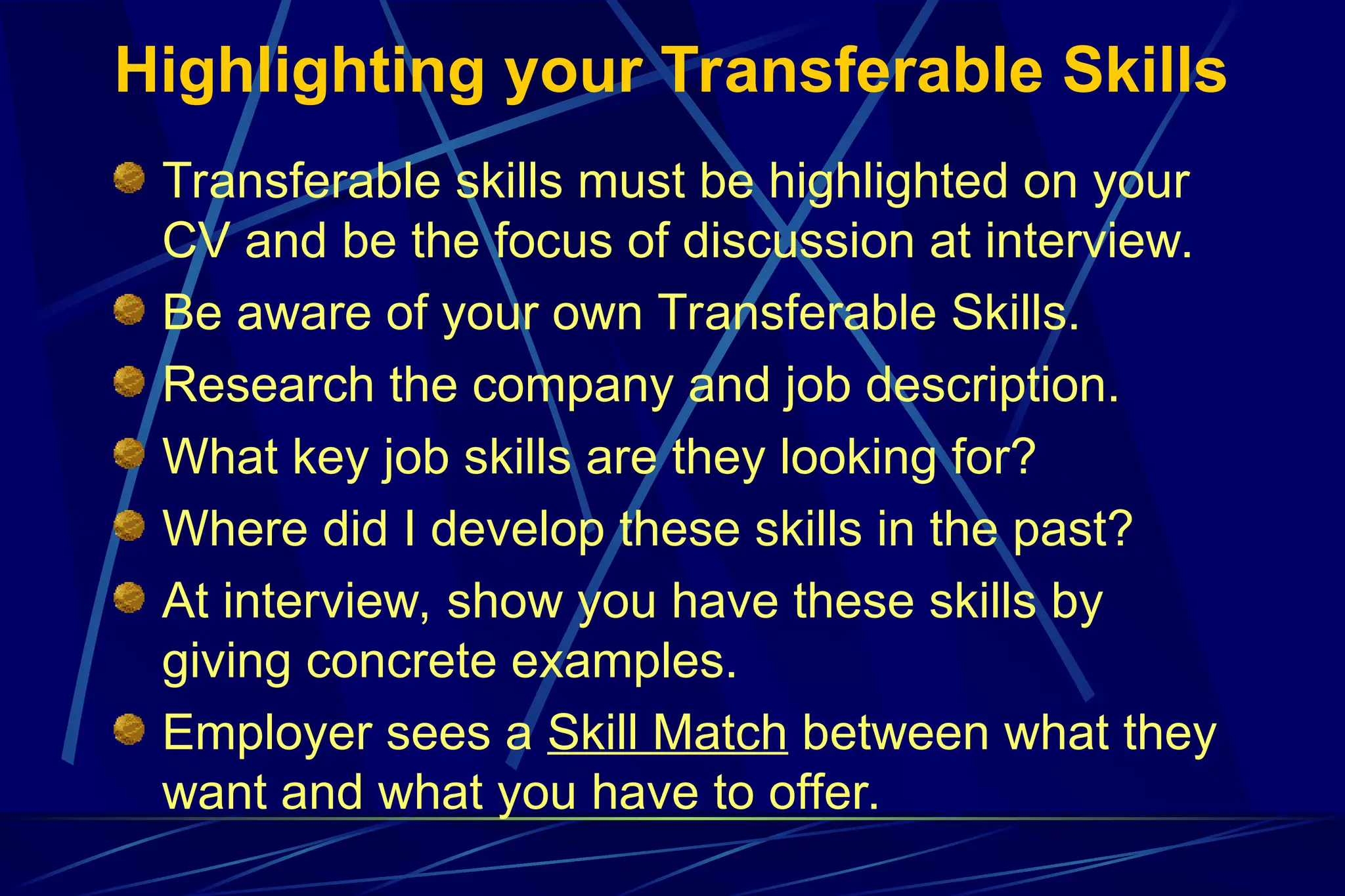
Highlighting your Transferable Skills
Transferable skills must be highlighted on your
CV and be the focus of discussion at interview.
Be aware of your own Transferable Skills.
Research the company and job description.
What key job skills are they looking for?
Where did I develop these skills in the past?
At interview, show you have these skills by
giving concrete examples.
Employer sees a Skill Match between what they
want and what you have to offer.
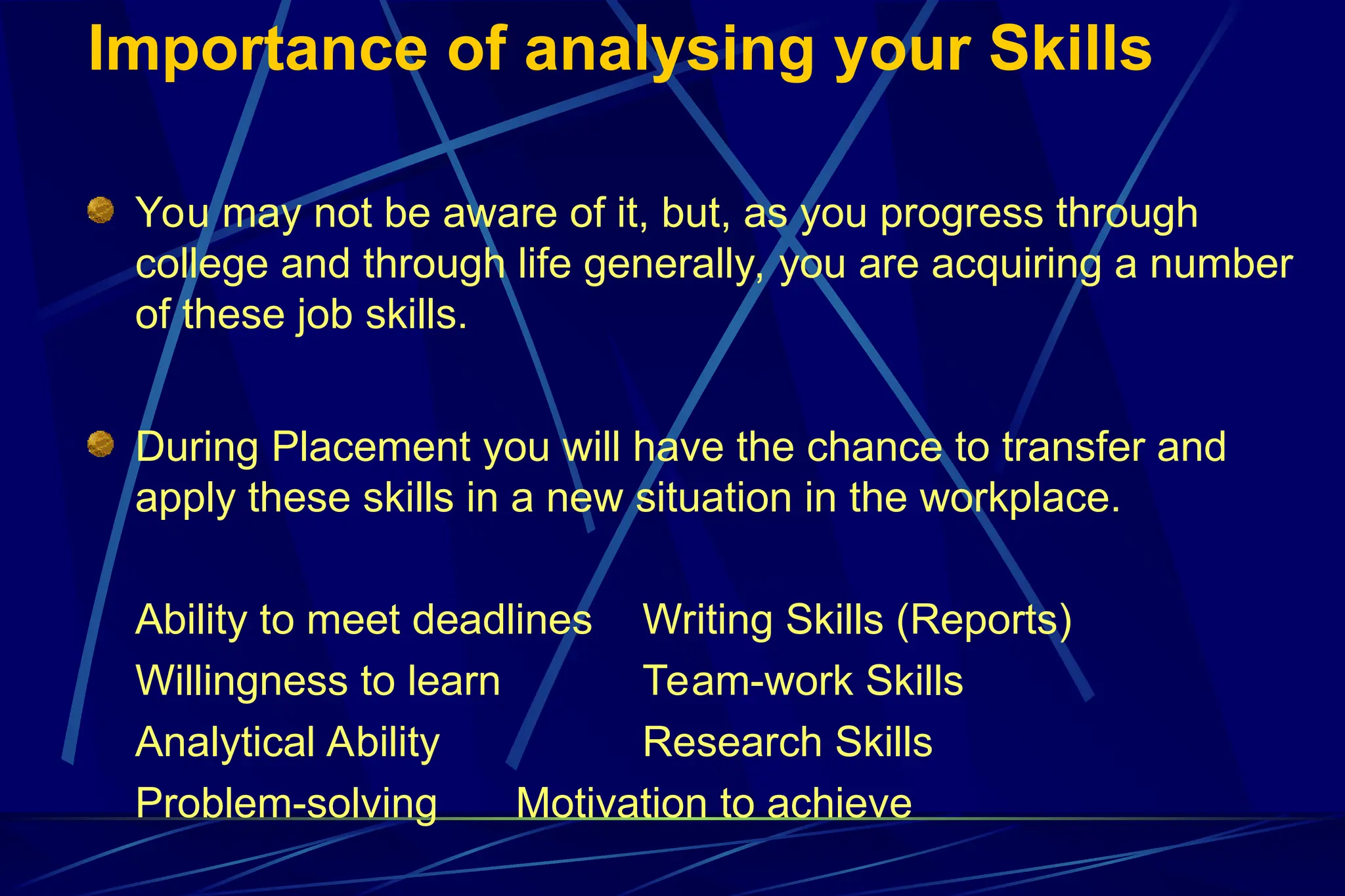
Importance of analysing your Skills
You may not be aware of it, but, as you progress through
college and through life generally, you are acquiring a number
of these job skills.
During Placement you will have the chance to transfer and
apply these skills in a new situation in the workplace.
Ability to meet deadlines Writing Skills (Reports)
Willingness to learn Team-work Skills
Analytical Ability Research Skills
Problem-solving Motivation to achieve
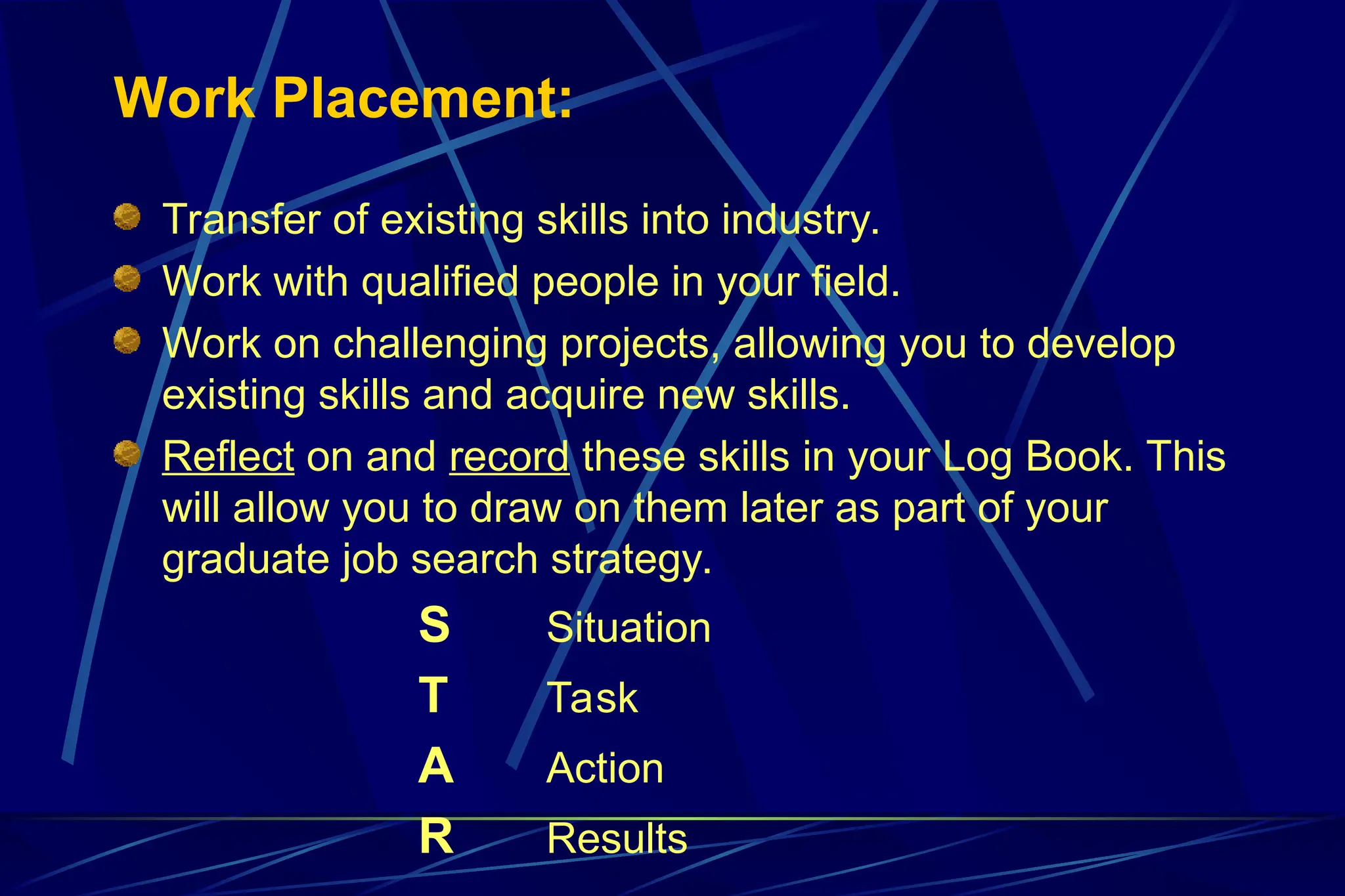
Work Placement:
Transfer of existing skills into industry.
Work with qualified people in your field.
Work on challenging projects, allowing you to develop
existing skills and acquire new skills.
Reflect on and record these skills in your Log Book. This
will allow you to draw on them later as part of your
graduate job search strategy.
S Situation
T Task
A Action
R Results
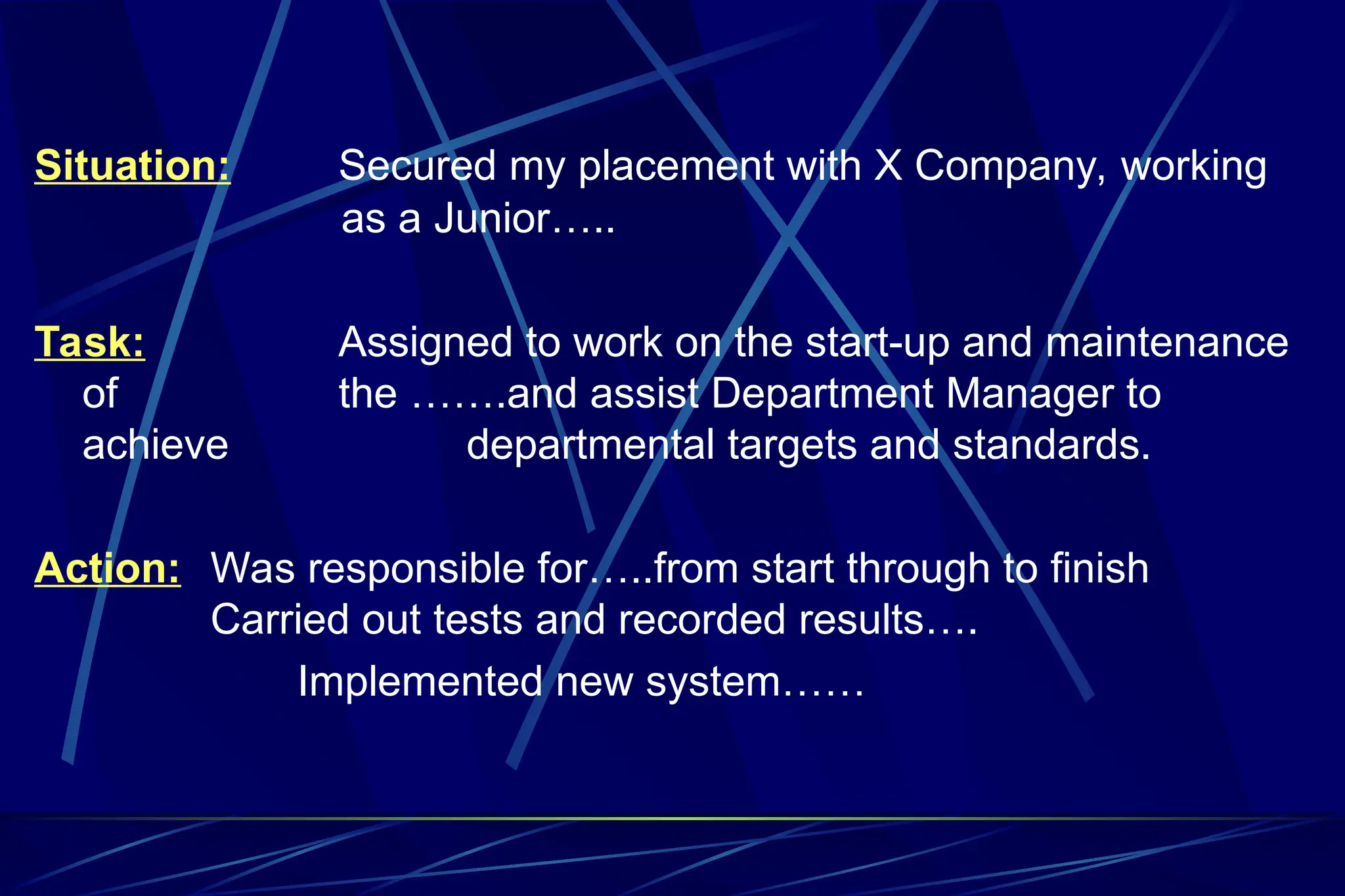
Situation: Secured my placement with X Company, working
as a Junior…..
Task: Assigned to work on the start-up and maintenance
of the …….and assist Department Manager to
achieve departmental targets and standards.
Action: Was responsible for…..from start through to finish
Carried out tests and recorded results….
Implemented new system……
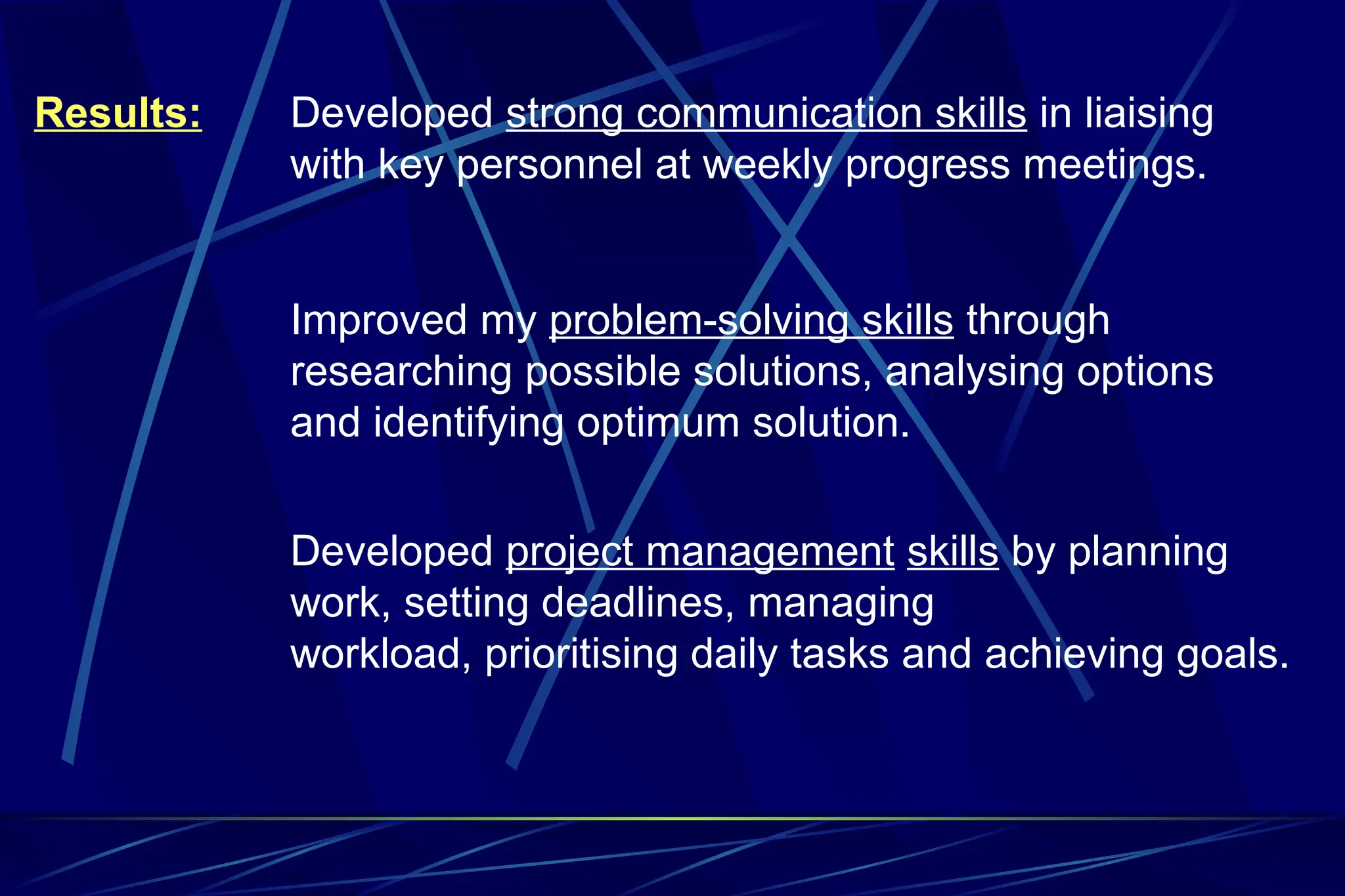
Results: Developed strong communication skills in liaising
with key personnel at weekly progress meetings.
Improved my problem-solving skills through
researching possible solutions, analysing options
and identifying optimum solution.
Developed project management skills by planning
work, setting deadlines, managing
workload, prioritising daily tasks and achieving goals.
Good Luck on Placement!

Transferable Skills: The Hidden Strength Behind Every Successful Career

  • 1.
  • 2.
    Content What are TransferableSkills? Examples of Transferable Skills Why do employers look for them? Transferable Skill Cycle Highlighting your transferable skills Importance of analysing your Skills
  • 3.
    What are TransferableSkills? •Transferable skills are the skills you acquire during any activity in your life, that can be applied at a later stage in new situations i.e they can be transferred. •You can acquire these skills through all sorts of activities e.g employment, projects, voluntary work, hobbies, sports.
  • 4.
    Examples of TransferableSkills Willingness to Learn Commitment Dependability/Reliability Team-work Communication Skills Co-operation Drive/Energy Self Management Desire to Achieve/ Motivation Problem Solving Ability Analytical Ability Flexibility/Adaptability Taking Initiative Summarising Key Issues Logical Thinking Numeracy Coping with Deadlines Time Management Research Skills
  • 5.
    Why do employerslook for them? With your Transferable Skills, employers see you as a very valuable source of skilled labour. Once you have acquired a skill, they know you have the capacity to transfer it into their organisation and to develop it further i.e. Skill Progression. In your CV and at Interview, employers look for concrete evidence that you have the skills they are looking for i.e. Skill Match
  • 6.
    Transferable Skill Cycle SKILLACQUISITION Acquired via sports, employment, projects, voluntary work, hobbies SKILL TRANSFER Skills acquired in any situation applied to new situation SKILL PROGRESSION Skills can be developed & improved in new situation SKILL MATCH Employer looks for concrete evidence in CV and at Interview
  • 7.
    Skill Progression Ability towork in teams in different situations to reach team goals & objectives. Skill developed Team-work Skills Concrete Example Design Team – 6 members, deadlines, co-operation, weekly progress meetings. Acquired through Sports Rugby or Basketball Skill transferred to new situation: UCC Course Skill Transferred to new situation: Placement employer Concrete Example U18, weekly team training, pulled together to achieve goals. Overcame obstacles. Concrete Example Group project – Team of 4, deadlines, agreeing tasks based on our strengths and abilities, Insight into team dynamics.
  • 8.
    Highlighting your TransferableSkills Transferable skills must be highlighted on your CV and be the focus of discussion at interview. Be aware of your own Transferable Skills. Research the company and job description. What key job skills are they looking for? Where did I develop these skills in the past? At interview, show you have these skills by giving concrete examples. Employer sees a Skill Match between what they want and what you have to offer.
  • 9.
    Importance of analysingyour Skills You may not be aware of it, but, as you progress through college and through life generally, you are acquiring a number of these job skills. During Placement you will have the chance to transfer and apply these skills in a new situation in the workplace. Ability to meet deadlines Writing Skills (Reports) Willingness to learn Team-work Skills Analytical Ability Research Skills Problem-solving Motivation to achieve
  • 10.
    Work Placement: Transfer ofexisting skills into industry. Work with qualified people in your field. Work on challenging projects, allowing you to develop existing skills and acquire new skills. Reflect on and record these skills in your Log Book. This will allow you to draw on them later as part of your graduate job search strategy. S Situation T Task A Action R Results
  • 11.
    Situation: Secured myplacement with X Company, working as a Junior….. Task: Assigned to work on the start-up and maintenance of the …….and assist Department Manager to achieve departmental targets and standards. Action: Was responsible for…..from start through to finish Carried out tests and recorded results…. Implemented new system……
  • 12.
    Results: Developed strongcommunication skills in liaising with key personnel at weekly progress meetings. Improved my problem-solving skills through researching possible solutions, analysing options and identifying optimum solution. Developed project management skills by planning work, setting deadlines, managing workload, prioritising daily tasks and achieving goals.
  • 13.
    Good Luck onPlacement!