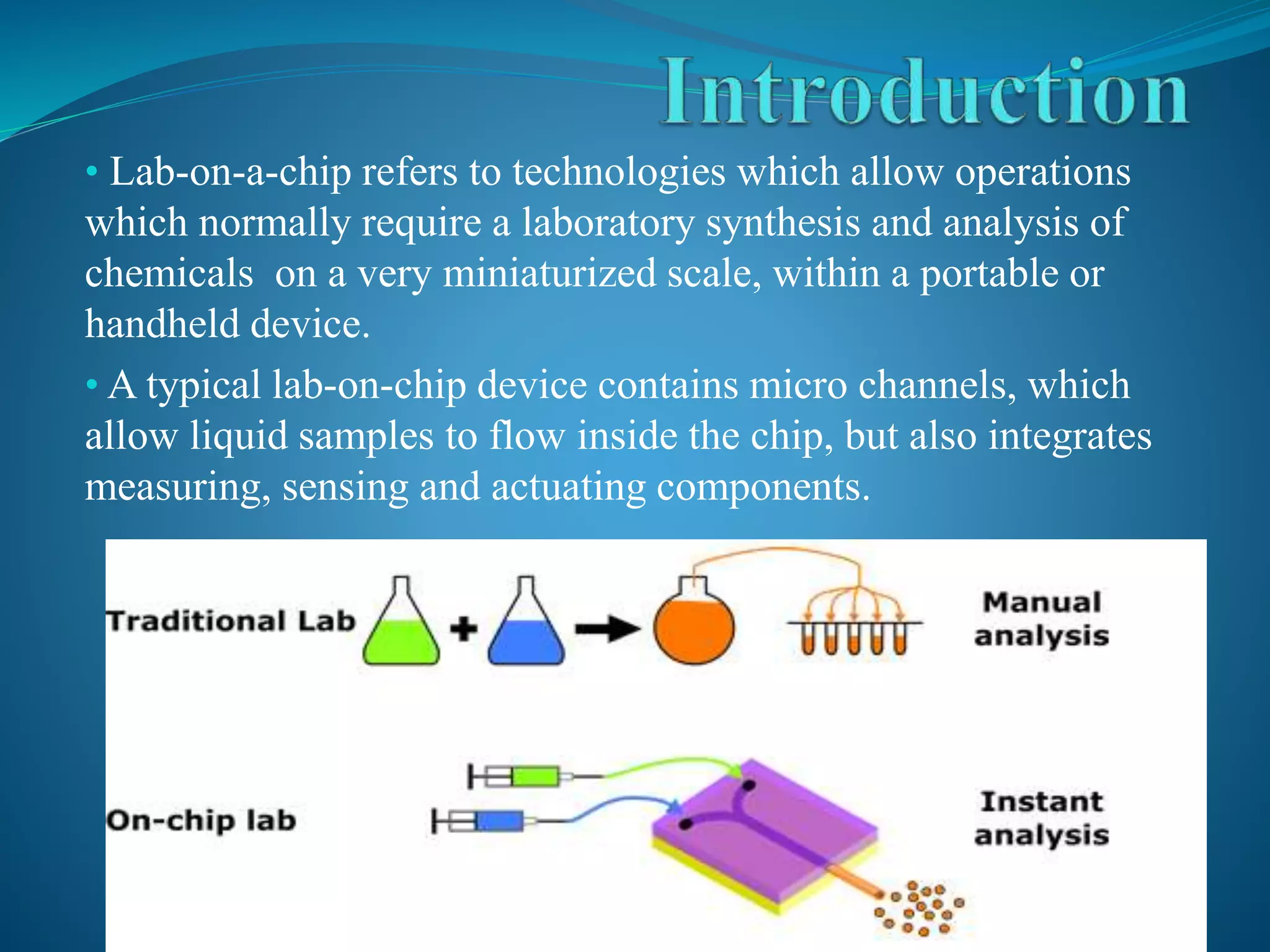
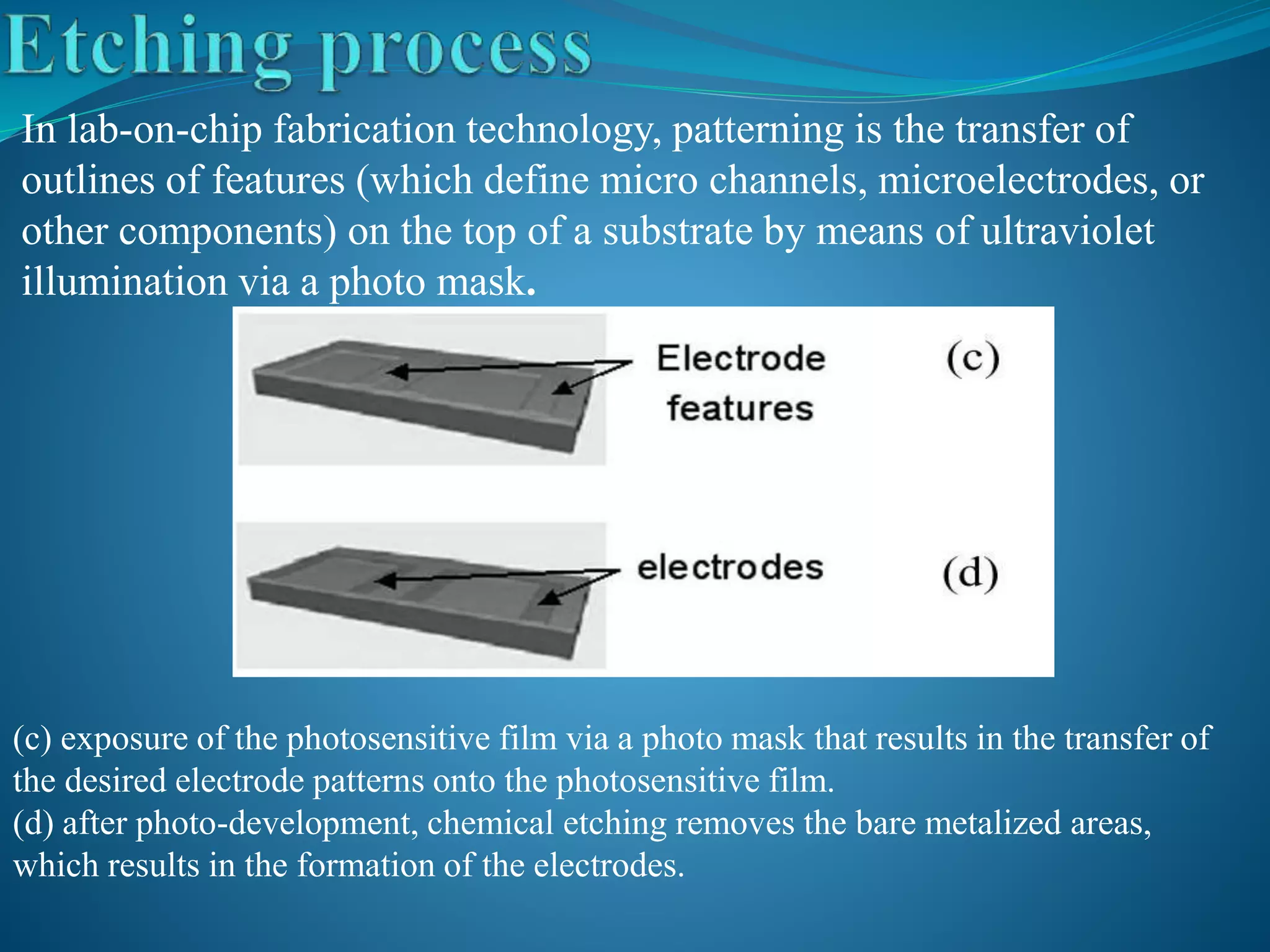
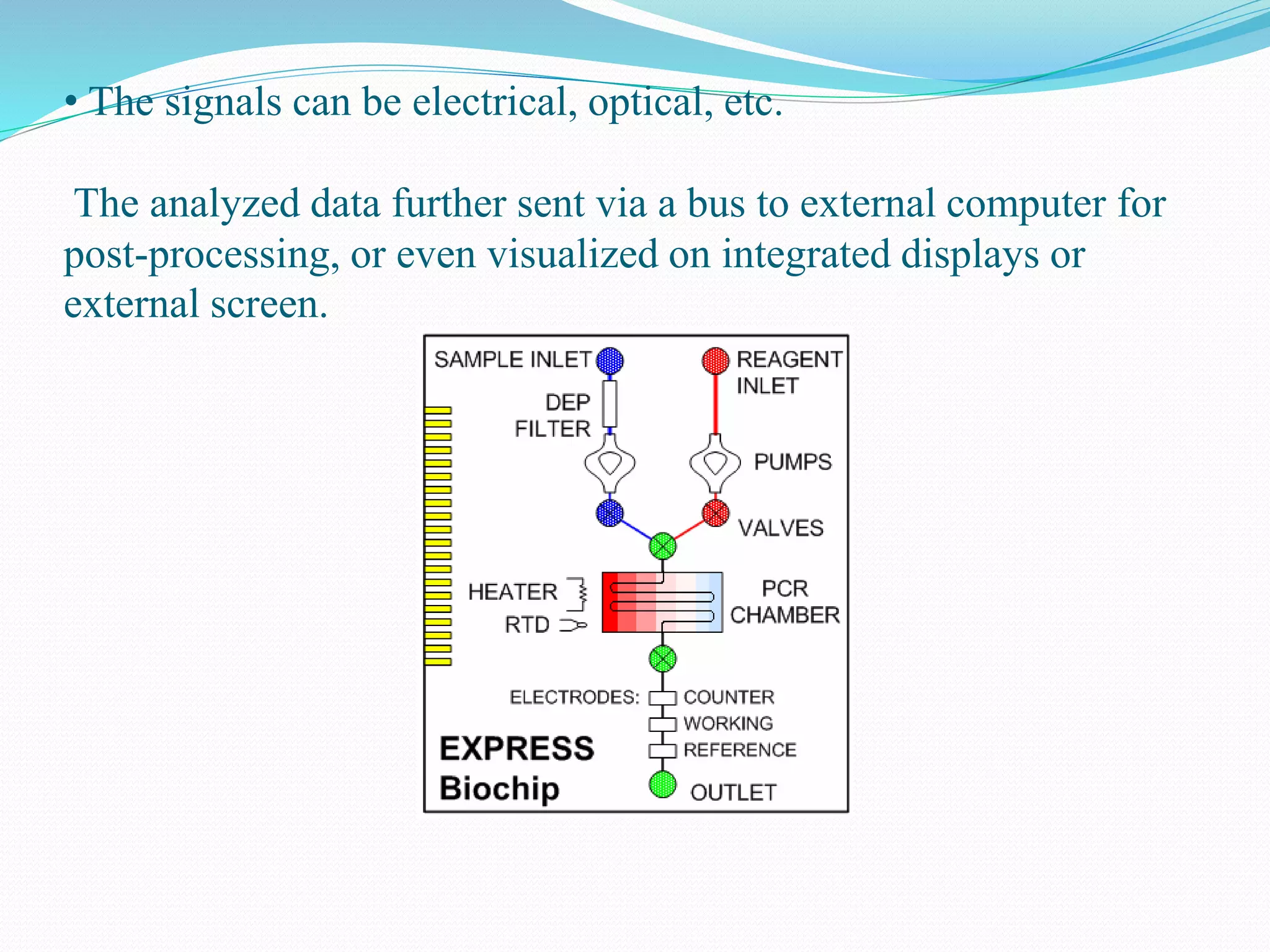
Lab on a chip technology integrates laboratory functions onto a single chip only millimeters in size through microfluidics and electronic components. It utilizes materials like glass, silicon, and polymers for microchannels and metals for conductive parts. Fabrication involves deposition, etching, and bonding processes to pattern channels, electrodes, and seal the device. Sensors can detect low concentrations using nanomaterials. Advantages include faster analysis, compact size, and lower costs, while challenges include new technology and detection scaling issues. Applications include point-of-care diagnostics, pollution monitoring, and military medicine.