Anti-lock braking systems (ABS) prevent wheel lockup during hard braking by rapidly pumping the brakes using computer-controlled solenoid valves. ABS allows steering control to be maintained even when braking hard. It works by monitoring wheel speed sensors and adjusting brake pressure as needed to keep wheels rotating just below the point of lockup. Drivers may feel the brake pedal pulsating during ABS braking, which is normal operation.
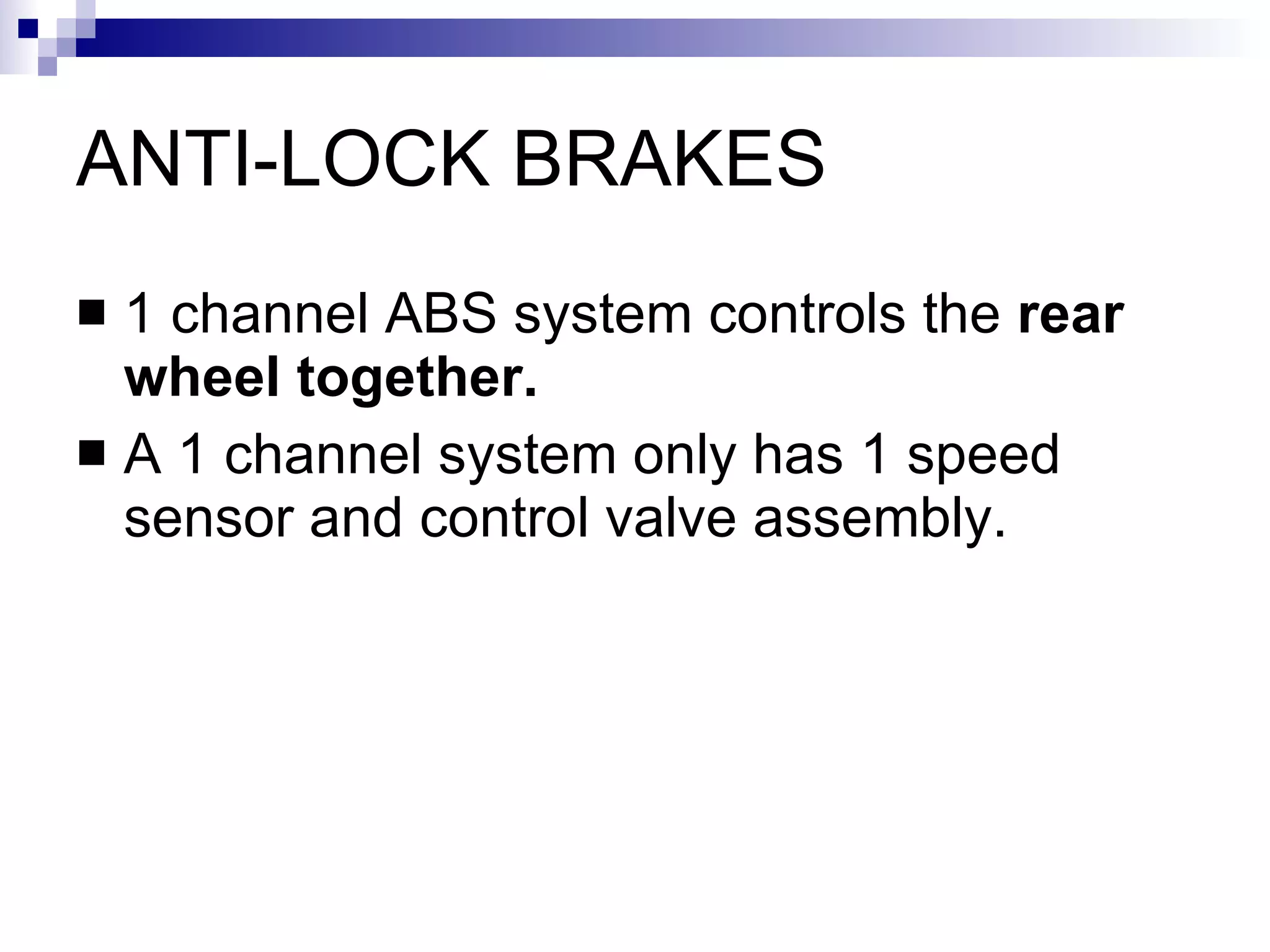
ANTI-LOCK BRAKES ABS,(Anti-Lock brake system) ABS allows the driver to maintain steering control of the vehicle while in hard braking situations .
3.
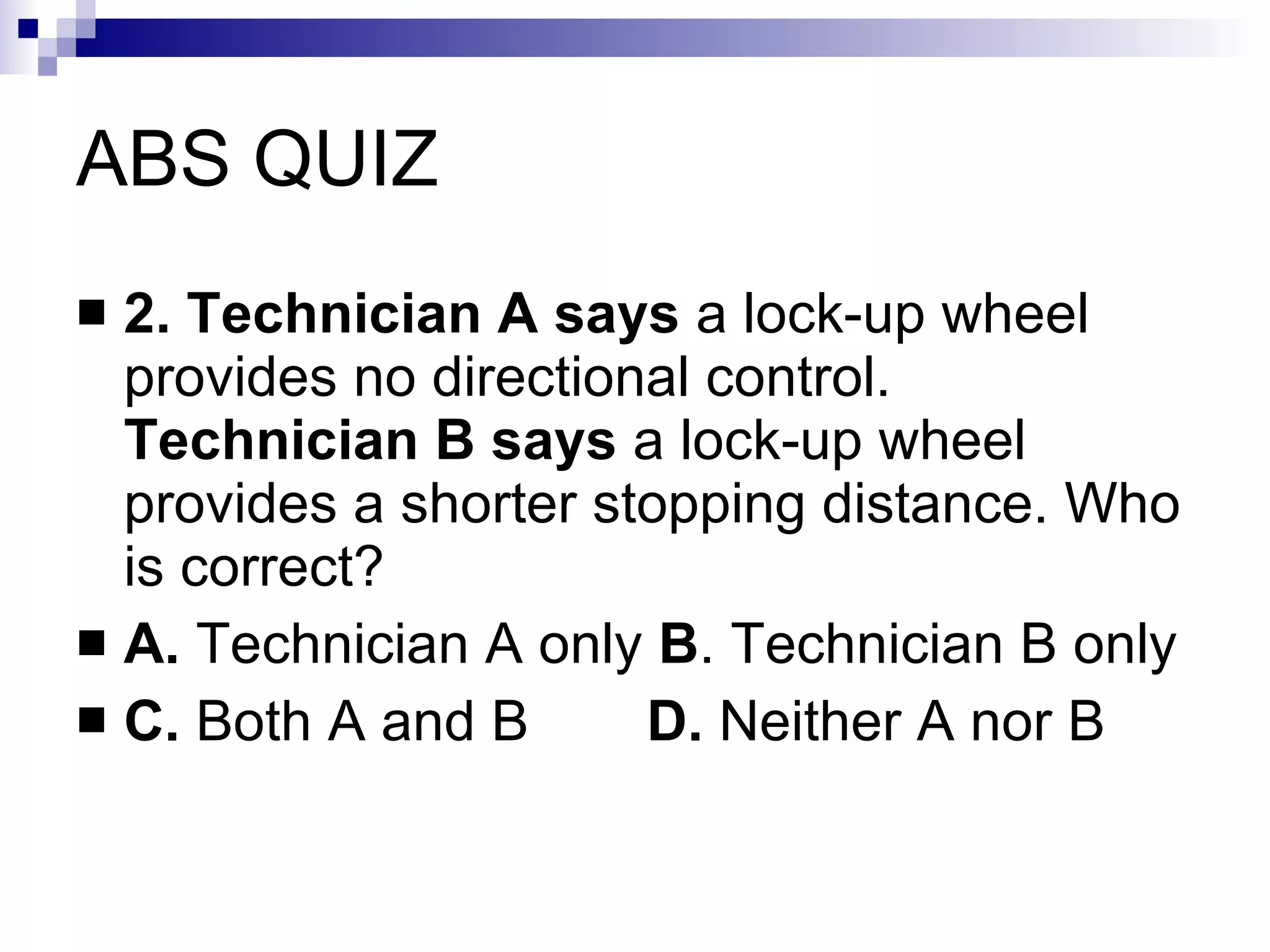
ANTI-LOCK BRAKES ComputerizedABS is designed to keep the wheels from locking as the brakes are applied. A locked wheel provides very little or no directional control.
4.
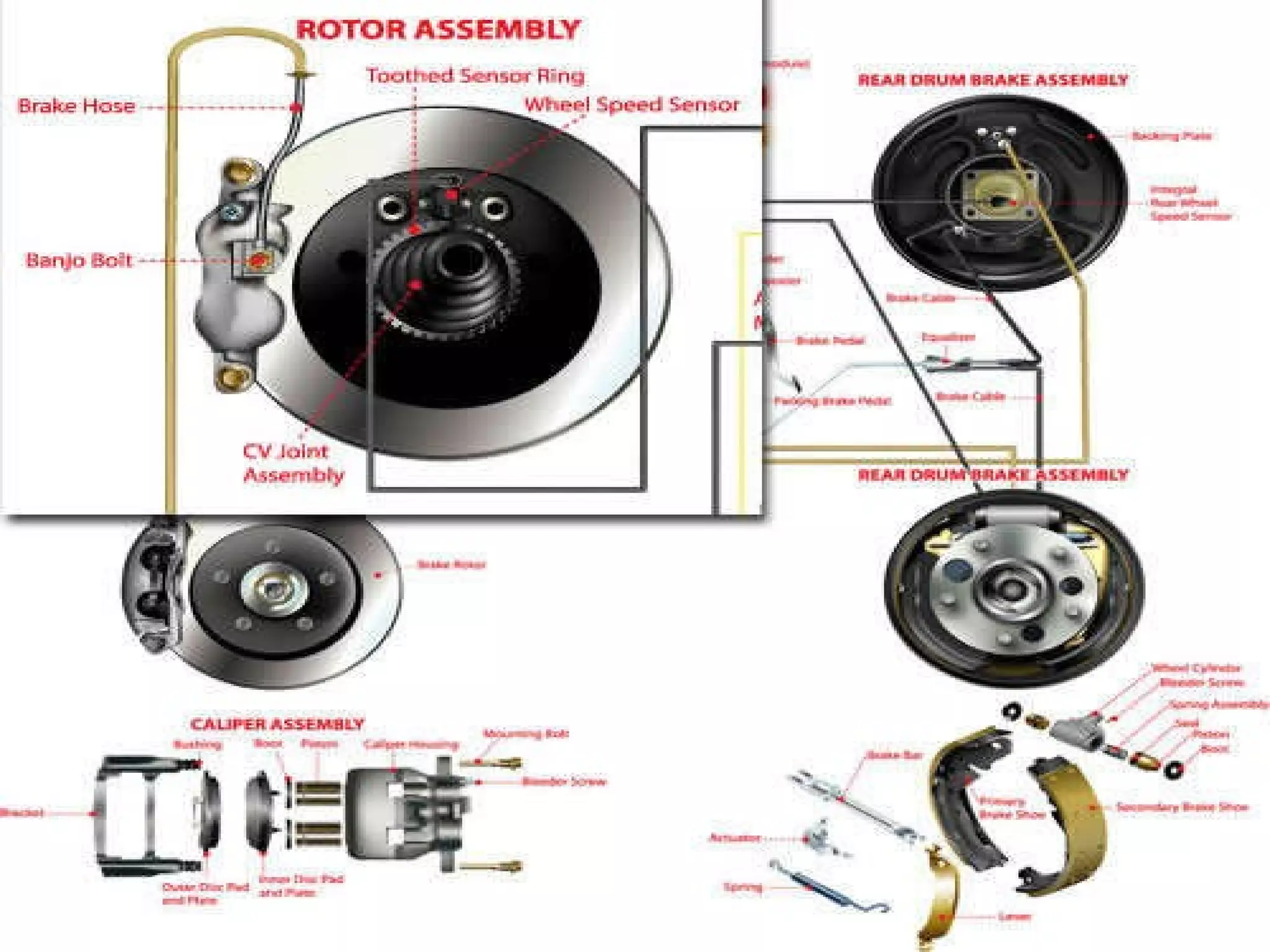
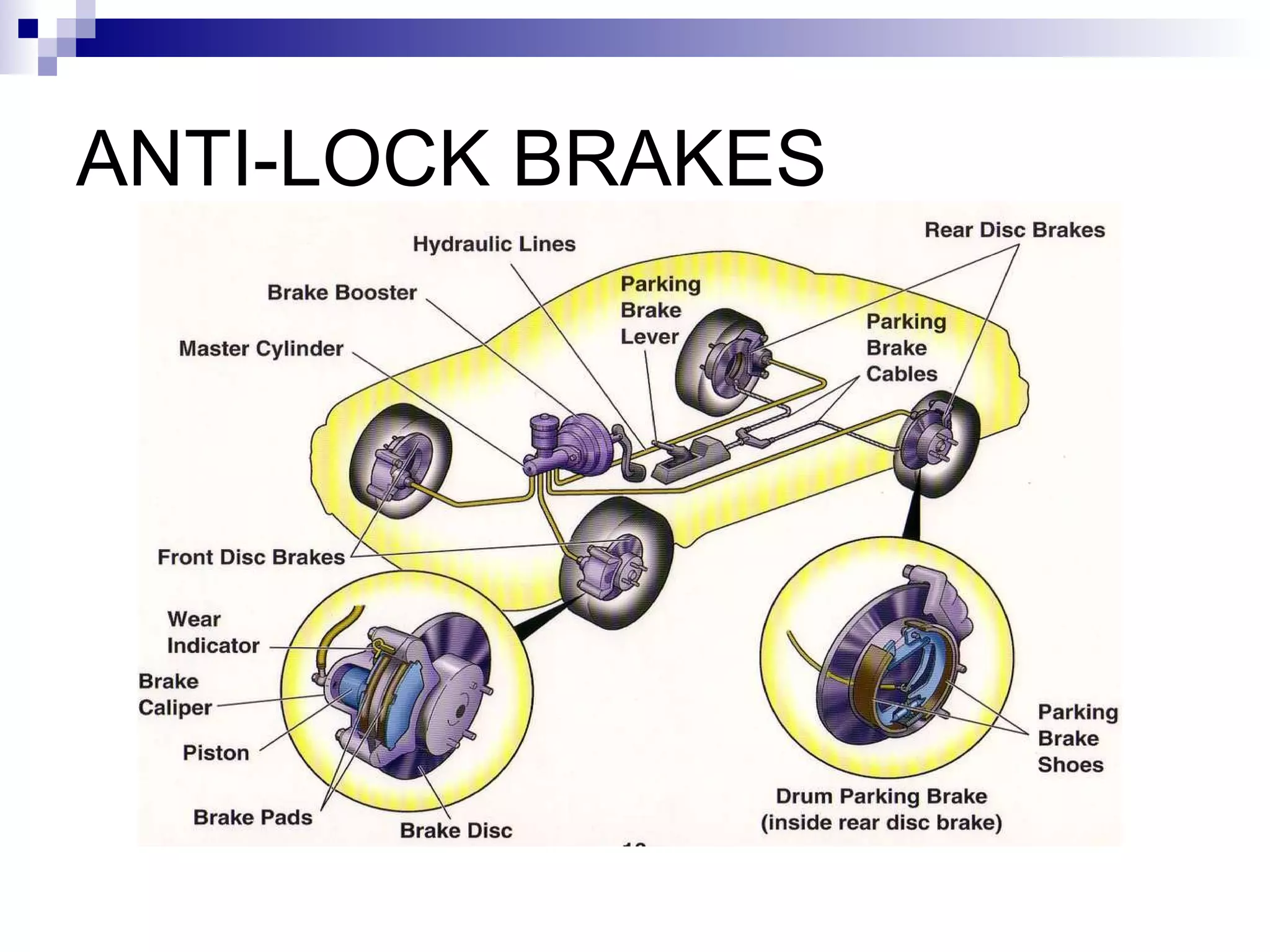
ANTI-LOCK BRAKES Thefollowing slides show the common ABS components. Some components are part of both the conventional and ABS system.
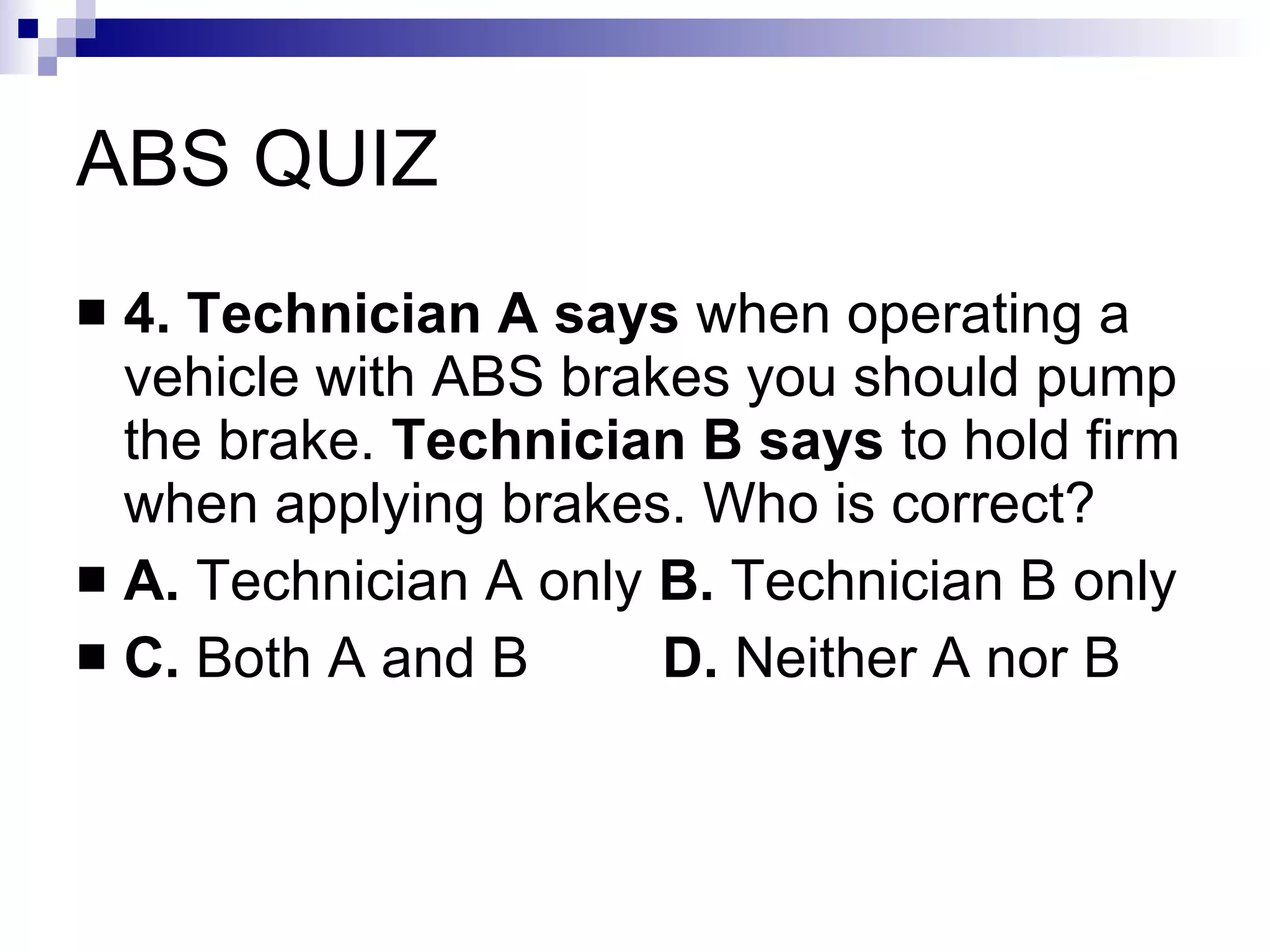
ANTI-LOCK BRAKES Whenoperating a vehicle with ABS never pump the brakes. Doing so will make the ABS system ineffective. Always apply firm pressure.
11.
ANTI-LOCK BRAKES Driversmay experience a pulsation in the brake pedal, or pedal kick back during an ABS stop. This is normal and not to be confused with a conventional brake pedal pulsation
12.
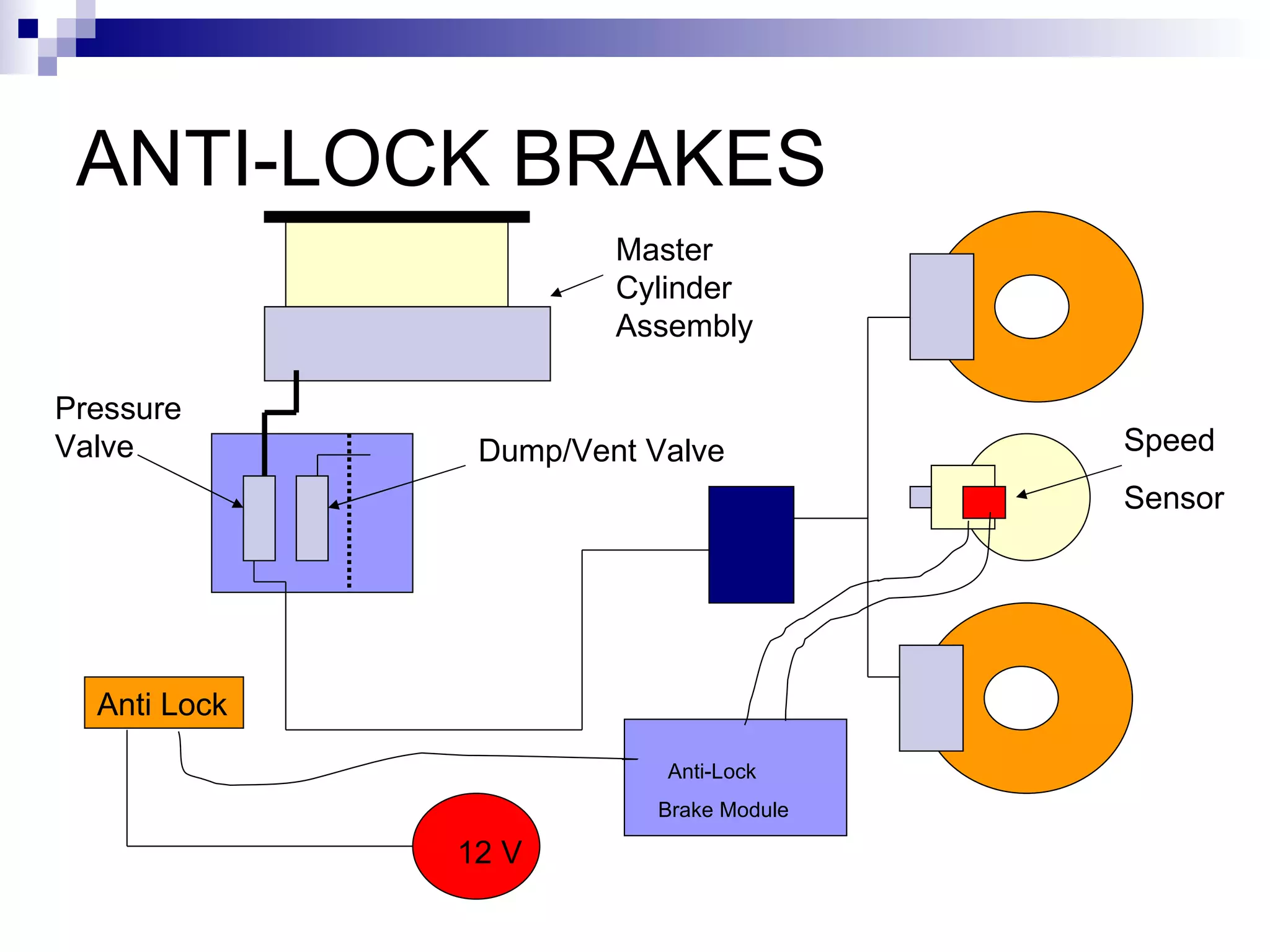
ANTI-LOCK BRAKES Anti-LockBrake Module Speed Sensor Pressure Valve Dump/Vent Valve Master Cylinder Assembly Anti Lock 12 V
13.
ANTI-LOCK BRAKES Majorcomponents of the anti-lock brake system consist of a Brake control module, Solenoid valve assembly, Speed sensor's Wiring, and the amber ABS brake warning light.
14.
ANTI-LOCK BRAKES BrakeControl Module : The brake control module is a compute that receives information from the speed sensor and compares it to the speed of other wheels. When one wheel is approaching lock-up pressure can be vented allowing the wheel nearing lock-up to speed up.
15.
ANTI-LOCK BRAKES Ifa wheel is to fast pressure can be increased to slow down the wheel. If both wheel are approximately the same speed the brake control module can enter a pressure hold mode of operation.
16.
ANTI-LOCK BRAKES SolenoidValve Assembly: Is a pair of valves that can: A. Increase pressure B. Hold pressure steady C. Decrease pressure
17.
ANTI-LOCK BRAKES During pressure increase mode of operation fluid is allowed to flow through both solenoids to the brake caliper Solenoid 1 Pressure increase Solenoid 2 Pressure decrease/Vent solenoid Brake line under pressure Brake fluid line not under pressure
18.
ANTI-LOCK BRAKES During Pressure Hold mode of operation both solenoids are closed and no additional fluid is allowed to flow to brake calipers. Solenoid 1 Pressure increase Solenoid 2 Pressure decrease/Vent
19.
ANTI-LOCK BRAKES During Pressure Vent mode the pressure increase solenoid is closed. The Vent solenoid opens allowing fluid to vent into an accumulator chamber Solenoid 1 Pressure increase Solenoid 2 Pressure decrease/Vent
20.
ANTI-LOCK BRAKES ABSsystem can maintain extremely high static pressure and must be disabled before attempting repairs. Normally pumping brake 20-30 times will release pressure.
ANTI-LOCK BRAKES Anintegrated system has the master cylinder and control valve assembly made together. A nonintegrated has the master cylinder and control valve assembly made separate.
23.
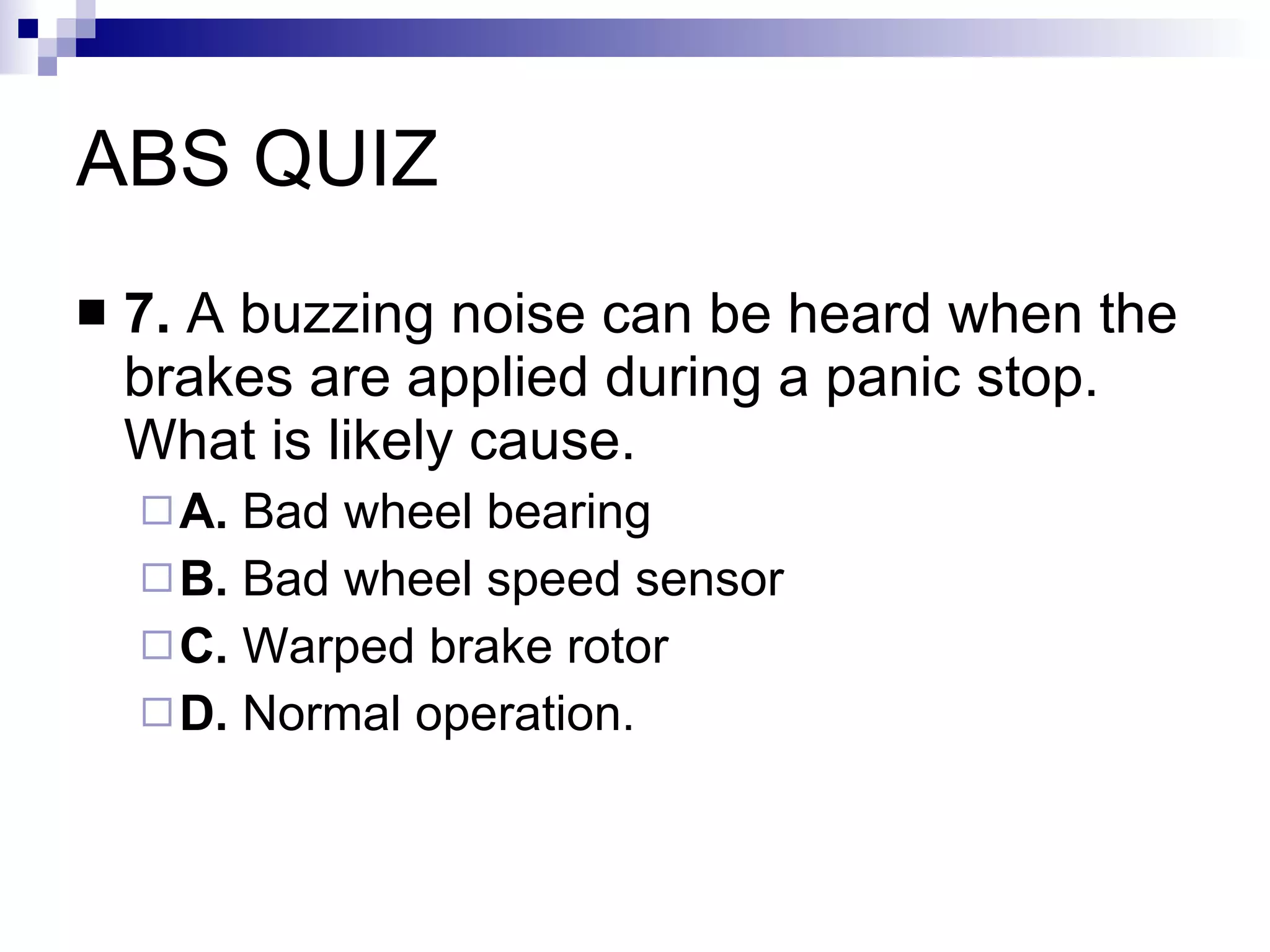
ANTI-LOCK BRAKES ABSoperates using the same hydraulic principal as conventional brakes. ABS system only operates when wheel lock-up is emanate. A bussing noise and bakes pedal vibration is normal during ABS operation.
24.
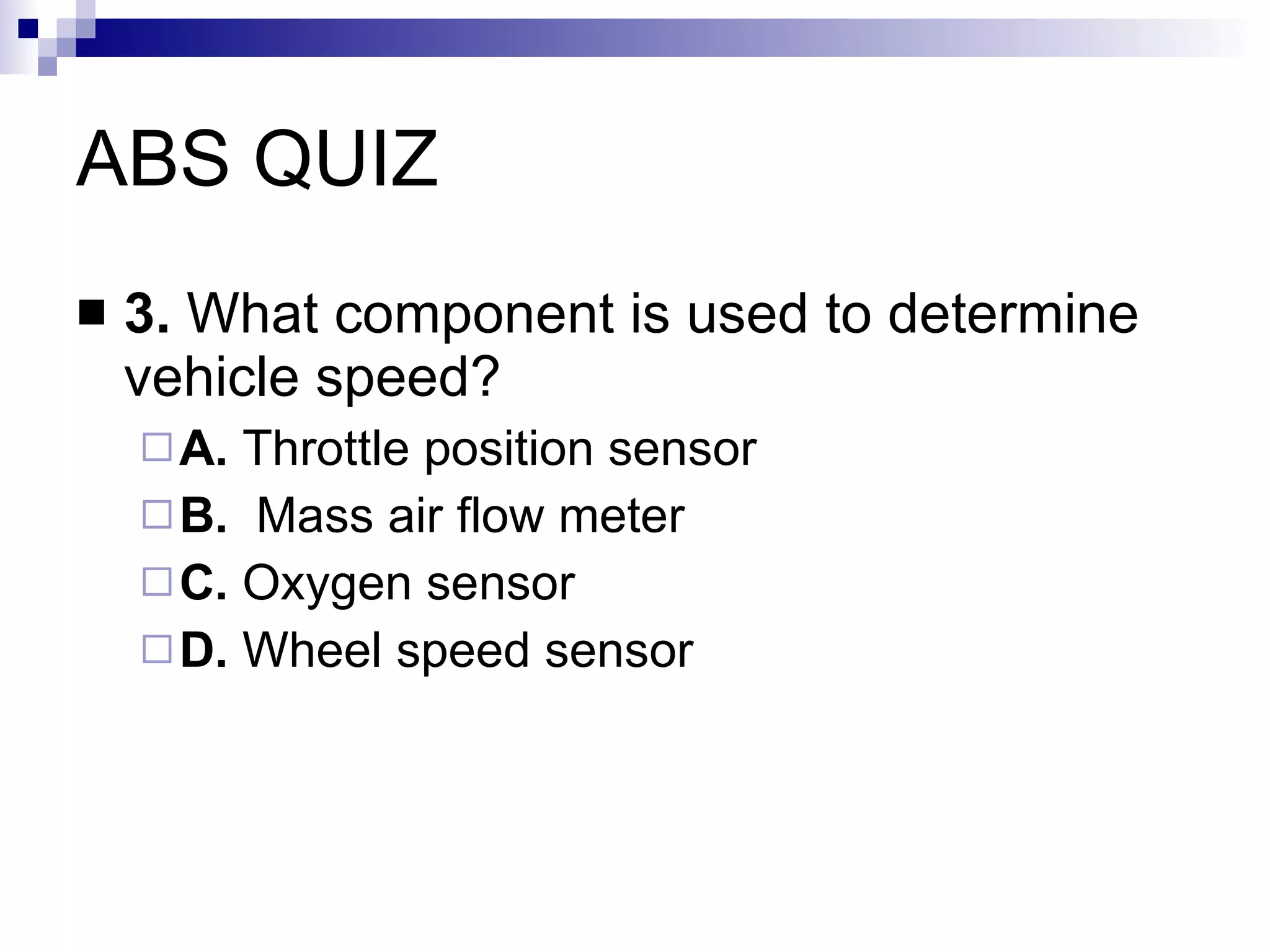
ANTI-LOCK BRAKES Todetermine if wheel lock-up is about to occur vehicles a wheel speed sensor.
25.
ANTI-LOCK BRAKES There3 ABS configurations 1. channel normally RWAL (rear wheel anti-lock) In a one channel RWAL system the rear wheels are controlled together
ANTI-LOCK BRAKES 1channel ABS system controls the rear wheel together. A 1 channel system only has 1 speed sensor and control valve assembly.
29.
ANTI-LOCK BRAKES Athree (3) channel ABS system control the rear wheel together and the front independently . Three channel ABS system have 3 speed sensor and one (1) control module
30.
ANTI-LOCK BRAKES WheelSlippage , is the wheel speed in relation to vehicle speed. If vehicle speed is faster than the wheel speed slippage is negative. And the wheel may become lock-up
31.
ANTI-LOCK BRAKES Ifvehicle speed is slower than wheel speed. Wheel slippage is positive. Positive wheel slippage occurs when a wheel is spinning. NOTE: Late model vehicles use the same ABS components with traction control. Traction control prevent a vehicle from spinning out of control.
32.
ANTI-LOCK BRAKES Thebest braking action occurs at between 10-20%. If vehicle speed and wheel speed is the same wheel slippage is 0% A lock-up wheel will have a wheel slippage of 100%
33.
ANTI-LOCK BRAKES Ina diagonally split system brake system the left front and right rear brakes are controlled together. Diagonally split systems offer an added safety value. Master Cylinder
34.
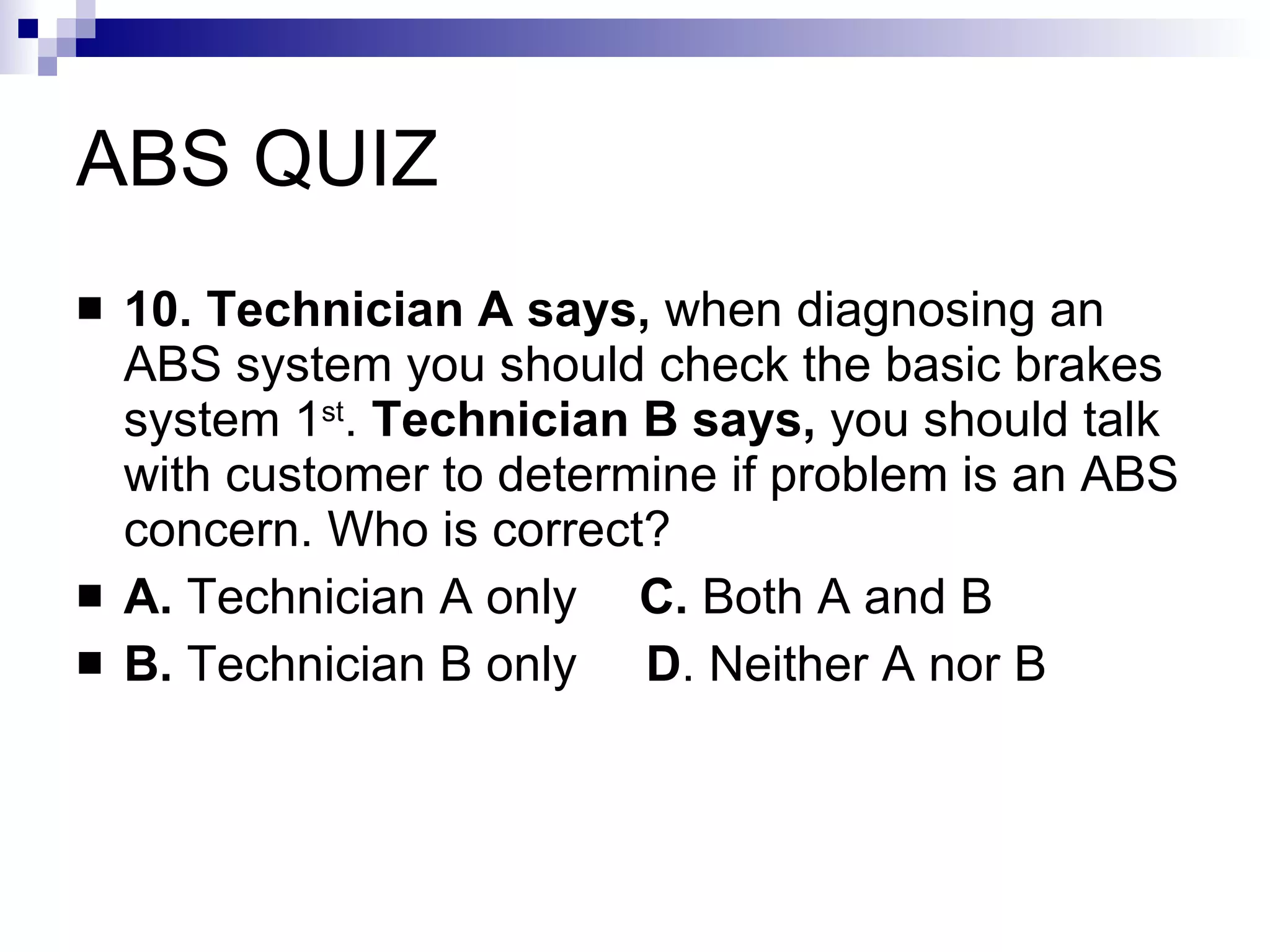
ANTI-LOCK BRAKES Whendiagnosing an ABS concern always 1. Talk with customer/ owner, to deterring if the ABS at fault or a basic brake system concern 2. Always check the basic brake system 1 st. 3. Check for proper tire size 4. Check for damage sensor and reluctor rings. 5. Check brake light operation 6. Check for diagnostic trouble codes
35.
ABS QUIZ 1. Technician A says , That ABS works only in a panic situation. Technician B says ABS works when wheel lock-up is determine. Who is correct? A. Technician A only B. Technician B only C. Neither A nor B D. Both A and B
36.
ABS QUIZ 2.Technician A says a lock-up wheel provides no directional control. Technician B says a lock-up wheel provides a shorter stopping distance. Who is correct? A. Technician A only B . Technician B only C. Both A and B D. Neither A nor B
37.
ABS QUIZ 3. What component is used to determine vehicle speed? A. Throttle position sensor B. Mass air flow meter C. Oxygen sensor D. Wheel speed sensor
38.
ABS QUIZ 4.Technician A says when operating a vehicle with ABS brakes you should pump the brake. Technician B says to hold firm when applying brakes. Who is correct? A. Technician A only B. Technician B only C. Both A and B D. Neither A nor B
39.
ABS QUIZ 5. What type brake fluid should never be used with an ABS system? A. DOT 3 B. DOT 4 C. DOT 5 D. All the above can be used
40.
ABS QUIZ 6. Best braking action occurs at what percentage of wheel slip? A. 1 to 5 percent B. 10-20 percent C. 30-40 percent D. above 40 percent
41.
ABS QUIZ 7. A buzzing noise can be heard when the brakes are applied during a panic stop. What is likely cause. A. Bad wheel bearing B. Bad wheel speed sensor C. Warped brake rotor D. Normal operation.
42.
ABS QUIZ 8. A signal channel ABS system operates the: A. Front brakes together B. Right front and left rear brakes togeather C. The rear together D. None of the above
43.
ABS QUIZ 9. In a diagonally split brake system the right front and left rear wheels are: A. Controlled separately B. Controlled independently C. Controlled together. D. Not controlled
44.
ABS QUIZ 10.Technician A says, when diagnosing an ABS system you should check the basic brakes system 1 st . Technician B says, you should talk with customer to determine if problem is an ABS concern. Who is correct? A. Technician A only C. Both A and B B. Technician B only D . Neither A nor B