PA SIMULATION AT CHESTER
JAMES ENNIS
OVERVIEW
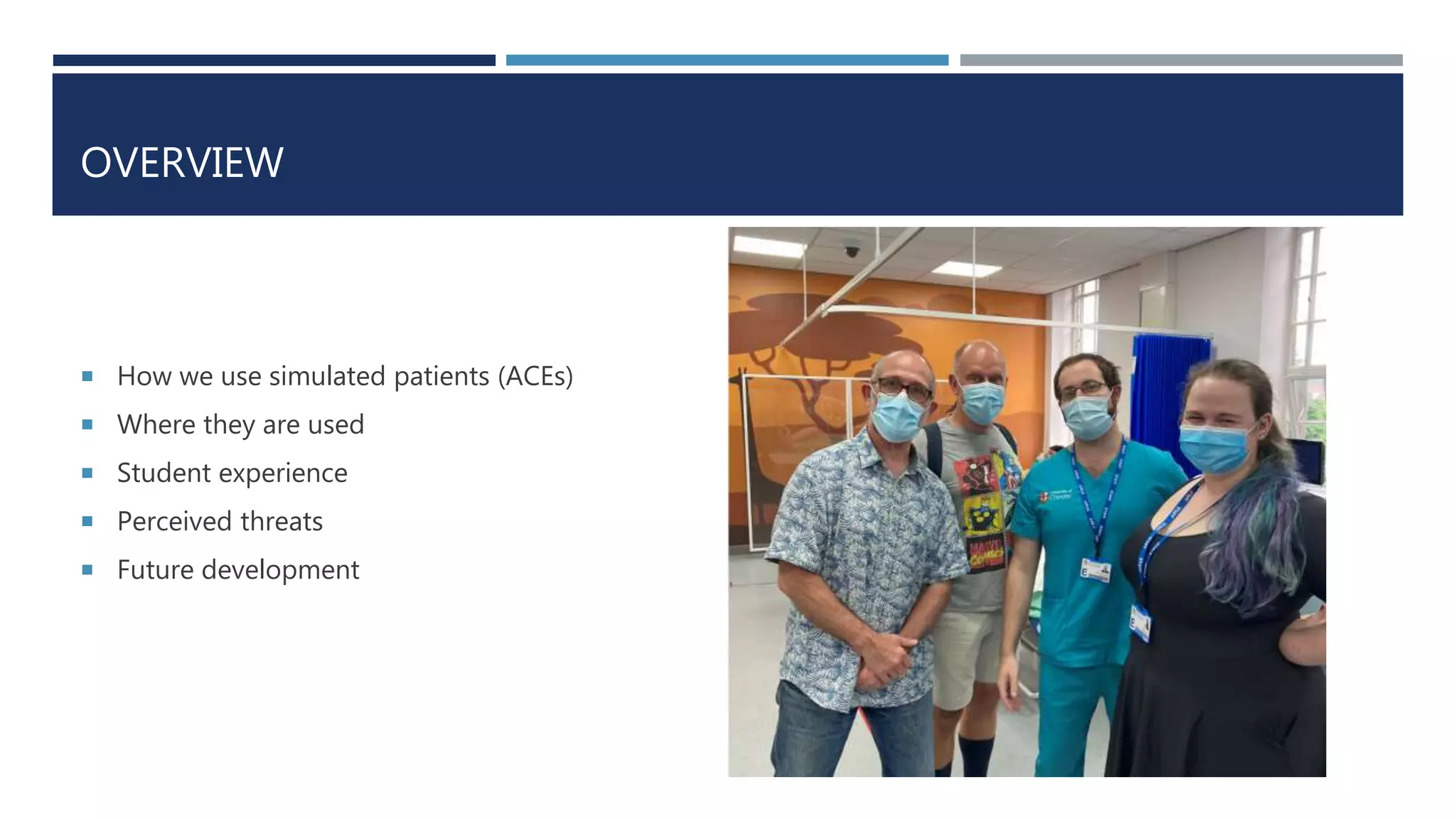
 How we use simulated patients (ACEs)
 Where they are used
 Student experience
 Perceived threats
 Future development
HOW WE USE ACES
Emphasis on human simulation at
Chester
 Simulated/standardised patients 1 – role players
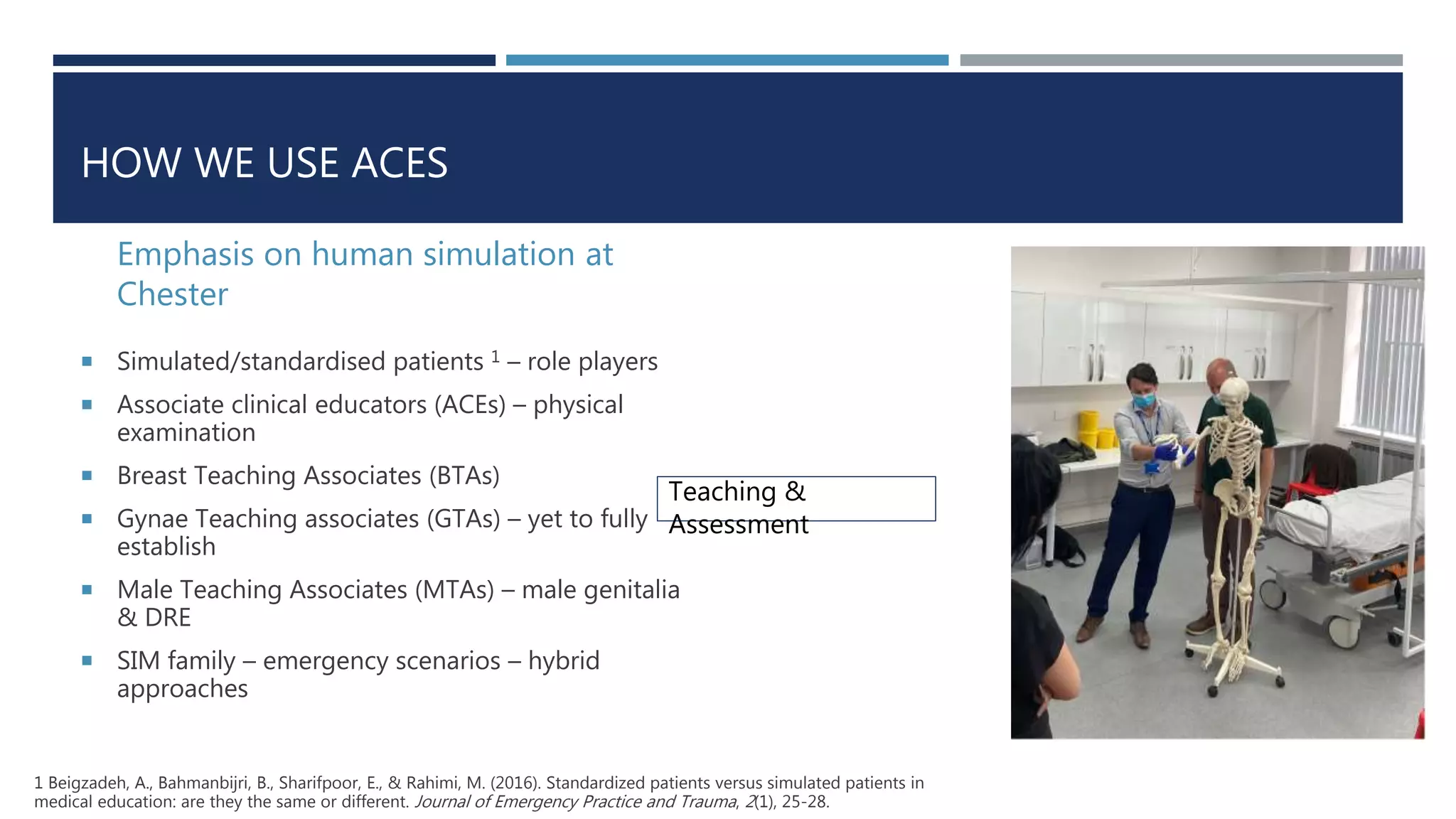
 Associate clinical educators (ACEs) – physical
examination
 Breast Teaching Associates (BTAs)
 Gynae Teaching associates (GTAs) – yet to fully
establish
 Male Teaching Associates (MTAs) – male genitalia
& DRE
 SIM family – emergency scenarios – hybrid
approaches
Teaching &
Assessment
1 Beigzadeh, A., Bahmanbijri, B., Sharifpoor, E., & Rahimi, M. (2016). Standardized patients versus simulated patients in
medical education: are they the same or different. Journal of Emergency Practice and Trauma, 2(1), 25-28.
WHERE WE USE ACES
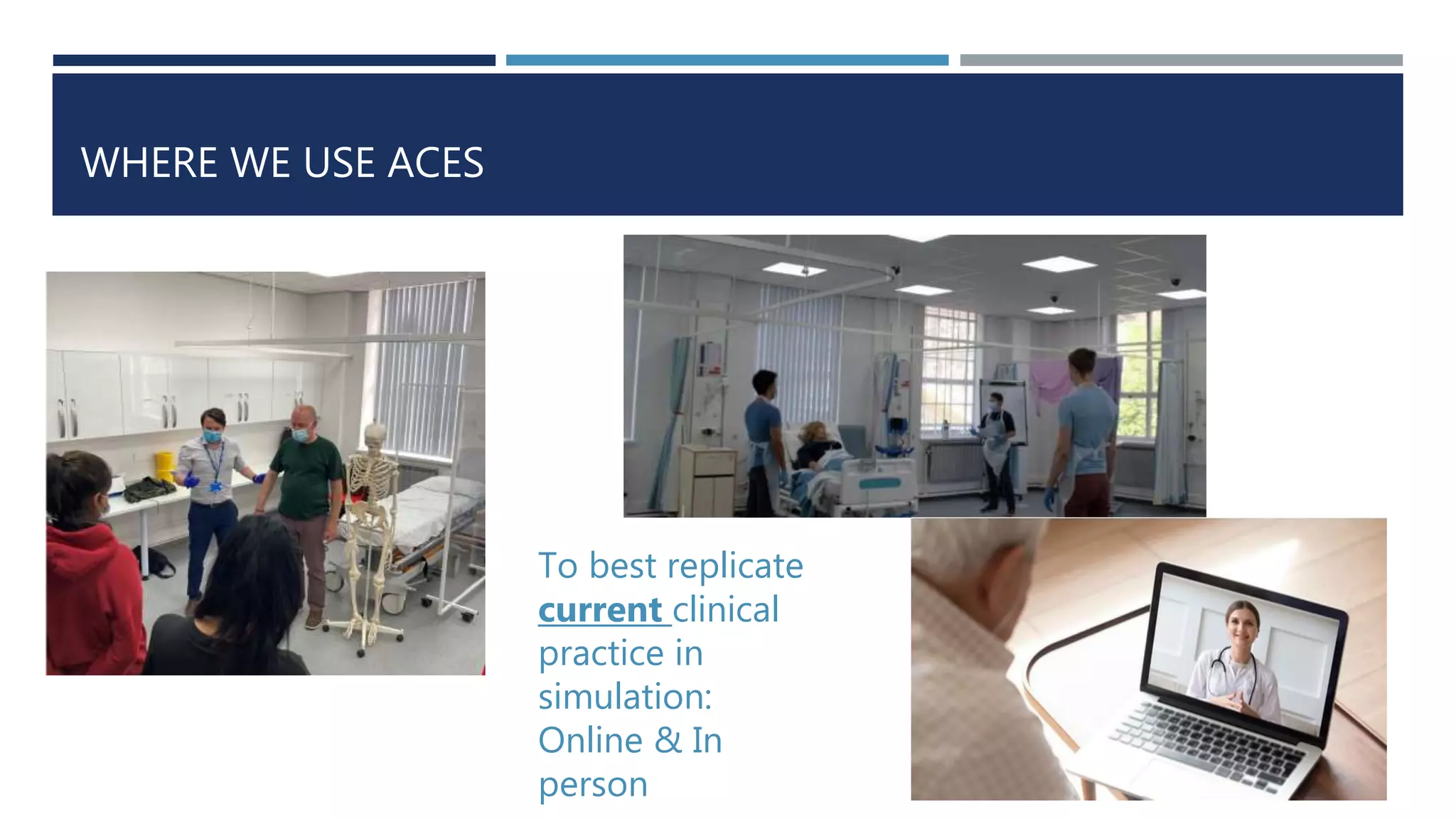
To best replicate
current clinical
practice in
simulation:
Online & In
person
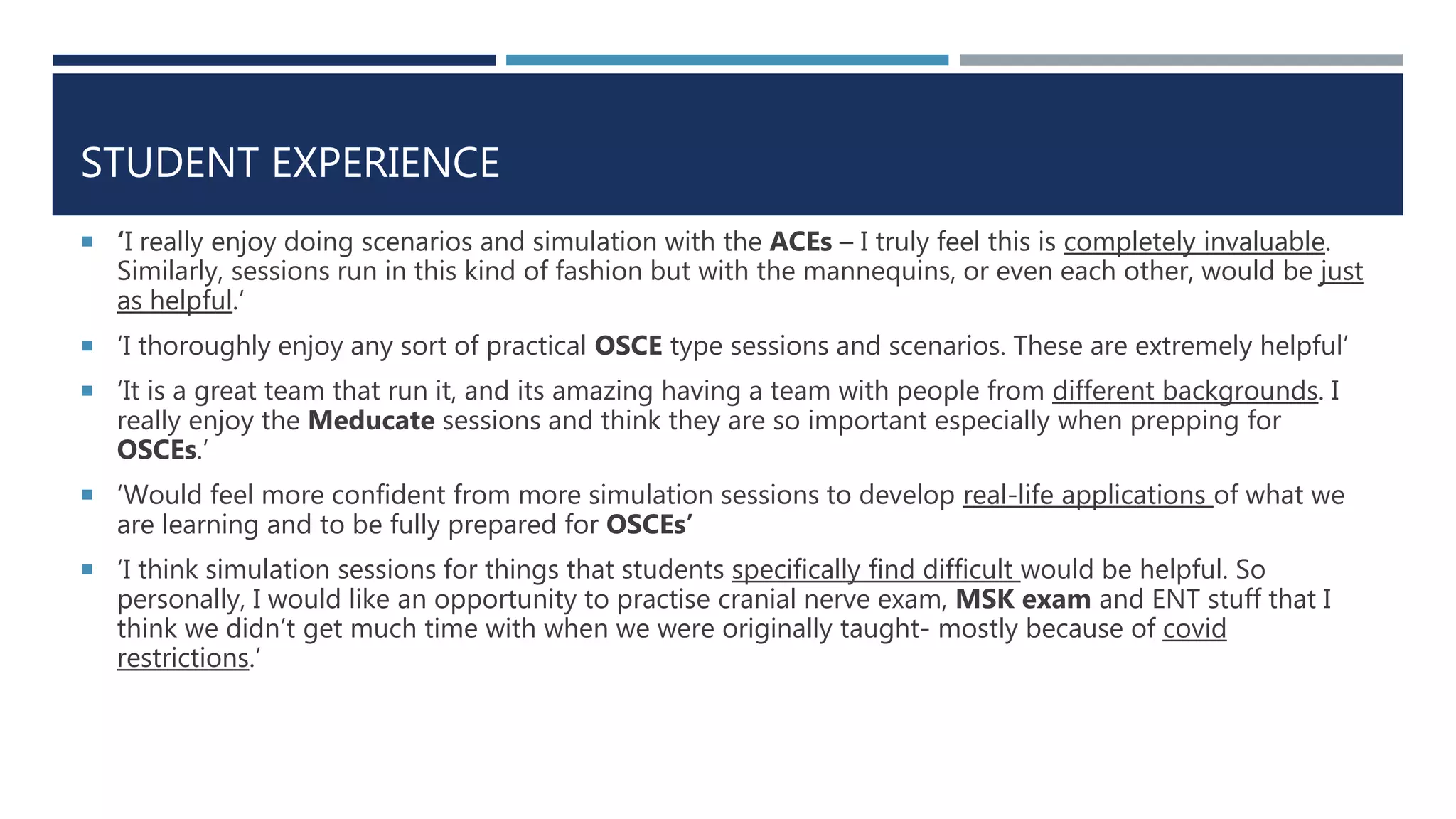
STUDENT EXPERIENCE
 ‘I really enjoy doing scenarios and simulation with the ACEs – I truly feel this is completely invaluable.
Similarly, sessions run in this kind of fashion but with the mannequins, or even each other, would be just
as helpful.’
 ‘I thoroughly enjoy any sort of practical OSCE type sessions and scenarios. These are extremely helpful’
 ‘It is a great team that run it, and its amazing having a team with people from different backgrounds. I
really enjoy the Meducate sessions and think they are so important especially when prepping for
OSCEs.’
 ‘Would feel more confident from more simulation sessions to develop real-life applications of what we
are learning and to be fully prepared for OSCEs’
 ‘I think simulation sessions for things that students specifically find difficult would be helpful. So
personally, I would like an opportunity to practise cranial nerve exam, MSK exam and ENT stuff that I
think we didn’t get much time with when we were originally taught- mostly because of covid
restrictions.’
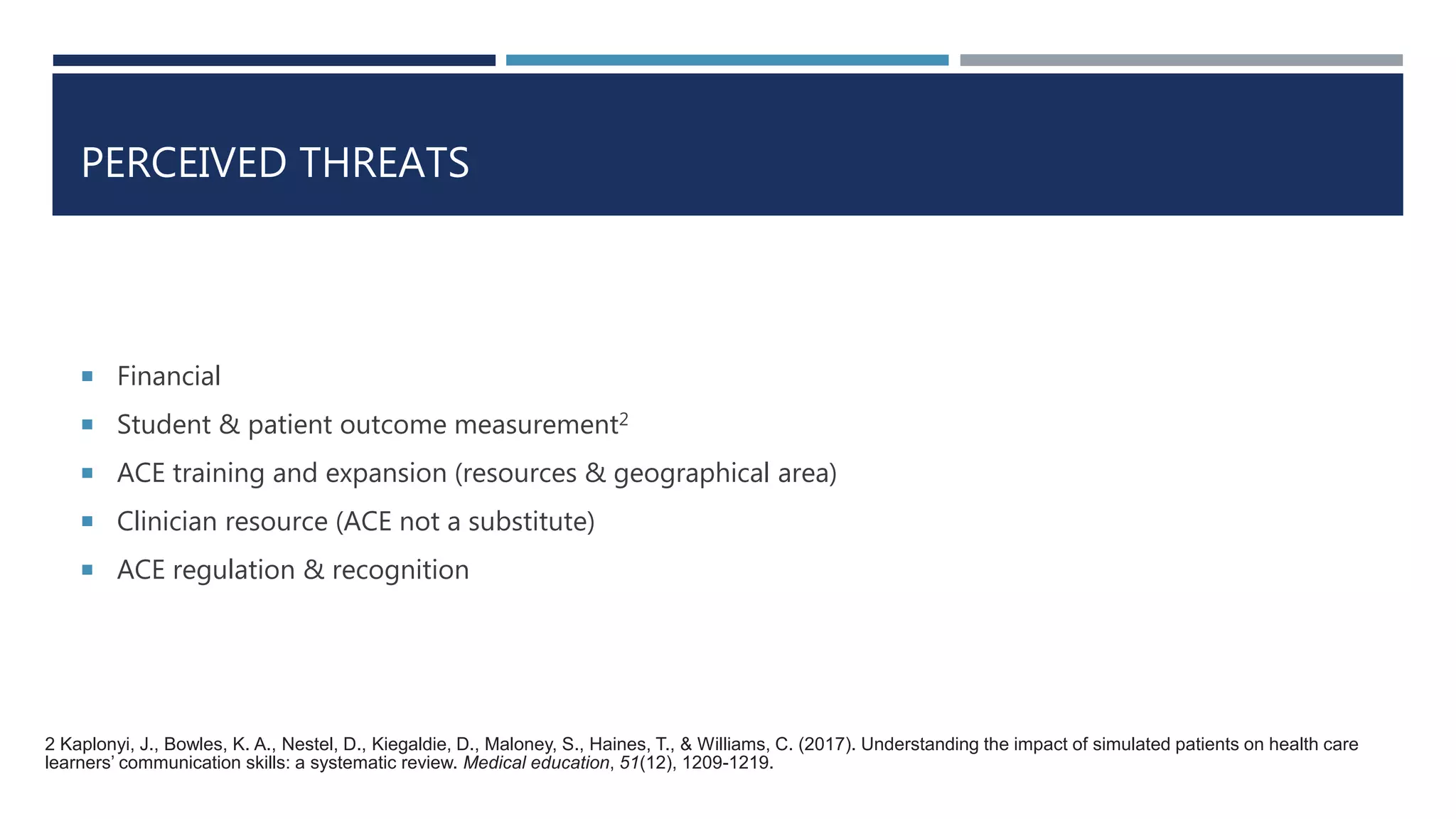
PERCEIVED THREATS
 Financial
 Student & patient outcome measurement2
 ACE training and expansion (resources & geographical area)
 Clinician resource (ACE not a substitute)
 ACE regulation & recognition
2 Kaplonyi, J., Bowles, K. A., Nestel, D., Kiegaldie, D., Maloney, S., Haines, T., & Williams, C. (2017). Understanding the impact of simulated patients on health care
learners’ communication skills: a systematic review. Medical education, 51(12), 1209-1219.
FUTURE RESEARCH
 Use of SPs & ACEs; investigating their potential, student experience and impact on student performance
 Use of haptics and potential development in skill acquisition
 Hybrid approaches
 If you have any interest in medical simulation and research please contact me: j.ennis@chester.ac.uk

Simulation at chester (meducate)

  • 1.
    PA SIMULATION ATCHESTER JAMES ENNIS
  • 2.
    OVERVIEW  How weuse simulated patients (ACEs)  Where they are used  Student experience  Perceived threats  Future development
  • 3.
    HOW WE USEACES Emphasis on human simulation at Chester  Simulated/standardised patients 1 – role players  Associate clinical educators (ACEs) – physical examination  Breast Teaching Associates (BTAs)  Gynae Teaching associates (GTAs) – yet to fully establish  Male Teaching Associates (MTAs) – male genitalia & DRE  SIM family – emergency scenarios – hybrid approaches Teaching & Assessment 1 Beigzadeh, A., Bahmanbijri, B., Sharifpoor, E., & Rahimi, M. (2016). Standardized patients versus simulated patients in medical education: are they the same or different. Journal of Emergency Practice and Trauma, 2(1), 25-28.
  • 4.
    WHERE WE USEACES To best replicate current clinical practice in simulation: Online & In person
  • 5.
    STUDENT EXPERIENCE  ‘Ireally enjoy doing scenarios and simulation with the ACEs – I truly feel this is completely invaluable. Similarly, sessions run in this kind of fashion but with the mannequins, or even each other, would be just as helpful.’  ‘I thoroughly enjoy any sort of practical OSCE type sessions and scenarios. These are extremely helpful’  ‘It is a great team that run it, and its amazing having a team with people from different backgrounds. I really enjoy the Meducate sessions and think they are so important especially when prepping for OSCEs.’  ‘Would feel more confident from more simulation sessions to develop real-life applications of what we are learning and to be fully prepared for OSCEs’  ‘I think simulation sessions for things that students specifically find difficult would be helpful. So personally, I would like an opportunity to practise cranial nerve exam, MSK exam and ENT stuff that I think we didn’t get much time with when we were originally taught- mostly because of covid restrictions.’
  • 6.
    PERCEIVED THREATS  Financial Student & patient outcome measurement2  ACE training and expansion (resources & geographical area)  Clinician resource (ACE not a substitute)  ACE regulation & recognition 2 Kaplonyi, J., Bowles, K. A., Nestel, D., Kiegaldie, D., Maloney, S., Haines, T., & Williams, C. (2017). Understanding the impact of simulated patients on health care learners’ communication skills: a systematic review. Medical education, 51(12), 1209-1219.
  • 7.
    FUTURE RESEARCH  Useof SPs & ACEs; investigating their potential, student experience and impact on student performance  Use of haptics and potential development in skill acquisition  Hybrid approaches  If you have any interest in medical simulation and research please contact me: j.ennis@chester.ac.uk

Editor's Notes

  • #7 SP-based education is widely accepted as a valuable and effective means of teaching communication skills but there is limited evidence of how this translates to patient outcomes and no indication of economic benefit for this type of training over another method