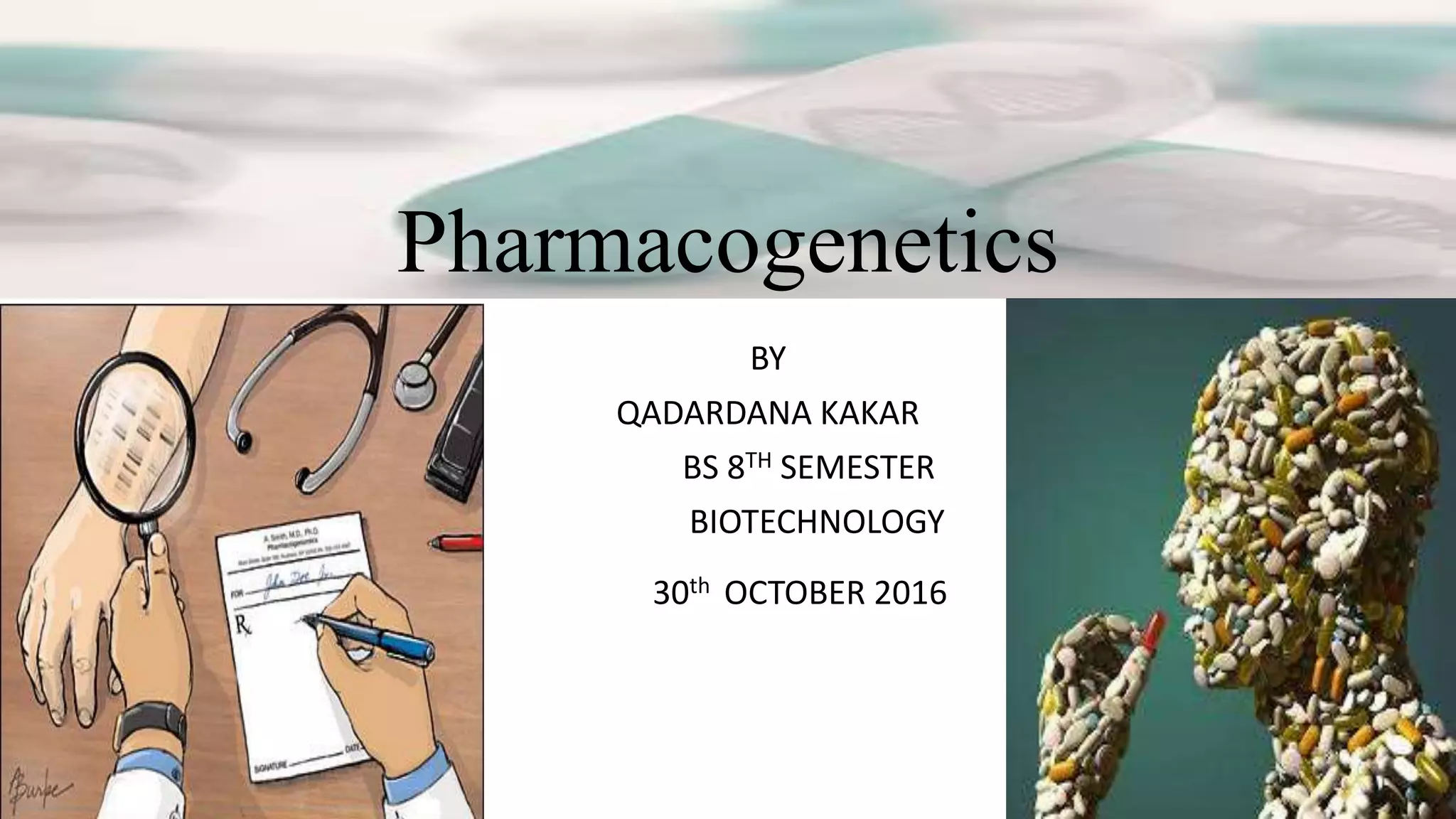
Pharmacogenetics
BY
QADARDANA KAKAR
BS 8TH SEMESTER
BIOTECHNOLOGY
30th OCTOBER 2016
Pharmacogenetics
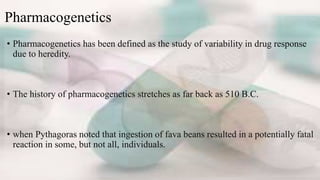
• Pharmacogenetics has been defined as the study of variability in drug response
due to heredity.
• The history of pharmacogenetics stretches as far back as 510 B.C.
• when Pythagoras noted that ingestion of fava beans resulted in a potentially fatal
reaction in some, but not all, individuals.
Pharmacogenetics
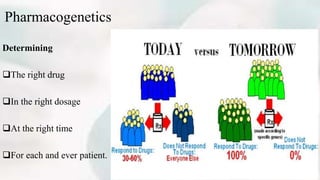
Determining
The right drug
In the right dosage
At the right time
For each and ever patient.
Pharmacogenetics
• Variation within the human genome is seen about every 500±1000 bases.
• There are a number of different types of polymorphic markers.
• Most attention recently has focused on single nucleotide polymorphisms (SNPs,
pronounced snips).
• The potential for using these to determine the individual drug response profile is
very high.
Example of different response to drugs
• Primaquine-induced hemolytic anemia among African-Americans
• Later shown to be due to glucose-6-phosphate dehydrogenase [G6PD] variant
alleles.
• succinylcholine-induced prolonged apnea during anesthesia (due to autosomal
recessive butyrylcholinesterase deficiency).
• Severe adverse effects after antituberculosis treatment with isoniazid (later
shown to be due to N-acetyltransferase [NAT] variant allele).
Initiation of pharmacogenetics
• In 1977 the hepatic cytochrome P450 oxidase that controls debrisoquine and
sparteine metabolism were study.
• And family studies identified specific drug metabolism phenotypes
• suggested that the “poor metabolism” trait was inherited in an autosomal
recessive Mendelian fashion.
Continue..
• The responsible enzyme, CYP2D6, was eventually purified, cloned, and
extensively sequenced
• And is now believed to be directly involved in the metabolism of ~25% of all
commonly used drugs.
• More than 80 variant CYP2D6 alleles have since been discovered worldwide,
many of which encode deficient enzyme activity.
Case study
• For ten-year-old leukaemia patient Jason Saunders, the usual chemotherapy was
not going to work.
• Given the standard drug treatment, there was a strong chance that toxic
metabolites would build up in his body and make him sick.
• Requiring a break in his therapy that would allow the cancer to return.
• This is because Jason is one with a genetic variation that reduces his ability to
metabolize thiopurines,
• The drugs most commonly used to treat acute lymphoblastic leukaemia.
Case study
• Rather than having two high-activity copies of the TPMT gene that produces the
enzyme responsible for metabolizing these drugs, Jason has only one.
• Luckily for him, the doctors knew that.
• When he was diagnosed with cancer, one of the first things his physicians did was
take a sample of his blood to assess how he might respond to the drugs.
• As a result, Jason was given a lower dose of thiopurines than normal, and he
tolerated the therapy without needing a break. He is now in remission.
Conclusion
• These are important issues that will require clinical pharmacological expertise to
investigate.
• Inevitably, it is likely that many of our expectations may be unrealistic, and what
may eventually be realized is somewhere in between the viewpoints of the
optimists and pessimists.
Presentation1

Presentation1

  • 1.
    Pharmacogenetics BY QADARDANA KAKAR BS 8THSEMESTER BIOTECHNOLOGY 30th OCTOBER 2016
  • 2.
    Pharmacogenetics • Pharmacogenetics hasbeen defined as the study of variability in drug response due to heredity. • The history of pharmacogenetics stretches as far back as 510 B.C. • when Pythagoras noted that ingestion of fava beans resulted in a potentially fatal reaction in some, but not all, individuals.
  • 3.
    Pharmacogenetics Determining The right drug Inthe right dosage At the right time For each and ever patient.
  • 4.
    Pharmacogenetics • Variation withinthe human genome is seen about every 500±1000 bases. • There are a number of different types of polymorphic markers. • Most attention recently has focused on single nucleotide polymorphisms (SNPs, pronounced snips). • The potential for using these to determine the individual drug response profile is very high.
  • 5.
    Example of differentresponse to drugs • Primaquine-induced hemolytic anemia among African-Americans • Later shown to be due to glucose-6-phosphate dehydrogenase [G6PD] variant alleles. • succinylcholine-induced prolonged apnea during anesthesia (due to autosomal recessive butyrylcholinesterase deficiency). • Severe adverse effects after antituberculosis treatment with isoniazid (later shown to be due to N-acetyltransferase [NAT] variant allele).
  • 6.
    Initiation of pharmacogenetics •In 1977 the hepatic cytochrome P450 oxidase that controls debrisoquine and sparteine metabolism were study. • And family studies identified specific drug metabolism phenotypes • suggested that the “poor metabolism” trait was inherited in an autosomal recessive Mendelian fashion.
  • 7.
    Continue.. • The responsibleenzyme, CYP2D6, was eventually purified, cloned, and extensively sequenced • And is now believed to be directly involved in the metabolism of ~25% of all commonly used drugs. • More than 80 variant CYP2D6 alleles have since been discovered worldwide, many of which encode deficient enzyme activity.
  • 8.
    Case study • Forten-year-old leukaemia patient Jason Saunders, the usual chemotherapy was not going to work. • Given the standard drug treatment, there was a strong chance that toxic metabolites would build up in his body and make him sick. • Requiring a break in his therapy that would allow the cancer to return. • This is because Jason is one with a genetic variation that reduces his ability to metabolize thiopurines, • The drugs most commonly used to treat acute lymphoblastic leukaemia.
  • 9.
    Case study • Ratherthan having two high-activity copies of the TPMT gene that produces the enzyme responsible for metabolizing these drugs, Jason has only one. • Luckily for him, the doctors knew that. • When he was diagnosed with cancer, one of the first things his physicians did was take a sample of his blood to assess how he might respond to the drugs. • As a result, Jason was given a lower dose of thiopurines than normal, and he tolerated the therapy without needing a break. He is now in remission.
  • 10.
    Conclusion • These areimportant issues that will require clinical pharmacological expertise to investigate. • Inevitably, it is likely that many of our expectations may be unrealistic, and what may eventually be realized is somewhere in between the viewpoints of the optimists and pessimists.