Chapter 1: A Human Phenomenon
Consider the following questions:
 What is art?
 What are some ways to approach a
definition of art?
What is art?
 No one definition applies for all times and
places.
 “Art is a primarily visual medium that
expresses ideas about our human
experience and the world around us.”
-Lazzari and Schlesier, Exploring Art
 Function: what job does the art do within a
culture?
 Visual Form: what does the art look like,
how and what has the artist assembled?
 Content: what ideas are being
communicated through the art?
 Aesthetics: what is defined as beautiful by
the culture in which the art was made?
Functions of Art
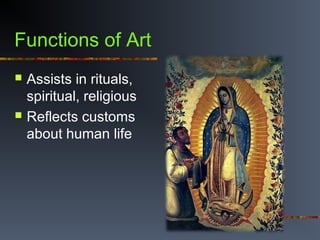
 Assists in rituals,
spiritual, religious
 Reflects customs
about human life
Functions of Art
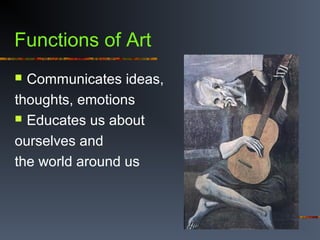
 Communicates ideas,
thoughts, emotions
 Educates us about
ourselves and
the world around us
Functions of Art
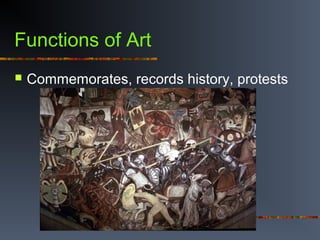
 Commemorates, records history, protests
Functions of Art
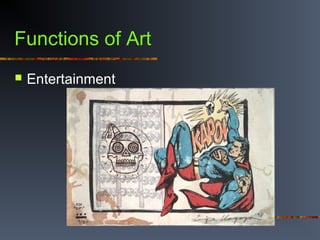
 Entertainment
VISUAL FORM
 MATERIALS
 FORMAL ELEMENTS
 OVERALL COMPOSITION OR
ARRANGEMENT
CONTENT
 The art’s imagery
 It’s surroundings where it is used or
displayed
 Its symbolic meaning
 The customs, beliefs, and values of the
culture that uses it
 Text incorporated in work, or writings
about work
What defines beauty…?
What makes something beautiful?
 WHO defines beauty?
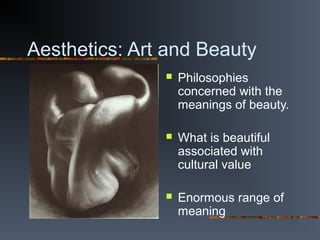
Aesthetics: Art and Beauty
 Philosophies
concerned with the
meanings of beauty.
 What is beautiful
associated with
cultural value
 Enormous range of
meaning
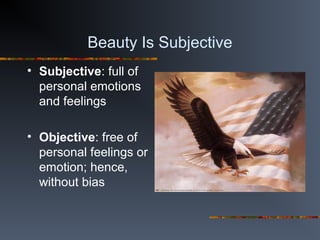
Beauty Is Subjective
• Subjective: full of
personal emotions
and feelings
• Objective: free of
personal feelings or
emotion; hence,
without bias
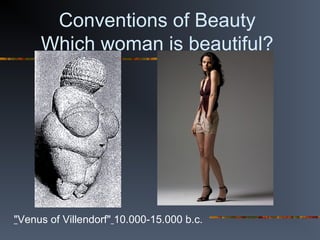
Conventions of Beauty
Which woman is beautiful?
"Venus of Villendorf" 10.000-15.000 b.c.
Beauty is like art…
 There is no one definition of beauty for
one time period or place.
 Ideas of beauty change over time and
across different cultural and geographical
locations.
 Beauty is in the eye of the beholder. One
person may think something is beautiful
while another may not.
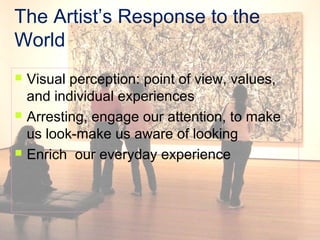
The Artist’s Response to the
World
 Visual perception: point of view, values,
and individual experiences
 Arresting, engage our attention, to make
us look-make us aware of looking
 Enrich our everyday experience
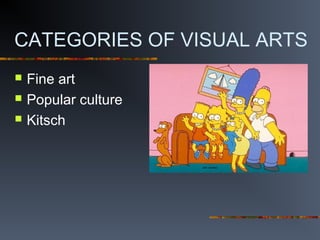
CATEGORIES OF VISUAL ARTS
 Fine art
 Popular culture
 Kitsch
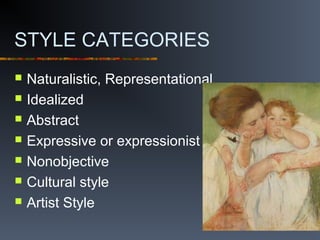
STYLE CATEGORIES
 Naturalistic, Representational
 Idealized
 Abstract
 Expressive or expressionist
 Nonobjective
 Cultural style
 Artist Style
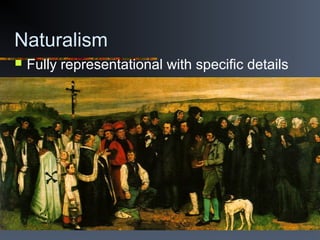
Naturalism
 Fully representational with specific details
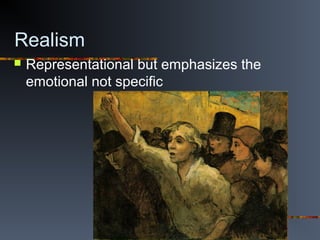
Realism
 Representational but emphasizes the
emotional not specific
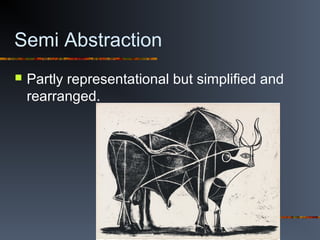
Semi Abstraction
 Partly representational but simplified and
rearranged.
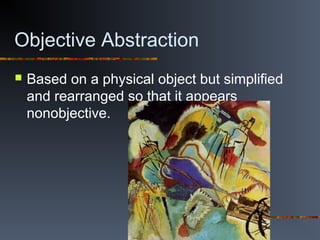
Objective Abstraction
 Based on a physical object but simplified
and rearranged so that it appears
nonobjective.
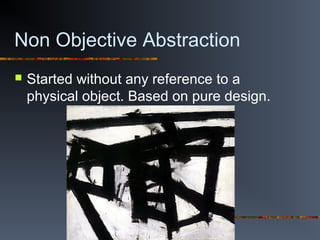
Non Objective Abstraction
 Started without any reference to a
physical object. Based on pure design.
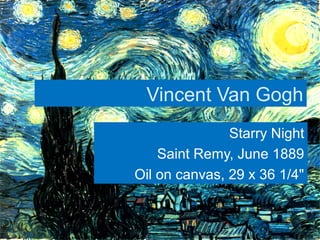
Vincent Van Gogh
Starry Night
Saint Remy, June 1889
Oil on canvas, 29 x 36 1/4"
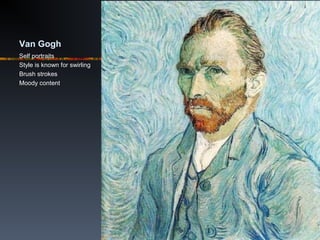
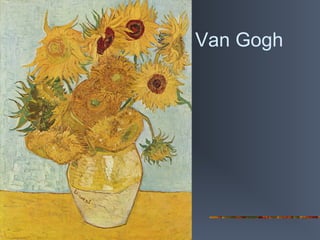
Van Gogh
Self portraits
Style is known for swirling
Brush strokes
Moody content
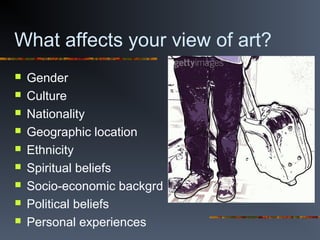
What affects your view of art?
 Gender
 Culture
 Nationality
 Geographic location
 Ethnicity
 Spiritual beliefs
 Socio-economic backgrd
 Political beliefs
 Personal experiences
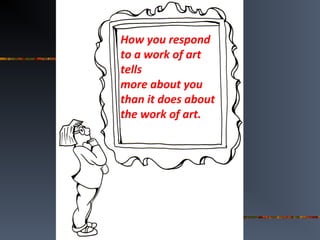
How you respond
to a work of art
tells
more about you
than it does about
the work of art.

What Is Art? A Human Phenomenon

  • 1.
    Chapter 1: AHuman Phenomenon Consider the following questions:  What is art?  What are some ways to approach a definition of art?
  • 2.
    What is art? No one definition applies for all times and places.  “Art is a primarily visual medium that expresses ideas about our human experience and the world around us.” -Lazzari and Schlesier, Exploring Art
  • 3.
     Function: whatjob does the art do within a culture?  Visual Form: what does the art look like, how and what has the artist assembled?  Content: what ideas are being communicated through the art?  Aesthetics: what is defined as beautiful by the culture in which the art was made?
  • 4.
    Functions of Art Assists in rituals, spiritual, religious  Reflects customs about human life
  • 5.
    Functions of Art Communicates ideas, thoughts, emotions  Educates us about ourselves and the world around us
  • 6.
    Functions of Art Commemorates, records history, protests
  • 7.
    Functions of Art Entertainment
  • 8.
    VISUAL FORM  MATERIALS FORMAL ELEMENTS  OVERALL COMPOSITION OR ARRANGEMENT
  • 9.
    CONTENT  The art’simagery  It’s surroundings where it is used or displayed  Its symbolic meaning  The customs, beliefs, and values of the culture that uses it  Text incorporated in work, or writings about work
  • 10.
    What defines beauty…? Whatmakes something beautiful?  WHO defines beauty?
  • 11.
    Aesthetics: Art andBeauty  Philosophies concerned with the meanings of beauty.  What is beautiful associated with cultural value  Enormous range of meaning
  • 12.
    Beauty Is Subjective •Subjective: full of personal emotions and feelings • Objective: free of personal feelings or emotion; hence, without bias
  • 13.
    Conventions of Beauty Whichwoman is beautiful? "Venus of Villendorf" 10.000-15.000 b.c.
  • 14.
    Beauty is likeart…  There is no one definition of beauty for one time period or place.  Ideas of beauty change over time and across different cultural and geographical locations.  Beauty is in the eye of the beholder. One person may think something is beautiful while another may not.
  • 15.
    The Artist’s Responseto the World  Visual perception: point of view, values, and individual experiences  Arresting, engage our attention, to make us look-make us aware of looking  Enrich our everyday experience
  • 16.
    CATEGORIES OF VISUALARTS  Fine art  Popular culture  Kitsch
  • 17.
    STYLE CATEGORIES  Naturalistic,Representational  Idealized  Abstract  Expressive or expressionist  Nonobjective  Cultural style  Artist Style
  • 18.
  • 19.
    Realism  Representational butemphasizes the emotional not specific
  • 20.
    Semi Abstraction  Partlyrepresentational but simplified and rearranged.
  • 21.
    Objective Abstraction  Basedon a physical object but simplified and rearranged so that it appears nonobjective.
  • 22.
    Non Objective Abstraction Started without any reference to a physical object. Based on pure design.
  • 23.
    Vincent Van Gogh StarryNight Saint Remy, June 1889 Oil on canvas, 29 x 36 1/4"
  • 24.
    Van Gogh Self portraits Styleis known for swirling Brush strokes Moody content
  • 27.
    What affects yourview of art?  Gender  Culture  Nationality  Geographic location  Ethnicity  Spiritual beliefs  Socio-economic backgrd  Political beliefs  Personal experiences
  • 28.
    How you respond toa work of art tells more about you than it does about the work of art.