Lecture 1

A Human Phenomenon
What is art?
• Assists us in rituals
• Reflects customs related to food, shelter, and
  human reproduction
• Communicates thoughts, emotions, ideas
• Visualizes deities
• Educates us about the surrounding world
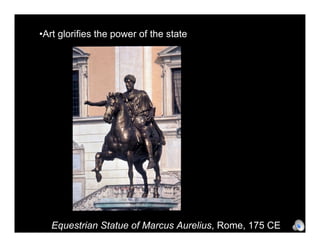
•Art glorifies the power of the state


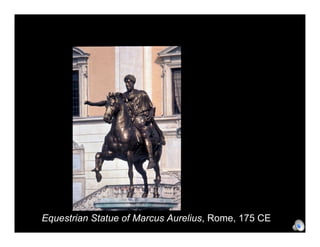
   Equestrian Statue of Marcus Aurelius, Rome, 175 CE
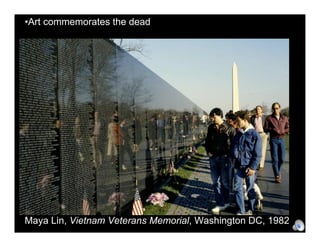
•Art commemorates the dead


Maya Lin, Vietnam Veterans Memorial, Washington DC, 1982
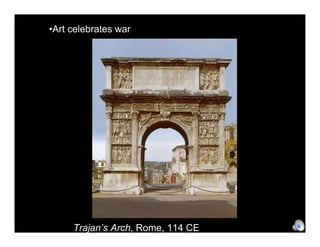
•Art celebrates war


     Trajan’s Arch, Rome, 114 CE
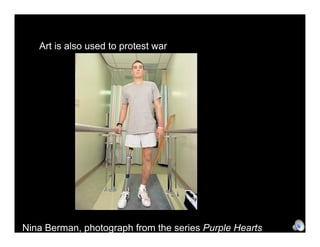
Art is also used to protest war


Nina Berman, photograph from the series Purple Hearts
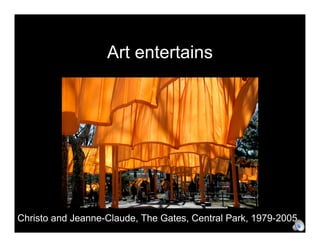
Art entertains


Christo and Jeanne-Claude, The Gates, Central Park, 1979-2005
Can you think of any other functions of
 art?

What function does art take in your life?
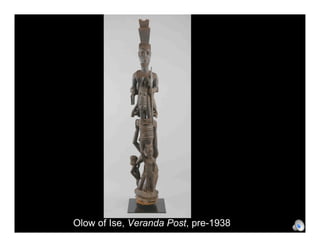
Olow of Ise, Veranda Post, pre-1938
Equestrian Statue of Marcus Aurelius, Rome, 175 CE
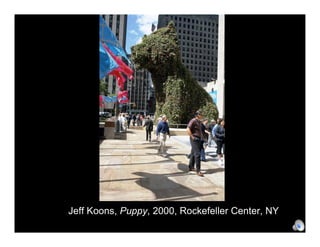
Jeff Koons, Puppy, 2000, Rockefeller Center, NY
Art has content, which is the mass of ideas
           associated with the work.

The content can be expressed through the:
• Imagery
• Location or surroundings where it is displayed
• Symbols
• Customs, beliefs or values in the culture in
  which it was made
• Text associated with the work or writings
  about the work
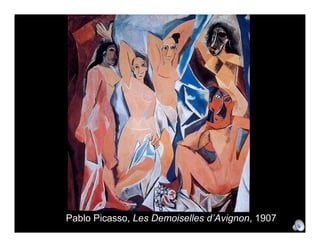
Pablo Picasso, Les Demoiselles d’Avignon, 1907
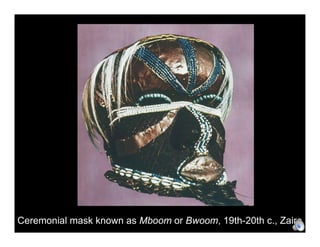
Ceremonial mask known as Mboom or Bwoom, 19th-20th c., Zaire
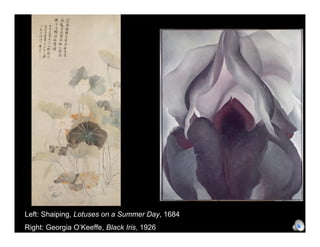
Left: Shaiping, Lotuses on a Summer Day, 1684
Right: Georgia O’Keeffe, Black Iris, 1926
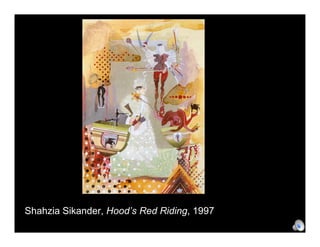
Shahzia Sikander, Hood’s Red Riding, 1997
Categories of Visual Arts
• Fine Art
• Pop Culture
• Kitsch
Fine Art


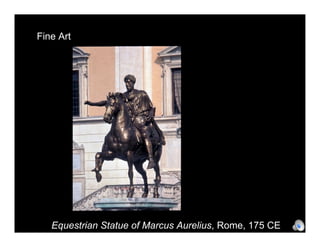
   Equestrian Statue of Marcus Aurelius, Rome, 175 CE
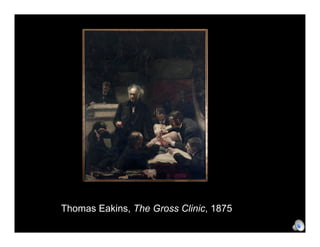
Thomas Eakins, The Gross Clinic, 1875
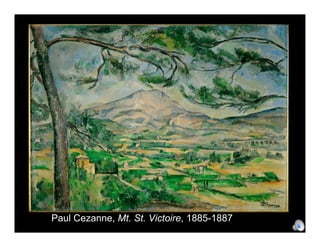
Paul Cezanne, Mt. St. Victoire, 1885-1887
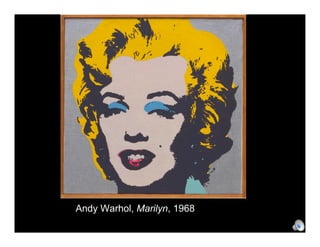
Pop Culture
When you hear the words “pop culture,”
 what do you think of?
Pop Culture
When you hear the words “pop culture,” what
  do you think of?
• Television
• Movies
• Magazines
• Comic books
• Advertising
• Tattoos
• Websites
Andy Warhol, Marilyn, 1968
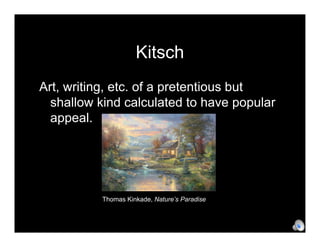
Kitsch
Art, writing, etc. of a pretentious but
  shallow kind calculated to have popular
  appeal.


          Thomas Kinkade, Nature’s Paradise
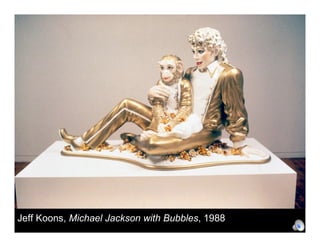
Jeff Koons, Michael Jackson with Bubbles, 1988
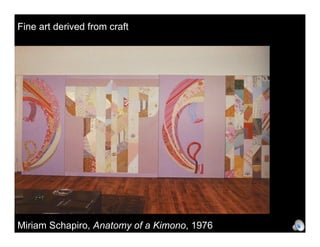
Fine art derived from craft


Miriam Schapiro, Anatomy of a Kimono, 1976
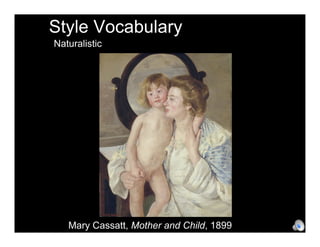
Style Vocabulary
Naturalistic


   Mary Cassatt, Mother and Child, 1899
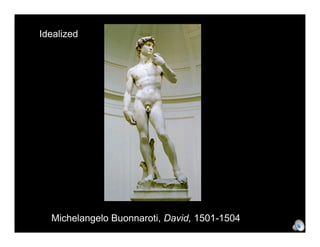
Idealized


  Michelangelo Buonnaroti, David, 1501-1504
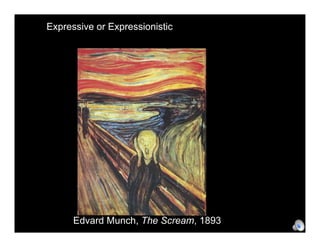
Expressive or Expressionistic


      Edvard Munch, The Scream, 1893
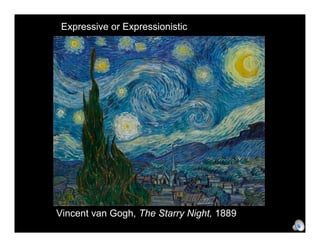
Expressive or Expressionistic


Vincent van Gogh, The Starry Night, 1889
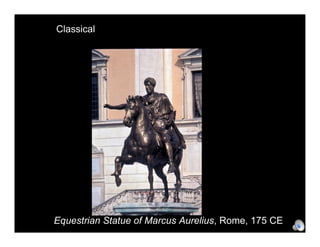
Classical


Equestrian Statue of Marcus Aurelius, Rome, 175 CE
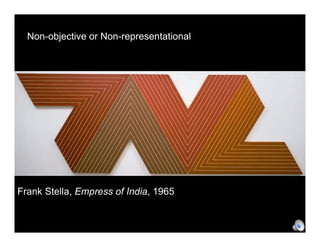
Non-objective or Non-representational


Frank Stella, Empress of India, 1965
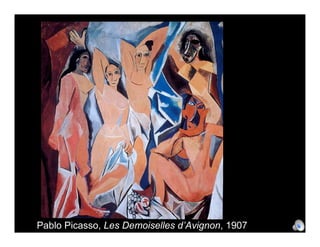
Pablo Picasso, Les Demoiselles d’Avignon, 1907
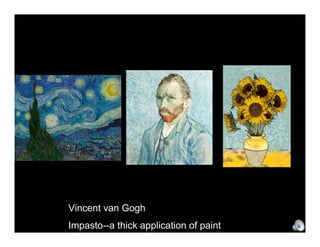
Vincent van Gogh
Impasto--a thick application of paint
Assignment 1 Questions
• How do you encounter art on a daily
  basis?
• When looking at art, are you drawn to it
  by its aesthetics or by its meaning?
• Do you judge some art to be more
  valuable than other types of art?
  Explain your response.

Presentation1nosound