











Bringing Nature Home


      Doug Tallamy
Top 10 Voter Concerns
Economy              80%
Health Care         66%
Gov’t Corruption    66%
Taxes                58%
Energy Policy       52%
Education            61%
Social Security     60%
Immigration         45%
National Security   52%
Afghanistan         35%
Biodiversity losses
 are a clear signal
that humanity’s life
 support systems
    are failing.
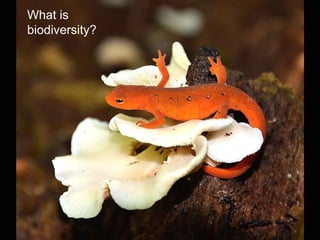
What is
biodiversity?


                   What is
                biodiversity ?
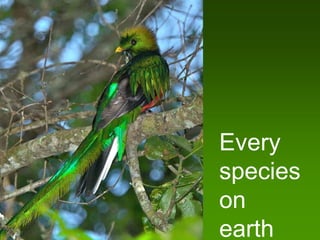
Every
species
on
earth
Each species has a specific
function in its ecosystem, and
 there is much redundancy in
     healthy ecosystems.

Several species do the same job.
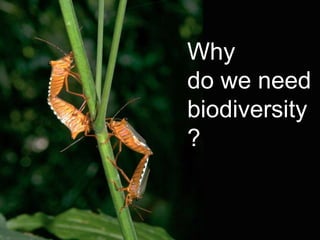
Why
do we need
biodiversity
?
Biodiversity is essential to
 ecosystems because it:
   Increases stability
   Increases productivity
   Decreases susceptibility to biotic invasions


                      David Tilman, Peter Price, Don
    Strong
Plants and animals are
       the rivets
holding the ecosystems
     that sustain us
        together.
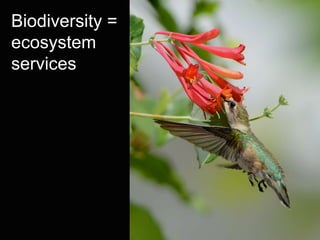
Biodiversity =
ecosystem
services
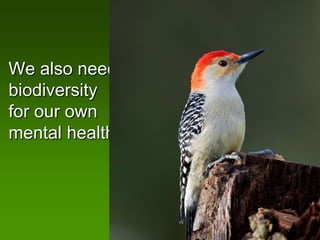
We also need
biodiversity
for our own
mental health
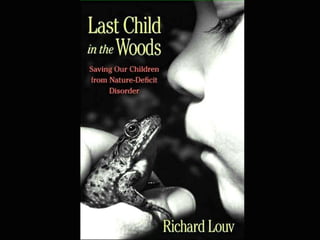
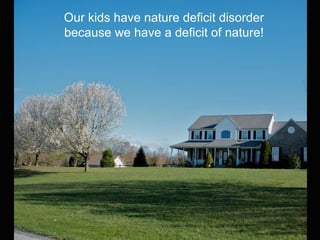
Our kids have nature deficit disorder
because we have a deficit of nature!
Where does animal
diversity come from?
950 million acres
Kershner & Leverett 2004
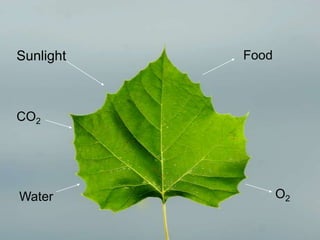
Sunlight                Food

           Photosynthesis
CO2           drawing


Water                          O2
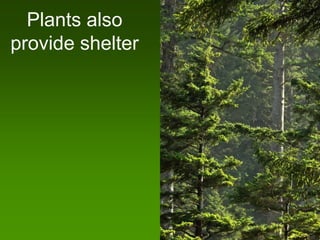
Plants also
provide shelter
Plants are literally a matter of life and
death
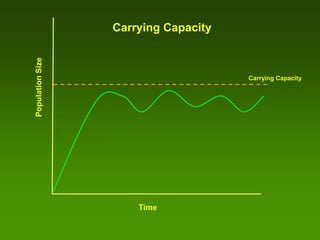
Carrying Capacity

The number of individuals of a
particular species that can be
    supported sustainably
without degrading the resource
             base
Carrying Capacity
Population Size


                                      Carrying Capacity


                      Time
Population Size   Carrying Capacity


                                      Carrying Capacity


                         Time
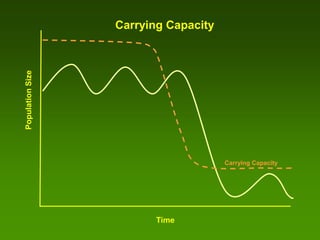
What have we done
to the carrying capacity
of the U.S. ?


                           Sanderson 2009
We haven’t
done this
only on
Manhattan!
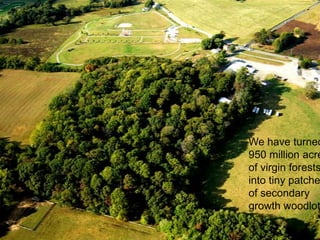
We have turned
950 million acre
of virgin forests
into tiny patche
of secondary
growth woodlot
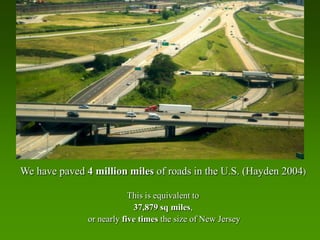
We have paved 4 million miles of roads in the U.S. (Hayden 2004)

                           This is equivalent to
                            37,879 sq miles,
               or nearly five times the size of New Jersey
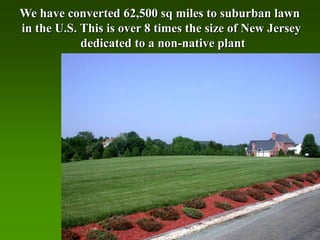
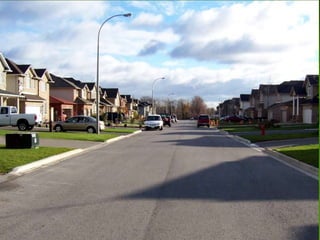
We have converted 62,500 sq miles to suburban lawn
in the U.S. This is over 8 times the size of New Jersey
            dedicated to a non-native plant
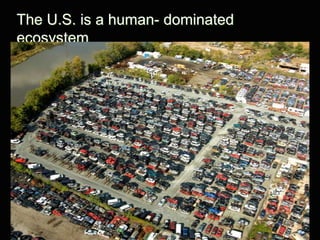
The U.S. is a human- dominated
ecosystem
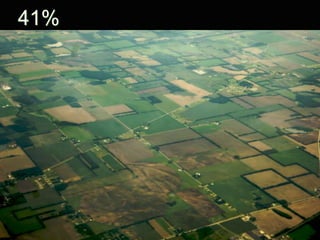
41%
agriculture
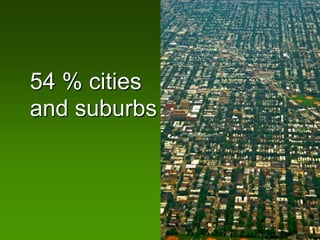
54 % cities
and suburbs
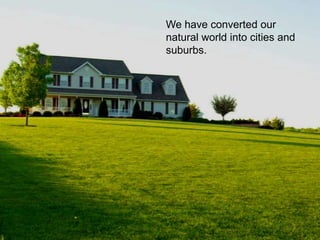
We have converted our
natural world into cities and
suburbs.
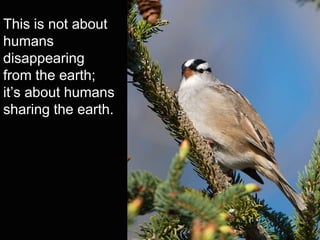
This is not about
humans
disappearing
from the earth;
it’s about humans
sharing the earth.
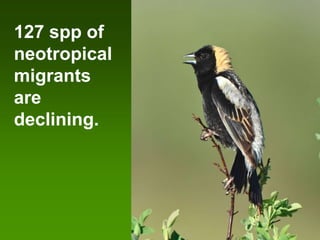
127 spp of
neotropical
migrants
are
declining.
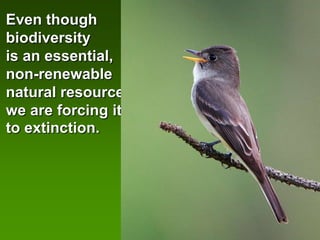
Even though
biodiversity
is an essential,
non-renewable
natural resource,
we are forcing it
to extinction.
Why can’t
biodiversity survive
  in our parks and
     preserves?
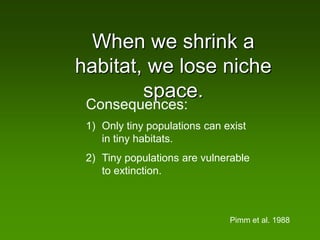
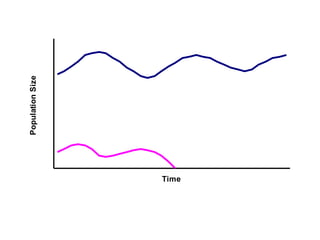
When we shrink a
habitat, we lose niche
        space.
 Consequences:
 1) Only tiny populations can exist
    in tiny habitats.
 2) Tiny populations are vulnerable
    to extinction.


                               Pimm et al. 1988
Population Size
       few               many


Time
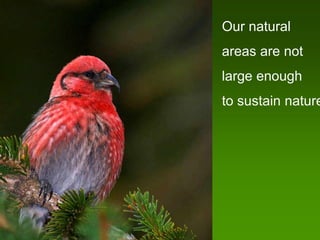
Our natural
areas are not
large enough
to sustain nature
Today, our yards
 support very little
   biodiversity.
        Our challenge is to raise
      the carrying capacity of our
             neighborhoods
so that they can be healthy, functioning
              ecosystems.
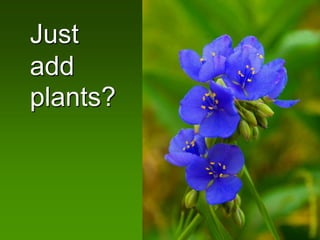
Just
add
plants?
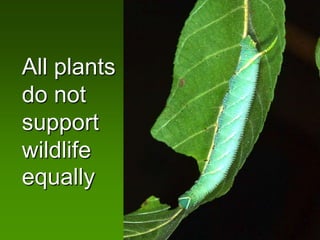
All plants
do not
support
wildlife
equally
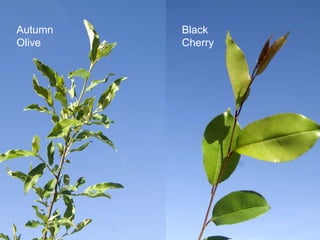
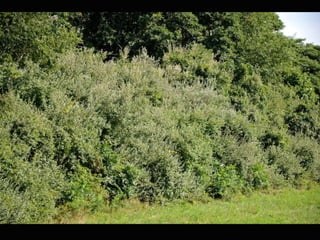
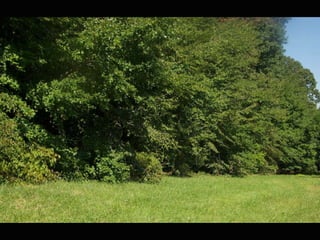
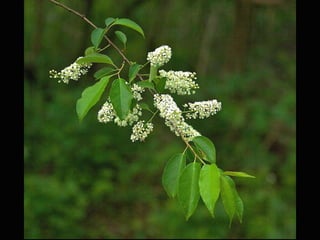
Autumn   Black
Olive    Cherry
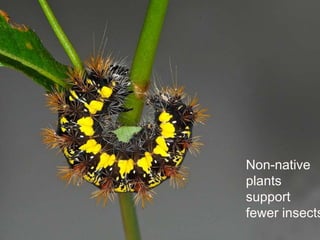
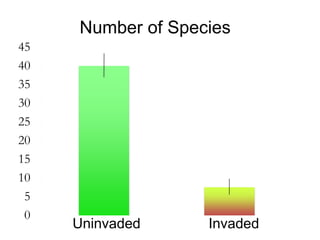
Non-native
Non-native plants
                    plants
support
                    support
fewer insects.
                    fewer insects
Number of Species
45
40
35
30
25
20
15
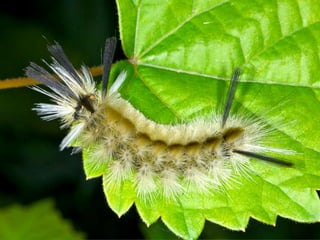
10
 5
 0
     Uninvaded     Invaded
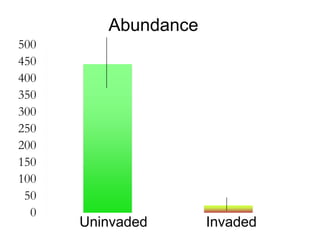
Abundance
500
450
400
350
300
250
200
150
100
 50
  0
      Uninvaded      Invaded
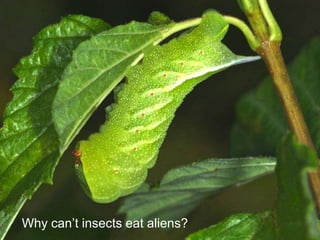
Why can’t insects eat
                      aliens?


Why can’t insects eat aliens?
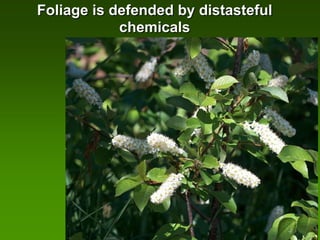
Foliage is defended by distasteful
            chemicals
Most insects can develop
        and reproduce only
on the plants with which they share
      an evolutionary history.

                       (Ehrlich & Raven, 1964)
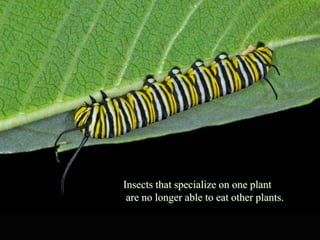
Insects that specialize on one plant
Insects that   specializeare no longer able to eat other plants.
                          on one plant
90% of all phytophagous insect species
can eat plants in only 3 or fewer families.

         Most can tolerate only
      a few closely related species.


                     (Bernays & Graham, 1988)
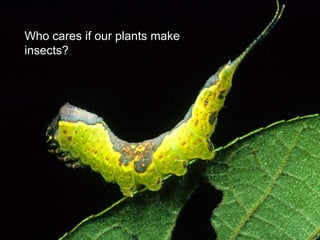
Who cares if our plants make
insects?
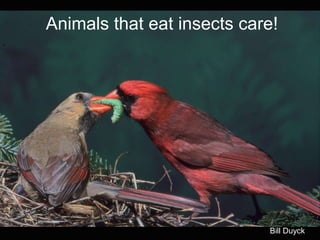
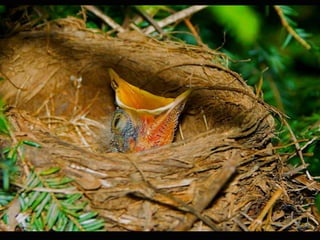
Animals that eat insects care!


                            Bill Duyck
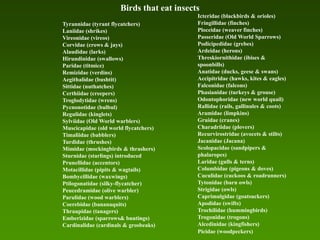
Birds that eat insects
                                           Icteridae (blackbirds & orioles)
Tyrannidae (tyrant flycatchers)            Fringillidae (finches)
Laniidae (shrikes)                         Ploceidae (weaver finches)
Vireonidae (vireos)                        Passeridae (Old World Sparrows)
Corvidae (crows & jays)                    Podicipedidae (grebes)
Alaudidae (larks)                          Ardeidae (herons)
Hirundinidae (swallows)                    Threskiornithidae (ibises &
Paridae (titmice)                          spoonbills)
Remizidae (verdins)                        Anatidae (ducks, geese & swans)
Aegithalidae (bushtit)                     Accipitridae (hawks, kites & eagles)
Sittidae (nuthatches)                      Falconidae (falcons)
Certhiidae (creepers)                      Phasianidae (turkeys & grouse)
Troglodytidae (wrens)                      Odontophoridae (new world quail)
Pycnonotidae (bulbul)                      Rallidae (rails, gallinules & coots)
Regulidae (kinglets)                       Aramidae (limpkins)
Sylviidae (Old World warblers)             Gruidae (cranes)
Muscicapidae (old world flycatchers)       Charadriidae (plovers)
Timaliidae (babblers)                      Recurvirostridae (avocets & stilts)
Turdidae (thrushes)                        Jacanidae (Jacana)
Mimidae (mockingbirds & thrashers)         Scolopacidae (sandpipers &
Sturnidae (starlings) introduced           phalaropes)
Prunellidae (accentors)                    Laridae (gulls & terns)
Motacillidae (pipits & wagtails)           Columbidae (pigeons & doves)
Bombycillidae (waxwings)                   Cuculidae (cuckoos & roadrunners)
Ptilogonatidae (silky-flycatcher)          Tytonidae (barn owls)
Peucedramidae (olive warbler)              Strigidae (owls)
Parulidae (wood warblers)                  Caprimulgidae (goatsuckers)
Coerebidae (bananaquits)                   Apodidae (swifts)
Thraupidae (tanagers)                      Trochilidae (hummingbirds)
Emberizidae (sparrows& buntings)           Trogonidae (trogons)
Cardinalidae (cardinals & grosbeaks)       Alcedinidae (kingfishers)
                                           Picidae (woodpeckers)
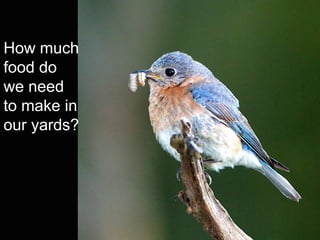
How much
food do
we need
to make in
our yards?
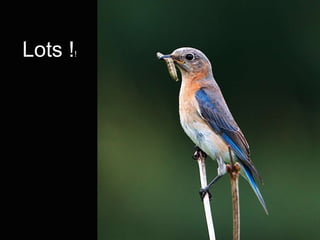
Lots !   !


             L
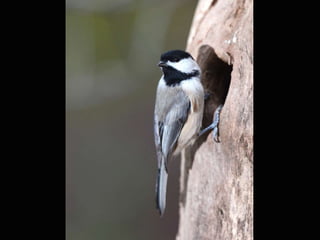
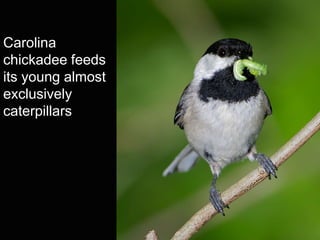
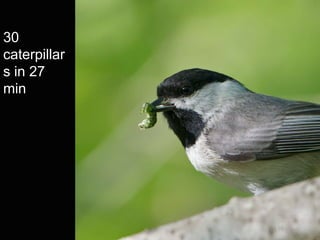
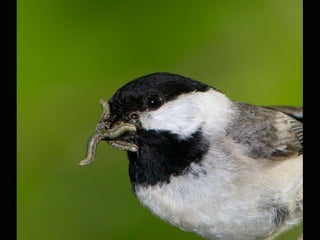
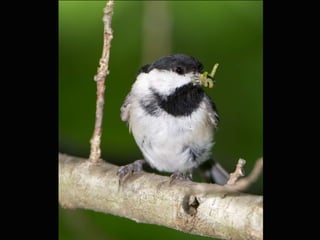
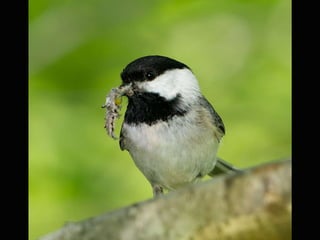
Carolina
chickadee feeds
its young almost
exclusively
caterpillars
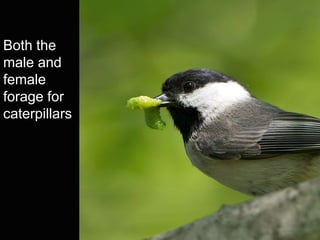
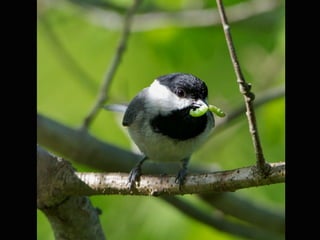
Both the
male and
female
forage for
caterpillars
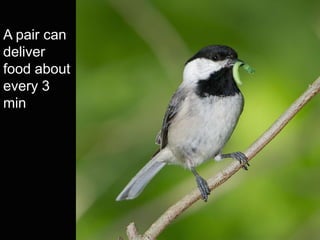
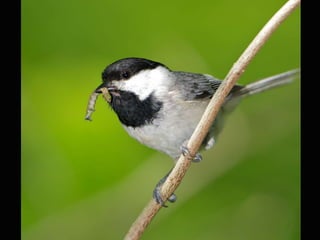
A pair can
deliver
food about
every 3
min
30
caterpillar
s in 27
min
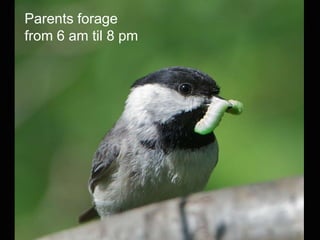
Parents forage
from 6 am til 8 pm
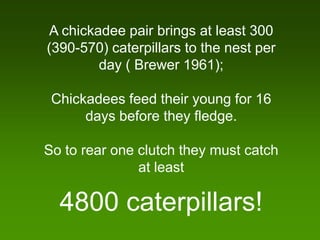
A chickadee pair brings at least 300
(390-570) caterpillars to the nest per
        day ( Brewer 1961);

 Chickadees feed their young for 16
      days before they fledge.

So to rear one clutch they must catch
               at least

  4800 caterpillars!
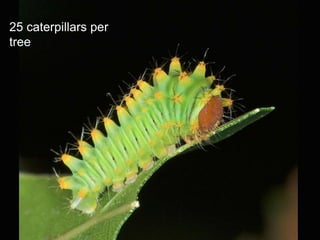
25 caterpillars per
tree
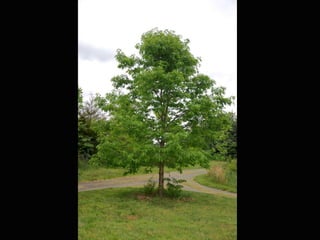
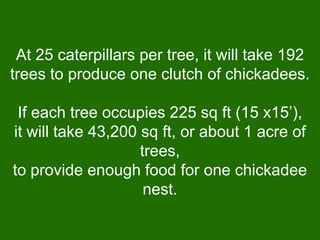
At 25 caterpillars per tree, it will take 192
trees to produce one clutch of chickadees.

 If each tree occupies 225 sq ft (15 x15’),
it will take 43,200 sq ft, or about 1 acre of
                    trees,
to provide enough food for one chickadee
                     nest.
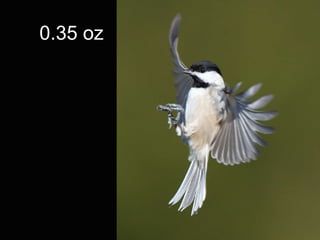
0.35 oz
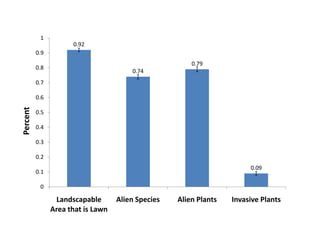
How close are
our yards to making
  this much food?
1
                      0.92
          0.9
                                                        0.79
          0.8
                                        0.74
          0.7

          0.6
Percent


          0.5

          0.4

          0.3

          0.2
                                                                        0.09
          0.1

           0

                 Landscapable       Alien Species   Alien Plants   Invasive Plants
                Area that is Lawn
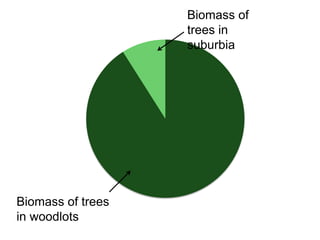
Biomass of
                   trees in
                   suburbia


Biomass of trees
in woodlots
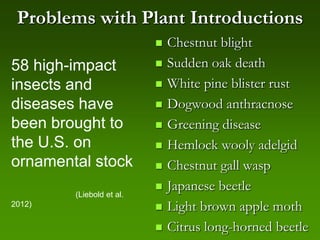
Problems with Plant Introductions
                             Chestnut blight
58 high-impact               Sudden oak death
insects and                  White pine blister rust
diseases have                Dogwood anthracnose
been brought to              Greening disease
the U.S. on                  Hemlock wooly adelgid
ornamental stock             Chestnut gall wasp
        (Liebold et al.
                             Japanese beetle
2012)                        Light brown apple moth
                             Citrus long-horned beetle
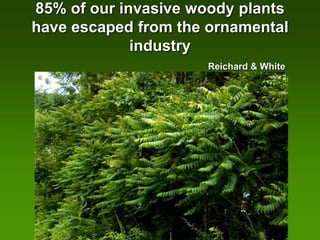
85% of our invasive woody plants
have escaped from the ornamental
             industry
                     Reichard & White
              2001
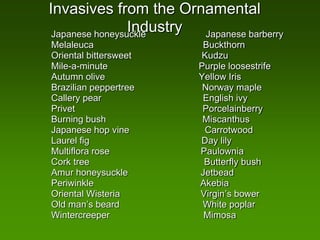
Invasives from the Ornamental
                 Industry
 Japanese honeysuckle     Japanese barberry
Melaleuca                   Buckthorn
Oriental bittersweet       Kudzu
Mile-a-minute              Purple loosestrife
Autumn olive               Yellow Iris
Brazilian peppertree        Norway maple
Callery pear                English ivy
Privet                      Porcelainberry
Burning bush                Miscanthus
Japanese hop vine           Carrotwood
Laurel fig                 Day lily
Multiflora rose            Paulownia
Cork tree                   Butterfly bush
Amur honeysuckle           Jetbead
Periwinkle                 Akebia
Oriental Wisteria          Virgin’s bower
Old man’s beard             White poplar
Wintercreeper               Mimosa
It’s not just the types of plants in our
landscapes that are starving our
birds, it is the amount of plants we
use in suburbia.
                   house
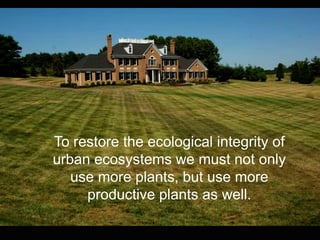
       To restore the ecological integrity of
       urban ecosystems we must not only
          use more plants, but use more
            productive plants as well.
Does your yard have to
   100% natives?
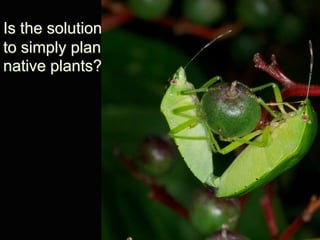
Is the solution
to simply plant
native plants?
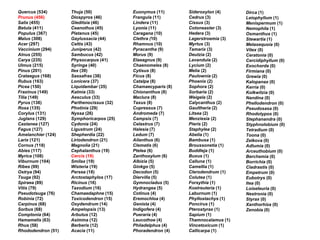
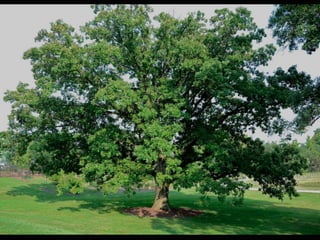
Quercus (534)       Thuja (50)            Euonymus (11)       Sideroxylon (4)     Dirca (1)
Prunus (456)        Diospyros (46)        Frangula (11)       Cedrus (3)          Leiophyllum (1)
Salix (455)         Gleditsia (46)        Lindera (11)        Cissus (3)          Menispermum (1)
Betula (411)        Ceanothus (45)        Lyonia (11)         Cotoneaster (3)     Nemophila (1)
Populus (367)       Platanus (45)         Caragana (10)       Hedera (3)          Osmanthus (1)
Malus (308)         Gaylussacia (44)      Clethra (10)        Lagerstroemia (3)   Stewartia (1)
Acer (297)          Celtis (43)           Rhamnus (10)        Myrtus (3)          Metasequoia (0)
Vaccinium (294)     Juniperus (42)        Pyracantha (9)      Tamarix (3)         Vitex (0)
Alnus (255)         Sambucus (42)         Morus (9)           Deutzia (2)         Ceratonia (0)
Carya (235)         Physocarpus (41)      Elaeagnus (9)       Lavandula (2)       Cercidiphyllum (0)
Ulmus (215)         Syringa (40)          Chaenomeles (8)     Lycium (2)          Exochorda (0)
Pinus (201)         Ilex (39)             Cytisus (8)         Melia (2)           Firmiana (0)
Crataegus (168)     Sassafras (38)        Ficus (8)           Paulownia (2)       Grewia (0)
Rubus (163)         Lonicera (37)         Catalpa (8)         Phoenix (2)         Kalopanax (0)
Picea (150)         Liquidambar (35)      Chamaecyparis (8)   Sophora (2)         Kerria (0)
Fraxinus (149)      Kalmia (33)           Chionanthus (8)     Sorbaria (2)        Kolkwitzia (0)
Tilia (149)         Aesculus (33)         Maclura (8)         Weigela (2)         Nandina (0)
Pyrus (138)         Parthenocissus (32)   Taxus (8)           Calycanthus (2)     Phellodendron (0)
Rosa (135)          Photinia (29)         Cupressus (7)       Gaultheria (2)      Pseudosasa (0)
Corylus (131)       Nyssa (26)            Andromeda (7)       Litsea (2)          Rhodotypos (0)
Juglans (129)       Symphoricarpos (25)   Campsis (7)         Menziesia (2)       Stephanandra (0)
Castanea (127)      Cydonia (24)          Celastrus (7)       Pieris (2)          Styphnolobium (0)
Fagus (127)         Ligustrum (24)        Halesia (7)         Staphylea (2)       Tetradium (0)
Amelanchier (124)   Shepherdia (22)       Ledum (7)           Abelia (1)          Toona (0)
Larix (121)         Liriodendron (21)     Ailanthus (6)       Bambusa (1)         Zelkova (0)
Cornus (118)        Magnolia (21)         Clematis (6)        Broussonetia (1)    Adlumia (0)
Abies (117)         Cephalanthus (19)     Ptelea (6)          Buddleja (1)        Arceuthobium (0)
Myrica (108)        Cercis (19)           Zanthoxylum (6)     Buxus (1)           Berchemia (0)
Viburnum (104)      Smilax (19)           Albizia (5)         Calluna (1)         Borrichia (0)
Ribes (99)          Wisteria (19)         Ginkgo (5)          Camellia (1)        Cladrastis (0)
Ostrya (94)         Persea (18)           Decodon (5)         Clerodendrum (1)    Empetrum (0)
Tsuga (92)          Arctostaphylos (17)   Diervilla (5)       Colutea (1)         Eubotrys (0)
Spiraea (89)        Ricinus (16)          Gymnocladus (5)     Forsythia (1)       Itea (0)
Vitis (79)          Taxodium (16)         Hydrangea (5)       Koelreuteria (1)    Loiseleuria (0)
Pseudotsuga (76)    Chamaedaphne (15)     Cotinus (4)         Laburnum (1)        Nestronia (0)
Robinia (72)        Toxicodendron (15)    Eremochloa (4)      Phyllostachys (1)   Styrax (0)
Carpinus (68)       Oxydendrum (14)       Genista (4)         Poncirus (1)        Xanthorhiza (0)
Sorbus (68)         Ampelopsis (13)       Indigofera (4)      Pterostyrax (1)     Zenobia (0)
Comptonia (64)      Arbutus (12)          Pueraria (4)        Sapium (1)
Hamamelis (63)      Asimina (12)          Leucothoe (4)       Thamnocalamus (1)
Rhus (58)           Berberis (12)         Philadelphus (4)    Vincetoxicum (1)
Rhododendron (51)   Acacia (11)           Phoradendron (4)    Callicarpa (1)
E
Quercus (534)       Thuja (50)            Euonymus (11)       Sideroxylon (4)     Dirca (1)
Prunus (456)        Diospyros (46)        Frangula (11)       Cedrus (3)          Leiophyllum (1)
Salix (455)         Gleditsia (46)        Lindera (11)        Cissus (3)          Menispermum (1)
Betula (411)        Ceanothus (45)        Lyonia (11)         Cotoneaster (3)     Nemophila (1)
Populus (367)       Platanus (45)         Caragana (10)       Hedera (3)          Osmanthus (1)
Malus (308)         Gaylussacia (44)      Clethra (10)        Lagerstroemia (3)   Stewartia (1)
Acer (297)          Celtis (43)           Rhamnus (10)        Myrtus (3)          Metasequoia (0)
Vaccinium (294)     Juniperus (42)        Pyracantha (9)      Tamarix (3)         Vitex (0)
Alnus (255)         Sambucus (42)         Morus (9)           Deutzia (2)         Ceratonia (0)
Carya (235)         Physocarpus (41)      Elaeagnus (9)       Lavandula (2)       Cercidiphyllum (0)
Ulmus (215)         Syringa (40)          Chaenomeles (8)     Lycium (2)          Exochorda (0)
Pinus (201)         Ilex (39)             Cytisus (8)         Melia (2)           Firmiana (0)
Crataegus (168)     Sassafras (38)        Ficus (8)           Paulownia (2)       Grewia (0)
Rubus (163)         Lonicera (37)         Catalpa (8)         Phoenix (2)         Kalopanax (0)
Picea (150)         Liquidambar (35)      Chamaecyparis (8)   Sophora (2)         Kerria (0)
Fraxinus (149)      Kalmia (33)           Chionanthus (8)     Sorbaria (2)        Kolkwitzia (0)
Tilia (149)         Aesculus (33)         Maclura (8)         Weigela (2)         Nandina (0)
Pyrus (138)         Parthenocissus (32)   Taxus (8)           Calycanthus (2)     Phellodendron (0)
Rosa (135)          Photinia (29)         Cupressus (7)       Gaultheria (2)      Pseudosasa (0)
Corylus (131)       Nyssa (26)            Andromeda (7)       Litsea (2)          Rhodotypos (0)
Juglans (129)       Symphoricarpos (25)   Campsis (7)         Menziesia (2)       Stephanandra (0)
Castanea (127)      Cydonia (24)          Celastrus (7)       Pieris (2)          Styphnolobium (0)
Fagus (127)         Ligustrum (24)        Halesia (7)         Staphylea (2)       Tetradium (0)
Amelanchier (124)   Shepherdia (22)       Ledum (7)           Abelia (1)          Toona (0)
Larix (121)         Liriodendron (21)     Ailanthus (6)       Bambusa (1)         Zelkova (0)
Cornus (118)        Magnolia (21)         Clematis (6)        Broussonetia (1)    Adlumia (0)
Abies (117)         Cephalanthus (19)     Ptelea (6)          Buddleja (1)        Arceuthobium (0)
Myrica (108)        Cercis (19)           Zanthoxylum (6)     Buxus (1)           Berchemia (0)
Viburnum (104)      Smilax (19)           Albizia (5)         Calluna (1)         Borrichia (0)
Ribes (99)          Wisteria (19)         Ginkgo (5)          Camellia (1)        Cladrastis (0)
Ostrya (94)         Persea (18)           Decodon (5)         Clerodendrum (1)    Empetrum (0)
Tsuga (92)          Arctostaphylos (17)   Diervilla (5)       Colutea (1)         Eubotrys (0)
Spiraea (89)        Ricinus (16)          Gymnocladus (5)     Forsythia (1)       Itea (0)
Vitis (79)          Taxodium (16)         Hydrangea (5)       Koelreuteria (1)    Loiseleuria (0)
Pseudotsuga (76)    Chamaedaphne (15)     Cotinus (4)         Laburnum (1)        Nestronia (0)
Robinia (72)        Toxicodendron (15)    Eremochloa (4)      Phyllostachys (1)   Styrax (0)
Carpinus (68)       Oxydendrum (14)       Genista (4)         Poncirus (1)        Xanthorhiza (0)
Sorbus (68)         Ampelopsis (13)       Indigofera (4)      Pterostyrax (1)     Zenobia (0)
Comptonia (64)      Arbutus (12)          Pueraria (4)        Sapium (1)
Hamamelis (63)      Asimina (12)          Leucothoe (4)       Thamnocalamus (1)
Rhus (58)           Berberis (12)         Philadelphus (4)    Vincetoxicum (1)
Rhododendron (51)   Acacia (11)           Phoradendron (4)    Callicarpa (1)
Quercus (534)       Thuja (50)            Euonymus (11)       Sideroxylon (4)     Dirca (1)
Prunus (456)        Diospyros (46)        Frangula (11)       Cedrus (3)          Leiophyllum (1)
Salix (455)         Gleditsia (46)        Lindera (11)        Cissus (3)          Menispermum (1)
Betula (411)        Ceanothus (45)        Lyonia (11)         Cotoneaster (3)     Nemophila (1)
Populus (367)       Platanus (45)         Caragana (10)       Hedera (3)          Osmanthus (1)
Malus (308)         Gaylussacia (44)      Clethra (10)        Lagerstroemia (3)   Stewartia (1)
Acer (297)          Celtis (43)           Rhamnus (10)        Myrtus (3)          Metasequoia (0)
Vaccinium (294)     Juniperus (42)        Pyracantha (9)      Tamarix (3)         Vitex (0)
Alnus (255)         Sambucus (42)         Morus (9)           Deutzia (2)         Ceratonia (0)
Carya (235)         Physocarpus (41)      Elaeagnus (9)       Lavandula (2)       Cercidiphyllum (0)
Ulmus (215)         Syringa (40)          Chaenomeles (8)     Lycium (2)          Exochorda (0)
Pinus (201)         Ilex (39)             Cytisus (8)         Melia (2)           Firmiana (0)
Crataegus (168)     Sassafras (38)        Ficus (8)           Paulownia (2)       Grewia (0)
Rubus (163)         Lonicera (37)         Catalpa (8)         Phoenix (2)         Kalopanax (0)
Picea (150)         Liquidambar (35)      Chamaecyparis (8)   Sophora (2)         Kerria (0)
Fraxinus (149)      Kalmia (33)           Chionanthus (8)     Sorbaria (2)        Kolkwitzia (0)
Tilia (149)         Aesculus (33)         Maclura (8)         Weigela (2)         Nandina (0)
Pyrus (138)         Parthenocissus (32)   Taxus (8)           Calycanthus (2)     Phellodendron (0)
Rosa (135)          Photinia (29)         Cupressus (7)       Gaultheria (2)      Pseudosasa (0)
Corylus (131)       Nyssa (26)            Andromeda (7)       Litsea (2)          Rhodotypos (0)
Juglans (129)       Symphoricarpos (25)   Campsis (7)         Menziesia (2)       Stephanandra (0)
Castanea (127)      Cydonia (24)          Celastrus (7)       Pieris (2)          Styphnolobium (0)
Fagus (127)         Ligustrum (24)        Halesia (7)         Staphylea (2)       Tetradium (0)
Amelanchier (124)   Shepherdia (22)       Ledum (7)           Abelia (1)          Toona (0)
Larix (121)         Liriodendron (21)     Ailanthus (6)       Bambusa (1)         Zelkova (0)
Cornus (118)        Magnolia (21)         Clematis (6)        Broussonetia (1)    Adlumia (0)
Abies (117)         Cephalanthus (19)     Ptelea (6)          Buddleja (1)        Arceuthobium (0)
Myrica (108)        Cercis (19)           Zanthoxylum (6)     Buxus (1)           Berchemia (0)
Viburnum (104)      Smilax (19)           Albizia (5)         Calluna (1)         Borrichia (0)
Ribes (99)          Wisteria (19)         Ginkgo (5)          Camellia (1)        Cladrastis (0)
Ostrya (94)         Persea (18)           Decodon (5)         Clerodendrum (1)    Empetrum (0)
Tsuga (92)          Arctostaphylos (17)   Diervilla (5)       Colutea (1)         Eubotrys (0)
Spiraea (89)        Ricinus (16)          Gymnocladus (5)     Forsythia (1)       Itea (0)
Vitis (79)          Taxodium (16)         Hydrangea (5)       Koelreuteria (1)    Loiseleuria (0)
Pseudotsuga (76)    Chamaedaphne (15)     Cotinus (4)         Laburnum (1)        Nestronia (0)
Robinia (72)        Toxicodendron (15)    Eremochloa (4)      Phyllostachys (1)   Styrax (0)
Carpinus (68)       Oxydendrum (14)       Genista (4)         Poncirus (1)        Xanthorhiza (0)
Sorbus (68)         Ampelopsis (13)       Indigofera (4)      Pterostyrax (1)     Zenobia (0)
Comptonia (64)      Arbutus (12)          Pueraria (4)        Sapium (1)
Hamamelis (63)      Asimina (12)          Leucothoe (4)       Thamnocalamus (1)
Rhus (58)           Berberis (12)         Philadelphus (4)    Vincetoxicum (1)
Rhododendron (51)   Acacia (11)           Phoradendron (4)    Callicarpa (1)
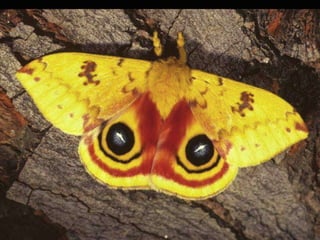
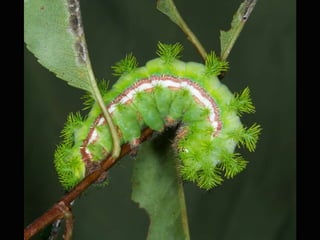
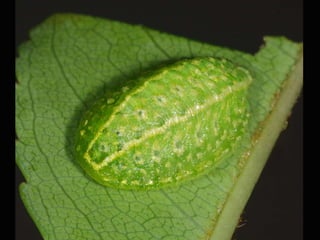
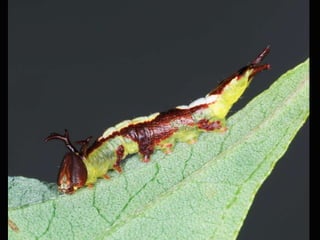
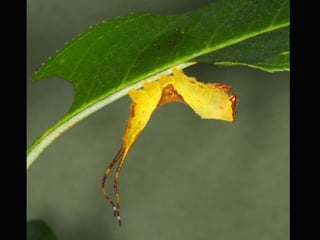
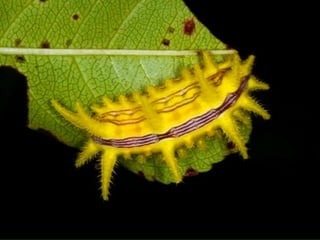
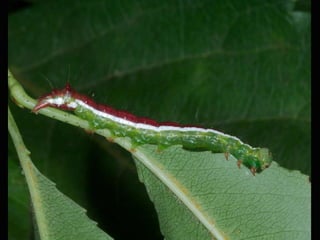
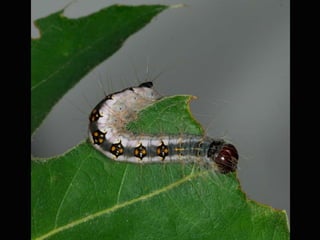
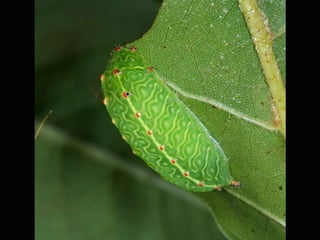
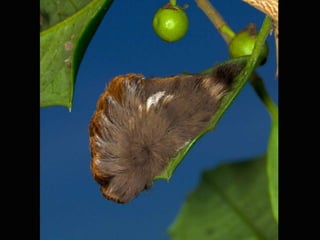
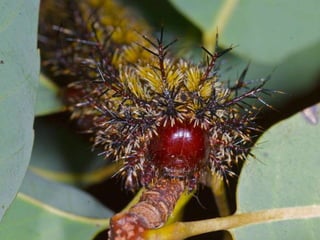
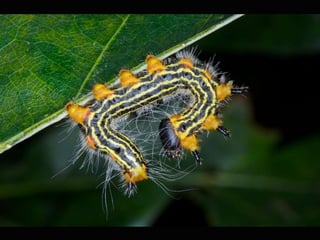
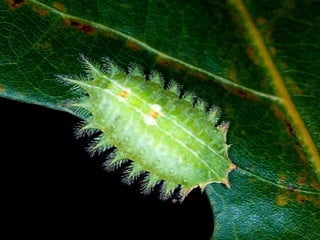
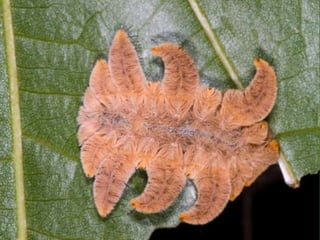
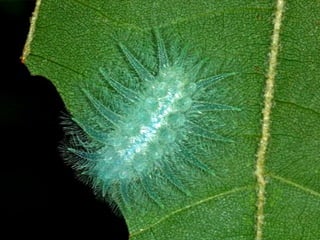
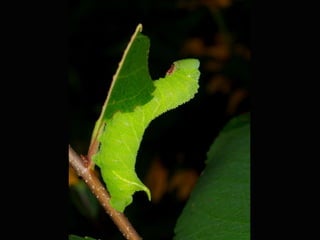
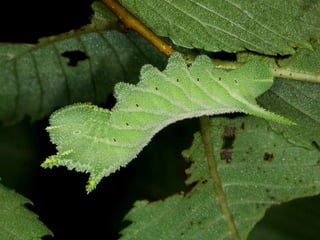
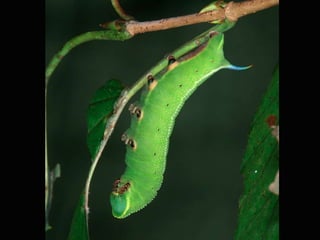
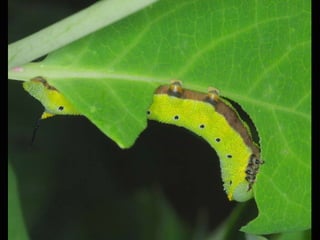
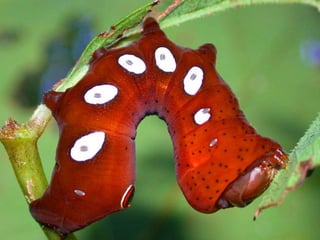
Io Moth
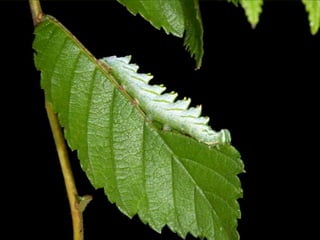
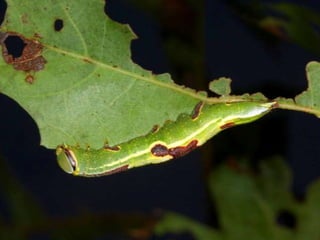
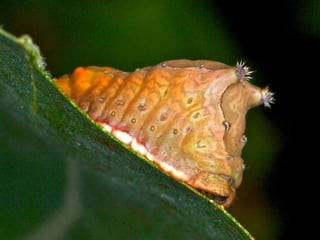
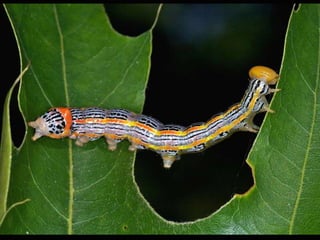
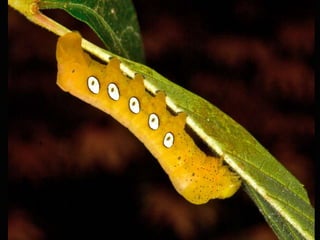
Saddled Prominent
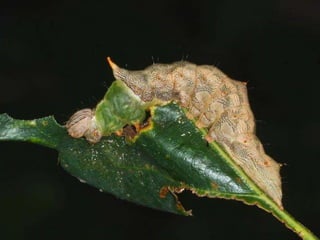
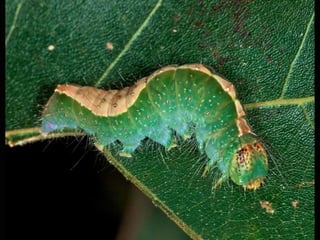
Double-lined Prominent
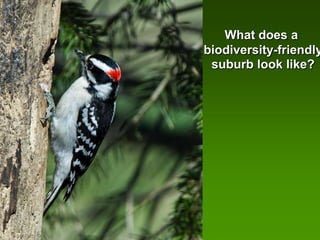
What does a
biodiversity-friendly
 suburb look like?
To share suburbia with
    wildlife, we need to:

 Create corridors connecting
  natural areas
 Reduce the area now in lawn

 Begin the transition from alien
  ornamentals to native
  ornamentals
If we
replant
half of
the area
now in
lawn…..
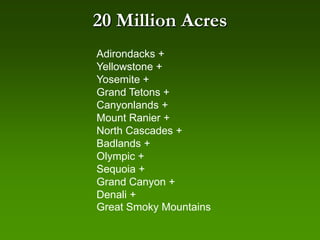
20 Million Acres
Adirondacks +
Yellowstone +
Yosemite +
Grand Tetons +
Canyonlands +
Mount Ranier +
North Cascades +
Badlands +
Olympic +
Sequoia +
Grand Canyon +
Denali +
Great Smoky Mountains
It is often
hardest to see
 what is most
   obvious
        It is often hardest to
        see what is most
Nature
 is what
you make
    it.
   We have paved 4 million miles of roads in the U.S.
   This is equivalent to 37,879 square miles, or nearly five
    times the size of New Jersey
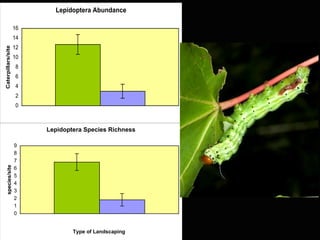
Lepidoptera Abundance

                    16
                    14
                    12
Caterpillars/site


                    10
                    8
                    6
                    4
                    2
                    0


                                  Type of Landscaping
                         Lepidoptera Species Richness

                    9
                    8
                    7
   species/site


                    6
                    5
                    4
                    3                              Native
                    2
                    1
                    0


                                 Type of Landscaping
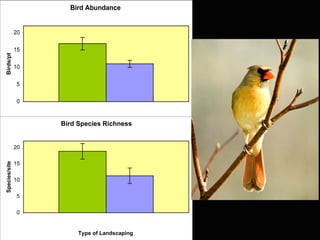
Bird Abundance


               20

               15
Birds/pt


               10

               5

               0


                        Type of Landscaping
                    Bird Species Richness


               20
Species/site


               15

               10

               5                        Native
               0


                         Type of Landscaping
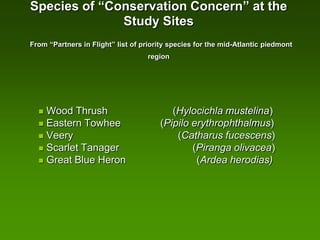
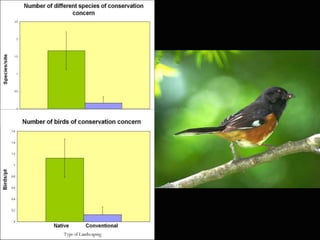
Species of “Conservation Concern” at the
              Study Sites
From “Partners in Flight” list of priority species for the mid-Atlantic piedmont
                                   region


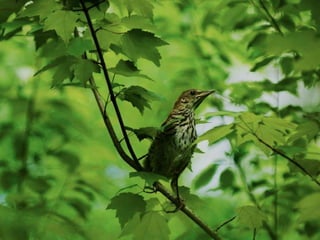
   Wood Thrush                           (Hylocichla mustelina)
   Eastern Towhee                     (Pipilo erythrophthalmus)
   Veery                                  (Catharus fucescens)
   Scarlet Tanager                            (Piranga olivacea)
   Great Blue Heron                            (Ardea herodias)
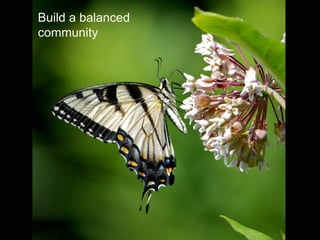
Build a balanced
community
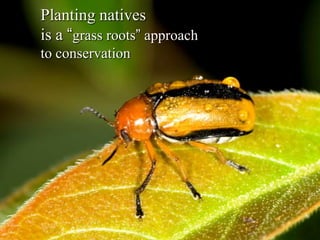
Planting natives
is a “grass roots” approach
to conservation
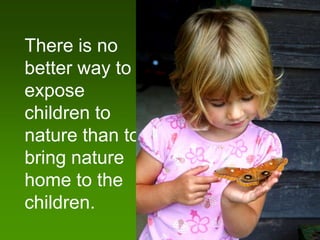
There is no
better way to
expose
children to
nature than to
bring nature
home to the
children.
“Gardening is
a way of
showing
that you believe
in tomorrow”

          Unknown
BringingNatureHome.n
         et
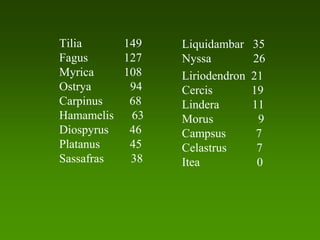
Tilia     149   Liquidambar    35
Fagus     127   Nyssa          26
Myrica    108   Liriodendron   21
Ostrya     94   Cercis         19
Carpinus   68   Lindera        11
Hamamelis  63   Morus           9
Diospyrus  46   Campsus         7
Platanus   45   Celastrus       7
Sassafras  38   Itea            0
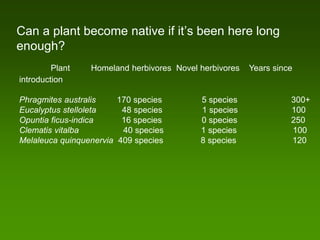
Can a plant become native if it’s been here long
enough?
         Plant   Homeland herbivores Novel herbivores   Years since
introduction

Phragmites australis    170 species        5 species              300+
Eucalyptus stelloleta    48 species        1 species              100
Opuntia ficus-indica     16 species        0 species              250
Clematis vitalba         40 species        1 species              100
Melaleuca quinquenervia 409 species        8 species              120
Compromise
 With Alien
  Credits!
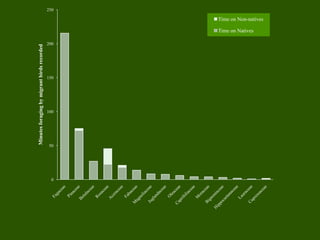
250

                                                   Time on Non-natives

                                                   Time on Natives

                                             200
Minutes foraging by migrant birds recorded


                                             150


                                             100


                                             50


                                              0

Bringing Nature Home

  • 1.
  • 3.
    Top 10 VoterConcerns Economy 80% Health Care 66% Gov’t Corruption 66% Taxes 58% Energy Policy 52% Education 61% Social Security 60% Immigration 45% National Security 52% Afghanistan 35%
  • 8.
    Biodiversity losses area clear signal that humanity’s life support systems are failing.
  • 9.
    What is biodiversity? What is biodiversity ?
  • 10.
  • 11.
    Each species hasa specific function in its ecosystem, and there is much redundancy in healthy ecosystems. Several species do the same job.
  • 12.
  • 13.
    Biodiversity is essentialto ecosystems because it:  Increases stability  Increases productivity  Decreases susceptibility to biotic invasions David Tilman, Peter Price, Don Strong
  • 14.
    Plants and animalsare the rivets holding the ecosystems that sustain us together.
  • 15.
  • 25.
    We also need biodiversity forour own mental health
  • 31.
    Our kids havenature deficit disorder because we have a deficit of nature!
  • 32.
  • 34.
  • 35.
    Sunlight Food Photosynthesis CO2 drawing Water O2
  • 36.
  • 37.
    Plants are literallya matter of life and death
  • 38.
    Carrying Capacity The numberof individuals of a particular species that can be supported sustainably without degrading the resource base
  • 39.
    Carrying Capacity Population Size Carrying Capacity Time
  • 40.
    Population Size Carrying Capacity Carrying Capacity Time
  • 43.
    What have wedone to the carrying capacity of the U.S. ? Sanderson 2009
  • 44.
  • 45.
    We have turned 950million acre of virgin forests into tiny patche of secondary growth woodlot
  • 46.
    We have paved4 million miles of roads in the U.S. (Hayden 2004) This is equivalent to 37,879 sq miles, or nearly five times the size of New Jersey
  • 47.
    We have converted62,500 sq miles to suburban lawn in the U.S. This is over 8 times the size of New Jersey dedicated to a non-native plant
  • 48.
    The U.S. isa human- dominated ecosystem
  • 49.
  • 50.
  • 51.
    We have convertedour natural world into cities and suburbs.
  • 52.
    This is notabout humans disappearing from the earth; it’s about humans sharing the earth.
  • 53.
  • 54.
    Even though biodiversity is anessential, non-renewable natural resource, we are forcing it to extinction.
  • 55.
    Why can’t biodiversity survive in our parks and preserves?
  • 56.
    When we shrinka habitat, we lose niche space. Consequences: 1) Only tiny populations can exist in tiny habitats. 2) Tiny populations are vulnerable to extinction. Pimm et al. 1988
  • 57.
    Population Size few many Time
  • 58.
    Our natural areas arenot large enough to sustain nature
  • 60.
    Today, our yards support very little biodiversity. Our challenge is to raise the carrying capacity of our neighborhoods so that they can be healthy, functioning ecosystems.
  • 61.
  • 62.
  • 63.
    Autumn Black Olive Cherry
  • 64.
    Non-native Non-native plants plants support support fewer insects. fewer insects
  • 67.
  • 68.
  • 70.
    Why can’t insectseat aliens? Why can’t insects eat aliens?
  • 71.
    Foliage is defendedby distasteful chemicals
  • 72.
    Most insects candevelop and reproduce only on the plants with which they share an evolutionary history. (Ehrlich & Raven, 1964)
  • 73.
    Insects that specializeon one plant Insects that specializeare no longer able to eat other plants. on one plant
  • 79.
    90% of allphytophagous insect species can eat plants in only 3 or fewer families. Most can tolerate only a few closely related species. (Bernays & Graham, 1988)
  • 80.
    Who cares ifour plants make insects?
  • 81.
    Animals that eatinsects care! Bill Duyck
  • 97.
    Birds that eatinsects Icteridae (blackbirds & orioles) Tyrannidae (tyrant flycatchers) Fringillidae (finches) Laniidae (shrikes) Ploceidae (weaver finches) Vireonidae (vireos) Passeridae (Old World Sparrows) Corvidae (crows & jays) Podicipedidae (grebes) Alaudidae (larks) Ardeidae (herons) Hirundinidae (swallows) Threskiornithidae (ibises & Paridae (titmice) spoonbills) Remizidae (verdins) Anatidae (ducks, geese & swans) Aegithalidae (bushtit) Accipitridae (hawks, kites & eagles) Sittidae (nuthatches) Falconidae (falcons) Certhiidae (creepers) Phasianidae (turkeys & grouse) Troglodytidae (wrens) Odontophoridae (new world quail) Pycnonotidae (bulbul) Rallidae (rails, gallinules & coots) Regulidae (kinglets) Aramidae (limpkins) Sylviidae (Old World warblers) Gruidae (cranes) Muscicapidae (old world flycatchers) Charadriidae (plovers) Timaliidae (babblers) Recurvirostridae (avocets & stilts) Turdidae (thrushes) Jacanidae (Jacana) Mimidae (mockingbirds & thrashers) Scolopacidae (sandpipers & Sturnidae (starlings) introduced phalaropes) Prunellidae (accentors) Laridae (gulls & terns) Motacillidae (pipits & wagtails) Columbidae (pigeons & doves) Bombycillidae (waxwings) Cuculidae (cuckoos & roadrunners) Ptilogonatidae (silky-flycatcher) Tytonidae (barn owls) Peucedramidae (olive warbler) Strigidae (owls) Parulidae (wood warblers) Caprimulgidae (goatsuckers) Coerebidae (bananaquits) Apodidae (swifts) Thraupidae (tanagers) Trochilidae (hummingbirds) Emberizidae (sparrows& buntings) Trogonidae (trogons) Cardinalidae (cardinals & grosbeaks) Alcedinidae (kingfishers) Picidae (woodpeckers)
  • 101.
    How much food do weneed to make in our yards?
  • 102.
  • 105.
    Carolina chickadee feeds its youngalmost exclusively caterpillars
  • 106.
  • 107.
    A pair can deliver foodabout every 3 min
  • 108.
  • 111.
  • 115.
    A chickadee pairbrings at least 300 (390-570) caterpillars to the nest per day ( Brewer 1961); Chickadees feed their young for 16 days before they fledge. So to rear one clutch they must catch at least 4800 caterpillars!
  • 117.
  • 118.
    At 25 caterpillarsper tree, it will take 192 trees to produce one clutch of chickadees. If each tree occupies 225 sq ft (15 x15’), it will take 43,200 sq ft, or about 1 acre of trees, to provide enough food for one chickadee nest.
  • 119.
  • 120.
    How close are ouryards to making this much food?
  • 121.
    1 0.92 0.9 0.79 0.8 0.74 0.7 0.6 Percent 0.5 0.4 0.3 0.2 0.09 0.1 0 Landscapable Alien Species Alien Plants Invasive Plants Area that is Lawn
  • 122.
    Biomass of trees in suburbia Biomass of trees in woodlots
  • 126.
    Problems with PlantIntroductions  Chestnut blight 58 high-impact  Sudden oak death insects and  White pine blister rust diseases have  Dogwood anthracnose been brought to  Greening disease the U.S. on  Hemlock wooly adelgid ornamental stock  Chestnut gall wasp (Liebold et al.  Japanese beetle 2012)  Light brown apple moth  Citrus long-horned beetle
  • 130.
    85% of ourinvasive woody plants have escaped from the ornamental industry Reichard & White 2001
  • 131.
    Invasives from theOrnamental Industry Japanese honeysuckle Japanese barberry Melaleuca Buckthorn Oriental bittersweet Kudzu Mile-a-minute Purple loosestrife Autumn olive Yellow Iris Brazilian peppertree Norway maple Callery pear English ivy Privet Porcelainberry Burning bush Miscanthus Japanese hop vine Carrotwood Laurel fig Day lily Multiflora rose Paulownia Cork tree Butterfly bush Amur honeysuckle Jetbead Periwinkle Akebia Oriental Wisteria Virgin’s bower Old man’s beard White poplar Wintercreeper Mimosa
  • 132.
    It’s not justthe types of plants in our landscapes that are starving our birds, it is the amount of plants we use in suburbia. house To restore the ecological integrity of urban ecosystems we must not only use more plants, but use more productive plants as well.
  • 133.
    Does your yardhave to 100% natives?
  • 135.
    Is the solution tosimply plant native plants?
  • 136.
    Quercus (534) Thuja (50) Euonymus (11) Sideroxylon (4) Dirca (1) Prunus (456) Diospyros (46) Frangula (11) Cedrus (3) Leiophyllum (1) Salix (455) Gleditsia (46) Lindera (11) Cissus (3) Menispermum (1) Betula (411) Ceanothus (45) Lyonia (11) Cotoneaster (3) Nemophila (1) Populus (367) Platanus (45) Caragana (10) Hedera (3) Osmanthus (1) Malus (308) Gaylussacia (44) Clethra (10) Lagerstroemia (3) Stewartia (1) Acer (297) Celtis (43) Rhamnus (10) Myrtus (3) Metasequoia (0) Vaccinium (294) Juniperus (42) Pyracantha (9) Tamarix (3) Vitex (0) Alnus (255) Sambucus (42) Morus (9) Deutzia (2) Ceratonia (0) Carya (235) Physocarpus (41) Elaeagnus (9) Lavandula (2) Cercidiphyllum (0) Ulmus (215) Syringa (40) Chaenomeles (8) Lycium (2) Exochorda (0) Pinus (201) Ilex (39) Cytisus (8) Melia (2) Firmiana (0) Crataegus (168) Sassafras (38) Ficus (8) Paulownia (2) Grewia (0) Rubus (163) Lonicera (37) Catalpa (8) Phoenix (2) Kalopanax (0) Picea (150) Liquidambar (35) Chamaecyparis (8) Sophora (2) Kerria (0) Fraxinus (149) Kalmia (33) Chionanthus (8) Sorbaria (2) Kolkwitzia (0) Tilia (149) Aesculus (33) Maclura (8) Weigela (2) Nandina (0) Pyrus (138) Parthenocissus (32) Taxus (8) Calycanthus (2) Phellodendron (0) Rosa (135) Photinia (29) Cupressus (7) Gaultheria (2) Pseudosasa (0) Corylus (131) Nyssa (26) Andromeda (7) Litsea (2) Rhodotypos (0) Juglans (129) Symphoricarpos (25) Campsis (7) Menziesia (2) Stephanandra (0) Castanea (127) Cydonia (24) Celastrus (7) Pieris (2) Styphnolobium (0) Fagus (127) Ligustrum (24) Halesia (7) Staphylea (2) Tetradium (0) Amelanchier (124) Shepherdia (22) Ledum (7) Abelia (1) Toona (0) Larix (121) Liriodendron (21) Ailanthus (6) Bambusa (1) Zelkova (0) Cornus (118) Magnolia (21) Clematis (6) Broussonetia (1) Adlumia (0) Abies (117) Cephalanthus (19) Ptelea (6) Buddleja (1) Arceuthobium (0) Myrica (108) Cercis (19) Zanthoxylum (6) Buxus (1) Berchemia (0) Viburnum (104) Smilax (19) Albizia (5) Calluna (1) Borrichia (0) Ribes (99) Wisteria (19) Ginkgo (5) Camellia (1) Cladrastis (0) Ostrya (94) Persea (18) Decodon (5) Clerodendrum (1) Empetrum (0) Tsuga (92) Arctostaphylos (17) Diervilla (5) Colutea (1) Eubotrys (0) Spiraea (89) Ricinus (16) Gymnocladus (5) Forsythia (1) Itea (0) Vitis (79) Taxodium (16) Hydrangea (5) Koelreuteria (1) Loiseleuria (0) Pseudotsuga (76) Chamaedaphne (15) Cotinus (4) Laburnum (1) Nestronia (0) Robinia (72) Toxicodendron (15) Eremochloa (4) Phyllostachys (1) Styrax (0) Carpinus (68) Oxydendrum (14) Genista (4) Poncirus (1) Xanthorhiza (0) Sorbus (68) Ampelopsis (13) Indigofera (4) Pterostyrax (1) Zenobia (0) Comptonia (64) Arbutus (12) Pueraria (4) Sapium (1) Hamamelis (63) Asimina (12) Leucothoe (4) Thamnocalamus (1) Rhus (58) Berberis (12) Philadelphus (4) Vincetoxicum (1) Rhododendron (51) Acacia (11) Phoradendron (4) Callicarpa (1)
  • 139.
    E Quercus (534) Thuja (50) Euonymus (11) Sideroxylon (4) Dirca (1) Prunus (456) Diospyros (46) Frangula (11) Cedrus (3) Leiophyllum (1) Salix (455) Gleditsia (46) Lindera (11) Cissus (3) Menispermum (1) Betula (411) Ceanothus (45) Lyonia (11) Cotoneaster (3) Nemophila (1) Populus (367) Platanus (45) Caragana (10) Hedera (3) Osmanthus (1) Malus (308) Gaylussacia (44) Clethra (10) Lagerstroemia (3) Stewartia (1) Acer (297) Celtis (43) Rhamnus (10) Myrtus (3) Metasequoia (0) Vaccinium (294) Juniperus (42) Pyracantha (9) Tamarix (3) Vitex (0) Alnus (255) Sambucus (42) Morus (9) Deutzia (2) Ceratonia (0) Carya (235) Physocarpus (41) Elaeagnus (9) Lavandula (2) Cercidiphyllum (0) Ulmus (215) Syringa (40) Chaenomeles (8) Lycium (2) Exochorda (0) Pinus (201) Ilex (39) Cytisus (8) Melia (2) Firmiana (0) Crataegus (168) Sassafras (38) Ficus (8) Paulownia (2) Grewia (0) Rubus (163) Lonicera (37) Catalpa (8) Phoenix (2) Kalopanax (0) Picea (150) Liquidambar (35) Chamaecyparis (8) Sophora (2) Kerria (0) Fraxinus (149) Kalmia (33) Chionanthus (8) Sorbaria (2) Kolkwitzia (0) Tilia (149) Aesculus (33) Maclura (8) Weigela (2) Nandina (0) Pyrus (138) Parthenocissus (32) Taxus (8) Calycanthus (2) Phellodendron (0) Rosa (135) Photinia (29) Cupressus (7) Gaultheria (2) Pseudosasa (0) Corylus (131) Nyssa (26) Andromeda (7) Litsea (2) Rhodotypos (0) Juglans (129) Symphoricarpos (25) Campsis (7) Menziesia (2) Stephanandra (0) Castanea (127) Cydonia (24) Celastrus (7) Pieris (2) Styphnolobium (0) Fagus (127) Ligustrum (24) Halesia (7) Staphylea (2) Tetradium (0) Amelanchier (124) Shepherdia (22) Ledum (7) Abelia (1) Toona (0) Larix (121) Liriodendron (21) Ailanthus (6) Bambusa (1) Zelkova (0) Cornus (118) Magnolia (21) Clematis (6) Broussonetia (1) Adlumia (0) Abies (117) Cephalanthus (19) Ptelea (6) Buddleja (1) Arceuthobium (0) Myrica (108) Cercis (19) Zanthoxylum (6) Buxus (1) Berchemia (0) Viburnum (104) Smilax (19) Albizia (5) Calluna (1) Borrichia (0) Ribes (99) Wisteria (19) Ginkgo (5) Camellia (1) Cladrastis (0) Ostrya (94) Persea (18) Decodon (5) Clerodendrum (1) Empetrum (0) Tsuga (92) Arctostaphylos (17) Diervilla (5) Colutea (1) Eubotrys (0) Spiraea (89) Ricinus (16) Gymnocladus (5) Forsythia (1) Itea (0) Vitis (79) Taxodium (16) Hydrangea (5) Koelreuteria (1) Loiseleuria (0) Pseudotsuga (76) Chamaedaphne (15) Cotinus (4) Laburnum (1) Nestronia (0) Robinia (72) Toxicodendron (15) Eremochloa (4) Phyllostachys (1) Styrax (0) Carpinus (68) Oxydendrum (14) Genista (4) Poncirus (1) Xanthorhiza (0) Sorbus (68) Ampelopsis (13) Indigofera (4) Pterostyrax (1) Zenobia (0) Comptonia (64) Arbutus (12) Pueraria (4) Sapium (1) Hamamelis (63) Asimina (12) Leucothoe (4) Thamnocalamus (1) Rhus (58) Berberis (12) Philadelphus (4) Vincetoxicum (1) Rhododendron (51) Acacia (11) Phoradendron (4) Callicarpa (1)
  • 142.
    Quercus (534) Thuja (50) Euonymus (11) Sideroxylon (4) Dirca (1) Prunus (456) Diospyros (46) Frangula (11) Cedrus (3) Leiophyllum (1) Salix (455) Gleditsia (46) Lindera (11) Cissus (3) Menispermum (1) Betula (411) Ceanothus (45) Lyonia (11) Cotoneaster (3) Nemophila (1) Populus (367) Platanus (45) Caragana (10) Hedera (3) Osmanthus (1) Malus (308) Gaylussacia (44) Clethra (10) Lagerstroemia (3) Stewartia (1) Acer (297) Celtis (43) Rhamnus (10) Myrtus (3) Metasequoia (0) Vaccinium (294) Juniperus (42) Pyracantha (9) Tamarix (3) Vitex (0) Alnus (255) Sambucus (42) Morus (9) Deutzia (2) Ceratonia (0) Carya (235) Physocarpus (41) Elaeagnus (9) Lavandula (2) Cercidiphyllum (0) Ulmus (215) Syringa (40) Chaenomeles (8) Lycium (2) Exochorda (0) Pinus (201) Ilex (39) Cytisus (8) Melia (2) Firmiana (0) Crataegus (168) Sassafras (38) Ficus (8) Paulownia (2) Grewia (0) Rubus (163) Lonicera (37) Catalpa (8) Phoenix (2) Kalopanax (0) Picea (150) Liquidambar (35) Chamaecyparis (8) Sophora (2) Kerria (0) Fraxinus (149) Kalmia (33) Chionanthus (8) Sorbaria (2) Kolkwitzia (0) Tilia (149) Aesculus (33) Maclura (8) Weigela (2) Nandina (0) Pyrus (138) Parthenocissus (32) Taxus (8) Calycanthus (2) Phellodendron (0) Rosa (135) Photinia (29) Cupressus (7) Gaultheria (2) Pseudosasa (0) Corylus (131) Nyssa (26) Andromeda (7) Litsea (2) Rhodotypos (0) Juglans (129) Symphoricarpos (25) Campsis (7) Menziesia (2) Stephanandra (0) Castanea (127) Cydonia (24) Celastrus (7) Pieris (2) Styphnolobium (0) Fagus (127) Ligustrum (24) Halesia (7) Staphylea (2) Tetradium (0) Amelanchier (124) Shepherdia (22) Ledum (7) Abelia (1) Toona (0) Larix (121) Liriodendron (21) Ailanthus (6) Bambusa (1) Zelkova (0) Cornus (118) Magnolia (21) Clematis (6) Broussonetia (1) Adlumia (0) Abies (117) Cephalanthus (19) Ptelea (6) Buddleja (1) Arceuthobium (0) Myrica (108) Cercis (19) Zanthoxylum (6) Buxus (1) Berchemia (0) Viburnum (104) Smilax (19) Albizia (5) Calluna (1) Borrichia (0) Ribes (99) Wisteria (19) Ginkgo (5) Camellia (1) Cladrastis (0) Ostrya (94) Persea (18) Decodon (5) Clerodendrum (1) Empetrum (0) Tsuga (92) Arctostaphylos (17) Diervilla (5) Colutea (1) Eubotrys (0) Spiraea (89) Ricinus (16) Gymnocladus (5) Forsythia (1) Itea (0) Vitis (79) Taxodium (16) Hydrangea (5) Koelreuteria (1) Loiseleuria (0) Pseudotsuga (76) Chamaedaphne (15) Cotinus (4) Laburnum (1) Nestronia (0) Robinia (72) Toxicodendron (15) Eremochloa (4) Phyllostachys (1) Styrax (0) Carpinus (68) Oxydendrum (14) Genista (4) Poncirus (1) Xanthorhiza (0) Sorbus (68) Ampelopsis (13) Indigofera (4) Pterostyrax (1) Zenobia (0) Comptonia (64) Arbutus (12) Pueraria (4) Sapium (1) Hamamelis (63) Asimina (12) Leucothoe (4) Thamnocalamus (1) Rhus (58) Berberis (12) Philadelphus (4) Vincetoxicum (1) Rhododendron (51) Acacia (11) Phoradendron (4) Callicarpa (1)
  • 147.
  • 175.
  • 176.
  • 178.
  • 194.
  • 195.
    To share suburbiawith wildlife, we need to:  Create corridors connecting natural areas  Reduce the area now in lawn  Begin the transition from alien ornamentals to native ornamentals
  • 198.
    If we replant half of thearea now in lawn…..
  • 199.
    20 Million Acres Adirondacks+ Yellowstone + Yosemite + Grand Tetons + Canyonlands + Mount Ranier + North Cascades + Badlands + Olympic + Sequoia + Grand Canyon + Denali + Great Smoky Mountains
  • 208.
    It is often hardestto see what is most obvious It is often hardest to see what is most
  • 226.
  • 229.
    We have paved 4 million miles of roads in the U.S.  This is equivalent to 37,879 square miles, or nearly five times the size of New Jersey
  • 230.
    Lepidoptera Abundance 16 14 12 Caterpillars/site 10 8 6 4 2 0 Type of Landscaping Lepidoptera Species Richness 9 8 7 species/site 6 5 4 3 Native 2 1 0 Type of Landscaping
  • 231.
    Bird Abundance 20 15 Birds/pt 10 5 0 Type of Landscaping Bird Species Richness 20 Species/site 15 10 5 Native 0 Type of Landscaping
  • 232.
    Species of “ConservationConcern” at the Study Sites From “Partners in Flight” list of priority species for the mid-Atlantic piedmont region  Wood Thrush (Hylocichla mustelina)  Eastern Towhee (Pipilo erythrophthalmus)  Veery (Catharus fucescens)  Scarlet Tanager (Piranga olivacea)  Great Blue Heron (Ardea herodias)
  • 235.
  • 252.
    Planting natives is a“grass roots” approach to conservation
  • 253.
    There is no betterway to expose children to nature than to bring nature home to the children.
  • 255.
    “Gardening is a wayof showing that you believe in tomorrow” Unknown
  • 257.
  • 258.
    Tilia 149 Liquidambar 35 Fagus 127 Nyssa 26 Myrica 108 Liriodendron 21 Ostrya 94 Cercis 19 Carpinus 68 Lindera 11 Hamamelis 63 Morus 9 Diospyrus 46 Campsus 7 Platanus 45 Celastrus 7 Sassafras 38 Itea 0
  • 260.
    Can a plantbecome native if it’s been here long enough? Plant Homeland herbivores Novel herbivores Years since introduction Phragmites australis 170 species 5 species 300+ Eucalyptus stelloleta 48 species 1 species 100 Opuntia ficus-indica 16 species 0 species 250 Clematis vitalba 40 species 1 species 100 Melaleuca quinquenervia 409 species 8 species 120
  • 261.
  • 268.
    250 Time on Non-natives Time on Natives 200 Minutes foraging by migrant birds recorded 150 100 50 0

Editor's Notes

  • #24 Pest control services
  • #68 5 times more species
  • #69 22 times fewer caterpillars in the invaded habitats. That is the carrying capacity of these hedgerows is 22 times les than in the uninvaded habitats.
  • #78 Sumac flea beetle
  • #105 And a family of chickadees in my backyard is a good example.
  • #106 All day long they bring caterpillars back to their nest
  • #107 Both male and female forage
  • #108 And bring food back about every three minutes
  • #109 All were taken from the trees in our yard
  • #110 Sometimes they bring two caterpillars at a time
  • #111 Sometimes more than two
  • #112 And they do that from 6:00 AM till 8 pm
  • #113 Some were brown
  • #114 Some were green
  • #115 All are collected from trees within 50 m of the nest
  • #116 570 for 16 days is over 9000 caterpillars
  • #117 Now most of the trees on our property are young maybe 15’ tall
  • #118 Let’s assume there are 25 caterpillars on this tree. (when I search I found about 5).
  • #120 A carolina chickadee weighs 0.35 oz
  • #122 Standard ErrorLawn = +/- 0.012 These landscapes have 98.9% less tree biomass than the mature woodlots that used to be in that space.Alien Species = +/- 0.015Alien Plants = +/- 0.016Invasive = +/- 0.012
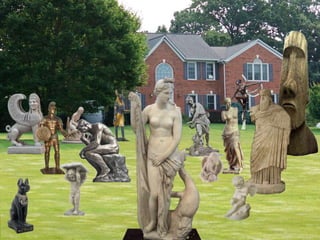
  • #135 But think of your non-native plants as statues. How many statues do you want in your yard?
  • #150 Yellow shouldeedr slug
  • #161 Wavy-lined heterocampa
  • #165 Lunate Zale
  • #167 Long wing daggermoth
  • #169 Interrupted dagger moth
  • #182 Hickory tussock moth
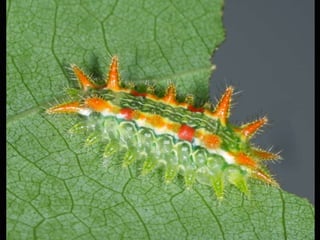
  • #183 Spiny oak caterpillar
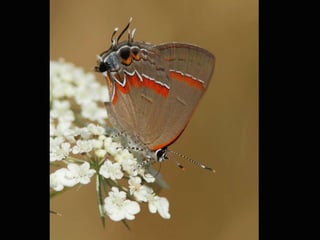
  • #184 Banded hairstreak
  • #185 Yellow-necked caterpillar
  • #188 The bride
  • #207  This is the ultimate celebration of mulch; not of plants
  • #223 We could save those leaves, rake them into our flowerbeds.
  • #238 Blinded sphinx
  • #240 Hummingbird sphinx
  • #241 Snowberry clearwing
  • #250 Spice bush swallowtail requires 3 leaves to reach maturity
  • #263 What do humans need to exist? A place to live and something to eat. What do animals need?
  • #264 The earth produces a finite amount of resourses
  • #265 The more resources humans use, the fewer are left for the rest of life
  • #266 Every time we add a human to th earth, we need more ecosystem services, not fewer
  • #267 So this
  • #268 And this …are not an option