Product Quality Review (PQR)

        Rikul Patel
The Overview

•   What is the Product Quality Review?
•   Objectives
•   EU GMP requirements
•   PQR Relationship to the Quality System
•   Six Areas: Product Specific Reviews
•   Six Areas: Modular Reviews
•   Follow Up Actions
Product Quality Review?

Product Quality Review is regular periodic or rolling quality reviews of
        all licensed medicinal products, including export only
        products, which are conducted with the objective of verifying
        the consistency of the existing process, the appropriateness
        of current specifications for both starting materials and
        finished product to highlight any trends and to identify
        product and process improvements.

The Product Quality review (PQR) is an effective quality improvement
       tool to enhance the consistency of the process and the
       overall quality of the product. The PQR will capture a broader
       view of product data, capturing trends and will help
       determine the need for revalidation and changes, if any.
Objectives
• Determine the need to make changes to manufacturing
  processes, process controls, in-process tests or product
  specifications
• Verify compliance with marketing authorisations
• Verify the consistency of manufacturing processes
• Determine the need for re-validation of existing
  processes
• Identify product or process improvements
• Identify any adverse trends and the need to take
  corrective and preventive action
• Determine the appropriateness of starting material and
  product specifications.
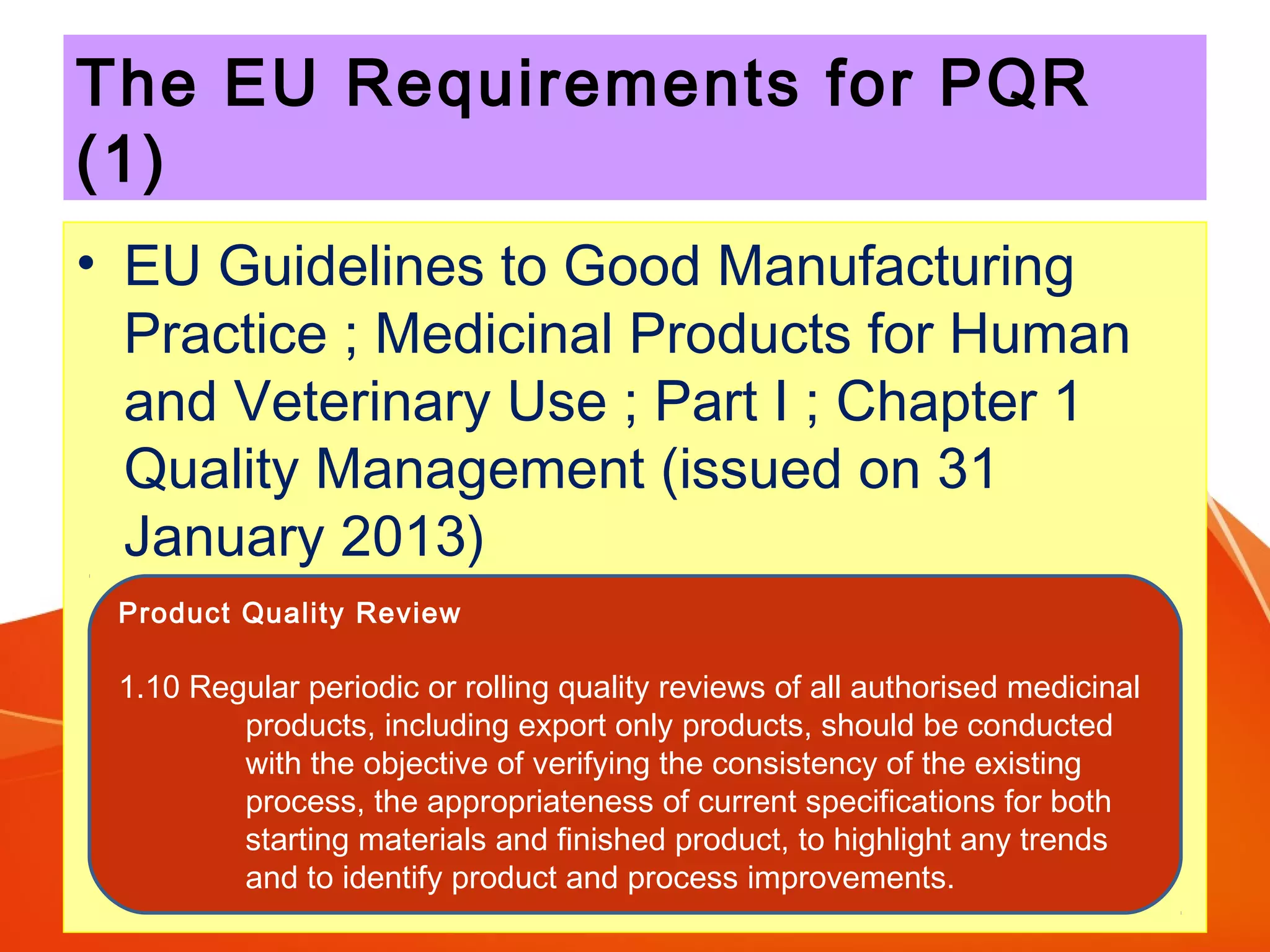
The EU Requirements for PQR
(1)
• EU Guidelines to Good Manufacturing
  Practice ; Medicinal Products for Human
  and Veterinary Use ; Part I ; Chapter 1
  Quality Management (issued on 31
  January 2013)
 Product Quality Review

 1.10 Regular periodic or rolling quality reviews of all authorised medicinal
         products, including export only products, should be conducted
         with the objective of verifying the consistency of the existing
         process, the appropriateness of current specifications for both
         starting materials and finished product, to highlight any trends
         and to identify product and process improvements.
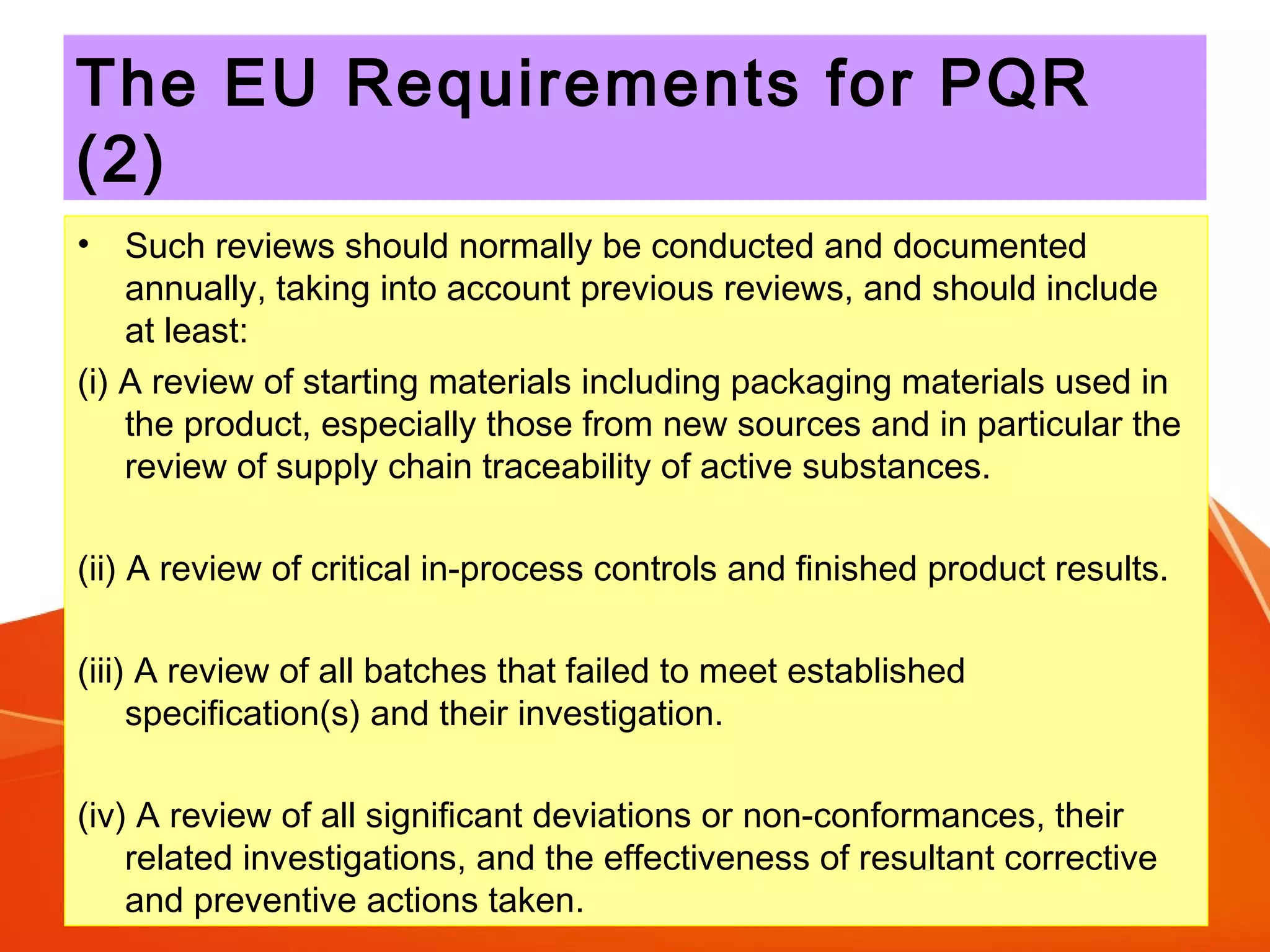
The EU Requirements for PQR
(2)
•   Such reviews should normally be conducted and documented
    annually, taking into account previous reviews, and should include
    at least:
(i) A review of starting materials including packaging materials used in
    the product, especially those from new sources and in particular the
    review of supply chain traceability of active substances.

(ii) A review of critical in-process controls and finished product results.

(iii) A review of all batches that failed to meet established
     specification(s) and their investigation.

(iv) A review of all significant deviations or non-conformances, their
    related investigations, and the effectiveness of resultant corrective
    and preventive actions taken.
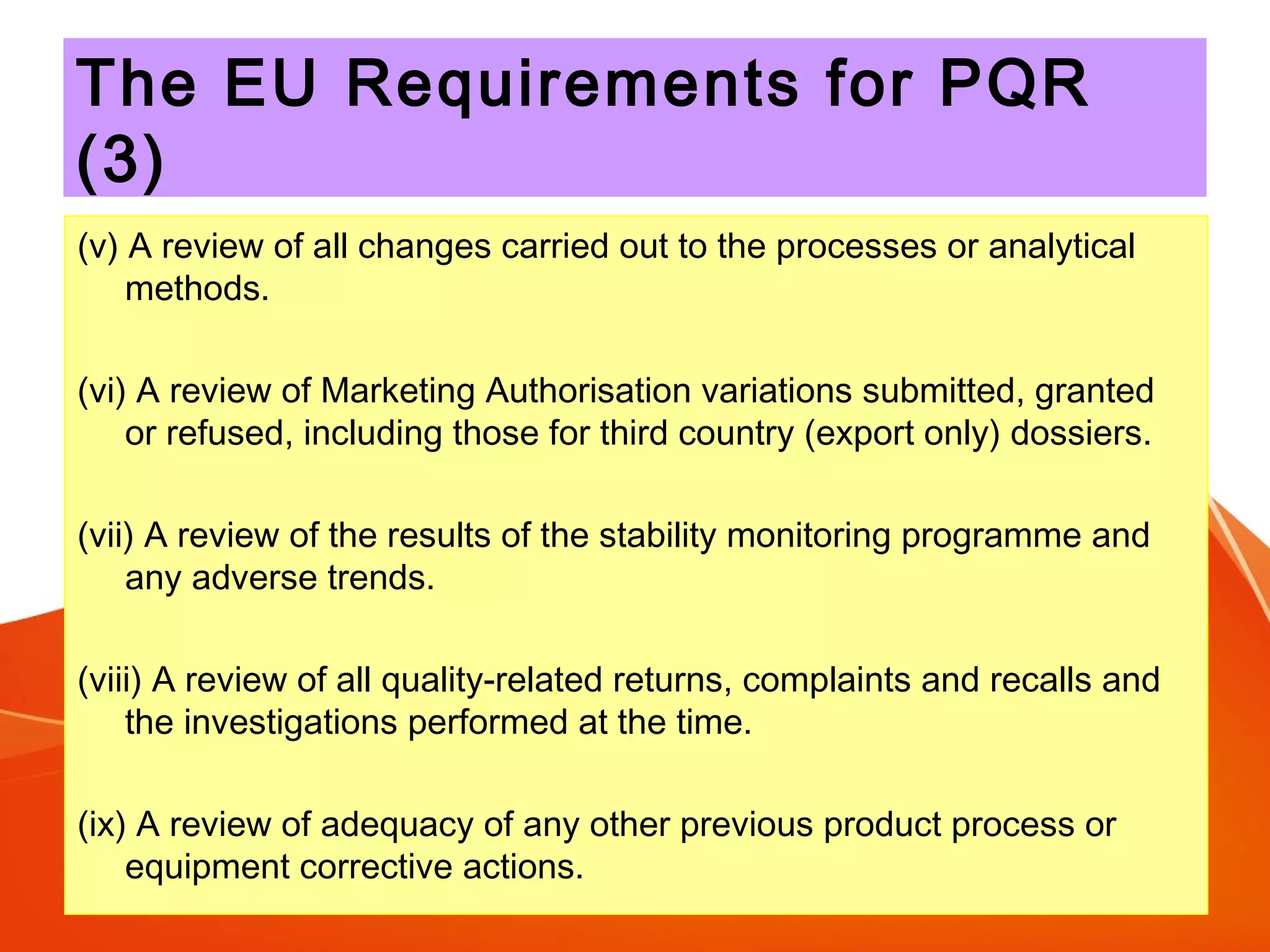
The EU Requirements for PQR
(3)
(v) A review of all changes carried out to the processes or analytical
    methods.

(vi) A review of Marketing Authorisation variations submitted, granted
    or refused, including those for third country (export only) dossiers.

(vii) A review of the results of the stability monitoring programme and
    any adverse trends.

(viii) A review of all quality-related returns, complaints and recalls and
    the investigations performed at the time.

(ix) A review of adequacy of any other previous product process or
    equipment corrective actions.
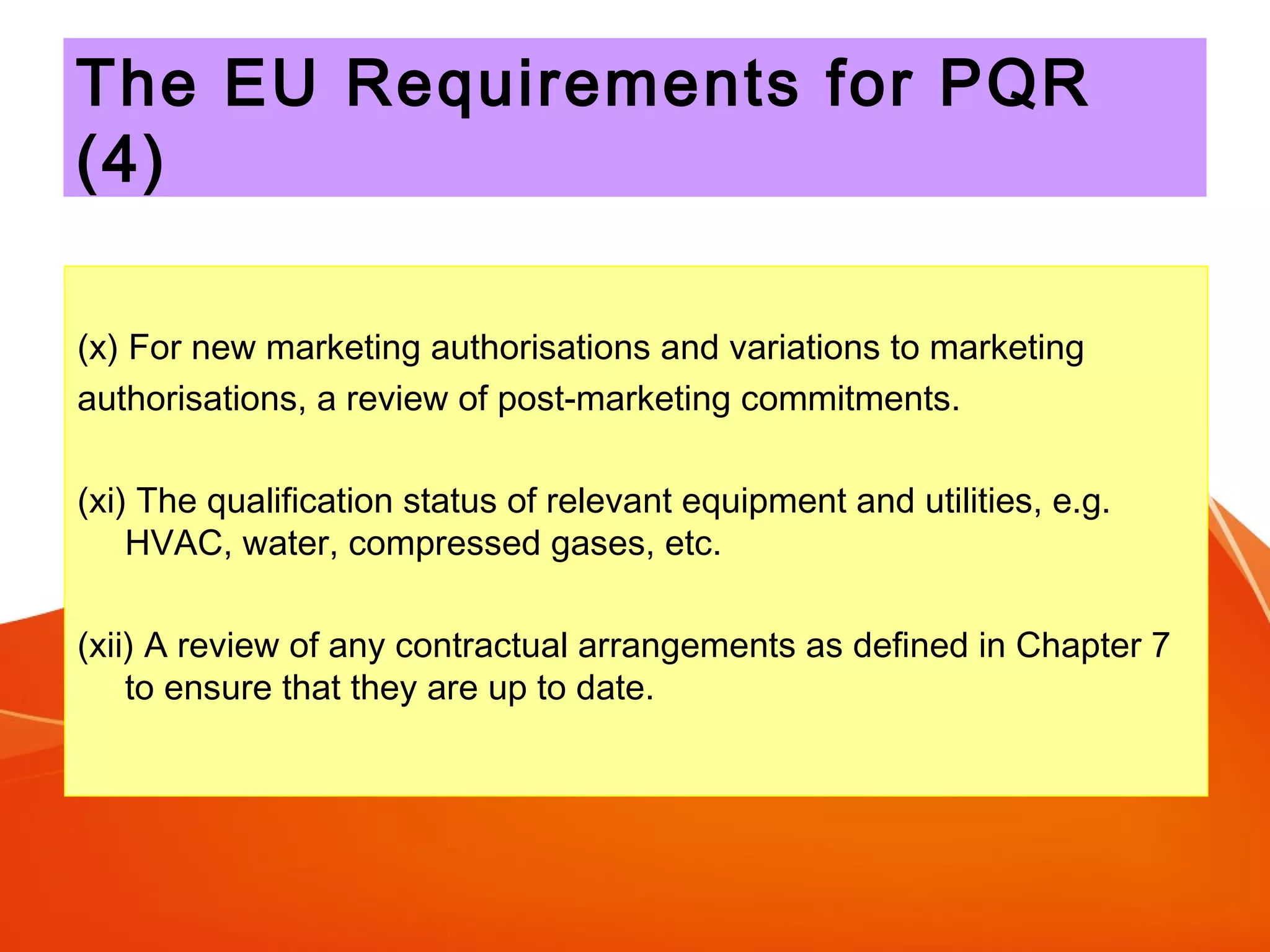
The EU Requirements for PQR
(4)

(x) For new marketing authorisations and variations to marketing
authorisations, a review of post-marketing commitments.

(xi) The qualification status of relevant equipment and utilities, e.g.
    HVAC, water, compressed gases, etc.

(xii) A review of any contractual arrangements as defined in Chapter 7
    to ensure that they are up to date.
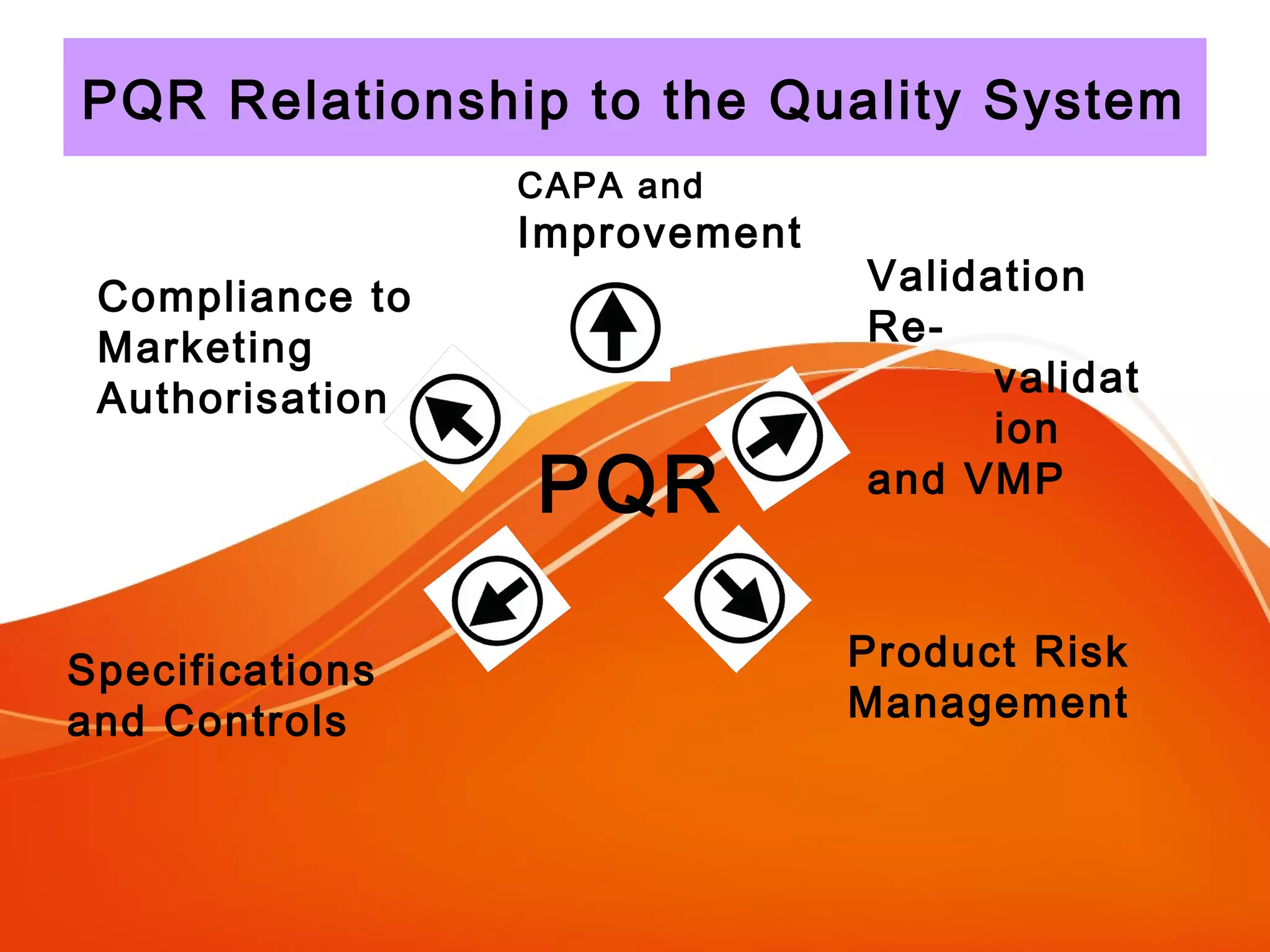
PQR Relationship to the Quality System
                 CAPA and
                 Improvement
 Compliance to                 Validation
 Marketing                     Re-
 Authorisation                       validat
                                     ion
                 PQR           and VMP


Specifications                 Product Risk
and Controls                   Management
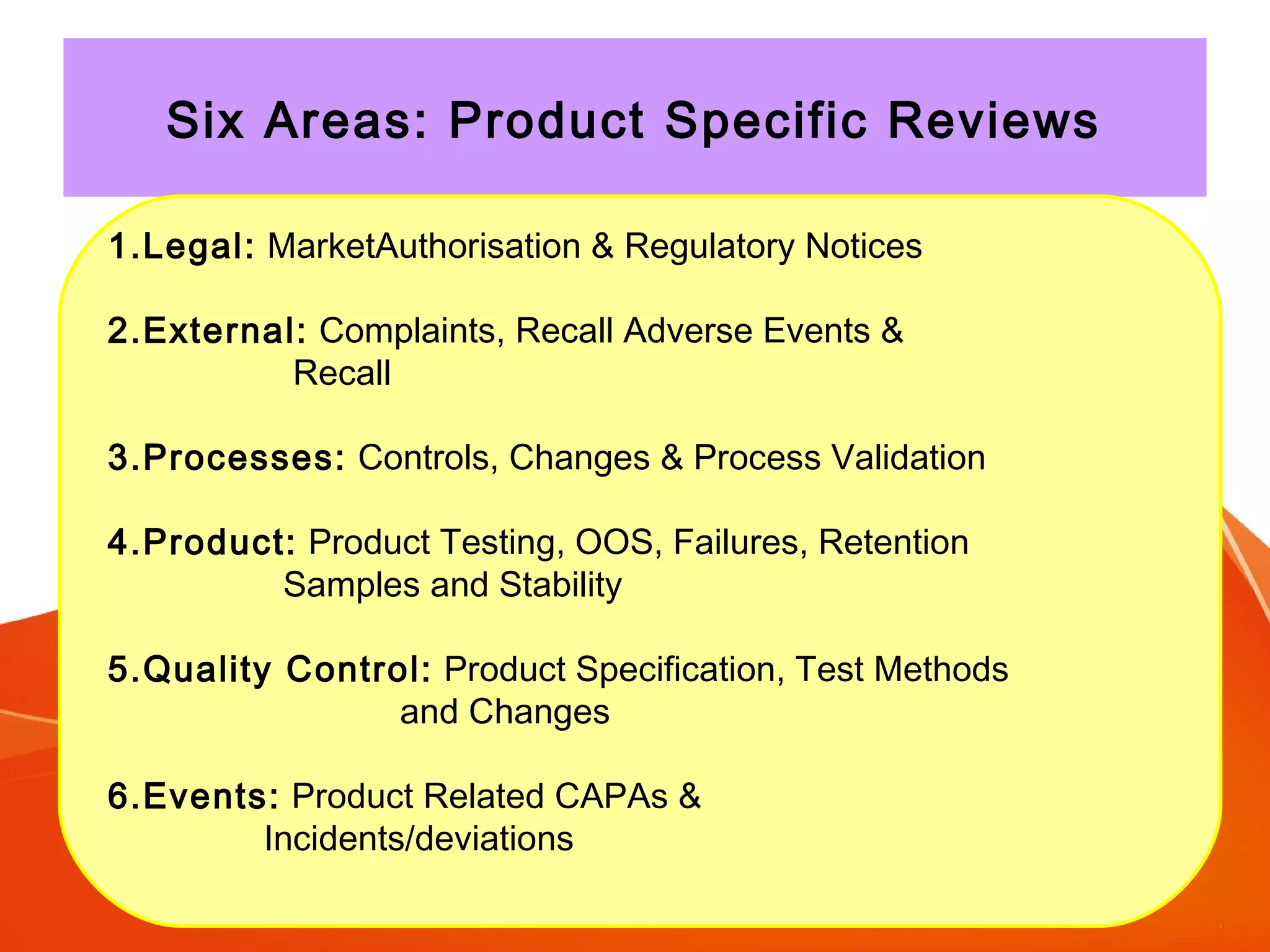
Six Areas: Product Specific Reviews

1.Legal: MarketAuthorisation & Regulatory Notices

2.External: Complaints, Recall Adverse Events &
          Recall

3.Processes: Controls, Changes & Process Validation

4.Product: Product Testing, OOS, Failures, Retention
         Samples and Stability

5.Quality Control: Product Specification, Test Methods
                and Changes

6.Events: Product Related CAPAs &
        Incidents/deviations
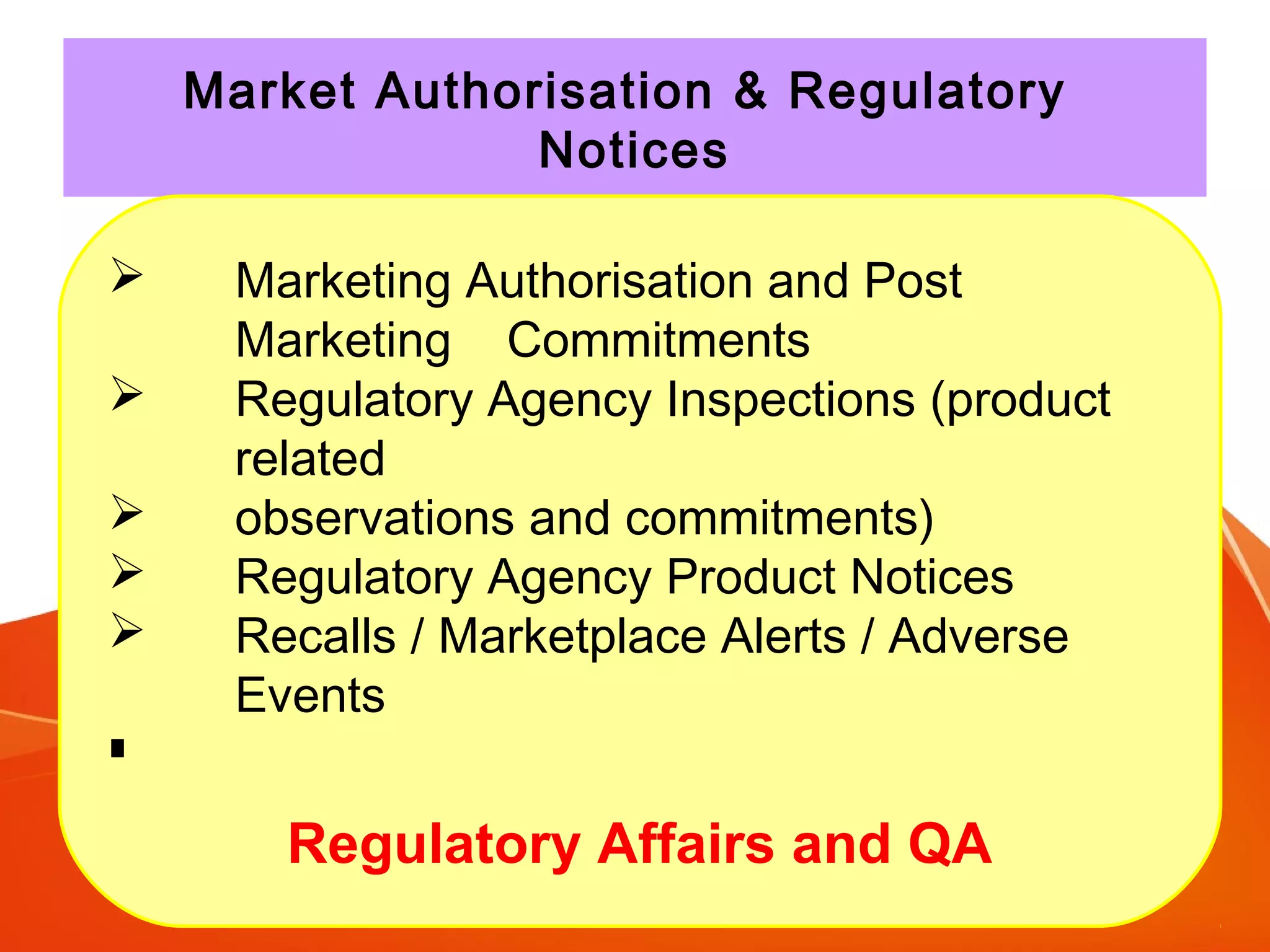
Market Authorisation & Regulatory
                 Notices

    Marketing Authorisation and Post
     Marketing Commitments
    Regulatory Agency Inspections (product
     related
    observations and commitments)
    Regulatory Agency Product Notices
    Recalls / Marketplace Alerts / Adverse
     Events
∎


       Regulatory Affairs and QA
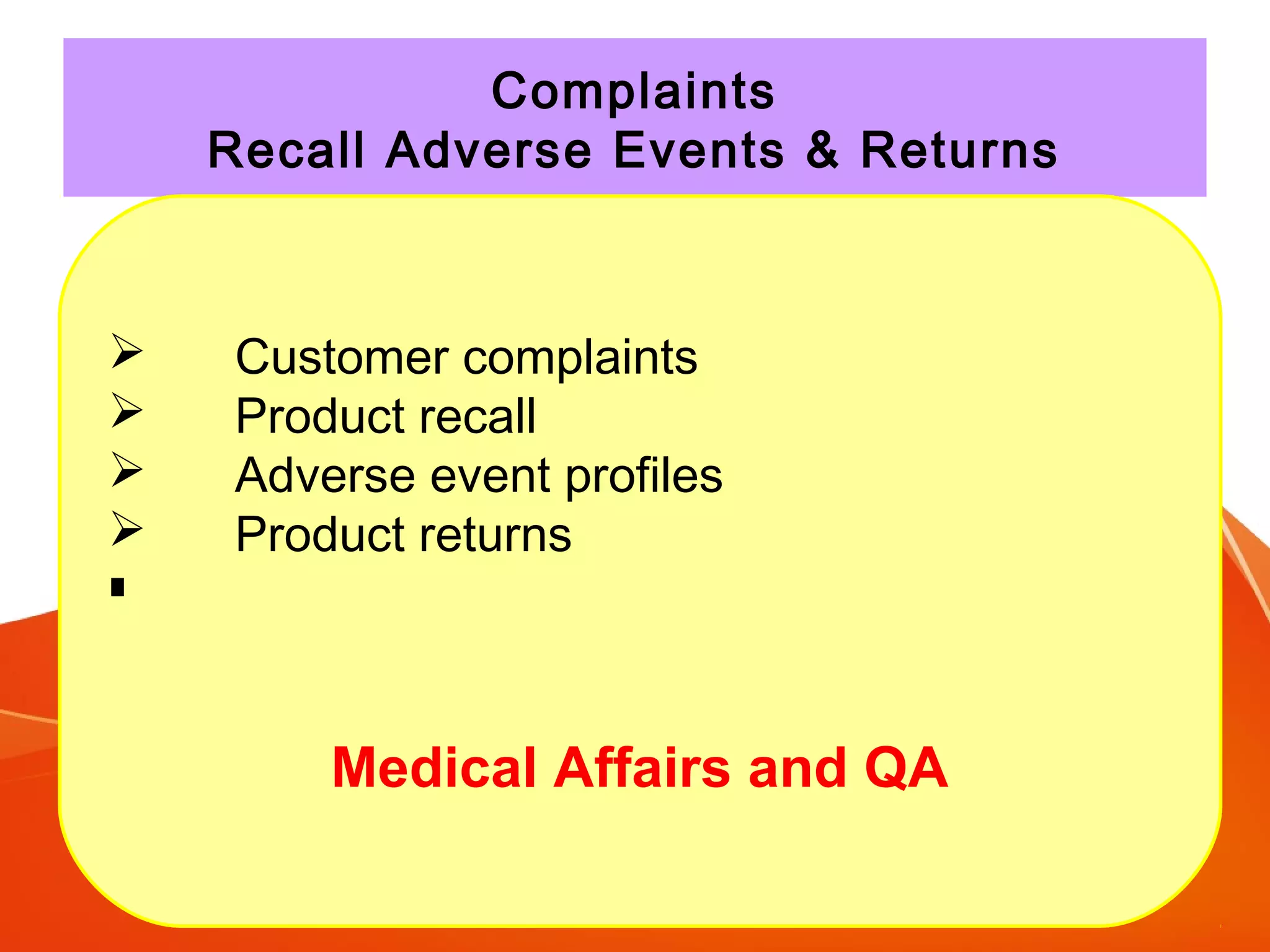
Complaints
    Recall Adverse Events & Returns


    Customer complaints
    Product recall
    Adverse event profiles
    Product returns
∎


         Medical Affairs and QA
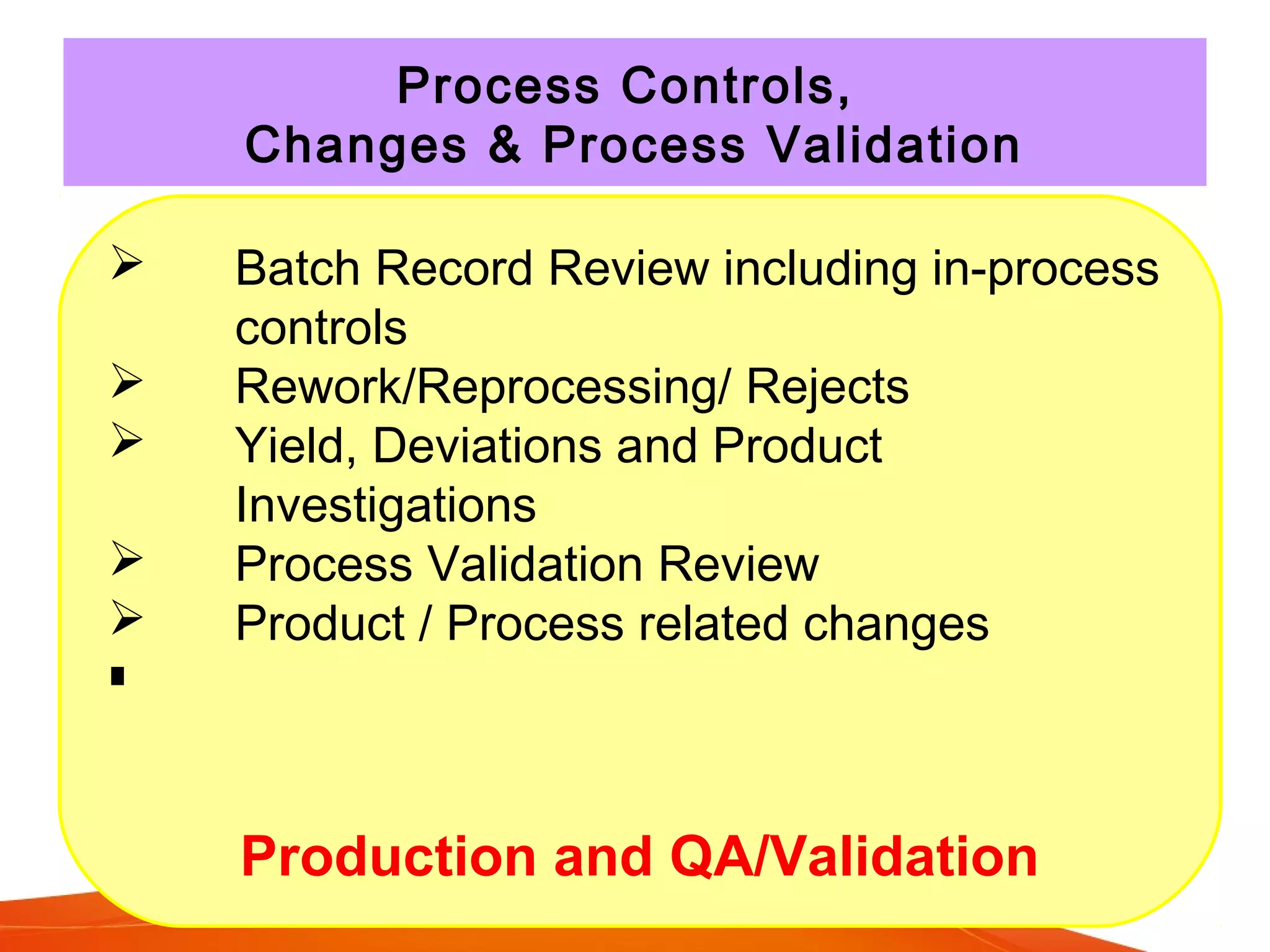
Process Controls,
    Changes & Process Validation

   Batch Record Review including in-process
    controls
   Rework/Reprocessing/ Rejects
   Yield, Deviations and Product
    Investigations
   Process Validation Review
   Product / Process related changes
∎


    Production and QA/Validation
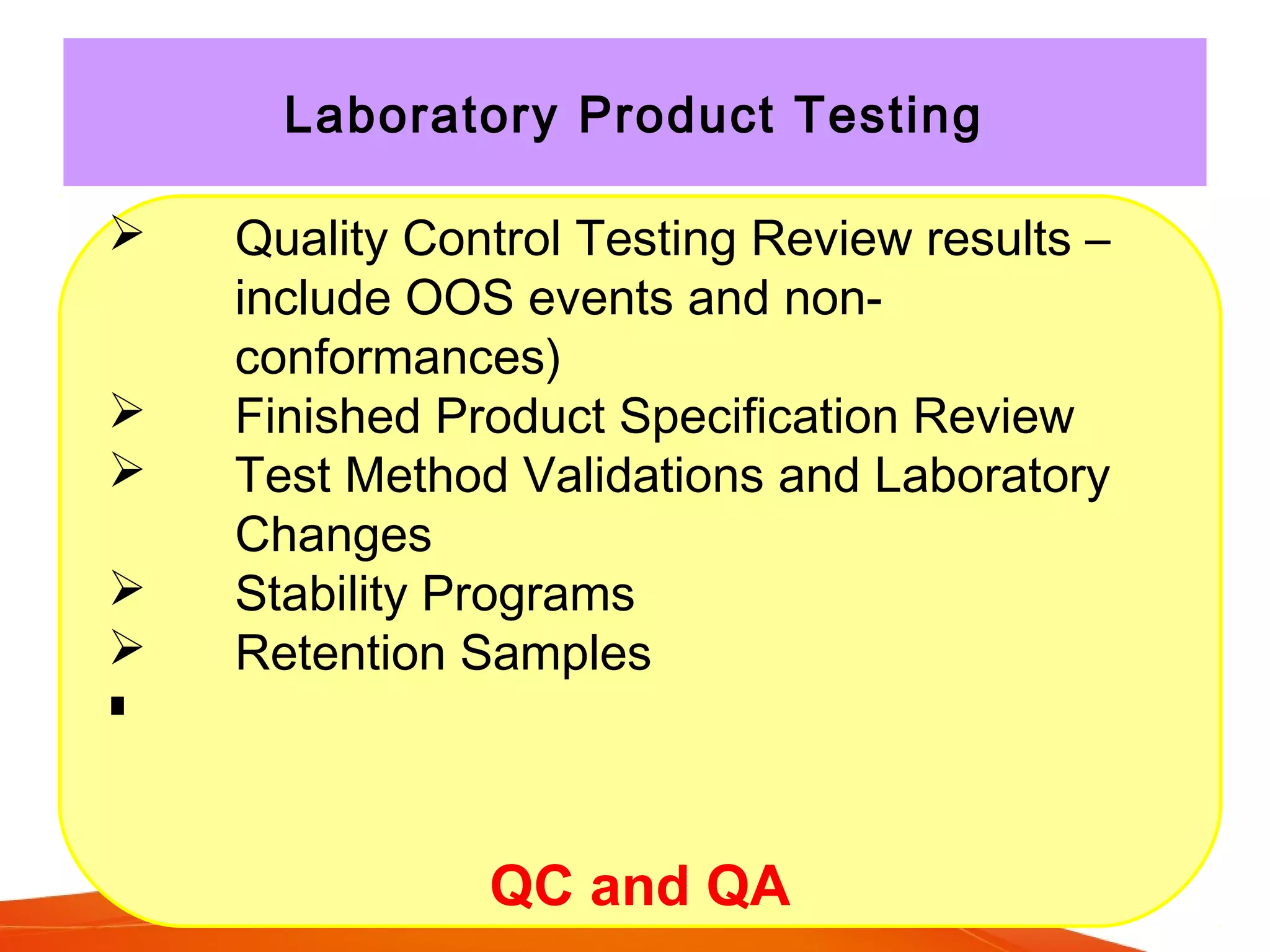
Laboratory Product Testing

   Quality Control Testing Review results –
    include OOS events and non-
    conformances)
   Finished Product Specification Review
   Test Method Validations and Laboratory
    Changes
   Stability Programs
   Retention Samples
∎


               QC and QA
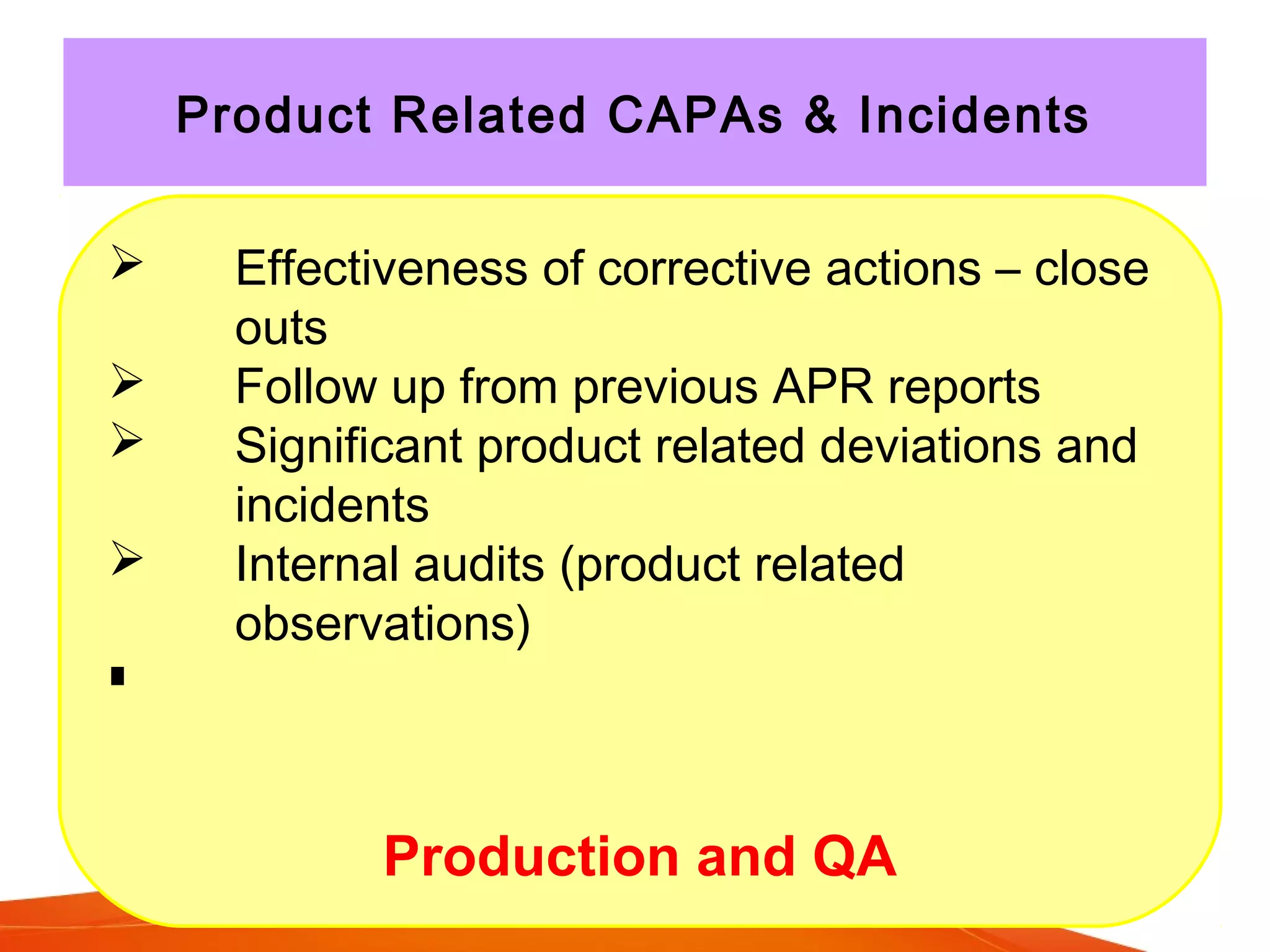
Product Related CAPAs & Incidents

     Effectiveness of corrective actions – close
      outs
     Follow up from previous APR reports
     Significant product related deviations and
      incidents
     Internal audits (product related
      observations)
∎


            Production and QA
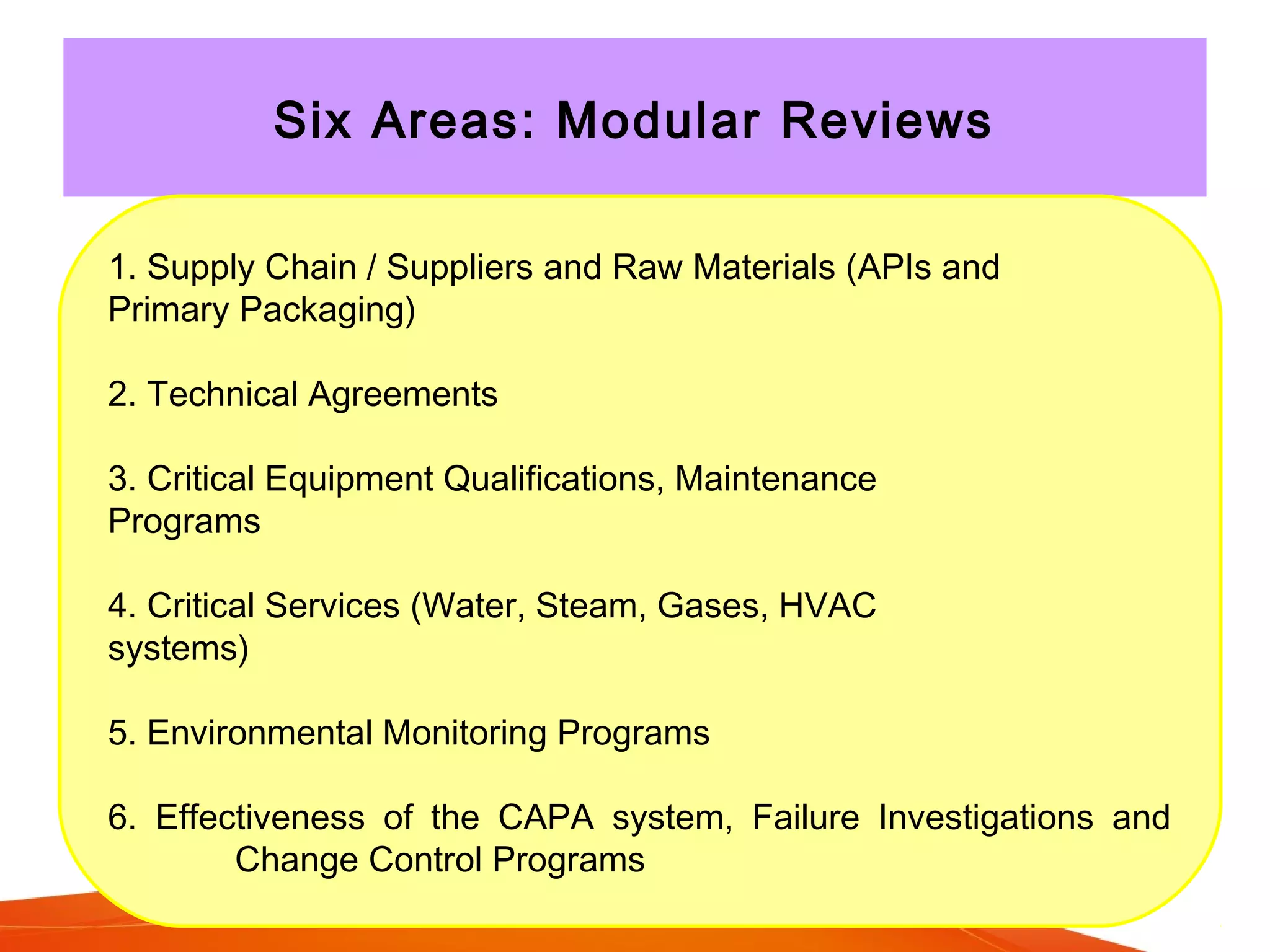
Six Areas: Modular Reviews

1. Supply Chain / Suppliers and Raw Materials (APIs and
Primary Packaging)

2. Technical Agreements

3. Critical Equipment Qualifications, Maintenance
Programs

4. Critical Services (Water, Steam, Gases, HVAC
systems)

5. Environmental Monitoring Programs

6. Effectiveness of the CAPA system, Failure Investigations and
        Change Control Programs
Follow Up Actions

Follow-up actions may be included but are not limited to:

   Product process improvement
   Formulation improvement
   Analytical method improvements
   In-process or final product specification
    review
   Revalidation
   Product recall or withdrawal
   Change of RM/PM
Thank You

Product Quality Review (PQR)

  • 1.
    Product Quality Review(PQR) Rikul Patel
  • 2.
    The Overview • What is the Product Quality Review? • Objectives • EU GMP requirements • PQR Relationship to the Quality System • Six Areas: Product Specific Reviews • Six Areas: Modular Reviews • Follow Up Actions
  • 3.
    Product Quality Review? ProductQuality Review is regular periodic or rolling quality reviews of all licensed medicinal products, including export only products, which are conducted with the objective of verifying the consistency of the existing process, the appropriateness of current specifications for both starting materials and finished product to highlight any trends and to identify product and process improvements. The Product Quality review (PQR) is an effective quality improvement tool to enhance the consistency of the process and the overall quality of the product. The PQR will capture a broader view of product data, capturing trends and will help determine the need for revalidation and changes, if any.
  • 4.
    Objectives • Determine theneed to make changes to manufacturing processes, process controls, in-process tests or product specifications • Verify compliance with marketing authorisations • Verify the consistency of manufacturing processes • Determine the need for re-validation of existing processes • Identify product or process improvements • Identify any adverse trends and the need to take corrective and preventive action • Determine the appropriateness of starting material and product specifications.
  • 5.
    The EU Requirementsfor PQR (1) • EU Guidelines to Good Manufacturing Practice ; Medicinal Products for Human and Veterinary Use ; Part I ; Chapter 1 Quality Management (issued on 31 January 2013) Product Quality Review 1.10 Regular periodic or rolling quality reviews of all authorised medicinal products, including export only products, should be conducted with the objective of verifying the consistency of the existing process, the appropriateness of current specifications for both starting materials and finished product, to highlight any trends and to identify product and process improvements.
  • 6.
    The EU Requirementsfor PQR (2) • Such reviews should normally be conducted and documented annually, taking into account previous reviews, and should include at least: (i) A review of starting materials including packaging materials used in the product, especially those from new sources and in particular the review of supply chain traceability of active substances. (ii) A review of critical in-process controls and finished product results. (iii) A review of all batches that failed to meet established specification(s) and their investigation. (iv) A review of all significant deviations or non-conformances, their related investigations, and the effectiveness of resultant corrective and preventive actions taken.
  • 7.
    The EU Requirementsfor PQR (3) (v) A review of all changes carried out to the processes or analytical methods. (vi) A review of Marketing Authorisation variations submitted, granted or refused, including those for third country (export only) dossiers. (vii) A review of the results of the stability monitoring programme and any adverse trends. (viii) A review of all quality-related returns, complaints and recalls and the investigations performed at the time. (ix) A review of adequacy of any other previous product process or equipment corrective actions.
  • 8.
    The EU Requirementsfor PQR (4) (x) For new marketing authorisations and variations to marketing authorisations, a review of post-marketing commitments. (xi) The qualification status of relevant equipment and utilities, e.g. HVAC, water, compressed gases, etc. (xii) A review of any contractual arrangements as defined in Chapter 7 to ensure that they are up to date.
  • 9.
    PQR Relationship tothe Quality System CAPA and Improvement Compliance to Validation Marketing Re- Authorisation validat ion PQR and VMP Specifications Product Risk and Controls Management
  • 10.
    Six Areas: ProductSpecific Reviews 1.Legal: MarketAuthorisation & Regulatory Notices 2.External: Complaints, Recall Adverse Events & Recall 3.Processes: Controls, Changes & Process Validation 4.Product: Product Testing, OOS, Failures, Retention Samples and Stability 5.Quality Control: Product Specification, Test Methods and Changes 6.Events: Product Related CAPAs & Incidents/deviations
  • 11.
    Market Authorisation &Regulatory Notices  Marketing Authorisation and Post Marketing Commitments  Regulatory Agency Inspections (product related  observations and commitments)  Regulatory Agency Product Notices  Recalls / Marketplace Alerts / Adverse Events ∎ Regulatory Affairs and QA
  • 12.
    Complaints Recall Adverse Events & Returns  Customer complaints  Product recall  Adverse event profiles  Product returns ∎ Medical Affairs and QA
  • 13.
    Process Controls, Changes & Process Validation  Batch Record Review including in-process controls  Rework/Reprocessing/ Rejects  Yield, Deviations and Product Investigations  Process Validation Review  Product / Process related changes ∎ Production and QA/Validation
  • 14.
    Laboratory Product Testing  Quality Control Testing Review results – include OOS events and non- conformances)  Finished Product Specification Review  Test Method Validations and Laboratory Changes  Stability Programs  Retention Samples ∎ QC and QA
  • 15.
    Product Related CAPAs& Incidents  Effectiveness of corrective actions – close outs  Follow up from previous APR reports  Significant product related deviations and incidents  Internal audits (product related observations) ∎ Production and QA
  • 16.
    Six Areas: ModularReviews 1. Supply Chain / Suppliers and Raw Materials (APIs and Primary Packaging) 2. Technical Agreements 3. Critical Equipment Qualifications, Maintenance Programs 4. Critical Services (Water, Steam, Gases, HVAC systems) 5. Environmental Monitoring Programs 6. Effectiveness of the CAPA system, Failure Investigations and Change Control Programs
  • 17.
    Follow Up Actions Follow-upactions may be included but are not limited to: Product process improvement Formulation improvement Analytical method improvements In-process or final product specification review Revalidation Product recall or withdrawal Change of RM/PM
  • 18.