Gothic art
2º ESO Geography and History
Architecture
• New construction techniques emerged in
France in the 12th century and were spread to
all western Europe until the 15th century.
• Architectural innovations:
• Gothic buildings were higher, brighter and more
complex than the Romanesque ones.
• Used pointed arches: that are higher and lighter
• Ribbed vault (Bóveda de crucería): formed by the
intersection of two pointed arches.
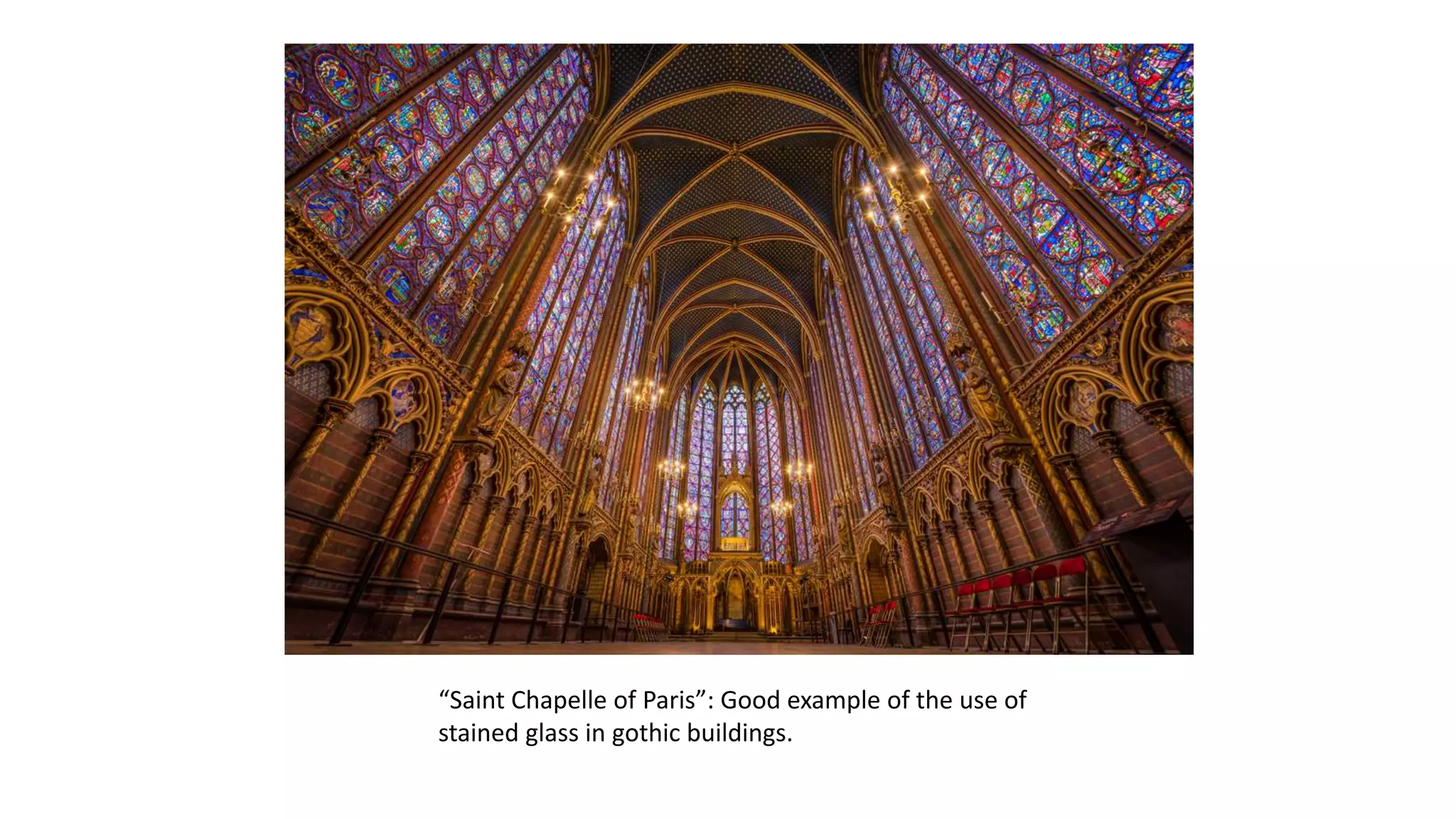
• Large stained glass and rose windows.
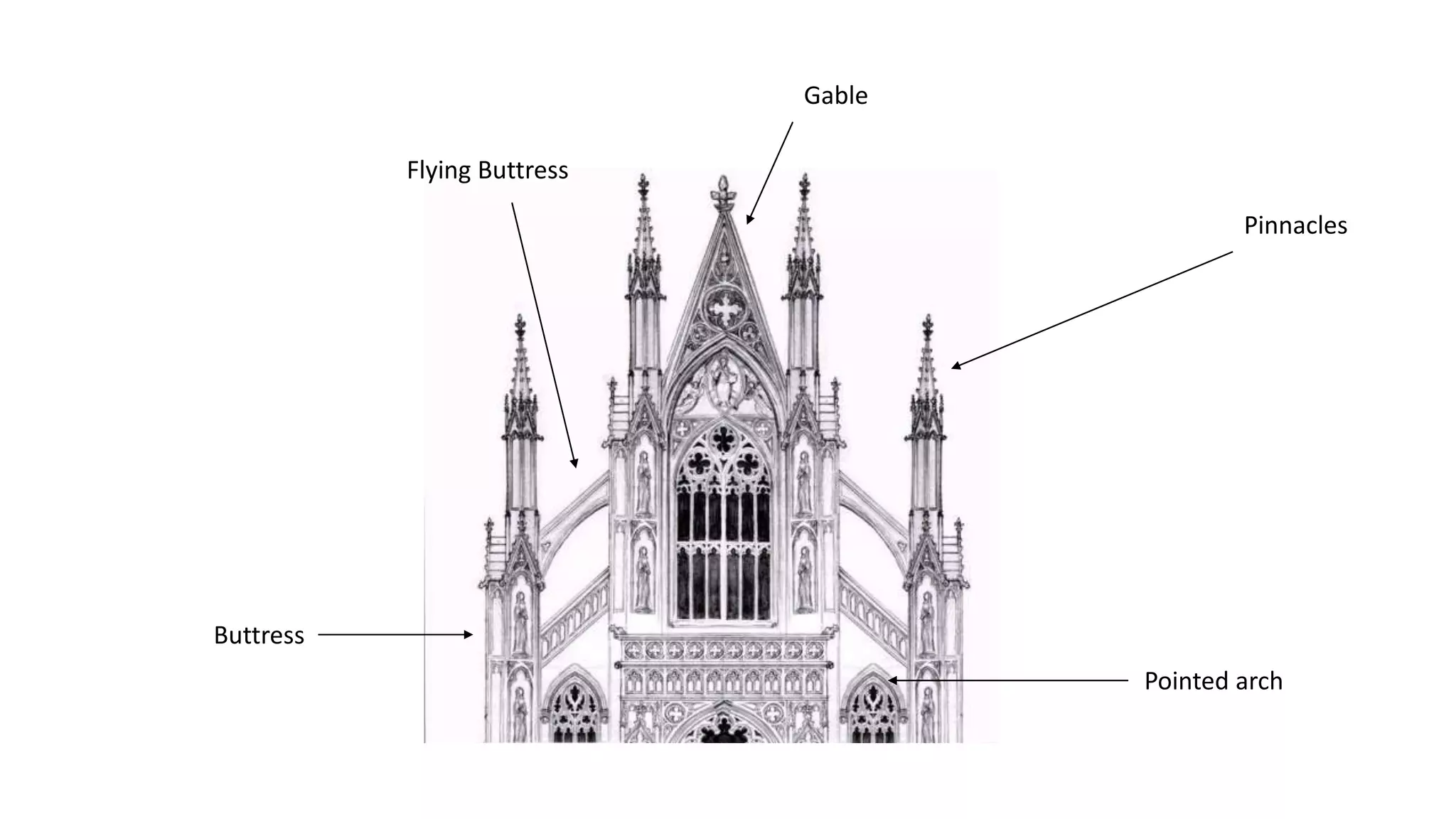
• A system of buttresses and flying buttresses
supported the building
• Exterior decoration of gables and pinnacles that
gave a greater sense of height.
Pointed arch and ribbed vault
“Saint Chapelle of Paris”: Good example of the use of
stained glass in gothic buildings.
Pinnacles
Gable
Buttress
Flying Buttress
Pointed arch
Examples of a ribbed vault
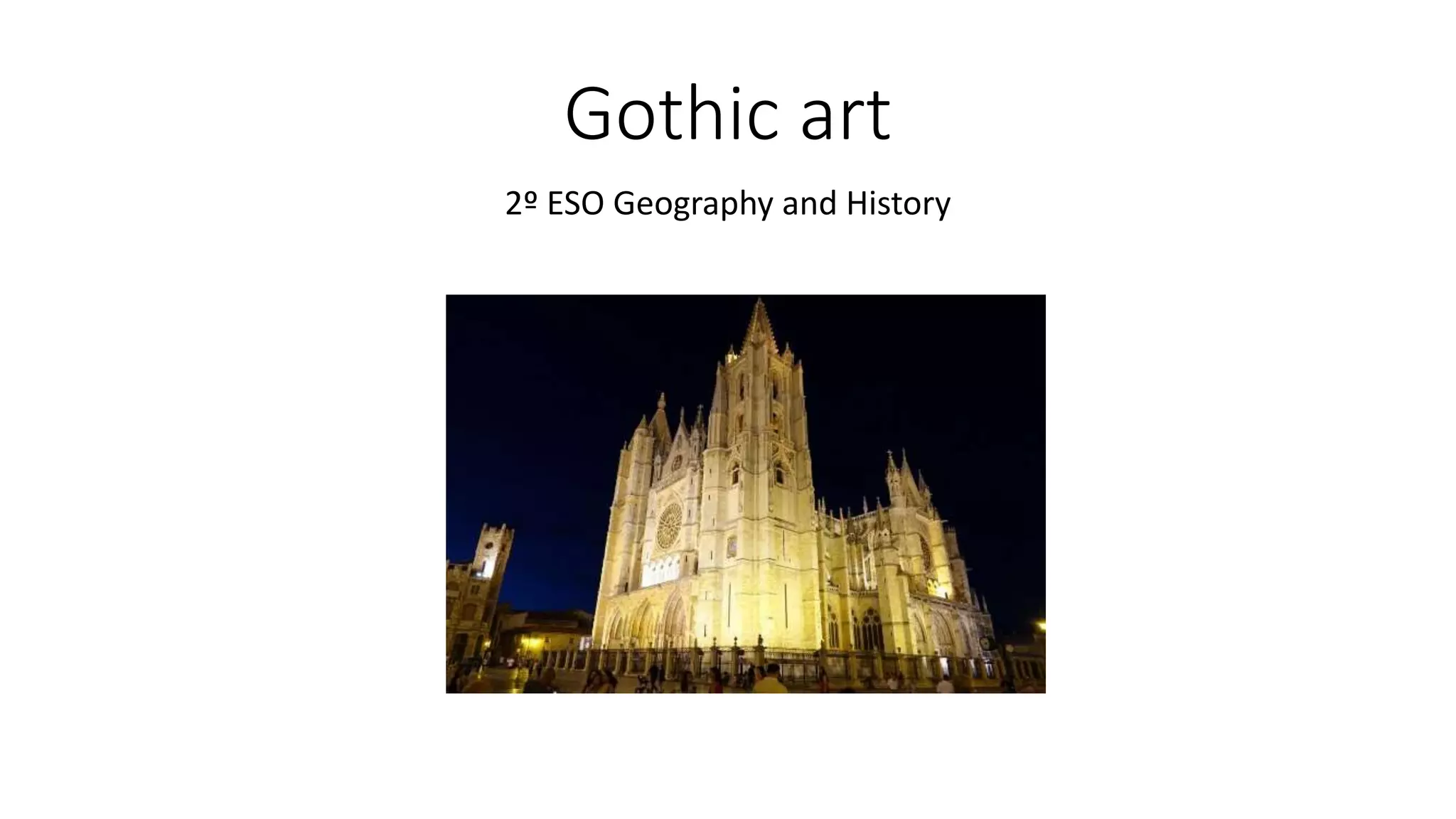
Leon’s Cathedral
Rose window
Tympanum
Archivolts
Gable
Sculpture
• Used as decoration on façades, cloisters, altarpieces and sepulchres.
• Freestanding sculptures: religious themes and portraits of kings and
nobles
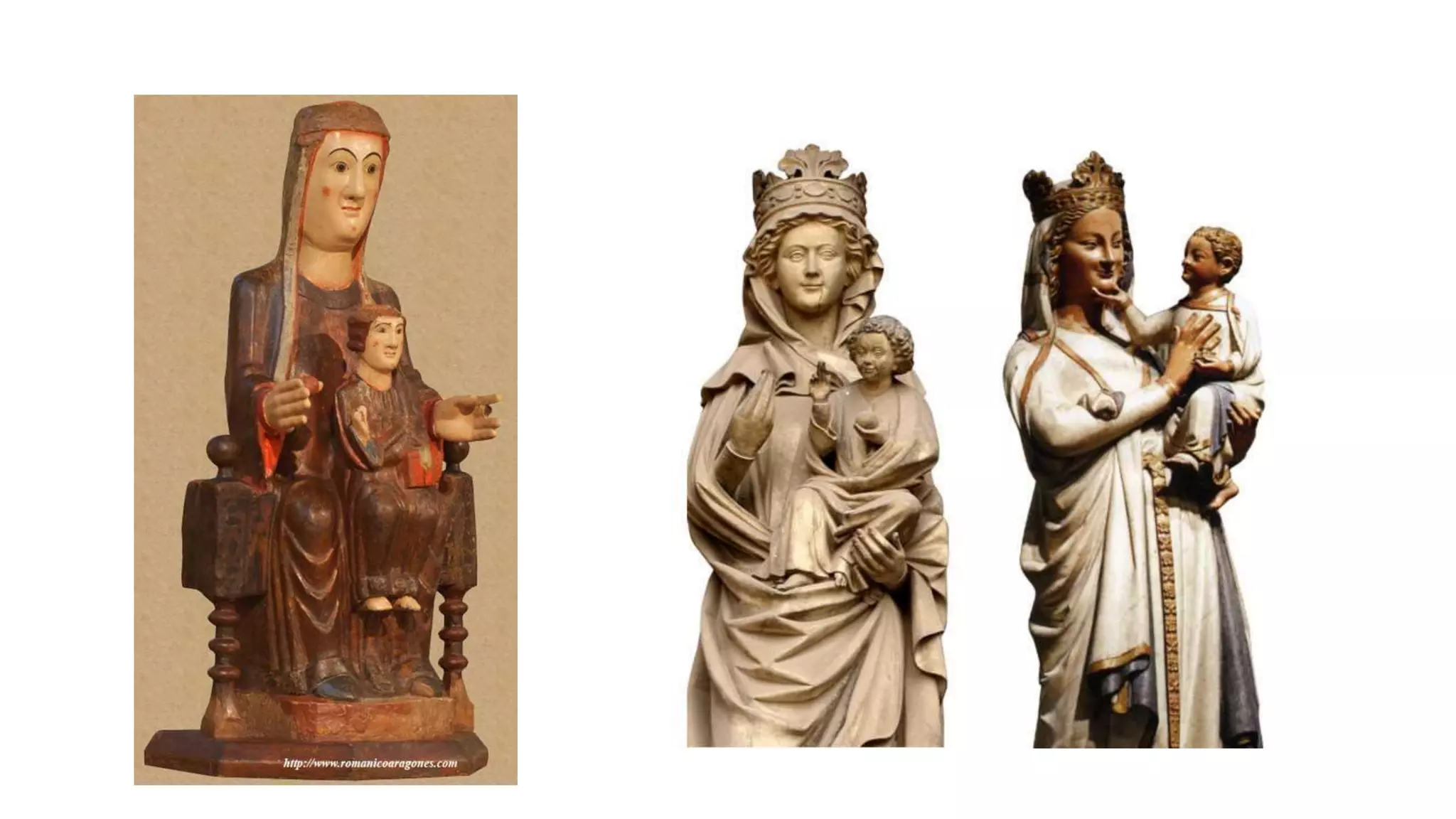
• Realistic features
• Faces expressed feelings
• Drapery gave shape to the body
• Sculptures were not isolated
• Appeared less rigid
• S curve of the body gave a sense of movement
Smiling Angel. Reims Cathedral
Gargoyles. Notre Damme (Paris)
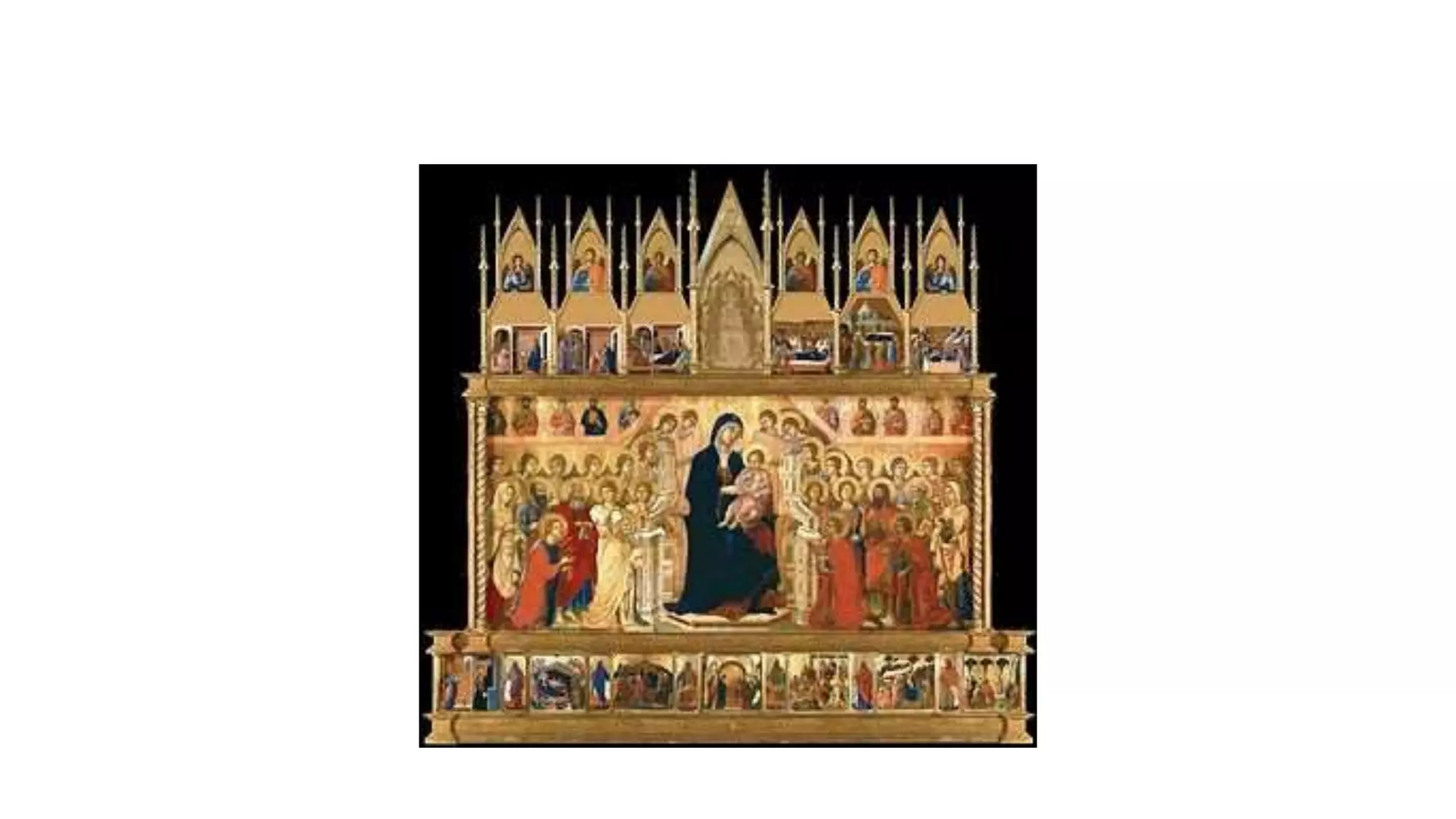
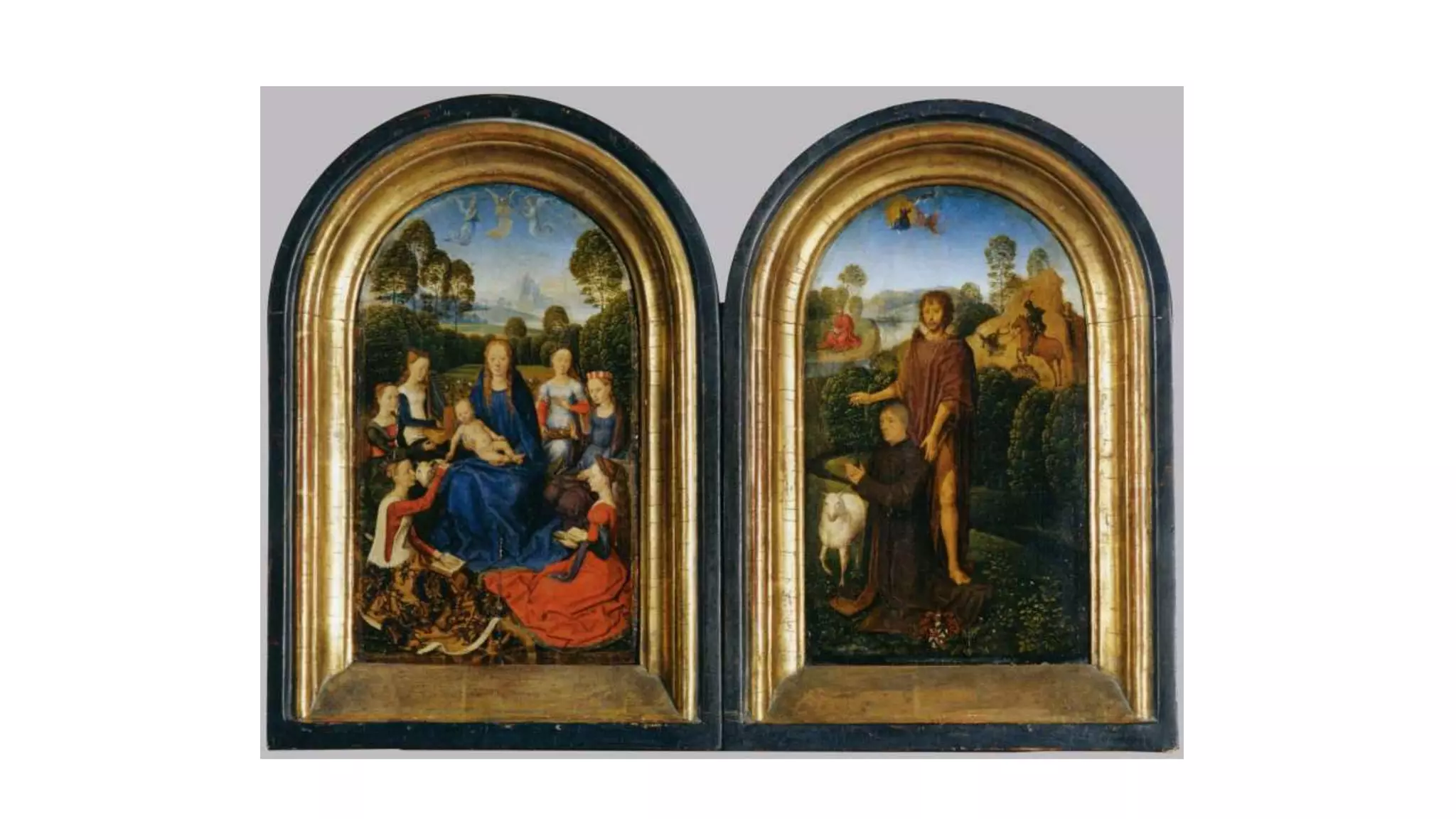
Painting
• In gothic churches walls were replaced by
large windows: reduced the space for
frescoes.
• Panel paintings (altarpieces) became more
common
• Miniature illustrations in books and codices
• Themes: Mostly religious, also scene of
everyday life, landscapes and cities.
• More naturalistic and realistic bodies
• Expression of emotions
• Use of light and colour
Altar pieces
Painting on the Iberian peninsula
• Frescos were replaced by
altarpieces and panel
paintings
• Famous artist in the crown
of Aragón: Jaume Serra,
Bernat Martorell, Lluís
Dalmau and Jaume Huguet.
• Crown of Castille: Fernando
Gallego and Nicolas Francés
Fernando Gallego: Pietá
Fernando Gallego: Holly Face
Nicolás Francés: Virgin and child altarpiece
Miniatures of “Cantigas de Santa Maria” (King Alfonso X)
Sculpture
• Carved altarpieces and freestanding
sculptures
• Most famous artists: Gil de Siloé in Castille
and Pere Joan in Aragón
Gil de Siloé: Sepulchre of Infante D.
Alfonso
Pere Joan: Saint George killing the
Dragon
Pere Joan: Santa Tecla altarpiece
Gil de Siloe: Sepulchre of king John II of Castille and Isabel of Portugal
(Cartuja de Miraflores, Burgos)

Gothic art

  • 1.
    Gothic art 2º ESOGeography and History
  • 2.
    Architecture • New constructiontechniques emerged in France in the 12th century and were spread to all western Europe until the 15th century. • Architectural innovations: • Gothic buildings were higher, brighter and more complex than the Romanesque ones. • Used pointed arches: that are higher and lighter • Ribbed vault (Bóveda de crucería): formed by the intersection of two pointed arches. • Large stained glass and rose windows. • A system of buttresses and flying buttresses supported the building • Exterior decoration of gables and pinnacles that gave a greater sense of height. Pointed arch and ribbed vault
  • 3.
    “Saint Chapelle ofParis”: Good example of the use of stained glass in gothic buildings.
  • 4.
  • 6.
    Examples of aribbed vault
  • 7.
  • 8.
    Sculpture • Used asdecoration on façades, cloisters, altarpieces and sepulchres. • Freestanding sculptures: religious themes and portraits of kings and nobles • Realistic features • Faces expressed feelings • Drapery gave shape to the body • Sculptures were not isolated • Appeared less rigid • S curve of the body gave a sense of movement
  • 9.
    Smiling Angel. ReimsCathedral Gargoyles. Notre Damme (Paris)
  • 10.
    Painting • In gothicchurches walls were replaced by large windows: reduced the space for frescoes. • Panel paintings (altarpieces) became more common • Miniature illustrations in books and codices • Themes: Mostly religious, also scene of everyday life, landscapes and cities. • More naturalistic and realistic bodies • Expression of emotions • Use of light and colour
  • 12.
  • 16.
    Painting on theIberian peninsula • Frescos were replaced by altarpieces and panel paintings • Famous artist in the crown of Aragón: Jaume Serra, Bernat Martorell, Lluís Dalmau and Jaume Huguet. • Crown of Castille: Fernando Gallego and Nicolas Francés
  • 17.
  • 18.
    Nicolás Francés: Virginand child altarpiece
  • 19.
    Miniatures of “Cantigasde Santa Maria” (King Alfonso X)
  • 20.
    Sculpture • Carved altarpiecesand freestanding sculptures • Most famous artists: Gil de Siloé in Castille and Pere Joan in Aragón Gil de Siloé: Sepulchre of Infante D. Alfonso Pere Joan: Saint George killing the Dragon
  • 21.
    Pere Joan: SantaTecla altarpiece
  • 22.
    Gil de Siloe:Sepulchre of king John II of Castille and Isabel of Portugal (Cartuja de Miraflores, Burgos)