Downloaded 1,612 times

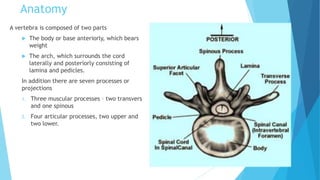

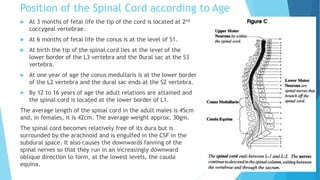
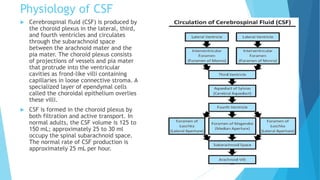

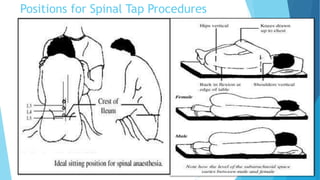
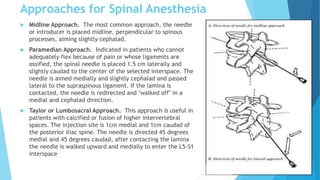
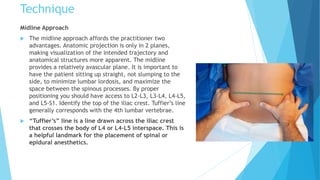













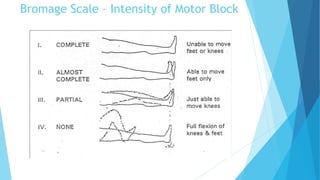












Spinal anesthesia involves injecting local anesthetic into the subarachnoid space to temporarily numb sensation and motor function in the lower body. The anesthesiologist inserts the needle below L2 to access the spinal fluid and avoid the spinal cord. Spinal anesthesia provides excellent surgical conditions for various abdominal, pelvic, and lower extremity procedures. It has been used since the late 1800s and involves carefully positioning the patient and needle to safely access the spinal fluid and distribute the anesthetic in the spinal canal.


![Anaesthesia for cardiopulmonary bypass surgery [autosaved]](https://cdn.slidesharecdn.com/ss_thumbnails/anaesthesiaforcardiopulmonarybypasssurgeryautosaved-150531185352-lva1-app6892-thumbnail.jpg?width=640&height=640&fit=bounds)


