Dry Point Etching
Etching has been around for nearly
500 years. It is a type of engraving,
where ink is forced through tiny lines
and grooves that have been applied
to a copper plate (or in our case
plastic). A wet piece of paper is laid
onto the plate and forced through a
roller, which then creates a print.

Originally etching was used to
decorate armour in Medieval times.
Decorated parts of the armour were
filled in to give the designs a contrast.
Etching is the print-making
technique most closely associated
with drawing.
Your first task…
This week you need to create at least a double page on
one artist who has created etchings.

You can find your own Artist or use one on the
Pinterest website:

http://pinterest.com/beaumontart/

The page should include

1.Good quality images of the Artist’s work

2.Facts and opinions about the Artist (Use the ‘How to
write about Artists’ sheet for support)

3.A transcription of the Artist’s work.
What is Dry Point Etching …
Dry point etching is the modern
equivalent to etching. It is called dry
point because you create your
image by scratching into a surface
with a dry needle.
How to create a Dry Point Etching…
1. Draw into your plastic with a sharp
   needle. This is called intaglio which
   means cutting, carving or engraving
   into a flat surface. You can use lots of
   different mark-making techniques with
   the needle to create different tones
   and textures.
2. You can create
rubbings on your
plastic from
anything that has a
raised surface. You
create rubbings by
using fine
sandpaper.


3. You can cut
out sections of
your plastic to
create white
spaces and cut
out your etchings
and overlap them
with other ones.
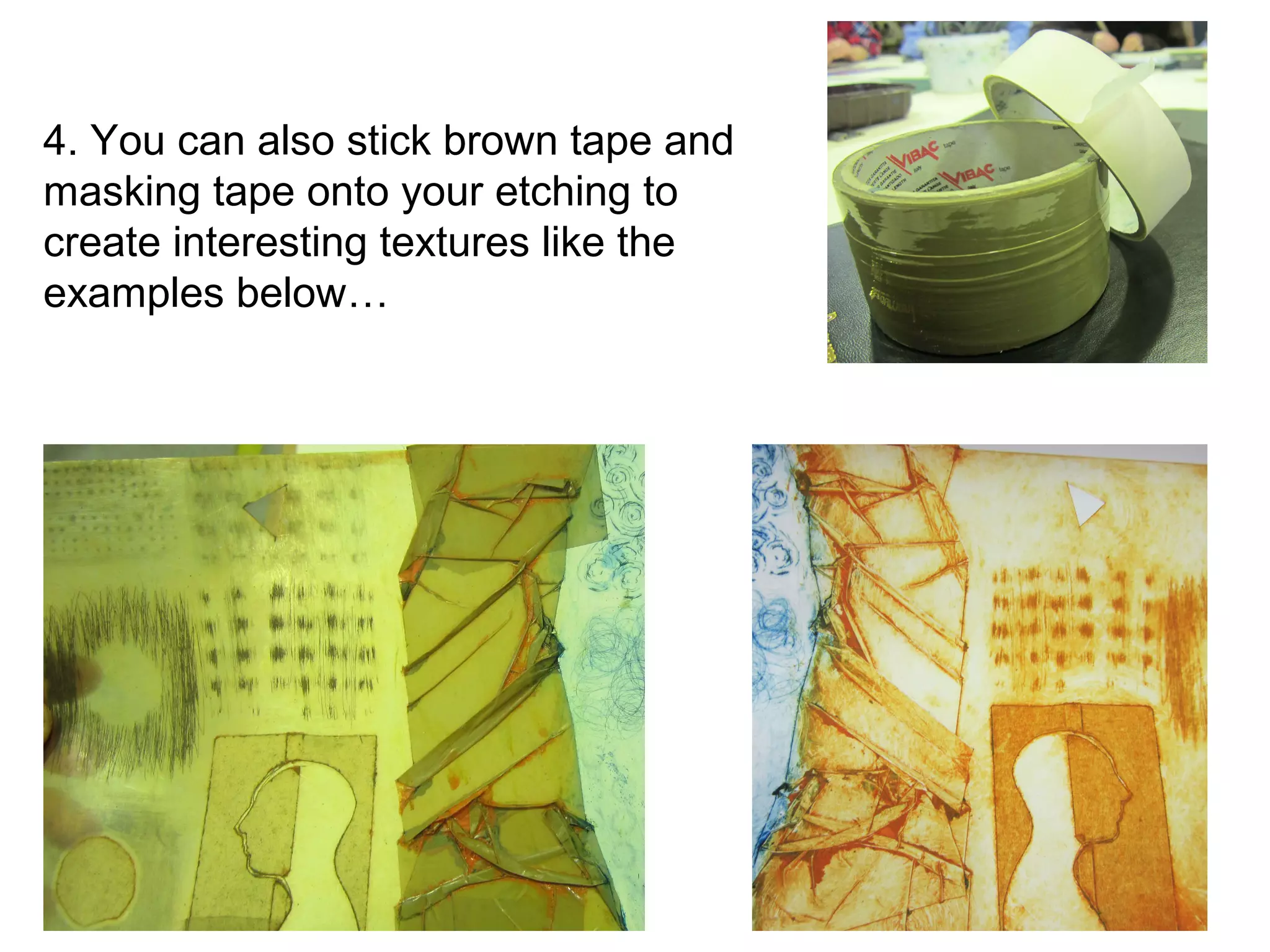
4. You can also stick brown tape and
masking tape onto your etching to
create interesting textures like the
examples below…
5. When applying the etching ink it
is recommended that you wear
plastic gloves. First apply a thin
layer of ink with a piece of
cardboard. Drag it over your
plastic.

6. Use a piece of fabric or tissue
and push down and turn the ink.
You want to make sure all your
scratches are loaded with ink.

7. You can use newspaper or
tissue paper to clean all ink off
certain areas of your plastic.
8. Spray cartridge paper evenly with
water on both sides. Use paper
fingers to pick up your paper so
your don’t get any ink on it.

9. Sandwich your plastic (ink side
up) with your wet paper on top
between newspaper and put
through the printing press.

10. Place your finished etching
between paper and something
heavy to make sure it dries flat.

Etching

  • 1.
  • 2.
    Etching has beenaround for nearly 500 years. It is a type of engraving, where ink is forced through tiny lines and grooves that have been applied to a copper plate (or in our case plastic). A wet piece of paper is laid onto the plate and forced through a roller, which then creates a print. Originally etching was used to decorate armour in Medieval times. Decorated parts of the armour were filled in to give the designs a contrast. Etching is the print-making technique most closely associated with drawing.
  • 3.
    Your first task… Thisweek you need to create at least a double page on one artist who has created etchings. You can find your own Artist or use one on the Pinterest website: http://pinterest.com/beaumontart/ The page should include 1.Good quality images of the Artist’s work 2.Facts and opinions about the Artist (Use the ‘How to write about Artists’ sheet for support) 3.A transcription of the Artist’s work.
  • 4.
    What is DryPoint Etching … Dry point etching is the modern equivalent to etching. It is called dry point because you create your image by scratching into a surface with a dry needle.
  • 5.
    How to createa Dry Point Etching… 1. Draw into your plastic with a sharp needle. This is called intaglio which means cutting, carving or engraving into a flat surface. You can use lots of different mark-making techniques with the needle to create different tones and textures.
  • 6.
    2. You cancreate rubbings on your plastic from anything that has a raised surface. You create rubbings by using fine sandpaper. 3. You can cut out sections of your plastic to create white spaces and cut out your etchings and overlap them with other ones.
  • 9.
    4. You canalso stick brown tape and masking tape onto your etching to create interesting textures like the examples below…
  • 10.
    5. When applyingthe etching ink it is recommended that you wear plastic gloves. First apply a thin layer of ink with a piece of cardboard. Drag it over your plastic. 6. Use a piece of fabric or tissue and push down and turn the ink. You want to make sure all your scratches are loaded with ink. 7. You can use newspaper or tissue paper to clean all ink off certain areas of your plastic.
  • 11.
    8. Spray cartridgepaper evenly with water on both sides. Use paper fingers to pick up your paper so your don’t get any ink on it. 9. Sandwich your plastic (ink side up) with your wet paper on top between newspaper and put through the printing press. 10. Place your finished etching between paper and something heavy to make sure it dries flat.