TRINETRA RASA
PRESENTED BY
DR SAIMEERA P
PG SCHOLAR
DEPT OF RSBK
MVRAMC
INTRODUCTION
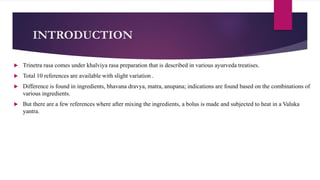
 Trinetra rasa comes under khalviya rasa preparation that is described in various ayurveda treatises.
 Total 10 references are available with slight variation .
 Difference is found in ingredients, bhavana dravya, matra, anupana; indications are found based on the combinations of
various ingredients.
 But there are a few references where after mixing the ingredients, a bolus is made and subjected to heat in a Valuka
yantra.
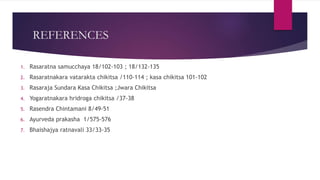
REFERENCES
1. Rasaratna samucchaya 18/102-103 ; 18/132-135
2. Rasaratnakara vatarakta chikitsa /110-114 ; kasa chikitsa 101-102
3. Rasaraja Sundara Kasa Chikitsa ;Jwara Chikitsa
4. Yogaratnakara hridroga chikitsa /37-38
5. Rasendra Chintamani 8/49-51
6. Ayurveda prakasha 1/575-576
7. Bhaishajya ratnavali 33/33-35
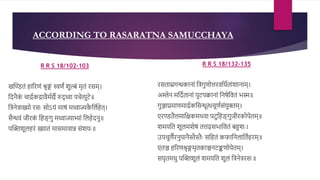
ACCORDING TO RASARATNA SAMUCCHAYA
R R S 18/102-103
खण्डितं हारिणं श्रृङ्ग
ं स्वणं शुल्बं मृतं िसम्।
दिनैक
ं चार्द्रकर्द्ावैमरर्द्यै रुि् वा पचेत्पुटे॥
दिनेिाख्यो िसः सोऽयं माषं मवाज्यक
ै दलरहेत्।
सैन्धवं जीिक
ं दहङ् गु मवाज्याभ्ां दलहेिनु॥
पण्डिशूलहिं ख्यातं मासमािान्न संशयः॥
R R S 18/132-135
िसताम्रगन्धकानां दिगुणोत्तिवदधरतांशानाम्।
अम्लेन मदिरतानां पुटपक्वानां दनषेदवतं भस्म॥
गुञ्जाप्रमाणमार्द्रकदसन्धूत्थचूणरसंयुिम्।
एिितैलमादिकमथवा पटुदहङ् गुजीिकोपेतम्॥
शमयदत शूलमशेषं तत्तर्द्सभादवतं बहुशः।
उपचूणैिनुपानैस्तैस्तैः सदहतं कफादनलादतरहिम्॥
एतञ्च हरिणश्रृङ्गमृतकाञ्चनटङ्कणोपेतम्।
सघृतमधु पण्डिशूलं शमयदत शूलं दिनेििसः॥
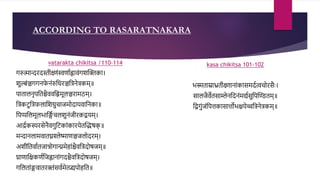
ACCORDING TO RASARATNAKARA
vatarakta chikitsa /110-114
गरुत्मान्दििस्तीक्ष्णंस्वणारह्वावंगशण्डिका।
शुल्बंञ्चगगनफ
े नंरुदधिञ्चदिनेिकम्॥
पातालनृपदतश्चैववदिमूलञ्चिामठम्।
दिकटुदिफलादशग्रुचाजमोिायवादनका॥
दपप्पदलमूलभादङ्ग
र चलशुनंजीिकद्वयम्।
आर्द्रकस्यिसेनैवगुदटकांकाियेतण्डिषक
् ॥
मन्दानलामवातघ्नश्लेष्माणञ्चजलोििम्।
अशीदतवारतजान्रोगान्प्रमेहांश्चैवदििोषजम्॥
घ्राणादिकणरदजह्वानांगिश्चैवदििोषजम्।
गदलतांङ्गवातििंसवरमेतद्व्यपोहदत॥
kasa chikitsa 101-102
भस्मताम्राभ्रतीक्ष्णानांकासमिरत्वचोिसैः।
सालजैवेतसाम्लेनदिनंमर्द्यरसुदपण्डितम्॥
दद्वगुंजंदपत्तकासात्तोभियेच्चदिनेिकम्॥
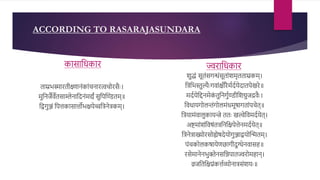
ACCORDING TO RASARAJASUNDARA
कासादधकाि
ताम्रभस्माितीक्ष्णानंकांचनाित्वचोिसैः।
मुदनजैवेतसाम्लेनादिनंमर्द्यं सुदपण्डितम्॥
दद्वगुञ्जं दपत्तकासात्तोभियेच्चदिनेिकम्।
ज्विादधकाि
शुद्धं सूतंसगन्धंसूतांशमृतताम्रकम्।
दिदभस्तुल्ैःगवांिीिैमरिरयेिातपेखिे॥
मिरयेदिनमेक
ं तुदनगुरिीदशग्रुजर्द्वैः।
दवधायगोलन्तंगोलमंधमूषागतांपचेत्॥
दियामंवालुकायन्त्रे ततः खल्वेदवमिरयेत्।
अष्टमांशंदवषंतिदनदिपेत्तेनमिरयेत्॥
दिनेिाख्योिसोह्येषिेयोगुञ्जाद्वयोण्डततम्।
पंचकोलकषायेणछागीिुग्धेनवासह॥
िसेमानेनभुिेनसदन्नपातज्विोमहान्।
व्रजदतदिप्रंकत्तरव्योनािसंशयः॥
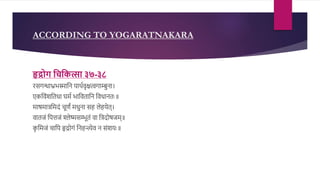
ACCORDING TO YOGARATNAKARA
हृद्रोग चिचित्सा ३७-३८
िसगन्धाभ्रभस्मादन पाथरवृित्वगाम्बुना।
एकदवंशदतधा घमर भादवतादन दवधानतः॥
माषमािदमिं चूणं मधुना सह लेहयेत्।
वातजं दपत्तजं श्लेष्मसम्भूतं वा दििोषजम्॥
क
ृ दमजं चादप हृर्द्ोगं दनहन्त्येव न संशयः॥
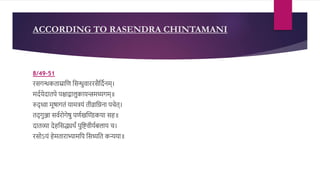
ACCORDING TO RASENDRA CHINTAMANI
8/49-51
िसगन्धकताम्रादण दसन्धुवाििसैदिरनम्।
मिरयेिातपे पश्चाद्वालुकायन्त्रमध्यगम्॥
रुि् वा मूषागतं यामियं तीव्रादिना पचेत्।
ति् गुञ्जा सवरिोगेषु पणरखण्डिकया सह॥
िातव्या िेहदसद्ध्यथं पुदष्टवीयरबलाय च।
िसोऽयं हेमतािाभ्ामदप दसध्यदत कन्यया॥
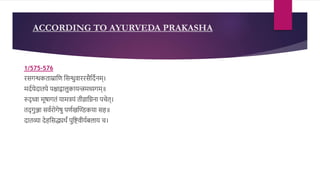
ACCORDING TO AYURVEDA PRAKASHA
1/575-576
िसगन्धकताम्रादण दसन्धुवाििसैदिरनम्।
मिरयेिातपे पश्चाद्वालुकायन्त्रमध्यगम्॥
रुि् वा मूषागतं यामियं तीव्रादिना पचेत्।
ति् गुञ्जा सवरिोगेषु पणरखण्डिकया सह॥
िातव्या िेहदसद्ध्यथं पुदष्टवीयरबलाय च।
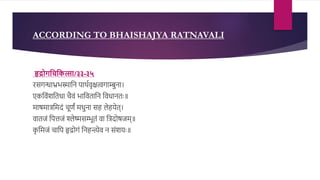
ACCORDING TO BHAISHAJYA RATNAVALI
हृद्रोगचिचित्सा/३३-३५
िसगन्धाभ्रभस्मादन पाथरवृित्वगाम्बुना।
एकदवंशदतधा चैवं भादवतादन दवधानतः॥
माषमािदमिं चूणं मधुना सह लेहयेत्।
वातजं दपत्तजं श्लेष्मसम्भूतं वा दििोषजम्॥
क
ृ दमजं चादप हृर्द्ोगं दनहन्त्येव न संशयः॥
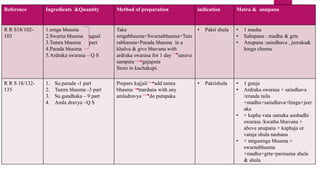
Reference Ingredients &Quantity Method of preparation indication Matra & anupana
R R S18/102-
103
1.srnga bhasma
2.Swarna bhasma equal
3.Tamra bhasma part
4.Parada bhasma
5.Ardraka swarasa – Q S
Take
srngabhasma+Swarnabhasma+Tam
rabhasma+Parada bhasma in a
khalva & give bhavana with
ardraka swarasa for 1 day sarava
samputa gajaputa
Store in kachakupi.
• Pakti shula • 1 masha
• Sahapana : madhu & grta
• Anupana :saindhava , jeeraka&
hingu churna
R R S 18/132-
135
1. Su.parada -1 part
2. Tamra bhasma -3 part
3. Su.gandhaka – 9 part
4. Amla dravya –Q S
Prepare kajjali add tamra
bhasma mardana with any
amladravya do putapaka
• Paktishula • 1 gunja
• Ardraka swarasa + saindhava
/eranda taila
+madhu+saindhava+hingu+jeer
aka
• + kapha vata samaka aushadhi
swarasa /kwatha bhavana +
above anupana + kaphaja or
vataja shula nashana
• + mrgasrnga bhasma +
swarnabhasma
+madhu+grta=parinama shula
& shula
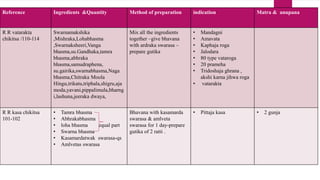
Reference Ingredients &Quantity Method of preparation indication Matra & anupana
R R vatarakta
chikitsa /110-114
Swarnamakshika
,Mishraka,Lohabhasma
,Swarnaksheeri,Vanga
bhasma,su.Gandhaka,tamra
bhasma,abhraka
bhasma,samudraphena,
su.gairika,swarnabhasma,Naga
bhasma,Chitraka Moola
Hingu,trikatu,triphala,shigru,aja
moda,yavani,pippalimula,bharng
i,lashuna,jeeraka dwaya,
Mix all the ingredients
together –give bhavana
with ardraka swarasa –
prepare gutika
• Mandagni
• Amavata
• Kaphaja roga
• Jalodara
• 80 type vataroga
• 20 prameha
• Tridoshaja ghrana ,
akshi karna jihwa roga
• vatarakta
R R kasa chikitsa
101-102
• Tamra bhasma
• Abhrakabhasma
• loha bhasma equal part
• Swarna bhasma
• Kasamardatwak swarasa-qs
• Amlvetas swarasa
Bhavana with kasamarda
swarasa & amlveta
swarasa for 1 day-prepare
gutika of 2 ratti .
• Pittaja kasa • 2 gunja
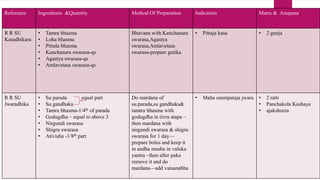
Reference Ingredients &Quantity Method Of Preparation Indication Matra & Anupana
R R SU
Kasadhikara
• Tamra bhasma
• Loha bhasma
• Pittala bhasma
• Kanchanara swarasa-qs
• Agastya swarasa-qs
• Amlavetasa swarasa-qs
Bhavana with Kanchanara
swarasa,Agastya
swarasa,Amlavetasa
swarasa-prepare gutika
• Pittaja kasa • 2 gunja
R R SU
Jwaradhika
• Su parada equal part
• Su gandhaka
• Tamra bhasma-1/4th of parada
• Godugdha – equal to above 3
• Nirgundi swarasa
• Shigru swarasa
• Ativisha -1/8th part
Do mardana of
su.parada,su gandhaka&
tamtra bhasma with
godugdha in tivra atapa –
then mardana with
nirgundi swarasa & shigru
swarasa for 1 day—
prepare bolus and keep it
in andha musha in valuka
yantra –then after paka
remove it and do
mardana—add vatsanabha
.
• Maha sannipataja jwara • 2 ratti
• Panchakola Kashaya
• ajaksheera
Reference Ingredients &Quantity Method Of Preparation Indication Matra & Anupana
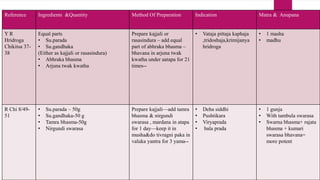
Y R
Hridroga
Chikitsa 37-
38
Equal parts
• Su.parada
• Su.gandhaka
(Either as kajjali or rasasindura)
• Abhraka bhasma
• Arjuna twak kwatha
Prepare kajjali or
rasasindura – add equal
part of abhraka bhasma –
bhavana in arjuna twak
kwatha under aatapa for 21
times--
• Vataja pittaja kaphaja
,tridoshaja,krimijanya
hridroga
• 1 masha
• madhu
R Chi 8/49-
51
• Su.parada – 50g
• Su.gandhaka-50 g
• Tamra bhasma-50g
• Nirgundi swarasa
Prepare kajjali—add tamra
bhasma & nirgundi
swarasa , mardana in atapa
for 1 day—keep it in
musha&do tivragni paka in
valuka yantra for 3 yama--
• Deha siddhi
• Pushtikara
• Viryaprada
• bala prada
• 1 gunja
• With tambula swarasa
• Swarna bhasma+ rajata
bhasma + kumari
swarasa bhavana=
more potent
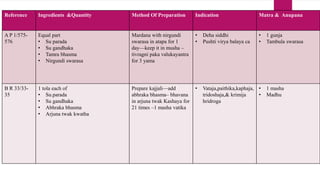
Reference Ingredients &Quantity Method Of Preparation Indication Matra & Anupana
A P 1/575-
576
Equal part
• Su parada
• Su gandhaka
• Tamra bhasma
• Nirgundi swarasa
Mardana with nirgundi
swarasa in atapa for 1
day—keep it in musha –
tivragni paka valukayantra
for 3 yama
• Deha siddhi
• Pushti virya balaya ca
• 1 gunja
• Tambula swarasa
B R 33/33-
35
1 tola each of
• Su.parada
• Su gandhaka
• Abhraka bhasma
• Arjuna twak kwatha
Prepare kajjali—add
abhraka bhasma– bhavana
in arjuna twak Kashaya for
21 times –1 masha vatika
• Vataja,paithika,kaphaja,
tridoshaja,& krimija
hridroga
• 1 masha
• Madhu
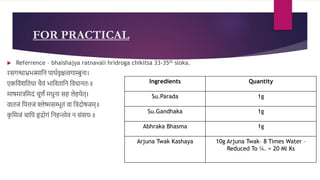
FOR PRACTICAL
 Referrence – bhaishajya ratnavali hridroga chikitsa 33-35th sloka.
िसगन्धाभ्रभस्मादन पाथरवृित्वगाम्बुना।
एकदवंशदतधा चैवं भादवतादन दवधानतः॥
माषमािदमिं चूणं मधुना सह लेहयेत्।
वातजं दपत्तजं श्लेष्मसम्भूतं वा दििोषजम्॥
क
ृ दमजं चादप हृर्द्ोगं दनहन्त्येव न संशयः॥
Ingredients Quantity
Su.Parada 1g
Su.Gandhaka 1g
Abhraka Bhasma 1g
Arjuna Twak Kashaya 10g Arjuna Twak– 8 Times Water –
Reduced To ¼. = 20 Ml Ks
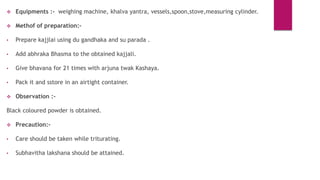
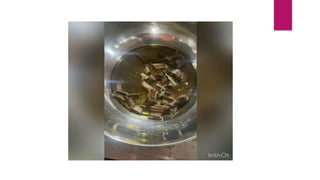
 Equipments :- weighing machine, khalva yantra, vessels,spoon,stove,measuring cylinder.
 Methof of preparation:-
• Prepare kajjlai using du gandhaka and su parada .
• Add abhraka Bhasma to the obtained kajjali.
• Give bhavana for 21 times with arjuna twak Kashaya.
• Pack it and sstore in an airtight container.
 Observation :-
Black coloured powder is obtained.
 Precaution:-
• Care should be taken while triturating.
• Subhavitha lakshana should be attained.
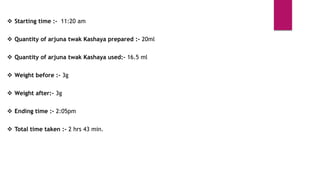
 Starting time :- 11:20 am
 Quantity of arjuna twak Kashaya prepared :- 20ml
 Quantity of arjuna twak Kashaya used:- 16.5 ml
 Weight before :- 3g
 Weight after:- 3g
 Ending time :- 2:05pm
 Total time taken :- 2 hrs 43 min.
MARKET AVAILABILITY
 Bhairav health care , Jamnagar ,Gujarat
RESEARCH WORKS
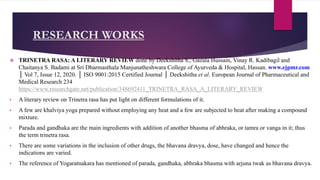
 TRINETRA RASA: A LITERARY REVIEW done by Deekshitha S., Gazala Hussain, Vinay R. Kadibagil and
Chaitanya S. Badami at Sri Dharmasthala Manjunatheshwara College of Ayurveda & Hospital, Hassan. www.ejpmr.com
│ Vol 7, Issue 12, 2020. │ ISO 9001:2015 Certified Journal │ Deekshitha et al. European Journal of Pharmaceutical and
Medical Research 234
https://www.researchgate.net/publication/348692411_TRINETRA_RASA_A_LITERARY_REVIEW
• A literary review on Trinetra rasa has put light on different formulations of it.
• A few are khalviya yoga prepared without employing any heat and a few are subjected to heat after making a compound
mixture.
• Parada and gandhaka are the main ingredients with addition of another bhasma of abhraka, or tamra or vanga in it; thus
the term trinetra rasa.
• There are some variations in the inclusion of other drugs, the bhavana dravya, dose, have changed and hence the
indications are varied.
• The reference of Yogaratnakara has mentioned of parada, gandhaka, abhraka bhasma with arjuna twak as bhavana dravya.
• As arjuna dravya is hridya, it gives a synergistic effect to the formulation and this formulation is indicated in all types of
hridroga.
• The same combination with addition of vatsanabha (Aconitum ferox) is indicated in Sannipataja and tridoshaja vyadhi with
panchakola as anupana.
• Suddha Parada (Mercury), Shuddha Gandhaka (Sulphur), Tamra Bhasma (Copper ash) with change in bhavana dravya and
anupana are indicated in different conditions.
• Thus the role of bhavana dravya is emphasized here.
• A few references of Trinetra rasa found have the role of heat, where the bolus of the ingredient is subjected to heat in baluka
yantra.
• The role of agni samskara by which the drug because of samskara will enhance in its guna.
• Trinetra rasa is a formulation having its description in various Ayurvedic text books.
• Mainly three ingredients are there in most of the combinations.
• Parada and Gandhaka are common with combination of abhraka bhasma or vanga bhasma or tamra bhasma.
• The bhavana dravya and anupana vary in different references; thus the change in indications.
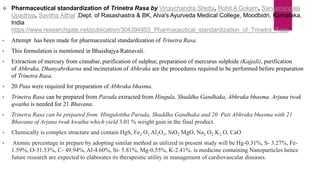
 Pharmaceutical standardization of Trinetra Rasa by Vinaychandra Shetty, Rohit A Gokarn, Sarvamangala
Upadhya, Savitha Aithal ,Dept. of Rasashastra & BK, Alva's Ayurveda Medical College, Moodbidri, Karnataka,
India
https://www.researchgate.net/publication/304394953_Pharmaceutical_standardization_of_Trinetra_Rasa
• Attempt has been made for pharmaceutical standardization of Trinetra Rasa.
• This formulation is mentioned in Bhaishajya Ratnavali.
• Extraction of mercury from cinnabar, purification of sulphur, preparation of mercurus sulphide (Kajjali), purification
of Abhraka, Dhanyabrikarna and incineration of Abhraka are the procedures required to be performed before preparation
of Trinetra Rasa.
• 20 Puta were required for preparation of Abhraka bhasma.
• Trinetra Rasa can be prepared from Parada extracted from Hingula, Shuddha Gandhaka, Abhraka bhasma. Arjuna twak
qwatha is needed for 21 Bhavana.
• Trinetra Rasa can be prepared from Hingulottha Parada, Shuddha Gandhaka and 20 Puti Abhraka bhasma with 21
Bhavana of Arjuna twak kwatha which yield 3.01 % weight gain in the final product.
• Chemically is complex structure and contain HgS, Fe2 O3 Al2O3, SiO2 MgO, Na2 O2 K2 O, CaO.
• Atomic percentage in prepare by adopting similar method as utilized in present study will be Hg-0.31%, S- 3.27%, Fe-
1.59%, O-31.53%, C- 49.94%, Al-4.60%, Si- 5.81%, Mg-0.55%, K-2.41%. is medicine containing Nanoparticles hence
future research are expected to elaborates its therapeutic utility in management of cardiovascular diseases.
 PHARMACEUTICAL AND ANALYTICAL STUDY OF TRINETRA RAS – HERBO-MINERAL FORMULATION by Nandurkar
Vishal Marotrao, V. M. Ramteke, S.G. Jyotishi ,Department of Rasshastra & Bhaishajya Kalpana, Shri K.R.Pandav Ayurved
College, Dighori, Nagpur, Maharashtra, India. https://ijapr.in/index.php/ijapr/article/download/1689/1254/
• Trinetraras can be prepared from Shuddha Parad, Shuddha gandhak and 40 Puti Abhrakbhasma with 21 Bhavana with Arjuna
twak kwath.
• Abhrak bhasma subjected to more Gajaputa more will be its therapeutic efficacy.
• Hence future research is expected to elaborate its therapeutic utility in management of cardiovascular diseases.
• Shodhan has broader concept other than purification.
• Shodhan is essential for the further pharmaceutical processes.
• Shodhan of Parad and Gandhak typically resembles as stated in the reference.
• Preparation of Dhanyabhraka states the significance of concept used by ancient Acharya.
• Jaggary and Eranda patra swarasa are the best and suitable media for the preparation of Abhraka bhasma.
• Properly prepared Bhasma possess all the parameters described in Ayurvedic classics.
• Analytical study of Trinetraras revealed the uniformity of the procedures in the three samples of Trinetra ras, as evidenced by
the observations of the analytical values of the three samples were not much variations found.
• Therefore physicochemical parameters serve as a mean for Standardisation of herbo-mineral preparation.
• Data generated from pharmaceutical, analytical studies can be used to develop a preliminary standard profile for the
formulation of Trinetra Ras.
 Cardio protective activity of Trinetra Rasa in experimental animal model by
Sarvamangala Shetty,Vinayachandra B, Aithal Savitha Prasanna, Ravishankar B, Upadhyaya Prandev,
Department of Rasashastra, Alva s Ayurveda Medical College, Moodbidri, Karnataka, India
https://www.cabdirect.org/globalhealth/search/?q=do%3a%22International+Journal+of+Research+in+Ayurveda+
and+Pharmacy+(IJRAP)%22
• Aimed to evaluate Cardio protective activity of Trinetra Rasa against Isoprenaline induced cardiac damage in rats and attempt
to understand mechanism of its therapeutic effect with respect to biochemical markers, ECG and Histopathological changes.
• Albino rats of Wistar strains of either sex between 150 to 250 g, randomly divided into 6 groups, 8 rats in each group.
• Group 1- Control group given tap water 10 ml/kg, Group 2- Isoprenaline control group -100 mg/kg, Group 3- Standard group
given Proprenalol-10 mg/kg, Group 4- Honey (Vehicle control/Anupana)- 10 ml/kg (Test 1), Group 5-Trinetra Rasa in
therapeutic dose along with Honey-750 mg/kg (Test 2) and Group 6- Trinetra Rasa in 2 times the therapeutic dose along with
Honey- 1500 mg/kg (Test 3) were administered according to the body weight of animals by oral route to respective groups at
morning hours and continued for 20 days.
• On 19th day, ECG was recorded to assess Myocardial infarction and 1st dose of Isoprenaline injection (s/c) was given, on
20th day after 24 hours of 1st dose, 2nd dose of Isoprenaline injection was given (s/c) and ECG was recorded.
• Cardio protectivity is classified as physiological approach of cardio protectivity and therapeutic approach of cardio
protectivity.
• The same concept was explained in our texts thousands of years ago i.e. Hridya dravya and Hridrogahara dravya.
• Trinetra Rasa is one such unique combination of Hridya (physiological) and Hridrogahara (Therapeutic) dravya.
• Arjuna is having Hridya property and Abhraka is having Hridrogahara property, Kajjali as Yogavahi and Honey Hridya.
• Holistic approach is the special feature of Ayurveda; hence the drug was given along with Anupana (Test 1).
• With a view to assess the action of drug it was given in normal therapeutic equivalent dose (Test 2) and doubles the normal
therapeutic equivalent dose (Test 3).
• However in the present study even though the yoga is described in Hridroga context and indicated in all kinds of Hridroga,
experimental evaluation was carried out on cardio protective activity on Isoprenaline induced MI in experimental animals.
• Myocardial infarction occurs due to sudden decrease in the coronary blood flow, most often it is due to occlusion of coronary
artery already narrowed by atherosclerosis.
• In the early stages of AMI (Acute Myocardial Infarction) there is generally leucocytosis, elevation of serum enzymes like
Serum Glutamic Oxaloacetic Transaminase (SGOT), Lactic dehydrogenase (LDH), and its isoenzymes, Creatinine
Phosphokinase (CPK), and elevation in SGOT and CPK levels can be detected within 3 to 6 hours, which remain high up to 4
to 5 days after AMI.
• Hence, determination of these enzymes is useful for the early diagnosis of AMI.
• LDH levels rise from 12 to 48 hours after AMI and remain high for 10 to 12 days.
• If we analyze the result of experimental study in totality we can conclude that the injection of Isoprenaline leads to alterations
in biochemical, ECG and histopathological parameters indicating features of marked myocardial perturbations- simulating
changes found in myocardial infarction.
• These Isoprenaline induced changes are believed to be due to generation of highly cytotoxic free radicals which are responsible
for the observed myocardial injury reflected in the form of changes in the biomarkers and infarct like necrosis in the cyto-
architecture.
• The serum ALP, LDH and CPK enzyme activities are considered as important markers for both early and late phases of cardiac
injury.
• The changes observed in the key bio-markers especially CK-MB activity, LDH activity results may be considered to indicate
moderate myocardial protection in Test 2 and Test 3 groups and weak protection in Test 1 groups and histopathological
changes indicate presence of at least moderate cardio protective activity in the test drug- Trinetra rasa.
• The results obtained by catalase, lipid peroxidation and glutathione peroxidise activity presented a complex picture.
• However, it may be suggestive that the reference standard and test drug promote glutathione conservation by modulating its
metabolism.
• This may contribute to the lessening of the oxidative stress.
• However, dose dependent effect was not observed in all the parameters.
• In biochemical parameters better effect was observed with Test 2 group but histopathological profile showed good effect at
Test 3 group higher dose level.
• Nevertheless the evidence generated can be considered as the basis for the observed effectiveness of this formulation in the
clinical settings.
THANKYOU

TRINETRA RASA.pptx

  • 1.
    TRINETRA RASA PRESENTED BY DRSAIMEERA P PG SCHOLAR DEPT OF RSBK MVRAMC
  • 2.
    INTRODUCTION  Trinetra rasacomes under khalviya rasa preparation that is described in various ayurveda treatises.  Total 10 references are available with slight variation .  Difference is found in ingredients, bhavana dravya, matra, anupana; indications are found based on the combinations of various ingredients.  But there are a few references where after mixing the ingredients, a bolus is made and subjected to heat in a Valuka yantra.
  • 3.
    REFERENCES 1. Rasaratna samucchaya18/102-103 ; 18/132-135 2. Rasaratnakara vatarakta chikitsa /110-114 ; kasa chikitsa 101-102 3. Rasaraja Sundara Kasa Chikitsa ;Jwara Chikitsa 4. Yogaratnakara hridroga chikitsa /37-38 5. Rasendra Chintamani 8/49-51 6. Ayurveda prakasha 1/575-576 7. Bhaishajya ratnavali 33/33-35
  • 4.
    ACCORDING TO RASARATNASAMUCCHAYA R R S 18/102-103 खण्डितं हारिणं श्रृङ्ग ं स्वणं शुल्बं मृतं िसम्। दिनैक ं चार्द्रकर्द्ावैमरर्द्यै रुि् वा पचेत्पुटे॥ दिनेिाख्यो िसः सोऽयं माषं मवाज्यक ै दलरहेत्। सैन्धवं जीिक ं दहङ् गु मवाज्याभ्ां दलहेिनु॥ पण्डिशूलहिं ख्यातं मासमािान्न संशयः॥ R R S 18/132-135 िसताम्रगन्धकानां दिगुणोत्तिवदधरतांशानाम्। अम्लेन मदिरतानां पुटपक्वानां दनषेदवतं भस्म॥ गुञ्जाप्रमाणमार्द्रकदसन्धूत्थचूणरसंयुिम्। एिितैलमादिकमथवा पटुदहङ् गुजीिकोपेतम्॥ शमयदत शूलमशेषं तत्तर्द्सभादवतं बहुशः। उपचूणैिनुपानैस्तैस्तैः सदहतं कफादनलादतरहिम्॥ एतञ्च हरिणश्रृङ्गमृतकाञ्चनटङ्कणोपेतम्। सघृतमधु पण्डिशूलं शमयदत शूलं दिनेििसः॥
  • 5.
    ACCORDING TO RASARATNAKARA vataraktachikitsa /110-114 गरुत्मान्दििस्तीक्ष्णंस्वणारह्वावंगशण्डिका। शुल्बंञ्चगगनफ े नंरुदधिञ्चदिनेिकम्॥ पातालनृपदतश्चैववदिमूलञ्चिामठम्। दिकटुदिफलादशग्रुचाजमोिायवादनका॥ दपप्पदलमूलभादङ्ग र चलशुनंजीिकद्वयम्। आर्द्रकस्यिसेनैवगुदटकांकाियेतण्डिषक ् ॥ मन्दानलामवातघ्नश्लेष्माणञ्चजलोििम्। अशीदतवारतजान्रोगान्प्रमेहांश्चैवदििोषजम्॥ घ्राणादिकणरदजह्वानांगिश्चैवदििोषजम्। गदलतांङ्गवातििंसवरमेतद्व्यपोहदत॥ kasa chikitsa 101-102 भस्मताम्राभ्रतीक्ष्णानांकासमिरत्वचोिसैः। सालजैवेतसाम्लेनदिनंमर्द्यरसुदपण्डितम्॥ दद्वगुंजंदपत्तकासात्तोभियेच्चदिनेिकम्॥
  • 6.
    ACCORDING TO RASARAJASUNDARA कासादधकाि ताम्रभस्माितीक्ष्णानंकांचनाित्वचोिसैः। मुदनजैवेतसाम्लेनादिनंमर्द्यंसुदपण्डितम्॥ दद्वगुञ्जं दपत्तकासात्तोभियेच्चदिनेिकम्। ज्विादधकाि शुद्धं सूतंसगन्धंसूतांशमृतताम्रकम्। दिदभस्तुल्ैःगवांिीिैमरिरयेिातपेखिे॥ मिरयेदिनमेक ं तुदनगुरिीदशग्रुजर्द्वैः। दवधायगोलन्तंगोलमंधमूषागतांपचेत्॥ दियामंवालुकायन्त्रे ततः खल्वेदवमिरयेत्। अष्टमांशंदवषंतिदनदिपेत्तेनमिरयेत्॥ दिनेिाख्योिसोह्येषिेयोगुञ्जाद्वयोण्डततम्। पंचकोलकषायेणछागीिुग्धेनवासह॥ िसेमानेनभुिेनसदन्नपातज्विोमहान्। व्रजदतदिप्रंकत्तरव्योनािसंशयः॥
  • 7.
    ACCORDING TO YOGARATNAKARA हृद्रोगचिचित्सा ३७-३८ िसगन्धाभ्रभस्मादन पाथरवृित्वगाम्बुना। एकदवंशदतधा घमर भादवतादन दवधानतः॥ माषमािदमिं चूणं मधुना सह लेहयेत्। वातजं दपत्तजं श्लेष्मसम्भूतं वा दििोषजम्॥ क ृ दमजं चादप हृर्द्ोगं दनहन्त्येव न संशयः॥
  • 8.
    ACCORDING TO RASENDRACHINTAMANI 8/49-51 िसगन्धकताम्रादण दसन्धुवाििसैदिरनम्। मिरयेिातपे पश्चाद्वालुकायन्त्रमध्यगम्॥ रुि् वा मूषागतं यामियं तीव्रादिना पचेत्। ति् गुञ्जा सवरिोगेषु पणरखण्डिकया सह॥ िातव्या िेहदसद्ध्यथं पुदष्टवीयरबलाय च। िसोऽयं हेमतािाभ्ामदप दसध्यदत कन्यया॥
  • 9.
    ACCORDING TO AYURVEDAPRAKASHA 1/575-576 िसगन्धकताम्रादण दसन्धुवाििसैदिरनम्। मिरयेिातपे पश्चाद्वालुकायन्त्रमध्यगम्॥ रुि् वा मूषागतं यामियं तीव्रादिना पचेत्। ति् गुञ्जा सवरिोगेषु पणरखण्डिकया सह॥ िातव्या िेहदसद्ध्यथं पुदष्टवीयरबलाय च।
  • 10.
    ACCORDING TO BHAISHAJYARATNAVALI हृद्रोगचिचित्सा/३३-३५ िसगन्धाभ्रभस्मादन पाथरवृित्वगाम्बुना। एकदवंशदतधा चैवं भादवतादन दवधानतः॥ माषमािदमिं चूणं मधुना सह लेहयेत्। वातजं दपत्तजं श्लेष्मसम्भूतं वा दििोषजम्॥ क ृ दमजं चादप हृर्द्ोगं दनहन्त्येव न संशयः॥
  • 11.
    Reference Ingredients &QuantityMethod of preparation indication Matra & anupana R R S18/102- 103 1.srnga bhasma 2.Swarna bhasma equal 3.Tamra bhasma part 4.Parada bhasma 5.Ardraka swarasa – Q S Take srngabhasma+Swarnabhasma+Tam rabhasma+Parada bhasma in a khalva & give bhavana with ardraka swarasa for 1 day sarava samputa gajaputa Store in kachakupi. • Pakti shula • 1 masha • Sahapana : madhu & grta • Anupana :saindhava , jeeraka& hingu churna R R S 18/132- 135 1. Su.parada -1 part 2. Tamra bhasma -3 part 3. Su.gandhaka – 9 part 4. Amla dravya –Q S Prepare kajjali add tamra bhasma mardana with any amladravya do putapaka • Paktishula • 1 gunja • Ardraka swarasa + saindhava /eranda taila +madhu+saindhava+hingu+jeer aka • + kapha vata samaka aushadhi swarasa /kwatha bhavana + above anupana + kaphaja or vataja shula nashana • + mrgasrnga bhasma + swarnabhasma +madhu+grta=parinama shula & shula
  • 12.
    Reference Ingredients &QuantityMethod of preparation indication Matra & anupana R R vatarakta chikitsa /110-114 Swarnamakshika ,Mishraka,Lohabhasma ,Swarnaksheeri,Vanga bhasma,su.Gandhaka,tamra bhasma,abhraka bhasma,samudraphena, su.gairika,swarnabhasma,Naga bhasma,Chitraka Moola Hingu,trikatu,triphala,shigru,aja moda,yavani,pippalimula,bharng i,lashuna,jeeraka dwaya, Mix all the ingredients together –give bhavana with ardraka swarasa – prepare gutika • Mandagni • Amavata • Kaphaja roga • Jalodara • 80 type vataroga • 20 prameha • Tridoshaja ghrana , akshi karna jihwa roga • vatarakta R R kasa chikitsa 101-102 • Tamra bhasma • Abhrakabhasma • loha bhasma equal part • Swarna bhasma • Kasamardatwak swarasa-qs • Amlvetas swarasa Bhavana with kasamarda swarasa & amlveta swarasa for 1 day-prepare gutika of 2 ratti . • Pittaja kasa • 2 gunja
  • 13.
    Reference Ingredients &QuantityMethod Of Preparation Indication Matra & Anupana R R SU Kasadhikara • Tamra bhasma • Loha bhasma • Pittala bhasma • Kanchanara swarasa-qs • Agastya swarasa-qs • Amlavetasa swarasa-qs Bhavana with Kanchanara swarasa,Agastya swarasa,Amlavetasa swarasa-prepare gutika • Pittaja kasa • 2 gunja R R SU Jwaradhika • Su parada equal part • Su gandhaka • Tamra bhasma-1/4th of parada • Godugdha – equal to above 3 • Nirgundi swarasa • Shigru swarasa • Ativisha -1/8th part Do mardana of su.parada,su gandhaka& tamtra bhasma with godugdha in tivra atapa – then mardana with nirgundi swarasa & shigru swarasa for 1 day— prepare bolus and keep it in andha musha in valuka yantra –then after paka remove it and do mardana—add vatsanabha . • Maha sannipataja jwara • 2 ratti • Panchakola Kashaya • ajaksheera
  • 14.
    Reference Ingredients &QuantityMethod Of Preparation Indication Matra & Anupana Y R Hridroga Chikitsa 37- 38 Equal parts • Su.parada • Su.gandhaka (Either as kajjali or rasasindura) • Abhraka bhasma • Arjuna twak kwatha Prepare kajjali or rasasindura – add equal part of abhraka bhasma – bhavana in arjuna twak kwatha under aatapa for 21 times-- • Vataja pittaja kaphaja ,tridoshaja,krimijanya hridroga • 1 masha • madhu R Chi 8/49- 51 • Su.parada – 50g • Su.gandhaka-50 g • Tamra bhasma-50g • Nirgundi swarasa Prepare kajjali—add tamra bhasma & nirgundi swarasa , mardana in atapa for 1 day—keep it in musha&do tivragni paka in valuka yantra for 3 yama-- • Deha siddhi • Pushtikara • Viryaprada • bala prada • 1 gunja • With tambula swarasa • Swarna bhasma+ rajata bhasma + kumari swarasa bhavana= more potent
  • 15.
    Reference Ingredients &QuantityMethod Of Preparation Indication Matra & Anupana A P 1/575- 576 Equal part • Su parada • Su gandhaka • Tamra bhasma • Nirgundi swarasa Mardana with nirgundi swarasa in atapa for 1 day—keep it in musha – tivragni paka valukayantra for 3 yama • Deha siddhi • Pushti virya balaya ca • 1 gunja • Tambula swarasa B R 33/33- 35 1 tola each of • Su.parada • Su gandhaka • Abhraka bhasma • Arjuna twak kwatha Prepare kajjali—add abhraka bhasma– bhavana in arjuna twak Kashaya for 21 times –1 masha vatika • Vataja,paithika,kaphaja, tridoshaja,& krimija hridroga • 1 masha • Madhu
  • 16.
    FOR PRACTICAL  Referrence– bhaishajya ratnavali hridroga chikitsa 33-35th sloka. िसगन्धाभ्रभस्मादन पाथरवृित्वगाम्बुना। एकदवंशदतधा चैवं भादवतादन दवधानतः॥ माषमािदमिं चूणं मधुना सह लेहयेत्। वातजं दपत्तजं श्लेष्मसम्भूतं वा दििोषजम्॥ क ृ दमजं चादप हृर्द्ोगं दनहन्त्येव न संशयः॥ Ingredients Quantity Su.Parada 1g Su.Gandhaka 1g Abhraka Bhasma 1g Arjuna Twak Kashaya 10g Arjuna Twak– 8 Times Water – Reduced To ¼. = 20 Ml Ks
  • 17.
     Equipments :-weighing machine, khalva yantra, vessels,spoon,stove,measuring cylinder.  Methof of preparation:- • Prepare kajjlai using du gandhaka and su parada . • Add abhraka Bhasma to the obtained kajjali. • Give bhavana for 21 times with arjuna twak Kashaya. • Pack it and sstore in an airtight container.  Observation :- Black coloured powder is obtained.  Precaution:- • Care should be taken while triturating. • Subhavitha lakshana should be attained.
  • 19.
     Starting time:- 11:20 am  Quantity of arjuna twak Kashaya prepared :- 20ml  Quantity of arjuna twak Kashaya used:- 16.5 ml  Weight before :- 3g  Weight after:- 3g  Ending time :- 2:05pm  Total time taken :- 2 hrs 43 min.
  • 20.
    MARKET AVAILABILITY  Bhairavhealth care , Jamnagar ,Gujarat
  • 21.
    RESEARCH WORKS  TRINETRARASA: A LITERARY REVIEW done by Deekshitha S., Gazala Hussain, Vinay R. Kadibagil and Chaitanya S. Badami at Sri Dharmasthala Manjunatheshwara College of Ayurveda & Hospital, Hassan. www.ejpmr.com │ Vol 7, Issue 12, 2020. │ ISO 9001:2015 Certified Journal │ Deekshitha et al. European Journal of Pharmaceutical and Medical Research 234 https://www.researchgate.net/publication/348692411_TRINETRA_RASA_A_LITERARY_REVIEW • A literary review on Trinetra rasa has put light on different formulations of it. • A few are khalviya yoga prepared without employing any heat and a few are subjected to heat after making a compound mixture. • Parada and gandhaka are the main ingredients with addition of another bhasma of abhraka, or tamra or vanga in it; thus the term trinetra rasa. • There are some variations in the inclusion of other drugs, the bhavana dravya, dose, have changed and hence the indications are varied. • The reference of Yogaratnakara has mentioned of parada, gandhaka, abhraka bhasma with arjuna twak as bhavana dravya.
  • 22.
    • As arjunadravya is hridya, it gives a synergistic effect to the formulation and this formulation is indicated in all types of hridroga. • The same combination with addition of vatsanabha (Aconitum ferox) is indicated in Sannipataja and tridoshaja vyadhi with panchakola as anupana. • Suddha Parada (Mercury), Shuddha Gandhaka (Sulphur), Tamra Bhasma (Copper ash) with change in bhavana dravya and anupana are indicated in different conditions. • Thus the role of bhavana dravya is emphasized here. • A few references of Trinetra rasa found have the role of heat, where the bolus of the ingredient is subjected to heat in baluka yantra. • The role of agni samskara by which the drug because of samskara will enhance in its guna. • Trinetra rasa is a formulation having its description in various Ayurvedic text books. • Mainly three ingredients are there in most of the combinations. • Parada and Gandhaka are common with combination of abhraka bhasma or vanga bhasma or tamra bhasma. • The bhavana dravya and anupana vary in different references; thus the change in indications.
  • 23.
     Pharmaceutical standardizationof Trinetra Rasa by Vinaychandra Shetty, Rohit A Gokarn, Sarvamangala Upadhya, Savitha Aithal ,Dept. of Rasashastra & BK, Alva's Ayurveda Medical College, Moodbidri, Karnataka, India https://www.researchgate.net/publication/304394953_Pharmaceutical_standardization_of_Trinetra_Rasa • Attempt has been made for pharmaceutical standardization of Trinetra Rasa. • This formulation is mentioned in Bhaishajya Ratnavali. • Extraction of mercury from cinnabar, purification of sulphur, preparation of mercurus sulphide (Kajjali), purification of Abhraka, Dhanyabrikarna and incineration of Abhraka are the procedures required to be performed before preparation of Trinetra Rasa. • 20 Puta were required for preparation of Abhraka bhasma. • Trinetra Rasa can be prepared from Parada extracted from Hingula, Shuddha Gandhaka, Abhraka bhasma. Arjuna twak qwatha is needed for 21 Bhavana. • Trinetra Rasa can be prepared from Hingulottha Parada, Shuddha Gandhaka and 20 Puti Abhraka bhasma with 21 Bhavana of Arjuna twak kwatha which yield 3.01 % weight gain in the final product. • Chemically is complex structure and contain HgS, Fe2 O3 Al2O3, SiO2 MgO, Na2 O2 K2 O, CaO. • Atomic percentage in prepare by adopting similar method as utilized in present study will be Hg-0.31%, S- 3.27%, Fe- 1.59%, O-31.53%, C- 49.94%, Al-4.60%, Si- 5.81%, Mg-0.55%, K-2.41%. is medicine containing Nanoparticles hence future research are expected to elaborates its therapeutic utility in management of cardiovascular diseases.
  • 24.
     PHARMACEUTICAL ANDANALYTICAL STUDY OF TRINETRA RAS – HERBO-MINERAL FORMULATION by Nandurkar Vishal Marotrao, V. M. Ramteke, S.G. Jyotishi ,Department of Rasshastra & Bhaishajya Kalpana, Shri K.R.Pandav Ayurved College, Dighori, Nagpur, Maharashtra, India. https://ijapr.in/index.php/ijapr/article/download/1689/1254/ • Trinetraras can be prepared from Shuddha Parad, Shuddha gandhak and 40 Puti Abhrakbhasma with 21 Bhavana with Arjuna twak kwath. • Abhrak bhasma subjected to more Gajaputa more will be its therapeutic efficacy. • Hence future research is expected to elaborate its therapeutic utility in management of cardiovascular diseases. • Shodhan has broader concept other than purification. • Shodhan is essential for the further pharmaceutical processes. • Shodhan of Parad and Gandhak typically resembles as stated in the reference. • Preparation of Dhanyabhraka states the significance of concept used by ancient Acharya. • Jaggary and Eranda patra swarasa are the best and suitable media for the preparation of Abhraka bhasma. • Properly prepared Bhasma possess all the parameters described in Ayurvedic classics. • Analytical study of Trinetraras revealed the uniformity of the procedures in the three samples of Trinetra ras, as evidenced by the observations of the analytical values of the three samples were not much variations found. • Therefore physicochemical parameters serve as a mean for Standardisation of herbo-mineral preparation. • Data generated from pharmaceutical, analytical studies can be used to develop a preliminary standard profile for the formulation of Trinetra Ras.
  • 25.
     Cardio protectiveactivity of Trinetra Rasa in experimental animal model by Sarvamangala Shetty,Vinayachandra B, Aithal Savitha Prasanna, Ravishankar B, Upadhyaya Prandev, Department of Rasashastra, Alva s Ayurveda Medical College, Moodbidri, Karnataka, India https://www.cabdirect.org/globalhealth/search/?q=do%3a%22International+Journal+of+Research+in+Ayurveda+ and+Pharmacy+(IJRAP)%22 • Aimed to evaluate Cardio protective activity of Trinetra Rasa against Isoprenaline induced cardiac damage in rats and attempt to understand mechanism of its therapeutic effect with respect to biochemical markers, ECG and Histopathological changes. • Albino rats of Wistar strains of either sex between 150 to 250 g, randomly divided into 6 groups, 8 rats in each group. • Group 1- Control group given tap water 10 ml/kg, Group 2- Isoprenaline control group -100 mg/kg, Group 3- Standard group given Proprenalol-10 mg/kg, Group 4- Honey (Vehicle control/Anupana)- 10 ml/kg (Test 1), Group 5-Trinetra Rasa in therapeutic dose along with Honey-750 mg/kg (Test 2) and Group 6- Trinetra Rasa in 2 times the therapeutic dose along with Honey- 1500 mg/kg (Test 3) were administered according to the body weight of animals by oral route to respective groups at morning hours and continued for 20 days. • On 19th day, ECG was recorded to assess Myocardial infarction and 1st dose of Isoprenaline injection (s/c) was given, on 20th day after 24 hours of 1st dose, 2nd dose of Isoprenaline injection was given (s/c) and ECG was recorded. • Cardio protectivity is classified as physiological approach of cardio protectivity and therapeutic approach of cardio protectivity. • The same concept was explained in our texts thousands of years ago i.e. Hridya dravya and Hridrogahara dravya.
  • 26.
    • Trinetra Rasais one such unique combination of Hridya (physiological) and Hridrogahara (Therapeutic) dravya. • Arjuna is having Hridya property and Abhraka is having Hridrogahara property, Kajjali as Yogavahi and Honey Hridya. • Holistic approach is the special feature of Ayurveda; hence the drug was given along with Anupana (Test 1). • With a view to assess the action of drug it was given in normal therapeutic equivalent dose (Test 2) and doubles the normal therapeutic equivalent dose (Test 3). • However in the present study even though the yoga is described in Hridroga context and indicated in all kinds of Hridroga, experimental evaluation was carried out on cardio protective activity on Isoprenaline induced MI in experimental animals. • Myocardial infarction occurs due to sudden decrease in the coronary blood flow, most often it is due to occlusion of coronary artery already narrowed by atherosclerosis. • In the early stages of AMI (Acute Myocardial Infarction) there is generally leucocytosis, elevation of serum enzymes like Serum Glutamic Oxaloacetic Transaminase (SGOT), Lactic dehydrogenase (LDH), and its isoenzymes, Creatinine Phosphokinase (CPK), and elevation in SGOT and CPK levels can be detected within 3 to 6 hours, which remain high up to 4 to 5 days after AMI. • Hence, determination of these enzymes is useful for the early diagnosis of AMI. • LDH levels rise from 12 to 48 hours after AMI and remain high for 10 to 12 days. • If we analyze the result of experimental study in totality we can conclude that the injection of Isoprenaline leads to alterations in biochemical, ECG and histopathological parameters indicating features of marked myocardial perturbations- simulating changes found in myocardial infarction.
  • 27.
    • These Isoprenalineinduced changes are believed to be due to generation of highly cytotoxic free radicals which are responsible for the observed myocardial injury reflected in the form of changes in the biomarkers and infarct like necrosis in the cyto- architecture. • The serum ALP, LDH and CPK enzyme activities are considered as important markers for both early and late phases of cardiac injury. • The changes observed in the key bio-markers especially CK-MB activity, LDH activity results may be considered to indicate moderate myocardial protection in Test 2 and Test 3 groups and weak protection in Test 1 groups and histopathological changes indicate presence of at least moderate cardio protective activity in the test drug- Trinetra rasa. • The results obtained by catalase, lipid peroxidation and glutathione peroxidise activity presented a complex picture. • However, it may be suggestive that the reference standard and test drug promote glutathione conservation by modulating its metabolism. • This may contribute to the lessening of the oxidative stress. • However, dose dependent effect was not observed in all the parameters. • In biochemical parameters better effect was observed with Test 2 group but histopathological profile showed good effect at Test 3 group higher dose level. • Nevertheless the evidence generated can be considered as the basis for the observed effectiveness of this formulation in the clinical settings.
  • 28.