Atropine
• Background information
• Biological explanation
• Uses in medicine
Background
• Atropine is found in many members of the Solanaceae
family of plants
• Mandragora (mandrake) was used in the fourth century
B.C. for treatment of wounds, gout, and sleeplessness
• Roman and Islamic Empires across Europe used
Solanaceae containing tropane alkaloids for
anaesthesia for centuries
• The substance was first synthesized by German chemist
Richard Willstätter in 1901
• The toxic alkaloid atropine
comes from the highly
poisonous Deadly
nightshade, common
name belladonna (Italian
for "beautiful lady")
• Women placed atropine-
containing drops in their
eyes to dilate their pupils,
giving them a dreamy look
that was believed to be
attractive. Tragically, many
of these women later
became blind
Biological explanation
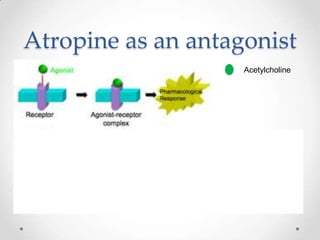
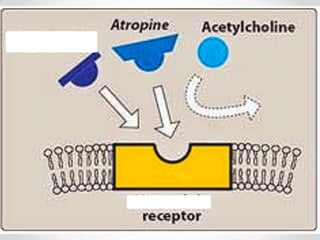
• Atropine is an ANTICHOLINERGENIC drug
• It is called this because it ‘antagonises’ (works
against) acetylcholine.
Atropine as an antagonist
Acetylcholine
Atropine
Atropine as an antagonist
Acetylcholine
Atropine
Atropine
C17H23NO3
SYNAPSE
Atropine binds
with the receptors
so acetylcholine
can’t
The nerve
impulse cannot
transmit
This function can
be utilised to
‘paralyse’ certain
nerves
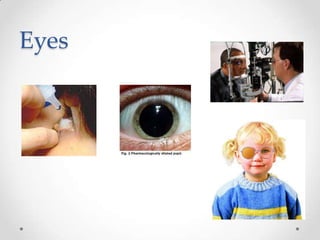
Eyes
Heart
The vagus nerve normally slows the heart
Atropine blocks the effect of the vagus nerve by
binding with the acetylcholine receptors on the post –
synaptic membrane
The heart rate is no longer inhibited
This may stimulate the heart
Atropine is give after a heart attack
Metabolism of atropine
• Up to 50% of atropine is excreted unchanged in the
urine
• The remaining Atropine is destroyed by enzymatic
hydrolysis in the liver

Atropine

  • 1.
  • 2.
    • Background information •Biological explanation • Uses in medicine
  • 3.
    Background • Atropine isfound in many members of the Solanaceae family of plants • Mandragora (mandrake) was used in the fourth century B.C. for treatment of wounds, gout, and sleeplessness • Roman and Islamic Empires across Europe used Solanaceae containing tropane alkaloids for anaesthesia for centuries • The substance was first synthesized by German chemist Richard Willstätter in 1901
  • 4.
    • The toxicalkaloid atropine comes from the highly poisonous Deadly nightshade, common name belladonna (Italian for "beautiful lady") • Women placed atropine- containing drops in their eyes to dilate their pupils, giving them a dreamy look that was believed to be attractive. Tragically, many of these women later became blind
  • 5.
    Biological explanation • Atropineis an ANTICHOLINERGENIC drug • It is called this because it ‘antagonises’ (works against) acetylcholine.
  • 6.
    Atropine as anantagonist Acetylcholine Atropine
  • 7.
    Atropine as anantagonist Acetylcholine Atropine
  • 8.
  • 10.
  • 11.
    Atropine binds with thereceptors so acetylcholine can’t The nerve impulse cannot transmit This function can be utilised to ‘paralyse’ certain nerves
  • 14.
  • 15.
    Heart The vagus nervenormally slows the heart Atropine blocks the effect of the vagus nerve by binding with the acetylcholine receptors on the post – synaptic membrane The heart rate is no longer inhibited This may stimulate the heart Atropine is give after a heart attack
  • 16.
    Metabolism of atropine •Up to 50% of atropine is excreted unchanged in the urine • The remaining Atropine is destroyed by enzymatic hydrolysis in the liver