CYSTOCLYSIS 
MARIA FILOMENA E. SEMILLA, RN,MSN
CYSTOCLYSIS/BLADDER IRRIGATION 
• process of flushing the 
bladder with normal 
saline to prevent or 
treat clot formation.
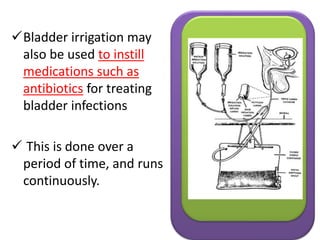
Bladder irrigation may 
also be used to instill 
medications such as 
antibiotics for treating 
bladder infections 
 This is done over a 
period of time, and runs 
continuously.
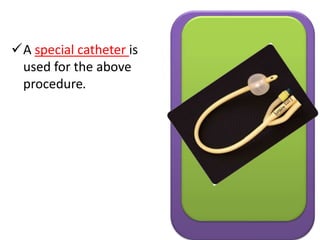
A special catheter is 
used for the above 
procedure.
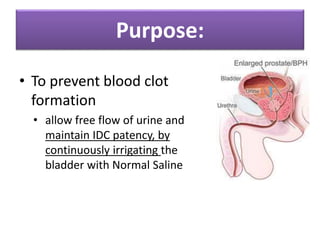
Purpose: 
• To prevent blood clot 
formation 
• allow free flow of urine and 
maintain IDC patency, by 
continuously irrigating the 
bladder with Normal Saline
Purpose: 
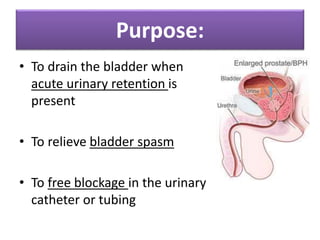
• To drain the bladder when 
acute urinary retention is 
present 
• To relieve bladder spasm 
• To free blockage in the urinary 
catheter or tubing
EXPECTED OUTCOMES 
1. The urinary catheter remains patent and 
urine is able to drain freely via the 
indwelling catheter (IDC) 
2. The patients comfort is maintained
EXPECTED OUTCOMES 
3. Clot formation within the bladder or IDC is 
prevented or minimized 
4. The patient’s risk of Urinary Tract Infection is 
minimized, through use of aseptic technique 
when connecting bladder irrigation to IDC
TYPES OF IRRIGATING CYSTOCLYSIS 
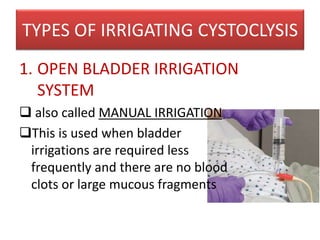
1. OPEN BLADDER IRRIGATION 
SYSTEM 
 also called MANUAL IRRIGATION 
This is used when bladder 
irrigations are required less 
frequently and there are no blood 
clots or large mucous fragments
TYPES OF IRRIGATING CYSTOCLYSIS 
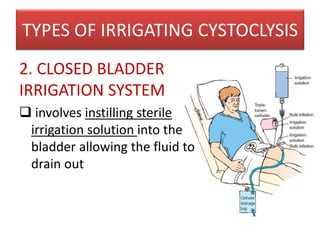
2. CLOSED BLADDER 
IRRIGATION SYSTEM 
 involves instilling sterile 
irrigation solution into the 
bladder allowing the fluid to 
drain out
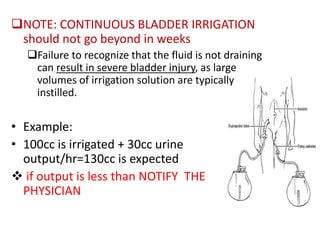
NOTE: CONTINUOUS BLADDER IRRIGATION 
should not go beyond in weeks 
Failure to recognize that the fluid is not draining 
can result in severe bladder injury, as large 
volumes of irrigation solution are typically 
instilled. 
• Example: 
• 100cc is irrigated + 30cc urine 
output/hr=130cc is expected 
 if output is less than NOTIFY THE 
PHYSICIAN
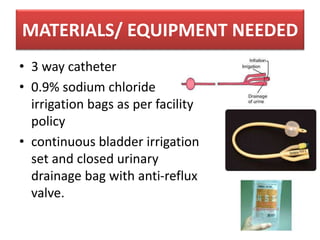
MATERIALS/ EQUIPMENT NEEDED 
• 3 way catheter 
• 0.9% sodium chloride 
irrigation bags as per facility 
policy 
• continuous bladder irrigation 
set and closed urinary 
drainage bag with anti-reflux 
valve.
MATERIALS/ EQUIPMENT NEEDED 
• Chlorhexidane 0.5% with 70% 
alcohol wipes 
• Non sterile gloves 
• Personal protective equipment 
• Underpad (bluey) 
• IV pole
Procedure: 
• 1. Explain procedure to the 
patient and ensure patient 
privacy 
• 2. Position the patient for 
easy access to the catheter 
whilst maintaining patient 
comfort
Procedure: 
• 3. Ensure that the patient has 
a three-way urinary catheter. 
– If not, a three-way catheter 
needs to be inserted
Procedure: 
• 4. Hang irrigation flasks on IV pole and prime 
irrigation set maintaining asepsis of irrigation set. 
• Note: Only one of the irrigation flask clamps 
should be open when priming the irrigation set 
otherwise the fluid can run from one flask to 
another. 
– After priming the irrigation set ensure that all clamps 
on the irrigation set are closed.
Procedure: 
• 5. Don goggles and impervious gown , place 
underpad underneath catheter connection 
• 6. Attend hand wash and don non sterile 
gloves 
• 7. Swab IDC irrigation and catheter ports with 
chlorhexidine swabs and allow drying
Procedure: 
• 8. Remove the spigot from the irrigation 
lumen of the catheter using sterile gauze and 
discard spigot 
• 9. Connect the irrigation set to the irrigation 
lumen of the catheter, maintaining clean 
procedure
Procedure: 
• 10. Remove spigot or old drainage bag from 
the catheter lumen using sterile gauze and 
apply catheter drainage bag maintaining clean 
procedure. 
• Note: Do not commence Bladder Irrigation 
until urine is draining freely
Procedure: 
• 11. Unclamp the irrigation flask that was 
used to prime the irrigation set and set 
the rate of administration by adjusting 
the roller clamp 
• Note: The aim of the bladder irrigation 
is to keep the urine rose’ coloured and 
free from clots.
Diagram/ Illustrations:
Nursing Responsibilities: 
• Saline flasks for bladder irrigation do not need 
to be ordered by a Medical Officer 
• Continue irrigation as necessary depending on 
the degree of hematuria 
– (ensure adequate supply of irrigant nearby)
Nursing Responsibilities: 
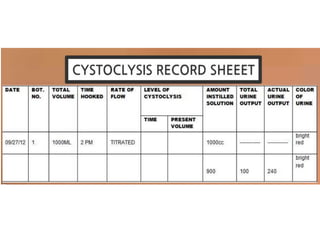
• After each flask is complete 
– empty urine drainage bag and record urine 
output on the FLUID BALANCE CHART, prior to 
commencement of the next irrigation flask 
• Regular catheter care is required in order to 
minimize the risk of catheter related urinary 
tract infection
Nursing Responsibilities: 
• Catheter care provided should be documented 
in the progress notes 
• Also the nursing care plan including: 
– patient comfort 
– urine colour/degree of hematuria 
– urine output 
– Also presence of clots if any and if manual bladder 
washout was necessary
QUIZ 
• 1-3. purposes of bladder irrigation 
• 4-5. indication for bladder irrigation 
• 6-7 nursing responsibilities for patient with 
cystoclysis 
• 8. complication of bladder irrigation 
• 9-10. types of bladder irrigation
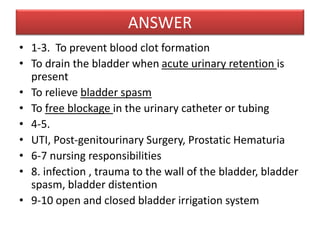
ANSWER 
• 1-3. To prevent blood clot formation 
• To drain the bladder when acute urinary retention is 
present 
• To relieve bladder spasm 
• To free blockage in the urinary catheter or tubing 
• 4-5. 
• UTI, Post-genitourinary Surgery, Prostatic Hematuria 
• 6-7 nursing responsibilities 
• 8. infection , trauma to the wall of the bladder, bladder 
spasm, bladder distention 
• 9-10 open and closed bladder irrigation system

Cystoclysis bladder irrigation

  • 1.
    CYSTOCLYSIS MARIA FILOMENAE. SEMILLA, RN,MSN
  • 2.
    CYSTOCLYSIS/BLADDER IRRIGATION •process of flushing the bladder with normal saline to prevent or treat clot formation.
  • 3.
    Bladder irrigation may also be used to instill medications such as antibiotics for treating bladder infections  This is done over a period of time, and runs continuously.
  • 4.
    A special catheteris used for the above procedure.
  • 5.
    Purpose: • Toprevent blood clot formation • allow free flow of urine and maintain IDC patency, by continuously irrigating the bladder with Normal Saline
  • 6.
    Purpose: • Todrain the bladder when acute urinary retention is present • To relieve bladder spasm • To free blockage in the urinary catheter or tubing
  • 7.
    EXPECTED OUTCOMES 1.The urinary catheter remains patent and urine is able to drain freely via the indwelling catheter (IDC) 2. The patients comfort is maintained
  • 8.
    EXPECTED OUTCOMES 3.Clot formation within the bladder or IDC is prevented or minimized 4. The patient’s risk of Urinary Tract Infection is minimized, through use of aseptic technique when connecting bladder irrigation to IDC
  • 10.
    TYPES OF IRRIGATINGCYSTOCLYSIS 1. OPEN BLADDER IRRIGATION SYSTEM  also called MANUAL IRRIGATION This is used when bladder irrigations are required less frequently and there are no blood clots or large mucous fragments
  • 11.
    TYPES OF IRRIGATINGCYSTOCLYSIS 2. CLOSED BLADDER IRRIGATION SYSTEM  involves instilling sterile irrigation solution into the bladder allowing the fluid to drain out
  • 12.
    NOTE: CONTINUOUS BLADDERIRRIGATION should not go beyond in weeks Failure to recognize that the fluid is not draining can result in severe bladder injury, as large volumes of irrigation solution are typically instilled. • Example: • 100cc is irrigated + 30cc urine output/hr=130cc is expected  if output is less than NOTIFY THE PHYSICIAN
  • 13.
    MATERIALS/ EQUIPMENT NEEDED • 3 way catheter • 0.9% sodium chloride irrigation bags as per facility policy • continuous bladder irrigation set and closed urinary drainage bag with anti-reflux valve.
  • 14.
    MATERIALS/ EQUIPMENT NEEDED • Chlorhexidane 0.5% with 70% alcohol wipes • Non sterile gloves • Personal protective equipment • Underpad (bluey) • IV pole
  • 15.
    Procedure: • 1.Explain procedure to the patient and ensure patient privacy • 2. Position the patient for easy access to the catheter whilst maintaining patient comfort
  • 16.
    Procedure: • 3.Ensure that the patient has a three-way urinary catheter. – If not, a three-way catheter needs to be inserted
  • 17.
    Procedure: • 4.Hang irrigation flasks on IV pole and prime irrigation set maintaining asepsis of irrigation set. • Note: Only one of the irrigation flask clamps should be open when priming the irrigation set otherwise the fluid can run from one flask to another. – After priming the irrigation set ensure that all clamps on the irrigation set are closed.
  • 18.
    Procedure: • 5.Don goggles and impervious gown , place underpad underneath catheter connection • 6. Attend hand wash and don non sterile gloves • 7. Swab IDC irrigation and catheter ports with chlorhexidine swabs and allow drying
  • 19.
    Procedure: • 8.Remove the spigot from the irrigation lumen of the catheter using sterile gauze and discard spigot • 9. Connect the irrigation set to the irrigation lumen of the catheter, maintaining clean procedure
  • 20.
    Procedure: • 10.Remove spigot or old drainage bag from the catheter lumen using sterile gauze and apply catheter drainage bag maintaining clean procedure. • Note: Do not commence Bladder Irrigation until urine is draining freely
  • 21.
    Procedure: • 11.Unclamp the irrigation flask that was used to prime the irrigation set and set the rate of administration by adjusting the roller clamp • Note: The aim of the bladder irrigation is to keep the urine rose’ coloured and free from clots.
  • 22.
  • 23.
    Nursing Responsibilities: •Saline flasks for bladder irrigation do not need to be ordered by a Medical Officer • Continue irrigation as necessary depending on the degree of hematuria – (ensure adequate supply of irrigant nearby)
  • 24.
    Nursing Responsibilities: •After each flask is complete – empty urine drainage bag and record urine output on the FLUID BALANCE CHART, prior to commencement of the next irrigation flask • Regular catheter care is required in order to minimize the risk of catheter related urinary tract infection
  • 25.
    Nursing Responsibilities: •Catheter care provided should be documented in the progress notes • Also the nursing care plan including: – patient comfort – urine colour/degree of hematuria – urine output – Also presence of clots if any and if manual bladder washout was necessary
  • 28.
    QUIZ • 1-3.purposes of bladder irrigation • 4-5. indication for bladder irrigation • 6-7 nursing responsibilities for patient with cystoclysis • 8. complication of bladder irrigation • 9-10. types of bladder irrigation
  • 29.
    ANSWER • 1-3.To prevent blood clot formation • To drain the bladder when acute urinary retention is present • To relieve bladder spasm • To free blockage in the urinary catheter or tubing • 4-5. • UTI, Post-genitourinary Surgery, Prostatic Hematuria • 6-7 nursing responsibilities • 8. infection , trauma to the wall of the bladder, bladder spasm, bladder distention • 9-10 open and closed bladder irrigation system