• He is the son of Perfecto Q.
  Manansala and Engracia Silva. He
  married Hermenegilda (Hilda) Diaz,
  with whom he had one child. As a
  newsboy       and     bootblack     in
  Intramuros, he expressed his early
  creativity designing kites and making
  charcoal sketches. At 15, he studied
  under      the     turn-of-the-century
  painter Ramon Peralta while doing
  signboards for a painting shop.
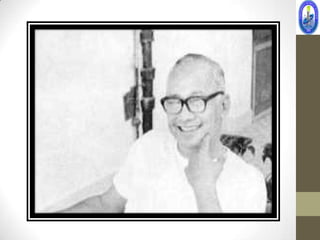
• Vicente Silva Manansala (January 22,
 1910 - August 22, 1981) was a Philippine
        cubist painter and illustrator.
   • Manansala was born in Macabebe,
Pampanga. From 1926 to 1930, he studied
  at the U.P. School of Fine Arts. In 1949,
 Manansala received a six-month grant by
  UNESCO to study at the Ecole de Beaux
  Arts in Banff and Montreal, Canada. In
      1950, he received a nine-month
scholarship to study at the Ecole de Beaux
  Arts in Paris by the French government.
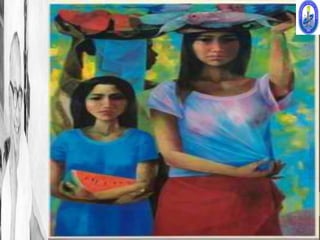
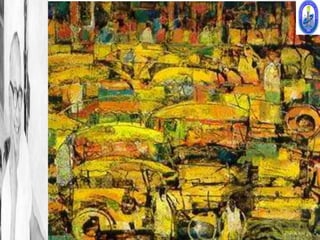
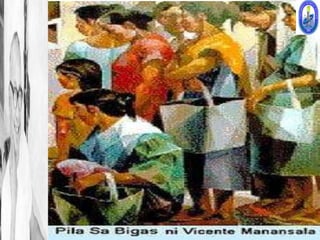
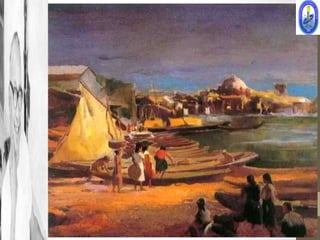
• Manansala's canvases were
   described as masterpieces that
  brought the cultures of the barrio
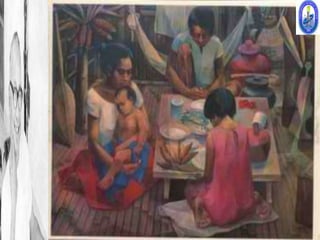
 and the city together. His Madonna
    of the Slums is a portrayal of a
      mother and child from the
   countryside who became urban
 shanty residents once in the city. In
 his Jeepneys, Manansala combined
    the elements of provincial folk
culture with the congestion issues of
               the city.
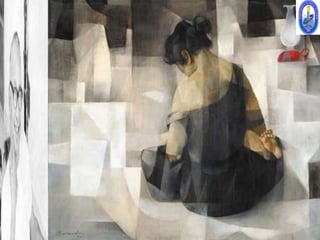
• Manansala             developed
  transparent cubism, wherein the
  "delicate tones, shapes, and
  patterns    of    figure    and
  environment are masterfully
  superimposed". A fine example
  of    Manansala     using   this
  "transparent and translucent"
  technique is his composition,
  Kalabaw (Carabao).
• As a member of the Thirteen Moderns
    and the neo-realists, he was at the
  forefront of the modernist movement
     in the country. With the issues of
   national culture and identity in focus
    after WWII his works were those of
     the other early modernists which
   reflected the social environment and
    expressed the native sensibility. He
   held his first one-person show at the
           Manila Hotel in 1951.
• Manansala's vision of the city and
  his fundamentally native Filipino
  approach to his subjects would
  influence numerous artists who
  took up his folk themes within an
  urban context. Among those who
  show his influence are Mauro
  Malang Santos, with his own
  version of folk romanticism in
  paintings which convey the
  fragile,
• makeshift character of the 1950s,
  and others from the University of
    Santo Tomas where Manansala
  taught for a time, such as Antonio
Austria, Angelito Antonio, and Mario
   Parial. Like him, they draw their
    inspiration from the folk, their
    occupations and pleasures. He
influenced Manuel Baldemor, whose
roots are in Paete, Laguna, as well as
    some Laguna lakeshore artists.
• His works distinguish him as the
 pioneer of transparent cubism in
     the country and one of the
    prewar “Thirteen Moderns”.
      Manansala immortalized
  in his paintings the reality seen
 by someone who lived to see the
    ravages during and after the
         Second World War.
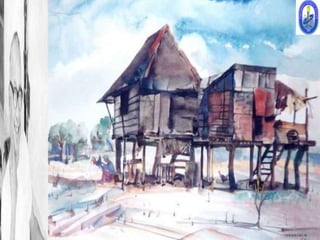
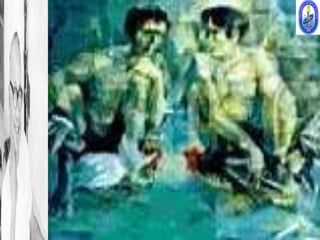
• His images of postwar Manila’s urban
  landscape      included    makeshift
  shanties, women vendors, jeepneys,
  beggars and cock fighters, and
  depicted the search for national
  identity after the war. All of them
  turned into pulsating images through
  cubism and his knack for using layers
  and planes to make space explode
  while staying true to the geometric
  shapes of his subjects.
• At 15, he entered the preparatory school
  of then leading scenographic painter
  Ramon Peralta, where he learned to
  draw while doing signboards for a
  painting shop. He took courses at the
  School of Fine Arts in UP while working
  as billboard painter and then as
  illustrator and layout artist for Philippine
  Herald and Photo News – all this, while
  doing hard labor on the side during the
  construction of the Ipo Dam. He also
  became part of Liwayway and Saturday
  Evening News magazines years after.
• When the war broke out, most
     of his works in his house in
  Intramuros were not salvaged.
   He moved his family to Cavite
  and Pampanga. To support his
        family, he worked as a
   fisherman and did portraits in
     exchange for palay or rice.
• Going back to the city after
  the war, Manansala also
  painted several historical
  murals including the Stations
  of the Cross for UP Diliman
  Chapel, mural for Philippine
  Heart Center, and the fresco
  mural for the National Press
  Club.
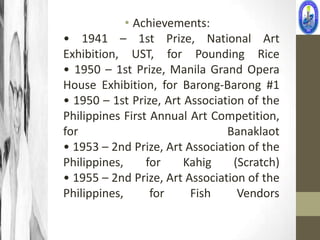
• Achievements:
• 1941 – 1st Prize, National Art
Exhibition, UST, for Pounding Rice
• 1950 – 1st Prize, Manila Grand Opera
House Exhibition, for Barong-Barong #1
• 1950 – 1st Prize, Art Association of the
Philippines First Annual Art Competition,
for                             Banaklaot
• 1953 – 2nd Prize, Art Association of the
Philippines,     for    Kahig    (Scratch)
• 1955 – 2nd Prize, Art Association of the
Philippines,      for    Fish     Vendors
• • 1955 – 3rd Prize, Art Association of
  the Philippines, for Best-Served, Well-
                   Gained
  • 1957 – Outstanding UP Alumnus
  • 1962 – 2nd Prize, Art Association of
  the Philippines, for Give Us This Day
  • 1962 – Best in Show, Art Association
  of the Philippines, for Give Us This Day
  • 1963 – Republic Cultural Heritage
                   Award
  • 1970 – Patnubay ng Sining at
  Kalinangan Award, from the City of
  Manila
• • 1955 – 3rd Prize, Art Association of the
  Philippines, for Best-Served, Well-Gained
  • 1957 – Outstanding UP Alumnus
  • 1962 – 2nd Prize, Art Association of the
  Philippines, for Give Us This Day
  • 1962 – Best in Show, Art Association of
  the Philippines, for Give Us This Day
  • 1963 – Republic Cultural Heritage
                    Award
  • 1970 – Patnubay ng Sining at
  Kalinangan Award, from the City of
  Manila
• Well-Gained, 1955; second prize,
  Give Us This Day, 1962; and best
  in show, Give Us This Day, 1962.
 He received the Republic Cultural
  Heritage Award in 1963. He also
  received the Patnubay ng Sining
   at Kalinangan Award from the
   City of Manila in 1970 He was
    proclaimed National Artist in
          Painting in 1982.
• Vicente Manansala, a National Artist of
 the Philippines in Visual Arts, was a direct
influence to his fellow Filipino neo-realists:
 Malang, Angelito Antonio, Norma Belleza
 and Baldemor. The Honolulu Academy of
     Arts, the Lopez Memorial Museum
 (Manila), the Philippine Center (New York
  City) and the Singapore Art Museum are
among the public collections holding work
 by Vicente Manansala. Manansala died in
 Makati in 1981 and proclaimed NATIONAL
ARTIST OF THE PHILIPPINES. (posthumous)
Thank you for
 listening!!!
THE END

Vicente Manansala

  • 3.
    • He isthe son of Perfecto Q. Manansala and Engracia Silva. He married Hermenegilda (Hilda) Diaz, with whom he had one child. As a newsboy and bootblack in Intramuros, he expressed his early creativity designing kites and making charcoal sketches. At 15, he studied under the turn-of-the-century painter Ramon Peralta while doing signboards for a painting shop.
  • 4.
    • Vicente SilvaManansala (January 22, 1910 - August 22, 1981) was a Philippine cubist painter and illustrator. • Manansala was born in Macabebe, Pampanga. From 1926 to 1930, he studied at the U.P. School of Fine Arts. In 1949, Manansala received a six-month grant by UNESCO to study at the Ecole de Beaux Arts in Banff and Montreal, Canada. In 1950, he received a nine-month scholarship to study at the Ecole de Beaux Arts in Paris by the French government.
  • 5.
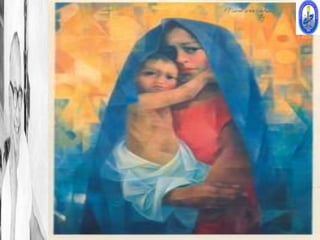
    • Manansala's canvaseswere described as masterpieces that brought the cultures of the barrio and the city together. His Madonna of the Slums is a portrayal of a mother and child from the countryside who became urban shanty residents once in the city. In his Jeepneys, Manansala combined the elements of provincial folk culture with the congestion issues of the city.
  • 6.
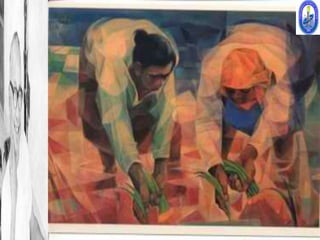
    • Manansala developed transparent cubism, wherein the "delicate tones, shapes, and patterns of figure and environment are masterfully superimposed". A fine example of Manansala using this "transparent and translucent" technique is his composition, Kalabaw (Carabao).
  • 7.
    • As amember of the Thirteen Moderns and the neo-realists, he was at the forefront of the modernist movement in the country. With the issues of national culture and identity in focus after WWII his works were those of the other early modernists which reflected the social environment and expressed the native sensibility. He held his first one-person show at the Manila Hotel in 1951.
  • 8.
    • Manansala's visionof the city and his fundamentally native Filipino approach to his subjects would influence numerous artists who took up his folk themes within an urban context. Among those who show his influence are Mauro Malang Santos, with his own version of folk romanticism in paintings which convey the fragile,
  • 9.
    • makeshift characterof the 1950s, and others from the University of Santo Tomas where Manansala taught for a time, such as Antonio Austria, Angelito Antonio, and Mario Parial. Like him, they draw their inspiration from the folk, their occupations and pleasures. He influenced Manuel Baldemor, whose roots are in Paete, Laguna, as well as some Laguna lakeshore artists.
  • 10.
    • His worksdistinguish him as the pioneer of transparent cubism in the country and one of the prewar “Thirteen Moderns”. Manansala immortalized in his paintings the reality seen by someone who lived to see the ravages during and after the Second World War.
  • 11.
    • His imagesof postwar Manila’s urban landscape included makeshift shanties, women vendors, jeepneys, beggars and cock fighters, and depicted the search for national identity after the war. All of them turned into pulsating images through cubism and his knack for using layers and planes to make space explode while staying true to the geometric shapes of his subjects.
  • 12.
    • At 15,he entered the preparatory school of then leading scenographic painter Ramon Peralta, where he learned to draw while doing signboards for a painting shop. He took courses at the School of Fine Arts in UP while working as billboard painter and then as illustrator and layout artist for Philippine Herald and Photo News – all this, while doing hard labor on the side during the construction of the Ipo Dam. He also became part of Liwayway and Saturday Evening News magazines years after.
  • 13.
    • When thewar broke out, most of his works in his house in Intramuros were not salvaged. He moved his family to Cavite and Pampanga. To support his family, he worked as a fisherman and did portraits in exchange for palay or rice.
  • 14.
    • Going backto the city after the war, Manansala also painted several historical murals including the Stations of the Cross for UP Diliman Chapel, mural for Philippine Heart Center, and the fresco mural for the National Press Club.
  • 28.
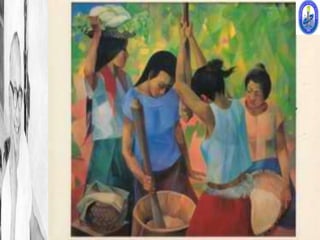
    • Achievements: • 1941– 1st Prize, National Art Exhibition, UST, for Pounding Rice • 1950 – 1st Prize, Manila Grand Opera House Exhibition, for Barong-Barong #1 • 1950 – 1st Prize, Art Association of the Philippines First Annual Art Competition, for Banaklaot • 1953 – 2nd Prize, Art Association of the Philippines, for Kahig (Scratch) • 1955 – 2nd Prize, Art Association of the Philippines, for Fish Vendors
  • 29.
    • • 1955– 3rd Prize, Art Association of the Philippines, for Best-Served, Well- Gained • 1957 – Outstanding UP Alumnus • 1962 – 2nd Prize, Art Association of the Philippines, for Give Us This Day • 1962 – Best in Show, Art Association of the Philippines, for Give Us This Day • 1963 – Republic Cultural Heritage Award • 1970 – Patnubay ng Sining at Kalinangan Award, from the City of Manila
  • 30.
    • • 1955– 3rd Prize, Art Association of the Philippines, for Best-Served, Well-Gained • 1957 – Outstanding UP Alumnus • 1962 – 2nd Prize, Art Association of the Philippines, for Give Us This Day • 1962 – Best in Show, Art Association of the Philippines, for Give Us This Day • 1963 – Republic Cultural Heritage Award • 1970 – Patnubay ng Sining at Kalinangan Award, from the City of Manila
  • 31.
    • Well-Gained, 1955;second prize, Give Us This Day, 1962; and best in show, Give Us This Day, 1962. He received the Republic Cultural Heritage Award in 1963. He also received the Patnubay ng Sining at Kalinangan Award from the City of Manila in 1970 He was proclaimed National Artist in Painting in 1982.
  • 32.
    • Vicente Manansala,a National Artist of the Philippines in Visual Arts, was a direct influence to his fellow Filipino neo-realists: Malang, Angelito Antonio, Norma Belleza and Baldemor. The Honolulu Academy of Arts, the Lopez Memorial Museum (Manila), the Philippine Center (New York City) and the Singapore Art Museum are among the public collections holding work by Vicente Manansala. Manansala died in Makati in 1981 and proclaimed NATIONAL ARTIST OF THE PHILIPPINES. (posthumous)
  • 33.
    Thank you for listening!!!
  • 34.