Thesis Writing
Khalid Mahmood, PhD
Professor
University of the Punjab
1
 Professor of Information Management at University
of the Punjab, Pakistan
 Post-doctoral research fellow at University of
California, Los Angeles, USA
 150+ publications
 Supervised many doctoral, M.Phil. and master
theses
 Worked for many research journals as editor,
reviewer and editorial board member
 Conducted many trainings on research writing and
publishing
About me
2
Acknowledgment
 I have prepared this presentation
with the help of many books,
presentations and Websites.
 I pay my sincere gratitude to all
authors, professors and experts for
their efforts and contributions.
3
Revising your thesis
 Reading by your supervisor
 Taking feedback from your friends
 Reading by yourself – put it aside for
a while before reading
 You may use a checklist
 You may use a commercial service
4
Levels of revision
 Organisational level
 Based on table of contents
 Chapters and sections
 Content level
 Preview, smooth, review
 Section by section
 Targeted revision
 Spelling, grammar and punctuation
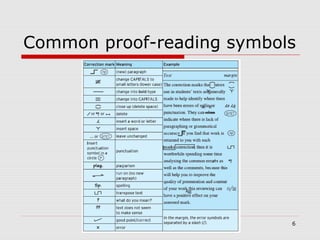
Common proof-reading symbols
6
Practical tips for revising
 Make time for checking
 Work from a hard copy
 Follow the ‘reading aloud’ check
 Map your work to obtain an overview
 Check for relevance
 Check for consistency
 Check for factual accuracy
 Stick to your word limit
7
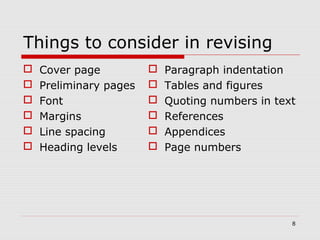
Things to consider in revising
 Cover page
 Preliminary pages
 Font
 Margins
 Line spacing
 Heading levels
 Paragraph indentation
 Tables and figures
 Quoting numbers in text
 References
 Appendices
 Page numbers
8
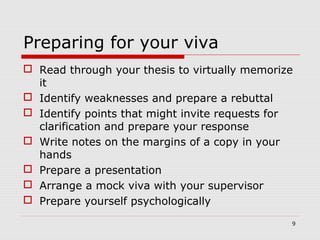
Preparing for your viva
 Read through your thesis to virtually memorize
it
 Identify weaknesses and prepare a rebuttal
 Identify points that might invite requests for
clarification and prepare your response
 Write notes on the margins of a copy in your
hands
 Prepare a presentation
 Arrange a mock viva with your supervisor
 Prepare yourself psychologically
9
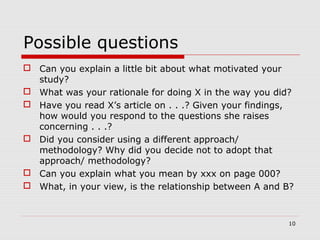
Possible questions
 Can you explain a little bit about what motivated your
study?
 What was your rationale for doing X in the way you did?
 Have you read X’s article on . . .? Given your findings,
how would you respond to the questions she raises
concerning . . .?
 Did you consider using a different approach/
methodology? Why did you decide not to adopt that
approach/ methodology?
 Can you explain what you mean by xxx on page 000?
 What, in your view, is the relationship between A and B?
10
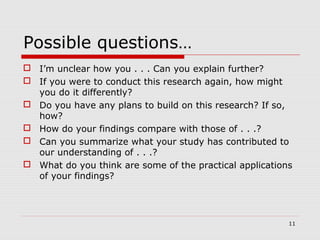
Possible questions…
 I’m unclear how you . . . Can you explain further?
 If you were to conduct this research again, how might
you do it differently?
 Do you have any plans to build on this research? If so,
how?
 How do your findings compare with those of . . .?
 Can you summarize what your study has contributed to
our understanding of . . .?
 What do you think are some of the practical applications
of your findings?
11
The outcome
 Pass
 Pass with changes
 Fail
12
13
Best of luck for your
research endeavors!

Khalid thesis writing

  • 1.
    Thesis Writing Khalid Mahmood,PhD Professor University of the Punjab 1
  • 2.
     Professor ofInformation Management at University of the Punjab, Pakistan  Post-doctoral research fellow at University of California, Los Angeles, USA  150+ publications  Supervised many doctoral, M.Phil. and master theses  Worked for many research journals as editor, reviewer and editorial board member  Conducted many trainings on research writing and publishing About me 2
  • 3.
    Acknowledgment  I haveprepared this presentation with the help of many books, presentations and Websites.  I pay my sincere gratitude to all authors, professors and experts for their efforts and contributions. 3
  • 4.
    Revising your thesis Reading by your supervisor  Taking feedback from your friends  Reading by yourself – put it aside for a while before reading  You may use a checklist  You may use a commercial service 4
  • 5.
    Levels of revision Organisational level  Based on table of contents  Chapters and sections  Content level  Preview, smooth, review  Section by section  Targeted revision  Spelling, grammar and punctuation
  • 6.
  • 7.
    Practical tips forrevising  Make time for checking  Work from a hard copy  Follow the ‘reading aloud’ check  Map your work to obtain an overview  Check for relevance  Check for consistency  Check for factual accuracy  Stick to your word limit 7
  • 8.
    Things to considerin revising  Cover page  Preliminary pages  Font  Margins  Line spacing  Heading levels  Paragraph indentation  Tables and figures  Quoting numbers in text  References  Appendices  Page numbers 8
  • 9.
    Preparing for yourviva  Read through your thesis to virtually memorize it  Identify weaknesses and prepare a rebuttal  Identify points that might invite requests for clarification and prepare your response  Write notes on the margins of a copy in your hands  Prepare a presentation  Arrange a mock viva with your supervisor  Prepare yourself psychologically 9
  • 10.
    Possible questions  Canyou explain a little bit about what motivated your study?  What was your rationale for doing X in the way you did?  Have you read X’s article on . . .? Given your findings, how would you respond to the questions she raises concerning . . .?  Did you consider using a different approach/ methodology? Why did you decide not to adopt that approach/ methodology?  Can you explain what you mean by xxx on page 000?  What, in your view, is the relationship between A and B? 10
  • 11.
    Possible questions…  I’munclear how you . . . Can you explain further?  If you were to conduct this research again, how might you do it differently?  Do you have any plans to build on this research? If so, how?  How do your findings compare with those of . . .?  Can you summarize what your study has contributed to our understanding of . . .?  What do you think are some of the practical applications of your findings? 11
  • 12.
    The outcome  Pass Pass with changes  Fail 12
  • 13.
    13 Best of luckfor your research endeavors!