
Digital Networks Kathy E. Gill 11 January 2012
What Is An Info Economy? “ An economy based on the exchange of knowledge information and services rather than physical goods and services.” Australian Gov ’ t , Dept. Finance and Administration, 2001.
What is Information? In the context of this class, anything that can be converted to bits, ie, digitized, is an information good Entertainment News Business Info Software
What is Information Technology? Telecommunications, computers, software Communication: E-mail, IM, TheWeb Networks: Extranet, Intranet, Internet, LAN, WAN Software: Expert systems, Enterprise Resource Planning, Query and Reporting, Data Mining Networks: T1, T3, Wireless, WiMax Protocols: HTTP, FTP, VoIP, GoogleWave?
Competing Theories Technology optimists A new society without pollution; time for creative work; participatory democracy; perfect markets… Technology pessimists No new society but an increase the divide between rich and poor; greater control over individuals; erosion of privacy… Technology + economics +society
Summary  Use whatever label you wish … the makeup of our economy has changed. Information as a good and information technologies have replaced goods made of atoms and technologies resting on muscle.
What Is Economics? Economics is the study of how people (and institutions) act in a society with limited resources (iow, scarcity) The choices are more diverse than simply $$ - it ’s also time, work, savings Driving principle: that people optimize the  “utility” (satisfaction) of goods and services consumed - that we are  rational
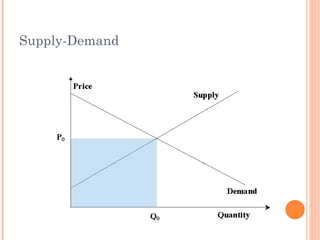
Supply-Demand
Economics of Information Costly to produce Inexpensive to re-produce Economist-speak: High fixed costs, low marginal costs
Economics of Attention  Info overload:  “a wealth of information creates a poverty of attention” (Herbert Simon)
Types of Goods  (1/2) Non-rival - a good that can be used by more than one person at the same time (an idea) Non-excludable - it is not possible for the  “owner” to exclude others from consuming this good (non-patented idea)
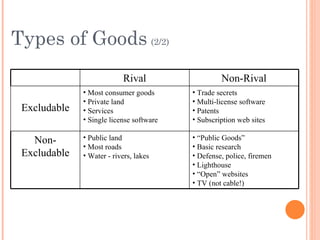
Types of Goods   (2/2) Rival Non-Rival Excludable Most consumer goods Private land Services Single license software Trade secrets Multi-license software Patents Subscription web sites Non-Excludable Public land Most roads Water - rivers, lakes “ Public Goods” Basic research Defense, police, firemen Lighthouse “ Open” websites TV (not cable!)
Excludability and Information From the  World Bank :  Assume someone produces a valuable theorem, but it cannot be kept secret -- it must be made immediately available. Because anyone can immediately use it, there is no way for an individual to profit from creating it.
Types of Excludability (traditional) Trade Secrets (Coca Cola) Patents (Amazon One-Click) Copyright  Will people create knowledge if they can ’t charge for it? WB says No. Open source movement says Yes.
Digital Excludability (transitional?) DRM iTunes, Amazon Difference in video and music Subscriptions RealNetworks and Napster, The Economist and the WSJ Lawsuits
An Experience Good A good is an  “experience” good if a consumer has to experience it to value it Various biz strategies encourage  “try before you buy”
Complementary Goods CDs + CD Player Websites  “optimized” for a specific browser Bluetooth headset & cellphone Issues: network effects & lock-in
NETWORK EFFECTS  (1/2) Static analysis: One person ’s decision to adopt a new piece of software (or other technology) has no effect on someone else’s welfare or decision to adopt Assumes no network  externality
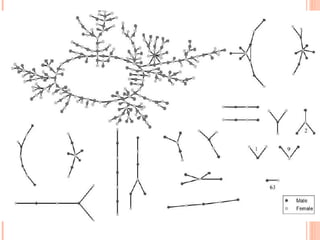
Network effects  (2/2) Dynamic analysis: The value of the software (or technology) depends upon the decisions of others (interoperability, for example) Assumes there is a network externality
 
Locked In! Consumers may be locked into a network because of  “cost of exit” (switching) Contracts (cell phone 24-month policies) Training (learn a new system – ugh) Data conversion (from Word to Word Perfect, for example) Search cost (finding the new product) Loyalty cost (frequent flyer programs,  “minutes carry-over”)
Tipping As market share increases for any one product (system, technology), there are increasing returns (externality) from increasing consumer demand, leading to dominance by one system
EXAMPLES  AM v FM radio Beta v VHS Mac v Windows QWERTY v DVORAK BlueRay v HD-DVD GSM v CDMA
Conclusion  (1/2) Economy is increasingly reliant on information technologies and information Firms in this sector have a different cost structure than traditional goods/sectors like ag or manufacturing
Conclusion  (2/2) The products in this sector have characteristics of a public good -- the antithesis of a scarce, excludable good Thus information technology is disruptive, economically and socially
Resources  (1/3) The Inkjet Printer, from  The Economist.  (2002)  http://emlab.berkeley.edu/users/bhhall/e124inkjetprinter.html The Invention of Email, from  Pretext  Magazine (1998)  http://emlab.berkeley.edu/users/bhhall/e124emailinvention.pdf Hal R. Varian ,  “High Technology Industries and Market Structure” (2001)  http://www.sims.berkeley.edu/~hal/Papers/structure/structure.html Science and Engineering Indicators (2002) National Science Board.  http://www.nsf.gov/sbe/srs/seind02/start.htm
Resources  (2/3) Michael L. Katz and Carl Shapiro.  “Systems Competition and Network Effects,”  Journal of Economic Perspectives , Vol 8 No 2 (1994) Nicholas Economides.  “The Economics of Networks,”  International Journal of Industrial Organization,  October (1996)  http://www.stern.nyu.edu/networks/top.html S.J. Liebowitz and Stephen E. Margolis.  “Network Externality: An Uncommon Tragedy,”  Journal of Economic Perspectives , Vol 8 No 2 (1994)
Resources  (3/3) Timothy F. Bresnahan.  “The Economics of the Microsoft Case.”  http://www.stanford.edu/~tbres/Microsoft/The_Economics_of_The_Microsoft_Case.pdf Stephen Martin.  “The Nature of Innovation Market Failure and the Design of Public Support for Private Innovation”  http://www.sam.sdu.dk/undervis/92172.E03/martin_scott.pdf Tore Nilssen and Lars Sørgard.  “TV Advertising, Programming Investments, and Product-Market Oligopoly”  http://www.nhh.no/sam/res-publ/2000/dp06.pdf

Digital Networks

  • 1.
    Digital Networks KathyE. Gill 11 January 2012
  • 2.
    What Is AnInfo Economy? “ An economy based on the exchange of knowledge information and services rather than physical goods and services.” Australian Gov ’ t , Dept. Finance and Administration, 2001.
  • 3.
    What is Information?In the context of this class, anything that can be converted to bits, ie, digitized, is an information good Entertainment News Business Info Software
  • 4.
    What is InformationTechnology? Telecommunications, computers, software Communication: E-mail, IM, TheWeb Networks: Extranet, Intranet, Internet, LAN, WAN Software: Expert systems, Enterprise Resource Planning, Query and Reporting, Data Mining Networks: T1, T3, Wireless, WiMax Protocols: HTTP, FTP, VoIP, GoogleWave?
  • 5.
    Competing Theories Technologyoptimists A new society without pollution; time for creative work; participatory democracy; perfect markets… Technology pessimists No new society but an increase the divide between rich and poor; greater control over individuals; erosion of privacy… Technology + economics +society
  • 6.
    Summary Usewhatever label you wish … the makeup of our economy has changed. Information as a good and information technologies have replaced goods made of atoms and technologies resting on muscle.
  • 7.
    What Is Economics?Economics is the study of how people (and institutions) act in a society with limited resources (iow, scarcity) The choices are more diverse than simply $$ - it ’s also time, work, savings Driving principle: that people optimize the “utility” (satisfaction) of goods and services consumed - that we are rational
  • 8.
  • 9.
    Economics of InformationCostly to produce Inexpensive to re-produce Economist-speak: High fixed costs, low marginal costs
  • 10.
    Economics of Attention Info overload: “a wealth of information creates a poverty of attention” (Herbert Simon)
  • 11.
    Types of Goods (1/2) Non-rival - a good that can be used by more than one person at the same time (an idea) Non-excludable - it is not possible for the “owner” to exclude others from consuming this good (non-patented idea)
  • 12.
    Types of Goods (2/2) Rival Non-Rival Excludable Most consumer goods Private land Services Single license software Trade secrets Multi-license software Patents Subscription web sites Non-Excludable Public land Most roads Water - rivers, lakes “ Public Goods” Basic research Defense, police, firemen Lighthouse “ Open” websites TV (not cable!)
  • 13.
    Excludability and InformationFrom the World Bank : Assume someone produces a valuable theorem, but it cannot be kept secret -- it must be made immediately available. Because anyone can immediately use it, there is no way for an individual to profit from creating it.
  • 14.
    Types of Excludability(traditional) Trade Secrets (Coca Cola) Patents (Amazon One-Click) Copyright Will people create knowledge if they can ’t charge for it? WB says No. Open source movement says Yes.
  • 15.
    Digital Excludability (transitional?)DRM iTunes, Amazon Difference in video and music Subscriptions RealNetworks and Napster, The Economist and the WSJ Lawsuits
  • 16.
    An Experience GoodA good is an “experience” good if a consumer has to experience it to value it Various biz strategies encourage “try before you buy”
  • 17.
    Complementary Goods CDs+ CD Player Websites “optimized” for a specific browser Bluetooth headset & cellphone Issues: network effects & lock-in
  • 18.
    NETWORK EFFECTS (1/2) Static analysis: One person ’s decision to adopt a new piece of software (or other technology) has no effect on someone else’s welfare or decision to adopt Assumes no network externality
  • 19.
    Network effects (2/2) Dynamic analysis: The value of the software (or technology) depends upon the decisions of others (interoperability, for example) Assumes there is a network externality
  • 20.
  • 21.
    Locked In! Consumersmay be locked into a network because of “cost of exit” (switching) Contracts (cell phone 24-month policies) Training (learn a new system – ugh) Data conversion (from Word to Word Perfect, for example) Search cost (finding the new product) Loyalty cost (frequent flyer programs, “minutes carry-over”)
  • 22.
    Tipping As marketshare increases for any one product (system, technology), there are increasing returns (externality) from increasing consumer demand, leading to dominance by one system
  • 23.
    EXAMPLES AMv FM radio Beta v VHS Mac v Windows QWERTY v DVORAK BlueRay v HD-DVD GSM v CDMA
  • 24.
    Conclusion (1/2)Economy is increasingly reliant on information technologies and information Firms in this sector have a different cost structure than traditional goods/sectors like ag or manufacturing
  • 25.
    Conclusion (2/2)The products in this sector have characteristics of a public good -- the antithesis of a scarce, excludable good Thus information technology is disruptive, economically and socially
  • 26.
    Resources (1/3)The Inkjet Printer, from The Economist. (2002) http://emlab.berkeley.edu/users/bhhall/e124inkjetprinter.html The Invention of Email, from Pretext Magazine (1998) http://emlab.berkeley.edu/users/bhhall/e124emailinvention.pdf Hal R. Varian , “High Technology Industries and Market Structure” (2001) http://www.sims.berkeley.edu/~hal/Papers/structure/structure.html Science and Engineering Indicators (2002) National Science Board. http://www.nsf.gov/sbe/srs/seind02/start.htm
  • 27.
    Resources (2/3)Michael L. Katz and Carl Shapiro. “Systems Competition and Network Effects,” Journal of Economic Perspectives , Vol 8 No 2 (1994) Nicholas Economides. “The Economics of Networks,” International Journal of Industrial Organization, October (1996) http://www.stern.nyu.edu/networks/top.html S.J. Liebowitz and Stephen E. Margolis. “Network Externality: An Uncommon Tragedy,” Journal of Economic Perspectives , Vol 8 No 2 (1994)
  • 28.
    Resources (3/3)Timothy F. Bresnahan. “The Economics of the Microsoft Case.” http://www.stanford.edu/~tbres/Microsoft/The_Economics_of_The_Microsoft_Case.pdf Stephen Martin. “The Nature of Innovation Market Failure and the Design of Public Support for Private Innovation” http://www.sam.sdu.dk/undervis/92172.E03/martin_scott.pdf Tore Nilssen and Lars Sørgard. “TV Advertising, Programming Investments, and Product-Market Oligopoly” http://www.nhh.no/sam/res-publ/2000/dp06.pdf

Editor's Notes

  • #13 Non-rival - a good that can be used by more than one person at the same time Non-excludable – it is not possible for the “owner” to exclude others from consuming it
  • #19 Links to PPTs on externalities
  • #21 http://punkrockor.wordpress.com/2011/07/27/five-nifty-social-networks/
  • #22 Where we ended Monday night!