TTeexxtt FFeeaattuurreess
Table of Contents 
Narrative/Fiction Text 3 
Characters 4 
Setting 5 
Plot 6 
Non-Fiction Text 7 
Table of Contents 8 
Index 9 
Photographs 10 
Captions 11 
Labels 12 
Cutaways 13 
Close-ups 14 
Comparisons 15 
Charts, Tables, & Graphs 16 
Maps 17 
Types of Print 18 
Glossary 19 
Standards (classroom) 20 
Standards (library) 21
Narrative/Fiction Text 
Purpose: 
Entertainment
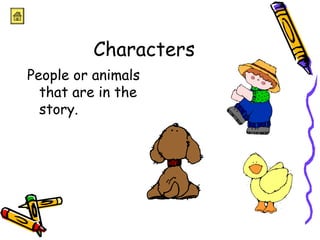
Characters 
People or animals 
that are in the 
story.
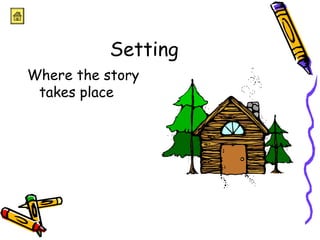
Setting 
Where the story 
takes place
Plot 
Action, problem 
and solution
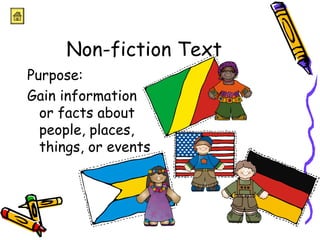
Non-fiction Text 
Purpose: 
Gain information 
or facts about 
people, places, 
things, or events
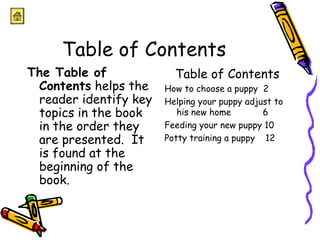
Table of Contents 
The Table of 
Contents helps the 
reader identify key 
topics in the book 
in the order they 
are presented. It 
is found at the 
beginning of the 
book. 
Table of Contents 
How to choose a puppy 2 
Helping your puppy adjust to 
his new home 6 
Feeding your new puppy 10 
Potty training a puppy 12
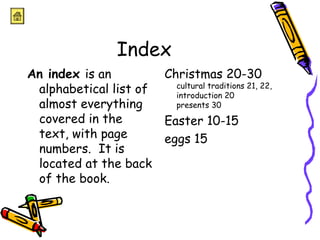
Index 
An index is an 
alphabetical list of 
almost everything 
covered in the 
text, with page 
numbers. It is 
located at the back 
of the book. 
Christmas 20-30 
cultural traditions 21, 22, 
introduction 20 
presents 30 
Easter 10-15 
eggs 15
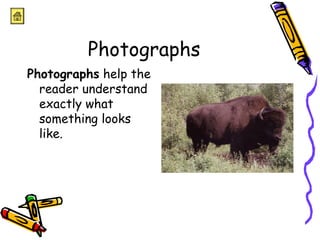
Photographs 
Photographs help the 
reader understand 
exactly what 
something looks 
like.
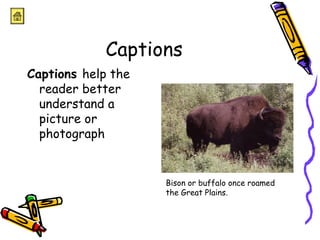
Captions 
Captions help the 
reader better 
understand a 
picture or 
photograph 
Bison or buffalo once roamed 
the Great Plains.
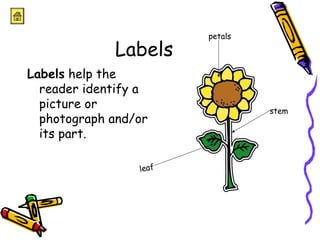
Labels 
Labels help the 
reader identify a 
picture or 
photograph and/or 
its part. 
leaf 
stem 
petals
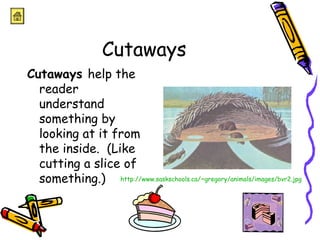
Cutaways 
Cutaways help the 
reader 
understand 
something by 
looking at it from 
the inside. (Like 
cutting a slice of 
something.) http://www.saskschools.ca/~gregory/animals/images/bvr2.jpg
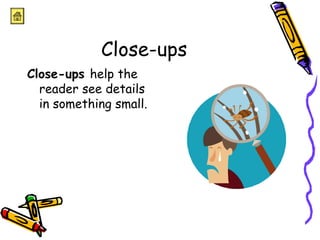
Close-ups 
Close-ups help the 
reader see details 
in something small.
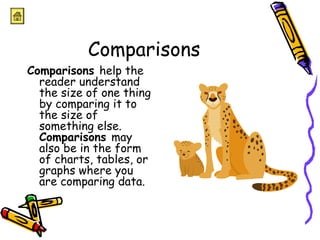
Comparisons 
Comparisons help the 
reader understand 
the size of one thing 
by comparing it to 
the size of 
something else. 
Comparisons may 
also be in the form 
of charts, tables, or 
graphs where you 
are comparing data.
Charts, Tables,and 
Graphs 
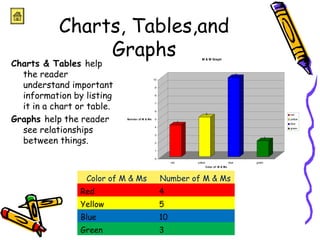
Charts & Tables help 
the reader 
understand important 
information by listing 
it in a chart or table. 
Graphs help the reader 
see relationships 
between things. 
4 
M & M Graph 
5 
10 
2 
10 
9 
8 
7 
6 
5 
4 
3 
2 
1 
0 
Number of M & Ms 
red yellow blue green 
Color of M & Ms 
red 
yellow 
blue 
green 
Color of M & Ms Number of M & Ms 
Red 4 
Yellow 5 
Blue 10 
Green 3
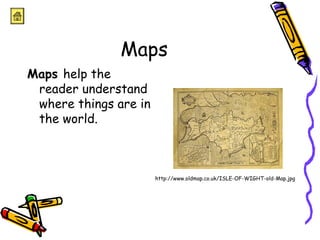
Maps 
Maps help the 
reader understand 
where things are in 
the world. 
http://www.oldmap.co.uk/ISLE-OF-WIGHT-old-Map.jpg
Types of Print 
Types of print help 
the reader by 
signaling, “Look at 
me! I’m important!” 
It may be bold 
print, italics, ALL 
CAPS, underlined, 
or larger 
print. 
The old dresser draw 
screeched as the 
children slowly 
pulled it open. 
Inside they found 
and old document 
that gave 
directions to a lost 
gold mine.
Glossary 
The glossary helps the 
reader understand key 
words that are in the 
text. It is an 
alphabetical listing of 
key words and their 
meaning. It is located in 
the back of the book. 
Other names: Important 
Words to Know. 
captions cutaways 
Captions – words describing what 
is happening in a picture or 
photograph 
Close-ups – enlarged picture or 
object to show details in 
something small 
Cutaways – picture or illustration 
that helps the reader 
understand something by 
looking at it from the inside. 
(Like cutting a slice of 
something)
Classroom Standards
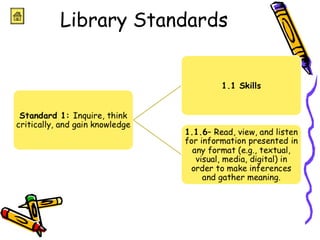
Library Standards

Text features 1

  • 1.
  • 2.
    Table of Contents Narrative/Fiction Text 3 Characters 4 Setting 5 Plot 6 Non-Fiction Text 7 Table of Contents 8 Index 9 Photographs 10 Captions 11 Labels 12 Cutaways 13 Close-ups 14 Comparisons 15 Charts, Tables, & Graphs 16 Maps 17 Types of Print 18 Glossary 19 Standards (classroom) 20 Standards (library) 21
  • 3.
  • 4.
    Characters People oranimals that are in the story.
  • 5.
    Setting Where thestory takes place
  • 6.
    Plot Action, problem and solution
  • 7.
    Non-fiction Text Purpose: Gain information or facts about people, places, things, or events
  • 8.
    Table of Contents The Table of Contents helps the reader identify key topics in the book in the order they are presented. It is found at the beginning of the book. Table of Contents How to choose a puppy 2 Helping your puppy adjust to his new home 6 Feeding your new puppy 10 Potty training a puppy 12
  • 9.
    Index An indexis an alphabetical list of almost everything covered in the text, with page numbers. It is located at the back of the book. Christmas 20-30 cultural traditions 21, 22, introduction 20 presents 30 Easter 10-15 eggs 15
  • 10.
    Photographs Photographs helpthe reader understand exactly what something looks like.
  • 11.
    Captions Captions helpthe reader better understand a picture or photograph Bison or buffalo once roamed the Great Plains.
  • 12.
    Labels Labels helpthe reader identify a picture or photograph and/or its part. leaf stem petals
  • 13.
    Cutaways Cutaways helpthe reader understand something by looking at it from the inside. (Like cutting a slice of something.) http://www.saskschools.ca/~gregory/animals/images/bvr2.jpg
  • 14.
    Close-ups Close-ups helpthe reader see details in something small.
  • 15.
    Comparisons Comparisons helpthe reader understand the size of one thing by comparing it to the size of something else. Comparisons may also be in the form of charts, tables, or graphs where you are comparing data.
  • 16.
    Charts, Tables,and Graphs Charts & Tables help the reader understand important information by listing it in a chart or table. Graphs help the reader see relationships between things. 4 M & M Graph 5 10 2 10 9 8 7 6 5 4 3 2 1 0 Number of M & Ms red yellow blue green Color of M & Ms red yellow blue green Color of M & Ms Number of M & Ms Red 4 Yellow 5 Blue 10 Green 3
  • 17.
    Maps Maps helpthe reader understand where things are in the world. http://www.oldmap.co.uk/ISLE-OF-WIGHT-old-Map.jpg
  • 18.
    Types of Print Types of print help the reader by signaling, “Look at me! I’m important!” It may be bold print, italics, ALL CAPS, underlined, or larger print. The old dresser draw screeched as the children slowly pulled it open. Inside they found and old document that gave directions to a lost gold mine.
  • 19.
    Glossary The glossaryhelps the reader understand key words that are in the text. It is an alphabetical listing of key words and their meaning. It is located in the back of the book. Other names: Important Words to Know. captions cutaways Captions – words describing what is happening in a picture or photograph Close-ups – enlarged picture or object to show details in something small Cutaways – picture or illustration that helps the reader understand something by looking at it from the inside. (Like cutting a slice of something)
  • 20.
  • 21.