Three Innovation Strategies
Technology Driver, Need Seeker,
Market Reader
Innovation Strategies
• Strategy& has stipulated that firms follow at
least one of three innovation strategies:
– Need Seeker
– Market Reader
– Technology Driver
• Selecting the appropriate strategy or
strategies and implementing them
appropriately can greatly impact the success
of innovation in your business
Previous versions of this presentation suggested that BCG created
the three innovation strategies model. Corrected to Strategy&
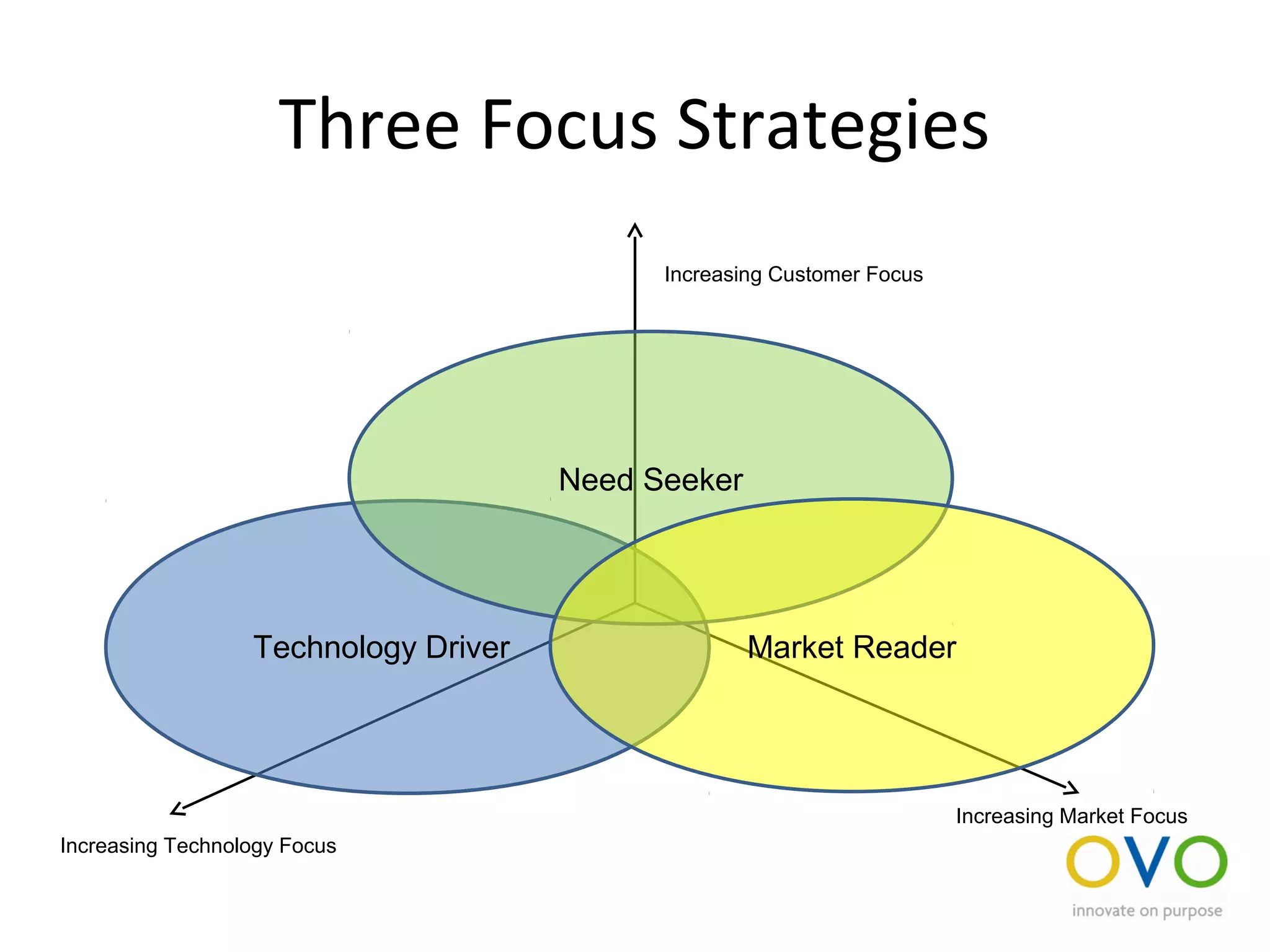
Three Focus Strategies
Technology Driver
Need Seeker
Market Reader
Increasing Customer Focus
Increasing Technology Focus
Increasing Market Focus
Technology Driver
• Based on the concept that the firm can create
interesting, relevant technologies that solve customer
needs
– Firms that pursue this strategy must also be the
technology leader in their field
– “Inside-out” innovation. Company creates innovations
that find or create markets
– Driven by technology, not needs
– Limited breadth of innovations. Typically limited to new
products. Few services, business models or experiences
– R&D focused. Typically much of this innovation happens
in the lab. Less innovation outside of R&D.
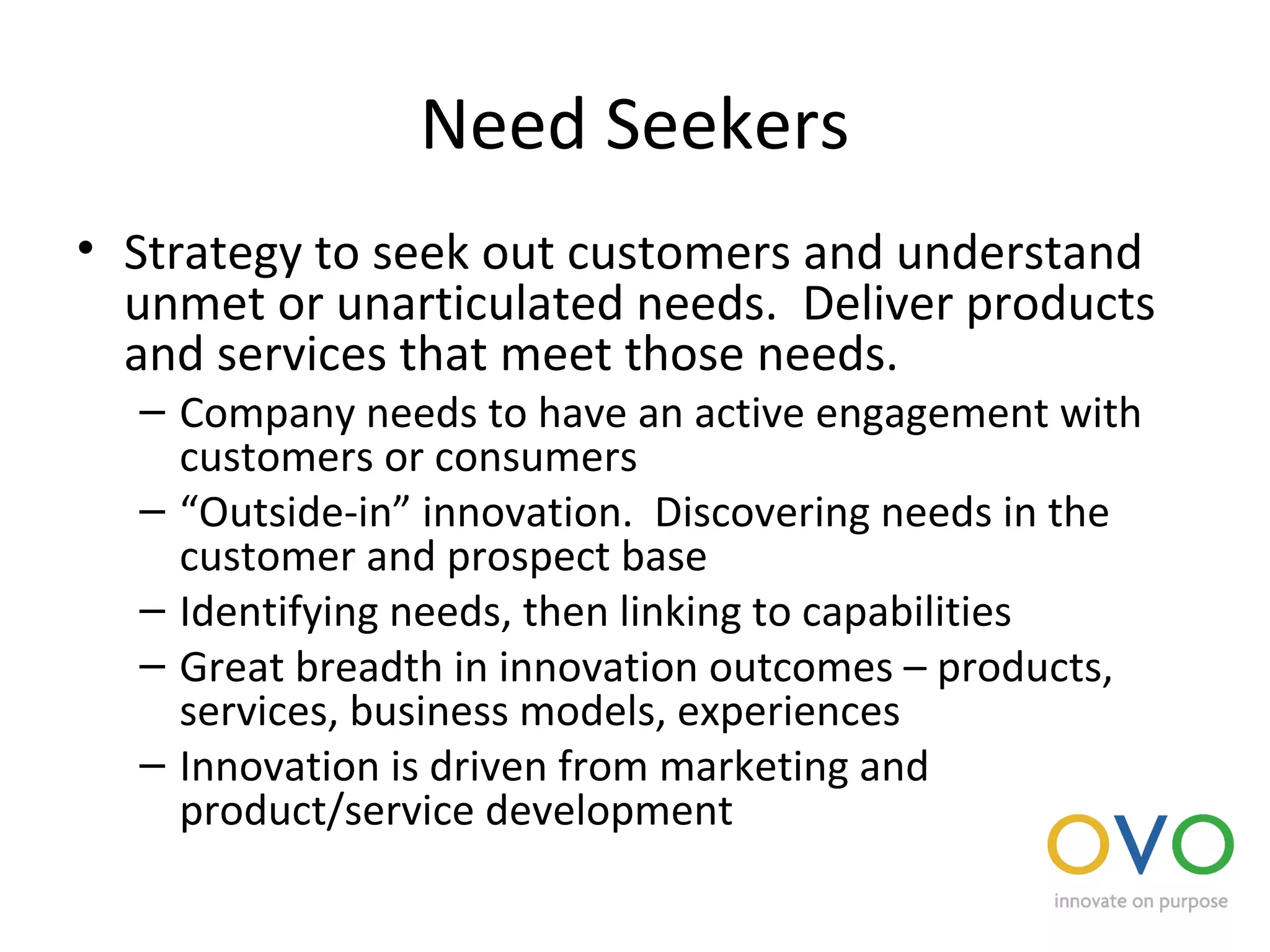
Need Seekers
• Strategy to seek out customers and understand
unmet or unarticulated needs. Deliver products
and services that meet those needs.
– Company needs to have an active engagement with
customers or consumers
– “Outside-in” innovation. Discovering needs in the
customer and prospect base
– Identifying needs, then linking to capabilities
– Great breadth in innovation outcomes – products,
services, business models, experiences
– Innovation is driven from marketing and
product/service development
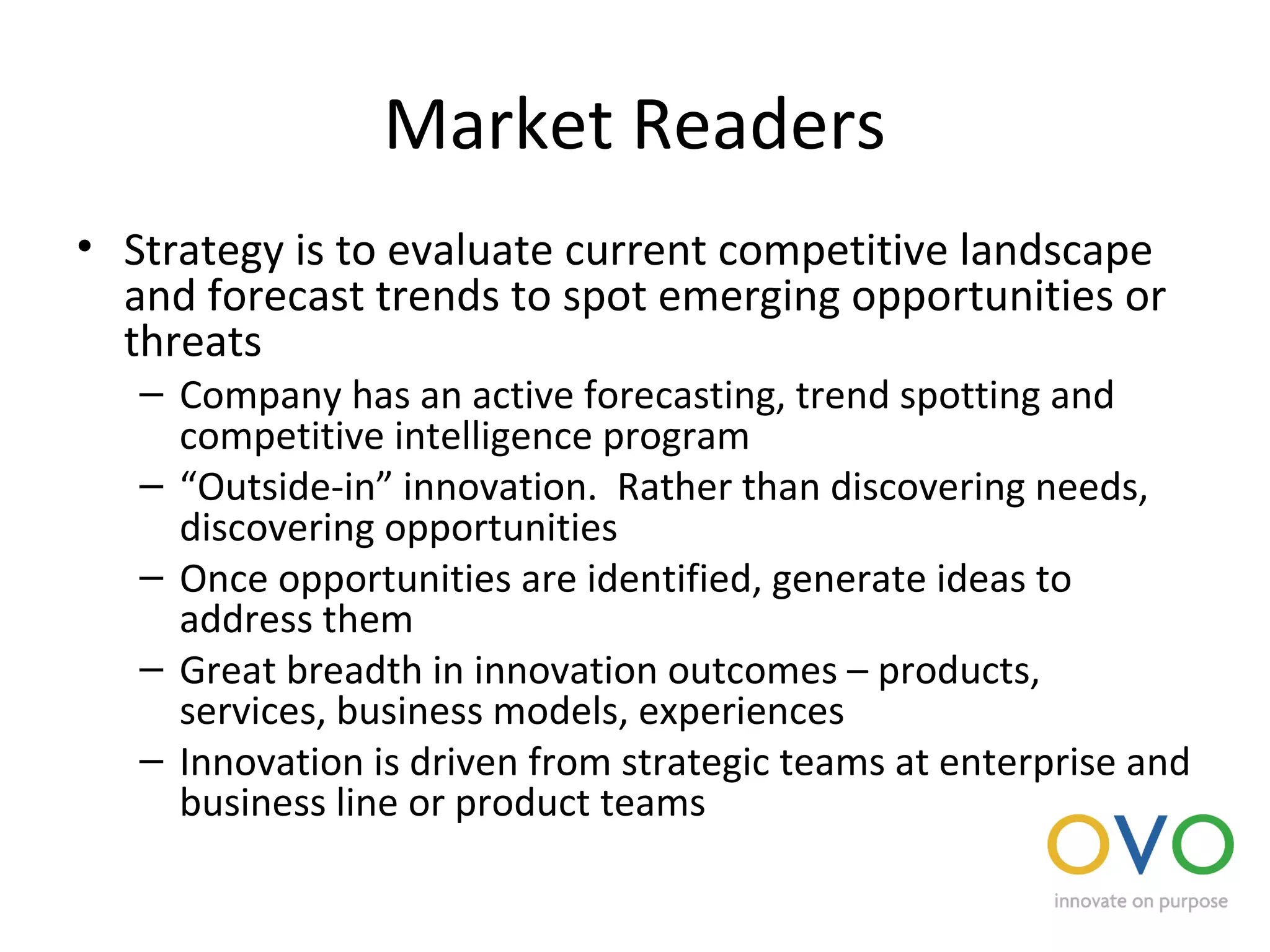
Market Readers
• Strategy is to evaluate current competitive landscape
and forecast trends to spot emerging opportunities or
threats
– Company has an active forecasting, trend spotting and
competitive intelligence program
– “Outside-in” innovation. Rather than discovering needs,
discovering opportunities
– Once opportunities are identified, generate ideas to
address them
– Great breadth in innovation outcomes – products,
services, business models, experiences
– Innovation is driven from strategic teams at enterprise and
business line or product teams
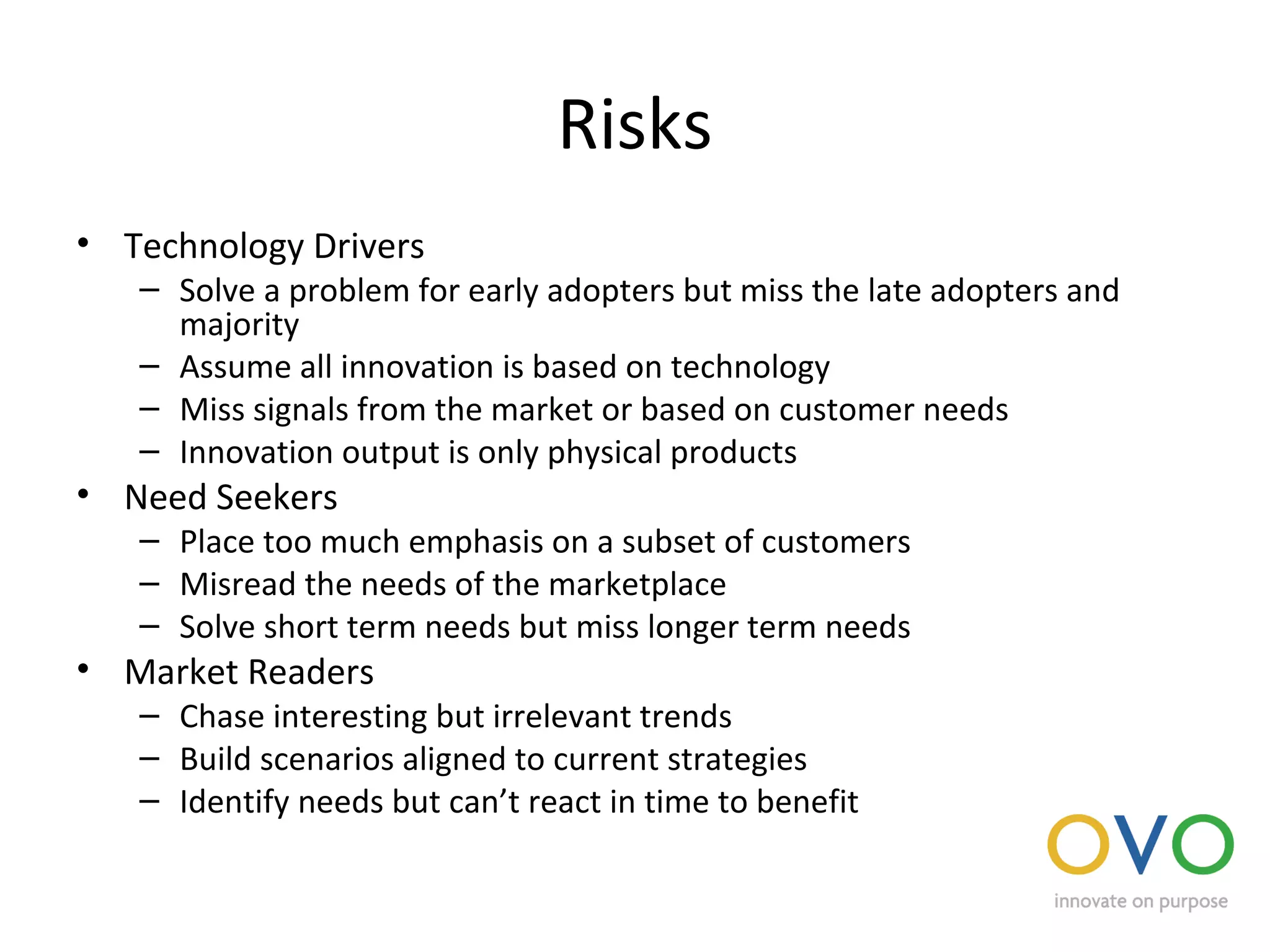
Risks
• Technology Drivers
– Solve a problem for early adopters but miss the late adopters and
majority
– Assume all innovation is based on technology
– Miss signals from the market or based on customer needs
– Innovation output is only physical products
• Need Seekers
– Place too much emphasis on a subset of customers
– Misread the needs of the marketplace
– Solve short term needs but miss longer term needs
• Market Readers
– Chase interesting but irrelevant trends
– Build scenarios aligned to current strategies
– Identify needs but can’t react in time to benefit
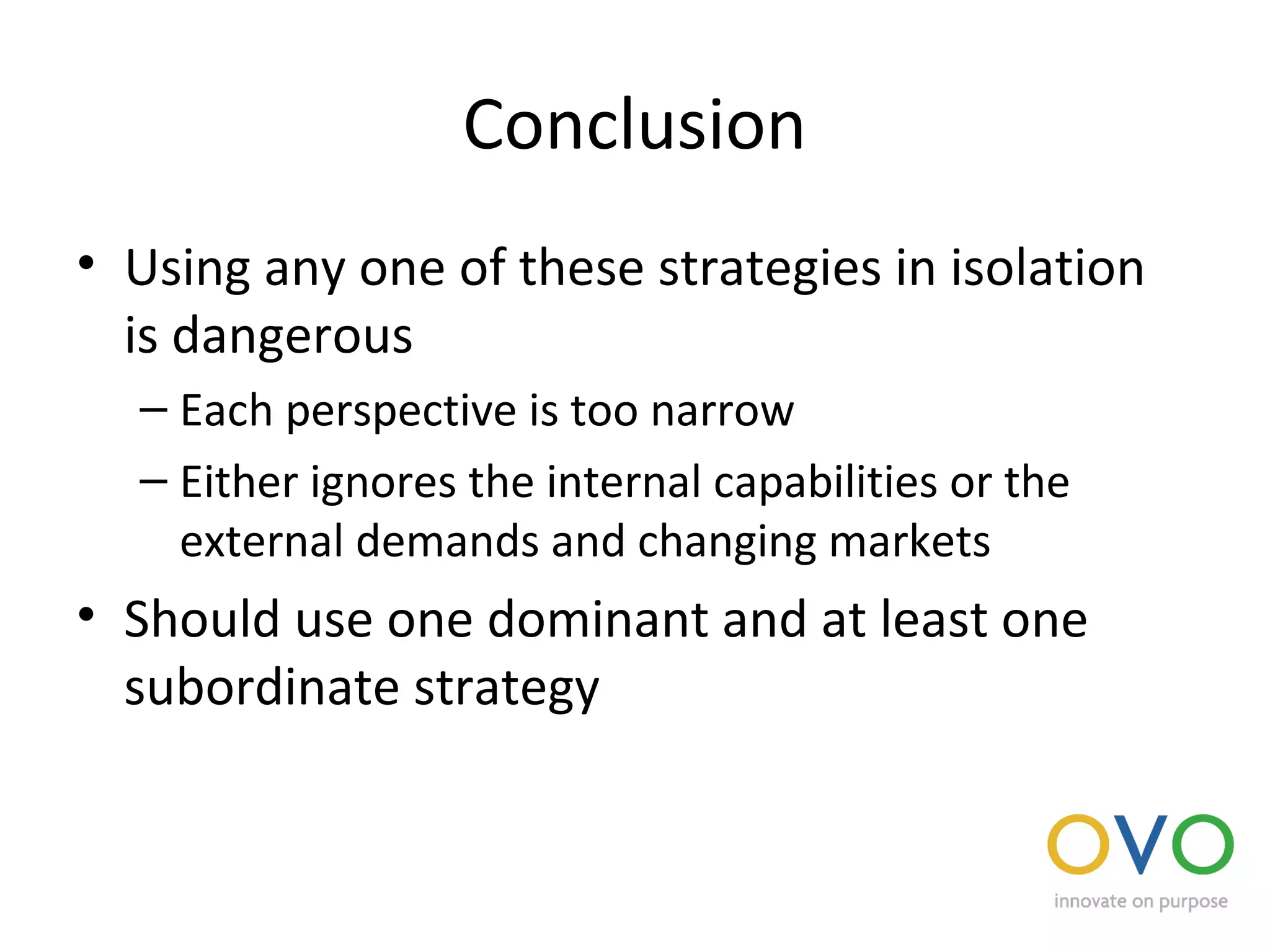
Conclusion
• Using any one of these strategies in isolation
is dangerous
– Each perspective is too narrow
– Either ignores the internal capabilities or the
external demands and changing markets
• Should use one dominant and at least one
subordinate strategy
Recommendation
• Start with Market Reading
– Identify longer term trends and emerging
opportunities
• Next, apply Need Seeking
– Within the scenarios identify customer wants and
needs
• Then apply Technology Development
– What capabilities or technologies can we bring to
bear on those needs within the scenario
Recommendation
• Start with Market Reading
– Identify longer term trends and emerging
opportunities
• Next, apply Need Seeking
– Within the scenarios identify customer wants and
needs
• Then apply Technology Development
– What capabilities or technologies can we bring to
bear on those needs within the scenario

Three innovation strategies

  • 1.
    Three Innovation Strategies TechnologyDriver, Need Seeker, Market Reader
  • 2.
    Innovation Strategies • Strategy&has stipulated that firms follow at least one of three innovation strategies: – Need Seeker – Market Reader – Technology Driver • Selecting the appropriate strategy or strategies and implementing them appropriately can greatly impact the success of innovation in your business Previous versions of this presentation suggested that BCG created the three innovation strategies model. Corrected to Strategy&
  • 3.
    Three Focus Strategies TechnologyDriver Need Seeker Market Reader Increasing Customer Focus Increasing Technology Focus Increasing Market Focus
  • 4.
    Technology Driver • Basedon the concept that the firm can create interesting, relevant technologies that solve customer needs – Firms that pursue this strategy must also be the technology leader in their field – “Inside-out” innovation. Company creates innovations that find or create markets – Driven by technology, not needs – Limited breadth of innovations. Typically limited to new products. Few services, business models or experiences – R&D focused. Typically much of this innovation happens in the lab. Less innovation outside of R&D.
  • 5.
    Need Seekers • Strategyto seek out customers and understand unmet or unarticulated needs. Deliver products and services that meet those needs. – Company needs to have an active engagement with customers or consumers – “Outside-in” innovation. Discovering needs in the customer and prospect base – Identifying needs, then linking to capabilities – Great breadth in innovation outcomes – products, services, business models, experiences – Innovation is driven from marketing and product/service development
  • 6.
    Market Readers • Strategyis to evaluate current competitive landscape and forecast trends to spot emerging opportunities or threats – Company has an active forecasting, trend spotting and competitive intelligence program – “Outside-in” innovation. Rather than discovering needs, discovering opportunities – Once opportunities are identified, generate ideas to address them – Great breadth in innovation outcomes – products, services, business models, experiences – Innovation is driven from strategic teams at enterprise and business line or product teams
  • 7.
    Risks • Technology Drivers –Solve a problem for early adopters but miss the late adopters and majority – Assume all innovation is based on technology – Miss signals from the market or based on customer needs – Innovation output is only physical products • Need Seekers – Place too much emphasis on a subset of customers – Misread the needs of the marketplace – Solve short term needs but miss longer term needs • Market Readers – Chase interesting but irrelevant trends – Build scenarios aligned to current strategies – Identify needs but can’t react in time to benefit
  • 8.
    Conclusion • Using anyone of these strategies in isolation is dangerous – Each perspective is too narrow – Either ignores the internal capabilities or the external demands and changing markets • Should use one dominant and at least one subordinate strategy
  • 9.
    Recommendation • Start withMarket Reading – Identify longer term trends and emerging opportunities • Next, apply Need Seeking – Within the scenarios identify customer wants and needs • Then apply Technology Development – What capabilities or technologies can we bring to bear on those needs within the scenario
  • 10.
    Recommendation • Start withMarket Reading – Identify longer term trends and emerging opportunities • Next, apply Need Seeking – Within the scenarios identify customer wants and needs • Then apply Technology Development – What capabilities or technologies can we bring to bear on those needs within the scenario