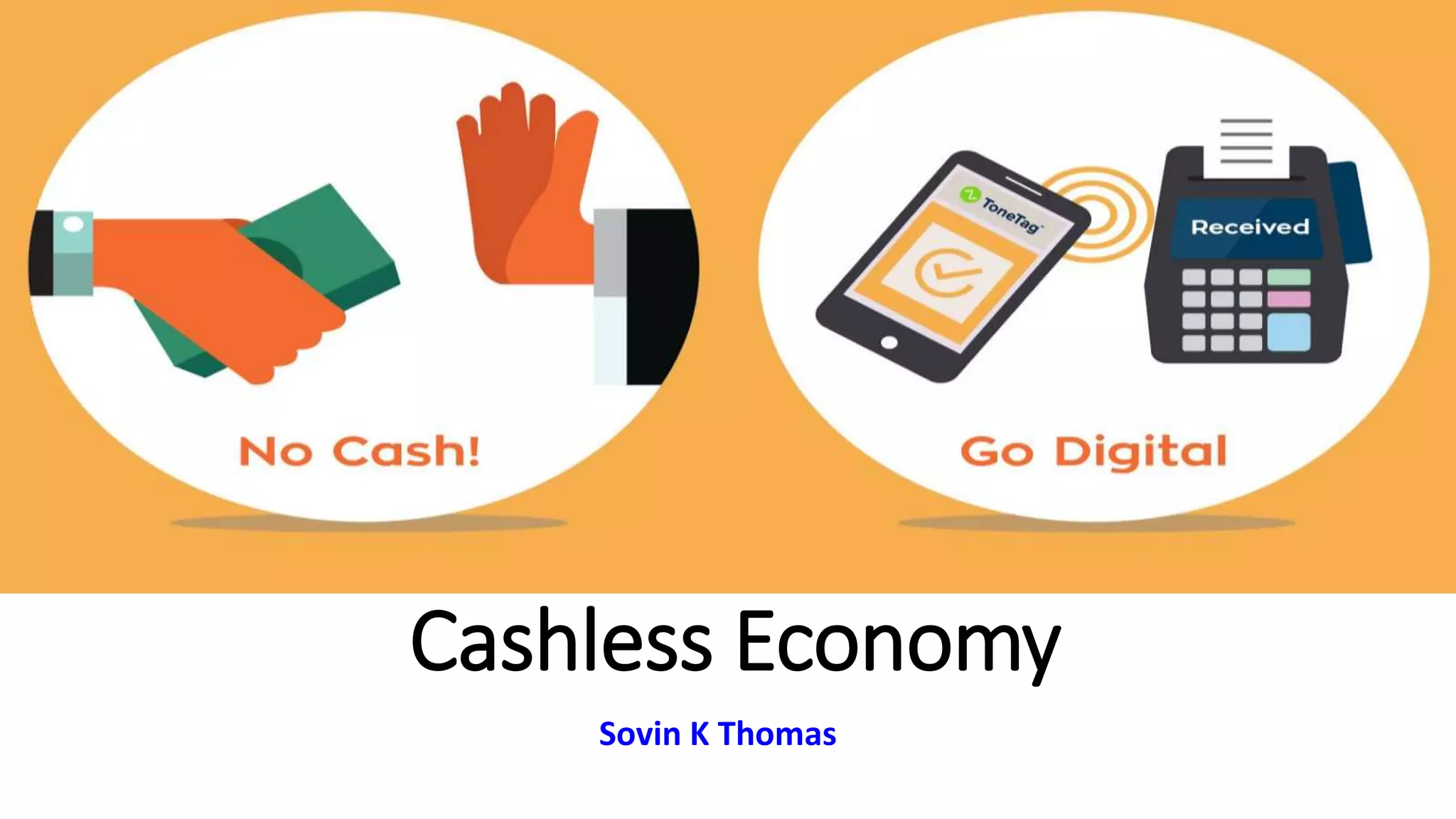
Cashless Economy
Sovin K Thomas
Black money
• People intentionally do transaction in cash to save income tax.
• All illegal activates like money laundering, kidnapping, Bribe to
government officers, terrorist activities consummate in cash
payments.
• Indian companies are reportedly misusing NGO and public trust for
money laundering.
• Generally people convert their black money into Gold and real estate.
• Still 8% of total black money is in cash.
• Recent demonetization will help to reduce black money which is in a
cash form.
Payment: The transfer of money from one individual or legal
entity to another
 Cash
 Personal Cheques
 Money orders (Bank note)
Traditional Payment Methods
2001 4
Selection of Payment Method
 Based on:
 Convenience
 Trace-ability
 Repudiation
 Financial risk
 Fraud protection
What is a Cashless Society?
• No paper money or coins
• Everything is electronic
• Payment via E-wallets
• EFT- Electronic Funds Transfer
• EPS – Electronic Payment System
• Microchips/Smart Cards
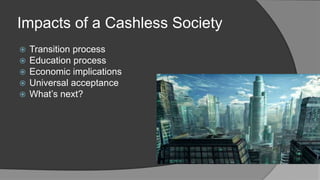
Impacts of a Cashless Society
 Transition process
 Education process
 Economic implications
 Universal acceptance
 What’s next?
Security Benefits
 Electronic means of recognition
 Verification records of all transactions
 Computer errors are far less common than human
errors
Security Risks
 Misuse of technology
 Potential for a new crime frontier
 Less regulation and scrutiny

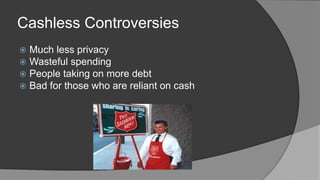
Cashless Controversies
 Much less privacy
 Wasteful spending
 People taking on more debt
 Bad for those who are reliant on cash
Various E-Payment Methods
 Credit and Debit card
 Digital Currency
 E-Wallets
 Peer-to-Peer Methods
 Smart card
 Micro-payments
 B2B
•
2001
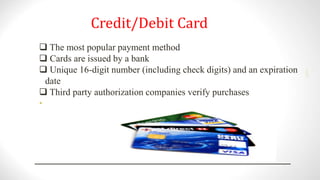
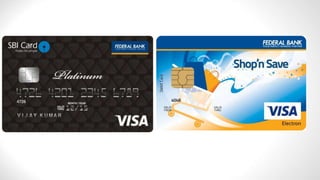
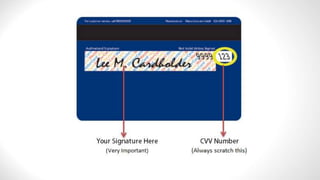
Credit/Debit Card
 The most popular payment method
 Cards are issued by a bank
 Unique 16-digit number (including check digits) and an expiration
date
 Third party authorization companies verify purchases
•
2001
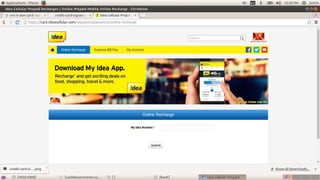
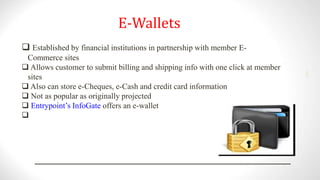
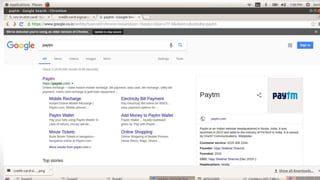
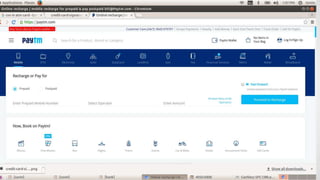
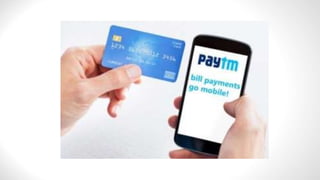
E-Wallets
 Established by financial institutions in partnership with member E-
Commerce sites
 Allows customer to submit billing and shipping info with one click at member
sites
 Also can store e-Cheques, e-Cash and credit card information
 Not as popular as originally projected
 Entrypoint’s InfoGate offers an e-wallet

2001
THANK YOU
Sovin K Thomas

Cashless economy

  • 1.
  • 2.
    Black money • Peopleintentionally do transaction in cash to save income tax. • All illegal activates like money laundering, kidnapping, Bribe to government officers, terrorist activities consummate in cash payments. • Indian companies are reportedly misusing NGO and public trust for money laundering. • Generally people convert their black money into Gold and real estate. • Still 8% of total black money is in cash. • Recent demonetization will help to reduce black money which is in a cash form.
  • 3.
    Payment: The transferof money from one individual or legal entity to another  Cash  Personal Cheques  Money orders (Bank note) Traditional Payment Methods
  • 4.
    2001 4 Selection ofPayment Method  Based on:  Convenience  Trace-ability  Repudiation  Financial risk  Fraud protection
  • 5.
    What is aCashless Society? • No paper money or coins • Everything is electronic • Payment via E-wallets • EFT- Electronic Funds Transfer • EPS – Electronic Payment System • Microchips/Smart Cards
  • 6.
    Impacts of aCashless Society  Transition process  Education process  Economic implications  Universal acceptance  What’s next?
  • 7.
    Security Benefits  Electronicmeans of recognition  Verification records of all transactions  Computer errors are far less common than human errors
  • 8.
    Security Risks  Misuseof technology  Potential for a new crime frontier  Less regulation and scrutiny 
  • 9.
    Cashless Controversies  Muchless privacy  Wasteful spending  People taking on more debt  Bad for those who are reliant on cash
  • 10.
    Various E-Payment Methods Credit and Debit card  Digital Currency  E-Wallets  Peer-to-Peer Methods  Smart card  Micro-payments  B2B • 2001
  • 11.
    Credit/Debit Card  Themost popular payment method  Cards are issued by a bank  Unique 16-digit number (including check digits) and an expiration date  Third party authorization companies verify purchases • 2001
  • 15.
    E-Wallets  Established byfinancial institutions in partnership with member E- Commerce sites  Allows customer to submit billing and shipping info with one click at member sites  Also can store e-Cheques, e-Cash and credit card information  Not as popular as originally projected  Entrypoint’s InfoGate offers an e-wallet  2001
  • 28.

Editor's Notes