FILM GENRE RESEARCH
   URBAN DRAMA
History


•   As a sub-genre of ‘Drama’, Urban Drama is known for its illustrations of a realistic outlook in society and expressing
    social issues.
•   Urban Drama films began in the late 1980s to 90s and currently hitting mainstream in the 00s. In a explicit manor ‘Hood
    films’ often show aspects of urban ‘Black culture’ such as: rap, gangs, drugs, racism, murder, violence and profanity.
•   The protagonist in Urban Drama films tends to be a reflection of where he/she originates from, almost building them as
    a ‘Product of the environment’. Films that portray this prominent role is ‘Menace II Society’, ‘Juice’, ‘Kidulthood’ and ‘Ill
    Manors’.
•   Much like ‘Social realist’ films, Urban Drama films are also seen to be ‘educational’ and seek to educate audiences about
    these social issues.
•   Over the recent years independent Urban Drama films have made a bonus in the movie, Blu-ray/DVDs markets as well.
Early Urban Drama Films


                    •   Boyz N the Hood (1991)
                    •   Juice (1992)
                    •   Menace II Society (1993)
                    •   Dead Presidents (1995)
                    •   Higher Learning (1995)
                    •   Poetic Justice (1993)
                    •   Above The Rim (1994)
                    •   Do The Right Thing (1989)
Contemporary/Modern Urban Drama Films


                           •   Bullet Boy (2005)
                           •   Get Rich or Die Tryin’ (2005)
                           •   Ill Manors (2012)
                           •   Kidulthood (2006)
                           •   8 Mile (2002)
                           •   City of God (2003)
                           •   Victim (2012)
Actors & Directors
Notable Actors:
•        Samuel L. Jackson
•        Wesley Snipes
•        Ice Cube
•        Terrence Howard
•        Morris Chestnut
•        Tupac Shakur
•        Chris Tucker
•        Wood Harris
•        Noel Clarke
•        Snoop Dogg
•        Ashley Walters
•        Tyrese
•        50 Cent

Notable Directors:
•        John Singleton
•        Spike Lee
•        Noel Clarke
•        Ben Drew
•        Jules Dassin
•        Jean-Luc Godard
•        Sidney Lumet
•        Ken Loach
Narrative Structure


The protagonist is illustrated with their environment/social class. Also,
    the protagonists family and friends are shown as well so that the
    audience is aware with his/hers relationships with other characters.

Then a distribution of the equilibrium is situated, founded by the
    environment or the antagonist which brings upon issues for the
    protagonist.

Protagonist undergoes through life-threatening encounters or chooses a
    decision to even issues out. Fir example: Seeking revenge.

In that case, the protagonist either has made an escape from his/her
     problems due to their decisions, or the protagonist choices has led to
     another death of a loved one or themselves.
Narrative Structure (part 2)


‘Todorov’s Theory’ implies that the narrative leads of a basic structure.
    For instance at the start of the film the atmosphere is in a
    equilibrium, though it is breached during the mid-point of the film
    and it revolves around the protagonist. Then at the end the
    matter is resolved and a new equilibrium arrives.

In comparison Urban Drama films express vague connection to
     Todorov’s theory as the narrative starts with the impartial
     ambience yet in the middle of the film the conflicting issues start
     to happen till it reaches a tense moment in the film. And the film
     usually has altered endings which could raise biased views
     whether ‘good’ or ‘bad’.
Archetypes in Urban Drama


Protagonist:                                                   Environment:
Main character or plot based character, either in a group or   Urban deprived areas/Inner-city/Ghetto area that contains
     as single person.                                              negative aspects, that the protagonist tries to overcome
•    Tends to be serious or sensible than his/her friends.          or survive in.
•    May have a negative outlook on life due to social class   •    Projects/Council Estates, Cages or Rucker Parks.
     and environment.
                                                               •    Alleyways, Broken down buildings/Illegal shelters.
•    From a dysfunctional home. E.g. No father figure.
•    Possibly in a current relationship.                       •    Bars, Brothels, Night-Clubs.
                                                               •    Trap-houses/Drug Houses, Gang territory.
Antagonist:                                                    •    Prison/Jail.
Considered the rival of the protagonist or a trouble-
     maker/dangerous person.                                   Others:
•    Traitor or an ex-friend.
                                                               People that accompany the main characters in their daily lives.
•    Rival gang-member.
•    Sibling.                                                  •    Barbers, Postman or Shopkeeper.
•    Causes from an argument or a ‘petty’ issue.               •    Drunkard or ‘Crack-head’.
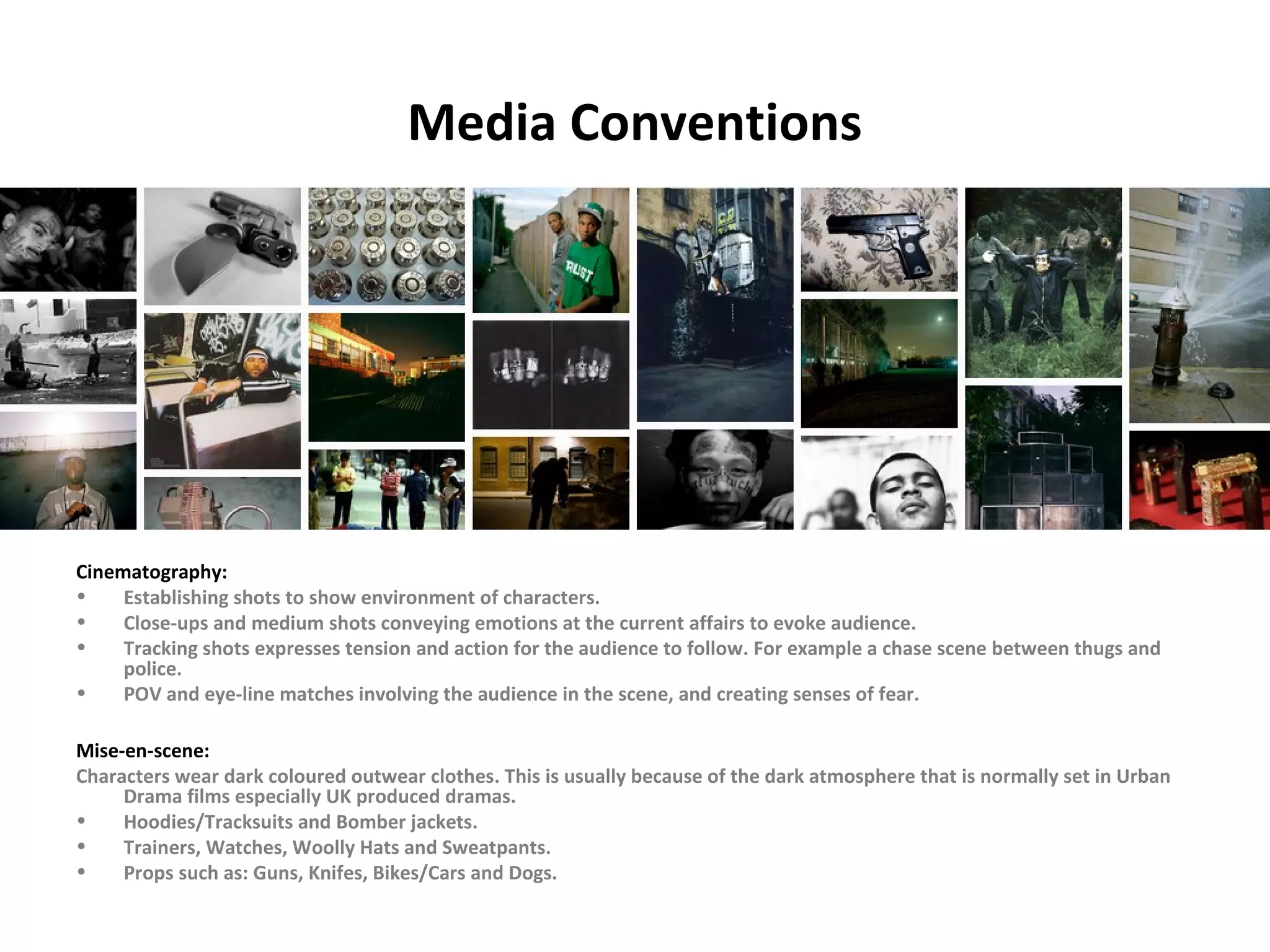
Media Conventions


Cinematography:
•    Establishing shots to show environment of characters.
•    Close-ups and medium shots conveying emotions at the current affairs to evoke audience.
•    Tracking shots expresses tension and action for the audience to follow. For example a chase scene between thugs and
     police.
•    POV and eye-line matches involving the audience in the scene, and creating senses of fear.

Mise-en-scene:
Characters wear dark coloured outwear clothes. This is usually because of the dark atmosphere that is normally set in Urban
     Drama films especially UK produced dramas.
•    Hoodies/Tracksuits and Bomber jackets.
•    Trainers, Watches, Woolly Hats and Sweatpants.
•    Props such as: Guns, Knifes, Bikes/Cars and Dogs.
Media Conventions (part 2)


Sound:
Sounds in Hood films vary depending on the focus area of the film.
•   Diegetic sounds of normal conversations usually colloquial dialect, ambient sound of atmosphere.
•   Non diegetic sounds of music genres such as Hip-Hop, Grime, Bashment, Garage and R&B. This relates to the fitting of the
    scenes and also predominantly focus on Black culture.

Editing:
•     Use of transitions of fade used as memories or flashbacks during character voice-overs.
•     Cross cutting and Jump cuts to vary flow of the scene whilst two events are occurring.
•     Editing of all the sounds, for instance the amplifying and toning to increase tension.

Urban Drama - Genre Research

  • 1.
  • 2.
    History • As a sub-genre of ‘Drama’, Urban Drama is known for its illustrations of a realistic outlook in society and expressing social issues. • Urban Drama films began in the late 1980s to 90s and currently hitting mainstream in the 00s. In a explicit manor ‘Hood films’ often show aspects of urban ‘Black culture’ such as: rap, gangs, drugs, racism, murder, violence and profanity. • The protagonist in Urban Drama films tends to be a reflection of where he/she originates from, almost building them as a ‘Product of the environment’. Films that portray this prominent role is ‘Menace II Society’, ‘Juice’, ‘Kidulthood’ and ‘Ill Manors’. • Much like ‘Social realist’ films, Urban Drama films are also seen to be ‘educational’ and seek to educate audiences about these social issues. • Over the recent years independent Urban Drama films have made a bonus in the movie, Blu-ray/DVDs markets as well.
  • 3.
    Early Urban DramaFilms • Boyz N the Hood (1991) • Juice (1992) • Menace II Society (1993) • Dead Presidents (1995) • Higher Learning (1995) • Poetic Justice (1993) • Above The Rim (1994) • Do The Right Thing (1989)
  • 4.
    Contemporary/Modern Urban DramaFilms • Bullet Boy (2005) • Get Rich or Die Tryin’ (2005) • Ill Manors (2012) • Kidulthood (2006) • 8 Mile (2002) • City of God (2003) • Victim (2012)
  • 5.
    Actors & Directors NotableActors: • Samuel L. Jackson • Wesley Snipes • Ice Cube • Terrence Howard • Morris Chestnut • Tupac Shakur • Chris Tucker • Wood Harris • Noel Clarke • Snoop Dogg • Ashley Walters • Tyrese • 50 Cent Notable Directors: • John Singleton • Spike Lee • Noel Clarke • Ben Drew • Jules Dassin • Jean-Luc Godard • Sidney Lumet • Ken Loach
  • 6.
    Narrative Structure The protagonistis illustrated with their environment/social class. Also, the protagonists family and friends are shown as well so that the audience is aware with his/hers relationships with other characters. Then a distribution of the equilibrium is situated, founded by the environment or the antagonist which brings upon issues for the protagonist. Protagonist undergoes through life-threatening encounters or chooses a decision to even issues out. Fir example: Seeking revenge. In that case, the protagonist either has made an escape from his/her problems due to their decisions, or the protagonist choices has led to another death of a loved one or themselves.
  • 7.
    Narrative Structure (part2) ‘Todorov’s Theory’ implies that the narrative leads of a basic structure. For instance at the start of the film the atmosphere is in a equilibrium, though it is breached during the mid-point of the film and it revolves around the protagonist. Then at the end the matter is resolved and a new equilibrium arrives. In comparison Urban Drama films express vague connection to Todorov’s theory as the narrative starts with the impartial ambience yet in the middle of the film the conflicting issues start to happen till it reaches a tense moment in the film. And the film usually has altered endings which could raise biased views whether ‘good’ or ‘bad’.
  • 8.
    Archetypes in UrbanDrama Protagonist: Environment: Main character or plot based character, either in a group or Urban deprived areas/Inner-city/Ghetto area that contains as single person. negative aspects, that the protagonist tries to overcome • Tends to be serious or sensible than his/her friends. or survive in. • May have a negative outlook on life due to social class • Projects/Council Estates, Cages or Rucker Parks. and environment. • Alleyways, Broken down buildings/Illegal shelters. • From a dysfunctional home. E.g. No father figure. • Possibly in a current relationship. • Bars, Brothels, Night-Clubs. • Trap-houses/Drug Houses, Gang territory. Antagonist: • Prison/Jail. Considered the rival of the protagonist or a trouble- maker/dangerous person. Others: • Traitor or an ex-friend. People that accompany the main characters in their daily lives. • Rival gang-member. • Sibling. • Barbers, Postman or Shopkeeper. • Causes from an argument or a ‘petty’ issue. • Drunkard or ‘Crack-head’.
  • 9.
    Media Conventions Cinematography: • Establishing shots to show environment of characters. • Close-ups and medium shots conveying emotions at the current affairs to evoke audience. • Tracking shots expresses tension and action for the audience to follow. For example a chase scene between thugs and police. • POV and eye-line matches involving the audience in the scene, and creating senses of fear. Mise-en-scene: Characters wear dark coloured outwear clothes. This is usually because of the dark atmosphere that is normally set in Urban Drama films especially UK produced dramas. • Hoodies/Tracksuits and Bomber jackets. • Trainers, Watches, Woolly Hats and Sweatpants. • Props such as: Guns, Knifes, Bikes/Cars and Dogs.
  • 10.
    Media Conventions (part2) Sound: Sounds in Hood films vary depending on the focus area of the film. • Diegetic sounds of normal conversations usually colloquial dialect, ambient sound of atmosphere. • Non diegetic sounds of music genres such as Hip-Hop, Grime, Bashment, Garage and R&B. This relates to the fitting of the scenes and also predominantly focus on Black culture. Editing: • Use of transitions of fade used as memories or flashbacks during character voice-overs. • Cross cutting and Jump cuts to vary flow of the scene whilst two events are occurring. • Editing of all the sounds, for instance the amplifying and toning to increase tension.