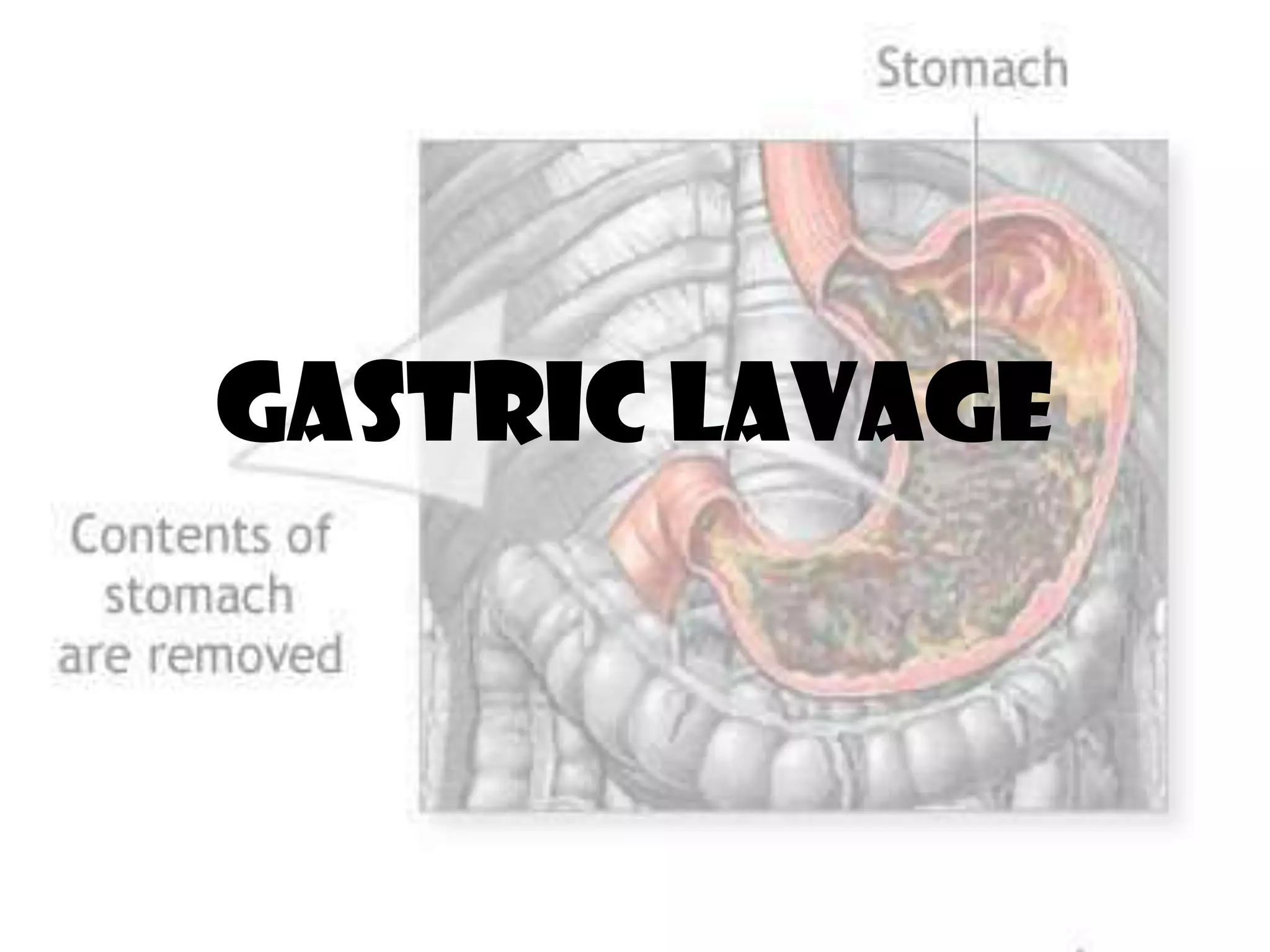
GASTRIC LAVAGE
DEFINATION
• Gastric lavage also commonly called stomach
  wash or gastric suction, is the process of
  cleaning out the contents of the stomach. It
  has been used for eliminating poisons from
  the stomach.
PURPOSE
1.For urgent removal of ingested
substance to decrease systemic
absorption.

2.To empty the stomach before
endoscopic procedure.


3.To diagnose gastric hemorrhage and
to arrest hemorrhage.
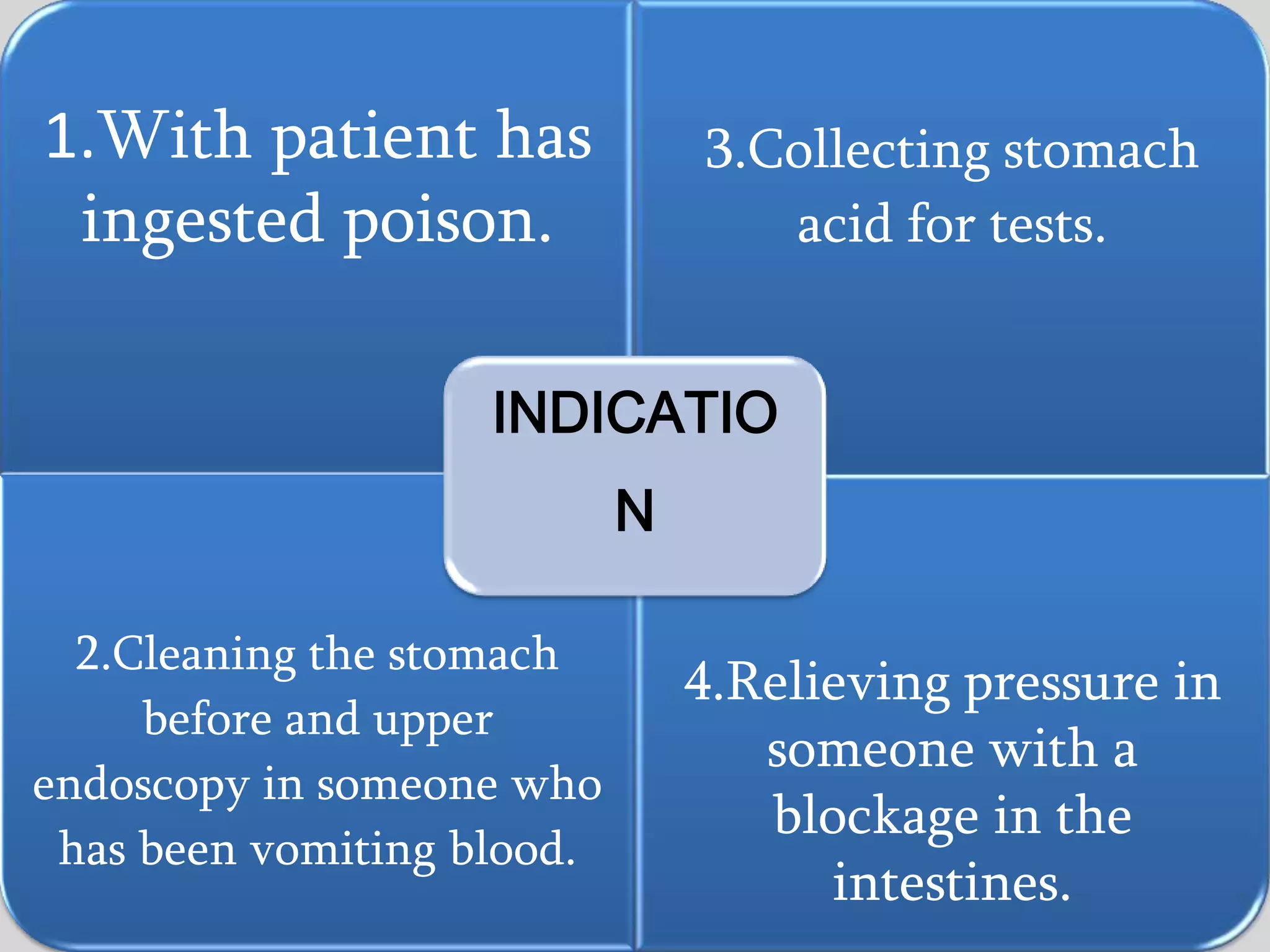
1.With patient has              3.Collecting stomach
 ingested poison.                  acid for tests.


                    INDICATIO
                            N

  2.Cleaning the stomach
                                4.Relieving pressure in
     before and upper
                                   someone with a
endoscopy in someone who
                                   blockage in the
 has been vomiting blood.
                                      intestines.
CONTRAINDICATION
1.Loss of airway protective
reflexes, such as in a patient with a
depressed state of consciousness.


    2.Ingestion of a corrosive substance
    such as a strong acid or alkali.

      3.Ingestion of a hydrocarbon with
      high aspiration potential.

            4.Patients who are at risk of
            hemorrhage or gastrointestinal
            perforation.
TECHNIQUE
1.Gastric lavage involves the passage of a tube
  via the mouth or nose down into the
  stomach, followed by sequential
  administration and removal of small
  volumes of liquid.

2.The placement of the tube in the stomach
  must be confirmed either by air insufflation
  while listening to the stomach, by pH
  testing a small amount of aspirated stomach
  contents, or x-ray. This is to ensure the
  tube is not in the lungs.
CON’T…
3.Lavage is repeated until the returning fluid
  shows no further gastric contents.

4. If the patient is unconscious or cannot
  protect their airway then the patient should
  be intubated before performing lavage.
COMPLICATION
1.Aspiration pneumonia.
  While taking the unwanted poison and drugs out of
  the stomach (lavage), the substances might
  accidentally enter the respiratory canal, into the
  lungs and cause aspiration pneumonia.

2.Laryngospasm.
  Uncontrolled and involuntary muscle contraction
  (spasm) of the larynx cord.

3.Hypoxia and hypercapnia.
  Lack of oxygen in the body tissues.
COMPLICATION
4.Bradycardia
   Pulse is slow and lower than normal.

5.SOB
• Patient might experience dyspnea due to a tube
  inserted through the oropharynx that can obstruct
  the patient airway, which cause low oxygen supply.

6.Mechanical injury to the throat, esophagus, and
  stomach.
Gastric lavage
Gastric lavage

Gastric lavage

  • 1.
  • 2.
    DEFINATION • Gastric lavagealso commonly called stomach wash or gastric suction, is the process of cleaning out the contents of the stomach. It has been used for eliminating poisons from the stomach.
  • 3.
    PURPOSE 1.For urgent removalof ingested substance to decrease systemic absorption. 2.To empty the stomach before endoscopic procedure. 3.To diagnose gastric hemorrhage and to arrest hemorrhage.
  • 4.
    1.With patient has 3.Collecting stomach ingested poison. acid for tests. INDICATIO N 2.Cleaning the stomach 4.Relieving pressure in before and upper someone with a endoscopy in someone who blockage in the has been vomiting blood. intestines.
  • 5.
    CONTRAINDICATION 1.Loss of airwayprotective reflexes, such as in a patient with a depressed state of consciousness. 2.Ingestion of a corrosive substance such as a strong acid or alkali. 3.Ingestion of a hydrocarbon with high aspiration potential. 4.Patients who are at risk of hemorrhage or gastrointestinal perforation.
  • 6.
    TECHNIQUE 1.Gastric lavage involvesthe passage of a tube via the mouth or nose down into the stomach, followed by sequential administration and removal of small volumes of liquid. 2.The placement of the tube in the stomach must be confirmed either by air insufflation while listening to the stomach, by pH testing a small amount of aspirated stomach contents, or x-ray. This is to ensure the tube is not in the lungs.
  • 7.
    CON’T… 3.Lavage is repeateduntil the returning fluid shows no further gastric contents. 4. If the patient is unconscious or cannot protect their airway then the patient should be intubated before performing lavage.
  • 8.
    COMPLICATION 1.Aspiration pneumonia. While taking the unwanted poison and drugs out of the stomach (lavage), the substances might accidentally enter the respiratory canal, into the lungs and cause aspiration pneumonia. 2.Laryngospasm. Uncontrolled and involuntary muscle contraction (spasm) of the larynx cord. 3.Hypoxia and hypercapnia. Lack of oxygen in the body tissues.
  • 9.
    COMPLICATION 4.Bradycardia Pulse is slow and lower than normal. 5.SOB • Patient might experience dyspnea due to a tube inserted through the oropharynx that can obstruct the patient airway, which cause low oxygen supply. 6.Mechanical injury to the throat, esophagus, and stomach.