Downloaded 1,076 times


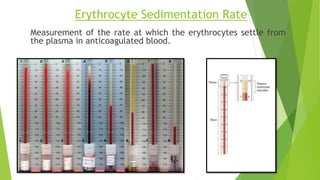

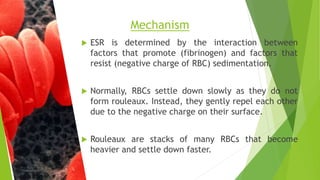
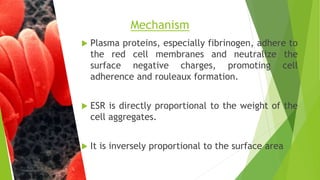
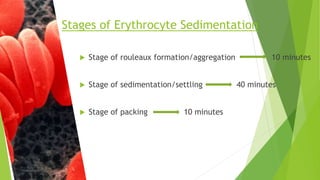
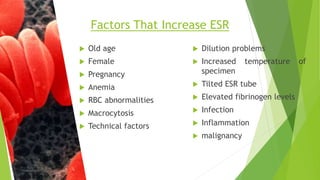
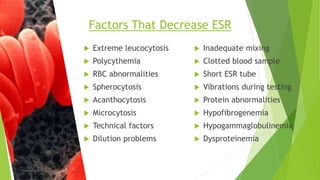








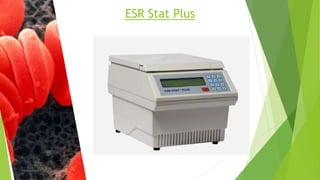
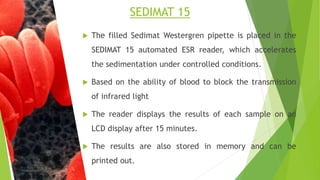
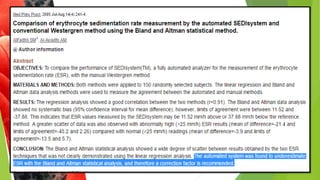





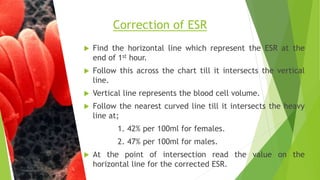
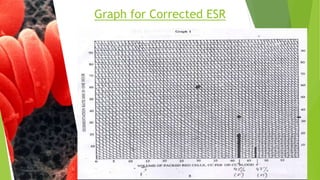




1. Erythrocyte sedimentation rate (ESR) measures the rate at which red blood cells settle in a tube of blood over one hour. It is a non-specific test used to detect inflammation. 2. ESR works by fibrinogen proteins adhering to red blood cells, neutralizing their negative charge and allowing them to stick together and fall faster as rouleaux. Conditions with elevated fibrinogen like infection, inflammation, and malignancy increase ESR. 3. ESR is measured using the Westergreen, Wintrobe, or automated methods. The Westergreen method is the reference standard. ESR values are interpreted based on age, sex and clinical context.


