Policy issues in mainstreaming
gender into land and water
management activities, and natural
resources management in the
context of MENARID
By Dina Najjar, ICARDA
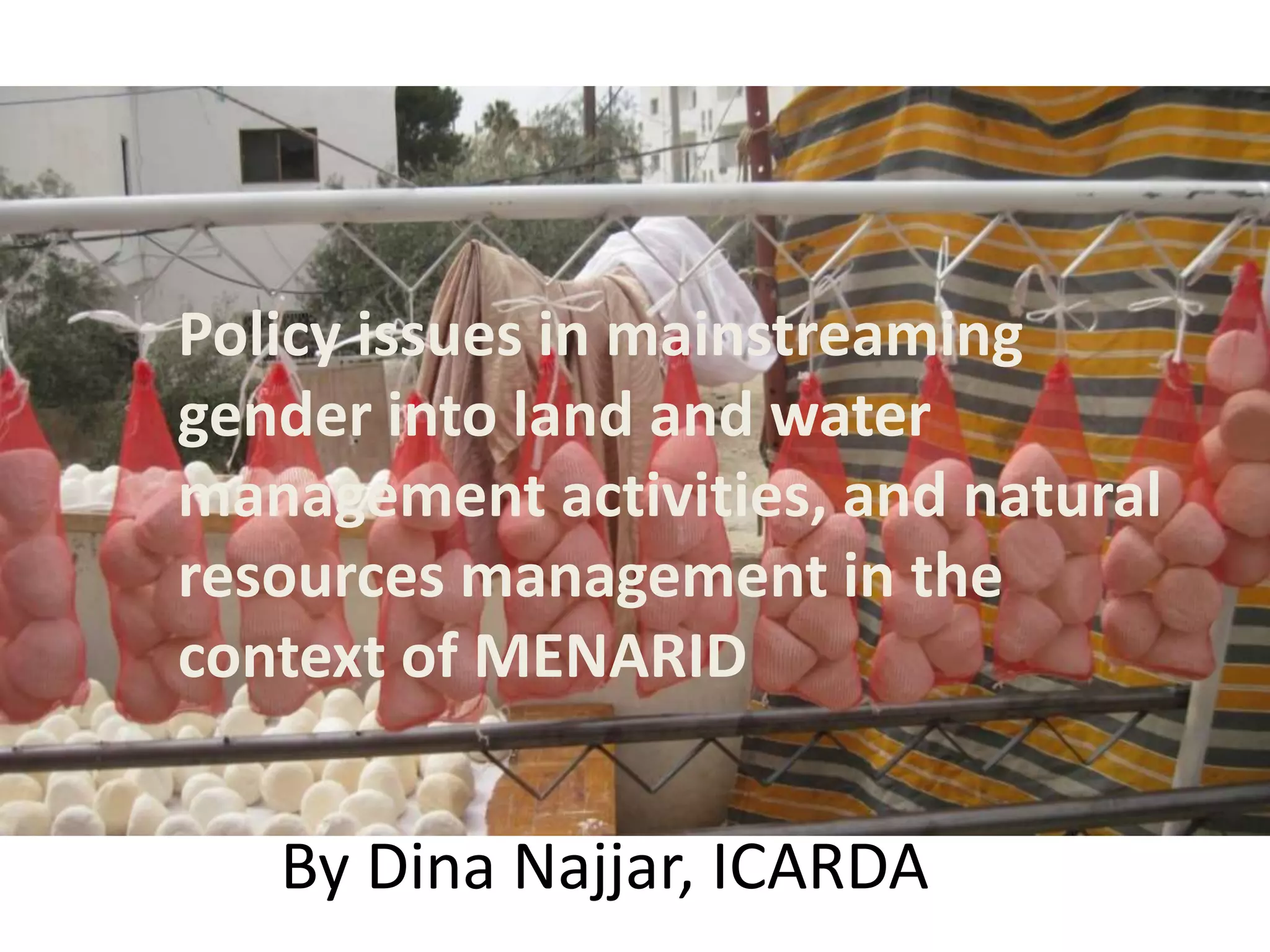
Policy issues in mainstreaming
gender into land and water
management activities, and natural
resources management in the
context of MENARID
International Context
• Global awakening towards sustained efforts for
achieving gender equality and equitable development
– For overcoming the wicked problems (vulnerability to
climate change, land degradation, and food insecurity)
need to increase the role of and benefits for women
(efficiency concerns) (e.g., Najjar 2014)
– Mainstreaming gender into the ex ante diagnostic phase
– Gender transformative approaches beyond technical fixes
for complex problems (Humphries et al. 2012)
– Technologies induce no harm for women (e.g., Beuchelt
and Badstue 2013; Abdelali‐Martini and Dey de Pryck
2014).
Main Findings in the IFAD-GEF ARMP II
Project
• Micro-credit opportunities for women
– Overcome lack of collateral/assets
– Venue for social networking
• Access to knowledge and training
Main Findings Cont’d
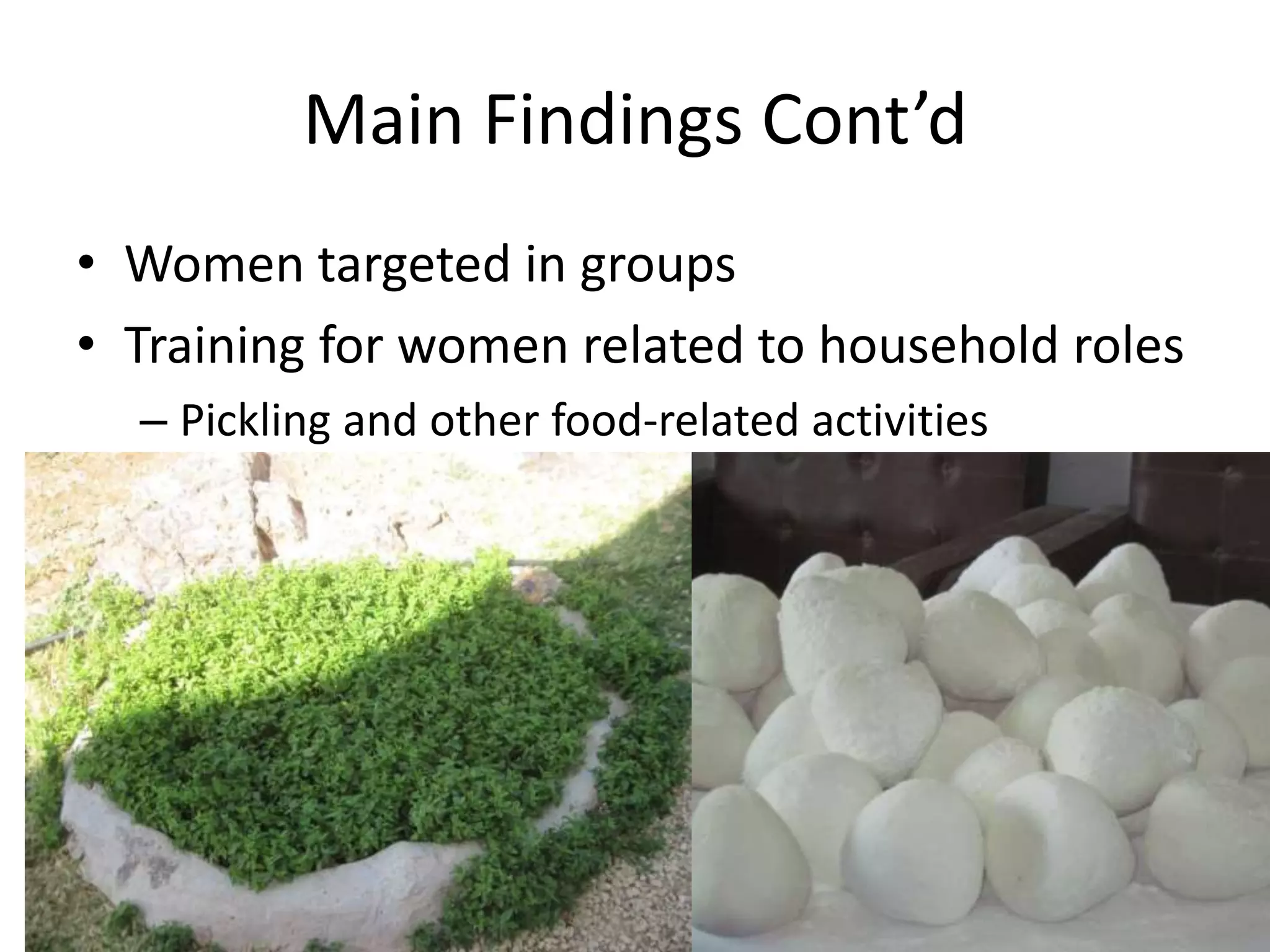
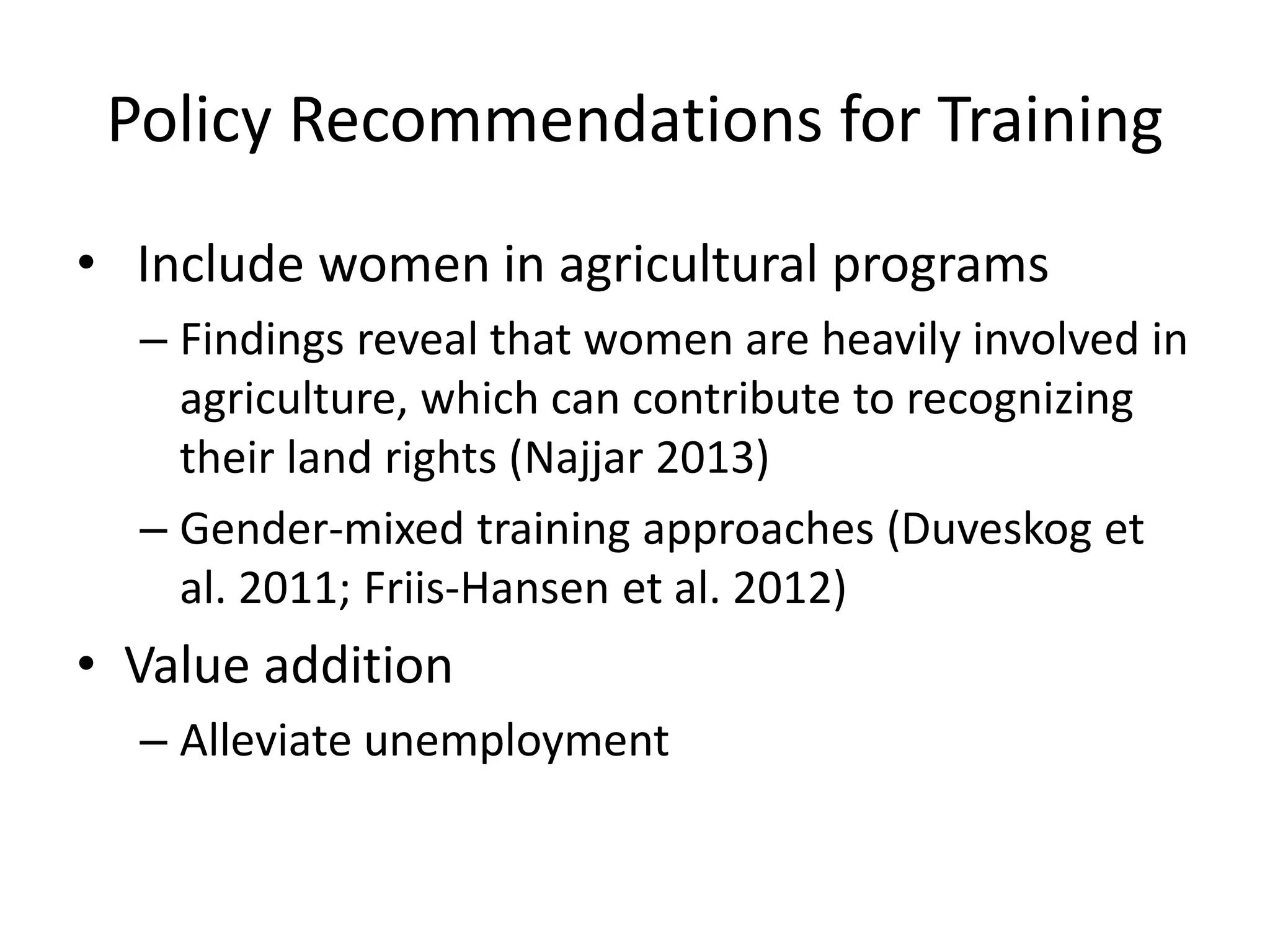
• Women targeted in groups
• Training for women related to household roles
– Pickling and other food-related activities
Policy Recommendations for Training
• Include women in agricultural programs
– Findings reveal that women are heavily involved in
agriculture, which can contribute to recognizing
their land rights (Najjar 2013)
– Gender-mixed training approaches (Duveskog et
al. 2011; Friis-Hansen et al. 2012)
• Value addition
– Alleviate unemployment
For Targeting
• Target individual women (limitations to focus
on groups) for more inclusive development
• Strengthen women’s groups (volatile groups)
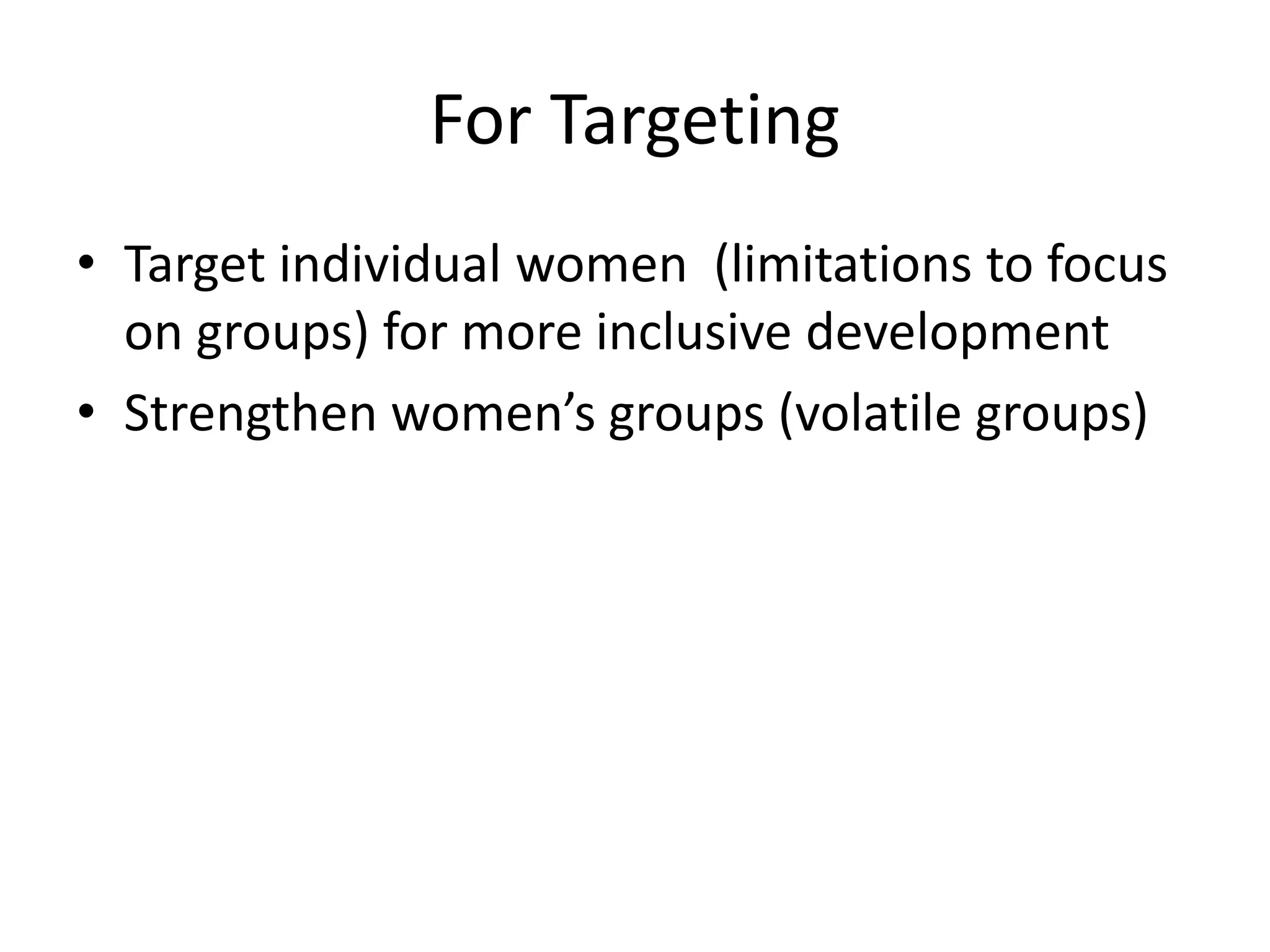
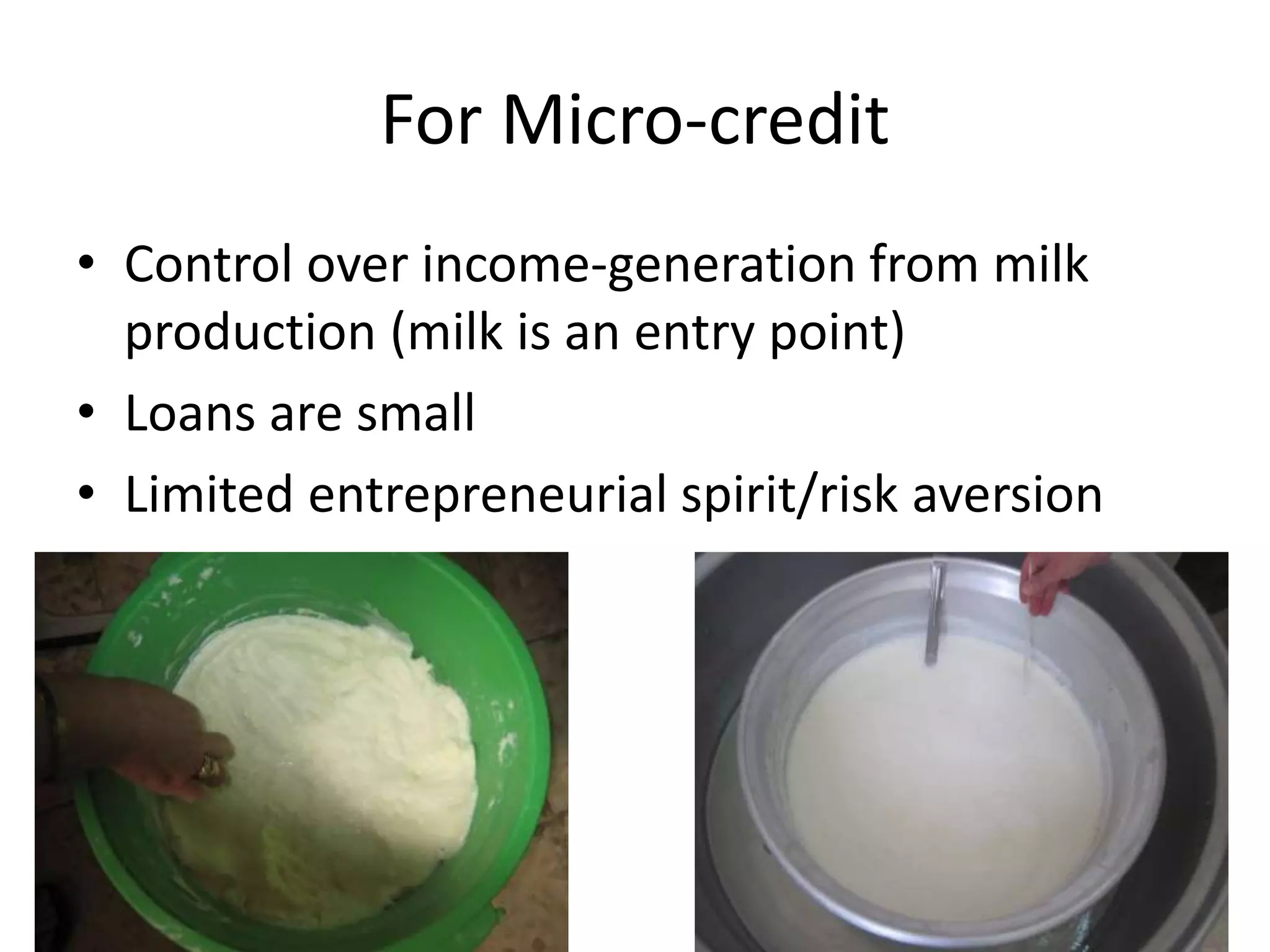
For Micro-credit
• Control over income-generation from milk
production (milk is an entry point)
• Loans are small
• Limited entrepreneurial spirit/risk aversion
For Monitoring and Evaluation
• Collection of sex-disaggregated data
• No harm induced
– Increased labour
• Increased control over natural resources
• Increased decision-making power
– Expenditure of profit
Conclusions
• Intrinsic and instrumental approach to
women’s empowerment
– skills, micro-credit, leadership training, awareness
campaigns
• Mainstreaming gender into the ex-ante
diagnostic phase (including priority setting
and targeting)
Acknowledgements
• Dr. Taghrid Khoury’s contributions of fieldwork
and respective study report
References
• Abdelali‐Martini, M., & Dey de Pryck, J. (2014). DOES THE FEMINISATION OF
AGRICULTURAL LABOUR EMPOWER WOMEN? INSIGHTS FROM FEMALE LABOUR
CONTRACTORS AND WORKERS IN NORTHWEST SYRIA. Journal of International
Development.
• Beuchelt, T. D., & Badstue, L. (2013). Gender, nutrition-and climate-smart food
production: opportunities and trade-offs. Food Security, 5(5), 709-721.
• Duveskog, D., Friis-Hansen, E., Taylor, E.W., 2011. Farmer Field Schools in rural
Kenya: A transformative learning experience. Journal of Development Studies, 47
(10), 1–16.
• Friis-Hansen, E., Duveskog, D., Taylor, E. (2012). Less noise in the household: the
impact of Farmer Field Schools on gender relations. Journal of Research in
Peace, Gender and Development, 2 (2), 44–55.
• Humphries, S., Classen, L., Jiménez, J., Sierra, F., Gallardo, O., & Gómez, M.
(2012). Opening Cracks for the Transgression of Social Boundaries: An Evaluation
of the Gender Impacts of Farmer Research Teams in Honduras. World
Development, 40(10), 2078-2095.
• Najjar, D. (2013). THE MONEY OF QAROON AND THE PATIENCE OF AYOUB:
WOMEN AND LAND IN EGYPT’S MUBARAK RESETTLEMENT SCHEME (Thesis
format: Monograph) (Doctoral dissertation, The University of Western Ontario).
• Najjar, D. (2014). Women’s contributions to climate change adaptation in Egypt’s
Mubarak Resettlement Scheme through cactus cultivation and adjusted
irrigation. In Buechler, S and Hanson A.S. (Eds) A Political Ecology of Women,
Water and Global Environmental Change . Routledge.
Go ahead. Ask away.
QUESTIONS
and
ANSWERS

Najjar d policy-issues_in_mainstreaming_gender_into_land_and_water_management_activities_and_nrm_menarid

  • 1.
    Policy issues inmainstreaming gender into land and water management activities, and natural resources management in the context of MENARID By Dina Najjar, ICARDA Policy issues in mainstreaming gender into land and water management activities, and natural resources management in the context of MENARID
  • 2.
    International Context • Globalawakening towards sustained efforts for achieving gender equality and equitable development – For overcoming the wicked problems (vulnerability to climate change, land degradation, and food insecurity) need to increase the role of and benefits for women (efficiency concerns) (e.g., Najjar 2014) – Mainstreaming gender into the ex ante diagnostic phase – Gender transformative approaches beyond technical fixes for complex problems (Humphries et al. 2012) – Technologies induce no harm for women (e.g., Beuchelt and Badstue 2013; Abdelali‐Martini and Dey de Pryck 2014).
  • 4.
    Main Findings inthe IFAD-GEF ARMP II Project • Micro-credit opportunities for women – Overcome lack of collateral/assets – Venue for social networking • Access to knowledge and training
  • 5.
    Main Findings Cont’d •Women targeted in groups • Training for women related to household roles – Pickling and other food-related activities
  • 6.
    Policy Recommendations forTraining • Include women in agricultural programs – Findings reveal that women are heavily involved in agriculture, which can contribute to recognizing their land rights (Najjar 2013) – Gender-mixed training approaches (Duveskog et al. 2011; Friis-Hansen et al. 2012) • Value addition – Alleviate unemployment
  • 7.
    For Targeting • Targetindividual women (limitations to focus on groups) for more inclusive development • Strengthen women’s groups (volatile groups)
  • 8.
    For Micro-credit • Controlover income-generation from milk production (milk is an entry point) • Loans are small • Limited entrepreneurial spirit/risk aversion
  • 9.
    For Monitoring andEvaluation • Collection of sex-disaggregated data • No harm induced – Increased labour • Increased control over natural resources • Increased decision-making power – Expenditure of profit
  • 10.
    Conclusions • Intrinsic andinstrumental approach to women’s empowerment – skills, micro-credit, leadership training, awareness campaigns • Mainstreaming gender into the ex-ante diagnostic phase (including priority setting and targeting)
  • 11.
    Acknowledgements • Dr. TaghridKhoury’s contributions of fieldwork and respective study report
  • 12.
    References • Abdelali‐Martini, M.,& Dey de Pryck, J. (2014). DOES THE FEMINISATION OF AGRICULTURAL LABOUR EMPOWER WOMEN? INSIGHTS FROM FEMALE LABOUR CONTRACTORS AND WORKERS IN NORTHWEST SYRIA. Journal of International Development. • Beuchelt, T. D., & Badstue, L. (2013). Gender, nutrition-and climate-smart food production: opportunities and trade-offs. Food Security, 5(5), 709-721. • Duveskog, D., Friis-Hansen, E., Taylor, E.W., 2011. Farmer Field Schools in rural Kenya: A transformative learning experience. Journal of Development Studies, 47 (10), 1–16. • Friis-Hansen, E., Duveskog, D., Taylor, E. (2012). Less noise in the household: the impact of Farmer Field Schools on gender relations. Journal of Research in Peace, Gender and Development, 2 (2), 44–55. • Humphries, S., Classen, L., Jiménez, J., Sierra, F., Gallardo, O., & Gómez, M. (2012). Opening Cracks for the Transgression of Social Boundaries: An Evaluation of the Gender Impacts of Farmer Research Teams in Honduras. World Development, 40(10), 2078-2095. • Najjar, D. (2013). THE MONEY OF QAROON AND THE PATIENCE OF AYOUB: WOMEN AND LAND IN EGYPT’S MUBARAK RESETTLEMENT SCHEME (Thesis format: Monograph) (Doctoral dissertation, The University of Western Ontario). • Najjar, D. (2014). Women’s contributions to climate change adaptation in Egypt’s Mubarak Resettlement Scheme through cactus cultivation and adjusted irrigation. In Buechler, S and Hanson A.S. (Eds) A Political Ecology of Women, Water and Global Environmental Change . Routledge.
  • 13.
    Go ahead. Askaway. QUESTIONS and ANSWERS

Editor's Notes

  • #6 Agricultural Resource Management Project, ARMP II
  • #11 Targeting of individual women and focus on microcredit for milk purchase by women.