THE POLICY STORY:
POPULATION, HEALTH & ENVIRONMENT
A.Tianna Scozzaro
Population Action International
Population Connection
Capitol Hill Days
April 2013
So Why Explore Population and
Climate Change Linkages?
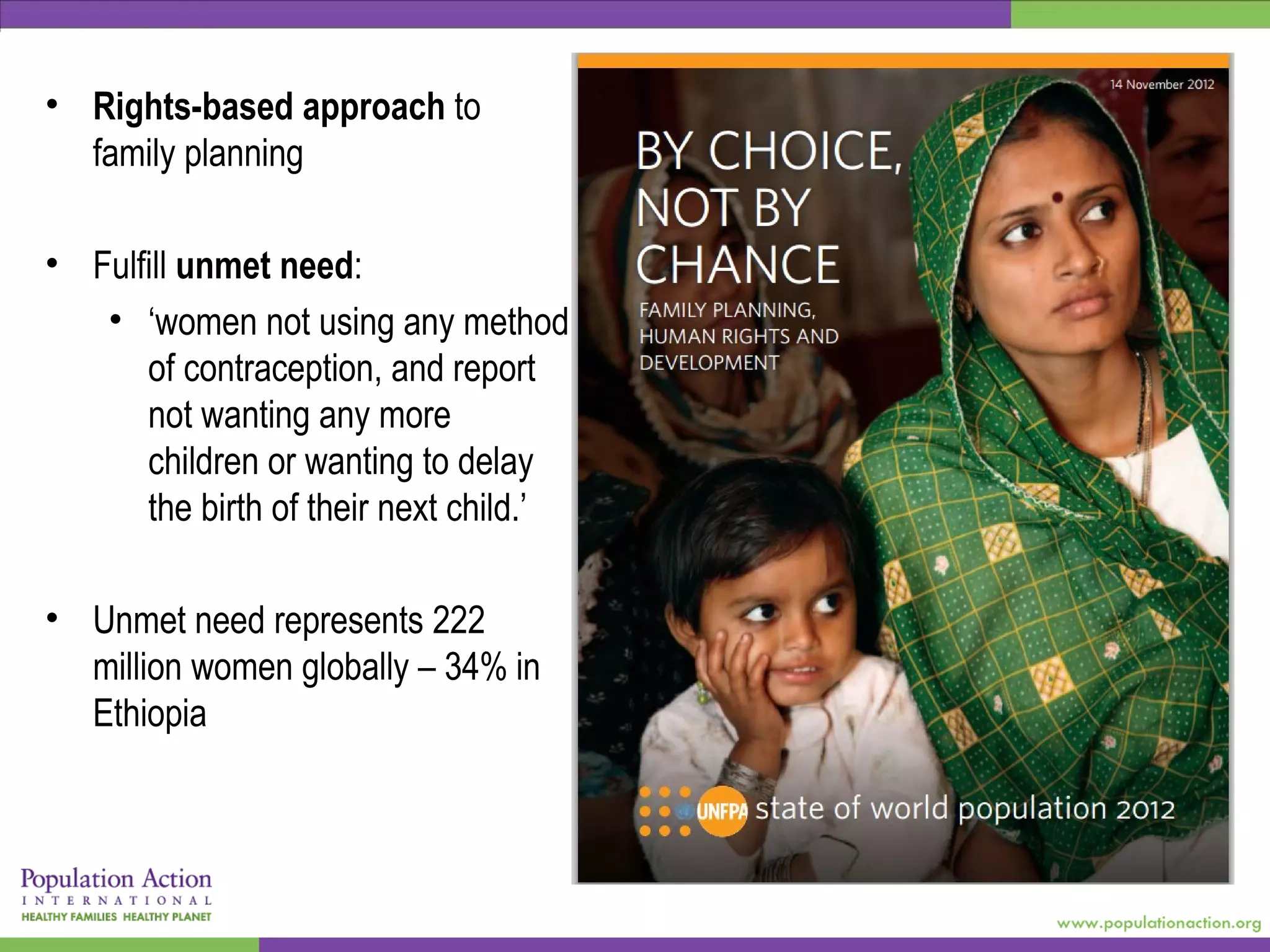
• Rights-based approach to
family planning
• Fulfill unmet need:
• ‘women not using any method
of contraception, and report
not wanting any more
children or wanting to delay
the birth of their next child.’
• Unmet need represents 222
million women globally – 34% in
Ethiopia
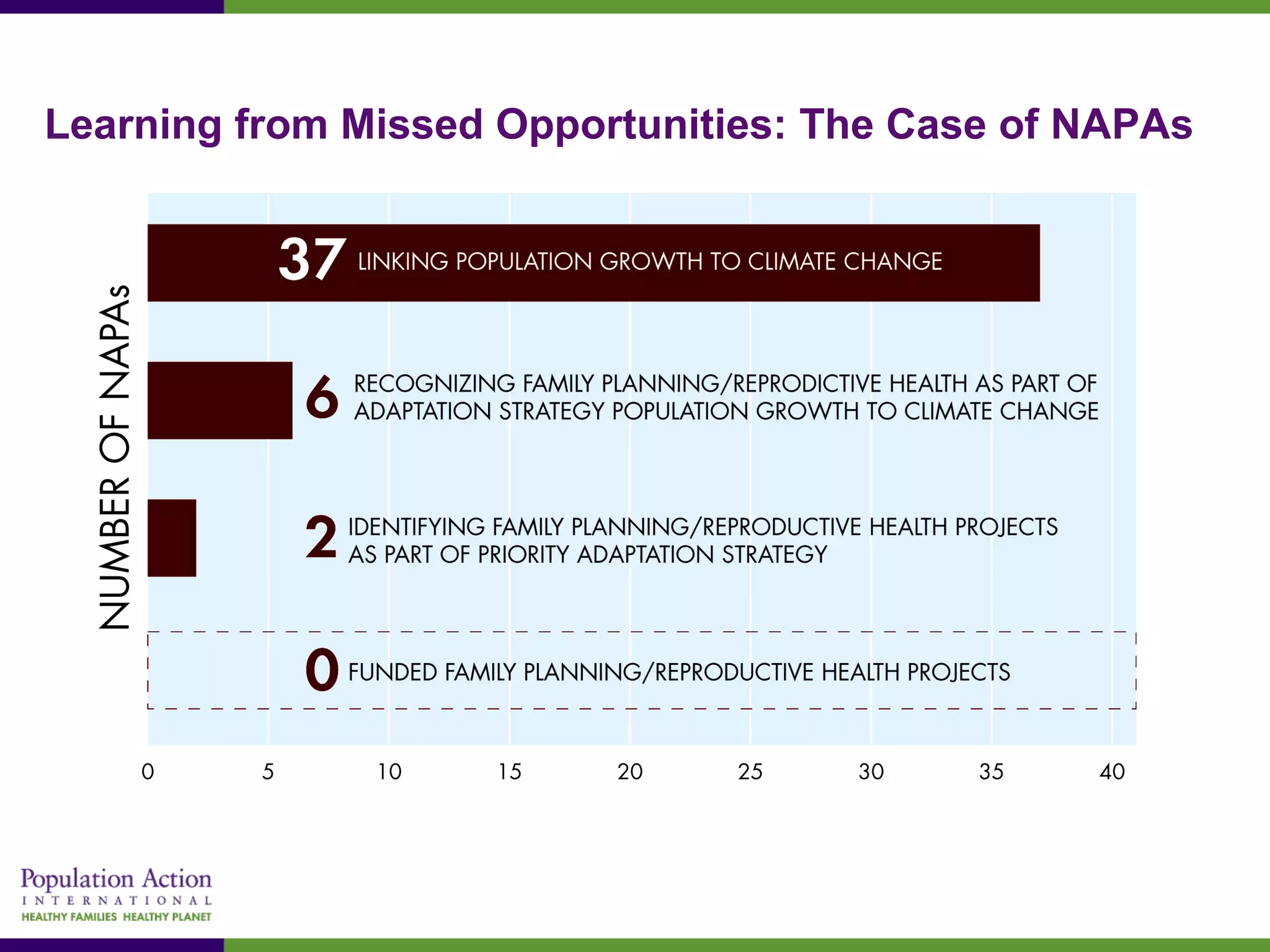
Learning from Missed Opportunities: The Case of NAPAs
What are we doing to advance
population dynamics and climate
change adaptation?
POPULATION AND CLIMATE CHANGE HOTSPOTS
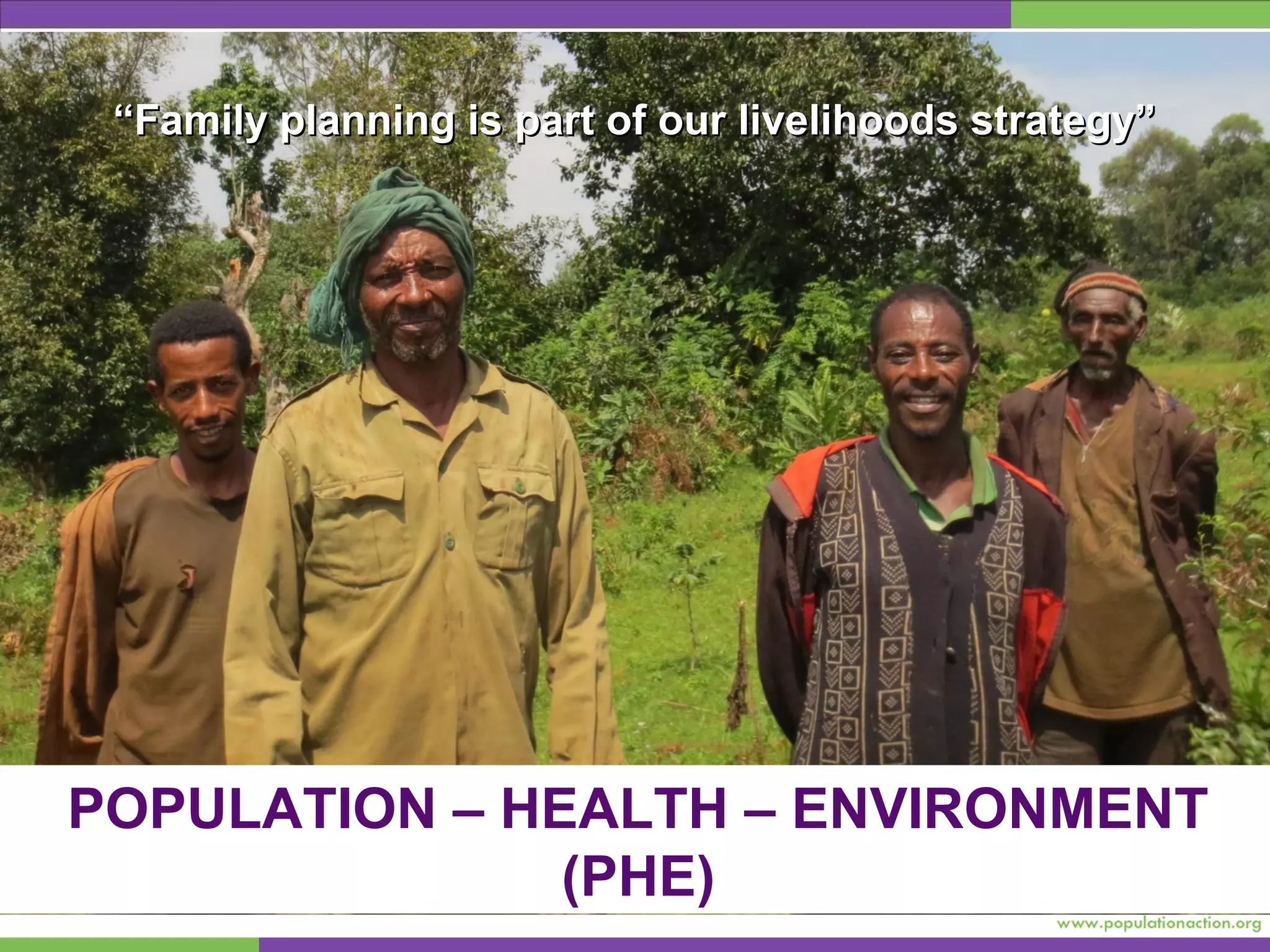
““Family planning is part of our livelihoods strategy”Family planning is part of our livelihoods strategy”
POPULATION – HEALTH – ENVIRONMENT
(PHE)
U.S. & International Policy on
Population & Environment
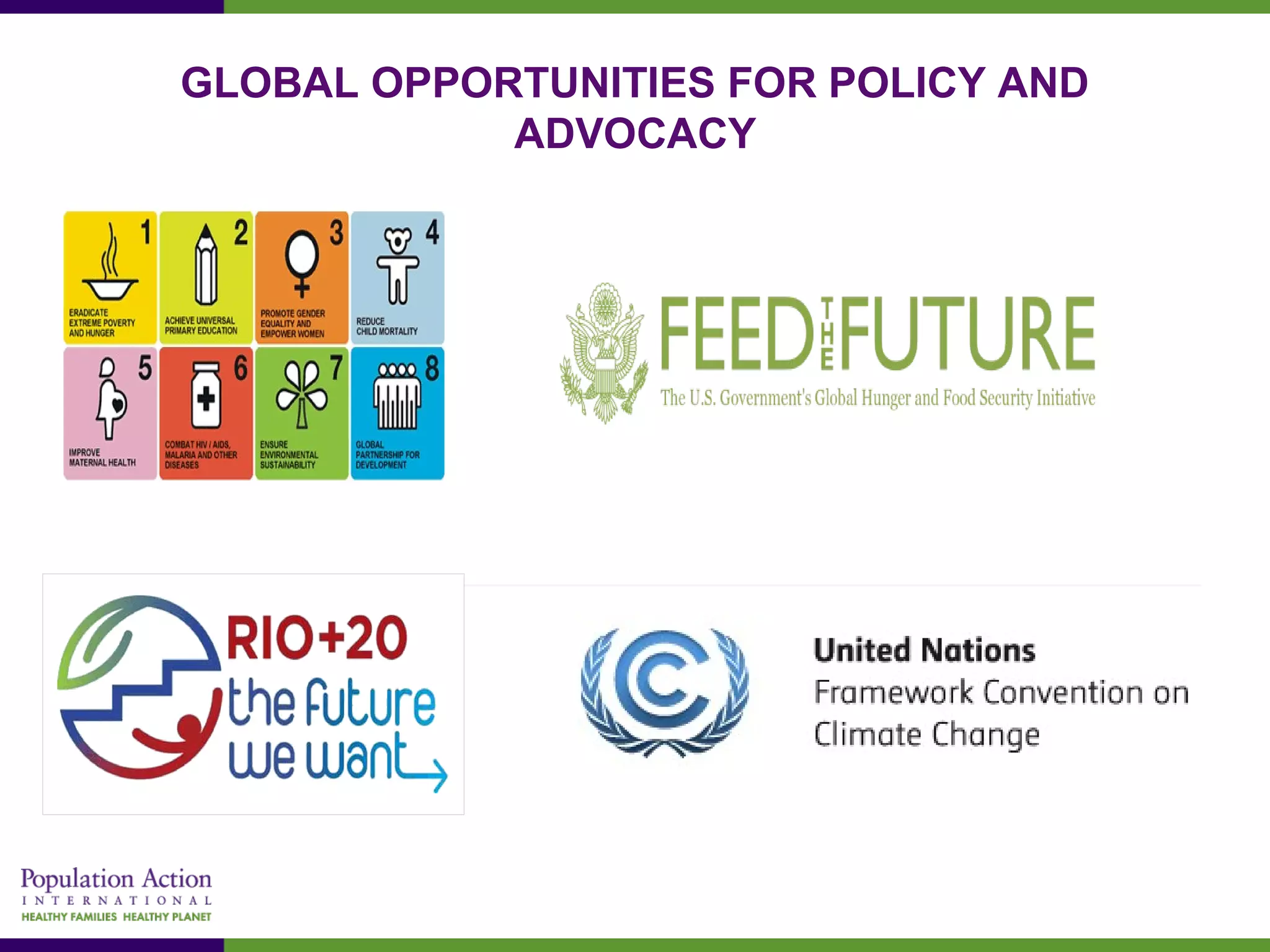
GLOBAL OPPORTUNITIES FOR POLICY AND
ADVOCACY
For more information please visit www.populationaction.org or contact:
A.Tianna Scozzaro
ascozzaro@popact.org
13
DISCUSSION QUESTIONS
• How are population dynamics impacting the communities with which you
work?
• What are the barriers to discussing or implementing reproductive health
within CBA in your community? How might we overcome those barriers?
• What opportunities exist for promoting reproductive health and family
planning as a strategy for increasing climate change resilience?
• What are key elements of strategic and effective communication in the
context of your region? Develop 3 key messages on population-
environment.
• What are tactics or strategies to engage decision makers in programs
focused on access to reproductive health at the local level? Regional?
National?

The policy story: population, health and environment

  • 1.
    THE POLICY STORY: POPULATION,HEALTH & ENVIRONMENT A.Tianna Scozzaro Population Action International Population Connection Capitol Hill Days April 2013
  • 3.
    So Why ExplorePopulation and Climate Change Linkages?
  • 5.
    • Rights-based approachto family planning • Fulfill unmet need: • ‘women not using any method of contraception, and report not wanting any more children or wanting to delay the birth of their next child.’ • Unmet need represents 222 million women globally – 34% in Ethiopia
  • 6.
    Learning from MissedOpportunities: The Case of NAPAs
  • 7.
    What are wedoing to advance population dynamics and climate change adaptation?
  • 8.
    POPULATION AND CLIMATECHANGE HOTSPOTS
  • 10.
    ““Family planning ispart of our livelihoods strategy”Family planning is part of our livelihoods strategy” POPULATION – HEALTH – ENVIRONMENT (PHE)
  • 11.
    U.S. & InternationalPolicy on Population & Environment
  • 12.
    GLOBAL OPPORTUNITIES FORPOLICY AND ADVOCACY
  • 13.
    For more informationplease visit www.populationaction.org or contact: A.Tianna Scozzaro ascozzaro@popact.org 13
  • 14.
    DISCUSSION QUESTIONS • Howare population dynamics impacting the communities with which you work? • What are the barriers to discussing or implementing reproductive health within CBA in your community? How might we overcome those barriers? • What opportunities exist for promoting reproductive health and family planning as a strategy for increasing climate change resilience? • What are key elements of strategic and effective communication in the context of your region? Develop 3 key messages on population- environment. • What are tactics or strategies to engage decision makers in programs focused on access to reproductive health at the local level? Regional? National?