1
Modeling sexual selection with Agent-Based Models
Esteban Ribero – August, 2009
This paper discusses a well known principle in evolutionary biology called
the handicap principle. Two agent-based-models were developed to illustrate the
principle in an attempt to better understand its implications for the study of human
behavior. A brief discussion about sexual selection and the handicap principle is
provided, followed by a detailed description of the models.
The use of biological concepts to explain human behavior is not new but
during the past three decades evolutionary psychology has put the concepts and
principles of evolutionary biology at the center of its meta-theory. The handicap
principle in particular, has been used to explain human behavior and culture in a
way that helps us understand the most fascinating and counterintuitive
characteristics of human beings.
Of particular importance is the work of Evolutionary Psychologist Geoffrey
Miller at the University of New Mexico in Albuquerque. Miller has applied the
handicap principle to explain how sexual selection (“the other” Darwin’s theory of
evolution –it is actually just another selection mechanism) has been the most
powerful force in Human evolution. Miller is pioneering the idea that most of our
mind is the result of evolution by sexual selection through mate choice. He
proposes that the traits that make us particularly different form other species
(language, abstract thinking abilities, music, art, culture, science, etc.) evolved as a
runaway process of fitness display (Miller, 1999).
Sexual selection
Evolution is supposed to occur via two main mechanisms: natural selection
and sexual selection. Even though Darwin provided examples of both types of
mechanisms when he introduced the theory, only the concept of natural selection
received considerable attention. For some reason the theory of evolution by sexual
selection was in exile until biologist started realizing that, actually, several of the
2
most perplexing, surprising and fascinating characteristics of animals could not be
understood without the theory of sexual selection.
Two different kinds of sexual selection can be responsible for the evolution
of complex body and mental structures in animals including humans: intrasexual
competition (aggressive competition between members of the same sex) and
intersexual competition (mate choice by member of the opposite sex)
One of the most important (if not the most) adaptive problem our ancestors
faced was finding a mate to be able to pass their genes through the next
generation. Even the most fitted individual to survive will not pass his genes if he
does not find a mate that will agree to mix her genes with his. Such individual will
eventually die and his characteristics would not be spread in future generations
disappearing from the landscape, leaving only the characteristics of the individuals
that were successful in finding a mate.
The handicap principle
The handicap principle was proposed in 1975 by Isralei biologist Amotz
Zahavi (Zahavi, 1975; Zahavi & Zahavi, 1997). Zahavi who studied birds for more
than 3 decades was puzzled by many behaviors and characteristics of many birds.
He noticed that some birds like the peacock developed big, costly tails or songs
that they displayed even in front of predators. What possible survival benefit could
a giant tail provide, if on the contrary, it seemed to prevent the animal to move and
escape faster from predators? It was certainly a sexual ornament used to attract
mates but its high cost and the handicap that it caused to the animal was
counterintuitive in the traditional “survival of the fittest” view of evolution.
Zahavi proposed that actually the high cost of sexual ornaments is what
keeps the ornaments reliable as indicators of fitness. Peacock tails require a lot of
energy to preen, and to carry around. Unhealthy, unfit peacocks, can’t afford big,
bright tails. The ornament’s cost guarantees the ornamented individual’s fitness,
and this is why costly ornaments evolve. Technically, the key feature is that the
indicator must have a higher relative marginal cost to an unfit animal than it does to
a highly fit animal (Miller, 2001). Handicaps have the counter-intuitive feature that
3
the more vulnerable they are to disruption (by poor nutrition, injury, parasites,
pathogens, genetic inbreeding, high mutation load, or socially subordinate status),
the more useful they are as fitness indicators.
Vulnerable traits amplify the differences in genetic quality between
individuals. They take small differences in genetic quality, nutritional state, general
health, or intelligence, and turn them into dramatic differences in ornament quality
(Miller, 2001). In this way, they make individual differences more visible to mate
choice. By choosing sexual partners with high-quality fitness indicators, animals
are more likely to get healthy partners, competent parents, and good genes for
their offspring (Miller, 2000).
An agent-based-model of the handicap principle
Two models were developed to illustrate different aspect of the handicap
principle. Model 1 explores the evolution of costly signaling while model 2 explore
the benefits of relying on this costly ornaments and not on others that are easy to
fake.
Model 1 overview
The model consists of a number of males and females that interact with
each other to reproduce themselves. At first, all males look the same but
generation after generation they evolve some type of signaling devise (color and
size) that advertise their strength to potential mates. By selecting the most visible
and colorful males to reproduce with, females end up selecting those that are the
strongest and most fitted individuals, those that could afford the costly signaling.
The result is a population of males with costly ornaments that guarantee females
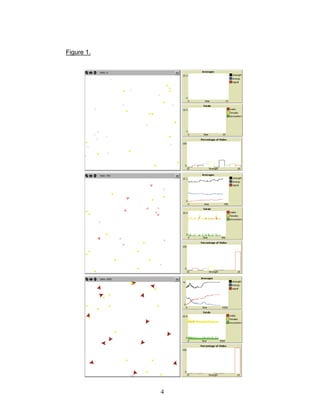
they are strong mates with high genetic quality. Figure 1 shows three snapshots of
the model at different moments of the simulation. Notice that the level of strength
of the different individual is fairly distributed at first but progressively skews
towards the strongest ones. Also notice that males end up with huge costly
ornaments (signal) that considerably reduce their level of energy guaranteeing that
only the strongest ones can afford them.
4
Figure 1.
5
Detailed description
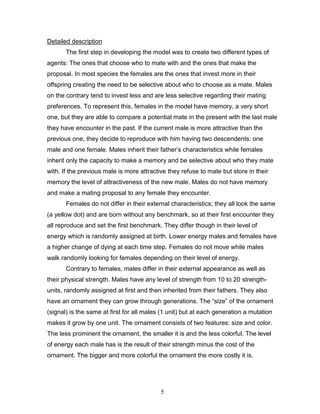
The first step in developing the model was to create two different types of
agents: The ones that choose who to mate with and the ones that make the
proposal. In most species the females are the ones that invest more in their
offspring creating the need to be selective about who to choose as a mate. Males
on the contrary tend to invest less and are less selective regarding their mating
preferences. To represent this, females in the model have memory, a very short
one, but they are able to compare a potential mate in the present with the last male
they have encounter in the past. If the current male is more attractive than the
previous one, they decide to reproduce with him having two descendents: one
male and one female. Males inherit their father’s characteristics while females
inherit only the capacity to make a memory and be selective about who they mate
with. If the previous male is more attractive they refuse to mate but store in their
memory the level of attractiveness of the new male. Males do not have memory
and make a mating proposal to any female they encounter.
Females do not differ in their external characteristics; they all look the same
(a yellow dot) and are born without any benchmark, so at their first encounter they
all reproduce and set the first benchmark. They differ though in their level of
energy which is randomly assigned at birth. Lower energy males and females have
a higher change of dying at each time step. Females do not move while males
walk randomly looking for females depending on their level of energy.
Contrary to females, males differ in their external appearance as well as
their physical strength. Males have any level of strength from 10 to 20 strength-
units, randomly assigned at first and then inherited from their fathers. They also
have an ornament they can grow through generations. The “size” of the ornament
(signal) is the same at first for all males (1 unit) but at each generation a mutation
makes it grow by one unit. The ornament consists of two features: size and color.
The less prominent the ornament, the smaller it is and the less colorful. The level
of energy each male has is the result of their strength minus the cost of the
ornament. The bigger and more colorful the ornament the more costly it is.
6
At each time step, a portion of the population of males and females (defined
by a slider) is designated as vulnerable and some individuals will die depending on
their level of energy and a random number. Again, the lower the energy the more
likely the individual is to die. If at any moment an agent energy level drops bellow 0
the agent die. Notice that agents do not consume energy throughout their life; it
represents more the stamina they have to move, live and reproduce during their
entire life.
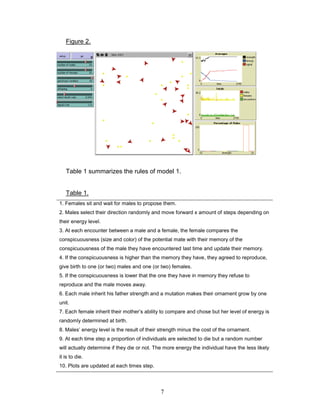
Figure 2 shows the result of a typical simulation of the model. The
population starts with 25 males and 25 females. The genotypic-variation slider
controls the variation of the level of strength among the first individuals. The wider
the variation the more heterogeneous the population of males is. The offspring
slider controls the number of offspring that each successful encounter produces (in
even numbers). The select-death-rate controls the proportion of individuals, males
and females that become “candidates for death” at each time step. A random
number will determine if they die or not depending on their energy level. The
signal-cost slider controls the level of handicap that each unit of the ornament
imposes to the individual.
The “Averages plot” traces the average strength of males, their average
level of energy and the average conspicuousness of the ornament (signal). The
“Totals plot” traces the number of individuals in the population and the number of
encounters between males and females. The “Percentage of Males plot” keeps
track of the distribution of strength among males. Notice again that the
conspicuousness of the ornament increases with time reducing the energy of
males making them more vulnerable to die. The first to die are the weakest ones
remaining only the strong and healthy ones that can carry the costly ornament.
7
Figure 2.
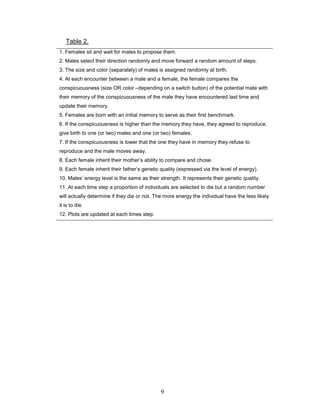
Table 1 summarizes the rules of model 1.
Table 1.
1. Females sit and wait for males to propose them.
2. Males select their direction randomly and move forward x amount of steps depending on
their energy level.
3. At each encounter between a male and a female, the female compares the
conspicuousness (size and color) of the potential mate with their memory of the
conspicuousness of the male they have encountered last time and update their memory.
4. If the conspicuousness is higher than the memory they have, they agreed to reproduce,
give birth to one (or two) males and one (or two) females.
5. If the conspicuousness is lower that the one they have in memory they refuse to
reproduce and the male moves away.
6. Each male inherit his father strength and a mutation makes their ornament grow by one
unit.
7. Each female inherit their mother’s ability to compare and chose but her level of energy is
randomly determined at birth.
8. Males’ energy level is the result of their strength minus the cost of the ornament.
9. At each time step a proportion of individuals are selected to die but a random number
will actually determine if they die or not. The more energy the individual have the less likely
it is to die.
10. Plots are updated at each times step.
8
Model 2
Model 1 was modified to illustrate the benefits that females get by having a
preference for males with of costly ornaments. These ornaments are honest
signals that testify of the good genetic quality of the male.
In model 2, males have already evolved the ornaments and they have
different degrees of conspicuousness. These are assigned randomly at birth.
Some males have very conspicuous ornaments while others not so much. Contrary
to model 1, males in model 2 have two different ornaments, one is their color the
other one is their size. Only the color imposes a cost to the individual. Females in
model 2 have a preference either for colorful males or for big males. Their
daughters inherit their father’s level of energy.
When females select males based on their color, their daughters live longer
and have a higher reproductive success increasing the average genetic quality of
the female population (expressed via higher energy levels). When females select
males based on size, their average energy level does not increase as high. This
difference illustrates the point that having a preference for males with costly signals
gives them a reproductive advantage vs. having a preference for males with
ornaments that does not imposes any cost to the individual because low-genetic-
quality males could fake the signal providing no real benefit to the females. Figure
3 compares two typical simulations: the graph on top shows the simulation when
females (now blue dots) select males based on their color. The graph at the bottom
shows the simulation when females select males based on their size.
Notice the difference in the average energy of females between the two
simulations. Also notice the distribution of energy among females. The population
of females that have a preference for the color of the males is skewed towards
females with high levels of energy and there is less variation among them.
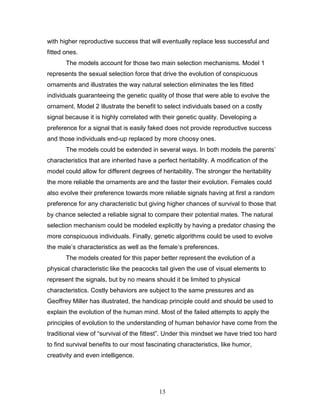
Table 2 summarizes the rules of model 2
9
Table 2.
1. Females sit and wait for males to propose them.
2. Males select their direction randomly and move forward a random amount of steps.
3. The size and color (separately) of males is assigned randomly at birth.
4. At each encounter between a male and a female, the female compares the
conspicuousness (size OR color –depending on a switch button) of the potential mate with
their memory of the conspicuousness of the male they have encountered last time and
update their memory.
5. Females are born with an initial memory to serve as their first benchmark.
6. If the conspicuousness is higher than the memory they have, they agreed to reproduce,
give birth to one (or two) males and one (or two) females.
7. If the conspicuousness is lower that the one they have in memory they refuse to
reproduce and the male moves away.
8. Each female inherit their mother’s ability to compare and chose.
9. Each female inherit their father’s genetic quality (expressed via the level of energy).
10. Males’ energy level is the same as their strength. It represents their genetic quality.
11. At each time step a proportion of individuals are selected to die but a random number
will actually determine if they die or not. The more energy the individual have the less likely
it is to die.
12. Plots are updated at each times step.
10
Figure 3.
Experimentation
To test for the significance of the differences observed in figure 3 two
controlled experiments were designed: In experiment 1, the model was run 50
times with females selecting colorful males over less colorful ones based on their
preference for color. The average energy level at time 1000 was recorded for each
of the runs. The model was run again another 50 times now with females selecting
bigger males over smaller ones based on their preference for size
11
In experiment 2 the model was run again 50 times with females selecting
the males’ colors and 50 times selecting their size. The percentage of females with
energy level above 7 was recorded at time 1000. Figure 4 compares the
distribution and mean of the average energy levels for each of the runs. Figure 5
does the same comparison for the percentage of females with energy level above
7. Signal1 denotes females selecting for color (signal1 in the model), Signal2
denotes females selecting for size (signal2 in the model). In both experiments a t-
test for independent samples was used to test for statistical significance.
It is clear from the two experiments that the cost imposed by Signal1 (color) makes
it a reliable indicator of fitness for females and that by selecting those males with
stronger colors females increase their own fitness through generations. This
creates the directional selection commonly observed in most species.
Figure 4.
t student (independent samples) = 5.799; P < 0.001.
12
Figure 5.
Discussion
The models described above fairly represent the handicap principle outlined
first by Zahavi back in the 70. The principle works because there are two differently
selection mechanisms working at the same time and in opposite directions. Natural
selection creates a pressure for lighter, smaller and more efficient features while
sexual selection pushes individuals to develop extravagant, inefficient and costly
ornaments.
The natural selection mechanism eliminates individuals that develop costly
ornaments but are not strong enough to afford them. The handicap that the
ornaments impose on the individual is what makes the ornament a reliable signal
of the genetic quality of the individual. Female and males that mate with higher
quality individuals will tend to have higher quality offspring that will themselves
have a higher chance of survival and reproduction. The end result, are individuals
t student (independent samples) = 9.093; P < 0.001.
13
with higher reproductive success that will eventually replace less successful and
fitted ones.
The models account for those two main selection mechanisms. Model 1
represents the sexual selection force that drive the evolution of conspicuous
ornaments and illustrates the way natural selection eliminates the les fitted
individuals guaranteeing the genetic quality of those that were able to evolve the
ornament. Model 2 illustrate the benefit to select individuals based on a costly
signal because it is highly correlated with their genetic quality. Developing a
preference for a signal that is easily faked does not provide reproductive success
and those individuals end-up replaced by more choosy ones.
The models could be extended in several ways. In both models the parents’
characteristics that are inherited have a perfect heritability. A modification of the
model could allow for different degrees of heritability. The stronger the heritability
the more reliable the ornaments are and the faster their evolution. Females could
also evolve their preference towards more reliable signals having at first a random
preference for any characteristic but giving higher chances of survival to those that
by chance selected a reliable signal to compare their potential mates. The natural
selection mechanism could be modeled explicitly by having a predator chasing the
more conspicuous individuals. Finally, genetic algorithms could be used to evolve
the male’s characteristics as well as the female’s preferences.
The models created for this paper better represent the evolution of a
physical characteristic like the peacocks tail given the use of visual elements to
represent the signals, but by no means should it be limited to physical
characteristics. Costly behaviors are subject to the same pressures and as
Geoffrey Miller has illustrated, the handicap principle could and should be used to
explain the evolution of the human mind. Most of the failed attempts to apply the
principles of evolution to the understanding of human behavior have come from the
traditional view of “survival of the fittest”. Under this mindset we have tried too hard
to find survival benefits to our most fascinating characteristics, like humor,
creativity and even intelligence.
14
It is very likely that those characteristics are more the result of sexual
selection through mate choice (see Miller, 2000, for a detailed exploration on this
subject). Looking at the human mind as a signaling machine that evolved to attract
potential mates, friends, and family members by entertaining them will open a
world of new insights about us. It is the pursuit of this goal that motivated this
paper because unless we truly understand the handicap principle this new way of
looking at our mind will pass as another fad in the quest for human understanding.
15
References
Miller, G. F. (1999). Sexual selection for cultural displays. In R. Dunbar, C. Knight,
& C. Power (Eds.), The evolution of culture. Edinburgh U. Press, pp. 71-91.
Miller, G. F. (2000). The mating mind: How sexual choice shaped the evolution of
human nature. New York: Doubleday.
Miller, G. F. (2001). Aesthetic fitness: How sexual selection shaped artistic
virtuosity as a fitness indicator and aesthetic preferences as mate choice criteria.
Bulletin of Psychology and the Arts 2(1), 20-25. Special issue on evolution,
creativity, and aesthetics.
Zahavi A.. (1975). Mate selection: A selection for a handicap. Journal of theoretical
biology, 53, 205-214.
Zahavi A.& Zahavi A. (1997). The handicap principle: A missing piece of Darwin’s
puzzle. Oxford University Press.
16
Appendix
Model 1:
breed [males male]
breed [females female]
females-own
[
memory
energy
]
males-own
[
signal
energy
strength
]
to setup
clear-all
ask patches [ set pcolor white ]
setup-turtles
end
to setup-turtles
create-males number-of-males
create-females number-of-females
set-default-shape females "dot"
ask turtles
[
setxy random-xcor random-ycor
]
ask males
[
set strength (10 + random genotypic-variation)
set signal 1
set energy (strength - (signal * Signal-Cost))
set color 19.5 - (signal / 3)
set size 1 + 0.5 * (signal / genotypic-variation)
]
ask females
[
set color yellow
set size 1.5
set energy (10 + random genotypic-variation)
set memory 0
move-to patch-here
]
do-plots
end
to go
;;if ticks = 700 [stop]
if count males < 2 [stop]
if count males > 500 [stop]
move-turtles
show-encounter
reproduce
check-death
tick
do-plots
end
to move-turtles
ask males [ right random 360 forward (1 + energy)]
end
to show-encounter
17
ask patches with [not any? turtles-here = true]
[
set pcolor white
]
ask patches with [any? females-here = true]
[ifelse any? males-here = true
[
set pcolor yellow
]
[
set pcolor white
]
]
end
to reproduce
ask females
[
if pcolor = yellow
[
check-male-attractiveness self one-of males
]
]
end
to check-male-attractiveness [Agent1 Agent2] ;; Agent1 is the female Agent2 is the male
let male-attractiveness [signal] of Agent2
if memory < male-attractiveness
[
hatch (offspring / 2)
[
set breed males
set strength [strength] of Agent2
set signal [signal] of Agent2 + 1
set energy (strength - (signal * Signal-Cost))
set size 1 + 0.5 * (signal / genotypic-variation)
set color 19.5 - (signal / 3)
]
hatch (offspring / 2)
[
set breed females
set size 1.5
set color yellow
setxy random-xcor random-ycor
move-to patch-here
set memory 0
set energy (10 + random genotypic-variation)
]
]
set memory male-attractiveness
end
to check-death
ask males
[
if energy < 1 [die]
]
ask n-of (count males * select-death-rate) males
[
if random 100 >= (energy * 3)
[
die
]
]
ask n-of (count females * select-death-rate) females
[
if random 100 >= (energy * 3)
[
die
18
]
]
end
to do-plots
set-current-plot "Totals"
set-current-plot-pen "males"
plot count males
set-current-plot-pen "females"
plot count females
set-current-plot-pen "encounters"
plot count patches with [pcolor = yellow]
set-current-plot "Averages"
set-current-plot-pen "signal"
plot mean [signal] of males
set-current-plot-pen "strength"
plot (mean [strength] of males * 2)
set-current-plot-pen "energy"
plot mean [energy] of males
set-current-plot "Percentage of Males"
clear-plot
foreach [10 11 12 13 14 15 16 17 18 19 20]
[
set-current-plot-pen word "pen" ?
plotxy ? (count males with [strength = ?] / (count males)) * 100
]
end
Model 2:
breed [males male]
breed [females female]
females-own
[
memory1 ;; memory for Signal1 of males
memory2 ;; memory for Signal2 of males
energy
selectivity ;; if 1 females select based on Signal1; if 0 they select for Signal2
]
males-own
[
signal1 ;; color
signal2 ;; size
energy ;; in this model energy and strength are the same
strength ;; we keep strength for consistency with Model1
]
to setup
clear-all
ask patches [ set pcolor white ]
setup-turtles
end
to setup-turtles
create-males number-of-males
create-females number-of-females
set-default-shape females "dot"
ask turtles
[
setxy random-xcor random-ycor
]
ask males
[
set signal1 random genotypic-variation
set signal2 random genotypic-variation
19
set strength signal1
set energy strength
set color 19.5 - (signal1 / 2)
set size 1 + 0.5 * (signal2 / genotypic-variation)
]
ask females
[
set size 1.5
set energy random genotypic-variation
set memory1 random genotypic-variation
set memory2 random genotypic-variation
move-to patch-here
set color yellow
set selectivity 0
]
if Preference-for-color
[
ask females
[
set selectivity 1
set color blue
]
]
do-plots
end
to go
;;if ticks = 500 [stop]
if count males < 2 [stop]
if count males > 500 [stop]
move-turtles
show-encounter
reproduce
check-death
tick
do-plots
end
to move-turtles
ask males [ right random 360 forward (random 20)]
end
to show-encounter
ask patches with [not any? turtles-here = true]
[
set pcolor white
]
ask patches with [any? females-here = true]
[ifelse any? males-here = true
[
set pcolor yellow
]
[
set pcolor white
]
]
end
to reproduce
ask females
[
if pcolor = yellow
[
check-male-attractiveness self one-of males
]
]
end
to check-male-attractiveness [Agent1 Agent2] ;; Agent1 is the female Agent2 is the male
20
let male-attractiveness1 [signal1] of Agent2
let male-attractiveness2 [signal2] of Agent2
if [selectivity] of agent1 = 1
[
if memory1 < male-attractiveness1
[
hatch (offspring / 2)
[
set breed males
set signal1 random genotypic-variation
set signal2 random genotypic-variation
set strength signal1
set energy strength
set color 19.5 - (signal1 / 2)
set size 1 + 0.5 * (signal2 / genotypic-variation)
]
hatch (offspring / 2)
[
set breed females
set size 1.5
set color blue
set selectivity 1
setxy random-xcor random-ycor
move-to patch-here
set memory1 random genotypic-variation
set memory2 random genotypic-variation
set energy [strength] of Agent2
]
set memory1 male-attractiveness1
]
]
if [selectivity] of agent1 = 0
[
if memory2 < male-attractiveness2
[
hatch (offspring / 2)
[
set breed males
set signal1 random genotypic-variation
set signal2 random genotypic-variation
set strength signal1
set energy strength
set color 19.5 - (signal1 / 2)
set size 1 + 0.5 * (signal2 / genotypic-variation)
]
hatch (offspring / 2)
[
set breed females
set size 1.5
set color yellow
set selectivity 0
setxy random-xcor random-ycor
move-to patch-here
set memory1 random genotypic-variation
set memory2 random genotypic-variation
set energy [strength] of Agent2
]
set memory2 male-attractiveness2
]
]
end
to check-death
ask males
[
if energy < 1 [die]
]
ask n-of (count males * select-death-rate) males
[
21
if random 100 >= (energy * 7)
[
die
]
]
ask n-of (count females * select-death-rate) females
[
if random 100 >= (energy * 7)
[
die
]
]
end
to do-plots
set-current-plot "Totals"
set-current-plot-pen "males"
plot count males
set-current-plot-pen "females"
plot count females
set-current-plot-pen "encounters"
plot count patches with [pcolor = yellow]
set-current-plot "Average Energy (Females)"
if Preference-for-color
[
if count females with [color = blue] > 0
[
set-current-plot-pen "blue"
plot mean [energy] of females with [color = blue]
]
]
if count females with [color = yellow] > 0
[
set-current-plot-pen "yellow"
plot mean [energy] of females with [color = yellow]
]
set-current-plot "Percentage of Females"
clear-plot
foreach [0 1 2 3 4 5 6 7 8 9 10]
[
set-current-plot-pen word "pen" ?
plotxy ? (count females with [energy = ?] / (count females)) * 100
]
end

Modeling Sexual Selection with Agent-Based Models

  • 1.
    1 Modeling sexual selectionwith Agent-Based Models Esteban Ribero – August, 2009 This paper discusses a well known principle in evolutionary biology called the handicap principle. Two agent-based-models were developed to illustrate the principle in an attempt to better understand its implications for the study of human behavior. A brief discussion about sexual selection and the handicap principle is provided, followed by a detailed description of the models. The use of biological concepts to explain human behavior is not new but during the past three decades evolutionary psychology has put the concepts and principles of evolutionary biology at the center of its meta-theory. The handicap principle in particular, has been used to explain human behavior and culture in a way that helps us understand the most fascinating and counterintuitive characteristics of human beings. Of particular importance is the work of Evolutionary Psychologist Geoffrey Miller at the University of New Mexico in Albuquerque. Miller has applied the handicap principle to explain how sexual selection (“the other” Darwin’s theory of evolution –it is actually just another selection mechanism) has been the most powerful force in Human evolution. Miller is pioneering the idea that most of our mind is the result of evolution by sexual selection through mate choice. He proposes that the traits that make us particularly different form other species (language, abstract thinking abilities, music, art, culture, science, etc.) evolved as a runaway process of fitness display (Miller, 1999). Sexual selection Evolution is supposed to occur via two main mechanisms: natural selection and sexual selection. Even though Darwin provided examples of both types of mechanisms when he introduced the theory, only the concept of natural selection received considerable attention. For some reason the theory of evolution by sexual selection was in exile until biologist started realizing that, actually, several of the
  • 2.
    2 most perplexing, surprisingand fascinating characteristics of animals could not be understood without the theory of sexual selection. Two different kinds of sexual selection can be responsible for the evolution of complex body and mental structures in animals including humans: intrasexual competition (aggressive competition between members of the same sex) and intersexual competition (mate choice by member of the opposite sex) One of the most important (if not the most) adaptive problem our ancestors faced was finding a mate to be able to pass their genes through the next generation. Even the most fitted individual to survive will not pass his genes if he does not find a mate that will agree to mix her genes with his. Such individual will eventually die and his characteristics would not be spread in future generations disappearing from the landscape, leaving only the characteristics of the individuals that were successful in finding a mate. The handicap principle The handicap principle was proposed in 1975 by Isralei biologist Amotz Zahavi (Zahavi, 1975; Zahavi & Zahavi, 1997). Zahavi who studied birds for more than 3 decades was puzzled by many behaviors and characteristics of many birds. He noticed that some birds like the peacock developed big, costly tails or songs that they displayed even in front of predators. What possible survival benefit could a giant tail provide, if on the contrary, it seemed to prevent the animal to move and escape faster from predators? It was certainly a sexual ornament used to attract mates but its high cost and the handicap that it caused to the animal was counterintuitive in the traditional “survival of the fittest” view of evolution. Zahavi proposed that actually the high cost of sexual ornaments is what keeps the ornaments reliable as indicators of fitness. Peacock tails require a lot of energy to preen, and to carry around. Unhealthy, unfit peacocks, can’t afford big, bright tails. The ornament’s cost guarantees the ornamented individual’s fitness, and this is why costly ornaments evolve. Technically, the key feature is that the indicator must have a higher relative marginal cost to an unfit animal than it does to a highly fit animal (Miller, 2001). Handicaps have the counter-intuitive feature that
  • 3.
    3 the more vulnerablethey are to disruption (by poor nutrition, injury, parasites, pathogens, genetic inbreeding, high mutation load, or socially subordinate status), the more useful they are as fitness indicators. Vulnerable traits amplify the differences in genetic quality between individuals. They take small differences in genetic quality, nutritional state, general health, or intelligence, and turn them into dramatic differences in ornament quality (Miller, 2001). In this way, they make individual differences more visible to mate choice. By choosing sexual partners with high-quality fitness indicators, animals are more likely to get healthy partners, competent parents, and good genes for their offspring (Miller, 2000). An agent-based-model of the handicap principle Two models were developed to illustrate different aspect of the handicap principle. Model 1 explores the evolution of costly signaling while model 2 explore the benefits of relying on this costly ornaments and not on others that are easy to fake. Model 1 overview The model consists of a number of males and females that interact with each other to reproduce themselves. At first, all males look the same but generation after generation they evolve some type of signaling devise (color and size) that advertise their strength to potential mates. By selecting the most visible and colorful males to reproduce with, females end up selecting those that are the strongest and most fitted individuals, those that could afford the costly signaling. The result is a population of males with costly ornaments that guarantee females they are strong mates with high genetic quality. Figure 1 shows three snapshots of the model at different moments of the simulation. Notice that the level of strength of the different individual is fairly distributed at first but progressively skews towards the strongest ones. Also notice that males end up with huge costly ornaments (signal) that considerably reduce their level of energy guaranteeing that only the strongest ones can afford them.
  • 4.
  • 5.
    5 Detailed description The firststep in developing the model was to create two different types of agents: The ones that choose who to mate with and the ones that make the proposal. In most species the females are the ones that invest more in their offspring creating the need to be selective about who to choose as a mate. Males on the contrary tend to invest less and are less selective regarding their mating preferences. To represent this, females in the model have memory, a very short one, but they are able to compare a potential mate in the present with the last male they have encounter in the past. If the current male is more attractive than the previous one, they decide to reproduce with him having two descendents: one male and one female. Males inherit their father’s characteristics while females inherit only the capacity to make a memory and be selective about who they mate with. If the previous male is more attractive they refuse to mate but store in their memory the level of attractiveness of the new male. Males do not have memory and make a mating proposal to any female they encounter. Females do not differ in their external characteristics; they all look the same (a yellow dot) and are born without any benchmark, so at their first encounter they all reproduce and set the first benchmark. They differ though in their level of energy which is randomly assigned at birth. Lower energy males and females have a higher change of dying at each time step. Females do not move while males walk randomly looking for females depending on their level of energy. Contrary to females, males differ in their external appearance as well as their physical strength. Males have any level of strength from 10 to 20 strength- units, randomly assigned at first and then inherited from their fathers. They also have an ornament they can grow through generations. The “size” of the ornament (signal) is the same at first for all males (1 unit) but at each generation a mutation makes it grow by one unit. The ornament consists of two features: size and color. The less prominent the ornament, the smaller it is and the less colorful. The level of energy each male has is the result of their strength minus the cost of the ornament. The bigger and more colorful the ornament the more costly it is.
  • 6.
    6 At each timestep, a portion of the population of males and females (defined by a slider) is designated as vulnerable and some individuals will die depending on their level of energy and a random number. Again, the lower the energy the more likely the individual is to die. If at any moment an agent energy level drops bellow 0 the agent die. Notice that agents do not consume energy throughout their life; it represents more the stamina they have to move, live and reproduce during their entire life. Figure 2 shows the result of a typical simulation of the model. The population starts with 25 males and 25 females. The genotypic-variation slider controls the variation of the level of strength among the first individuals. The wider the variation the more heterogeneous the population of males is. The offspring slider controls the number of offspring that each successful encounter produces (in even numbers). The select-death-rate controls the proportion of individuals, males and females that become “candidates for death” at each time step. A random number will determine if they die or not depending on their energy level. The signal-cost slider controls the level of handicap that each unit of the ornament imposes to the individual. The “Averages plot” traces the average strength of males, their average level of energy and the average conspicuousness of the ornament (signal). The “Totals plot” traces the number of individuals in the population and the number of encounters between males and females. The “Percentage of Males plot” keeps track of the distribution of strength among males. Notice again that the conspicuousness of the ornament increases with time reducing the energy of males making them more vulnerable to die. The first to die are the weakest ones remaining only the strong and healthy ones that can carry the costly ornament.
  • 7.
    7 Figure 2. Table 1summarizes the rules of model 1. Table 1. 1. Females sit and wait for males to propose them. 2. Males select their direction randomly and move forward x amount of steps depending on their energy level. 3. At each encounter between a male and a female, the female compares the conspicuousness (size and color) of the potential mate with their memory of the conspicuousness of the male they have encountered last time and update their memory. 4. If the conspicuousness is higher than the memory they have, they agreed to reproduce, give birth to one (or two) males and one (or two) females. 5. If the conspicuousness is lower that the one they have in memory they refuse to reproduce and the male moves away. 6. Each male inherit his father strength and a mutation makes their ornament grow by one unit. 7. Each female inherit their mother’s ability to compare and chose but her level of energy is randomly determined at birth. 8. Males’ energy level is the result of their strength minus the cost of the ornament. 9. At each time step a proportion of individuals are selected to die but a random number will actually determine if they die or not. The more energy the individual have the less likely it is to die. 10. Plots are updated at each times step.
  • 8.
    8 Model 2 Model 1was modified to illustrate the benefits that females get by having a preference for males with of costly ornaments. These ornaments are honest signals that testify of the good genetic quality of the male. In model 2, males have already evolved the ornaments and they have different degrees of conspicuousness. These are assigned randomly at birth. Some males have very conspicuous ornaments while others not so much. Contrary to model 1, males in model 2 have two different ornaments, one is their color the other one is their size. Only the color imposes a cost to the individual. Females in model 2 have a preference either for colorful males or for big males. Their daughters inherit their father’s level of energy. When females select males based on their color, their daughters live longer and have a higher reproductive success increasing the average genetic quality of the female population (expressed via higher energy levels). When females select males based on size, their average energy level does not increase as high. This difference illustrates the point that having a preference for males with costly signals gives them a reproductive advantage vs. having a preference for males with ornaments that does not imposes any cost to the individual because low-genetic- quality males could fake the signal providing no real benefit to the females. Figure 3 compares two typical simulations: the graph on top shows the simulation when females (now blue dots) select males based on their color. The graph at the bottom shows the simulation when females select males based on their size. Notice the difference in the average energy of females between the two simulations. Also notice the distribution of energy among females. The population of females that have a preference for the color of the males is skewed towards females with high levels of energy and there is less variation among them. Table 2 summarizes the rules of model 2
  • 9.
    9 Table 2. 1. Femalessit and wait for males to propose them. 2. Males select their direction randomly and move forward a random amount of steps. 3. The size and color (separately) of males is assigned randomly at birth. 4. At each encounter between a male and a female, the female compares the conspicuousness (size OR color –depending on a switch button) of the potential mate with their memory of the conspicuousness of the male they have encountered last time and update their memory. 5. Females are born with an initial memory to serve as their first benchmark. 6. If the conspicuousness is higher than the memory they have, they agreed to reproduce, give birth to one (or two) males and one (or two) females. 7. If the conspicuousness is lower that the one they have in memory they refuse to reproduce and the male moves away. 8. Each female inherit their mother’s ability to compare and chose. 9. Each female inherit their father’s genetic quality (expressed via the level of energy). 10. Males’ energy level is the same as their strength. It represents their genetic quality. 11. At each time step a proportion of individuals are selected to die but a random number will actually determine if they die or not. The more energy the individual have the less likely it is to die. 12. Plots are updated at each times step.
  • 10.
    10 Figure 3. Experimentation To testfor the significance of the differences observed in figure 3 two controlled experiments were designed: In experiment 1, the model was run 50 times with females selecting colorful males over less colorful ones based on their preference for color. The average energy level at time 1000 was recorded for each of the runs. The model was run again another 50 times now with females selecting bigger males over smaller ones based on their preference for size
  • 11.
    11 In experiment 2the model was run again 50 times with females selecting the males’ colors and 50 times selecting their size. The percentage of females with energy level above 7 was recorded at time 1000. Figure 4 compares the distribution and mean of the average energy levels for each of the runs. Figure 5 does the same comparison for the percentage of females with energy level above 7. Signal1 denotes females selecting for color (signal1 in the model), Signal2 denotes females selecting for size (signal2 in the model). In both experiments a t- test for independent samples was used to test for statistical significance. It is clear from the two experiments that the cost imposed by Signal1 (color) makes it a reliable indicator of fitness for females and that by selecting those males with stronger colors females increase their own fitness through generations. This creates the directional selection commonly observed in most species. Figure 4. t student (independent samples) = 5.799; P < 0.001.
  • 12.
    12 Figure 5. Discussion The modelsdescribed above fairly represent the handicap principle outlined first by Zahavi back in the 70. The principle works because there are two differently selection mechanisms working at the same time and in opposite directions. Natural selection creates a pressure for lighter, smaller and more efficient features while sexual selection pushes individuals to develop extravagant, inefficient and costly ornaments. The natural selection mechanism eliminates individuals that develop costly ornaments but are not strong enough to afford them. The handicap that the ornaments impose on the individual is what makes the ornament a reliable signal of the genetic quality of the individual. Female and males that mate with higher quality individuals will tend to have higher quality offspring that will themselves have a higher chance of survival and reproduction. The end result, are individuals t student (independent samples) = 9.093; P < 0.001.
  • 13.
    13 with higher reproductivesuccess that will eventually replace less successful and fitted ones. The models account for those two main selection mechanisms. Model 1 represents the sexual selection force that drive the evolution of conspicuous ornaments and illustrates the way natural selection eliminates the les fitted individuals guaranteeing the genetic quality of those that were able to evolve the ornament. Model 2 illustrate the benefit to select individuals based on a costly signal because it is highly correlated with their genetic quality. Developing a preference for a signal that is easily faked does not provide reproductive success and those individuals end-up replaced by more choosy ones. The models could be extended in several ways. In both models the parents’ characteristics that are inherited have a perfect heritability. A modification of the model could allow for different degrees of heritability. The stronger the heritability the more reliable the ornaments are and the faster their evolution. Females could also evolve their preference towards more reliable signals having at first a random preference for any characteristic but giving higher chances of survival to those that by chance selected a reliable signal to compare their potential mates. The natural selection mechanism could be modeled explicitly by having a predator chasing the more conspicuous individuals. Finally, genetic algorithms could be used to evolve the male’s characteristics as well as the female’s preferences. The models created for this paper better represent the evolution of a physical characteristic like the peacocks tail given the use of visual elements to represent the signals, but by no means should it be limited to physical characteristics. Costly behaviors are subject to the same pressures and as Geoffrey Miller has illustrated, the handicap principle could and should be used to explain the evolution of the human mind. Most of the failed attempts to apply the principles of evolution to the understanding of human behavior have come from the traditional view of “survival of the fittest”. Under this mindset we have tried too hard to find survival benefits to our most fascinating characteristics, like humor, creativity and even intelligence.
  • 14.
    14 It is verylikely that those characteristics are more the result of sexual selection through mate choice (see Miller, 2000, for a detailed exploration on this subject). Looking at the human mind as a signaling machine that evolved to attract potential mates, friends, and family members by entertaining them will open a world of new insights about us. It is the pursuit of this goal that motivated this paper because unless we truly understand the handicap principle this new way of looking at our mind will pass as another fad in the quest for human understanding.
  • 15.
    15 References Miller, G. F.(1999). Sexual selection for cultural displays. In R. Dunbar, C. Knight, & C. Power (Eds.), The evolution of culture. Edinburgh U. Press, pp. 71-91. Miller, G. F. (2000). The mating mind: How sexual choice shaped the evolution of human nature. New York: Doubleday. Miller, G. F. (2001). Aesthetic fitness: How sexual selection shaped artistic virtuosity as a fitness indicator and aesthetic preferences as mate choice criteria. Bulletin of Psychology and the Arts 2(1), 20-25. Special issue on evolution, creativity, and aesthetics. Zahavi A.. (1975). Mate selection: A selection for a handicap. Journal of theoretical biology, 53, 205-214. Zahavi A.& Zahavi A. (1997). The handicap principle: A missing piece of Darwin’s puzzle. Oxford University Press.
  • 16.
    16 Appendix Model 1: breed [malesmale] breed [females female] females-own [ memory energy ] males-own [ signal energy strength ] to setup clear-all ask patches [ set pcolor white ] setup-turtles end to setup-turtles create-males number-of-males create-females number-of-females set-default-shape females "dot" ask turtles [ setxy random-xcor random-ycor ] ask males [ set strength (10 + random genotypic-variation) set signal 1 set energy (strength - (signal * Signal-Cost)) set color 19.5 - (signal / 3) set size 1 + 0.5 * (signal / genotypic-variation) ] ask females [ set color yellow set size 1.5 set energy (10 + random genotypic-variation) set memory 0 move-to patch-here ] do-plots end to go ;;if ticks = 700 [stop] if count males < 2 [stop] if count males > 500 [stop] move-turtles show-encounter reproduce check-death tick do-plots end to move-turtles ask males [ right random 360 forward (1 + energy)] end to show-encounter
  • 17.
    17 ask patches with[not any? turtles-here = true] [ set pcolor white ] ask patches with [any? females-here = true] [ifelse any? males-here = true [ set pcolor yellow ] [ set pcolor white ] ] end to reproduce ask females [ if pcolor = yellow [ check-male-attractiveness self one-of males ] ] end to check-male-attractiveness [Agent1 Agent2] ;; Agent1 is the female Agent2 is the male let male-attractiveness [signal] of Agent2 if memory < male-attractiveness [ hatch (offspring / 2) [ set breed males set strength [strength] of Agent2 set signal [signal] of Agent2 + 1 set energy (strength - (signal * Signal-Cost)) set size 1 + 0.5 * (signal / genotypic-variation) set color 19.5 - (signal / 3) ] hatch (offspring / 2) [ set breed females set size 1.5 set color yellow setxy random-xcor random-ycor move-to patch-here set memory 0 set energy (10 + random genotypic-variation) ] ] set memory male-attractiveness end to check-death ask males [ if energy < 1 [die] ] ask n-of (count males * select-death-rate) males [ if random 100 >= (energy * 3) [ die ] ] ask n-of (count females * select-death-rate) females [ if random 100 >= (energy * 3) [ die
  • 18.
    18 ] ] end to do-plots set-current-plot "Totals" set-current-plot-pen"males" plot count males set-current-plot-pen "females" plot count females set-current-plot-pen "encounters" plot count patches with [pcolor = yellow] set-current-plot "Averages" set-current-plot-pen "signal" plot mean [signal] of males set-current-plot-pen "strength" plot (mean [strength] of males * 2) set-current-plot-pen "energy" plot mean [energy] of males set-current-plot "Percentage of Males" clear-plot foreach [10 11 12 13 14 15 16 17 18 19 20] [ set-current-plot-pen word "pen" ? plotxy ? (count males with [strength = ?] / (count males)) * 100 ] end Model 2: breed [males male] breed [females female] females-own [ memory1 ;; memory for Signal1 of males memory2 ;; memory for Signal2 of males energy selectivity ;; if 1 females select based on Signal1; if 0 they select for Signal2 ] males-own [ signal1 ;; color signal2 ;; size energy ;; in this model energy and strength are the same strength ;; we keep strength for consistency with Model1 ] to setup clear-all ask patches [ set pcolor white ] setup-turtles end to setup-turtles create-males number-of-males create-females number-of-females set-default-shape females "dot" ask turtles [ setxy random-xcor random-ycor ] ask males [ set signal1 random genotypic-variation set signal2 random genotypic-variation
  • 19.
    19 set strength signal1 setenergy strength set color 19.5 - (signal1 / 2) set size 1 + 0.5 * (signal2 / genotypic-variation) ] ask females [ set size 1.5 set energy random genotypic-variation set memory1 random genotypic-variation set memory2 random genotypic-variation move-to patch-here set color yellow set selectivity 0 ] if Preference-for-color [ ask females [ set selectivity 1 set color blue ] ] do-plots end to go ;;if ticks = 500 [stop] if count males < 2 [stop] if count males > 500 [stop] move-turtles show-encounter reproduce check-death tick do-plots end to move-turtles ask males [ right random 360 forward (random 20)] end to show-encounter ask patches with [not any? turtles-here = true] [ set pcolor white ] ask patches with [any? females-here = true] [ifelse any? males-here = true [ set pcolor yellow ] [ set pcolor white ] ] end to reproduce ask females [ if pcolor = yellow [ check-male-attractiveness self one-of males ] ] end to check-male-attractiveness [Agent1 Agent2] ;; Agent1 is the female Agent2 is the male
  • 20.
    20 let male-attractiveness1 [signal1]of Agent2 let male-attractiveness2 [signal2] of Agent2 if [selectivity] of agent1 = 1 [ if memory1 < male-attractiveness1 [ hatch (offspring / 2) [ set breed males set signal1 random genotypic-variation set signal2 random genotypic-variation set strength signal1 set energy strength set color 19.5 - (signal1 / 2) set size 1 + 0.5 * (signal2 / genotypic-variation) ] hatch (offspring / 2) [ set breed females set size 1.5 set color blue set selectivity 1 setxy random-xcor random-ycor move-to patch-here set memory1 random genotypic-variation set memory2 random genotypic-variation set energy [strength] of Agent2 ] set memory1 male-attractiveness1 ] ] if [selectivity] of agent1 = 0 [ if memory2 < male-attractiveness2 [ hatch (offspring / 2) [ set breed males set signal1 random genotypic-variation set signal2 random genotypic-variation set strength signal1 set energy strength set color 19.5 - (signal1 / 2) set size 1 + 0.5 * (signal2 / genotypic-variation) ] hatch (offspring / 2) [ set breed females set size 1.5 set color yellow set selectivity 0 setxy random-xcor random-ycor move-to patch-here set memory1 random genotypic-variation set memory2 random genotypic-variation set energy [strength] of Agent2 ] set memory2 male-attractiveness2 ] ] end to check-death ask males [ if energy < 1 [die] ] ask n-of (count males * select-death-rate) males [
  • 21.
    21 if random 100>= (energy * 7) [ die ] ] ask n-of (count females * select-death-rate) females [ if random 100 >= (energy * 7) [ die ] ] end to do-plots set-current-plot "Totals" set-current-plot-pen "males" plot count males set-current-plot-pen "females" plot count females set-current-plot-pen "encounters" plot count patches with [pcolor = yellow] set-current-plot "Average Energy (Females)" if Preference-for-color [ if count females with [color = blue] > 0 [ set-current-plot-pen "blue" plot mean [energy] of females with [color = blue] ] ] if count females with [color = yellow] > 0 [ set-current-plot-pen "yellow" plot mean [energy] of females with [color = yellow] ] set-current-plot "Percentage of Females" clear-plot foreach [0 1 2 3 4 5 6 7 8 9 10] [ set-current-plot-pen word "pen" ? plotxy ? (count females with [energy = ?] / (count females)) * 100 ] end