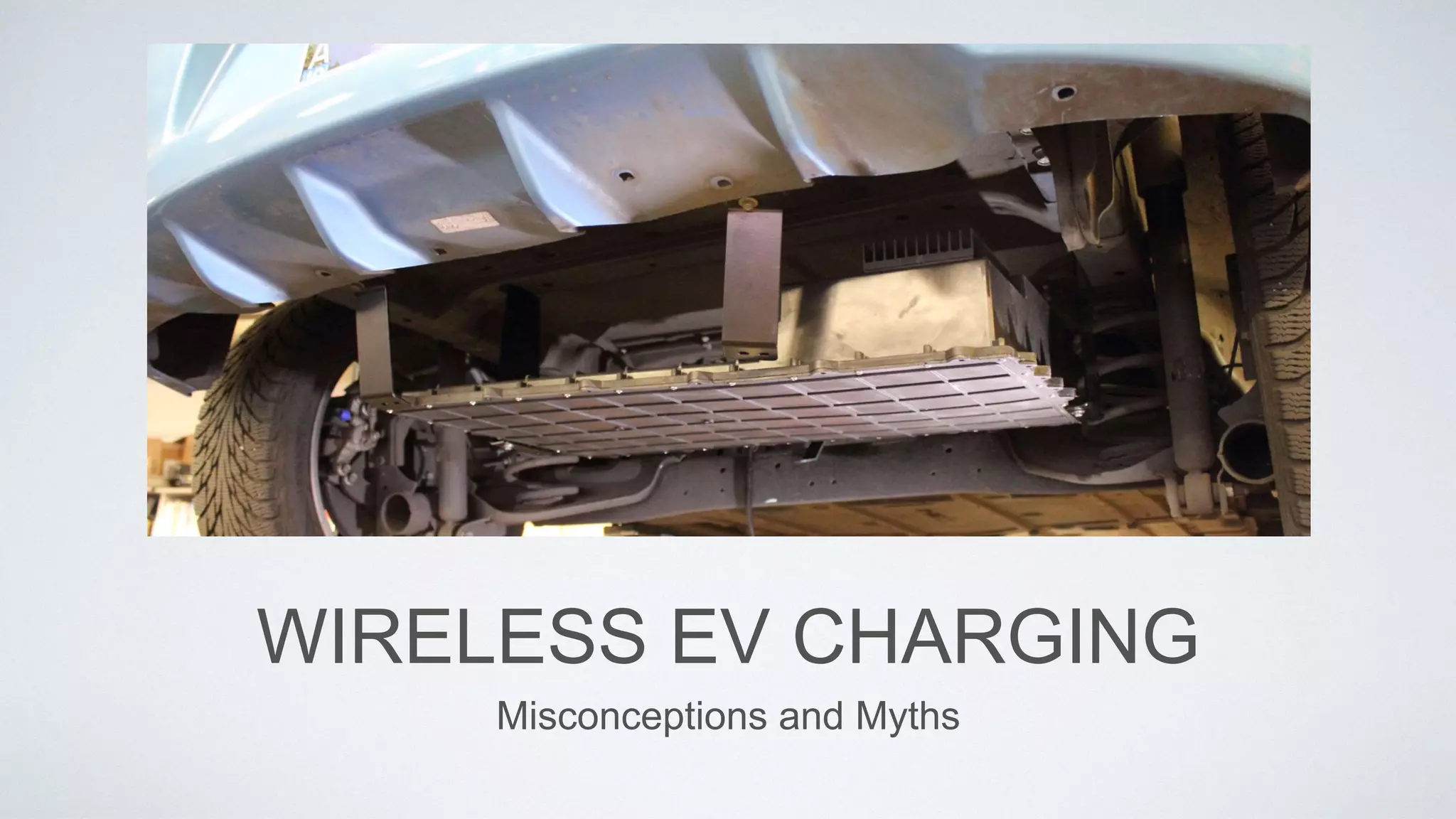
WIRELESS EV CHARGING
Misconceptions and Myths
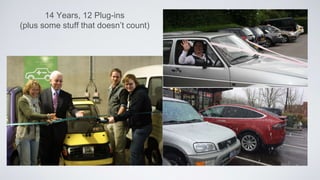
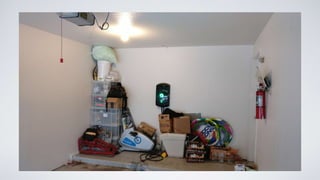
14 Years, 12 Plug-ins
(plus some stuff that doesn’t count)
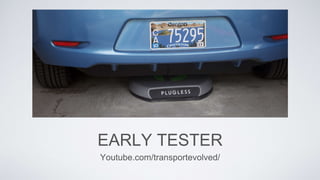
EARLY TESTER
Youtube.com/transportevolved/
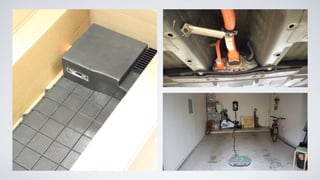
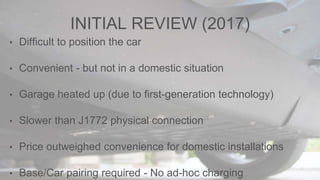
INITIAL REVIEW (2017)
• Difficult to position the car
• Convenient - but not in a domestic situation
• Garage heated up (due to first-generation technology)
• Slower than J1772 physical connection
• Price outweighed convenience for domestic installations
• Base/Car pairing required - No ad-hoc charging
TWITTER POLL
“What do you think of wireless EV Charging? “
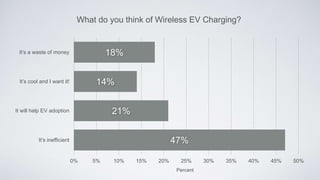
18%
14%
21%
47%
0% 5% 10% 15% 20% 25% 30% 35% 40% 45% 50%
It’s a waste of money
It’s cool and I want it!
It will help EV adoption
It’s inefficient
Percent
What do you think of Wireless EV Charging?
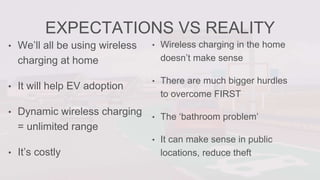
EXPECTATIONS VS REALITY
• We’ll all be using wireless
charging at home
• It will help EV adoption
• Dynamic wireless charging
= unlimited range
• It’s costly
• Wireless charging in the home
doesn’t make sense
• There are much bigger hurdles
to overcome FIRST
• The ‘bathroom problem’
• It can make sense in public
locations, reduce theft
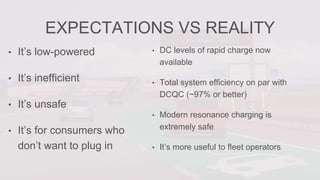
EXPECTATIONS VS REALITY
• It’s low-powered
• It’s inefficient
• It’s unsafe
• It’s for consumers who
don’t want to plug in
• DC levels of rapid charge now
available
• Total system efficiency on par with
DCQC (~97% or better)
• Modern resonance charging is
extremely safe
• It’s more useful to fleet operators
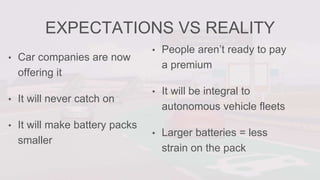
EXPECTATIONS VS REALITY
• Car companies are now
offering it
• It will never catch on
• It will make battery packs
smaller
• People aren’t ready to pay
a premium
• It will be integral to
autonomous vehicle fleets
• Larger batteries = less
strain on the pack
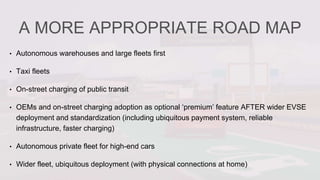
A MORE APPROPRIATE ROAD MAP
• Autonomous warehouses and large fleets first
• Taxi fleets
• On-street charging of public transit
• OEMs and on-street charging adoption as optional ‘premium’ feature AFTER wider EVSE
deployment and standardization (including ubiquitous payment system, reliable
infrastructure, faster charging)
• Autonomous private fleet for high-end cars
• Wider fleet, ubiquitous deployment (with physical connections at home)
OUR HOMEWORK
• Engage in realistic, appropriate
conversations about wireless charging
• Ignore the ‘flashy red herrings’
• Design for practicality in fleets before
‘wow factor’ for OEMs
• Focus on commercial deployments
and better ‘regular’ infrastructure
before confusing consumers further
• Talk about electric fuel.

Wireless EV Charging by Nikki Gordon-Bloomfield

  • 1.
  • 2.
    14 Years, 12Plug-ins (plus some stuff that doesn’t count)
  • 3.
  • 6.
    INITIAL REVIEW (2017) •Difficult to position the car • Convenient - but not in a domestic situation • Garage heated up (due to first-generation technology) • Slower than J1772 physical connection • Price outweighed convenience for domestic installations • Base/Car pairing required - No ad-hoc charging
  • 7.
    TWITTER POLL “What doyou think of wireless EV Charging? “
  • 8.
    18% 14% 21% 47% 0% 5% 10%15% 20% 25% 30% 35% 40% 45% 50% It’s a waste of money It’s cool and I want it! It will help EV adoption It’s inefficient Percent What do you think of Wireless EV Charging?
  • 9.
    EXPECTATIONS VS REALITY •We’ll all be using wireless charging at home • It will help EV adoption • Dynamic wireless charging = unlimited range • It’s costly • Wireless charging in the home doesn’t make sense • There are much bigger hurdles to overcome FIRST • The ‘bathroom problem’ • It can make sense in public locations, reduce theft
  • 10.
    EXPECTATIONS VS REALITY •It’s low-powered • It’s inefficient • It’s unsafe • It’s for consumers who don’t want to plug in • DC levels of rapid charge now available • Total system efficiency on par with DCQC (~97% or better) • Modern resonance charging is extremely safe • It’s more useful to fleet operators
  • 11.
    EXPECTATIONS VS REALITY •Car companies are now offering it • It will never catch on • It will make battery packs smaller • People aren’t ready to pay a premium • It will be integral to autonomous vehicle fleets • Larger batteries = less strain on the pack
  • 12.
    A MORE APPROPRIATEROAD MAP • Autonomous warehouses and large fleets first • Taxi fleets • On-street charging of public transit • OEMs and on-street charging adoption as optional ‘premium’ feature AFTER wider EVSE deployment and standardization (including ubiquitous payment system, reliable infrastructure, faster charging) • Autonomous private fleet for high-end cars • Wider fleet, ubiquitous deployment (with physical connections at home)
  • 13.
    OUR HOMEWORK • Engagein realistic, appropriate conversations about wireless charging • Ignore the ‘flashy red herrings’ • Design for practicality in fleets before ‘wow factor’ for OEMs • Focus on commercial deployments and better ‘regular’ infrastructure before confusing consumers further • Talk about electric fuel.